
 Stonehenge by Bernard Cornwell
My rating: 2 of 5 stars
I would argue that this is not one of Bernard Cornwell’s best books. It is a tedious book to read – a real chore and requires discipline to stick at. At least that is how I found it.

Stonehenge by Bernard Cornwell
My rating: 2 of 5 stars
I would argue that this is not one of Bernard Cornwell’s best books. It is a tedious book to read – a real chore and requires discipline to stick at. At least that is how I found it.
Brigid Maher, La Trobe University
In our series, Guide to the classics, experts explain key works of literature.
Many young children have flirted with the notion of escaping, once and for all, those stifling rules and obligations invoked at dinnertime: eat your greens, finish everything on your plate…
Few (thankfully) will have the kind of commitment required to take this rebellion to the extremes of Cosimo Piovasco di Rondò, protagonist of Italo Calvino’s enchanting novel, The Baron in the Trees.
The meal in question is indeed stomach-turning: snail soup followed by a main course of snails.
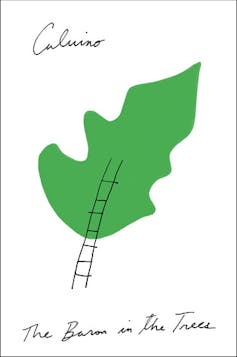
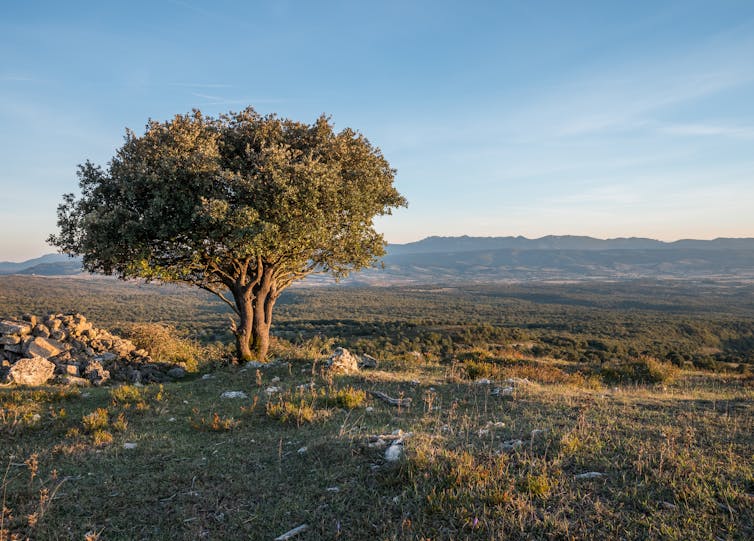
But when, one momentous day in 1767, the 12-year-old Cosimo pushes away his plate and refuses to touch his food, no admonitions from his appalled parents will change the boy’s mind. He runs from the family home and climbs a large holm oak on their estate, never again to come down to earth.
Calvino wrote the novel in 1957, and it remains one of his most loved. The story of Cosimo’s astonishing existence among the trees, where he lives through to adulthood and old age, during times of great turmoil, combines the bizarre imaginative flair of a folktale with a profound meditation on questions of isolation and human interaction.
Calvino was born in Cuba in 1923 to Italian parents who were working there as scientists, but the family moved back to Italy just two years later. His childhood was spent in the small coastal city of Sanremo (Liguria) on the Italian Riviera, very close to the French border.
The landscape of Liguria – in an imagined and idealised form that has since been lost to development – forms the luxuriant setting for Cosimo’s arboreal adventures.
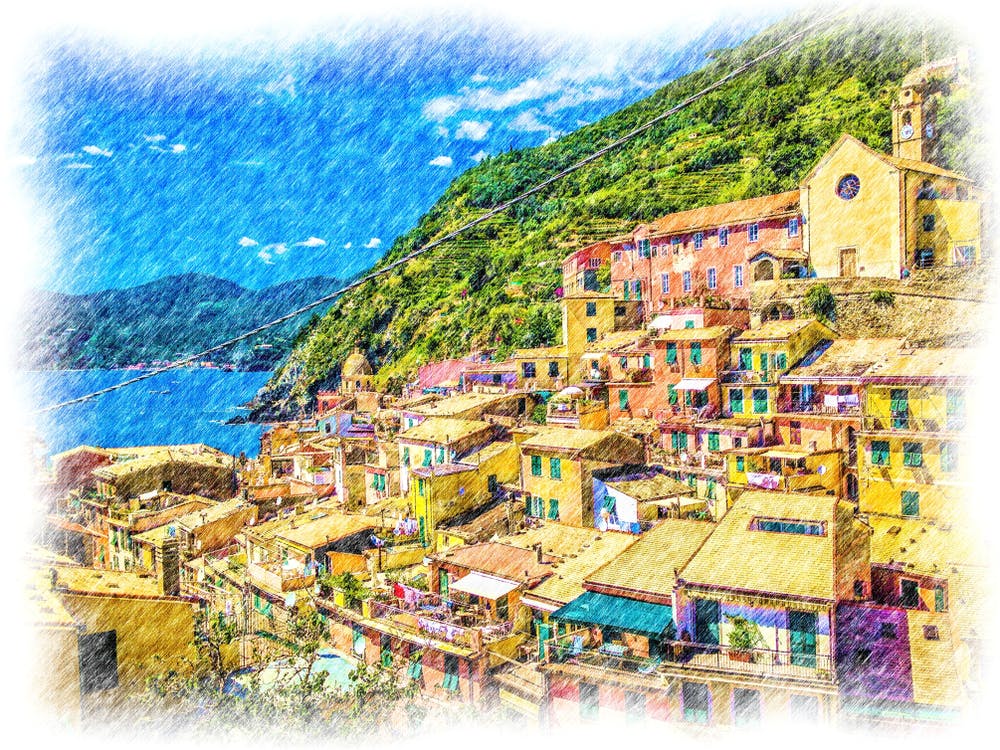
The baron’s (fictional) village of Ombrosa is rich in vegetation, and trees of every kind – oaks and mulberry trees, magnolias and Indian chestnuts, pines and olives – become Cosimo’s kingdom.
Life in the treetops is not without its challenges. Part of the charm of the novel lies in the way Calvino is able to use allegory to explore the human condition, without sidestepping a depiction of how Cosimo manages the practicalities of his peculiar existence.
Many of the funniest moments lie in Cosimo’s ingenuity and determination as he makes himself a permanent, and surprisingly comfortable, home in the trees. Hunting polecats and badgers affords him the fur jacket, hat and leather shoes required for spending cold winters out in the elements, while also lending him an eccentric appearance that little befits a baron.
Yet his life is nothing if not civilised. He comes up with strategies for washing, cooking and toileting; he can access drinking water, and even trains a goat to climb a short way up an olive tree so he can reach down to milk it.
But Cosimo’s day-to-day existence is not focused solely on surviving in his new habitat. He engages in many intellectual pursuits, becoming an avid reader of literature and philosophy. When he befriends the brigand Gian dei Brughi, on the run from the law, the two share this passion for books and soon, procuring reading material for the fugitive is almost a full-time job for Cosimo.
This love of the written word ultimately proves to be Gian dei Brughi’s undoing. He begins to neglect his brigandage and loses all fascination in the eyes of the local people.
When the once-elusive dei Brughi is finally captured, it is because he is too desperate to get back to his novel (Richardson’s Clarissa) to successfully carry out a burglary, and his erstwhile accomplices hand him over to the authorities.
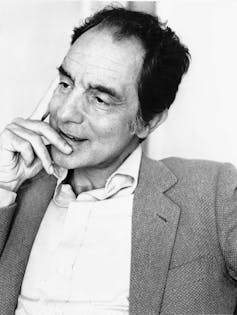
Cosimo, by contrast, has a greater capacity for balance. His extreme rebellion against the strictures of his noble upbringing is never an outright rejection of society or community. He is an eccentric and a free spirit, a true nonconformist, but not an individualist.
Indeed, from his position high in the leaves, Cosimo is often the one to bring the community together. He is a born leader, and is able to organise the villagers into firefighting squads during a time of drought.
Because, for all its fantastical setting and implausible adventures, The Baron in the Trees is still a novel with a political edge, or what in Italian literature is called impegno (political commitment).
The baron’s life embodies the struggle of the intellectual to contribute meaningfully to society, albeit from a position of isolation and distance. This was a struggle Calvino himself had to contend with. He entered adulthood towards the end of World War II, having spent well over a year in the Resistance.
His early work was strongly marked by political themes, but by the 1950s he had begun to see the nexus between politics and literature somewhat differently.
Baron in the Trees, as well as the novels immediately preceding and following it (The Cloven Viscount and The Non-Existent Knight), with which it is now often published as a trilogy of sorts under the title, Our Ancestors) mark the beginning of a move from realism towards a more allegorical and, later, experimental kind of writing.
All three books are deeply philosophical, yet at the same time easy to read and entertaining.
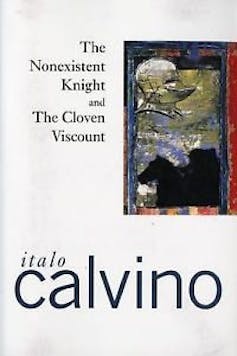
Lightness was a key literary value for Calvino, specifically “the search for lightness as a reaction to the weight of living”, as he put it in Six Memos for the New Millennium.
Cosimo is the very embodiment of this search. Even the baron’s final moments are both poetic and principled as, despite old age and infirmity, he manages to find a way never to return to earth, not even in death.
The Baron in the Trees appeared in English translation (by Archibald Colquhoun) just two years after its original publication in Italy. Fifty years on, a new translation, by Ann Goldstein, has appeared, testament to the novel’s enduring popularity. For despite its historical-fantastical setting, there is a message for our times in this novel, which asks us to question our anthropocentric view of our environment.
The longer Cosimo spends in the trees, the greater his identification with the natural world. His eyes are said to have become like a cat’s or an owl’s, and he begins making speeches and distributing pamphlets advocating greater communion between humans and birds.
Some townspeople view this as a sign of madness but Cosimo is a deeply rational man who believes that “anyone who wishes to look closely at the earth must keep at a necessary distance”.
We, too, have something to learn from Cosimo and the natural world.
Brigid Maher, Senior Lecturer in Italian Studies, La Trobe University
This article is republished from The Conversation under a Creative Commons license. Read the original article.
Matthew Sharpe, Deakin University
Western philosophy is a series of footnotes to Plato, the old saying goes. And The Republic (c. 375 BCE), featuring Plato’s teacher Socrates in dialogue with several friends, is unquestionably central to Plato’s thought.
There are few subjects that Plato’s masterpiece does not touch or play on: political theory, education, myth, psychology, ethics, epistemology, cultural criticism, drama and comedy.
Little surprise then, that The Republic continues to be claimed by people with the most diverse convictions and agendas.
The Nazis pointed to the text’s seeming advocacy of eugenics. Yet Martin Luther King Jr nominated The Republic as the one book he would have taken to a deserted island, alongside the Bible.
Karl Popper famously accused The Republic of being a blueprint for illiberal, closed societies. Yet today, we can hear its echoes in the dazzling hyper-libertarian utopias envisaged by the Silicon Valley set.
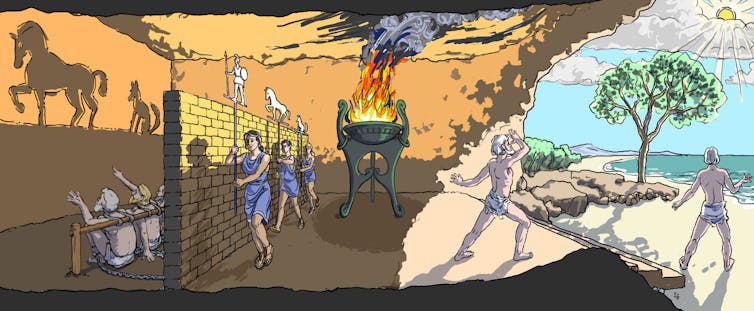
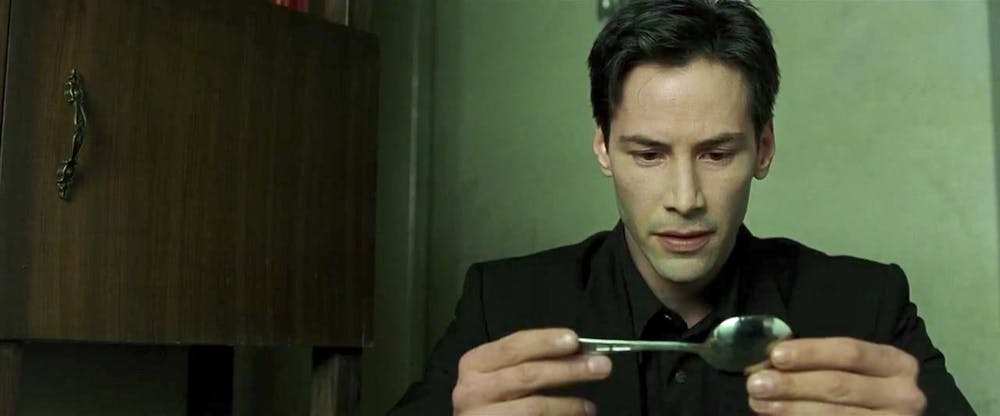
The Republic’s famous allegory of the cave, which suggests that people’s ordinary sense of reality may be illusory, continues to shape our cultural imagination. It has been revisited again and again in literature, as well as in classic sci-fi films like The Matrix.
So, how can we make sense of this extraordinary text today?
Read more:
The Matrix 20 years on: how a sci-fi film tackled big philosophical questions
Divided into ten “books”, the Republic is mostly taught as a text championing a series of radical prescriptions concerning the best city (polis) or regime (politeia).
At a certain point, Plato’s Socrates tells his young friends that the best city will be one in which the population is divided into three castes. On top will be a ruling caste of (yes) philosopher-guardians.
The second class will be “auxiliaries” or soldiers who will share everything in common, including wives and children. Indeed, Socrates depicts men and women as absolutely equal in all decisive senses. The third class are craftspeople and traders more recognisable to us today.
This is all very pie-in-the-sky stuff. When Socrates suggests that justice is only possible if philosophers become kings, or kings philosophers, his young companion Glaucon jokes that most people on hearing this will probably reach for their weapons.
Less amusing is the proposed power of Socrates’ enlightened guardians to “breed” men and women as breeders selectively mate horses, dogs or fighting birds. The best warriors will get to sleep with the most beautiful women. There will be rigged “lotteries” so that the lesser-credentialed think it is just bad luck that they cannot “hook up” with the alphas.
Babies will be taken from their mothers by the rulers to a kind of state crèche. More ominously, children born with defects will be “hidden away” (katakrypsousin).
Everything is to be arranged so everyone can say “mine” about the same things. Each person will not know who their immediate biological family is. So, they will consider all their fellow-citizens as brothers and sisters, mothers and fathers.
Read more:
Where to start reading philosophy?
We can understand at this point why Nazi educationalists looked to The Republic as a precedent for some of their programs. Contemporary dreamers of a “dark enlightenment” wherein techy people “with high IQs” can “opt out” of wider society are also finding their way back to the future as depicted in The Republic Book V.
Why many other defenders of political liberty admire Plato’s text is less clear. But, as mentioned, there are many other things the book discusses than Socrates’ seemingly ideal “city in speech”.
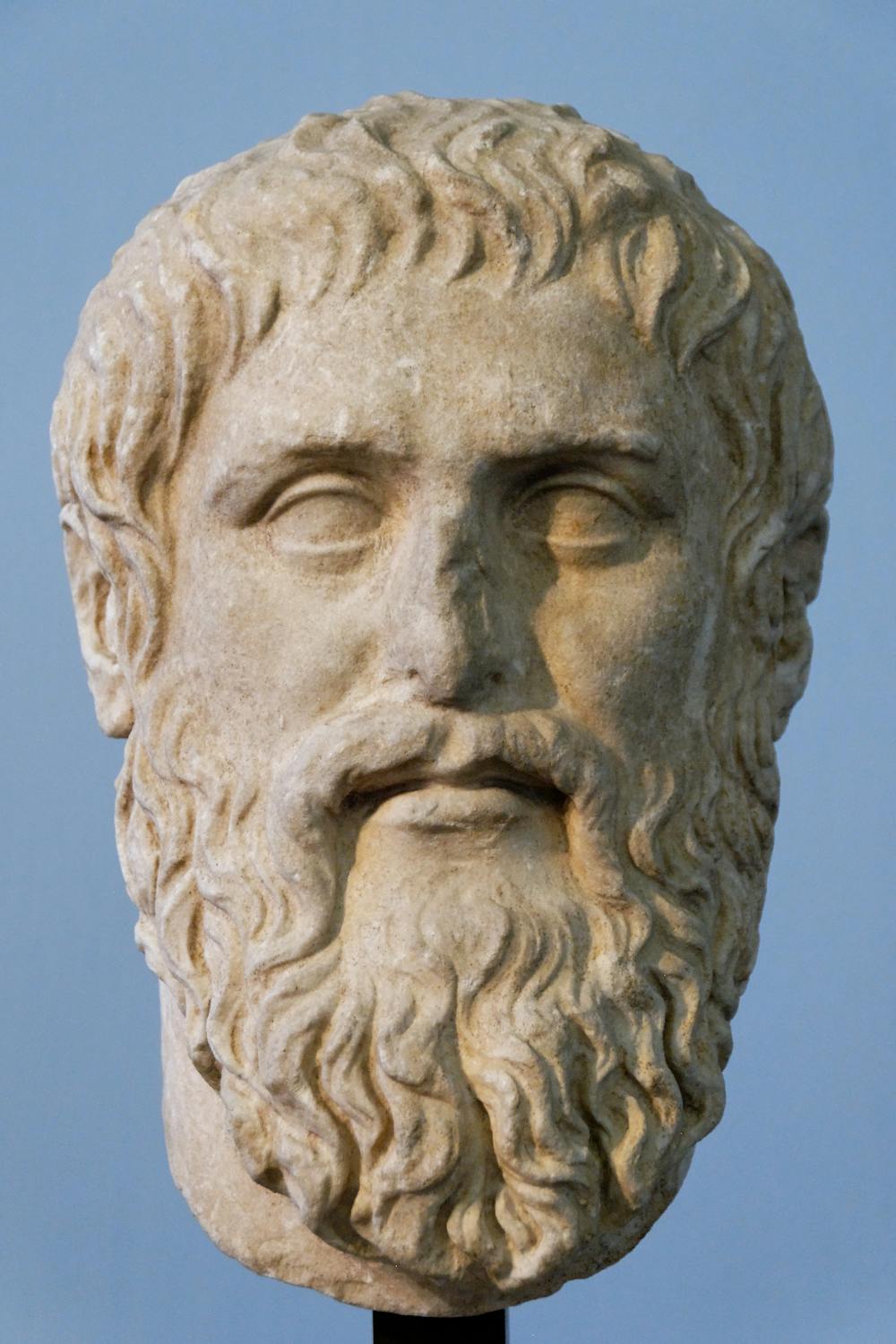
The Republic’s principal concern is the question of what justice is. Does being just benefit the just persons themselves, or those whom they aid, or both? Is it good for a person to live a just life?
To answer, The Republic sets up a connection between types and parts of the human psyche (mind, soul) and different political systems. For some systems and people, honour and its pursuit is considered the highest good. In other societies, like our own, the pursuit of money as the means to pleasure, power, and satisfying desires is predominant.
Socrates plausibly suggests that it would seem to be best that our political leaders are people who desire wisdom. For such people will be least moved by the desires for status and riches that produce civil dissension.
But then, it is almost impossible to imagine how such a ruling elite could ever be created without great injustices. How everybody else could be “persuaded” to accept their claims to rule is also unclear – as is grasping just how Plato’s guardians could get ordinary citizens to give up their kids to the state for the greater good.
Given these problems with the utopian interpretation of The Republic, some modern commentators take seriously Socrates’ repeated hints that we should consider what he is saying with a grain of salt.
In the wider context of the dialogue, Socrates presents the image of the three-caste city in order to provide his friends with an image of what a just individual soul would be like. Such a soul would be one in which wisdom rules over the desires for honour and pleasures. “Justice” would apparently be something like the inner harmony of the soul’s parts.
The famous “best city”, which has produced such divided reactions from commentators, is therefore a methodological model. If we can glimpse justice in something as big as a city, Socrates suggests, we might know what to look for in a person.
Small wonder that Socrates warns his friend: “you should know, Glaucon, that in my opinion, we will never get a precise answer using our present methods of argument”.

If there is a political message in The Republic at all, it is not about creating a recipe for the ideal city.
The true meaning of the Republic instead lies in how it stages the inescapable difficulties of political life, given what Isaiah Berlin called the crooked timber of human nature.
In fact, not just Socrates’ kallipolis (beautiful city), but each of the political regimes that he examines in The Republic prove flawed and unstable.
Regimes led by honour-loving nobles (timocracies) can only survive based on elites’ harshness towards inferiors, sowing grapes of wrath. Such elites tend over time to become scornful of public duties, and as they age, to turn from matters of war to finance:
finding ways of spending money for themselves, then they stretch the laws relating to money-making, then they and their wives disobey the laws altogether.
This vision sounds oddly prophetic after the Global Financial Crisis of 2007-8. Oligarchies hollow out the middle classes. By lending money at interest, they create “a considerable amount of drones and beggars in the city”. At a certain point, these “have-nots” rightly revolt. Democracies follow.
But Plato is no simple friend of democracies, either. Socrates asserts that the democratic citizens’ love of freedom tends to undermine traditional authorities. Teachers become afraid of students and parents of their children. As the generations mix, “the old stoop to play … and pleasantry, imitating the young for fear of appearing disagreeable and authoritarian …”
These passages have appeared prescient to many conservatives since the 60s.
A moral vacuum ensues in which demagogues can arise, promising to make the city great again. At this point, Socrates warns, democracies can devolve into tyrannies.
In these deeply unjust regimes, a single man can play out his hubris and pathologies on entire peoples, after removing his foes by force or fraud.
For some commentators, these passages have seemed most prophetic after 2016.
Read more:
Will Trump be a tyrant, and how will we tell? Some classical pointers
What, then, does The Republic say positively about justice?
An iconic exchange in The Republic pits Socrates against the sophist Thrasymachus. The latter argues that “might” (boldness, strength and cunning) “makes right”.
Socrates’ claim that justice involves harming no one, and cultivating the knowledge to benefit others and oneself, sounds to the “beast-like” Thrasymachus as naive as it still sounds to “realists” today.
Glaucon and Adeimantus, amongst Socrates’ other companions, also wonder whether treating others justly is not a recipe for individual unhappiness. Anticipating Mr Tolkein, Glaucon puts Socrates’ view to the test by imagining a magic ring conferring invisibility. Wouldn’t even Socrates take advantage of this power to feather his own nest on the quiet?
Unbelievably, Socrates replies “no”.
The argumentative arc of The Republic in fact closes in book IX, at the end of the account of a tyrant’s life. Here, we are made to see that the tyrant’s amoral pursuit of egoistic appetites, which people often imagine as the best of all possible lives, is a recipe for misery and paranoia.
In one of the mathematical plays that dot the text, Socrates tells us that such a monomaniac will be exactly 729 times less happy than a wise person. For the author of The Republic, grinning with irony, it is exponentially better to be just than to live unjustly.
Only when we see this can we grasp why Plato spills so much ink in The Republic on how to educate a lover of wisdom, turning them away from the lures of money, fame, flattery and power. The famous images of the divided line, the cave, and the Good beyond being are each produced in the course of describing such an ideal education.
In the cave allegory mentioned above, Socrates depicts ordinary people in a cave, seated for their whole lives watching images projected on the walls by “hidden persuaders” (sophists, probably, and politicians). Not knowing any better, they assume that the images they see are real things. Plato’s image itself seems an uncanny anticipation of modern culture industries and today’s ubiquitous screen technologies.
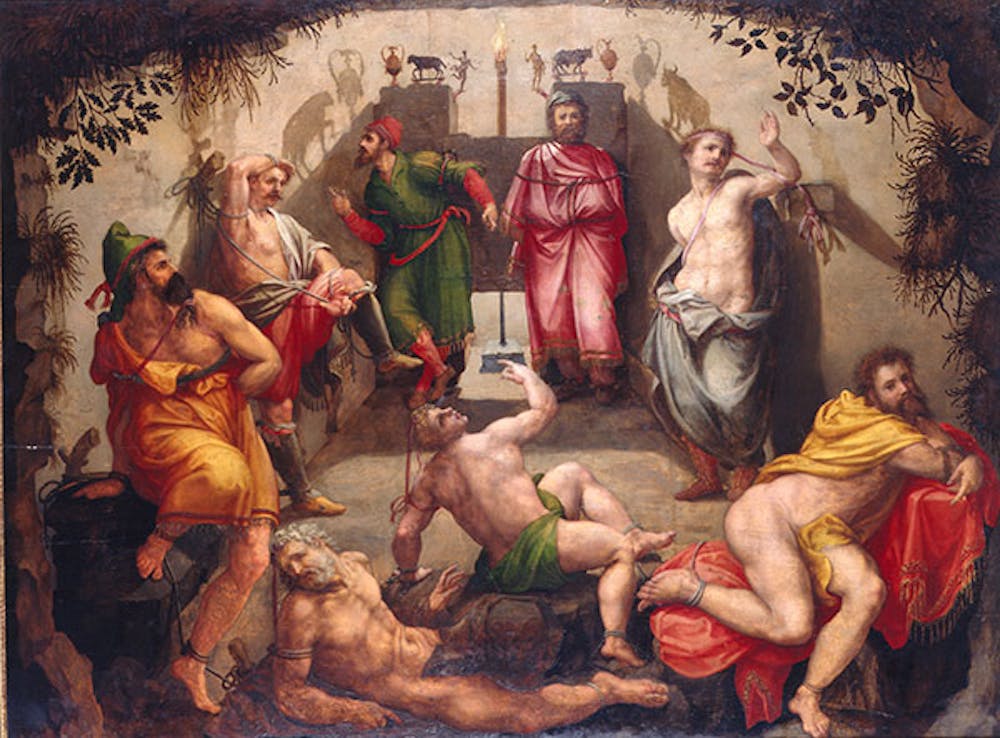
The philosopher is s/he who has turned around and climbed out of the cave to see reality for themselves.
Justice for such a person is voluntarily “going back down” into the cave to help others likewise turn their souls around. It is surely no mere chance that the first word of the Republic is Socrates telling us that “I went down yesterday to the Piraeus …”
The Socratic task is not easy. Socrates himself paid a heavy price for pursuing it. So the philosopher must be trained to “run the gauntlet of all tests”:
striving to examine everything by essential reality and not by opinion, holding on his way through all this without tripping in his reasoning …
The Republic itself can be read as a masterclass in this kind of training. For this reason, it rightly remains a classic text, and a timeless challenge to readers of all persuasions.
Matthew Sharpe, Associate Professor in Philosophy, Deakin University
This article is republished from The Conversation under a Creative Commons license. Read the original article.
 Founder, Fighter, Saxon Queen: Aethelflaed, Lady of the Mercians by Margaret C. Jones
My rating: 3 of 5 stars
Founder Fighter Saxon Queen – Aethelflaed Lady of the Mercians by Margaret C. Jones


 At the BookShelf

You must be logged in to post a comment.