Unknown's avatar

Exposing Donald Trump: Bolton book the latest in decades of White House disclosures to test First Amendment


Kaeten Mistry, University of East Anglia

Former US national security adviser John Bolton is the latest ex-government official to rebuke the misconduct, ignorance and self-serving behaviour of the president, Donald Trump, in the form of a tell-all book. The Room Where It Happened details Trump’s idiosyncrasies, offers of favours to authoritarian leaders, lack of basic knowledge, and “obstruction of justice as a way of life”.

Promoting the book in a series of interviews, Bolton told one reporter that he hopes it will be a one-term presidency: “Two terms, I’m more troubled about,” he said.

Yet the battle around the publication is more than another Trumpian political scandal. It centres on the disclosure of US national security information, particularly the concept of “prior restraint” that allows the government to censor speech or expression before it has occurred.

The issues originate in whistleblowing in the 1970s when former officials spoke out against government wrongdoing. Bolton is certainly no whistleblower although the legacy of that era informs an ongoing struggle today around first amendment freedom of speech rights and state secrecy.

Beyond politics

In many respects, the case is emblematic of Trump’s White House. Bolton was in post from April 2018 to September 2019, the longest serving national security adviser under Trump, but now asserts the president “lacks the competence to carry out the job” and is not “fit for office.” When the first excerpts from the book emerged, Trump characteristically lashed out with a tweet full of insults and accusations.

The politics are certainly messy. Bolton, a hawkish Republican, is an opportunistic political operative. With publication of the book, he has angered Trump’s supporters. At the same time his revelations have not won him friends among the president’s numerous opponents.

Bolton’s refusal to testify during the impeachment hearings at the beginning of the year, preferring to save his material for his book, has led to accusations that he was putting personal interest before national interest as well as profiteering, and trying to save his legacy.

Prior restraint

The crux of the matter is not individual politics but whether Bolton was authorised to publish the memoir. On June 20, Judge Royce C Lamberth of the Federal District Court of the District of Columbia denied a last-ditch Justice Department motion to block its release. Noting that excerpts were already printed and the book widely in circulation, he stated that: the “the damage is done. There is no restoring the status quo.”

The author nonetheless remains in trouble. The judge concluded that: “Bolton has gambled with the national security of the United States” by potentially exposing secrets. The government could still sue Bolton for not following the prepublication review process that applies to everyone who signs a secrecy agreement.

The prepublication review system was created following a wave of whistleblowing that exposed government abuse in the 1970s. The most famous example was Daniel Ellsberg’s revelation of the Pentagon Papers, a top secret military report on US involvement in the Vietnam War. Other whistleblowers including Frank Snepp, Philip Agee, and Victor Marchetti wrote books detailing their experiences working for the Central Intelligence Agency. Not all of them revealed secrets but the fact they were speaking publicly raised concerns.

In response, the US government created a process requiring all current and former national security officials to submit material intended for a public audience before it could be published. This vetting process was intended to protect classified information.

The system has been riddled with problems from the beginning, including lengthy review processes and arbitrary decision-making around what can and cannot be published. The issues have afflicted both works that criticise and support US foreign relations. In 2019 the Knight First Amendment Institute and the American Civil Liberties Union filed a lawsuit challenging the system as dysfunctional and placing too much power in the hands of reviewers.

Frank Snepp: forfeited royalties for his book.
Amazon

Authors who refuse to submit work for prepublication review are liable to be prosecuted. After publishing a 1977 book without approval, Snepp was ordered by the Supreme Court to forfeit all royalties to his former employer, the CIA. The court ruled that the book had caused “irreparable harm” to national security.

Bolton’s legal team claims he did not violate the secrecy agreement because he had satisfied all issues raised by the National Security Council’s senior director for prepublication review.

But the nature of the secrecy system and the review process is nebulous and allows the executive branch significant room for manoeuvre. While Trump’s assertion that “every conversation with me… [is] highly classified” is a stretch, the suggestion that “Bolton broke the law” and “must pay a very big price for this, as others have before him” is consistent with the broad authority afforded to presidents on national security matters.

The White House recently opened a second prepublication review process of Bolton’s book. The outcome of this latest review, which will be overseen by Judge Lambert, will determine his fate. If the courts follow historical precedent and rule in favour of the government, like Snepp before him, Bolton stands to forfeit his reported $2 million advance, and could face criminal liability that includes the possibility of a jail sentence.

Speech rights

While the author remains in legal peril, Bolton’s revelations continue to receive widespread attention. That the press can report national security secrets is rooted in another seminal whistleblowing case, Ellsberg’s release of the Pentagon Papers to the New York Times and other outlets. The Supreme Court ruled that prior restraint of the press was unconstitutional.

The First Amendment of the US constitution protects freedom of speech and freedom of the press from government interference. But when it comes to discussing national security information, the press enjoys greater protection than government employees.

In hyper-partisan times, it can be hard to look beyond the immediate political stakes. Yet the issues raised by this episode predate Bolton and Trump and are likely to persist long after them.The Conversation

Kaeten Mistry, Senior Lecturer in American History, University of East Anglia

This article is republished from The Conversation under a Creative Commons license. Read the original article.
Unknown's avatar

Trials of Portnoy: when Penguin fought for literature and liberty


IMDB

Patrick Mullins, University of Canberra

One grey morning in October 1970, in a crowded, tizzy-pink courtroom on the corner of Melbourne’s Russell and La Trobe Streets, crown prosecutor Leonard Flanagan began denouncing a novel in terms that were strident and ringing.

“When taken as a whole, it is lewd,” he declared. “As to a large part of it, it is absolutely disgusting both in the sexual and other sense; and the content of the book as a whole offends against the ordinary standards of the average person in the community today – the ordinary, average person’s standard of decency.”


Scribe

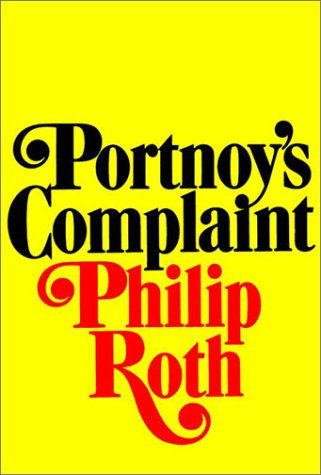
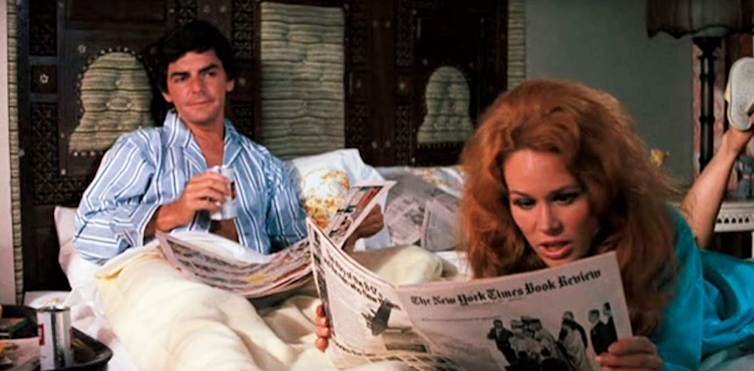
The object of Flanagan’s ire that day was the Penguin Books Australia edition of Portnoy’s Complaint. Frank, funny, and profane, Philip Roth’s novel — about a young man torn between the duties of his Jewish heritage and the autonomy of his sexual desires — had been a sensation the world over when it was published in February 1969.

Greeted with sweeping critical acclaim, it was advertised as “the funniest novel ever written about sex” and called “the autobiography of America” in the Village Voice. In the United States, it sold more than 400,000 copies in hardcover in a single year — more, even, than Mario Puzo’s The Godfather — and in the United Kingdom it was published to equal fervour and acclaim.

But in Australia, Portnoy’s Complaint had been banned.


Read more:
Philip Roth was the best post-war American writer, no ifs or buts


Banned books

Politicians, bureaucrats, police, and judges had for years worked to keep Australia free of the moral contamination of impure literature. Under a system of censorship that pre-dated federation, works that might damage the morals of the Australian public were banned, seized, and burned. Bookstores were raided. Publishers were policed and fined. Writers had been charged, fined and even jailed.

Seminal novels and political tracts from overseas had been kept out of the country. Where objectionable works emerged from Australian writers, they were rooted out like weeds. Under the censorship system, Boccacio’s Decameron had been banned. Nabokov’s Lolita had been banned. Joyce’s Ulysses had been banned. Even James Bond had been banned.

There had been opposition to this censorship for years, though it had become especially notable in the past decade. Criticism of the bans on J.D. Salinger’s The Catcher in the Rye and Norman Lindsay’s Redheap had prompted an almost complete revision of the banned list in 1958.

The repeated prosecutions of the Oz magazine team in 1963 and 1964 had attracted enormous attention and controversy.

Outcry over the bans on Mary McCarthy’s The Group and D.H. Lawrence’s Lady Chatterley’s Lover had been loud and pronounced, and three intrepid Sydney activists had exposed the federal government to ridicule when they published a domestic edition of The Trial of Lady Chatterley, an edited transcript of the failed court proceedings against Penguin Books UK for the publication of Lady Chatterley’s Lover in Britain in 1960.


Read more:
Friday essay: the Melbourne bookshop that ignited Australian modernism


Penguin goes to battle

Penguin Books Australia had been prompted to join the fight against censorship by the three idealistic and ambitious men at its helm: managing director John Michie, finance director Peter Froelich, and editor John Hooker.

In five years, the three men had overhauled the publisher, improving its distribution machinery and logistics and reinvigorating its publishing list. They believed Penguin could shape Australian life and culture by publishing interesting and vibrant books by Australian authors.

They wanted Penguin’s books to engage with the political and cultural shifts that the country was undergoing, to expose old canards, question the orthodox, and pose alternatives.

Censorship was no small topic in all this. Those at Penguin saw censorship as an inhibition on these ambitions. “We’d had issues with it before, in minor ways,” Peter Froelich recalled, “and we’d have drinks we’d say, ‘It’s wrong! How can we fix it? What can we do? How do we bring it to people’s attention, so that it can be changed?’”

The answer emerged when they heard of the ban placed on Portnoy’s Complaint. Justifiably famous, a bestseller the world over, of well-discussed literary merit, it stood out immediately as a work with which to challenge the censorship system, just as its British parent company had a decade earlier.

Why not obtain the rights to an Australian edition, print it in secret, and publish it in one fell swoop? As Hooker — who had the idea — put it to Michie, “Jack, we ought to really publish Portnoy’s Complaint and give them one in the eye”.

The risks were considerable. There was sure to be a backlash from police and politicians. Criminal charges against Penguin and its three leaders were almost certain. Financial losses thanks to seized stock and fines would be considerable. The legal fees incurred in fighting charges would be enormous. Booksellers who stocked the book would also be put on trial. But Penguin was determined.

John Michie was resolute. “John offered to smash the whole thing down,” Hooker said, later. When he was told what was about to happen, federal minister for customs Don Chipp swore that Michie would pay: “I’ll see you in jail for this.” But Michie was not to be dissuaded.

‘People who took exception to it at the time are mostly dead,’ Roth said, some 40 years and 30 books after Portnoy’s Complaint was published.

A stampede

In July 1970, Penguin arranged to have three copies of Portnoy smuggled into Australia. In considerable secrecy, they used them to print 75,000 copies in Sydney and shipped them to wholesalers and bookstores around the country. It was an operation carried out with a precision that Hooker later likened to the German invasion of Poland.


Wikimedia

The book was unveiled on August 31 1970. Michie held a press conference in his Mont Albert home, saying Portnoy’s Complaint was a masterpiece and should be available to read in Australia. Neither he nor Penguin were afraid of the prosecutions: “We are prepared to take the matter to the High Court.”

The next morning, as the trucks bearing copies began to arrive, bookstores everywhere were rushed. At one Melbourne bookstore, the assistant manager was knocked down and trampled by a crowd eager to buy the book and support Penguin. “It was a stampede,” he said later. A bookstore manager in Sydney was amazed when the 500 copies his store took sold out in two-and-a-half hours.

All too soon, it was sold out. And with politicians making loud promises of retribution, the police descended.

Bookstores were raided. Unsold copies were seized. Court summons were delivered to Penguin, to Michie, and to booksellers the whole country over. A long list of court trials over the publication of Portnoy’s Complaint and its sale were in the offing.

A stellar line-up

So the trial that opened on the grey morning of October 19 1970, in the Melbourne Magistrates Court, was only the first in what promised to be a long battle.

Neither Michie nor his colleagues were daunted. They had prepared a defence based around literary merit and the good that might come from reading the book. They had retained expert lawyers and marshalled the cream of Australia’s literary and academic elite to come to their aid.

Patrick White would appear as a witness for the defence. So too would academic John McLaren, The Age newspaper editor Graham Perkin, the critic A.A. Phillips, the historian Manning Clark, the poet Vincent Buckley, and many more. They were unconcerned by Flanagan’s furious denunciations, by his shudders of disgust, and by his caustic indictments of Penguin and its leaders.

They were confident in their cause. As one telegram to Michie said:

ALL BEST WISHES FOR A RESOUNDING VICTORY FOR LITERATURE AND LIBERTY.


This is an edited extract from Trials of Portnoy by Patrick Mullins, published by Scribe.The Conversation

Patrick Mullins, Adjunct assistant professor, Centre for Creative and Cultural Research, University of Canberra

This article is republished from The Conversation under a Creative Commons license. Read the original article.
Unknown's avatar

Finished Reading: Ancient Rome by Eric Brown


Ancient Rome: A Concise Overview of the Roman History and Mythology Including the Rise and Fall of the Roman Empire (Ancient History Book 3)Ancient Rome: A Concise Overview of the Roman History and Mythology Including the Rise and Fall of the Roman Empire by Eric Brown
My rating: 2 of 5 stars

View all my reviews

Unknown's avatar

Finished Reading: Ancient Greece by Eric Brown


Ancient Greece: A Concise Overview of the Greek History and Mythology Including Classical Greece, Hellenistic Greece, Roman Greece and The Byzantine Empire (Ancient History Book 2)Ancient Greece: A Concise Overview of the Greek History and Mythology Including Classical Greece, Hellenistic Greece, Roman Greece and The Byzantine Empire by Eric Brown
My rating: 2 of 5 stars

View all my reviews

Unknown's avatar

Finished Reading: Ancient Egypt: A Concise Overview of the Egyptian History and Mythology Including the Egyptian Gods, Pyramids, Kings and Queens (Ancient History Book 1) by Eric Brown


Ancient Egypt: A Concise Overview of the Egyptian History and Mythology Including the Egyptian Gods, Pyramids, Kings and Queens (Ancient History Book 1)Ancient Egypt: A Concise Overview of the Egyptian History and Mythology Including the Egyptian Gods, Pyramids, Kings and Queens by Eric Brown
My rating: 2 of 5 stars

View all my reviews

Unknown's avatar

Guide to the Classics: The Leopard


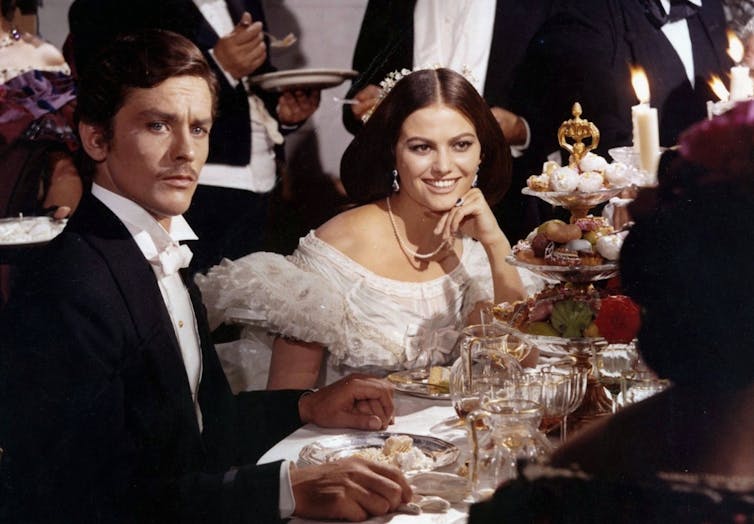
The Leopard/IMDB

Giorgia Alù, University of Sydney

Aridly undulating to the horizon in hillock after hillock, comfortless and irrational, with no lines that the mind could grasp, conceived apparently in a delirious moment of creation.

This is the description of a scorched, unruly Sicilian landscape – both protagonist and spectator of the story of its people – in Giuseppe Tomasi di Lampedusa’s The Leopard.


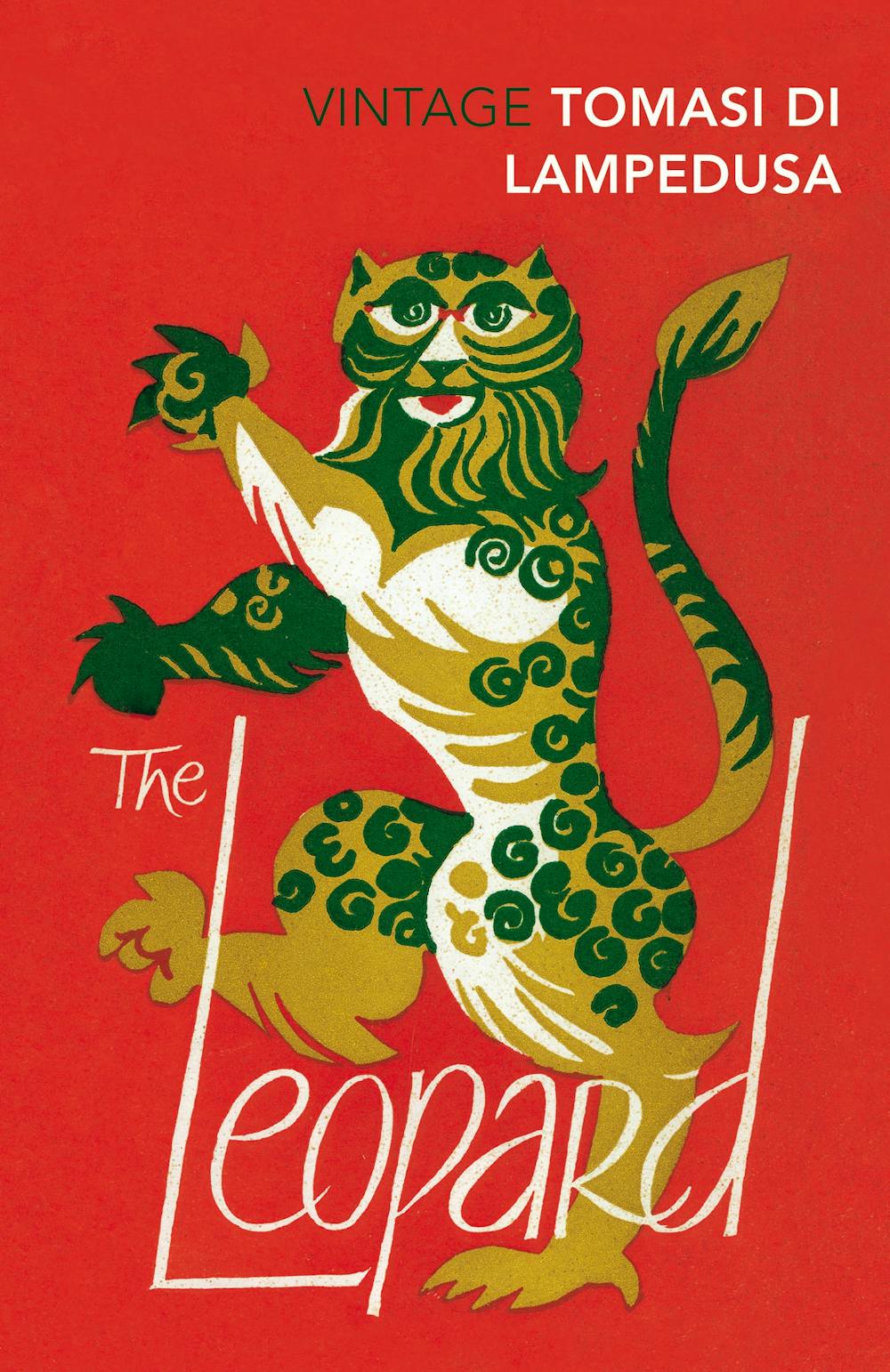
Penguin

The Leopard (Il Gattopardo) is one of the greatest Italian literary works of the 20th century. Since its publication in 1958, it has been regarded as a classic of European literature. Written by a Sicilian nobleman and set in the 19th-century during the Risorgimento – the movement for Italian Unification – it recounts the decline and fall of Sicily’s aristocracy.

Rosary, macaroni, faded grandeur

The action begins in 1860 when Italian general and patriot Giuseppe Garibaldi and his thousand volunteers land in Sicily to take the island from the Bourbons. They aim to unify the Kingdom of Naples – also known as the Kingdom of the Two Sicilies – with the Italian peninsula under the monarchy of Victor Emmanuel II. Events in the novel mark the passing of feudalism and the advent of modernity.

Yet everyday activities foreground the novel: daily recital of the Rosary, evening readings around the fire, faded grandeur of meals where “monumental dishes of macaroni” are served among massive silver and splendid glass, a walk and hunting expedition in the sunburnt Sicilian countryside, a magnificent ball.

The central character of the story is the irascible and reclusive Don Fabrizio Corbera, Prince of Salina, an aristocratic landowner and lover of astronomy, faithfully accompanied by his Great Dane Bendicò.

His family’s ancestral coat-of-arms shows an African serval or ocelot (mistakenly translated as leopard). The prince’s favourite nephew, the impoverished ambitious and frivolous Tancredi Falconeri, opportunistically supports the unification efforts of Garibaldi.

‘Conceived apparently in a delirious moment of creation’, the unruly Sicilian landscape.
Krisjanis Mezulis/Unsplash, CC BY

Tancredi falls in love with the beautiful Angelica, leaving a cousin who loves him devastated and his aunt distraught. Angelica is the daughter of Don Calogero Sedàra, a member of the merchant class ascending to power.

The novel’s main tension lies in class struggle: between the falling elites represented by the house of Corbera and the climbing middle class represented by the unscrupulous Sedàra. The national unification led by Piedmont in Northern Italy – and by statesman Camillo Benso, Count of Cavour – will mark the end of the aristocracy’s as well as of the church’s privileges in Italy.

Don Fabrizio reluctantly realises the only way to ensure the career of his nephew, who aims to become a diplomat, is to give his blessing to Tancredi’s marriage with Angelica. The union will provide Tancredi with the money he will need to succeed in the new regime. It will also bestow a title of nobility on Angelica and her parents. By the book’s end, set in 1910, the prince has died and his line has ended.


Read more:
Guide to the classics: Tacitus’ Annals and its enduring portrait of monarchical power


Rejected at first

The manuscript was initially rejected in 1956 and 1957. Important Italian publishers such as Mondadori and Einaudi thought it ideologically deficient, reactionary for its representation of an immobile history, and structurally weak. It also failed to align with the mainstream Italian literature of the time.

The manuscript was subsequently reviewed by writer Giorgio Bassani and published for Feltrinelli in 1958, a year after its author’s death.

Generally classified as a historical novel, The Leopard became a bestseller both in Italy and abroad, with 52 editions printed in the first four months. It won the prestigious Strega literary prize in 1959.

But critical debate erupted. The book appeared during an economic boom and when Italian intellectual culture was strongly politicised. Leftist intellectuals saw it as a backward, conservative portrayal of Sicilian elites written by a little-known man with no sense of progress.

After a few years, initial objections waned and the novel came to be appreciated for its writing and modern narrative structure.

With supple and ornate language, the book has an introspective storyline and alludes to the works of Shakespeare, Sterne, Tolstoy, Baudelaire, Keats, Proust and Stendhal. The narration is characterised by stylistic shifts that reflect both Prince Salina’s varying points of view and the unnamed but all-knowing narrator’s perceptions of history.

In 1963 director Luchino Visconti recreated The Leopard’s opulence in an unforgettable screen adaptation starring Burt Lancaster.

‘Nostalgia very similar to Gone With The Wind … says The New York Times!’

Meditations on history and humanity

Although The Leopard is a representation of 19th century Sicilian aristocracy, it is also a contemplative and ironic distancing from this same world. It is, above all, a novel that provides a profound meditation on transition and historical causality.

Besides, The Leopard is an ambitious political book. Critical interpretations of the novel have divided on whether the author was bemoaning the decline of the traditional ruling class, mercilessly critiquing it, or reflecting on the limits of political reforms.

In the plot, we can find similarities between the Bourbons’ supremacy and fascism, between Garibaldi’s conquest and the allied occupation at the end of the second world war. The book foreshadows political life in the newly unified kingdom and economic transformations that paved the way for corruption and criminal organisations in post-1945 Italy.


Read more:
Looking back at Italy 1992: the rise and fall of King Midas


As journalist and author, Luigi Barzini, once said, the book “made all us Italians understand our life and history to the depths.”

The most memorable – and misread – line in the book is

If we want things to stay as they are, things will have to change.

Spoken by Tancredi, it references Sicilian society’s resistance to change. It is also the narrator’s rumination on modern Italy with its various paradoxes and divisions.

The Leopard is a family saga, a psychological novel, a meditation on death and on the loss of collective memory. It has been read as a lyrical and prophetic contemplation on the experience of modernity and on the risks that it involves, such as ambition, and loss of beauty and traditions.

A solitary, melancholic man, author Tomasi di Lampedusa was deeply aware of his own mortality. The Leopard was his only novel that, together with a collection of short stories and literary studies, was published posthumously. His book would sell more than 3.2 million copies, be translated into more than 37 languages, and rightly honoured as an “immortal” masterpiece.The Conversation

Giorgia Alù, Associate Professor, Department of Italian Studies, University of Sydney

This article is republished from The Conversation under a Creative Commons license. Read the original article.

Unknown's avatar

Finished Reading: Lords of the Horizons – A History of the Ottoman Empire by Jason Goodwin


Lords of the Horizons A History of the Ottoman EmpireLords of the Horizons A History of the Ottoman Empire by Jason Goodwin
My rating: 2 of 5 stars

Unfortunately this book did not realise my expectations for it. That is perhaps the kindest way I can put it. I was hoping for a reasonably detailed chronological history of the Ottoman Empire, it rise and demise. There is a lot in this book, plenty of interesting detail and some amusing also. However, it is a little … too confusing for my like. It is all over the shop at times and just doesn’t ‘fit together’ enough for me. It is a useful read, but I doubt it will leave a lasting impression on me or an understanding of the Ottoman Empire with me.

View all my reviews

Unknown's avatar

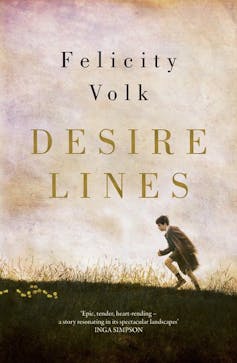
Book review: Desire Lines is a small love story inside an epic tale


Simon Maisch/Unsplash

Jennifer Gribble, University of Sydney

Chronicling four generations of two families, Felicity Volk’s Desire Lines is set against landmarks of 20th century Australian history, encompassing a geographical span that begins in the Arctic Circle and ends in the Blue Mountains of New South Wales.

Desire Lines is a richly textured celebration of Australia – its landscape, sights, sounds, seasons – while holding in close focus the inner lives of its characters. It is epic in scale, but also an unfolding love story that keeps the reader guessing until the very end.

Paddy O’Connor’s trajectory is set by the flip of his gambler father’s “lucky coin” abandoning him (rather than his infant brother) to the systematic cruelties of a London orphanage, and then the hard labour of a farm school far west of Sydney.

This spinning coin makes a recurrent trope for decision-making. The inability to decide; the urgencies and waylaying of desire.

Desire lines are the paths formed not by designers, but by human feet: the paths of dirt traced into grass as people walk the route they desire, not the route of the path laid out for them.

As Paddy, now a successful architect, reflects:

… when deciding where to put footpaths around an edifice, a pragmatic architect would plant grass and watch for where the trampled tracks appeared. A pragmatic architect would pave those.

Evie’s first meeting with Paddy at her grandparents’ market stall initiates love scenes of unusual tenderness and physical immediacy, overseen by a writer whose nuanced style moves with ease between the lyrically descriptive and the gently ironic.

Building and planting and travelling bring the parallel storylines of Paddy and Evie into convergence, setting up their rhythm of meeting and parting and meeting again.

Through the eyes of babes

Paddy and Evie’s inner lives are finely delineated from earliest childhood, to sexual awakening, to “the sweetness of rapprochement” in old age.

Volk acutely observes seven-year-old Paddy’s suffering in the face of his father’s violent abuse of his mother. In the agony of separation and loss he continues to write to Mammy, who “comes to him in dream, her face sharp and familiar”. He is always imagining their reunion. But before long, her sparse replies cease.

The bond Paddy forged with his friends from the orphanage, Rusty and Fionnoula, is shockingly broken when he discovers their dead bodies in a farm shed, covered by brown hessian:

… guttural noises spilled from his mouth. He was a stranger to his ears.

Seeing without fully understanding their grooming and sadistic punishments, he blames himself for not preventing their suicide pact:

It would walk beside him and be buried with him, preparing the way before him, so that he would fall into its abyss over and over again with every step that he took.

The reader understands Paddy’s failures of courage. Evie will find impossible to forgive him.

As a child, in the Edenic space of a lavender maze, Evie becomes aware of a man watching and grunting in an activity that threatens her:

with a dread she didn’t know but seemed to have known forever […] a truth so ugly it may as well have been a lie; best not to give words to it.

Rescued by a kindly Aboriginal gardener and presented with one of his yam daisies, she is is confirmed in her life’s work as a conservator of botanical species.

The high-point of Evie’s work as a conservationist comes in her depositing Australian seeds in the Global Seed Vault in Norway. Invested in her seeds is hope for the survival of the planet and its ecology; hopes for people and what they hold dear.

Living hope

Volk’s novel asks: to what extent are our lives laid out for us by the determinations of heredity and environment? What degrees of freedom can we claim? And how can the integrity of the self be reconciled with the needs and rights of others?

“Are you still a liar?” Evie fires off in a text message to her estranged lover as the novel’s first sentence. She has learnt lying is endemic in the adult world, and the nation’s history.

Being true to her love for Paddy, she is forced to lose custody of her children. He maintains the lie of a happy and faithful marriage to Ann; his children enjoy the stability and security he was denied.

Eventually, Evie realises she has reached the end of her patience. “Are you still a liar?” she keeps sending on their anniversaries across years and miles: a question that keeps hope alive by its very constancy. Hope that by coincidence, determination and vulnerability, desire will draw them together at last.


Desire Lines is out now through HachetteThe Conversation

Jennifer Gribble, Honorary Associate Professor, University of Sydney

This article is republished from The Conversation under a Creative Commons license. Read the original article.

Unknown's avatar

Not My Review: Diary of a Yuppie by Louis Auchincloss


The link below is to a book review of ‘ Diary of a Yuppie’ by Louis Auchincloss.

For more visit:
https://www.insidehook.com/article/books/louis-auchincloss-diary-yuppie-review

Unknown's avatar

Finished Reading: The First World War – A Complete History by Martin Gilbert


The First World War: A Complete HistoryThe First World War: A Complete History by Martin Gilbert
My rating: 4 of 5 stars

View all my reviews