Marcus Aurelius was no stranger to pandemics. For 16 years of his reign as Roman Emperor (161-180 CE), the empire was ravaged by the Antonine plague, which took five million lives.
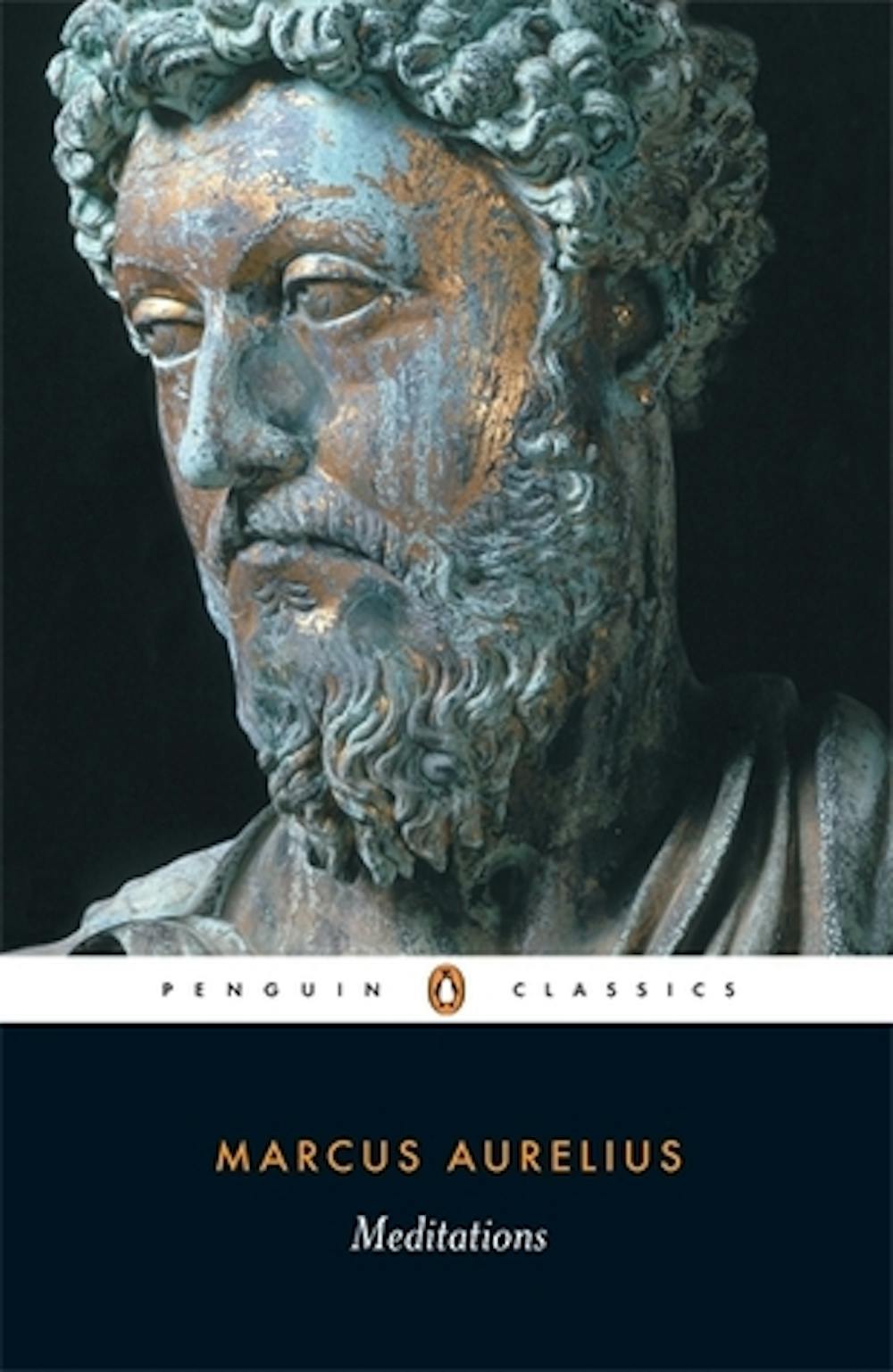
It was during this period that the philosopher king penned a series of “notes to himself”. Unpublished during his lifetime and found untitled with his mortal remains, this work has come to be called his Meditations.
Described by philosopher and biblical scholar Ernst Renan as “a gospel for those who do not believe in the supernatural,” the Meditations is a series of fragments, aphorisms, arguments, and injunctions. They were written at different moments in the final years of Marcus’ life.
As its opening book makes clear, Marcus had been converted to the philosophy of Stoicism at a young age. Like its great ancient competitor Epicureanism, Stoicism was more than a set of doctrines explaining the world and human nature.
Stoicism also demanded from its students a transformed attitude to life. Many Stoic texts prescribe practical exercises to reshape how a person responds to adversity and prosperity, insults, illness, old age, and mortality.
This practical dimension to Stoic philosophy underlies its extraordinary global rebirth in the new millennium, even before COVID-19. So, what can Marcus Aurelius’ Meditations tell us today, in our time of pandemic?
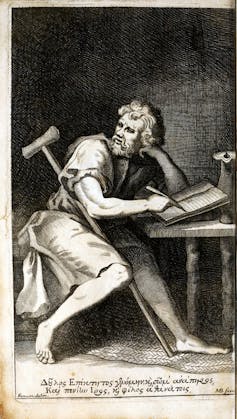
The Meditations comprises over 400 fragments, divided into 12 books. These disparate fragments are shaped by a few core philosophical principles. At the basis of these principles is the fundamental Stoic distinction expressed most clearly by the emancipated slave turned philosopher, Epictetus, whom Marcus greatly admired: that some things depend upon us and others do not.
Epictetus, the crippled slave who became one of Rome’s leading Stoic philosophers. Wikimedia Commons
In fact, of all the things in the world, we can only directly control what we do, think, choose, desire, and fear.
Everything else, including everything our society tells us that we need to “get a life” – riches, property, fame, promotions – depends on others and on fortune. It is here today and gone tomorrow, and it is usually distributed unfairly.
So to pin our dreams on achieving such things makes our happiness and peace of mind a highly uncertain prospect.
The Stoics propose that what they call “virtue” is the only good. And this virtue consists above all in knowing how best to respond to the things that befall us, rather than fretting about things we cannot control.
For Marcus, all those “goods” that markets trade, and our contemporary advertisements hawk, are “indifferent”. It is what you do with the pleasurable things, and with the difficulties you face, that shapes how happy or unhappy you will be.
It is almost as if Stoicism asks of us a kind of “virtual lockdown”, anticipating the actual one some of us are currently experiencing. The inability to go swimming, or to the football, gym, or movies, is for the Stoic regrettable. But it isn’t devastating. For s/he has weighed such preferable external things at their relative value.
“Wherever it is possible to live, it is possible to live well”, Marcus affirms.
None of us chose the pandemic. But each of us can strive to exercise courage in facing it, generosity in helping others, and resilience before the challenges it presents.
‘Only the present’
“Things do not touch the soul,” Marcus writes: “our perturbations come only from the opinion which is within”. And our opinions can, with hard work, be reformed. For they depend upon us.
This is the Stoic “good news”. Pandemics, bullies, and mischances really can rob us of our money, our jobs, our reputations. If they are malign enough, they affect our physical health. But they cannot change our minds. They cannot make us commit evil actions. They are powerless to even compel us to think resentful or hateful things about our fellows.
If it becomes clear, for instance, that someone has back-stabbed you, Marcus advises:
Pronounce no more to yourself, beyond what the appearances directly declare. It is said to you that someone has spoken ill of you. This alone is told you, and not that you are hurt by it.
If what your insulter has said is true, then change. If what they have said is false, it does not merit your being upset by it. If they have betrayed your trust, the shame and the fault lies with them.
“The best revenge,” Marcus counsels, “is not to become like the wrongdoer”.
Yes, we might reply, but what about truly enormous situations like COVID-19, or the end of a life-shaping relationship, or the illnesses of loved ones?
The Stoic principle of focusing only on what depends upon us operates here too. Worries carry our minds away into the future. Unless we watch ourselves, we can quickly find ourselves imagining the worst – the death of friends and family, a second great depression, the end of a career …
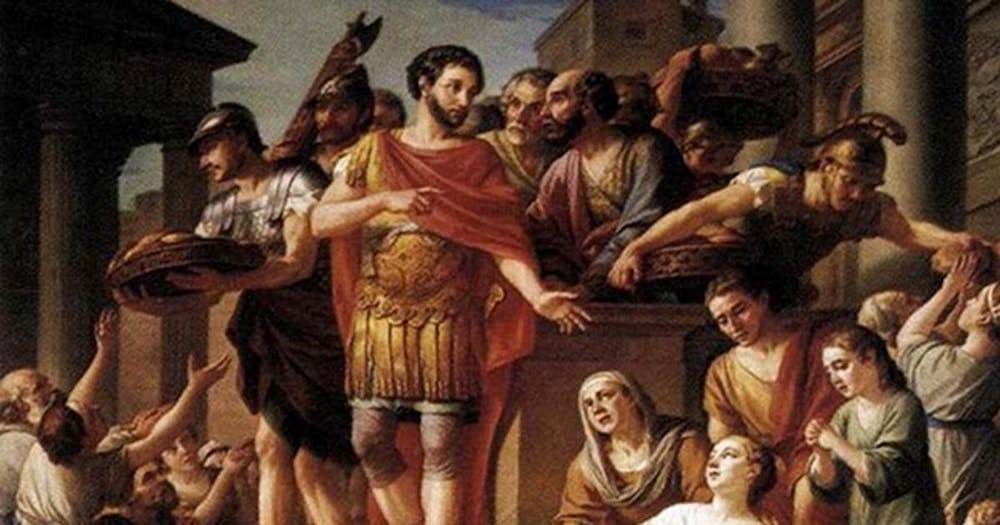
Marcus Aurelius Distributing Bread To the People, by Joseph-Marie Vien (1765). Wikimedia Commons
All of these things may come to pass. Or they may not. But, just now, we cannot immediately avert them. What depends on us right now, always, is what we think and do. And there is, for the Stoic, a comfort in this. As Marcus reminds himself:
Do not disturb yourself by thinking of your whole life. Don’t let your thoughts all at once embrace all the various troubles which may … befall you: but on every occasion ask yourself: What is there in this which is intolerable and past bearing? For you will be ashamed to confess. Next, remember that neither the future nor the past pains you, but only the present.
The parallels between this attitude and other spiritual traditions, notably Buddhism, are clear. For Marcus, the inner life of the wise person will be as serene as an open sky, even under fire.
He is content with two things: to accomplish the present action with justice, and to love the fate which has been allotted to him, here and now.
Does this mean then, that we should just accept the worst, rather than struggling to prevent it?
No: we each have a small range of things we can do and influence at any time. We can increase our understanding, start new initiatives, form or join groups, advocate and persuade others to the best of our powers.
But Marcus asks us also to recognise this: however great and urgent the causes we take up, any positive change will always consist of a lot of small decisions, each taken in the present moment.
And each of these decisions is more likely to be efficacious if we can calmly and clearly assess what is possible, rather than giving way to anxiety, fear, hatred or despair.
A soul’s secrets
Unlike much philosophy, the meditations of Marcus are mostly easy to grasp. The philosopher-emperor writes beautifully, with an honesty that can be affecting.
The difficulty lies in really applying these simple, often striking ideas to our lives.
It is (alas) somewhat easier to see why it is right to serenely bear misfortunes and forbear others’ flaws; to remember that “we are made for cooperation, like feet, like hands, like eyelids”; and not to fear death but embrace life in full awareness of one’s mortality, than to do these things in the heat of the moment.
This is why the traditional title, Meditations, is telling.
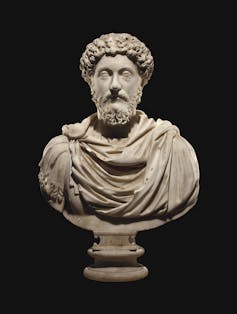
Roman bust of Marcus Aurelius. Wikimedia Commons
Readers who go to this classic expecting an ordered, linear philosophical argument will be quickly disillusioned. There are many repetitions and seeming hesitations. Many key Stoic ideas, and Marcus’ own preoccupations (for instance, with how to respond to schemers, and accept his own death) return multiple times. He reformulates his ideas in new ways, striving to find their most compelling expression.
Indeed the Meditations, as scholar Pierre Hadot has argued, need to be seen as an exemplar of a particular Stoic exercise, explicitly prescribed by Epictetus. This involved writing key precepts down as a means to later recall them and to deeply internalise them as philosophical aids to call upon at need.
All this makes the Meditations the singular classic that it is. Or, in Hadot’s moving words:
In world literature one finds lots of preachers, lesson-givers, and censors, who moralise to others with complacency, irony, cynicism, or bitterness; but it is extremely rare to find a person training himself to live and to think like a human being …
We feel “a highly particular emotion”, Hadot continues, as we witness Marcus trying, as we each do, “to live in complete consciousness and lucidity; to give each of our instants its fullest intensity; and to give meaning to our entire life”.
“Marcus is talking to himself”, Hadot observes, “but we get the impression that he is talking to each one of us”.
In this time of pandemic, our authors nominate a work they turn to for solace or perspective.
Why do bad things happen to good people? It is a question that seems particularly pertinent during times of pandemic. Disease is no respecter of virtue. It is just as likely to strike down saint as sinner. Yet even in more normal times, this is a problem we confront with depressing regularity. All too easily one thinks of lives cut too short, of acts of kindness and generosity that go unrewarded. The world can be a cold and bleak place. Why does this happen?
Every culture develops its own answer to this question. For the Greeks and Romans, their solution was that tragedy occurred because the gods were at best indifferent to mankind, at worst downright cruel.
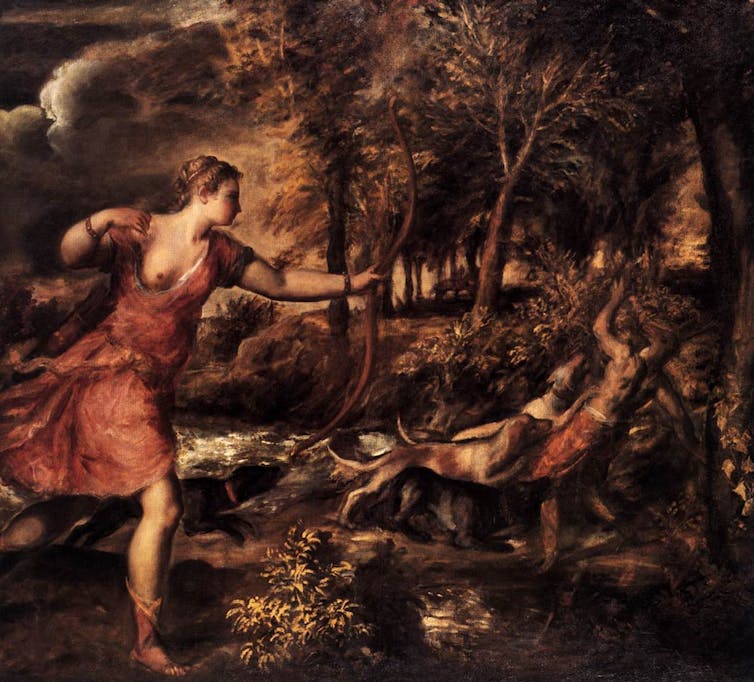
When I’m feeling my most pessimistic, I often think of this world view and, in particular, one story that the Greeks told. It is a story perfectly captured in one of treasures of the National Gallery in London, Titian’s The Death of Actaeon.
The story of Actaeon was one of the most popular of Greco-Roman myths. Its most famous retelling was undertaken by the Roman poet Ovid in his epic Metamorphoses. Titian had little Latin, so he almost certainly read about the myth in one of the many translations and abridged versions of Ovid that circulated in the 16th century.
It is a myth that shows well the sadism of the gods. Actaeon committed no crime. It was only an unfortunate coincidence that, one day while hunting, he happened to stumble across the goddess Diana (Greek: Artemis) as she and her retinue of nymphs were bathing in a forest pool.
Diana, who prized her virginity above all else, did not take kindly to being caught naked by this stranger and so she organised a terrible punishment. With a wave of her hand, she transformed Actaeon into a stag. The hunter now became the prey. To magnify the cruelty, Actaeon was still fully conscious, a man trapped in the body of a beast. Tears trickled down his now furry cheeks.
Instantly, Actaeon realised his danger. He had arrived with his pack of hunting dogs and they wasted no time turning upon their former master. The hounds seized his legs and dragged him to the ground. Their jaws bit deep into the shoulder, back, and throat. Actaeon died in agony torn apart by animals he had raised with such devotion.
The Death of Actaeon depicts a world of unfair savagery. Wikimedia Commons
Titian’s version of this tale shows the final moments of Actaeon’s life. It is an extraordinary painting from the end of Titian’s career. Most paintings of this story prefer to focus on the moment when Actaeon encounters the bathing Diana. Unable to resist the voyeuristic potential of the scene, they indulge in a riot of naked female flesh.
There is an earlier Titian of precisely this moment which he painted for Philip II of Spain. Yet in The Death of Actaeon the voyeurism is limited to one exposed nipple, a visual allusion to Actaeon’s crime. Diana dominates the foreground, but the line of her arm draws the viewer’s eye to the figures on the right of the painting. Here we see Actaeon caught in mid-transformation. He still retains his human form, but his head is now that of a stag.
This is enough for the hounds, who have overwhelmed Actaeon. Man, deer, and dogs merge into one muddy, muddled heap, a confusion of forms so jumbled that many have wondered if the painting is actually finished – but in its commotion it perfectly captures the vicious vitality of the act. Against this chaos, Diana stands off to the side ready to administer the coup de grâce, the only form of kindness she is prepared to give.
How could the Greeks and Romans bear to live in a world in which such unfair savagery received divine approval?
Unpredictable forces
The death of Actaeon is emblematic of so much injustice. The ancient Greeks and Romans may not have really had to worry about the correct etiquette for dealing with naked divinities, but they did need to worry about equally unpredictable forces. Theirs was a world stalked by famine, disease, war, and natural disaster.
Yet, it was in facing up to the capriciousness of fate that the ancients found meaning in the world. When Ovid introduces the story of Actaeon, he reminds his readers that no man should be regarded happy until he is dead. The treasures that we possess today can all too quickly and easily be taken away tomorrow. In this we see the true value of Actaeon’s story.
The lesson is not that the world is cruel, but rather that the gifts that we possess need to be cherished for the hard-won, against-the-odds, bounties that they are. It is the absences and deprivations that give value to our lives.
Only the person who has been hungry can truly know what it is to be full. The child born into wealth will never appreciate the riches that they enjoy.
Disasters are inevitable. They should not make us give up on life, but rather we should celebrate the preciousness of that life all the more. To do otherwise is to let the gods and Fate win, to let them turn us into beasts.
Why are there so few women at the top levels of politics?
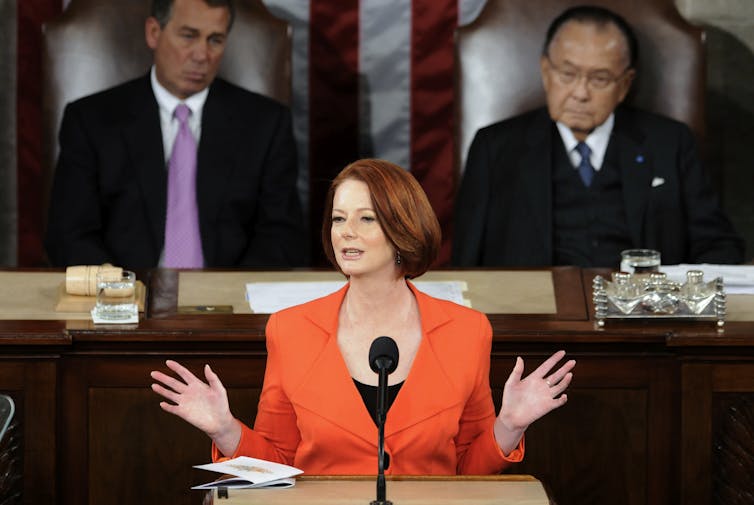
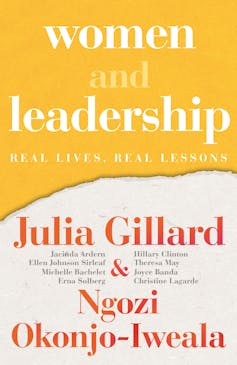
This question is at the centre of the new book, Women and Leadership, co-authored by Australia’s first woman prime minister, Julia Gillard, and former Nigerian finance minister, Ngozi Okonjo-Iweala.
Using their personal experiences and interviews with an impressive group of eight women leaders – including Theresa May, Hillary Clinton, Jacinda Ardern and Christine Lagarde – Gillard and Okonjo-Iweala test various academic studies to see if their findings are reflected in reality.
What results is both a sobering reminder that sexism isn’t going away anytime soon and an empowering message about women’s strength and resilience.
As an academic researching women’s political leadership, this book acts as a crucial point between scholarly studies and public debate. It also offers a fresh perspective of the many issues women in leadership face.
Here are four key messages:
1. The fashion police are everywhere
Gillard and Okonjo-Iweala find women leaders are heavily judged for their appearance. This was a problem faced by all leaders interviewed, despite their diverse experiences and locations.
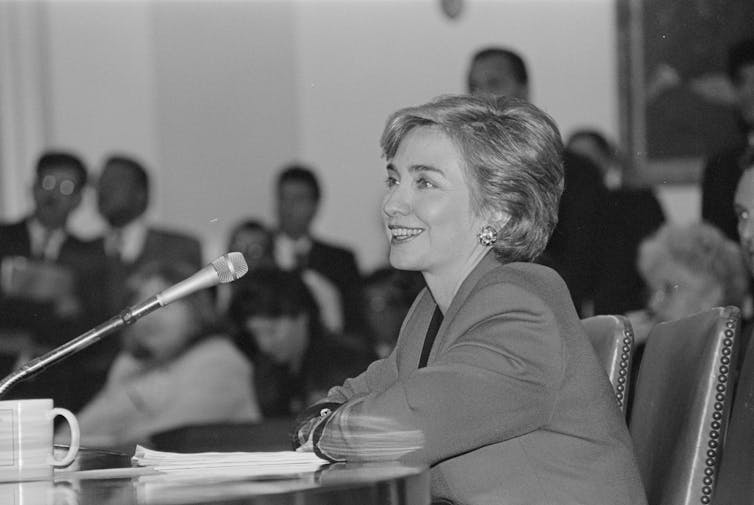
However, there were still differences across the world. Clinton, a former US presidential candidate and secretary of state, was known for her pant suits – which she said helped her feel professional and “fit in”. But former Liberian president Ellen Johnson Sirleaf noted how she “would have got some eyes as a woman wearing pant suits” and traditional dress worked best for her.
Hillary Clinton has said her pantsuits made her feel ‘ready to go’. David Moir/AAP
There can also be power in clothing. For example, New Zealand’s Ardern was seen to show compassion, empathy and solidarity when she wore a hijab after the Christchurch terrorist attack. As Gillard and Okonjo-Iweala write,
it became a symbol of love in the face of hate. There was a transcendent power in appearance.
2. Prepare to be judged for your reproductive choices
The book also explores how women leaders are judged for their reproductive choices. While fatherhood increases perceptions of male leaders as affable, relatable and conventional, public motherhood is a far more problematic experience.
As the authors note, women leaders with young children are frequently asked, “who’s minding the kids?”
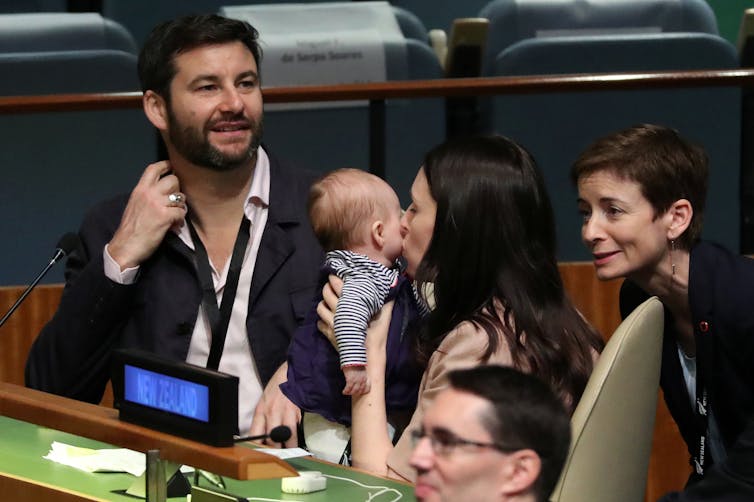
Seven hours after her election, Ardern was asked on national television about her plans for having children. When she had her daughter, there was intense media scrutiny about how she would juggle her leadership role and her baby. Yet male leaders, such as former UK prime minister Tony Blair, who welcome babies in office, are not questioned about who will be looking after them.
Jacinda Ardern has taken her daughter Neve to the UN General Assembly. Carlo Allegri/ AAP
And what about women leaders who don’t have children? Gillard is intrigued by the respectful treatment of former British prime minister May’s childlessness, as she had a polar opposite experience in Australia (who could forget the frenzy sparked by her empty fruit bowl).
Gillard makes a thought-provoking point here about choice. May wanted, but was unable, to have children, while Gillard was deliberately child-free. Perhaps this was the cause of the criticism she faced. As Gillard writes,
in being seen to offend against female stereotypes, is there anything bigger than not becoming a mother by choice?
3. The situation is not getting better
The book makes the point that despite the focus on women in politics, the experience for those at the top is not necessarily improving.
As someone whose research found media reaction to May in 2016 was more gendered than for Margaret Thatcher in 1979, I wasn’t shocked to read this. However, it was still surprising to learn that Michelle Bachelet – Chile’s president from 2006-10 and 2014-18 – noticed things were worse in her second term.
Initially assuming the pressure of gendered expectations had improved the second time around, Bachelet realised,
it was the same or worse. I think politics is getting more complicated these days and more vicious. There is less respect. It’s more personalised now.
All leaders interviewed said they were conscious of the difficulties of finding a balance in leadership style. If they were too strong or assertive, they could be seen as “cold”, “robotic” or “bitchy”.
4. ‘Be aware, not beware’
The experiences and advice of these eight high-profile women leaders reveal how sexism is par for the course.
This message is hammered home in the final chapter, in which Gillard and Okonjo-Iweala note “Be aware, not beware”. They argue that they want to inspire women to pursue politics and leadership roles, but glossing over the challenges would be dishonest and insulting.
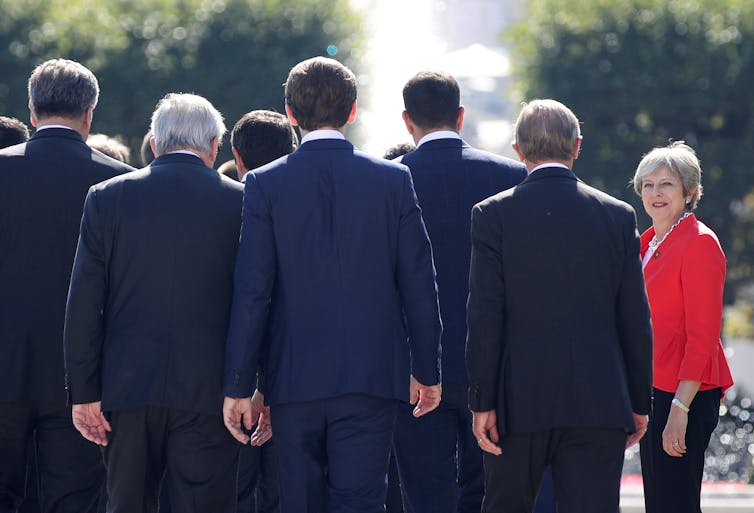
Gillard and Okonjo-Iweala say women leaders should expect sexist commentary. Lisi Niesner/AAP
Summarising the insights gleaned from previous chapters, Gillard and Okonjo-Iweala offer some stand-out lessons that will aid aspiring women leaders. These include:
expect sexism and sexist commentary relating to your appearance, family and leadership style and figure out early on how you will respond to this
support other women, whether through network-building, mentoring, role-modelling or general solidarity
persevere.
A reality check
Women and Leadership is, at times, a depressing reality check that feminism still has a long way to go. However, readers should not come away from this feeling hopeless or disheartened.
Rather, they can appreciate the respect the authors have given them by speaking plainly about the realities women leaders face.
Perhaps more consideration could have been given to the experiences of women in less senior positions. Do we need to hear from the success stories when we talk about the struggles of women in leadership, or could we perhaps also learn from those whose glass ceilings were just too thick?
While this book might be less useful for women – and men – without leadership aspirations, its general analysis of gender stereotypes and double standards still makes it a worthwhile read.
This is also problem that women cannot fix alone. Men need to do their bit, by calling out sexism and supporting women. The media must also be more active in combating sexism and misogyny.
One enduring message of this book is that progress and equality are not linear.
Sexism doesn’t just one day magically disappear. Rather, it can only be dismantled through constant pressure and the actions of those who persevere.
Curtis Sittenfeld has a knack of putting her readers in uncomfortable places in her fiction. In her short story Gender Studies she puts you in the middle of a hotel tryst between a Clinton-supporting professor and a Trump-supporting shuttle bus driver. In The Nominee, a journalist vomits on Hillary Rodham Clinton.
In Rodham, Sittenfeld returns to the former First Lady, but with a twist. An imagined memoir, Rodham is propelled by a “what if” thought experiment: what if, in 1975, Hillary left Bill?
It is an alternative reality page turner, and a welcome escapist read in these difficult times.
But how does the book play with the historical record?
Year of the Woman
Sittenfeld’s first turning point in Hillary’s political career is while she watches the 1991 Clarence Thomas Senate confirmation hearings from her colleague’s office at Northwestern University.
In both the true and imagined histories — despite clear evidence Thomas had sexually harassed his former employee Anita Hill — a predominantly male Senate confirmed Thomas’s appointment.
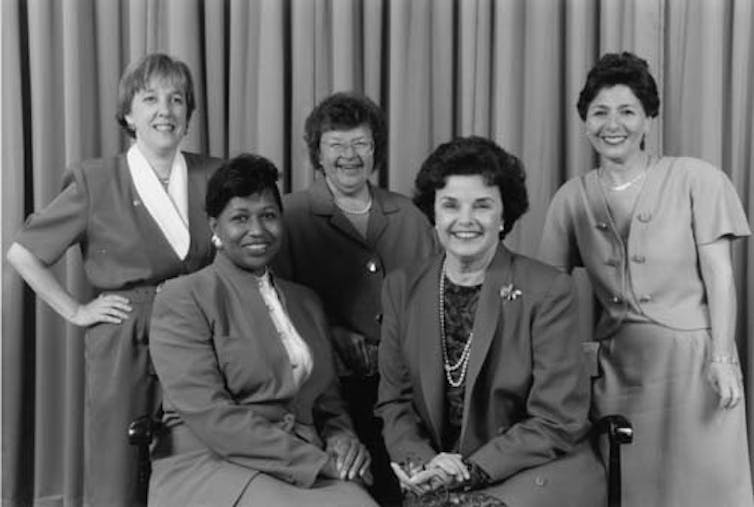
The backlash against these widely watched hearings led to 1992 being dubbed the “Year of the Woman” when a record number of women ran and were elected to the US Congress.
The Senate Democratic women in 1993, Carol Moseley-Braun is second from right. In Rodham, Hillary takes Braun’s place. Wikimedia Commons
In the novel, Hillary runs and defeats Carol Moseley Braun in the Democrat primary. In real life, Braun won this race to become the first ever black female Senator.
I have watched the real interview with Hillary many times with my students. Questioned about Bill’s alleged affair with Gennifer Flowers, the interview was a watershed moment in the changing attitude of the media towards politicians’ sex lives.
The interview is tough to first watch: why should any couple’s most private affairs be discussed on television like this? What good does it serve?
On re-watching the interview, I am struck by the effective way in which Bill and Hillary talk down the interviewer and control the narrative. Hillary particularly does this with her famous statement:
I’m not sitting here, some little woman standing by my man like Tammy Wynette. I’m sitting here because I love him, and I respect him, and I honour what he’s been through and what we’ve been through together. And you know, if that’s not enough for people, then heck — don’t vote for him.
In Sittenfeld’s imagined interview, Bill’s publicity-shy wife, Sarah Grace, breaks down and cries, effectively ending Bill’s run for presidency.
Sexism in politics
Rodham does an excellent job at detailing the many forms of sexism women face in academia and politics. In the first part of the novel, Professor Rodham is a successful law academic whose male students and colleagues say things they would never say to male academics.
Such double standards are also highlighted by the fictional Hillary once she enters politics as a Senator for Illinois. She laments:
The extra time female politicians were expected to spend on our appearance, known as the pink tax, amounted to an hour a day for me, but I’d learned the hard way that this was necessary. In the past, whenever I didn’t have my hair and makeup professionally done, the media would speculate about whether I was ill or exhausted.
In a delicious plot line, Bill and Hillary end up competing against each other in the 2016 Presidential primaries which leads Hillary to ask: “You know when true equality will be achieved? When a woman with these kinds of skeletons in her closet has the nerve to run for the office.”
Truths and half-truths
The novel draws on the rumours published in Vanity Fair and elsewhere of Bill Clinton’s affairs and involvement in sex parties, as well as discussing the long-standing allegation he raped a female campaign volunteer in the 1970s.
In the novel Hillary’s long-time mentor Gwen Greenberger, an African American children’s right advocate, is stand-in for a few significant figures in Hillary’s actual life, including the very impressive Marian Wright Edelman, the founder of the Children’s Defense Fund.
The novel also features James, a stand in character for Hillary Clinton’s friend and fellow partner at the Rose Law Firm in Arkansas, Vince Foster, who died by suicide leading to conspiracy theories against the Clintons.
An appeal to experience
Throughout Rodham, Sittenfeld dissects the question of Hillary’s “likeability” by the press and the American people. In a killer debate response (that I wish she had given in 2016) she says:
[I]f you want someone to look out for the interests of the American people, for your family, for you – someone who understands the economy and education and health care and foreign policy … then vote for me.
In the real election in 2016, too many Americans ignored this appeal to experience and competence and tragically they have ended up with a president that cares little about governing or even the rising death toll of his own people.
The truth has turned out to be more unbelievable than Sittenfeld’s fiction.











 At the BookShelf
You must be logged in to post a comment.