
The link below is to a book review of ‘The Cuckoo’s Calling,’ by Robert Galbraith, who we now know is J.K. Rowling.
For more visit:
http://www.guardian.co.uk/books/2013/jul/18/cuckoos-calling-robert-galbraith-jk-rowling-review

The link below is to a book review of ‘The Cuckoo’s Calling,’ by Robert Galbraith, who we now know is J.K. Rowling.
For more visit:
http://www.guardian.co.uk/books/2013/jul/18/cuckoos-calling-robert-galbraith-jk-rowling-review
The link below is to a book review (not strictly a book review) on ‘C.S. Lewis – A Life,’ by Alister McGrath.
For more visit:
http://www.credomag.com/2013/07/15/c-s-lewis-a-life-qa-with-alister-mcgrath/
The link below is to a book review/author interview of the new cricketing book, ‘The Great Tamasha: Cricket, Corruption and the Spectacular Rise of Modern Indian,’ by James Astill.
For more visit:
http://www.npr.org/2013/07/13/200731984/how-cricket-mirrors-indian-society-for-better-and-for-worse
The link below is to a book review of ‘Is This Tomorrow,’ by Caroline Leavitt.
The link below is to a book review of ‘Lexicon,’ by Max Barry.
For more visit:
http://www.dallasnews.com/entertainment/books/20130622-book-review-lexicon-by-max-barry.ece
The link below is to a book review of ‘The Lost Diggers,’ by Ross Coulthart.
For more visit:
http://www.insidehistory.com.au/2013/07/review-the-lost-diggers-by-ross-coulthart/
The link below is to a book review of ‘Undercover – The True Story of Britain’s Secret Police,’ by Paul Lewis and Rob Evans.
For more visit:
http://www.guardian.co.uk/books/2013/jul/04/undercover-britain-secret-police
The link below is to a book review of ‘Alexandria – The Last Nights of Cleopatra,’ by Peter Stothard.
For more visit:
http://www.guardian.co.uk/books/2013/jul/05/alexandria-last-nights-stothard-review
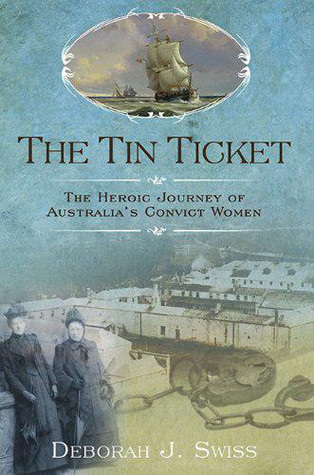
Chapter 10: Bendigo’s Gold
Bendigo’s Gold is the story of the families now being followed in The Tin Ticket as they move toward the gold rush in the gold fields of Victoria. It provides a short, almost rushed account, of life for those heading off to make their fortune in the gold fields. As always, an insight into this period is provided, right down to various incidentals of what life was like for these prospectors. There was the very real prospect of being robbed, both by bushrangers on the roads leading to the gold fields and the inspectors on the gold fields. Life was a difficult prospect for most during the gold rushes and especially so for those with young families.
Included in this chapter is an account of events leading up to the rebellion that has come down to us in history as the Eureka Stockade, which began as the fight for miners rights and finished with that bloody battle and the crushing of the miners rebellion.
There are further brief descriptions of what the lives of each of the three women and their descendants brought for them. The narrative though is quickly brought to a conclusion toward the end of chapter 10 and there is a sense that more could have been told regarding the stories of these remarkable women and their thirst for freedom in the Australian bush.
Chapter 10 is essentially the end of the book proper, though there are a number of appendixes following the end of this chapter. Overall, I think the book tends to be a bit rushed in sections, though well written. I have a bit of a thing for detail and appreciate more thorough investigations within nonfiction works, yet still found this book to be a very valuable contribution to the written history of early colonial Australia. I would highly recommend The Tin Ticket to anyone with an interest in Australian history and our convict past.
I think I would give it somewhere between a 3.5 and 4 out of 5 as a rating.
Buy this book at Amazon:
http://www.amazon.com/gp/product/B0043RSIWI/
Chapter 9: Flames of Love
‘Flames of Love’ begins a new chapter of life and love for each of the three main women characters and convicts of the book. Each of the three women – Agnes McMillan, Janet Houston and Ludlow Tedder – are now free and each fall in love and marry as they start new lives in Van Dieman’s Land. The narrative presents the reader with a different picture from that which has gone before. Prior to chapter 9 the stories for all three women were dominated by affliction and sadness, now there is joy and great hope. There is a measure of sadness though in the realisation that these firm friends will not see each other again, as they each go about living their new lives.
Interwoven into the narrative of the three women and the new lives that each are now pursuing, are the winds of change in Van Dieman’s Land and indeed Australia as a whole. That dreadful punishment of transportation is coming to an end and the process of how that came about in Van Dieman’s Land and the long enduring consequences of transportation on the colony are highlighted throughout the chapter.
Also of great interest in this chapter are the stories of the men that have entered the lives of each of the three women, providing further insight into the lives of those living in this period of Tasmania’s and Australia’s development and growth. Australia does present itself as a far more attractive prospect for all three women and their partners than Britain ever did. There are still many horrific experiences in the everyday happenings of colonial Van Dieman’s Land which play a role in the lives of The Tin Ticket’s main characters – bushrangers, the wholesale extermination of Aboriginal people, etc.
Buy this book at Amazon:
http://www.amazon.com/gp/product/B0043RSIWI/


You must be logged in to post a comment.