Unknown's avatar

Guide to the Classics: The Secret Garden and the healing power of nature


StudioCanal

Emma Hayes, Deakin University

Frances Hodgson Burnett’s The Secret Garden has been described as “the most significant children’s book of the 20th century.”

First published in 1911, after being serialised in The American Magazine, it was dismissed by one critic at the time as simple and lacking “plenty of excitement”. The novel is, in fact, a sensitive and complex story, which explores how a relationship with nature can foster our emotional and physical well-being. It also reveals anxieties about national identity at a time of the British Empire, drawing on ideas of Christian Science.

The Secret Garden has been read by generations, remains a fixture on children’s publishing lists today and has inspired several film versions. A new film, starring Colin Firth, Dixie Egerickx and Amir Wilson, updates the story in some ways for modern audiences.
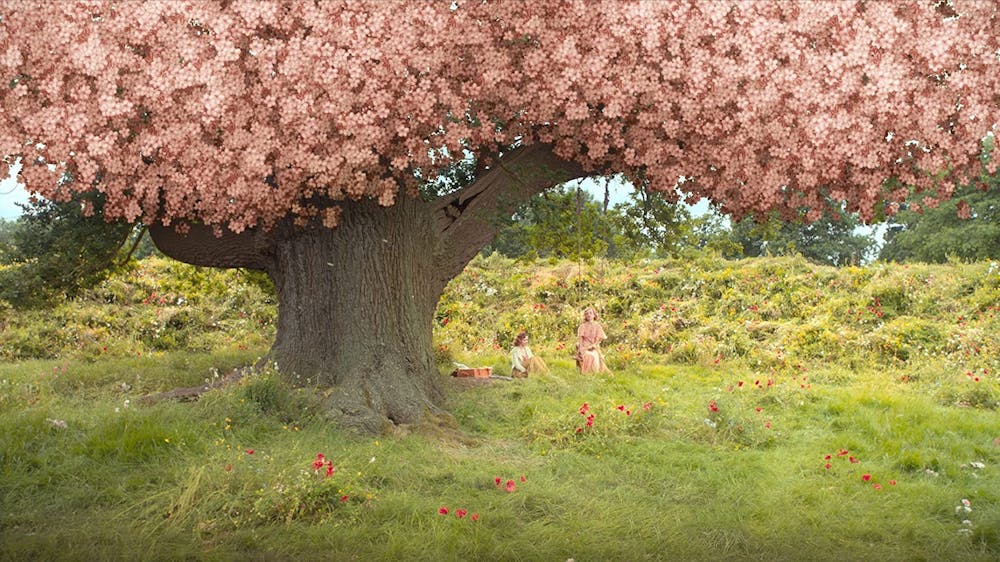
2020 movie still, a tree covered in pink flowers
A scene from the new movie version of the book.
Studiocanal

The book opens as nine-year-old Mary Lennox is discovered abandoned in an Indian bungalow following her parents’ deaths during a cholera outbreak. Burnett depicts India as a site of permissive behaviour, illness and lassitude:

[Mary’s] hair was yellow, and her face was yellow because she had been born in India and had always been ill in one way or another.

Mary is “disagreeable”, “contrary”, “selfish” and “cross”. She makes futile attempts at gardening, planting hibiscus blossoms into mounds of earth. The Ayah tasked with caring for Mary and the other “native servants … always obeyed Mary and gave her her own way in everything.”

On the death of her parents, Mary is sent to live with her reclusive uncle Archibald Craven at Misselthwaite Manor in Yorkshire.

Mary’s arrival in England proves a shock. The “blunt frankness” of the Yorkshire servants – in contrast to those in India – checks her behaviour. Martha Sowerby, an outspoken young housemaid, presents Mary with a skipping rope: Yorkshire good sense triumphing over Mary’s imperial malaise.

Also in the manor is Colin, her 10-year-old cousin. Hidden from Mary, she discovers him after hearing his cries at night.

Colin is unable to walk and believes he will not live to reach adulthood. Sequestered in his bedroom, Colin terrorises his servants with his tantrums: he performs “hysterics” in the model of Gothic femininity.


Read more:
The Yellow Wallpaper: a 19th-century short story of nervous exhaustion and the perils of women’s ‘rest cures’


Transformation

Perhaps the most famous image associated with Burnett’s text is the locked door leading to the eponymous garden.
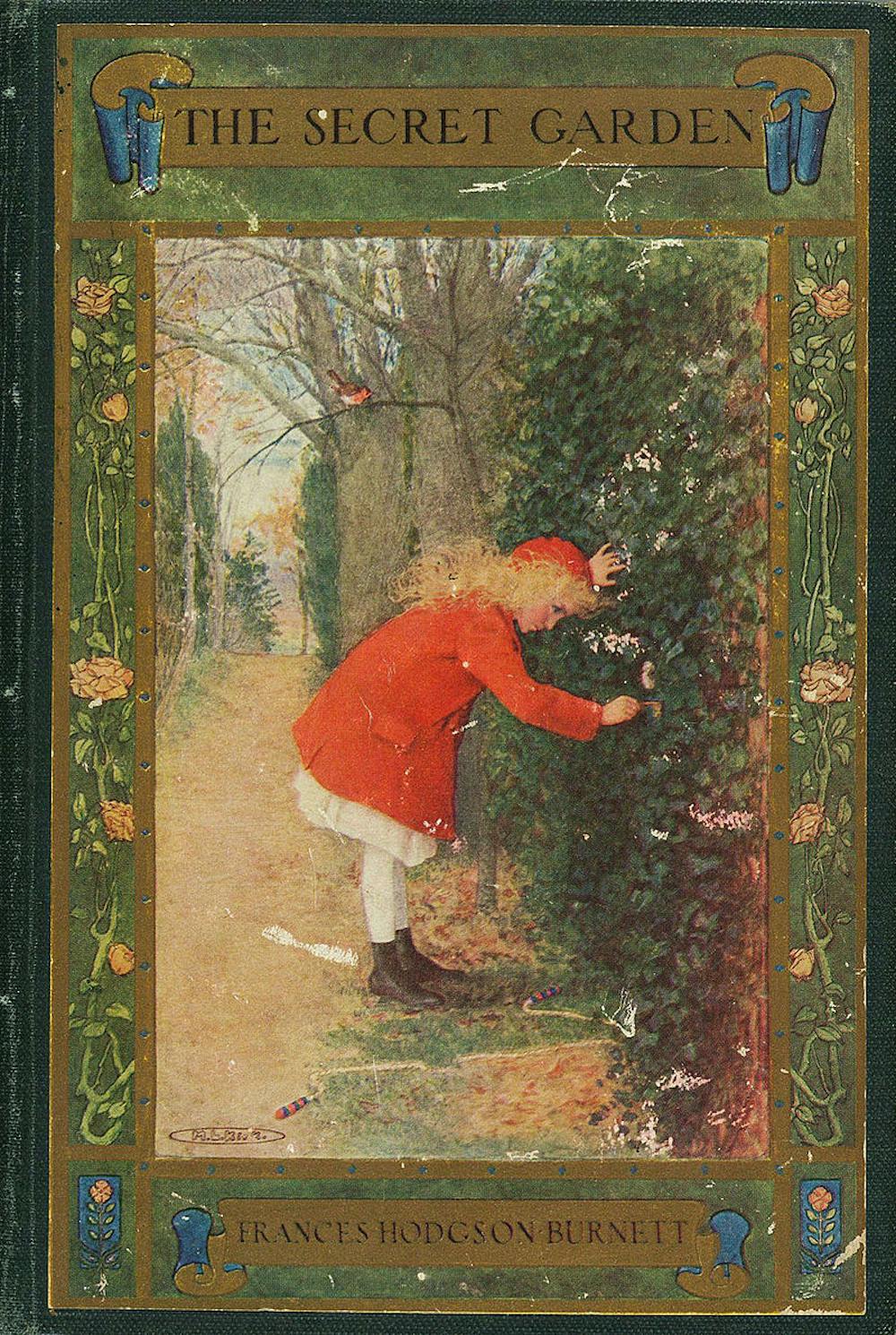
The first edition of The Secret Garden, published in 1911.
Houghton Library, Harvard University

This walled garden had formerly belonged to Colin’s mother, Lilias Craven. When she died after an accident in the garden, her husband, Archibald, locked the door and buried the key.

After Mary unearths the key, she begins to work in this mysterious, overgrown garden along with Martha’s brother, Dickon. Eventually, she manages to draw Colin out of his room with the help of Dickon, and the garden helps him to recover his strength.

Burnett draws upon the cultural connection between childhood and nature, highlighting Edwardian beliefs about the importance of the garden. Like other Edwardian texts, such as Kenneth Grahame’s The Wind in the Willows (1908) and J. M. Barrie’s Peter Pan in Kensington Gardens (1906), The Secret Garden also explores an English turn-of-the-century interest in paganism and the occult, expressed through the book’s fascination with the Greek god Pan.

Dickon, who shares an affinity with animals and the natural world, is first introduced as he sits under a tree “playing on a rough wooden pipe” reminiscent of Pan’s flute.
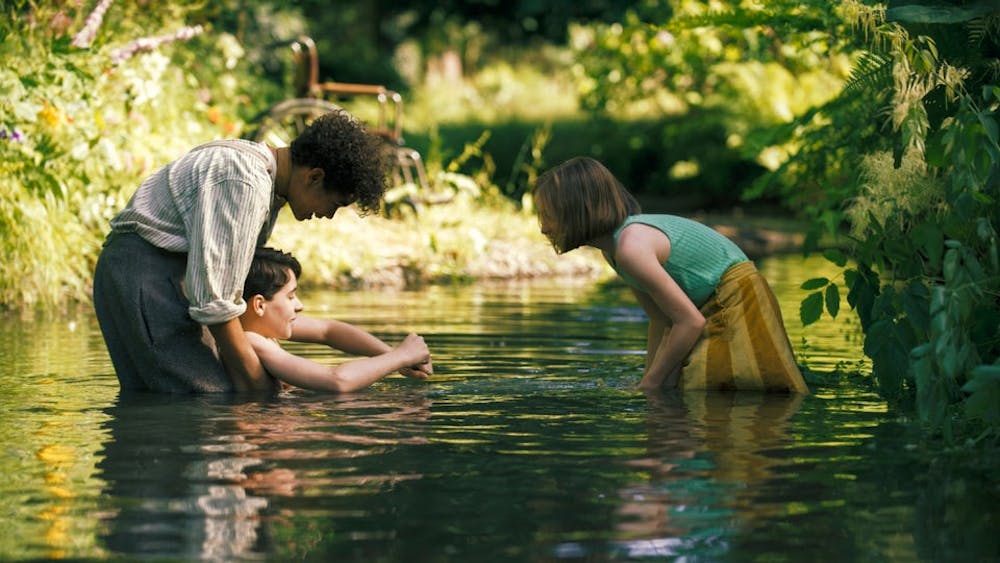
Dickon and Mary bathe Colin in a stream.
The garden becomes a space of rejuvenation for the children.
IMDB/Studiocanal

Mary and Colin are both physically and psychically transformed through working in the garden. The stifling rooms and constricting passages of Misselthwaite Manor are contrasted to the freedom of the secret garden.

At first it seemed that green things would never cease pushing their way through the earth, in the grass, in the beds, even in the crevices of the walls. Then the green things began to show buds and the buds began to unfurl and show colour, every shade of blue, every shade of purple, every tint and hue of crimson.


Read more:
B&Bs for birds and bees: transform your garden or balcony into a wildlife haven


The children are healed by gardening in the “fresh wind from the moor”. Both gain weight and strength and lose their pallor. Colin’s gardening suggests mastery of the space as he plants a rose – the floral emblem of England.

Mary is subordinated as Colin’s healing becomes the text’s main focus; Colin gains the ability to walk and – importantly – to win a race against her.
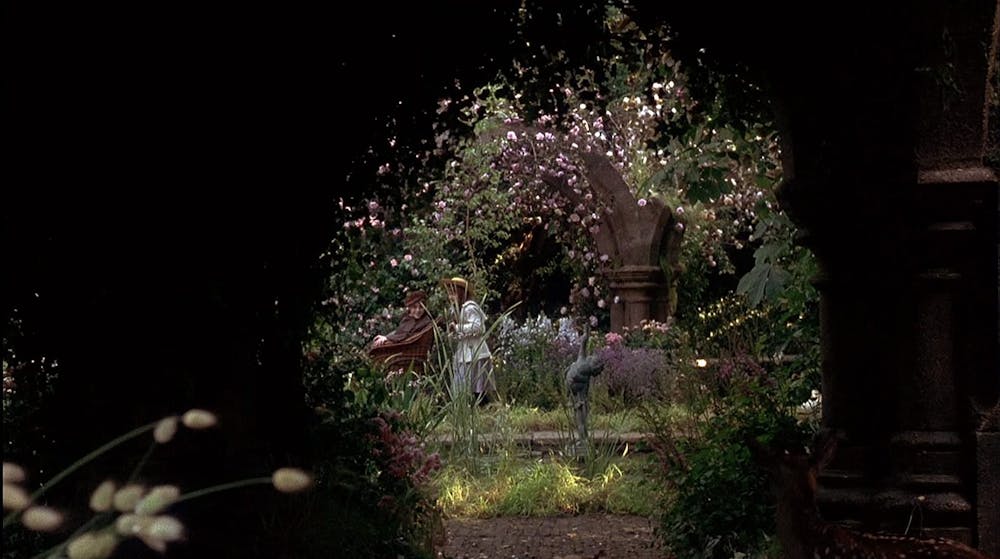
Movie still from 1993, children play in the garden
By interacting with nature, the children grow in strength and in heart.
Warner Bros

‘Just mere thoughts’

The Secret Garden emphasises the power of positive thinking: “thoughts – just mere thoughts – are as powerful as electric batteries – as good for one as sunlight is, or as bad for one as poison”.

This focus on the power of positive thoughts highlights Burnett’s interest in New Thought and Christian Science. New Thought teaches that people can enhance their lives by altering their thought patterns. It was developed by Phineas Parkhurst Quimby in the 19th century, and one of Quimby’s students was Mary Baker Eddy, the founder of Christian Science. While Burnett did not join either religion, she acknowledged that they influenced her work. Both religions often reject mainstream medicine.


Read more:
Why you should know about the New Thought movement
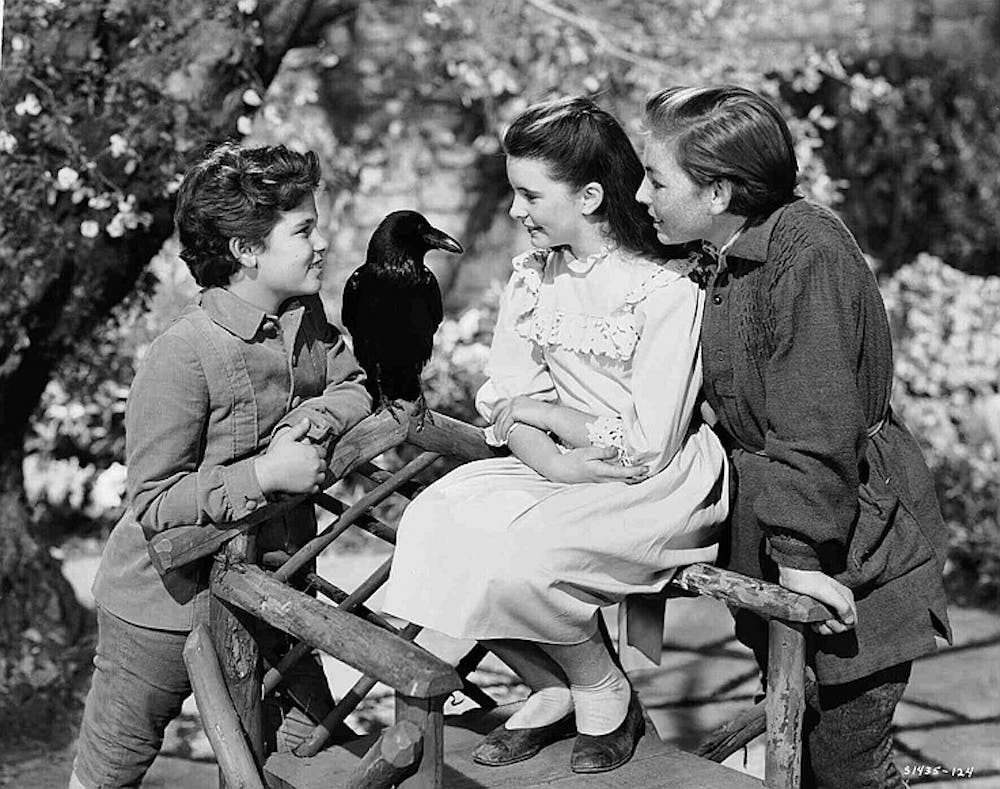

1949 movie still
The garden, seen here in the 1949 movie, captures the New Thought ideals of the healing power of thoughts.
IMDB/MGM

Belief in the healing power of thoughts is reflected as Colin chants about the “magic” of the garden.

The sun is shining – the sun is shining. That is the Magic. The flowers are growing – the roots are stirring. That is the Magic. Being alive is the Magic – being strong is the Magic. The Magic is in me… It’s in every one of us.

The Secret Garden today

Written in a time of British imperial expansion, The Secret Garden’s anxieties around national identity are evident. It draws implicit (and explicit) distinctions between the sickliness and languor of India, and the health and vitality associated with life on the Yorkshire moors.

Yet The Secret Garden still resonates with contemporary audiences. This new adaptation elaborates upon the “magic” associated with the healing power of thoughts, introducing a fantastic element to the story as Mary, Colin and Dickon enter a secret garden filled with otherworldly plants.

Director Marc Munden’s new adaptation also appears to revisit the colonialist emphasis of Burnett’s text. The adaptation shifts the time period during which the film is set to 1947, the year of the Partition of India.

This temporal change suggests an alteration to the original text’s ideas about national identity. While Burnett’s 1911 text considered Britain’s relationship with India at the height of British imperialism, Munden’s adaptation situates the narrative in the period of India gaining independence from Britain.

This new film suggests a desire to ensure The Secret Garden’s continued relevance to today’s audiences, who may be attuned to the book’s colonialist ideologies.

The Secret Garden opens in select cinemas today.The Conversation

Emma Hayes, Academic, School of Communication and Creative Arts, Deakin University

This article is republished from The Conversation under a Creative Commons license. Read the original article.

Unknown's avatar

Not My Review: Burning the Books by Richard Ovenden


The links below are to book reviews of ‘Burning the Books,’ by Richard Ovenden.

For more visit:
https://www.theguardian.com/books/2020/sep/10/burning-the-books-by-richard-ovenden-review-knowledge-under-attack
https://www.theguardian.com/books/2020/aug/31/burning-the-books-by-richard-ovenden-review-the-libraries-we-have-lost

Unknown's avatar

Finished Reading: Rome – An Empire’s Story by Greg Woolf


Rome: An Empire's StoryRome: An Empire’s Story by Greg Woolf
My rating: 3 of 5 stars

View all my reviews

Unknown's avatar

Not My Review: Moby-Dick by Herman Melville


Now the title for this post is ‘Not My Review…’ and this post will not be my review – though in some ways it may be. I am currently making my way through the ‘novel (used loosely)’ known as ‘Moby Dick.’ In my opinion, it is an exercise in tedium, yet I am determined to finish the thing. I don’t have a good record for some of these so-called ‘classics.’ I am known for calling a good number of them ‘rubbish.’ This is bound to join that bunch, yet that maybe some time away still, as it is quite a chore to stick with it (and not an enjoyable one by any means).

Anyhow, here are a few book reviews of Moby Dick by Herman Melville.

For more visit:
https://scottberkun.com/2010/book-review-moby-dick/
https://www.nytimes.com/2011/10/23/books/review/why-read-moby-dick-by-nathaniel-philbrick-book-review.html
https://bookmarks.reviews/the-original-1851-reviews-of-moby-dick/

Unknown's avatar

Finished Reading: Exalting Jesus in Matthew (Christ-Centered Exposition) by David Platt


Exalting Jesus in Matthew (Christ-Centered Exposition Commentary Book 2)Exalting Jesus in Matthew by David Platt
My rating: 3 of 5 stars

View all my reviews

Unknown's avatar

‘A doubtful gleam of solace’: reading Tennyson’s In Memoriam AHH in difficult times


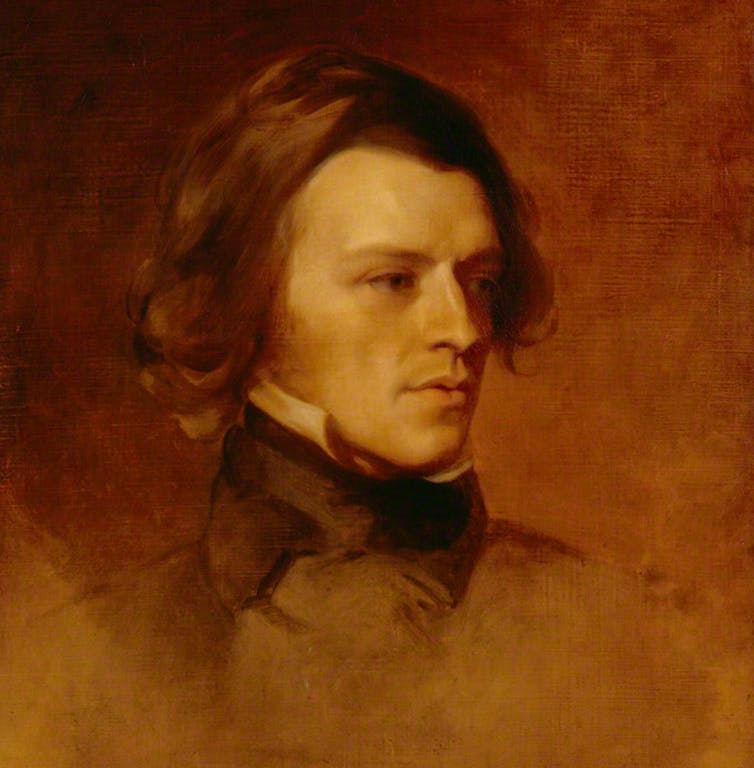
A portrait of Alfred, Lord Tennyson,
by Samuel Laurence and Sir Edward Burne-Jones, circa 1840.
Wikimedia Commons

Darius Sepehri, University of Sydney

In our series Art for Trying Times, authors nominate a work they turn to for solace or perspective during this pandemic.

In Memoriam AHH, cantos 27 & 28, read by Darius Sepehri.

Alfred Tennyson’s 1833 poem “Ulysses”, was, he tells us, written under a sense of loss — “that all had gone by but that still life must be fought out to the end.”

Dealing with the inertia created by grief, and the will needed to resist and move ahead, the poem perfectly expresses what St Paul called the “hope against hope”. Despite the heroism of the famous last line, (“To strive, to seek, to find, and not to yield”), the poem’s defiance only makes sense in the light of the anguish animating it.

Tennyson’s book-length elegy In Memoriam AHH, published in 1850, once among the most popular poems in English, came out of the same sense that the whole world was over — not a world but the world — and yet life must be lived, somehow.

I experience In Memoriam as a soulful and provocative artwork, not a “relevant” one or one merely to be mined for therapeutic consolations.

Despite its formal control and elegance, and what we may hear as dated language, Tennyson’s long poem is tumultuous, chaotic, and not only personal but social, deeply connected with upheavals in Victorian society.

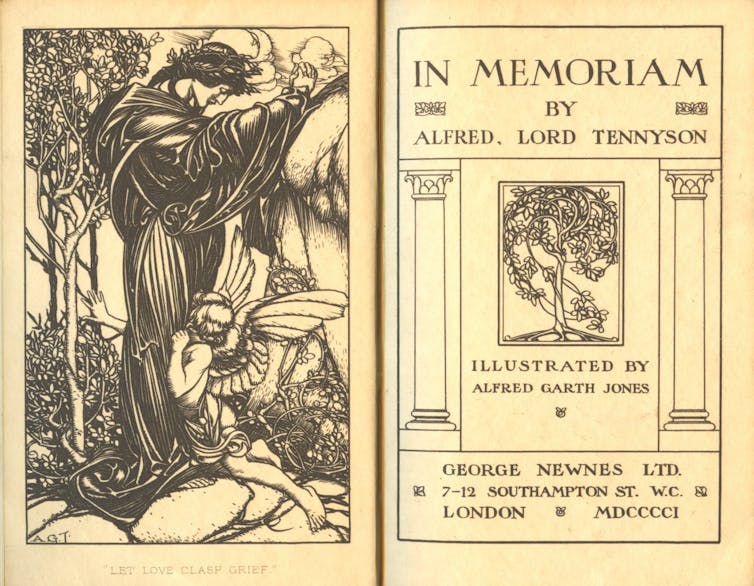
An 1851 edition of In Memoriam.
Wikimedia


Read more:
Ode to the poem: why memorising poetry still matters for human connection


Passion

Both Victorian and modern in style and composition, In Memoriam uses extraordinarily passionate language, tightly compressed. Its passion is directed by Tennyson at another man, his friend Arthur Hallam, a brilliant philosopher. Tennyson and Hallam met at university. We know their first encounters were magnetic and catalysing.

When Hallam died suddenly of a brain aneurysm in Italy in 1833, aged 22, it violently changed Tennyson’s life.

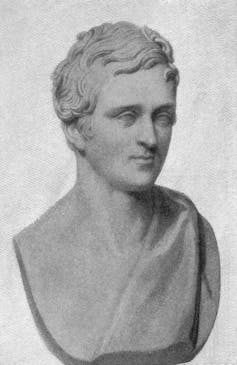
Bust of Arthur Hallam by Francis Leggatt Chantrey.
Wikimedia

Tennyson took 18 years to write In Memoriam. The prologue and epilogue attest to unshakeable faith in Christianity and in life’s continuity. The prologue’s first line addressed to “Strong Son of God, immortal Love”, and the last lines professing the eschatological completion of the world in “one far-off divine event/To which the whole creation moves”, could hardly seem more assured.

And yet. The 131 cantos in between these bookends trace an agonising journey into suffering, doubt, helplessness and the possibility of unredeemed pain that has no meaning or purpose. The rhetorical strength of some of these cantos is such that it puts the orthodox Christian position the poem professes elsewhere in serious question.

The way the poem tries to think through the many grand subjects it raises, such as if God cares for each individual being, creates a meandering journey, now confused, now suddenly clear. This feels right for grief.

Cantos 34 & 38 recited by Darius Sepehri.

The poem spirals around its ideas, rejecting clean linear progression, organised
around three Christmas sections (cantos 28, 78, and 104) of heightened feeling. Coming back and back to things, seemingly obsessed, Tennyson speaks of “a loss for ever new”. There is no “closure” of the wound. Can Christ really fill it? The world and its goods cannot.

I’ve committed many parts of In Memoriam to memory, made easier by the poem’s exceptionally memorable language (immortal, melodious phrases like “I loved the weight I had to bear/because it needed help of love”).

The poem’s form, entirely in quatrains of iambic tetrameter rhyming abba, composed in a long, ledger-like diary now kept at the British Museum, aids in memorisation.


Read more:
Explainer: poetic metre


I recite a selection of cantos here, and the famous “Ring Out Wild Bells” sequence, which charts a move from devastation to rebirth.

In Memoriam has an almost relentlessly regular meter, meant to recall biological processes such as the beat of the heart and breathing, organic processes that sustain life even as the poet’s being cries that life has ended.

All creation mourns

After Tennyson received a letter telling him Hallam’s remains were coming back by sea to Hallam’s family in England, he wrote the very first part of In Memoriam, calling the ship home: “Sphere all your lights around, above/Sleep, gentle heavens, before the prow/ Sleep, gentle winds, as he sleeps now.”

A hypnotic enchantment is created with the ship phosphorescent as it sails at night.

The poem connects something cosmic and transcendent with Tennyson’s own very private, enclosed grief. Terrence Malick’s Tree of Life, a film where the death of a young son is juxtaposed with grand existential and metaphysical questions that interrogate God, also aimed for such territory.

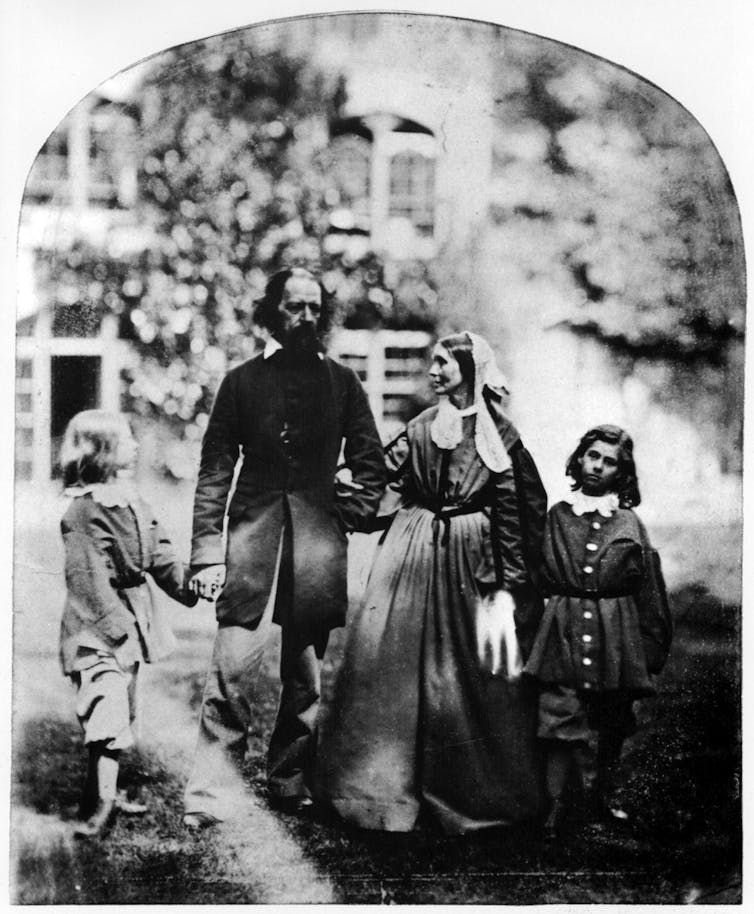
Tennyson with his wife Emily and sons, circa 1862. He named one of his sons Hallam.
Public Domain

Soulful ambiguity

“Dear friend, far off, my lost desire”, cries Tennyson. Today if a man speaks such excessive language of love to another man, we are likely to apply a defined identity or classification.


Read more:
Guide to the classics: Walt Whitman’s Leaves of Grass and the complex life of the ‘poet of America’


Although modern readers may read Tennyson’s excessive professions of love for Hallam as homosexual, the nature of their relationship was unclear to Tennyson himself, and its expressions in keeping with Victorian sentimentality. He would have baulked at our collapsing of an entire world of feelings so complex.

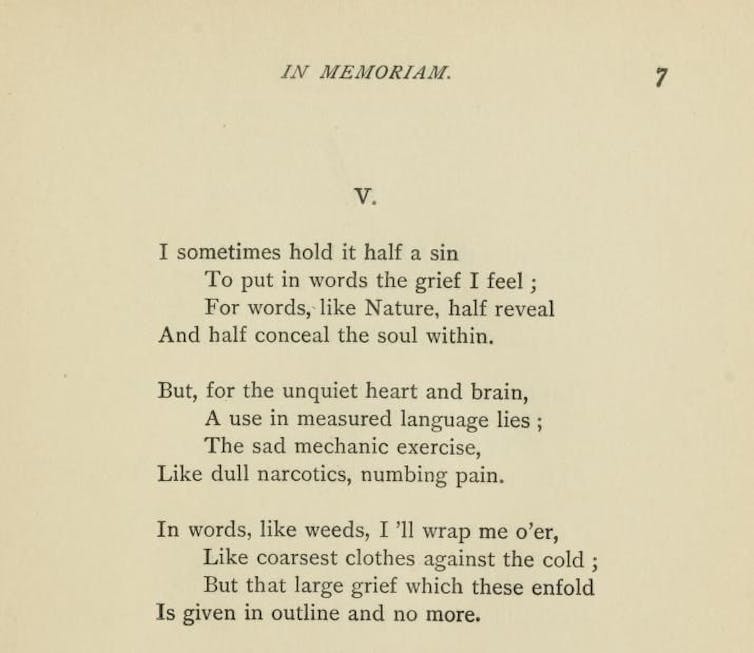
In Memoriam testifies to the ineffability of human experience. Language is inadequate to capture its density and intensity.

Canto 5.
Wikimedia

Tennyson was protective of the intensity of his feelings: hence the time he took to publish. He avoided the imperative to immediately display. Today we feel immense pressure to respond at once, in public, with clear stances, to make things transparent. Such transparency destroys soulfulness.

What makes our times so hard to bear are not just external circumstances themselves but the common ejection of mystery and suffering from art, and transcendence from consciousness.

In Memoriam dwells with the mysteries of being and death, mounts an impassioned defence of love and friendship, and — perhaps rarest of all — reminds us of something noble in the capacity to suffer for an ideal.

Tennyson’s lavish, excessive passion, his “tarrying with the negative” as Hegel put it, shows us how soulful art stirs us to life and staves off banality — but the cost must be paid.

Tennyson had a deep interest in Persian poetry through his friend Edward Fitzgerald (translator of the Rubaiyat of Omar Khayyam).

He surely found something in Persian poetry’s insistence that grief and joy are inseparable and that death is not total loss, because nothing we feel passionately and soulfully is truly lost to us.The Conversation

Darius Sepehri, Doctoral Candidate, Comparative Literature, Religion and History of Philosophy, University of Sydney

This article is republished from The Conversation under a Creative Commons license. Read the original article.
Unknown's avatar

Finished Reading: Primordia (Book 1) – In Search of the Lost World by Greig Beck


In Search of the Lost World (Primordia #1)In Search of the Lost World by Greig Beck
My rating: 2 of 5 stars

View all my reviews

Unknown's avatar

Not My Review: Carrie by Stephen King


Unknown's avatar

Not My Review: Members Only by Sameer Pandya


Unknown's avatar

Finished Reading: SPQR – A History of Ancient Rome by Mary Beard


SPQR: A History of Ancient RomeSPQR: A History of Ancient Rome by Mary Beard
My rating: 3 of 5 stars

View all my reviews