He was a politician, intellectual, journalist and author of the seminal Native Life in South Africa. He was also a writer of fiction. His first and only novel, Mhudi, was written in 1920 and published a decade later.
Despite being the first novel by a Black South African in English, it had little impact on the literary landscape of the country at the time. However, over the past century, the novel has garnered great interest from scholars.
One notable aspect of the novel is that it centres a woman as its protagonist – the Mhudi of the title – and her role in resistance. Her proactive, adventurous, quick-witted character has led a number of scholars to consider the novel from a feminist perspective. In fact, it has been described as “ahead of its time” for its portrayal of women in an era when women had few rights, and Black women almost none.
When working on my chapter for the new book, Sol Plaatje’s Mhudi: History, Criticism, Celebration, I found that most feminist scholarship on the novel has focused on the individual character of Mhudi. So, I turned my attention to Mhudi’s solidarity with other women and what this might tell us about Plaatje’s view of the nature of political struggle.
What the novel’s about
Mhudi takes place against the backdrop of fictionalised versions of actual historical events in what is today called South Africa. The action of the novel is set off by King Mzilikazi’s massacre of the Barolong people at Kunana in 1832. Mzilikazi was king of the Matabele, a group of people today known as the Ndebele and living mostly in Zimbabwe. The Barolong, now called the Rolong, are a clan of the Tswana people living largely in Botswana.
Mhudi, a young Barolong woman, manages to escape the massacre with her life, but believes she is the only one of her people left alive. However, after wandering in the wilderness, she meets a young Barolong man, Ra-Thaga, and they get married. The story follows the couple on several perilous adventures, in which Mhudi frequently saves Ra-Thaga through common sense and uncommon bravery, until they are united with the other surviving Barolong.
Determined to defeat the Matabele, the Barolong form a coalition with the Boers, the white, Afrikaans-speaking farmers descended from Dutch settlers. Ra-Thaga takes part in the successful battle, but is wounded. Mhudi, seeing this in a dream, leaves her children with her cousin and travels to aid him. On her way, she befriends Hannetjie, a young Boer woman, and Umnandi, the favourite wife of Mzilikazi, who fled her home because of the scheming of her co-wives. The Matabele routed, Mhudi and Ra-Thaga happily return home.
Women’s solidarity
The most obvious of women’s solidarities in the novel are those with their husbands. The second most apparent are the friendships Mhudi forms across racial and ethnic boundaries with Umnandi and Hannetjie. While personal, these relationships also have political implications.
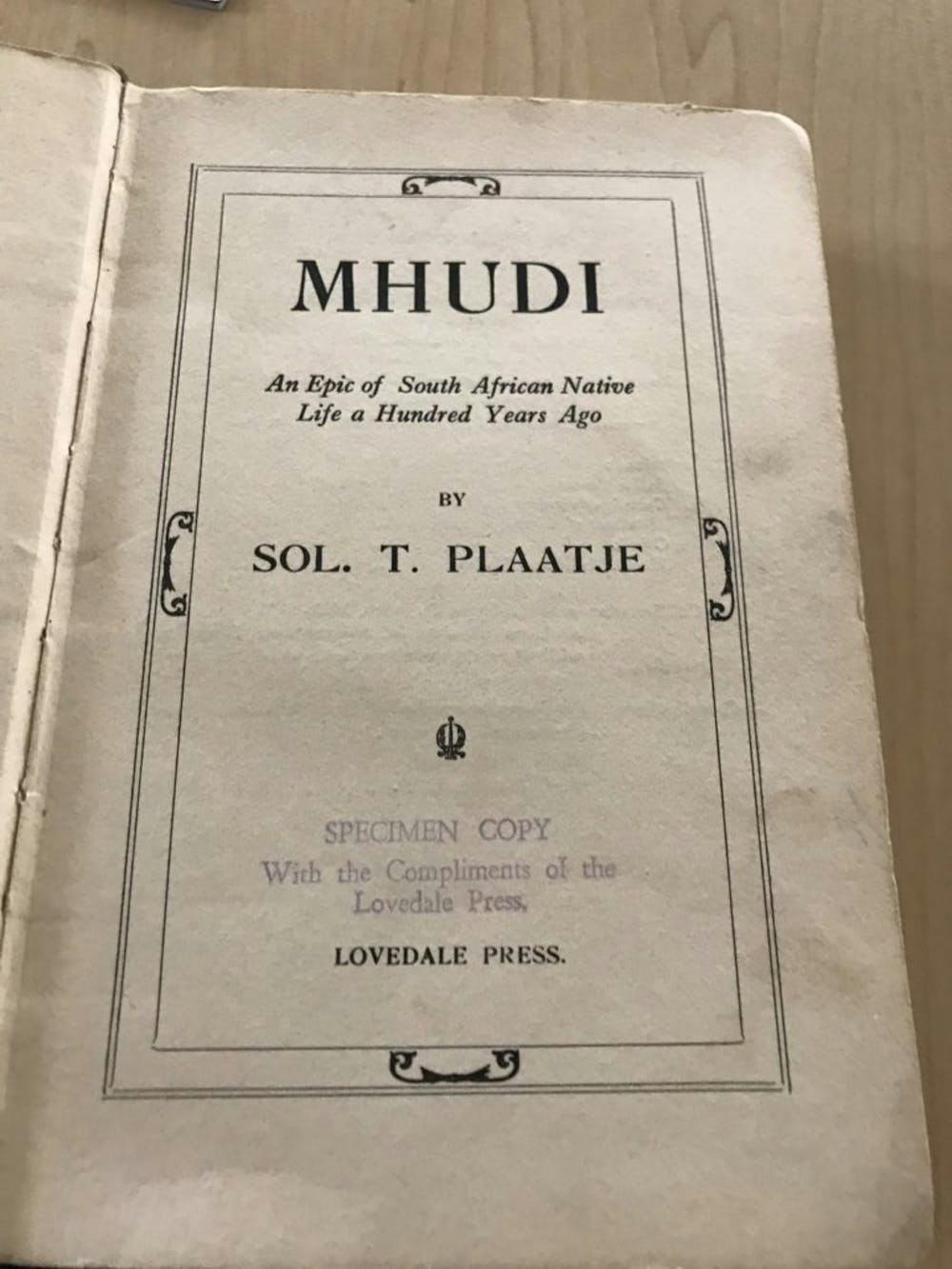
First edition of Mhudi, Lovedale Press. Blessing Kgasa/Kanye Records Centre/Twitter
Mhudi’s relationships with these two women allow her to see the humanity of the Matabele and the Boers, who she had, until this point, seen as inhumane and violent. This is because these two women also express their disapproval for unjust violence and suffering.
Mhudi’s friendships with these two exceptional women and their significance has been discussed in feminist analyses of the novel. However, the collective solidarity that Mhudi has with Barolong women has not really been considered. And yet, this is important in how we understand Plaatje’s view of resistance. We can see this idea of collective solidarity – standing together – in a story Mhudi tells Ra-Thaga about how she escaped being killed by a lion when she was a girl.
The story goes that Mhudi is out picking berries with a number of other Barolong girls and comes face-to-face with a lion. The other girls initially run away, but when they see Mhudi is paralysed with fright they run back and manage to scare off the lion. The fact that the girls are willing to return to Mhudi, even to die alongside her, suggests a deep sense of solidarity and commitment, the kind that arguably binds together successful political movements.
The individual and the collective
The reception of the lion story among the Barolong shows a tension between the collective and the individual. Ra-Thaga knows the story well. Mhudi’s bravery has been celebrated and she has even been called a heroine. However, the collective role of the girls in saving her has been lost in the story’s retelling.
We might understand this as a critique of individual heroism in stories of resistance (especially if we read the lion as a symbol of British and other imperialism) to the exclusion of the recognition of the collective that makes resistance possible.
It’s significant that Mhudi’s most productive relationships are with Barolong women from her community. Her relationship with Hannetjie has no real political impact besides shifting Mhudi’s view of the Boers. Despite herself and Hannetjie sharing a horror over the treatment of the servants, their friendship does not result in any material resistance to injustice.
Her relationship with Umnandi creates a deeper solidarity, as they both promise to use their influence on men to promote peace. However, it is her cousin looking after her children that allows her to make the journey that leads to her relationships with Umnandi and Hannetjie and to assisting her husband.
Jacana Media
Therefore, I read in Mhudi a sense of the importance of collective, communal forms of solidarity. Even when resistance requires alliances across racial, ethnic and gender boundaries, it is the communal solidarities women form that allow for individual and boundary-crossing solidarities to exist.
This might serve as a reminder to consider how we intrepret Plaatje’s place in the history of struggle in South Africa. While Plaatje is a fascinating and notable figure, whatever legacy he has left us was created and preserved through solidarities with others.
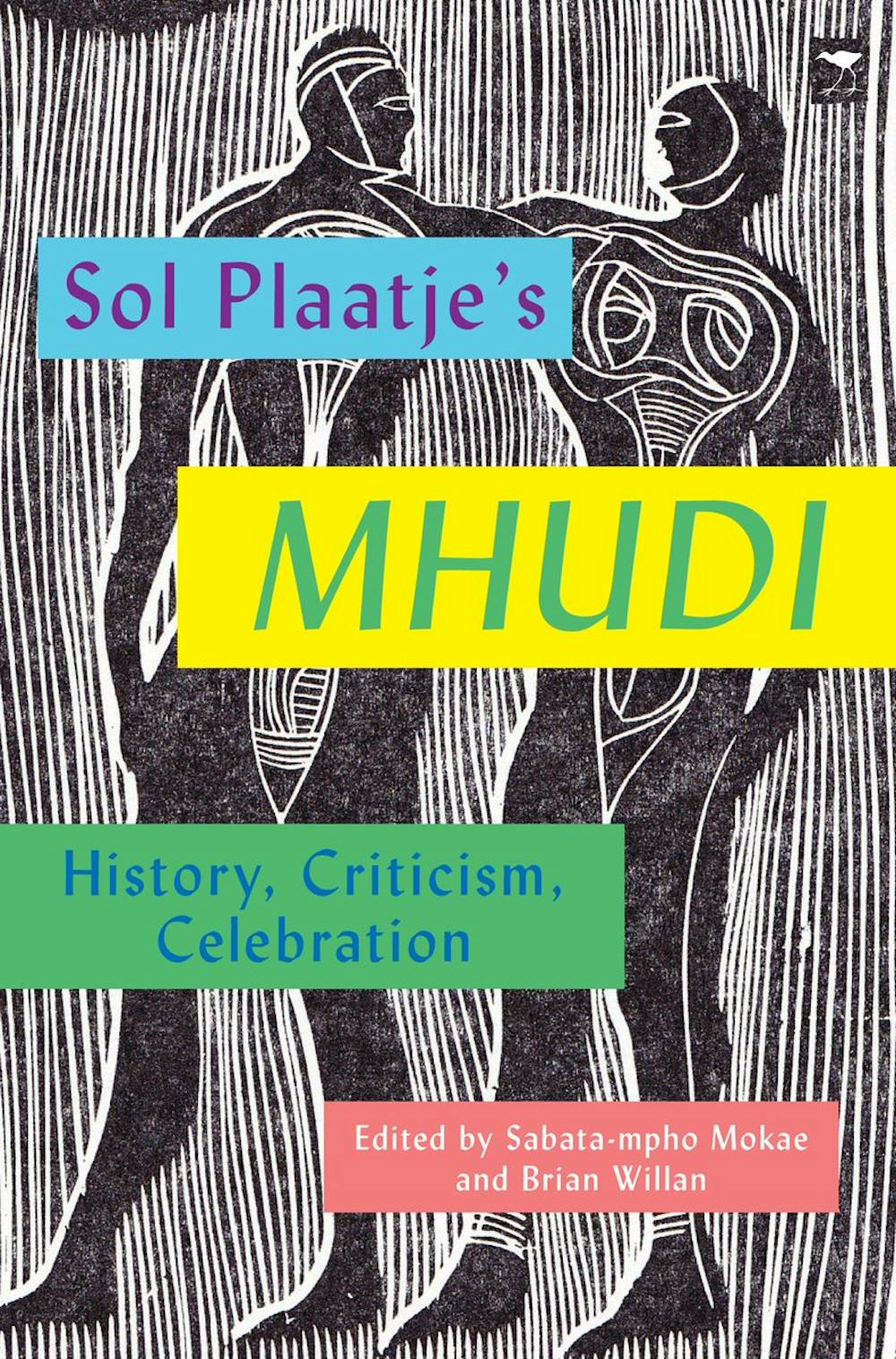
This article is based on Jenny Boźena du Preez’s chapter in the book Sol Plaatje’s Mhudi: History, Criticism, Celebration published by Jacana Media.
Growing up in Australia in the 1970s, I much preferred the hijinks of Han Solo and Chewie to Princess Leia’s sexualised damsel in distress. My sister and I spent an entire summer pigging out on Choc Wedges and Barney Bananas so we could collect the men’s cricket team on specially marked sticks. Feminism seemed a world “far, far away”. Yet what Australian girls could and couldn’t do was being explored through a glut of screen adaptations of classic novels.
These included Picnic at Hanging Rock (1975), The Getting of Wisdom (1977), Seven Little Australians (1973) and My Brilliant Career (1979). Many revealed a depressing picture of what happened if you were different, clever or outspoken. You could be: left behind while other girls are led through a mysterious rock portal, the subject of school bullying, or crushed more literally by a falling tree in an act of sacrificial redemption.
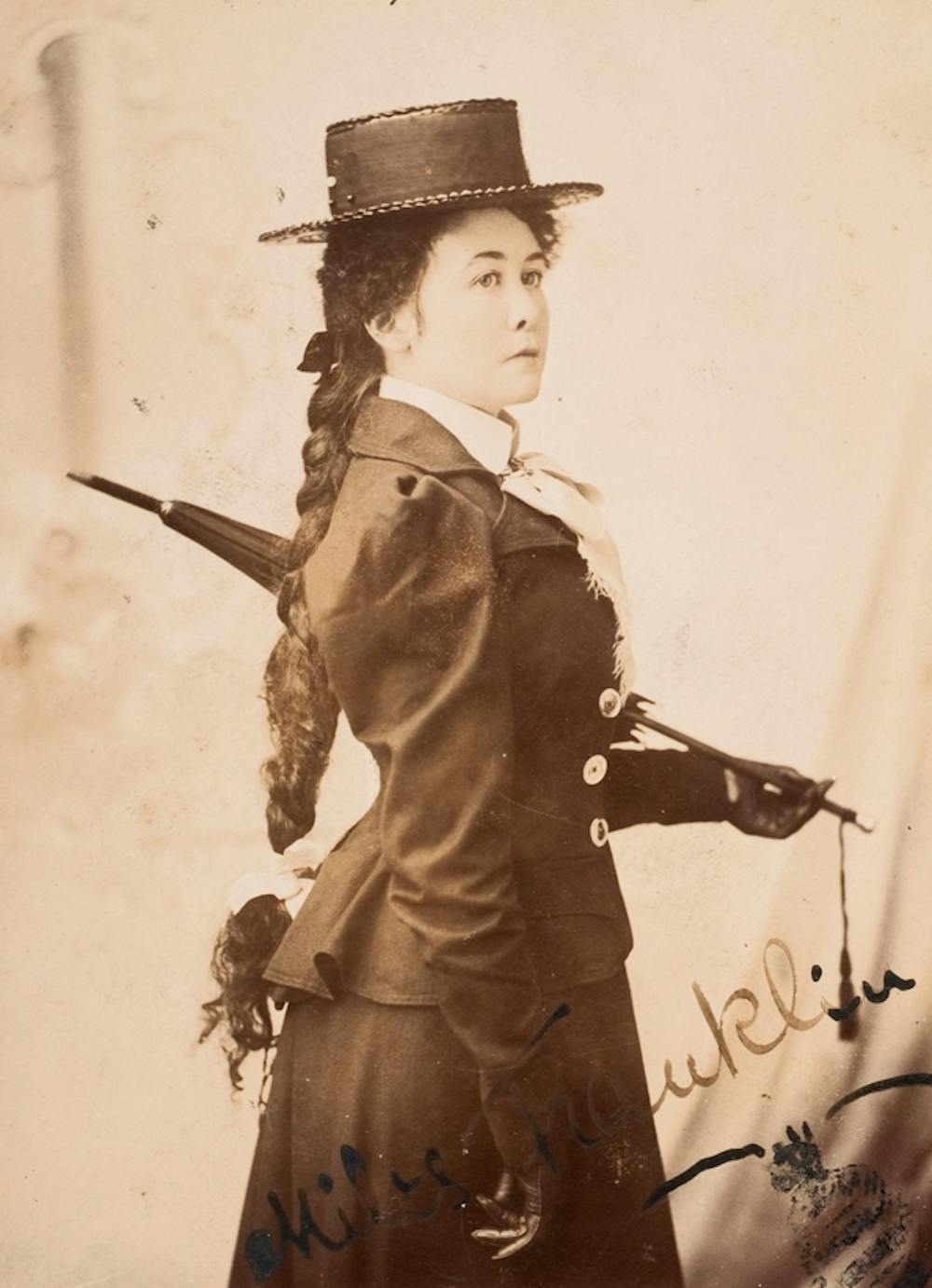
My Brilliant Career offered an alternative. Sybylla Melvyn, its “little bush commoner,” remains untamed and unapologetic. She would be modelled on author Miles Franklin herself, who mailed the manuscript to her literary idol, Henry Lawson. He subsequently provided a rousing endorsement and saw through its publication.
Miles Franklin in 1901. Wikimedia Commons
My Brilliant Career emerged in 1901, the same year as Federation, and aligned women’s independence with national independence through a symbolic coming-of-age narrative.
While Australian women received the right to vote the following year, My Brilliant Career voiced an irrepressible desire to be heard. Addressed to “My dear fellow Australians,” Melvyn (or Franklin) argues the story seeks to improve on other autobiographies by telling a collective truth: “This is not a romance … neither is it a novel, but simply a yarn — a real yarn”.
As such, My Brilliant Career blends the intimacy of life writing with the broader scope of a story being retold. My Brilliant Career is everywoman’s career as much as it is the career of Australia.
Sybylla is a highly likeable but flawed heroine, kicking around a crowded home and lamenting the “agonizing monotony, narrowness, and absolute uncongeniality” of teenage life.
Goodreads
The family has fallen on hard times, shifting from three stations and 200,000 acres to the small and “stagnant” Possum Gully. Dick Melvyn, once his daughter’s “hero, confidant, encyclopedia, mate, and even religion”, reneges all paternal responsibility by turning to drink after a series of failed speculations.
Franklin captures the resulting strain between Sybylla’s hardworking mother and her eldest daughter. As Sybylla knocks about as a hoydenish tomboy and dreams of joining the ranks of poets like Gordon, Lawson and Paterson, her mother sees only domestic uselessness and self-centredness.
Sent with her siblings to the local school, mingling with the Italian migrants at nearby diggings, and absorbing pub slang when retrieving her father, Sybylla has a democratic outlook:
To me the Prince of Wales will be no more than a shearer, unless when I meet him he displays some personality apart from his princeship — otherwise he can go hang.
Such colourful vernacular underscores how Franklin mobilises a living language, as much as a bush landscape, to generate national distinctiveness.
Packed off to her grandmother’s to be transformed into more marriageable material, Sybylla soon navigates a class-bound squattocracy with limited options. Besides her mother’s descent into drudgery, her Aunt Helen has been forced to return to the family home after her husband’s desertion. Sybylla realises with
a great blow that it was only men who could take the world by its ears and conquer their fate, while women, metaphorically speaking, were forced to sit with tied hands and patiently suffer as the waves of fate tossed them hither and thither.
She is critical of women’s value being reduced to an index of their beauty but also internalises it to think herself plain and unappealing. In this, she is proved wrong, for her unpretentious liveliness attracts a number of possible suitors, including neighbouring hunk, Harry Beecham.
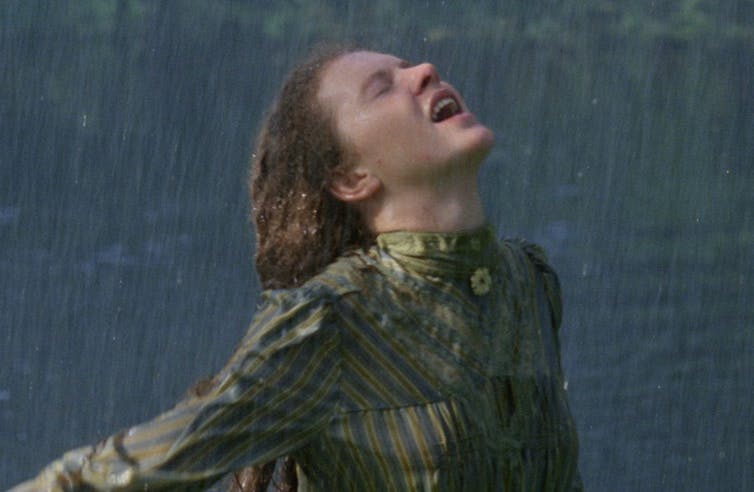
For the 1979 film, Gillian Armstrong perfectly cast then little-known Judy Davis as the pimply, unkempt Sybylla, a far cry from the Chiko Roll or Big M girls then gracing Australian billboards and TV.
My mother, now in her 80s, still raves about Sam Neill’s blue eyes as the dashing Beecham. Both Franklin and Armstrong build the chemistry in Sybylla and Harry’s courtship, emphasising an equality of energy and wit.
A higher love
Distinguishing between sexual passion and friendship love, Aunt Helen advises Sybylla she might receive and find real love in the latter. Yet Sybylla seeks a higher love.
Having “learnt them by heart”, the “men I loved” are the poets and she continues her “hope that one day I would clasp hands with them, and feel and know the unspeakable comfort and heart rest of congenial companionship”.
Sybylla holds to a Romantic view of the poet as both bard of the people and transcendent. The poet must be “Alone because his soul is as far above common mortals as common mortals are above monkeys.” This drives her sense there is something more than her appointed lot in life.
While Harry is prepared to “give” Sybylla “a study” and “truckload of writing gear” so she can pursue her career, Sybylla refuses his marriage proposal. She reflects, “He offered me everything — but control.”
Realising she needs an unfettered life, she knows she would ultimately destroy Harry’s “honest heart”. At the same time, there is little possibility of finding an ideal mate, who would be someone who has similarly “suffered” for their dreams.
My Brilliant Career not only captured the frustration of women at the turn of the century; it refused to end happily. Whereas the novel ends with Sybylla stuck and wearisome at Possum Gully, the film has her hopeful at the fence-line sending off her finished manuscript. Even in the 1970s, a choice between career and love seemed harsh.
Whereas Franklin suggests that women’s path to success requires lonely self-determination, second-wave feminism emphasised collective consciousness-raising, even if that forum of voices remained faultily selective in its whiteness.
A social divide
While representing the “rope of class distinction” drawing “tighter” around Australian working men and women, My Brilliant Career revealed a social divide marked as much by race as class and gender. The Irish M’Swats, for whom Sybylla is forced to become a governess to repay her father’s debt, are depicted as uncivilised in their dirtiness.
The Aborigines exist as unnamed servants, their culture similarly dismissed. Servant girl Jane Haizelip tells Sybylla of her disdain for the men at Possum Gully: “They let the women work too hard. It puts me in mind er the time wen the black fellows made the gins do all the work.”
While Franklin occasionally employs a slave rhetoric to emphasise female oppression, one is struck by the novel’s racial inequities.
Many of the problems in My Brilliant Career remain prescient: drought, bushfire, economic depression and social precarity. Whereas second-wave feminists advocated having it all, too often the message today is that women can’t expect to have love, family and career simultaneously.
Franklin achieved fame and showed women as central to Australian literature. I hope my daughter’s generation keep her spirit but that the yarn becomes one of shared, all-round fulfilment.


 Nottingham by Nathan Makaryk




 At the BookShelf
You must be logged in to post a comment.