
Unknown's avatar

Unflinching, luminous, and moving, the Stella shortlist will get under your skin


Image 20170412 25901 1uo9qo5
Shortlisted Stella authors, clockwise from top left: Cory Taylor, Maxine Beneba Clarke, Catherine de Saint Phalle, Heather Rose, Emily Maguire and Georgia Blain.
Stella Prize/The Conversation , CC BY-ND

Camilla Nelson, University of Notre Dame Australia

There are certain books that have the knack of getting under your skin. This is why George Bernard Shaw declared Charles Dickens’ Little Dorrit to be a far more “seditious” text than Karl Marx’s Das Capital. The Conversation

What he was getting at is the power of books to work on your emotions. The intellect can be too cold an instrument to engender empathy, to bring people who are distant from you into your “circle of concern”. And it is precisely this, as philosopher Martha Nussbaum argues, that matters for the pursuit of social justice.

In 2017, the Stella Prize judges have again come up with a shortlist of books that will engage your brain, but also your heart. They illuminate all the aspects of life that make us frail and vulnerable – sickness, dying, inequality – realities that many of us would prefer to ignore.

Two of the remarkable writers shortlisted, Cory Taylor and Georgia Blain, have died since the publication of their work: Blain of brain cancer; Taylor of melanoma-related cancer. And yet their books – alongside all those on this list – fasten our attention on the means to live better, more ethically, and with greater generosity. It is in the smallest things, in embracing everyday joys and sorrows, that we can learn to live large.

These are books that matter because they show us how to live in desperate times.
Let me draw them to your attention, one by one.

Georgia Blain, Between a Wolf and a Dog

Hilary is a 70-year-old filmmaker, dying of cancer, determined to choose the moment and manner of her death. She has not told her daughters, Ester and April, about her illness or her plans. Ester is the mother of young twins, a family therapist whose consulting rooms contain a world of pain – “post-natal depression, school aversion, relationship crisis, death, and loneliness”. Ester is estranged from her sister April, a once famous singer who never realised her potential, and from her one time husband, Lawrence, who has lied and cheated in his work.

The action unfolds in the space of a single rainy day – ending in the mauve light of dusk, “between a wolf and a dog”, a place filled with ambiguity and irresolution. Here, like Hilary’s last film – a “seemingly random scatter of images” – the characters find “narrative order”.

Blain is a quietly profound writer with an astonishing eye for the ways in which human beings hurt and heal one another. This, her final novel, addresses the significant questions of life, “what to keep, what to discard, what clings despite all efforts to dispel it, and what slides away”. It is modern, unflinching, and unsentimental.

Maxine Beneba Clarke, The Hate Race

Maxine is brown.
Maxine has brown skin.
Maxine has funny curly hair.
Maxine thinks her family comes from England.
Maxine has dark brown skin.
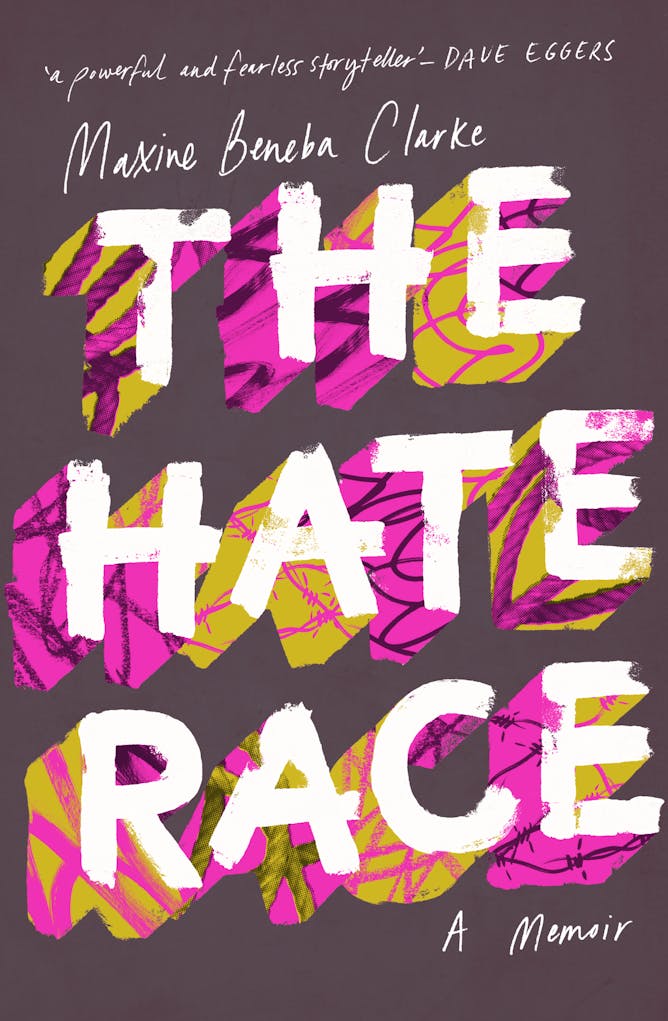
There is an utterly transfixing, yet deeply disturbing moment in this memoir in which the young Maxine, growing up in suburban, middle-class Australia, believes that she is turning white.

In a realist, not magic realist work, the fervently desired “miracle … quietly brewing” on her skin, turns out to be a rare skin condition, diagnosed after a trip to the dermatologist’s office. What the poignant humour of the memoir conceals is the extraordinary violence of a society that would cause a child to want this transformation.

Clarke’s story charts the experience of everyday racism, tracing the lives of her British-Caribbean parents on their journey to a better life. This ideal life is turned upside down by shredded school books, abusive notes left in bags and pencil cases, and the hapless ineffectuality of teachers and school administrators.

Positive experiences seem few and far between: her friend Jennifer’s kind words written in her album, or the high school teacher who had the foresight to advise Maxine that the things she’d been told in primary school were as “bizarre as I’d suspected”. It takes courage to speak out again and again on issues that many of us would prefer to think did not exist. The book soars above its subject matter, demonstrating humanity in the face of the inhuman.

Emily Maguire, An Isolated Incident

Emily Maguire’s novel centres on the sexual assault and murder of a young woman in a tough-talking, truck-stop town midway between Sydney and Melbourne. It is in the form of a thriller, but the author is perhaps less interested in seeking out the murderer than studying the town’s reaction.

Chris Rogers, the victim’s sister, is an astonishing character, reeling from the breakdown of her relationship to the love of her life; the death of her mother, and the murder of her sister. Chris struggles with men, alcohol and society’s obsession with cleavage. Then there is May Norman, a city-based journalist who arrives in Strathdee to cover the murder, and who, like Chris, is no stranger to the sexual double standard through which women – and not men – are judged for their conduct.

This novel tackles the insidious idea that rape is “never simple” but a “murky and confusing” situation in which the “lines of consent” are “blurred”. Maguire has a keen eye for the practices that excuse, tolerate and trivialise sexual violence, and for the language of misogyny that demeans women, blaming the victim for what she wore, what she did, or where she went.

What starts out as a realist venture ultimately lands in the territory of the gothic. Ghosts drift over scorched landscapes, and the bodies of murdered women rise up to haunt the living. “It’s always the men,” says the local historian. “I’ve never had a female hear the scream.” The novel’s title is, of course, ironic – it turns out that the violent death it investigates is not an isolated incident at all.

Heather Rose, The Museum of Modern Love

If everything goes to crap, it won’t be art that saves us. Art won’t matter one iota. You can’t write your way alive, or paint your way out of death.
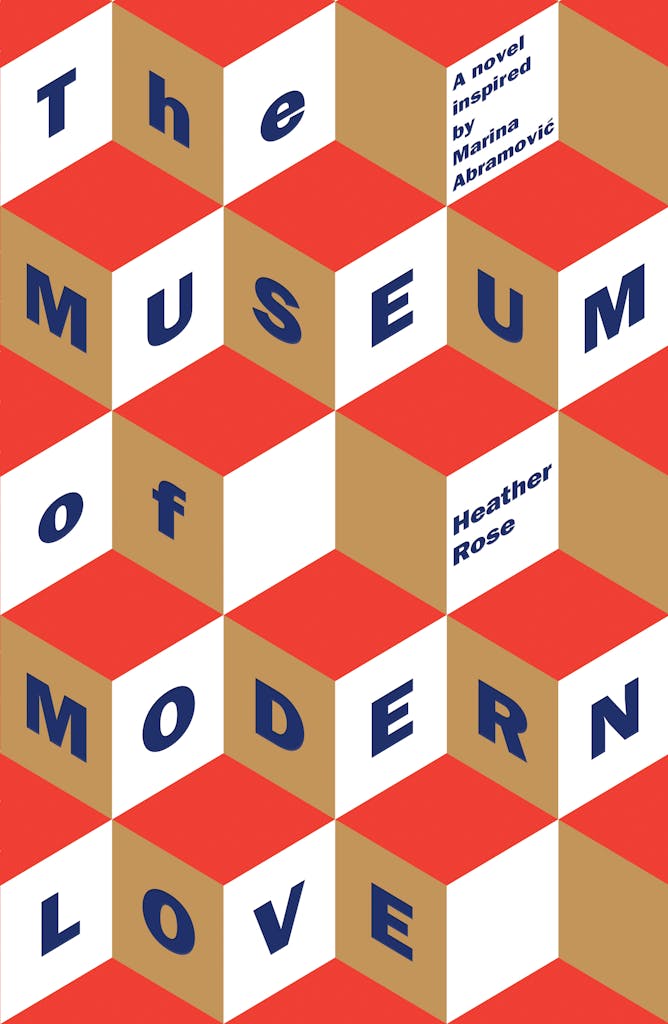
Against the odds, this is exactly what Heather Rose achieves in her startlingly original and strangely beautiful novel. It is built around the 75-day performance piece by Serbian artist Marina Abramović that took place at the Museum of Modern Art in New York in 2010.

Rose’s novel has a crystalline structure, tracing the lives of the characters who are transformed by the artwork. At its centre is Arky Levin, an emotionally-crippled composer who is cut off from life: from his daughter Alice, a medical student, and his wife, Lydia, an architect, facing the final stages of a potentially fatal illness in a nursing home without him.

Arky is joined at the performance by Jane Miller, an art teacher, who is mourning the death of her husband, Karl. There is also Brittika, a student; Healayas, a journalist assigned to cover the final days of the performance, and Danica ­– the ghost of Marina Abramović’s mother – who drifts, unsurprisingly, through its pages.

The unexpected oddity of the characters and their situations, and the luminous intensity of the language, marks out a philosophical territory that will be familiar to readers of Milorad Pavić, Dubravka Ugrešić or Danilo Kiš. This is an astonishingly beautiful book. In a culture that incessantly questions the worth and relevance of art for life, the novelist mounts a defence that is all the more astonishing for being successful.

Catherine de Saint Phalle, Poum and Alexandre

De Saint Phalle’s memoir is narrated through the eyes of a child who is beguiled and bewildered by her parents’ relationship, and the secret they appear to be hiding. They lead a fabled Parisian existence, always at some distance from their child. Her mother crosses herself frequently, talking incessantly about “the nuns” and what they might think. Her parenting mainly consists of reeling off long verses from The Odyssey.

Saint Phalle’s father regales her with tales of Napoleon, and could “convince me that Karl Marx was a practising Catholic” or “a bird that the sky is full of water”. He appears and disappears in the child’s life, for no apparent reason. A string of unknown aunts, cousins and siblings also arrive and depart unannounced, accentuating the book’s unstated sense of loss and abandonment, and the adults’ lack of awareness that a child may require a little more in the way of stability or commitment.

Written in soft, cloud-like prose, with a sense of elegy, this book is finally about the power of stories to conjure hope and possibility, and impart a sense of acceptance.

Cory Taylor, Dying a memoir

My suicide note was by way of apology. ‘I’m sorry,’ I wrote. ‘Please forgive me, but if I wake up from the surgery badly impaired, unable to walk, entirely dependent on other people to care for me, I’d prefer to end my own life.
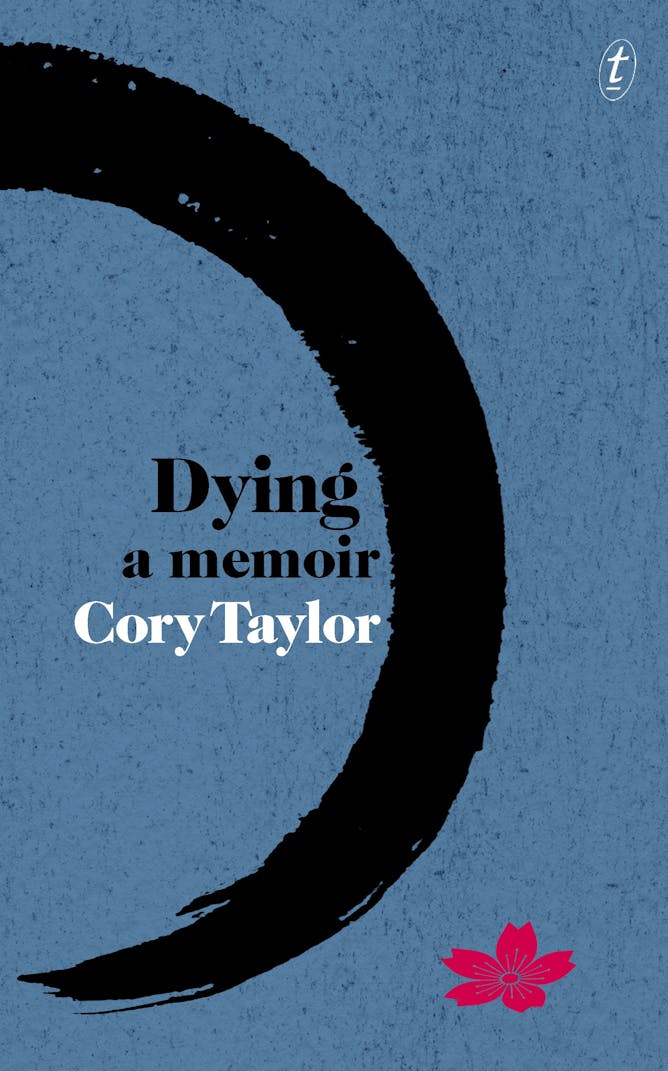
Cory Taylor did not finally choose to take her life. Ultimately, she feared the trauma such a death would have inflicted on other people. Suicide, she writes, remains shrouded in a sense of “mental angst, hopelessness, weakness, the lingering whiff of criminality”.

In short, the problem is not hers but ours. We have “lost our common rituals and common language for dying,” becoming a society that only understands death, as “a form of failure”, as Taylor’s doctors seem to do. But living longer also means dying longer, and because of this the dying “are probably lonelier now than they’ve ever been”.

Taylor had already seen what it meant to die “badly”, witnessing her parents’ long, drawn out deaths from dementia in a nursing home. And so the desire to choose the way you die – assisted dying – becomes a source of comfort to her and a means of facing the things that are most terrifying about death – its total randomness, and our lack of control.

What is truly profound about this book is that – though it ought to be harrowing ­– it is astonishingly easy, if not strangely uplifting, to read. In part, this is because the narrative voice is so gentle, and tightly controlled. Every scene has a radiant quality; it glows.

The memoir ends with a “coming into dying”, a kind of effloresce that occurs at the edge of life – “the edge of words”. Images take over: “an over-exposed home movie footage of a girl with a dog in dappled sunshine, a car speeding down the road.” And then “The jet takes off. A kookaburra sits on a branch laughing.”

Taylor does not speak of death so much as she shows it to us, leaving the reader with an inexpressible sense of gratitude. This is writing that matters.

The winner of the 2017 Stella Prize will be announced in Melbourne tonight.

Camilla Nelson, Associate Professor of Writing, University of Notre Dame Australia

This article was originally published on The Conversation. Read the original article.

Unknown's avatar

Australia’s copyright reform could bring millions of books and other reads to the blind


Image 20170322 25755 1y5edm2
Rule change should make it easier for more copyright works to be made available in Braille.
Chinnapong/Shutterstock

Nicolas Suzor, Queensland University of Technology

Proposed changes to Australia’s copyright law should make it easier for people to create and distribute versions of copyrighted works that are accessible to people with disabilities. The Conversation

The Copyright Amendment (Disability Access and other Measures) Bill was introduced to Parliament on Wednesday.

If passed, it would enable people with disabilities to access and enjoy books and other material in formats they can use, such as braille, large print or DAISY audio.

The Australian Human Rights Commission has long been calling for action to end the “world book famine” – only 5% of books produced in Australia are available in accessible formats. This means that people with vision impairment and other reading disabilities are excluded from a massive proportion of the world’s knowledge and culture.

Under the current law, educational institutions and other organisations can produce accessible copies of books, but the system is slow and expensive. Only a small number of popular books are available, and technical books that people need for work are often out of reach.

Technology should make accessibility much easier, but publishers have been slow to enable assistive technologies.

People with disabilities have long complained that they are not able to take advantage of new technologies such as inbuilt screen reading software on computers and smartphones.

Amazon’s Kindle, for example, used to allow text-to-speech to help blind people read books, but Amazon gave in to publishers’ fears and allowed them to disable the feature. Apple’s electronic books are much better, but there are still major gaps.

Our research looked at books available through electronic academic databases, and found that most ebook libraries have some features that frustrate full accessibility.

The Copyright Act in its current form does grant statutory licences for copying by institutions that assist people with disabilities, but there are no comprehensive exceptions for individuals. Research shows that even students in resourced universities have trouble accessing the materials they need to study.

A fair right for people with disabilities

The new Bill aims to create a clear right for individuals to copy materials into accessible formats. Critically, this new “fair dealing” exception also allows other people to help out by creating and sharing accessible versions of books and other materials.

This is a major milestone in making copyright law more fair. It implements Australia’s obligations under the Marrakesh Treaty, a landmark international agreement designed to stop copyright getting in the way of accessibility.

The Marrakesh Treaty, once implemented around the world, will enable organisations to share accessible books to the people who need them in other countries. This is an extremely important change as the costs of scanning and making a book accessible are so high that most blind people are denied access to most works.

Once the laws are clarified, the accessibility of books will increase dramatically. Google has been busy digitising the world’s books, and it has given those books to a charity called Hathi Trust. Soon, Hathi Trust will be able to share those books with blind people around the world.

Google’s partnership with Hathi Trust means that blind people will soon be able to access more than 14 million volumes almost overnight. This figure may grow quickly as Google has already digitised more than 30 million books. Very soon, the proportion of accessible books might jump from 5-10% to closer to 30%.

A missed opportunity

The Bill also proposes a number of other long awaited updates to Australian copyright law. But one thing the Bill does not do is fix a drafting error that has plagued Australian copyright law for the past decade.

When Australia signed the Australia – US Free Trade Agreement, we introduced a system of “notice-and-takedown” that would protect copyright owners. The system provides a way for people to ask online service providers to remove content that infringes copyright.

But the law was poorly drafted. It applied only to a small number of Internet Service Providers (such as Telstra, Optus and iiNet) but not the larger category of search engines and content hosts.

This means it does not apply to giants such as Google and Facebook. It also means that other organisations that host content uploaded by users, such as The Conversation, are also excluded.

These safe harbours provide a shield in case people – outside of the service provider’s control – use their networks to upload content that infringes any copyright laws.

The reason they are so critical is that it is often prohibitively expensive for the companies that host internet content to check all content before a user uploads it.

But the safe harbours aren’t free. The quid pro quo is that the ISP must introduce a notice and takedown scheme. This is one of the few effective mechanisms to get content removed from the internet, and has been a crucial part of protecting the rights of publishers and authors online.

Professor Kim Weatherall explains the drafting error in Australia’s copyright safe harbours.

When the new Bill was first drafted, it was set to fix the drafting error that excludes content hosts, search engines, universities and other organisations from the scheme. But the Bill introduced this week contains no such fix.

The extension of these safe harbours has become highly politicised, with major rightsholders warning that it looked like a win for Google and Facebook.

The past two decades of the internet in the United States have shown how critical the safe harbours are to all developers, both large and small. They reduce uncertainty and allow innovation in the ways that people access content.

So while this new Bill is important, it is also a missed opportunity. The drafting error in Australia’s copyright safe harbours means that neither tech companies or authors and publishers are well protected.


Tess Van Geelen, a Research Assistant at the Faculty of Law, Queensland University of Technology, contributed to this article.

Nicolas Suzor, Associate professor, Queensland University of Technology

This article was originally published on The Conversation. Read the original article.

Unknown's avatar

Productivity Commission re-ignites copyright wars by recommending ‘fair use’


Nicolas Suzor, Queensland University of Technology and Shereen Parvez, Queensland University of Technology

The Australian Government has just released the Productivity Commission’s report into Australia’s Intellectual Property Arrangements.

It’s a move that appears to have been designed to avoid some of the controversy of the copyright wars by releasing the report just before most Australians settle into their summer break.

The report does something that is very difficult in copyright debates: it sets out a rigorous, evidence-based case for reform. Academics have praised the “independent and systematic study that has assessed the effectiveness, efficiency, adaptability and accountability of Australia’s IP [intellectual property] laws”.

Good evidence about how well intellectual property laws are working is sometimes hard to come by. Intellectual property laws, including copyright and patent law, have to be very carefully calibrated. If they are too weak, it is difficult for investors to recoup their expenses in bringing new inventions, books, music and films to the market.

But when intellectual property laws are too strong, they restrict innovation and access to knowledge. They prevent people from making new inventions and creating new works, because access to existing materials becomes too expensive or difficult.

For consumers, they can make access to knowledge and culture much more expensive, and they can get in the way of education and the legitimate needs of disadvantaged members of society.

Scholars have pointed out for many years that the optimal balance between protection and access to knowledge is extremely difficult to pinpoint. As a result, intellectual property policy is a deeply controversial and emotional political arena. In the past, decisions about IP policy have been made on the basis of heavy corporate lobbying, gut-instinct, hunch and guesswork.

The Productivity Commission’s report is important because it reviews the available evidence and provides recommendations that we have good reason to think will improve Australia’s intellectual property laws.

After reviewing the evidence, the Productivity Commission’s view is that copyright law is not balanced, and that our laws:

[…] are skewed too far in favour of copyright owners to the detriment of consumers and intermediate users.

Making Australian copyright law ‘fair’

Probably the most significant – and controversial – recommendation is that Australia should introduce a “fair use” exception for copyright infringement.

Fair use allows people to use copyright material in ways that are fair, without asking for permission first. It has been extremely important in the United States for many different industries.

Filmmakers use it to make documentaries, libraries use it to digitise and preserve their collections, scholars use it for important data- and text-mining research, and search engines use it to index the web.

The Productivity Commission’s report is just the latest in a string of reports to recommend that Australia introduce a fair use exception. It found that Australia’s current exceptions to copyright:

[…] are too narrow and prescriptive, do not reflect the way people today consume and use content, and do not readily accommodate new legitimate uses of copyright material.

Balancing intellectual property laws is a thrilling challenge.
J Mark Bertrand/Flickr, CC BY-NC-ND

Other recommendations

The report is detailed and comprehensive, and covers a lot of ground. The Productivity Commission recommended a raft of other changes to modernise Australia’s copyright laws, including:

  • preventing copyright owners from overriding consumer rights through restrictive contractual agreements

  • allowing Australian consumers to break digital locks on content that prevent lawful activities (like fixing a tractor)

  • fixing a decade-long oversight in our “safe harbour” regime that makes it extremely difficult for home-grown equivalents of YouTube or social media platforms to host content in Australia

  • clarify the law to ensure Australian consumers can use VPNs to access content lawfully available in other countries

  • ensure that the results of publicly funded research are made freely available to the public under Open Access policies

  • remove an exception from competition law that allows software and content companies to create exclusive deals and other restrictive licensing agreements that would otherwise be anti-competitive.

Restarting the copyright wars

The timing of this report seems to be designed to minimise some of the controversy that it will generate. The commission’s report warns that it will be extremely difficult to “pursue change in the face of strong vested interests”.

The Copyright Agency, the Australasian Performing Right Association and the Australasian Mechanical Copyright Owners Society (APRA AMCOS), prominent players in the book industry and several authors have all issued statements that are highly critical of the commission’s report.

Their essential concern is that the expansion of user rights will result in reductions in revenues and investment in Australian creative industries and Australian creators.

The great difficulty here is that copyright law is extremely complex, and the debate is so emotive that the details often get lost in the heated arguments. What little empirical evidence we do have to guide policy is glossed over in a strong reaction against change.

The reaction of the established copyright industries is understandable. It has been very difficult for publishers and distributors to adapt to the internet, and they are only now beginning to develop business models that work in the digital age. The process has been painful to say the least.

In this context, many publishers, distributors, and creators feel besieged by efforts to reform copyright law for the digital age. But it is too late now to go back to a pre-digital world.

The restrictions on parallel importation, which have kept prices high for books in Australia, are a good example of laws that just don’t work for digital markets. If we expect consumers to obey copyright rules, it is clear that we need to work to make sure that the law and business models treat them fairly.

The great shame about the copyright wars is that sensible, evidence-based proposals for reform get mixed up with highly emotive reactions to “piracy”. The proposals by the Productivity Commission are careful and well justified. The evidence we have is that they are not likely to harm the actual revenues of Australian creators.

There is no doubt that we need new business models – and public funding – to support creators in the digital age. This is the hard work of real practical change that needs to happen to enable our creative industries to thrive.

The good news is that overseas examples show that it is possible for creators to make money in the digital economy. The Productivity Commission’s recommendations are a bet that digital is the future, and that making Australia’s laws more efficient and effective is critical to the health of our future industries.

We’re looking forward to the government’s plans to implement these recommendations, but it looks like 2017 will be a heated year for copyright debates.

The Conversation

Nicolas Suzor, Associate professor, Queensland University of Technology and Shereen Parvez, Graduate Research Fellow, Intellectual Property & Innovation Law Research Program, Queensland University of Technology

This article was originally published on The Conversation. Read the original article.

Unknown's avatar

Diversity, the Stella Count and the whiteness of Australian publishing


Natalie Kon-yu, Victoria University

In January 2016, I began working with The Stella Prize to set up their first ever Diversity Count. This meant widening their count of books reviewed according to the author’s gender to examine how issues of race, ethnicity, disability and sexuality affected the rate of books reviewed by women.

Until 2015, there’d been no recognition of these various intersections. Like the organisation VIDA: Women in the Literary Arts in the US, Stella had concentrated its early counts on the male/female binary and, as in the US, this began to annoy women whom the industry defines not only by their gender, but also by their race, ethnicity, sexuality, ability or gender-identity.

And Stella, which not only performs the count, but also awards The Stella Prize to the best book published by an Australian woman, has also come under increasing critique by women of colour about the whiteness of the prize’s longlists.

Charlotte Wood’s The Natural Way of Things, winner of the 2016 Stella Prize.

Undertaking the Stella Count is laborious and fairly crude work. Someone has to sit down and sift through newspapers and microfiches with a notepad and a running tally of the female and male names of authors whose work is reviewed.

That is, the distinction rests on name alone. This works to a degree, though not always; think of Lionel Shriver, JK Rowling (names that don’t reflect a gender) as well as authors who are gender-queer. And it doesn’t work at all if you’re taking into consideration race, ability and sexuality. It is difficult to look at a female name on a book and assess whether or not the author is a member of the LGBTI or queer community or if she has a disability.

It may be easier to distinguish race or ethnicity by a name, but this is fraught territory for a number of reasons, not least because names lie. Then what? In the case of race, do you look up pictures of all authors and assess the colour of their skin? Do you search for non-British sounding names? How do you tell?

So, after much discussion between myself and the Stella Count Coordinator, Veronica Sullivan, we designed a survey for women-identifying authors who had their work reviewed in 2015.

This was long and often difficult work. We set up a public forum for members of the writing community to give their feedback on drafts of the survey and also established a consultative committee, which had input into the final version of the Diversity Survey.

Then, after many months, we sent the survey out to writers. When the results came back they were underwhelming and statistically insignificant. This broke our hearts a little. But then I began to think about why we had such a small uptake from those we’d surveyed.

Too late in the game

In the case of race and ethnicity (the qualifiers I feel I am best placed to speak about), I have a feeling that counting reviews comes too late in the game. I would guess that the Australian publishing industry simply does not publish enough books by women who are not white, but there are no figures for this.

For example, thanks to a recent report from Macquarie University we know that within the genre of fiction in Australia, 65.2% of literary fiction writers, 76.2 % of genre fiction writers and 86.9% of children’s book authors are women. This makes those graphs showing that men get far more reviews than women all the more infuriating. But, as yet, we don’t have the figures for racial or ethnic diversity.

How many Indigenous writers are published each year? How many non-white writers are published? And what kinds of books are being published?

What kinds of stories are upheld about non-white people in Australian literature?
mirtmirt/shutterstock

Part of this lack, I think, comes from constraints placed on writers who are “othered” by the industry. For example, I think that it is probably easier for an indigenous author to be published if they write about epic struggles, rather than breezy romantic comedy. Likewise, I think that migrant writers will have an easier time getting into print if they follow the well-established trope of the happy, grateful migrant.

American author Morgan Parker writes that “we often find ourselves either being asked to ‘emphasize’ (read: exoticize) our identities (‘I love your writing about race,’ one editor told me. ‘Do you have anything else like that?’)”. And while Parker is speaking of the US, I think the same rules apply in Australia.

Safe, exotic, far away

It seems to me that the job of Indigenous writers and other writers of colour is to keep themselves and their stories at the margins of Australian literary culture. Safe, exotic, far away.

This begs questions about representation and what this means for a national literature. I listened to Indigenous author Jane Harrison speaking at the Diverse Women Writers Workshop in September and she pointed out that while Australia’s Indigenous population is (now) only about 2.44%, Australian Indigenous writing ought to make up a much larger percentage of our national literature, as our national literature should reflect Australian cultural heritage.

She’s right, of course. Toni Morrison writes that in the US the canon is,

unshaped by the 400-year-old presence of, first, Africans and then African Americans in the United States. It assumes that this presence – which has shaped the body politic, the Constitution, and the entire history of culture – has no significant place or consequence in the origin or development of that culture’s literature.

Toni Morrison.
Philippe Wojazer/Reuters

The Whiteness of the literary canon means that our ideas of good and bad writing are very narrow and, often, exclusionary.

In Australia, as in the US, only certain stories are allowed to take centre stage in our literary culture and the universal subject is still presumed to be a white, middle-class, cis-gendered, heterosexual and fully-abled male. The more deviations from this (limited and highly problematic) notion of personhood you possess, the more estranged from the centre you become.

As Australian poet Lia Incognita writes:

work that draws from non-Anglo cultural references befuddles institutions (festivals, venues, funding bodies) whose understanding of ‘traditional’ and ‘contemporary’ is structured around Western practice.

Does this mean that the Diversity Count is doomed? Maybe, but that’s not necessarily a bad thing. Failures teach us that we have to look harder for answers. For me this entails a lot more quantitative as well as qualitative work, which comes at the stage of publication, rather than at the reviewing stage.

I’d like to undertake a comprehensive demographic survey of the Australian publishing industry (like those that Publisher’s Weekly perform in the US), examining both those people who work within the industry, as well as the authors who get published.

At the same time we need to look through our syllabuses in high-schools and universities and think about the kinds of stories that are upheld about non-white people in Australian Literature. By including a multitude of voices to speak fully and freely about the Australian experience, we have nothing to lose and everything to gain.


Natalie will be online for an Author Q&A between 4 and 5pm AEDT on Tuesday, 13 December, 2016. Post any questions you have in the comments below.

The Conversation

Natalie Kon-yu, Lecturer in Creative and Professionaln, Literature and Gender Studies, Victoria University

This article was originally published on The Conversation. Read the original article.

Unknown's avatar

When it comes to books and copyright, the government should leave things as they are


David Throsby, Macquarie University

The Australian book industry is in a state of considerable agitation as it waits to see if the federal government will scrap the parallel import restrictions of the Copyright Act.

Lifting the restrictions has been recommended by the Harper Committee and the Productivity Commission, and a decision could come next week, next month, or never.

These regulations restrict the importation of commercial quantities of books without the permission of the copyright holder. There is a strong sense of déjà vu in the current situation. Every few years since the 1980s a recommendation for repeal of these import restrictions has been put to the government of the day and every time the government, whether Coalition or Labor, has rejected it.

The arguments for doing away with them are based on simple economics. The restrictions provide some protection for authors and publishers in the face of international competition. The overall effect is to raise, at least temporarily, the price of books to Australian consumers, though the directly attributable cost increase is uncertain.


Keep reading: Parallel importation and Australian book publishing: here we go again


Nevertheless, any form of protection is anathema to economists as it distorts markets, creates inefficiencies in the allocation of our national resources, and restricts the access of consumers to cheaper supplies of products from abroad.

The cultural exception

So should books be treated differently from anything else? Books are a cultural product, and can be defined as such for the purposes of international trade. Ever since the structure of the world trading system was set up in the 1940s with the establishment of the General Agreement on Tariffs and Trade, the forerunner of the present-day World Trade Organisation, a special case for cultural goods and services has been recognised: the so-called “cultural exception”.

The principle behind this concept is the proposition that cultural products are not just commercial merchandise, but embody cultural values that are separate from and additional to their economic value. These cultural values, it is argued, can be shown to be important to society, especially when they represent something about the national culture from which they are derived.


Keep reading: Friday essay: thriving societies produce great books – can Australia keep up?


So the argument concerning Australian books, written by Australian authors about Australian subjects and published by Australian publishers is that they convey such values. Hence, in the context of international trade they should be granted a cultural exception and should not be subject to the same free-trade ideology as other commodities in the global marketplace.


Tarek Mostafa/Reuters

Some hardline economists – including in the Productivity Commission – acknowledge the significance of Australian books to our culture. They’re willing to accept a role for the public sector in ensuring that the cultural contribution of the book industry is maintained, provided that the community agrees that such a role is worth paying for.

The argument here is that if Australian books generate a sufficient level of public-good benefit through their contribution to our collective cultural life – a contribution that cannot be purchased overseas, by the way – this may constitute a case of market failure. Government intervention to correct for it may be justified if the benefits from intervention outweigh the costs.

So far so good, you might think. But it is one thing to agree that some level of support for an industry is justified – and quite another to determine how such support might be provided.

Economists are likely to argue that instead of the blunt instrument of parallel import restrictions, whose beneficiaries may well include many of the “wrong” people, direct fiscal support would be more appropriate because it can be targeted at those who generate the public benefit, such as Australian authors.

Protection through fiscal channels?

If we accept this line of argument, and if the existence of public-good benefits from the Australian book industry is assumed, it can be argued that the best policy action in the present circumstances would be to remove the import restrictions, and replace them with an equivalent level of protection provided through fiscal channels, for example by increasing the levels of financial support provided to writers and publishers of Australian books.

Such a recommendation may have merit in principle, but in the realpolitik of the Australian government today it simply doesn’t stand up. Federal funding for the arts and culture sector has been under considerable pressure in recent years. Even more pointedly, the government last year signalled its attitude to supporting the book industry by abolishing the newly-established Book Council before it had even held its first meeting.


Keep reading: Short shelf life: the Book Council of Australia is stuffed back on the rack


The possibility that the Government would approve a new budget allocation of any significance to compensate authors or publishers following removal of the import restrictions must be regarded as very remote indeed.

Some commentators have argued that import restrictions are a relatively minor issue, particularly when set against other more far-reaching copyright proposals such as the possible introduction of US-style fair dealing – a prospect that would have much more serious implications for the book industry. Nevertheless the recommendation is there, and needs a response.

What to do? To avoid a confrontation with an entire industry and to demonstrate a concern for the health of Australian cultural life, the government could either abolish parallel import restrictions and provide compensatory support for the production, distribution and consumption of Australian books, or it could leave things as they are.

As we have noted, successive Australian governments have in previous years accepted the latter as the appropriate practical and principled strategy. In its own interests, the present government would be well advised to do the same.

The Conversation

David Throsby, Distinguished Professor of Economics, Macquarie University

This article was originally published on The Conversation. Read the original article.

Unknown's avatar

How to teach literacy so no child is left behind


Kevin Wheldall, Macquarie University

Children who do not learn to read in the first few years of schooling are typically destined to a school career of educational failure, because reading underpins almost all subsequent learning.

Even when exemplary reading instruction is available, there will always be some children who take longer than others to catch on to what reading is all about. It is important to identify these low-progress readers as early as possible so that they do not fall too far behind their peers.

We need a clear plan in place to ensure that no child falls through the net. Such a plan needs to be both effective and cost-effective.

A three tier model of reading instruction, known as Response to Intervention (or RtI) has become known in recent years as the best way of achieving this.

Kindergarten

The three tier RtI model is based on the first tier of exemplary, quality initial instruction in reading for all students during their first year of schooling.

The instruction offered to all children beginning school should be based on what internationally conducted scientific research has shown to be most effective.

To the layman, this sounds patently obvious but this is not what is currently the case in many Australian schools. For the last few decades an implicit model of reading instruction has held sway.

Most of this implicit approach to reading instruction makes a good bedrock to build effective reading instruction on. But it is not enough for every child to learn to read.

The majority of children will need direct, explicit and systematic instruction in the five pillars or “five big ideas” of reading instruction: phonological awareness, phonics, fluency, vocabulary and comprehension.

What is often lacking in initial reading instruction, in particular, is effective instruction in what is known as synthetic phonics: specific instruction in how to relate letters to sounds and to blend letter sounds into words.

In New South Wales and some other states, many schools typically screen students at the beginning of year one for possible placement in Reading Recovery, one of the most well known and most widely utilised remedial reading program in the world.

Whatever the debate about the efficacy of Reading Recovery, it is necessarily very expensive. It is based on a daily, half hour, one-to-one session with a highly trained Reading Recovery teacher, for two or more terms.

The bottom 25 per cent

The RtI model recommends that struggling readers should be offered more intensive Tier 2 intervention in small groups of three to four students.

Again the instruction provided to these students is based on what the scientific research evidence has shown to be most effective.

In effect, this is essentially the same emphasis on the same five big ideas of reading instruction but it is both more intensive and more individualised. Teachers also need to be more responsive to the specific idiosyncratic needs of the students with whom they are working.

Research suggests that good small group instruction can be just as effective as one-to-one instruction.

However, even with a solid Tier 2 small group reading intervention in place for young low-progress readers, there will still be a very small number of students who “fail to thrive”, perhaps about 3 to 5 per cent of the total population of Year 1 students.

Intensive instruction

The small number of students whose reading problems seem to be more entrenched and who are resistant even to specialised intensive small group instruction are the ones who should receive Tier 3 one-to-one intensive reading instruction.

By now it will come as no surprise that the general nature of the instruction provided in a one-to-one Tier 3 intervention is exactly the same as offered at Tier 1 and Tier 2.

What is different is the intensity of instruction provided to this very small minority of students.

Because we have successfully taught the vast majority of Year 1 students the basics of learning to read by Tier 1 and where necessary, Tier 2 teaching, we can afford to provide these remaining students with the individual support they need.

Some of these students may need this support for some time, but this is a far more manageable proposition with a smaller number of students.

Monitoring progress

With this three tier Response to Intervention model in place, most, if not all, children will learn to read, given the necessary time and resources.

The RtI model does not stop at the end of Year 1. It’s important to monitor all students’ reading progress closely, especially for the first three years of schooling.

By following these models, it’s not too much to ask to expect all of our children to learn to read.

The Conversation

Kevin Wheldall, Emeritus Professor of Education, Macquarie University

This article was originally published on The Conversation. Read the original article.

Unknown's avatar

Teenagers with low reading levels don’t find it any harder to get work


Cain Polidano, University of Melbourne and Chris Ryan, University of Melbourne

Teenagers with low reading levels, who went on to further education, don’t find it any harder to get a job at the age of 25, research shows.

At age 25, young Australians whose reading proficiency at age 15 was ranked low in the international literacy and numeracy test were employed at the same rates as those with higher levels of achievement.

For both the low (below level 3) and medium (level 3 and 4) reading proficiency groups, 58% were employed full-time, with a further 13-14% employed part-time.

Low proficiency levels in the Program for International Student Assessment (PISA) tests are deemed to be those at a level insufficient for students to perform the moderate reading tasks that are needed to meet real-life challenges and are below minimum Australian standards.

Around one-third of Australian 15 year olds had low reading proficiency levels, with just over one half were in the medium proficiency group.

The study also found that low school achievers work in jobs that have similar expected lifetime earnings as the medium reading proficiency group.

The results are particularly surprising because it is well known from other research that poor reading skills in adulthood are associated with poorer employment prospects and work in low-paid jobs.

It seems that not every teenager with low reading proficiency necessarily becomes an adult with poor reading skills.

Investment in VET is the key

These results can be explained by high rates of participation in, and good outcomes from, Vocational Education and Training (VET) by those with low reading proficiency.

Around 58% undertook VET study, 15% higher education study and 14% both.

In contrast, those from the medium group focused more on higher education — 42% higher education, 36% VET and 15% both.

Those from the low proficiency group compensate for studying below bachelor-level VET qualifications by choosing courses that have good labour market prospects.

Compared to the medium group which did not complete a university degree, the low group chose initial VET courses that had 6% higher graduate earnings.

It is thought that those with low reading proficiency at age 15 explore VET options from an early age.

Given the large number of VET courses available – and the fact that most are designed to prepare students for specific occupations – early career exploration may mean the low proficiency group is better prepared to make course choices.

Our approach

Australia is one of only a handful of countries with the capacity to track outcomes of PISA participants through its Longitudinal Survey of Australian Youth (LSAY).

In comparing outcomes, we also controlled for a range of differences between the student groups that may confound the analysis, such as family socioeconomic and demographic background and grade level at age 15.

The results rely on the survey respondents at age 25 being representative of those first surveyed at age 15, which can be problematic if attrition rates are high, as they are here at around 75%.

In the paper, we report a number of supplementary analyses that indicate that the results are unlikely to be affected by non-random attrition. The results also do not appear to reflect particularly high levels of motivation or ambition among the low skill group members who remain in the survey.

Implications for schools and policy

Further education and training plays a role in up-grading the skills of individuals.

A study of a Canadian PISA cohort reported that when respondents were re-tested at age 24, the reading levels among those who had undertaken post-school studies had increased from their age 15 levels.

The findings in our research underlines the role that VET plays in providing opportunities for low-achieving school students to engage further in study and participate fully in a modern economy.

It also demonstrates the importance of course choice in shaping outcomes.

For schools and education departments, the message is to not only ensure access to VET, but also to support young people in making good course choices. Early career counselling is a step in this direction.

We stress that these results do not mean that academic achievement is unimportant. On the contrary, we find more marked differences in labour market outcomes at 25 between those with high reading proficiency (levels 5 and above), suggesting substantial returns to achievement among the most skilled.

The Conversation

Cain Polidano, Research Fellow, University of Melbourne and Chris Ryan, Director, Economics of Education and Child Development, University of Melbourne

This article was originally published on The Conversation. Read the original article.

Unknown's avatar

Friday essay: on listening to new national storytellers


Anna Clark, University of Technology Sydney

A few years ago, I saw a series of Aboriginal paintings on a sandstone cliff face in the Northern Territory. There were characteristic crosshatched images of fat barramundi and turtles, as well as sprayed handprints and several human figures with spears. Next to them was a long gun, painted with white ochre, an unmistakable image of the colonisers. Was this an Indigenous rendering of contact? A work of history, no less?

I research historiography, the study of history writing. And just like that shaky rifle, painted onto a cave in northern Australia, each piece of history has a message and context that depends on who wrote it and when. As the US historian, Carl Becker, explained in his 1932 Presidential address to the American Historical Association, history

cannot be precisely the same for all at any given time, or the same for one generation as another.

You don’t need to go far to see Becker’s comments play out. Just think how Australian history has swirled and contorted over the years. The discipline continues to be hotly disputed, as historians, politicians and pundits of various persuasions stake a claim on the national narrative.

Should Australia Day be observed as a moment of celebration or survival? Should the Australian War Memorial include commemoration of the frontier wars? Should “invasion” be used to describe British colonisation? Taken together, these so-called “history wars” confirm the contested politics of collective memory.

Prime Minister Malcolm Turnbull and Opposition Leader Bill Shorten attend a Last Post ceremony at the Australian War Memorial earlier this year. Should the Memorial commemorate the frontier wars?
AAP/Mick Tsikas

Such disputes also hint at powerful historiographical shifts across generations. Debates over Australian history aren’t simply ideological, but also disciplinary, and reflect the historical challenges wrought by changing approaches to the past. Take this passage from Ernest Favenc’s 1888 history of Australian exploration:

The white man, when he came, looked upon the country as he would upon uninhabited land.

Or this, from GV Portus, in his ubiquitous text for Australian schoolchildren, Australia Since 1606, first published in 1932:

From 1644 to 1770 the story of Australian discovery is dark night, broken only by one faint gleam.

History isn’t just about understanding what happened and why. It’s also a powerful discipline that reflects the persuasions, politics and prejudices of its authors.

Challenging the silence

Each iteration of Australia’s national story reveals not only the past in question, but also the guiding concerns and perceptions of each generation of history makers.

Historiography reveals the historical process as a “hermeneutic and dialogic enterprise”, writes Bain Attwood, an interpretative relationship that is up for review with each historical reading. That constant urge of historical revision is “an attempt to find a deeper contemporary meaning in the past”, adds Don Watson.

Favenc and Portus’s early historical readings can be clearly dated by the era of their writing and publication. While the idea that Australia was effectively without history prior to European “discovery” has been well and truly replaced, the sense that history-writing should document a nation’s inexorable progress was dominant from the mid-19th century until about the 1960s.

An illustration titled ‘Native Habitation’ in the 1846 book Discoveries in Australia.
wikimedia commons

In fact, that period of Australian historiography has come to be defined by its lens of national advancement, where Australia was located in an affirming arc of British Imperialism. That narrative content was further bolstered by the methods and infrastructure of the history discipline, which privileged the written record and were consequently located in archives, libraries and universities (themselves imperial institutions).

For a settler-colonial society founded on the dispossession of Indigenous people, their omission was a telling oversight. Dispossessed from their country, Indigenous people were in turn dispossessed from Australian historiography. It was, in the words of the anthropologist, W.E.H. Stanner, our “Great Australian Silence”, and his phrase has come to characterise the nation’s own historiographical “dark ages”.

Since Stanner’s famous 1968 Boyer Lectures, the question of how to respond to that infamous historical silence has been approached in various ways. Historians such as Henry Reynolds tried to see the Other Side of the Frontier (1981).

Others, such as Peter Read, Lyndall Ryan and Raymond Evans wrote histories confirming what Indigenous people already understood, that settler-colonialism was far from the simple story of progress and advancement. And part of their historical method – the recognition of Indigenous testimony and oral history sources – was a challenge to traditional historical research methods, which depended on written primary sources.

More recently, Nicholas Clements literally divided his history of the Tasmanian Black War in two, in an ambitious attempt to reconstruct in writing the intractable “contact zone” of the Australian colonial frontier. Such research has been amplified by the work of Indigenous historians, such as Steve Kinnane, Noel Pearson and Larissa Behrendt, who have pressed for the inclusion of new historical lenses to read between the lines of colonial sources.

The influence of these historians’ research cannot be underestimated. Even in the 1950s, Portus’s book for young Australians was still the go-to text for thousands of schoolchildren around the country. There wasn’t an Indigenous perspective in sight.

Yet over the course of barely one generation, Australian history texts went from the casual inclusion of Aboriginal people as “stone age” snapshots to a concerted acknowledgement of Indigenous perspectives. It was a wholesale historiographical reimagining of Australia’s national story.

Different stories

The question I’m increasingly puzzling over, however, is whether that earlier silence extended beyond the academy? Historians of the late 19th and early 20th centuries might have been actively erasing the impact of settler-colonial society on Indigenous people in Australia – but what about different national storytellers? Were there other, metaphorical guns, like that one on the rock face in Kakadu, historians were missing?

Certainly, the sound of colonial violence and Aboriginal dispossession was ringing loud and clear in Judith Wright’s poem Nigger’s Leap, New England. Published in 1945, it’s based on the story of an Aboriginal massacre told to Wright by her father, and is a powerful antidote to Australian historiography of the time. She writes:

Make a cold quilt across the bone and skull/that screamed falling in flesh from the lipped cliff/and then were silent, waiting for the flies.

Did we not know their blood channelled our rivers,/and the black dust our crops ate was their dust?

Her words are a stark contrast to the ebullient nationalist text of Russell Ward’s Australian Legend, published thirteen years later.

Eleanor Dark’s novel, The Timeless Land (1941), is another powerful example. In it, Dark tries to capture the cultural clash between the Eora people and the British colonisers in early Sydney. This is historical fiction to be sure, but as Tom Griffiths has argued in his stunning collection of essays on Australian history The Art of Time Travel, Dark deserves recognition as a historian for the work she did, and her impact on Australians’ historical consciousness.

That doesn’t mean historians should be freewheeling away from the conventions of truth-seeking and critical inquiry. But as Griffiths intimates in his recent book, the relationship between history and fiction is surely more a dance than a clash, despite the heated debate over Kate Grenville’s historical novel, The Secret River. And historians who ignore the potential of fiction to imagine their way into some of those undocumented encounters diminish their own historical imaginations, he concludes.

Cast members in the 2013 Sydney Theatre Company production of The Secret River.
AAP/Heidrun Lohr

Consider the Indigenous writer Mudrooroo’s famous inversion of the journals of the Aboriginal Protector, G.A. Robinson. His fictionalised account of colonisation in Tasmania is grounded in the archive, yet written from the perspective of an Aboriginal Tasmanian, Dr Wooreddy. It was an imaginative leap reminiscent of Eleanor Dark’s, made all the more powerful by its Aboriginal authorship.

And if we extend our historical reading beyond the written word, what about the power of protest to mobilise new historical narratives, such as the 1938 Day of Mourning? While the rest of Sydney honoured the sesquicentenary of British colonisation, this dignified demonstration at Australia Hall on Elizabeth Street was a reminder that many Indigenous people had nothing to celebrate.

The last walkers come off the Sydney Harbour Bridge in the 2000 Sorry Walk.
AAP/Dave Hunt

These historical “moments” have the capacity to shift the tenor of Australia’s national story, as Paul Keating’s 1992 Redfern Park speech and the Sorry Day Walk across the Harbour Bridge in 2000 attest. I wonder if they can also constitute a kind of history – not written, to be sure – of Australia’s past?

Testing the boundaries

Working outside the cultural economy of the canon opens up new possibilities for historical engagement. This isn’t a new idea, by any means. Feminist and postcolonial scholars have demonstrated that the past can be embodied on its own subjects. Histories of motherhood, the Holocaust, migration, colonisation, sexuality, and slavery play out corporeally. Environmental historians and archeologists have further argued that the archives aren’t simply buildings with microfilm readers, but are all around us.

I will never forget the sight of that painted gun, or the piercing gaze of a Jawoyn figure looking out from a cave across a remote valley near Nitmiluk Gorge. They were historical reminders of the providence of Indigenous stories of those places more affecting than any history text. Yet the question of whether rock art or fiction can enter the corpus of Australian historiography remains hotly contested.

The cave on the Jatbula Trail, near Nitmiluk Gorge.
author provided

International studies have increasingly recognised the need to broaden our conception of historiography to reflect the many ways we make history, and consume it. German historian Stefan Berger notes

the importance of other genres to the evolution and shaping of national narratives.

The influential German historical philosopher, Jörn Rüsen, similarly advocates a much wider definition of historical practice: “History is much more than only a matter of historical studies”, he maintains. “It is an essential cultural factor in everybody’s life.”

I argue that there is a similar need in Australia to expand and reconceptualise our understanding of historiography in order to recognise that history is frequently captured and made outside the academy ­– in fiction, poetry, art and even beyond the public domain altogether, such as local and family histories.

The rock painting, complete with painted gun, in full.
Author provided

A recent project on Australians’ historical consciousness confirmed that ordinary people aren’t all that interested in reading the latest scholarly works. International research also shows that most people get their history from familial and popular sources such as Who Do You Think You Are? or DNA Nation, as well as family and local history groups.

I think my partner learnt more about Australia’s colonial history watching the ABC mini-series of Grenville’s Secret River than he had ever read in the pages of a history book. Judging by the sales of the book and the reception of its serialisation, I’m sure he’s not alone.

Given that, there is an obligation on historians to try and understand the methods and contexts of these colloquial histories and to contemplate their influence.

The ethical implications for testing the boundaries of the history discipline are also implicit in this project. The act of “silencing” pushed Indigenous perspectives between the lines of Australian history-writing until the second half of the twentieth century, but these narratives were kept alive in Indigenous communities through stories, material culture and oral history.

While the sources of these narratives were frequently humble, intimate and far removed from any written archive, they fundamentally changed Australian history when they finally gained wider scholarly recognition from the 1970s.

If the incorporation of everyday Indigenous narratives into the canon of historiography interrupts the Great Australian Silence invoked by Stanner and others, what other assumptions about Australian history might be broken down by expanding its disciplinary boundaries?

Obviously, not all quotidian historical discourses can be included in this thing we call historiography: as the late US historian Michael Kammen reminds us, not every act of nostalgia or remembrance is an act of history-making.

Nevertheless, recognising the potential of those historical readings to bridge some of the gaps in our historical canon is surely a conversation that historians need to have. To do so requires recognition of the complex relationship between scholarship, public histories and vernacular history-making in any historiographical analysis.

The question is how? How to extend Australian historiography into the fields of public memory and popular histories alongside academic and official public narratives? How to include sites of silence and absence with the historical record? How to recognise the impact of local and family narratives on the national narrative?

These questions might shake up our understandings of how Australian history is made and consumed, but they don’t mean foregoing the practice of scholarly, archival research. I’m not advocating that we need to make stuff up to fill in the gaps. That would only add unhelpful fuel to an already unhelpful history war. Instead, I’m interested in what vernacular epistemologies of history can add both to our understanding of the past and the discipline itself.

New South Wales History Week will run from tomorrow until September 11. This year’s theme is Neighbours.

The Conversation

Anna Clark, Australian Research Council Future Fellow in Public History, University of Technology Sydney

This article was originally published on The Conversation. Read the original article.

Unknown's avatar

Touching, ferocious and poetic, the Miles Franklin shortlist is worthy of your attention


Jen Webb, University of Canberra

The literary calendar is marked by big public events: writers festivals, book fairs, and the announcements first of shortlists and then of winners of major literary awards. For Australian writers and readers, the Miles Franklin is a lodestone, our Big Award – the one that celebrates not just writing, not just fiction, but particularly and peculiarly Australian writing.

Since 2013 that award has been accompanied by the second literary award to be named for Stella Maria Sarah Miles Franklin: the Stella Prize, established to recognise women’s contribution to Australian literature.

This year, it seems to me, the Miles Franklin shortlist entirely honours the founder of the award, not only because four of the five novelists are women, but also because each of the novels, in their own idiosyncratic and nuanced ways, reflects and represents Australian life, presenting as that “indigenous literature” (Franklin’s term) that prevents people from being “alien in their own soil”.

The novels do not, though, offer a comfortable or consoling rendition of Australian life: if anything, they turn their lenses on alienation, and on the weight of the ordinary occasions of everyday life, as well as the larger scale complexities of, say, the socio-political landscape, that bear down on individuals.

This makes them sound a bit “worthy” and “serious”: novels that take as their task the imperative to instruct readers about The Human Condition. But in fact each is remarkably readable; each writer has a wonderful sense of story and its elements: character, pacing, setting and yes, even plot. Any would be a worthy recipient of this prestigious award, to be announced Friday night.

Let me tiptoe through them in alphabetical order.


Hope Farm by Peggy Frew

Hope Farm (2015) by Peggy Frew.
Scribe

Peggy Frew’s Hope Farm is set in 1985 Gippsland. It is narrated by Silver, daughter of Ishtar who – pregnant as a teenager – fled the petit bourgeois morality of 1970s Queensland that would have forcibly removed her baby from her, for the uncertain support of a local ashram. The story unfolds on the ironically misnamed Hope Farm, a communal property occupied mainly by feckless incompetents. Ishtar and Silver may be misfits, but they are neither feckless nor incompetent; and their arrival, along with that of Ishtar’s new man Miller, initiates an unravelling of that decaying place, that compromised community.

There are the expected conflicts – children vs adults; bullies vs bullied; male vs female; parent vs child – but they are delivered with a clarity and tenderness that takes readers beyond the surface impression of, say, snotty child, or slovenly adult, to the fullness, the complexity, of any individual, or group of individuals. I wouldn’t dream of saying “redemption” in relation to this novel – and indeed this is not a redemptive story in the classical sense – but it does offer a stage on which Silver, and her equally misplaced friend Ian, and her shining, glorious, damaged mother Ishtar, can begin to feel their way beyond mere survival, and toward a more endurable life


Leap by Myfanwy Jones

Leap (2015) by Myfanwy Jones.
Allen & Unwin

With Leap Myfanwy Jones has crafted a lyrical account of mourning, and the long, lonely, difficult work of building sufficient scar tissue over the wounds of bereavement to allow mourners the possibility of moving on. Much of this work is couched in terms of physical being: the parkour through which Joe, muted by the death of his girlfriend Jen, is feeling his way back into the world; or the stillness and compulsive observation, that Jen’s mother, Elsie uses as her connection to memories of her daughter, to the idea of being alive.

Cats are important metaphors in this novel: the cat leap that Joe is learning to perform; the tigers that have captured Elsie’s imagination; the “catlike containment” of the mysterious nurse who moves into the spare room in Joe’s share house; Jen’s intention to have tiger stripes tattooed on her leg. Cats as a way of thinking about being: it worked for me. The novel is moving; the language poetic; the morphology of grief very believable.


Black Rock White City by AS Patric

Black Rock White City (2015) by AS Patric.
Transit Lounge Australia

With Black Rock White City we are again in the company of grief: loss, bereavement, trauma. Of the central characters, AS Patric’s narrator says, “Neither of them is sure about the present but this is some sort of afterlife”. Jovan and Suzana, refugees from the war in Sarajevo, have left their lives behind, along with the bodies of their little children: “Their names were Dejan and Ana. And there’s nothing more that can be said about the dead that doesn’t make them small, lost and forgotten”.

They are living now in the sort of afterlife you find in mythology: grey, and sad, and haunted by the shades of all they have lost. Even Jovan’s name has been lost in this new country (“Jo … Ja … Joh-von. Ja-Va. Ah fuck it, we’ll call you Joe”). But of course we never entirely lose, or escape, our past. The idea of war has come with them; Dr Graffito, who defaces the walls of the hospital with violent phrases, is a metaphor as well as an actuality of violence and death. But Patric does not leave Suzana and Jovan there; slowly, tenderly, they begin to emerge into this new country and all its possibilities.


Salt Creek by Lucy Treloar

Salt Creek (2015) by Lucy Treloar.
Pan Macmillan Australia

Lucy Treloar’s Salt Creek treads the sort of ground broken a few years ago by Kate Grenville and her Secret River. Set in the Coorong in South Australia, peopled by the Finches – a large and ever-expanding family whose father cannot find the balance between ideal and action – it’s narrated by Hester, the eldest daughter and the one who is required to provide the through line for the family: including cooking and cleaning and supporting her depressed mother and caring for the little children.

What I found compelling was not the story of Hester’s endurance, but rather the way Treloar depicts the relationship between the local people and the Finches: the stupidity and carelessness, the casual brutality, with which the settlers treat the Indigenous owners of land to which they have laid claim; and the way some of the Finch children begin to connect, however inadequately, with some of the local people. One of the rare sunny spots in the novel is provided by Tully, a local youth, who is adored both by Addie, Hester’s lighthearted sister, and Fred, her artist brother. And yes, it ends in tears. Indeed, this particular colonial adventure generally ends in betrayal, brokenness and disappointment; but to say this so bluntly is to ignore the beauty of the language, the lightness with which the historical context is carried by the story, and the vivid presence of the physical environment, which is as fully realised as are the central characters.


The Natural Way of Things by Charlotte Wood

The Natural Way of Things (2015) by Charlotte Wood.
Allen & Unwin

Charlotte Wood’s The Natural Way of Things, in equal parts captivated and appalled me. Built out of the actuality of the Hay Institution for Girls, an institution established for the punitive constraint of adolescent “offenders”, this novel operates as a dystopic fable of the control of women and women’s sexuality. The ten young women who suffer “the natural way of things” have all been the subjects of very public sexual scandals. They have been kidnapped and enslaved and brutalised by the agents of a vaguely identified corporation, Harding International.

Their heads shaved, their clothes exchanged for heavy boots and rough dresses, and their eyes and arms under constraints, the women find themselves “abducted right into the middle of the nineteen fucking fifties”. The necessarily “bald and frightened girls” and their dull abusive captors gradually adapt to this bizarre life, in a Waiting for Godot situation where day after day Harding International fails to arrive. But how does anyone adapt to the impossible: to authorised misogyny, to absent rights? They don’t, of course; they simply find ways to accommodate themselves to it.

In those accommodations we see the crippling of selves; the ambiguous comfort of friendship; the giving over of personal values for tiny physical ease. While there are fleeting gestures toward a sense of sisterhood, only two characters really come out of it with any honour: Yolanda, betrayed by her beloved brother, named “lunatic”, but able to hunt and kill, and thus to keep everyone alive, for a time; and Verla, who is able to use her brain, and thus to some extent keep them comparatively functional. It is gruelling to read, shattering. It is important.


Novels build in their readers a capacity for empathy, we are told. These five novels do precisely that, and besides are lovely to read – each writer has a feeling for sentences and phrases, and has built in such narrative traction that I read them at a gulp, emerging only at the end, blinking, before returning to the everyday. These novels are scored through by sensitivity, clarity, and a ruthless generosity of voice, and feel their way into character, into ethical complexities, and into the small and large ways our society creaks on.

The Conversation

Jen Webb, Director of the Centre for Creative and Cultural Research, University of Canberra

This article was originally published on The Conversation. Read the original article.

Unknown's avatar

How Australia’s children’s authors create magic on a page


Elizabeth Hale, University of New England

For a prime example of Australia’s innovation economy in action, look no further than the humble picture book. Staple of bedtime reading, offering textual delights beyond the verbal, picture books are a hidden treasure.

Australian picture books sell around the world, and are translated into many languages — take for instance, Jackie French’s iconic Diary of a Wombat (2002), which appears in French, German, Korean, and many more. But though the words need translating, the images, (in French’s book by Bruce Whatley), communicate across language barriers.

The interplay between words and images is one of the magic ingredients in a show-stopping picture book. Achieving that magic requires serious innovation. Writers, illustrators and editors work hard to balance word with image, and to carry the story or message through both.

It takes time, dedication, and care to make a picture book, and though some may be flipped through in minutes, others repay repeated reading and looking. Next time you pick one up in a bookshop or library, look at its design, the way the pictures engage with character, or setting, or contribute to mood, theme, and the controlling idea.

Dirty Dinsoaur by Janeen Brian
Viking

Ann James’s illustration of I’m a Dirty Dinosaur (2013) (text Janeen Brian) is a recent example. James’s lively dinosaur invites children in to the story, acting out the rhymes:

I’m a dirty dinosaur
with a dirty snout.
I never wipe it clean
I just sniff and snuff about.

Simple but evocative line drawings of this muddy dinosaur (made using Victorian mud!) connect beautifully with the energy of the rhymes, and provide young readers with visually engaging and memorable ideas.

Kevin Burgemeestre’s wonderful handmade dioramas on the cover of the recent Hush Treasure Book (2015) show that illustrations don’t have to be drawn to be lively and vivid. Indeed, in another of his books, B is for Bravo (2003), they provide a realistic but imaginative romp through an excitingly three-dimensional alphabet of Australian Aviation.

Illustrators conduct specific research to find just the right images for particular stories. Anne Spudvilas’s illustrations for the picture book version of Li Cunxin’s Mao’s Last Dancer (2003) use traditional watercolour, and collage from old newspapers, to convey the wealth and variety of Chinese culture.

Experimentation, consultation, imagination, teamwork and individual interpretation are the name of the game. And they demonstrate the incredible care writers and illustrators take to make books that speak to the text, and to the reader. You can see Ann James talk here about how she conveys emotion in collaboration with the author:

Jeannie Baker, meanwhile, takes collage to its highest level in her carefully crafted books. Her Window (1991), and Where the Forest Meets the Sea (1987) use layered and detailed images and to convey a powerful environmental message.

Sometimes words are unnecessary. Shaun Tan’s The Arrival (2007) tells a moving story about immigration through sepia pictures arranged as if in an old photo album. Any words would break the spell cast by these pictures, which call for a slow and thoughtful reading. Indeed, the only words that appear in the book are in a made-up font. Their unrecognisability symbolises the challenges facing new immigrants who have yet to learn the local language.

Gregory Rogers’s comic wordless story The Boy, the Bear, the Baron, the Bard (2004) is a wonderful contrast. Full of pace, fun, and historical detail, in company with the boy, bear and baron of the title, it takes us through the streets and theatres of Elizabethan London, pursued by the bard.

The Arrival by Shaun Tan
Hodder & Stoughton

And Nick Bland challenges the form of the picture book altogether, with The Wrong Book (2009), in which monsters, pirates, royalty and animals intrude on the protagonist’s attempts to tell a story. (It’s available as a lovely app)

Exact statistics as to the number of Australian illustrators are hard to come by: like authors, they receive royalties of up to 10% (sharing this figure, in the case of co-creation). And so, like so many creatives, to survive and flourish they have to be extremely energetic, professional and passionate about their work. To survive, they have had to innovate. Publishing opportunities are increasingly competitive, as the digital economy hits traditional publishers, though the development of the app-book offers new and interesting opportunities.

Many illustrators give classes, workshops, do school visits, are part of exhibitions, and support literacy initiatives at home and abroad. They find new ways to promote their work, and cross-fertilise with other industries.

I’ve only touched on a few of the many wonderful Australian creators of picture books for young (and not so young) readers. Next time you read one (to yourself or to others), you could think about the innovation economy that is the illustration industry. But hopefully, and more likely, you could settle back and enjoy the story – words, images, and all.


This week is Children’s Book Week. And the Children’s Book Council of Australia will announce a swag of prizes in various award categories, including picture books.

The University of New England has hosted many illustrators over the years through a Copyright Agency Cultural Fund supported residency program. The work they did is on display at the University Library.

The Conversation

Elizabeth Hale, Senior Lecturer in English and Writing (children’s literature), University of New England

This article was originally published on The Conversation. Read the original article.