
Unknown's avatar

Art for trying times: Titian’s The Death of Actaeon and the capriciousness of fate


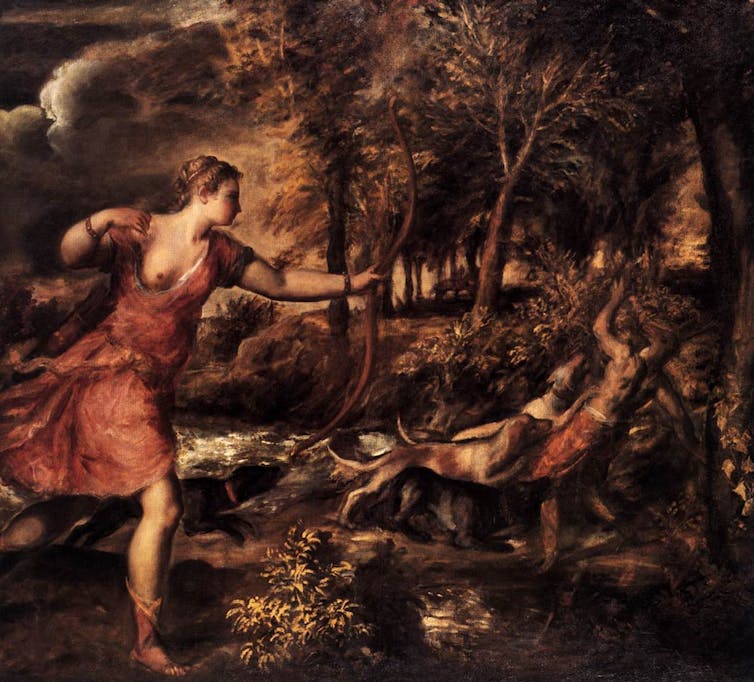
Titian,The Death of Actaeon (1562).
Wikimedia Commons

Alastair Blanshard, The University of Queensland

In this time of pandemic, our authors nominate a work they turn to for solace or perspective.


Why do bad things happen to good people? It is a question that seems particularly pertinent during times of pandemic. Disease is no respecter of virtue. It is just as likely to strike down saint as sinner. Yet even in more normal times, this is a problem we confront with depressing regularity. All too easily one thinks of lives cut too short, of acts of kindness and generosity that go unrewarded. The world can be a cold and bleak place. Why does this happen?

Every culture develops its own answer to this question. For the Greeks and Romans, their solution was that tragedy occurred because the gods were at best indifferent to mankind, at worst downright cruel.

When I’m feeling my most pessimistic, I often think of this world view and, in particular, one story that the Greeks told. It is a story perfectly captured in one of treasures of the National Gallery in London, Titian’s The Death of Actaeon.

The story of Actaeon was one of the most popular of Greco-Roman myths. Its most famous retelling was undertaken by the Roman poet Ovid in his epic Metamorphoses. Titian had little Latin, so he almost certainly read about the myth in one of the many translations and abridged versions of Ovid that circulated in the 16th century.

It is a myth that shows well the sadism of the gods. Actaeon committed no crime. It was only an unfortunate coincidence that, one day while hunting, he happened to stumble across the goddess Diana (Greek: Artemis) as she and her retinue of nymphs were bathing in a forest pool.

Diana, who prized her virginity above all else, did not take kindly to being caught naked by this stranger and so she organised a terrible punishment. With a wave of her hand, she transformed Actaeon into a stag. The hunter now became the prey. To magnify the cruelty, Actaeon was still fully conscious, a man trapped in the body of a beast. Tears trickled down his now furry cheeks.


Read more:
Guide to the classics: Ovid’s Metamorphoses and reading rape


Instantly, Actaeon realised his danger. He had arrived with his pack of hunting dogs and they wasted no time turning upon their former master. The hounds seized his legs and dragged him to the ground. Their jaws bit deep into the shoulder, back, and throat. Actaeon died in agony torn apart by animals he had raised with such devotion.
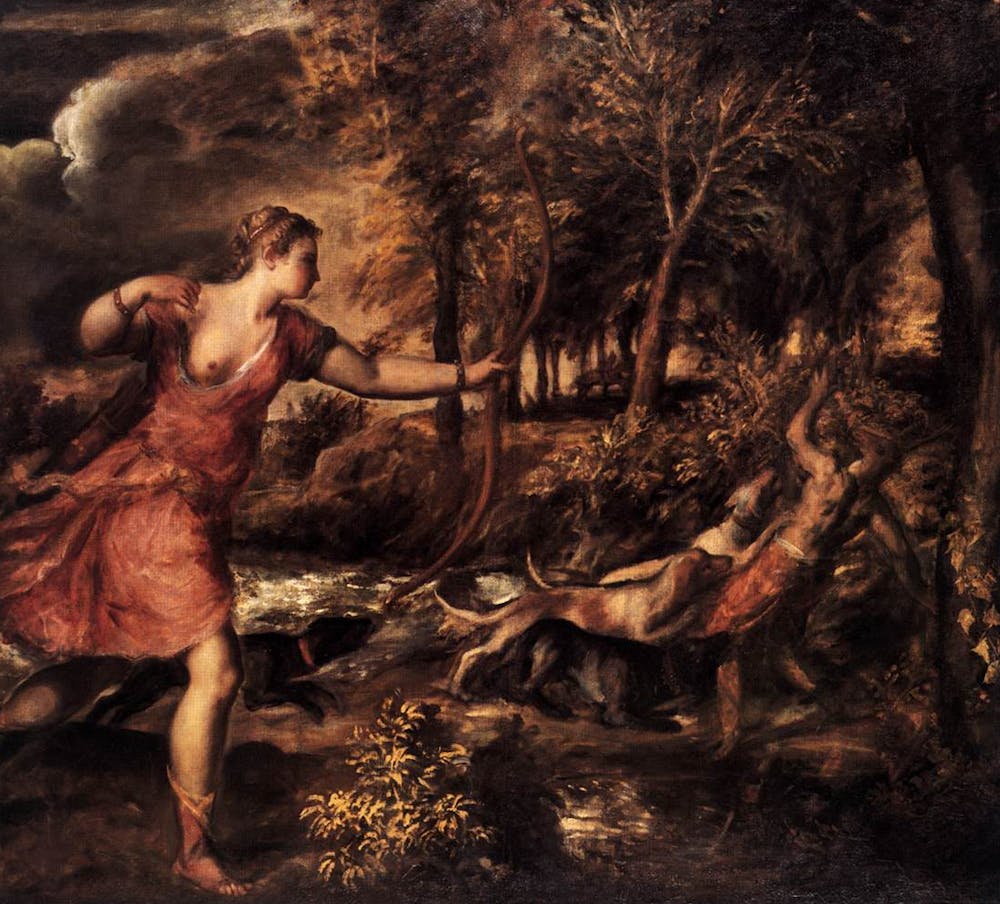
The Death of Actaeon depicts a world of unfair savagery.
Wikimedia Commons

Titian’s version of this tale shows the final moments of Actaeon’s life. It is an extraordinary painting from the end of Titian’s career. Most paintings of this story prefer to focus on the moment when Actaeon encounters the bathing Diana. Unable to resist the voyeuristic potential of the scene, they indulge in a riot of naked female flesh.

There is an earlier Titian of precisely this moment which he painted for Philip II of Spain. Yet in The Death of Actaeon the voyeurism is limited to one exposed nipple, a visual allusion to Actaeon’s crime. Diana dominates the foreground, but the line of her arm draws the viewer’s eye to the figures on the right of the painting. Here we see Actaeon caught in mid-transformation. He still retains his human form, but his head is now that of a stag.

This is enough for the hounds, who have overwhelmed Actaeon. Man, deer, and dogs merge into one muddy, muddled heap, a confusion of forms so jumbled that many have wondered if the painting is actually finished – but in its commotion it perfectly captures the vicious vitality of the act. Against this chaos, Diana stands off to the side ready to administer the coup de grâce, the only form of kindness she is prepared to give.

How could the Greeks and Romans bear to live in a world in which such unfair savagery received divine approval?

Unpredictable forces

The death of Actaeon is emblematic of so much injustice. The ancient Greeks and Romans may not have really had to worry about the correct etiquette for dealing with naked divinities, but they did need to worry about equally unpredictable forces. Theirs was a world stalked by famine, disease, war, and natural disaster.

Yet, it was in facing up to the capriciousness of fate that the ancients found meaning in the world. When Ovid introduces the story of Actaeon, he reminds his readers that no man should be regarded happy until he is dead. The treasures that we possess today can all too quickly and easily be taken away tomorrow. In this we see the true value of Actaeon’s story.

The lesson is not that the world is cruel, but rather that the gifts that we possess need to be cherished for the hard-won, against-the-odds, bounties that they are. It is the absences and deprivations that give value to our lives.

Only the person who has been hungry can truly know what it is to be full. The child born into wealth will never appreciate the riches that they enjoy.

Disasters are inevitable. They should not make us give up on life, but rather we should celebrate the preciousness of that life all the more. To do otherwise is to let the gods and Fate win, to let them turn us into beasts.The Conversation

Alastair Blanshard, Paul Eliadis Chair of Classics and Ancient History Deputy Head of School, The University of Queensland

This article is republished from The Conversation under a Creative Commons license. Read the original article.
Unknown's avatar

Reading during coronavirus: books can be triggering, but difficult texts teach us resilience, too


Shutterstock

Kate Douglas, Flinders University and Kylie Cardell, Flinders University

We teach English at university. Our weekly engagements include navigating unnerving plot twists, falling in and out of love with iconic characters, and evaluating the complexities of language and genre.

Reading challenges how we think. Each week, in English classes, we explore some of the most significant issues and representations affecting various historical periods and cultures.

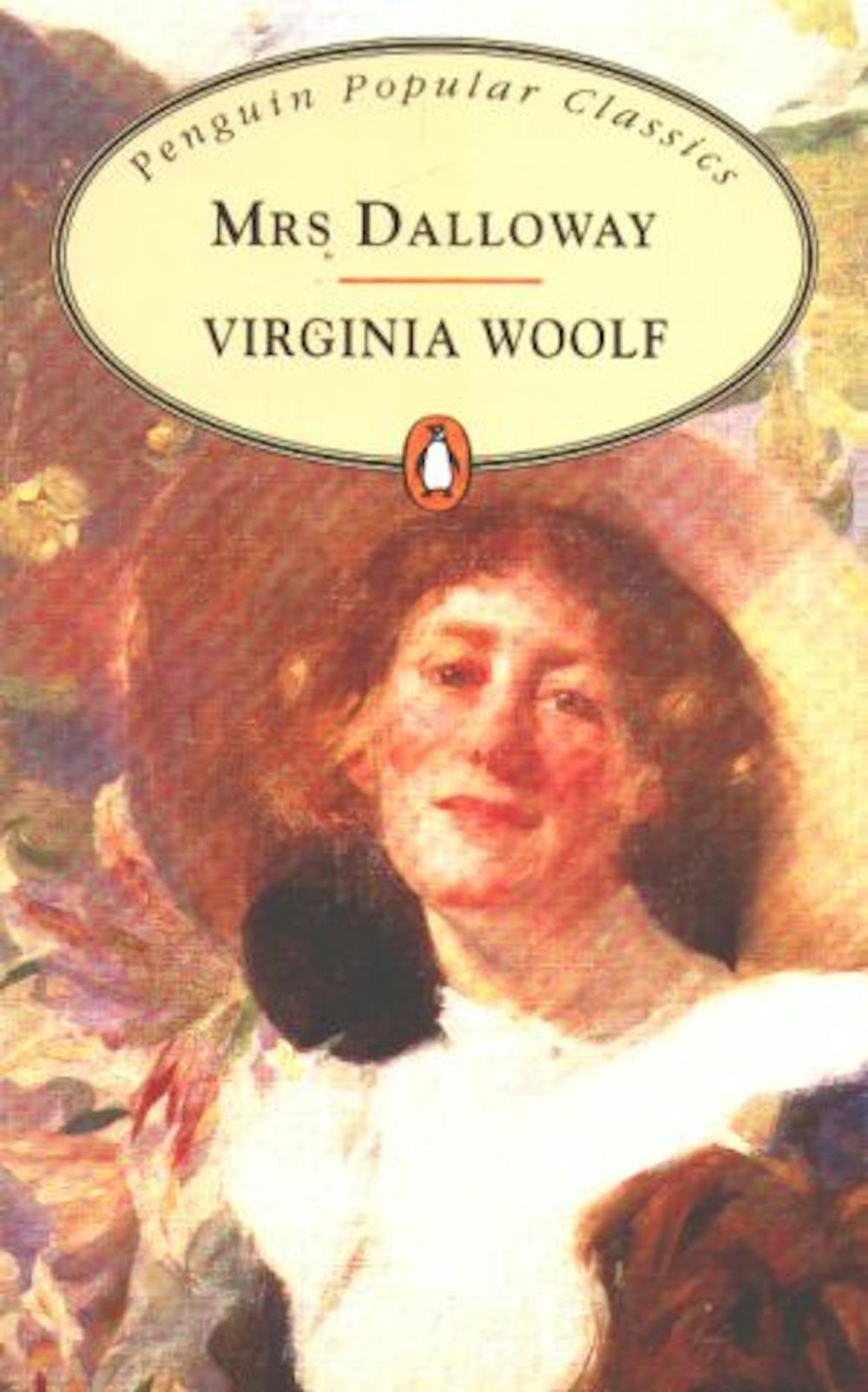
In the first semester, our reading list included classic works of literature that deal with themes including mental illness and psychological as well as physical isolation: Charlotte Perkins-Gilman’s The Yellow Wallpaper, Virginia Woolf’s Mrs Dalloway, and Sylvia Plath’s The Bell Jar.

Then COVID-19 happened.

News reports began circulating on what professors were reading for refuge during the pandemic. An article in the New Yorker pondered why “anxious readers” might be soothed by Mrs Dalloway. This is a text that, in the past, has seen students request trigger warnings for its of “examination of suicidal tendencies” which “may trigger painful memories for students suffering from self-harm”.


Read more:
When literature takes you by surprise: or, the case against trigger warnings


Our teaching suddenly moved online, which created an even more unsettling set of conditions. We were teaching literary texts representing various kinds of trauma to students coping with a range of new (or exacerbated) issues due to sudden loss of employment, social disconnection, anxiety and fear.

Would reading these difficult texts prove to be a solace for our students, a timely example of the social role of literary storytelling, or a trauma all of its own?

What are difficult texts?

Great stories move and they challenge. They draw attention to diverse social and cultural issues and to the transformative potential of empathy. But they can also be difficult and there are a range of reasons why.

The challenge might be intellectual. Or the text confronting on a psychological or emotional level.

A lot of literature is perceived as perpetuating racist stereotypes. Until quite recently, a good deal of canonical literature excluded the perspectives of women. This is something Woolf has written extensively about and that we can see at work in Mrs Dalloway. Part of her novel’s radicalism is its transgressive (for its era) narrowness of scope: a day in the life of a woman.

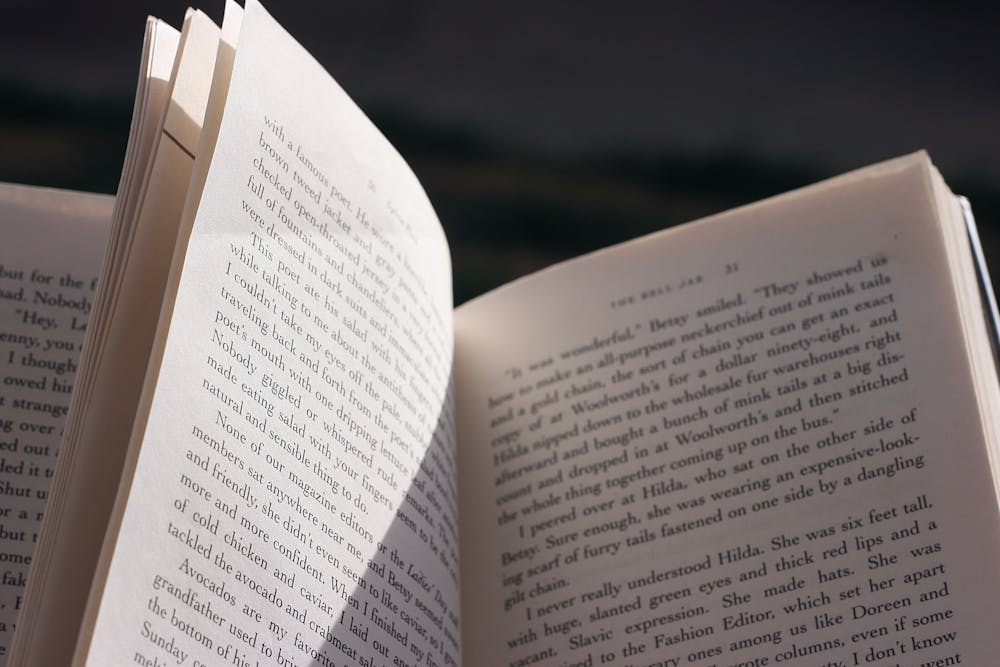
Sylvia Plath’s The Bell Jar explores mental illness, and could be triggering for some readers.
Flickr/kristina, CC BY-ND

And of course, there are themes in literary texts that are in themselves inherently challenging or traumatic: war, racial violence, and misogyny are staples in Shakespeare’s plays.

In identifying difficult literature, the goal posts shift: what was confronting to past generations may not remain true for current readers. So too, what was acceptable to readers of a certain era may no longer be acceptable in the 21st century.

Universities have seen an escalation of interest in content and trigger warnings. Viewpoints have run at both ends of the extreme. Content warnings are either coddling the minds of the “snowflake generation”; or one step away from censorship. Others consider warnings as essential in protecting students from psychological harm.

As literature scholar Michelle Smith notes, it seems widely accepted a lecturer should give a warning before showing a graphic visual scene. However, the argument trigger warnings should accompany written literature that represents difficult or challenging subject matter has been met with more scepticism and opposition.

This places a great deal of responsibility on teachers to decide where to draw the line.

Teachers face the ambitious balance of wanting to protect our students from representations that might be too difficult and trigger unwanted emotional responses, alongside a desire to expose students to complex representations, and histories — for instance of inequality, discrimination, racism and sexism.


Read more:
If you can read this headline, you can read a novel. Here’s how to ignore your phone and just do it


We use the term “trauma texts” to explore how new literary subjects and voices have emerged in the 21st century. Trauma texts reveal literature’s potential for direct and active political and cultural engagement. When we take these texts into the classroom, we ask students to accept difficulty into their lives (if they can), and to witness complex lives and histories in nuanced, critically engaged ways.

Teaching in the time of COVID has re-energised these ongoing debates. For instance, there is an opportunity to recognise (with renewed vigour) how a reader’s individual experience shapes how they approach a particular literary text. We have developed new understandings of how literary texts operate in moments of great cultural or social upheaval.

Virginia Woolf’s Mrs Dalloway is a radical text for its times.
Flickr/Wolf Gang, CC BY-SA

Iso-lit reading during COVID

In our research and practice we have found many positive outcomes when we teach difficult texts in university English. Our students appreciate the texts we teach address recognisable real-world problems.

These books offer opportunities for readers to show empathy, witness injustice and reflect on the ethics of representation. They offer skills (critical reading and thinking, debate, negotiation) that are transferable to diverse work contexts. They come to understand the value of literature (broadly conceived), and the wide cultural and political influence it may have.

Research has shown reading difficult texts with students requires care, and an awareness of how to approach content and trigger warnings. As life narrative theorist Leigh Gilmore reminds us, when we bring trauma texts into the literary classroom, we should teach as if someone in the room has experienced trauma.

The classroom needs to be a safe space.

In teaching difficult texts, it is a reasonable expectation we provide information (in advance) to students regarding any difficult content. We need to open a dialogue between student and teacher and this needs to be maintained throughout the semester so we can offer ongoing support.


Read more:
What my students taught me about reading: old books hold new insights for the digital generation


As well as empowering our students, this approach provides us with an opportunity to reflect, dynamically, on why we want to teach these texts.

In previous research we have argued that in English, we want to encourage students to confront new ideas and to be challenged by what they read. This is integral to the university experience. We are asking students to be generous readers who have the capacity to look inward and outward.

Now, more than ever we need tools to read and respond to human experiences of crisis and pain. Reading difficult literature is one way by which the eternal and ongoing responsibility of humanism can be fulfilled.The Conversation

Kate Douglas, Professor, Flinders University and Kylie Cardell, Lecturer in English, Flinders University

This article is republished from The Conversation under a Creative Commons license. Read the original article.
Unknown's avatar

2020 British Book Awards Winners


The links below are to articles reporting on the winners of the 2020 British Book Awards (the Nibbies).

For more visit:
https://www.booksandpublishing.com.au/articles/2020/06/30/152726/pan-mac-and-nosy-crow-win-at-2020-british-book-awards-queenie-wins-book-of-the-year/
https://publishingperspectives.com/2020/06/british-book-awards-online-and-upbeat-a-colorful-round-of-the-nibbies-2020-covid19/
https://www.theguardian.com/books/2020/jun/29/candice-carty-williams-bernardine-evaristo-first-black-authors-to-win-top-british-book-awards

Unknown's avatar

Writing a Book Review


The link below is to an article that looks at how to write a book review.

For more visit:
https://bookriot.com/how-to-write-a-professional-book-review/

Unknown's avatar

2020 Ngaio Marsh Award Longlist


The link below is to an article that reports on the longlist for this year’s Ngaio Marsh Award for New Zealand crime fiction.

For more visit:
https://www.booksandpublishing.com.au/articles/2020/06/30/152746/ngaio-marsh-award-2020-longlist-announced/

Unknown's avatar

How to Embed an Ebook on a Website


The link below is to an article that takes a look at how to embed an ebook on a website.

For more visit:
https://the-digital-reader.com/2020/07/03/how-to-embed-an-ebook-on-a-website-2020-edition/

Unknown's avatar

How Many Ebooks on a Kindle?


The link below is to an article that considers how many ebooks a Kindle can hold.

For more visit:
https://bookriot.com/how-many-books-can-a-kindle-hold/

Unknown's avatar

Kindle Alternatives


The link below is to an article that takes a look at alternatives to the Kindle.

For more visit:
https://blog.the-ebook-reader.com/2020/07/07/best-kindle-alternatives-in-2020/

Unknown's avatar

Hachette Australia Prize for Young Writers


The link below is to an article that considers changes to what is now the Hachette Australia Prize for Young Writers.

For more visit:
https://www.booksandpublishing.com.au/articles/2020/07/01/152838/john-marsden-prize-renamed-hachette-australia-prize-for-young-writers/

Unknown's avatar

Apps That Read Text Aloud


The link below is to an article that looks at apps that read text aloud.

For more visit:
https://bookriot.com/apps-that-read-to-you/