Unknown's avatar

The myth of the disappearing book


Simone Natale, Loughborough University and Andrea Ballatore, Birkbeck, University of London

After years of sales growth, major publishers reported a fall in their e-book sales for the first time this year, introducing new doubts about the potential of e-books in the publishing industry. A Penguin executive even admitted recently that the e-books hype may have driven unwise investment, with the company losing too much confidence in “the power of the word on the page.”

Yet despite the increasing realization that digital and print can easily coexist in the market, the question of whether the e-book will “kill” the print book continues to surface. It doesn’t matter if the intention is to predict or dismiss this possibility; the potential disappearance of the book does not cease to stimulate our imagination.

Why is this idea so powerful? Why do we continue to question the encounter between e-books and print books in terms of a struggle, even if all evidence points to their peaceful coexistence?

The answers to these questions go beyond e-books and tell us much more about the mixture of excitement and fear we feel about innovation and change.
In our research, we discuss how the idea of one medium “killing” another has often followed the unveiling of new technologies.

It’s all happened before

Even before the advent of digital technologies, critics have predicted the demise of existing media. After television was invented, many claimed radio would die. But radio ended up surviving by finding new uses; people started listening in cars, during train rides and on factory floors.

A family huddles around the television in the late 1950s.
National Archives and Records Administration

The myth of the disappearing book isn’t new, either. As early as 1894, there was speculation that the introduction of the phonograph would spell the demise of the books: They’d be replaced by what we today call audiobooks.

This happened again and again. Movies, radio, television, hyperlinks and smartphones – all conspired to destroy print books as a source of culture and entertainment. Some claimed the end of books would result in cultural regression and decline. Others envisioned utopian digital futures, overstating the advantages of e-books.

It is not by chance that the idea of the death of the book surfaces in moments of technological change. This narrative, in fact, perfectly conveys the mixture of hopes and fears that characterize our deepest reactions to technological change.

Narratives of technological change

To understand why these reactions are so common, one has to consider that we create emotional bonds with media as they become an integral part of our life. Numerous studies have shown how people develop a close relationship with objects such as books, televisions and computers. Sometimes, we even humanize them, giving a name to our car or shouting at our laptop for not working properly. As a result, the emergence of a new technology – like e-readers – doesn’t just indicate economic and social change. It also causes us to adjust our relationship with something that has become an integral part of our day-to-day life.

As a result, we find ourselves longing for what we used to know, but no longer have. And it’s why entire industries develop around retro products and older technologies. The spread of the printing press in 15th-century Europe, for example, made people seek out original manuscripts. The shift from silent to sound movie in the 1920s stimulated nostalgia for the older form. The same happened in the shift from analog to digital photography, from vinyls to CDs, or from black-and-white to color television. Not surprisingly, e-readers stimulated a new appreciation for the material quality of “old” books – and even for their often unpleasant smell.

Fans of vinyl visit a record shop on Record Store Day, a worldwide celebration of independently owned record stores held every April.
Associated Press

The ones who still worry for the disappearance of print books may rest assured: Books have endured many technical revolutions, and are in the best position to survive this one.

Yet the myth of the disappearing medium will continue to provide an appealing narrative about both the transformative power of technology and our aversion to change. In fact, one of the strategies we employ in order to make sense of change is the use of narrative patterns that are available and familiar, such as narratives of death and ending. Easy to remember and to spread, the story of the death of media reflects our excitement for the future, as well as our fear of losing parts of our intimate world – and finally, of ourselves.

The Conversation

Simone Natale, Lecturer in Communication and Media Studies, Loughborough University and Andrea Ballatore, Lecturer, Birkbeck, University of London

This article was originally published on The Conversation. Read the original article.

Unknown's avatar

Amazon Rapids


The link below is to an article that takes a look at Amazon Rapids, an app with short stories for kids.

For more visit:
http://goodereader.com/blog/e-book-news/amazon-rapids-is-a-new-app-that-features-short-stories-for-kids

Unknown's avatar

Scribd Now Offers Subscription Magazines


The links below are to articles reporting on Scribd now offering subscription magazines.

For more vsiit:
http://the-digital-reader.com/2016/11/01/scribd-isnt-dead-now-carries-magazines/
http://goodereader.com/blog/e-book-news/scribd-now-offers-digital-magazines

Unknown's avatar

Calibre is Ten


The link below is to an article reporting on ten years of the ebook managing software Calibre.

For more visit:
http://the-digital-reader.com/2016/10/31/ebook-library-app-calibre-turns-ten-today/

Unknown's avatar

Instapaper Premium Now Free


The links below are to articles reporting on Instapaper ‘premium’ now being free for all users.

For more visit:
http://the-digital-reader.com/2016/11/01/instapaper-makes-premium-tier-free-users/
http://goodereader.com/blog/e-book-news/instapaper-makes-send-to-kindle-free-for-everyone
http://www.hongkiat.com/blog/instapaper-premium-is-free/

Unknown's avatar

Crimes of grammar and other writing misdemeanours


Roslyn Petelin, The University of Queensland

Writing an article like this is just asking for trouble. Already, I can hear one reader asking “Why do you need just?” Another suggesting that like should be replaced by such as. And yet another saying “fancy using a cliché like asking for trouble!”

Another will mutter: “Where’s your evidence?”

My evidence lies in the vehement protestations that I face when going through solutions to an editing test or grammar quiz with on-campus students in my writing courses at The University of Queensland, and no, that’s not deferential capitalisation. It is capital ‘T’.

Confirming evidence lies in the querulous discussion-board posts from dozens of students when they see the answers to quizzes on the English Grammar and Style massive open online course that I designed.


Katie Krueger/Flickr

Further evidence lies in the fervour with which people comment about articles such as the one that you are currently reading. For instance, a 2013 article 10 grammar rules you can forget: How to stop worrying and write proper by the style editor of The Guardian, David Marsh, prompted 956 comments. Marsh loves breaking “real” rules. The title of his recent book is For Who the Bell Tolls. I’d prefer properly to proper and whom to who, but not everybody else would.

Marsh’s 10 forgettable rules are ones that my favourite grammarian, Professor Geoffrey Pullum, co-author of The Cambridge Grammar of the English Language calls zombie rules: “though dead, they shamble mindlessly on”. A list of zombie rules invariably includes never beginning a sentence with “and”, “but”, or “because”, as well as the strictures that are a hangover from Latin: never split an infinitive and never end a sentence with a preposition. It (should it be they?) couldn’t be done in Latin, but it (they?) can be done in English. Just covering my bases here.

So, what’s my stance on adhering to Standard English? I’m certainly not a grammar Nazi, nor even a grammando, a portmanteau term that first appeared in The New York Times in 2012 that’s hardly any softer. Am I a vigilante, a pedant, a per(s)nickety person? Am I a snoot? Snoot is the acronym that the late David Foster Wallace and his mother — both English teachers — coined from Sprachgefühl Necessitates Our Ongoing Tendance or, for those with neither German nor a cache of obsolete words in their vocabulary, Syntax Nudniks of Our Time.

David Foster Wallace
yoosi barzilai Flickr

Foster Wallace reserves snoot for a “really extreme usage fanatic”, the sort of person whose idea of Sunday fun would have been to find mistakes in the late William Safire’s On Language column in the New York Times magazine. Safire was a style maven who wrote articles with intriguing opening lines such as this: “A sinister force for solecism exists on Madison Avenue. It is the work of the copywrongers”.

Growing up with a mother who would stage a “pretend” coughing fit when her children made a grammar error clearly contributed to Foster Wallace’s SNOOTitude. His 50-page essay “Authority and American Usage”, published in 2005, constitutes a brilliant, if somewhat eccentric, coverage of English grammar.

I need to be a bit of a snoot because part of my brief as a writing educator is to prepare graduates for their utilitarian need to function as writing workers in a writing-reliant workplace where professional standards are crucial and errors erode credibility. (I see the other part of my brief as fostering a love of language that will provide them with lifelong recreational pleasure.)

How do I teach students to avoid grammar errors, ambiguous syntax, and infelicities and gaucheries in style? In the closing chapter of my new book on effective writing, I list around 80 potential problems in grammar, punctuation, style, and syntax.

My hateful eight

My brief for this article is to highlight eight of these problems. Should I identify ones that peeve me the most or ones that cause most dissonance for readers? What’s the peevishness threshold of readers of The Conversation? Let’s go with mine, for now; they may also be yours. They are in no particular order and they depend on the writing context in which they are set: academic, corporate, creative, or journalistic.

Archaic language: amongst, whilst. Replace them with among and while.

Resistance to the singular “they” Here’s an unbearably tedious example from a book published in 2016 in London: “The four victims each found a small book like this in his or her home, or among his or her possessions, several weeks before the murder occurred in each case”. Replace his or her with their.

In January this year, The American Dialect Society announced the singular “they” as their Word of the Year for 2015, decades after Australia welcomed and widely adopted it.

Placement of modifiers. Modifiers need to have a clear, direct relationship with the word/s that they modify. The title of Rob Lowe’s autobiography should be Stories I Tell Only My Friends, not Stories I Only Tell My Friends. However, I’ll leave Brian Wilson alone with “God only knows what I’d be without you”, though I know that he meant “Only God knows what I’d be without you”.

And how amusing is this commentary, which appeared in The Times on 18 April 2015? “A longboat full of Vikings, promoting the new British Museum exhibition, was seen sailing past the Palace of Westminster yesterday. Famously uncivilised, destructive and rapacious, with an almost insatiable appetite for rough sex and heavy drinking, the MPs nevertheless looked up for a bit to admire the vessel”.

Incorrect pronouns. The irritating genteelism of “They asked Agatha and myself to dinner” and the grammatically incorrect “They asked Agatha and I to dinner”, when in both instances it should be me .

Ambiguity/obfuscation “Few Bordeaux give as much pleasure at this price”. How ethical is that on a bottle of red wine of unidentified origin?

The wrong preposition The rich are very different to you and me. (Change “to” to “from” to make sense.) Not to be mistaken with. (Change “with” to “for”). No qualms with. (Change “with” to “about”.)


Alastair Bennett/Flickr

The wrong word. There are dozens of “confusable” words that a spell checker won’t necessarily help with: “Yes, it is likely that working off campus may effect what you are trying to do”. Ironically, this could be correct, but I know that that wasn’t the writer’s intended message. And how about practice/practise, principal/principle, lead/led, and many more.

Worryingly equivocal language. After the Easter strike some time ago, the CEO of QANTAS, Alan Joyce, sent out an apologetic letter that included the sentence: “Despite some sensational coverage recently, safety was never an issue … We always respond conservatively to any mechanical or performance issue”. I hoped at the time that that’s not what he meant because I felt far from reassured by the message.

Alert readers will have noticed that I haven’t railed against poorly punctuated sentences. I’ll do that next time. A poorly punctuated sentence cannot be grammatically correct.

The Conversation

Roslyn Petelin, Associate Professor in Writing, The University of Queensland

This article was originally published on The Conversation. Read the original article.

Unknown's avatar

How comic books help us to relive our childhood


Benoit Peeters, Lancaster University

Traditionally, comic books have been aimed primarily at children – to such a degree that they are often identified with them. Regardless of the recent evolution of the genre, particularly given the growing popularity of more adult graphic novels, to me the link between comics and childhood continues to be very profound.

There are certain regressive aspects to our love of comics and “bandes dessinées” (or BD) – as they are known in French, my native language. For example, collectors often pay incredible prices for figurines and old editions. They also have a remarkable desire to keep alive mythical characters after the death of their creator: from Batman and Astroboy to Spirou and Blake and Mortimer, characters continue to be resuscitated, with varying degrees of success. It’s as if the readers who were comforted in their childhood by these heroes can’t bear to see them disappear.

This seems to be something particular to the medium of the comic book. Of course, we remember the novels that we loved during our childhood, but we don’t read and return to them as often as our favourite comics.

A thirst for innocence

It’s also possible to admire great works of literature, philosophy and art without the need to return to them compulsively or to spend thousands on first editions. But there is a kind of archaic drive behind our relationship with comics, an inconsolable nostalgia mixed with an irresistible desire to not completely grow up. We dismiss this phenomenon by talking about childishness. But it’s more about a thirst for innocence or permanence that we keep carrying around inside us, and which comics allow us to satisfy easily.

But of course, this direct link with childhood is only one aspect of graphic fiction. Comics have also been evolving.

Winsor McCay: Little Nemo in Slumberland

In many modern comics since the 1970s, for example, the heroes are no longer invincible – they are affected by age or their own fragility. Comic book characters increasingly are caught in linear time, which affects and transforms them, just like it does every one of us. Links with others are made and remade, injuries cause real suffering, people, including the heroes themselves, die. They have abandoned the mythic to enter the romantic.

This new relationship with time is at the heart of many celebrated graphic novels, particularly the two volumes of the Pulitzer prize-winning Maus, which reimagines the Holocaust, casting mice as the Jews and cats as the Nazis. But Art Spiegelman’s masterpiece doesn’t just deal with the Holocaust and its survivors. It is concerned with a lot of other issues: the relationship between father and son, the difficulties of communication and of forgiveness. With the death of Vladek, the narrator’s father, in the middle of the story, memory changes function and gives a new sense to the work: mourning and history are inseparable.

In another way, Japanese manga such as My Father’s Journal or A Distant Neighborhood by Jirô Taniguchi pose similar questions. So too do the extraordinary biographical works accomplished by Emmanuel Guibert in The Photographer and Alan’s War. Mixing personal and universal elements, those stories are subtle and complex as the best novels.

A particularly striking example is proposed by Lint, one of the recent books produced by Chris Ware which describes the life of an ordinary man, from his birth to his last breath in 70 pages. The graphic and narrative style is codified to the extreme, far removed from any apparent realism. Ware’s designs are on the edge of a diagrammatic style. And yet, when we read this book – in which each of the years of Lint’s life is reduced to a single page – we are plunged into a story that deeply moves us.

This book moves us, not just because we identify with a character, as we might when watching a film, but because we identify with the medium itself. The pages of Chris Ware’s book evoke a mixture of emotions, primitive and childlike and sophisticated and adult at the same time, that appeal to a whole spectrum of experiences.

This highly sophisticated graphic novel can help us to understand how comic book art is connected with childhood, even in its most subtle and modern evolutions.

Could a child recognise it?
Shutterstock

Drawing donkeys

The simplicity of comic books is another key feature. Around 1840, Rodolphe Töpffer, inventor and first theorist of the comic book, had already started questioning the manner in which a child recognises a donkey illustrated in a linear drawing. When a donkey is represented in a picture in the middle of the countryside accompanied by a play of light and shadow, a young child can’t always immediately identify it. But if the donkey is suggested only by a few lines, the child doesn’t hesitate to recognise it. Even if a tree trunk is placed in front of the donkey in this simple linear drawing, so that only a few fragments of it are left, the child still sees it for what it is.

This tells us something about the specific way we perceive caricatures, such as those in comic books. When it’s a light touch design, a caricature fixes an image in our minds which cannot be erased, as if it has unveiled somebody’s true character. Through this we can see another essential quality of the comic book: its ability to stick in our memory.

In the midst of the flux of images and art surrounding us, comic books have a special and unforgettable place. They have a remarkable capacity to prolong the life of images well beyond the time of reading. The most remarkable sequences of images continue to live with us, accompanying us for years.

In this regard, the nearest thing to the comic book is perhaps the song. I don’t think there is any song that we fall in love with immediately: we have to listen to it again and again – sometimes obsessively – until it has infiltrated us and accompanies us in our daily life. To me, comics are similar to this: they live where we dream to live. There is something unique and profound here, comic books are a privileged way of renewing the buried emotions of our childhood.

It’s Asterix versus Tintin in a Clash of the Toon Titans for the Lakes International Comic Art Festival’s opening night (Friday, October 14). The Festival team have joined forces with Lancaster University to stage a battle of comic superstars. Putting the case for Tintin is Lancaster University’s new professor in Graphic Fiction and Comic Art, Benoît Peeters. Asterix is being championed by Peter Kessler, BAFTA award-winning producer and author of The Complete Guide to Asterix.

The Conversation

Benoit Peeters, Professor of Graphic Fiction and Comic Art, Lancaster University

This article was originally published on The Conversation. Read the original article.

Unknown's avatar

Boys and Reading


The link below is to an article that takes a look at boys and the way they read.

For more visit:
https://www.theguardian.com/education/2016/oct/22/the-truth-about-boys-and-books-they-read-less-and-skip-pages

Unknown's avatar

How Dostoevsky predicted Trump’s America


Ani Kokobobo, University of Kansas

As a professor of Russian literature, I’ve come to realize that it’s never a good sign when real life resembles a Fyodor Dostoevsky novel.

Donald Trump’s presidential campaign, with its riotous rhetoric and steady stream of scandals, calls to mind Dostoevsky’s most political novel, “Demons,” written in 1872. In it, the writer wanted to warn readers about the destructive force of demagoguery and unchecked rhetoric, and his cautionary messages – largely influenced by 19th-century Russian political chaos – resonate in our present political climate.

To show his readers just how bad things could get if they didn’t pay attention, Dostoevsky linked his political nightmare to unhinged impulses and the breakdown of civility.

A passion for destruction

Dostoevsky was as addicted to newspapers as some of us are to social media, and he often plucked crises and violence right from the headlines, refashioning them for his fiction.

Russia during the 1860s and 1870s – the heyday of the author’s career – was experiencing massive socioeconomic instability. Tsar Alexander II’s Emancipation of the Serfs freed Russian peasants from a form of class bondage, while the subsequent Great Reforms aimed to restructure the executive and judidical branches, as well as the military, tax code and education system. The reforms were supposed to modernize the country by dragging it out of the caste-like system of estates and legal privilege. But it didn’t do much to improve the economic lot of the peasant.

It was a reversal of America’s present political landscape. While today there’s simmering discontent from the right, in 19th-century Russia it was leftists who were enraged. They were angered by the reforms for not going far enough and had lost hope in the government’s ability to produce meaningful change.

Sergei Nechaev influenced Dostoevsky’s Pyotr Verkhovensky.
Wikimedia Commons

One of the only unifying ideas among the more radical left-wing political factions of the period was the belief that the tsarist regime must be eliminated. Important public figures, like Russian anarchist Mikhail Bakunin, advocated for destruction of the status quo as an end greater than all ideologies. As Bakunin famously exhorted: “The passion for destruction is a creative passion, too.”

Bakunin’s conviction that a new world could rise only from the ashes of tsarism was actually put into practice by his one-time disciple, Sergei Nechaev, who was the inspiration for Dostoevsky’s protagonist in “Demons,” Pyotr Verkhovensky.

A slippery slope from incivility to violence

In 1869, Nechaev orchestrated the murder of a young student, an event that so shocked and angered Dostoevsky that it became the basis for “Demons.”

The novel begins in a boring provincial backwater inhabited by middle-aged people and ineffectual young liberals, all engrossed in their romantic lives. Pyotr Verkhovensky arrives and persuades many of these same characters to join his underground revolutionary society. Passions are stirred and the local order destabilized as the town enters a downward spiral that concludes with arson and several murders.

What’s most relevant to our time in “Demons” is not its ideologues but the anti-intellectual and impulse-driven nature of Pyotr’s rebellion. In Pyotr, Dostoevsky created a demagogue and pure nihilist, a political figure who appeals to people’s baser desires. Under his influence, the townspeople lose all impulse control and grow reckless, rebelling against all conventions of decency for a good laugh. At one point they desecrate a sacred icon; at another, they gleefully gather around the body of someone who has committed suicide and eat the food he’s left behind.

If their pranks, insults and disorder seem harmless, the decline in the level of public discourse act as a precursor to the violent and destructive acts at the novel’s conclusion. A skilled psychological writer, Dostoevsky never saw violence as divorced from normal human behavior. What’s most haunting about his works is just how close otherwise ordinary people are from doing extraordinarily awful things.

In “Demons,” narrative tensions escalate in a deliberately gradual way. What begins as minor impoliteness becomes scandal, arson, murder and suicide. Dostoevsky is essentially saying that criminal acts are rooted in social transgression; uncivil behavior facilitates scapegoating, dehumanization and, eventually, violence.

‘Make America Great Again!’

Donald Trump’s unconventional campaign for president powerfully evokes Dostoevsky’s novel. Aside from his pro-gun and anti-immigration positions, Trump doesn’t offer many concrete political plans. As we evaluate what motivated 14 million Americans to vote for him in the primaries, we might consider new research showing that his candidacy has a primarily emotion-based – rather than ideological or economical – appeal. There are notable anti-establishment sentiments among his supporters; many are disaffected, middle-aged white people who believe that American institutions aren’t working on their behalf.

And while his notorious campaign motto “Make America Great Again” is framed in a positive way, it actually advances a version of Bakunin’s creative destruction. It stands for purging the establishment, for recreating a nostalgia-tinged version of some lost, past America. We’ve already seen this destructive drive in its more Nechaevist, low-brow form at Trump rallies, where several people have been attacked.

A delegate at the Republican National Convention holds a ‘Lock Her Up!’ sign, referring to Hillary Clinton.
Mike Segar/Reuters

There’s another aspect of Trump’s popularity that ties him to Dostoevsky’s “Demons.” Trump, in the way he carries himself, embodies the complete disavowal of impulse control we see in the novel. Unlike most political candidates, he speaks off the cuff, simultaneously reflecting and stoking the anger and pessimism of his supporters.

For instance, he said he wanted to “hit” some of the speakers who criticized him at the Democratic National Convention; in his words, there’s anger, a need to provoke and deep-seated irreverence. His supporters feel empowered by this. Without weighing his policies, they’re viscerally drawn to the spectacle of his candidacy, like the townspeople following Pyotr Verkhovensky in “Demons” who delight in the gossip and scandals he creates.

To complete the parallel, we might turn to the novel’s ending, which could have a sobering effect. Basic incivility gives way to an anarchic vision of creative destruction; many die or lose their minds due to Pyotr’s machinations. At one point, seemingly without thinking, crowds crush a female character to death because they falsely believe she’s responsible for the violence in town.

When audiences at Trump rallies verbalize violence by screaming “Lock her up” and “Kill her,” or when Donald Trump – either wittingly or unwittingly – advocates Second Amendment violence, I wonder whether they aren’t coming dangerously close to the primal violence of “Demons.”

The Conversation

Ani Kokobobo, Assistant Professor of Russian Literature, University of Kansas

This article was originally published on The Conversation. Read the original article.

Unknown's avatar

If you want to publish a truly subversive novel, have a main character who’s fat


Beth Younger, Drake University

Banned Books Week, held this year from Sept. 25 to Oct. 1, is an annual event designed to draw national attention to the harms of censorship. Created in 1982 by the American Library Association in response to a growing number of “challenged” books in schools and libraries, the week is really about celebrating the freedom to read.

Much of the practice of book banning takes the form of challenging a book deemed subversive and objectionable, with profanity or sexual content often the book challengers’ source of ire.

These days, such campaigns can elicit an eye roll: everyone knows that teens are regularly exposed to profanity and sex online and on TV. (Rather than try to ban books, a better approach is to instead teach media literacy so young people are better able to contextualize what they’re exposed to.)

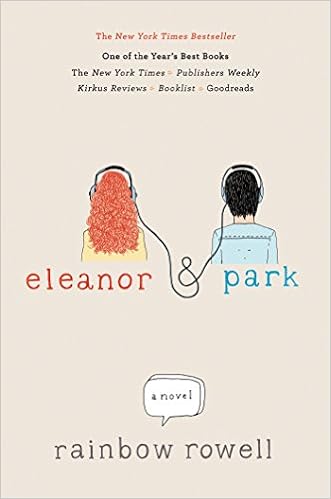
The problem is that when you go after books for swears or sex, you might also be threatening books that are truly subversive: the ones that confront our unconscious biases, whether it’s weight or race, and question the way we tend to think about ourselves and others. One frequently challenged book – Rainbow Rowell’s 2013 young adult novel “Eleanor & Park” – does just that.

Challenged in Minnesota

“Eleanor & Park” is a romance novel about two misfits who become friends, fall in love and endure the cruelties of the world: abusive parents, poverty and bullying.

The same year it was published, a parent group in the Anoka-Hennipin school district in Minnesota tried (and failed) to get the book removed from the curriculum and school libraries. But they did manage to get the author’s visit to Anoka High School canceled.

Citing 227 instances of profanity, the parents alleged that “Eleanor & Park” was “littered with extreme profanity and age inappropriate subject matter that should never be put into the hands and minds of minor children, much less promoted by the educational institutions and staff we entrust to teach and protect our children.”

What are we afraid of?

Banning books in the United States is nothing new, and there’s a long history of trying to prevent people (mostly kids and teens) from reading things some think they shouldn’t read.

It seems that the only thing worse than sex or the “f word” in young adult literature is being a lesbian. Depicting a gay couple got copies of Nancy Garden’s 1982 lesbian romance novel “Annie on My Mind” burned on the steps of the Kansas City School District headquarters in 1993.

Young adult author Judy Blume.
Carl Lender/flickr, CC BY

Judy Blume’s books are famous for pushing the “decency” envelope. Her 1972 novel “Forever…” is also frequently banned for sexual content and for profanity. (Pretty much yearly since its publication, “Forever…” has been challenged by Focus on the Family or The Christian Coalition.)

But there’s another aspect to “Forever…” that’s rarely discussed: It has a fat character who has lots of sex. Sybil is often seen as a foil to the main character Katherine, a rail-thin control freak who loses her virginity deliberately and with purpose.

Sybil is the other side of the body image spectrum: She’s fat and “has been laid” by six guys. At least she gets to have sex, which is pretty uncommon for a fat girl in 1972 young adult fiction. (And there’s a penis named Ralph in the book, yet another reason to read this classic.)

But “Forever…” is an extreme outlier. The way the media depicts fat characters – and fat people – has been a problem for generations. In 2011 NPR aired a piece on fat stereotypes in pop culture. The report dissected the typical fat character in TV shows and films: someone “self-loathing” and “desperate to be loved.”

Of course, the lives of fat people aren’t much different from those of thin people. But you wouldn’t know that from the way fat bodies are portrayed on TV and in film. Research on “weight bias in the media” suggests that most representations of fat people in media are stigmatizing. More research suggests that shows like “The Biggest Loser” and “More to Love” reinforce anti-fat bias rather than fat acceptance.

We were all teenagers once

This is why “Eleanor & Park” is so refreshingly different.

Like many protagonists in young adult novels, Eleanor is a teenager who’s desperate to be an adult so she can escape her awful circumstances. But while the parents trying to ban the book pounced on the profanity, they ignored one of the novel’s biggest triumphs: Eleanor is fat. Yes, Eleanor is a fat female protagonist in a young adult romance novel and she’s in love – she even has a cute boyfriend named Park.

The cover art for Rainbow Rowell’s ‘Eleanor & Park.’
Amazon

As author John Green wrote in a review of the novel, “…the obstacle in ‘Eleanor & Park’ is simply the world. The world cannot stomach a relationship between a good-looking Korean kid and Big Red.” (Big Red is Eleanor’s nickname.)

Last year, Buzzfeed writer Kaye Toal penned a beautiful personal essay about discovering Eleanor in an airport bookstore. Part of what struck Toal as significant about Eleanor is that she is fat yet is not required to become thin or change in order to be loved. Despite the recent increase in fat characters appearing on television and in movies, many of them are required to change in order to be accepted. Not surprisingly, another study published in 2013 connects the prevalence of the “thin ideal” in popular literature to low self-esteem in female readers.

Letting Eleanor be fat and be loved is much needed in today’s climate of “the obesity epidemic” and misplaced concerns with fatness. Park loves Eleanor; she loves him back. A simple story, but with a difference. Eleanor’s fat is not really a crucial aspect of her being. She doesn’t need to be fixed.

That’s what makes this lovely and painful novel subversive – and what makes efforts to ban it all the more misguided.

The Conversation

Beth Younger, Associate Professor of English & Women’s and Gender Studies, Drake University

This article was originally published on The Conversation. Read the original article.