
The link below is to an article that takes a look at the longlist for the 2018 Miles Franklin Literary Award.
For more visit:
https://blog.booktopia.com.au/2018/05/23/2018-miles-franklin-literary-award-longlist/

The link below is to an article that takes a look at the longlist for the 2018 Miles Franklin Literary Award.
For more visit:
https://blog.booktopia.com.au/2018/05/23/2018-miles-franklin-literary-award-longlist/
The link below is to an article that takes a look at annotations.
For more visit:
https://www.makeuseof.com/tag/annotations-guide-and-tools/
The link below is to an article that takes a look at the libraries of Finland.
For more visit:
https://www.theguardian.com/cities/2018/may/15/why-finlands-cities-are-havens-for-library-lovers-oodi-helsinki
The link below is to an article that takes a look at some Goodreads alternatives.
For more visit:
https://www.makeuseof.com/tag/book-sites-alternatives-goodreads/
The link below is to an article reporting on the closure of Kindle Worlds.
For more visit:
https://the-digital-reader.com/2018/05/15/amazon-to-shut-down-kindle-worlds/
Alice Whitmore, Monash University
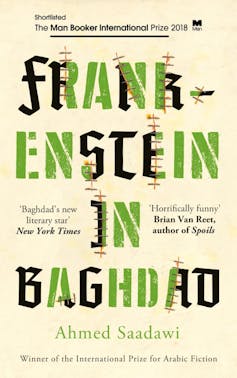
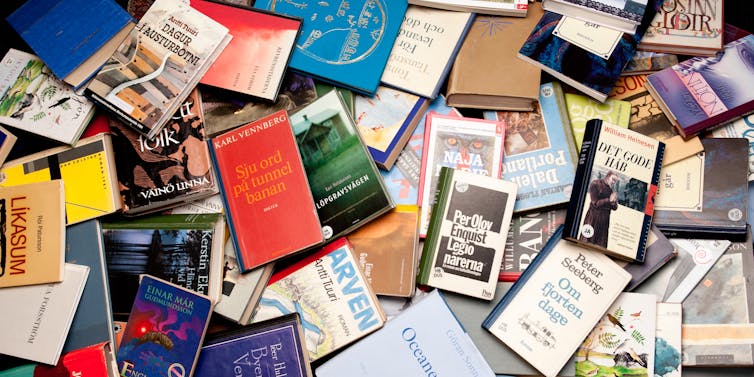
With today’s announcement of the winner of the Man Booker International Prize shortlist, translation again finds itself in the foreground of the literary landscape. This year’s shortlist includes novels translated from a diverse array of languages including Arabic (Frankenstein in Baghdad by Ahmed Saadawi), Hungarian (László Krasznahorkai’s The World Goes On) and Korean (The White Book by Han Kang).
In 2016, the prize evolved from a biennial event, designed to honour one living author’s overall contribution to fiction on the world stage, to a yearly prize for fiction in translation. In Australia, too, literary translation is experiencing something of a moment. Shokoofeh Azar’s The Enlightenment of the Greengage Tree, translated from Farsi, was recently shortlisted for the Stella Prize.
While Europe remains the overwhelming source of translated fiction in Australia, European writing is no longer restricted to classics and bestsellers. Scandinavian crime thrillers are still reliable favourites, but we are also seeing a greater range of Scandinavian literary fiction in translation, alongside relatively underrepresented European languages like Polish and Hungarian.
Witold Szabłowski’s Dancing Bears (translated by Antonia Lloyd-Jones) and Péter Gárdos’s Fever at Dawn (translated by Liz Szász) are outstanding recent examples of the latter.
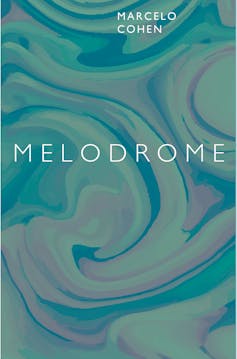
There are also more works of Asian, Middle Eastern and Latin American literature emerging in translation: Un-su Kim’s forthcoming novel The Plotters, translated by Sora Kim-Russell; Nir Baram’s A Land Without Borders, translated by Jessica Cohen; and Chris Andrews’s forthcoming translation of Marcelo Cohen’s Melodrome, to name just a few.
This suggests the growing openness of Australian readerships towards the rich cultural imaginations of the most intensely othered parts of the world. Literary connections with places like these also link Australia more closely to the experiences of its growing migrant communities.
Two decades ago, translation scholars Susan Bassnett and André Lefevere argued that, as a result of the “coming of age” of translation studies and cultural studies, both disciplines had shifted away from their “Eurocentric beginnings” towards “a new internationalist phase”. Since then, reading cultures across the English-speaking world have taken a similar turn, embracing and engaging with translated literature as never before.

In Australia, small and independent presses have been leading the charge. Brow Books, the new books imprint of Melbourne literary magazine The Lifted Brow, recently announced a co-publishing agreement with UK-based publisher Tilted Axis Press. Brow Books will be kicking off the partnership in August with the Australian publication of South Korean novelist Han Yujoo’s The Impossible Fairytale (translated by Janet Hong).
In 2018 the rights to Brow Books’ first translated title – the short fiction collection Apple and Knife, written by Indonesian-born Intan Paramaditha and translated by New Zealand scholar Stephen Epstein – were sold to Harvill Secker, an imprint of Random House UK, demonstrating that Australian translations have global appeal, too.
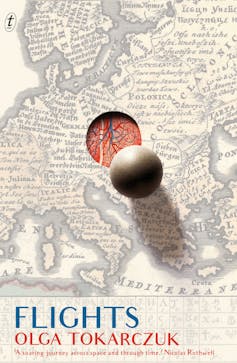
Other, more established independent presses have strengthened their commitment to translated literature in recent years. Text Publishing is a mainstay of literary translation in Australia, and is the local publisher of two titles on this year’s Man Booker International longlist: Wu Ming-Yi’s The Stolen Bicycle and Olga Tokarczuk’s Flights, (the latter has been shortlisted for the prize). Text also publishes acclaimed international authors like Herman Koch, Yuri Herrera and Marie Darrieussecq, and has been known to dabble in popular psychology, memoir, and other non-fiction genres in translation.
Melbourne and London-based Scribe and Sydney-based Giramondo have both made strides in publishing translated literature. With the launch of Giramondo’s new Southern Latitudes series, devoted to writers from the southern hemisphere, it is set to publish more Latin American work in translation in coming years.
What emerges from this snapshot of the literary translation scene, both here and abroad, is the crucial role played by small and independent presses. Such publishers are the lifeblood of marginal, challenging and “unprofitable” literature, whether local or international.
The fact is, Australians are reading – and publishing – literature in translation, and their tastes are broader than ever. Indeed, in the face of mounting political isolationism, translated fiction might just be the thing to save us. Translation provides a kind of window (if a temporary and sometimes foggy one) onto the experiences and imaginations of people we would never normally have the chance to observe.
 These books give us a glimpse of lives just as real and complex and miserable and beautiful, imaginations just as vivid and dark and brilliant and playful as our own. If Australians are reading more widely, this can only be a good thing.
Alice Whitmore, Assistant lecturer, Monash University
This article was originally published on The Conversation. Read the original article.
The link below is to an article that considers the new Google One service as a possible online ebook storage solution.
For more visit:
https://goodereader.com/blog/e-book-news/will-you-store-your-ebooks-on-google-one
Vera Tobin, Case Western Reserve University
Recently I did something that many people would consider unthinkable, or at least perverse. Before going to see “Avengers: Infinity War,” I deliberately read a review that revealed all of the major plot points, from start to finish.
Don’t worry; I’m not going to share any of those spoilers here. Though I do think the aversion to spoilers – what The New York Times’ A.O. Scott recently lamented as “a phobic, hypersensitive taboo against public discussion of anything that happens onscreen” – is a bit overblown.
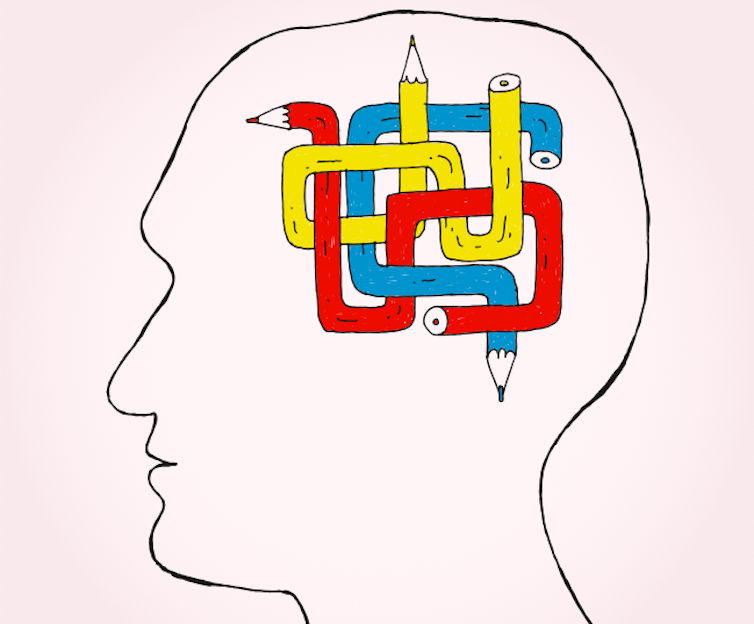
As a cognitive scientist who studies the relationship between cognition and narratives, I know that movies – like all stories – exploit our natural tendency to anticipate what’s coming next.
These cognitive tendencies help explain why plot twists can be so satisfying. But somewhat counterintuitively, they also explain why knowing about a plot twist ahead of time – the dreaded “spoiler” – doesn’t really spoil the experience at all.
When you pick up a book for the first time, you usually want to have some sense of what you’re signing up for – cozy mysteries, for instance, aren’t supposed to feature graphic violence and sex. But you’re probably also hoping that what you read won’t be entirely predictable.
To some extent, the fear of spoilers is well-grounded. You only have one opportunity to learn something for the first time. Once you’ve learned it, that knowledge affects what you notice, what you anticipate – and even the limits of your imagination.
What we know trips us up in lots of ways, a general tendency known as the “curse of knowledge.”
For example, when we know the answer to a puzzle, that knowledge makes it harder for us to estimate how difficult that puzzle will be for someone else to solve: We’ll assume it’s easier than it really is.
When we know the resolution of an event – whether it’s a basketball game or an election – we tend to overestimate how likely that outcome was.
Information we encounter early on influences our estimation of what is possible later. It doesn’t matter whether we’re reading a story or negotiating a salary: Any initial starting point for our reasoning – however arbitrary or apparently irrelevant – “anchors” our analysis. In one study, legal experts given a hypothetical criminal case argued for longer sentences when presented with larger numbers on randomly rolled dice.
Either consciously or intuitively, good writers know all of this.
An effective narrative works its magic, in part, by taking advantage of these, and other, predictable habits of thought. Red herrings, for example, are a type of anchor that set false expectations – and can make twists seem more surprising.
A major part of the pleasure of plot twists, too, comes not from the shock of surprise, but from looking back at the early bits of the narrative in light of the twist. The most satisfying surprises get their power from giving us a fresh, better way of making sense of the material that came before. This is another opportunity for stories to turn the curse of knowledge to their advantage.
Remember that once we know the answer to a puzzle, its clues can seem more transparent than they really were. When we revisit early parts of the story in light of that knowledge, well-constructed clues take on new, satisfying significance.
Consider “The Sixth Sense.” After unleashing its big plot twist – that Bruce Willis’ character has, all along, been one of the “dead people” that only the child protagonist can see – it presents a flash reprisal of scenes that make new sense in light of the surprise. We now see, for instance, that his wife (in fact, his widow) did not snatch up the check at a restaurant before he could take it out of pique. Instead it was because, as far as she knew, she was dining alone.
Even years after the film’s release, viewers take pleasure in this twist, savoring the degree to which it should be “obvious if you pay attention” to earlier parts the film.
At the same time, studies show that even when people are certain of an outcome, they reliably experience suspense, surprise and emotion. Action sequences are still heart-pounding; jokes are still funny; and poignant moments can still make us cry.
As UC San Diego researchers Jonathan Levitt and Nicholas Christenfeld have recently demonstrated, spoilers don’t spoil. In many cases, spoilers actively enhance enjoyment.
In fact, when a major turn in a narrative is truly unanticipated, it can have a catastrophic effect on enjoyment – as many outraged “Infinity War” viewers can testify.
If you know the twist beforehand, the curse of knowledge has more time to work its magic. Early elements of the story will seem to presage the ending more clearly when you know what that ending is. This can make the work as a whole feel more coherent, unified and satisfying.
Of course, anticipation is a delicious pleasure in its own right. Learning plot twists ahead of time can reduce that excitement, even if the foreknowledge doesn’t ruin your enjoyment of the story itself.
 Marketing experts know that what spoilers do spoil is the urgency of consumers’ desire to watch or read a story. People can even find themselves so sapped of interest and anticipation that they stay home, robbing themselves of the pleasure they would have had if they’d simply never learned of the outcome.
Vera Tobin, Assistant Professor of Cognitive Science, Case Western Reserve University
This article was originally published on The Conversation. Read the original article.
The link below is to an article that takes a look at saving rare books from climate change.
For more visit:
https://psmag.com/environment/saving-our-archives-from-climate-change
The link below is to an article that asks ‘are ebooks too expensive in 2018?’
For more visit:
https://goodereader.com/blog/e-book-news/are-ebooks-too-expensive-in-2018
I certainly don’t agree with all of the comments in the article, though they seem typical for this particular writer.
 At the BookShelf

You must be logged in to post a comment.