
The link below is to an article that takes a look at listening to audiobooks.
For more visit:
https://www.janefriedman.com/audiobook-shame/

The link below is to an article that takes a look at listening to audiobooks.
For more visit:
https://www.janefriedman.com/audiobook-shame/
The link below is to an article that looks at 5 things not to say to authors (they are a touchy mob).
For more visit:
https://litreactor.com/columns/5-things-you-shouldnt-say-to-authors
The link below is to an article that looks at 5 ways for writers to stay motivated.
For more visit:
https://litreactor.com/columns/5-ways-for-writers-to-stay-motivated-in-the-heat-of-summer
The link below is to an article reporting on the return of the ‘premium’ service for Instapaper.
For more visit:
https://the-digital-reader.com/2018/08/07/instapaper-is-charging-for-premium-once-more-the-free-ride-is-over/
Hilary Marland, University of Warwick and Catherine Cox, University College Dublin
Mad, bad, or dangerous to know? How can we understand the criminal mind and the commission of crimes? Are these prompted by wickedness and the desire for gain or revenge, or by the workings of a disordered mind? Such dilemmas preoccupied late 19th-century psychiatrists and prison doctors, grappling with growing numbers of criminals, many of whom showed signs of “mental weakness” or “lunacy”. And in an era of mass migration, psychiatrists and prison officials also sought to understand why so many of those they confined were Irish migrants.
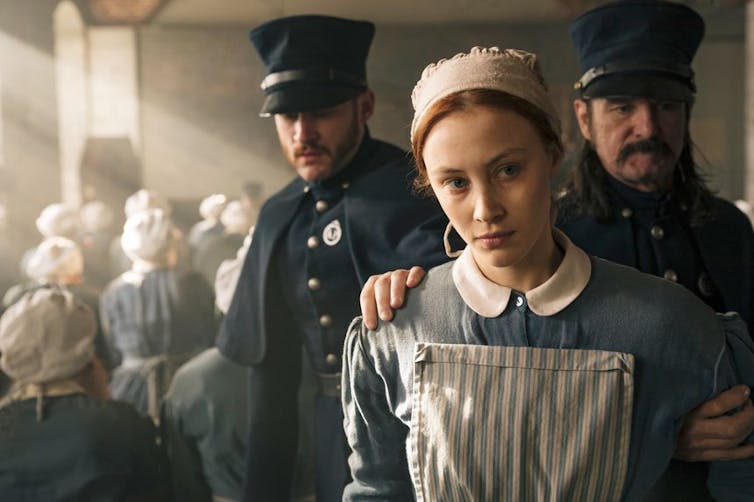
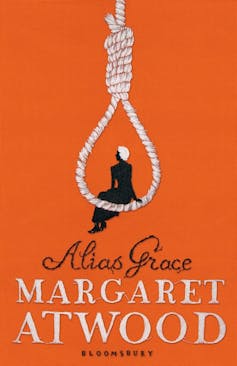
No work of fiction captures these issues more successfully and evocatively than Margaret Atwood’s novel, Alias Grace, recently adapted by Netflix into a television drama.
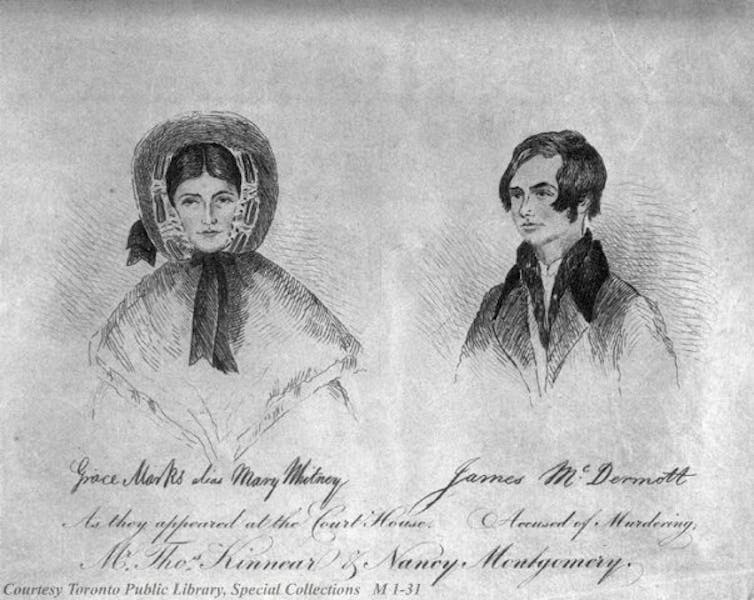
Alias Grace is based on the grisly double murder that took place in July 1843 in a village 16 miles out of Toronto, in Upper Canada, when two of Thomas Kinnear’s servants, 20-year-old James McDermott and 16-year-old Grace Marks, were charged with killing Kinnear and his housekeeper and lover, Nancy Montgomery. Kinnear was shot, while Montgomery, who was pregnant, was hit on the head with an axe, and then strangled. The trial caused a sensation and was extensively reported by the press in Canada, the US and Britain. The trial courtroom was said to be so crammed with spectators that there were fears that the floor would collapse.
McDermott and Marks were arrested in New York, where they had fled with a wagon full of stolen goods, and tried for the murder of Kinnear. McDermott was convicted of first-degree murder and Marks as an accessory. Both were sentenced to death and McDermott was hanged. The jury recommended mercy for Marks and her sentence was commuted to life imprisonment. Marks’s role in the crime and her culpability remained and still remains elusive, and neither the novel nor the drama series attempt to provide an answer. In 1872, after a series of clemency petitions, Marks was granted a pardon and released from prison.
Both Marks and McDermott were Protestant Irish migrants, and, while her age may have prompted Marks’ escape from the gallows – she was barely 16 when the case came to trial – her Irishness might well have counted against her. Atwood’s Marks observes the fact that being from Ireland was “made to sound like a crime”. She was, however, portrayed in far a more generous light than McDermott, with contemporary newspaper accounts emphasising her youth and beauty. Yet at the trial she expressed little emotion, and astonishingly arrived in court wearing clothes stolen from Montgomery, raising the question of whether Marks was stupid, unfeeling or disordered in mind.
Marks spent some 29 years in Kingston Penitentiary, but in 1852 was removed to the Provincial Lunatic Asylum, where she remained for 15 months. In the series, the asylum is portrayed in negative and stereotypical ways but in reality her circumstances and conditions would have been improved. Psychiatrists in this period were captivated by the relationship between crime and mental disorder, and particularly so in the case of women. The interest of fictional psychiatrist, Dr Simon Jordon, who attempts to discover a true account of the crime forms the core of Atwood’s novel.
Women committing crimes in the Victorian period – particularly violent ones – were depicted as doubly deviant. They were castigated and punished for their criminality, and also fiercely criticised for deviating from the prescriptive ideology of femininity, and betraying the ideals of womanhood, marked by respectability, passivity and virtuous behaviour.
Throughout this period, many such women would find themselves in asylums and saved from the death penalty, their crimes explained by insanity. Women were described by the emerging profession of psychiatry as being particularly vulnerable to mental weakness and illness, with female Irish migrants especially susceptible to imprisonment and asylum committal. Many had endured tough lives and migration was prompted by poverty and the need to build a new life in a new world. Grace Marks had made the journey to Canada from the North of Ireland about three years before the murder was committed. However, in the novel, Marks’ mother dies in childbirth during a harrowing voyage to Canada while her father is at best neglectful, at worst a violent drunk.
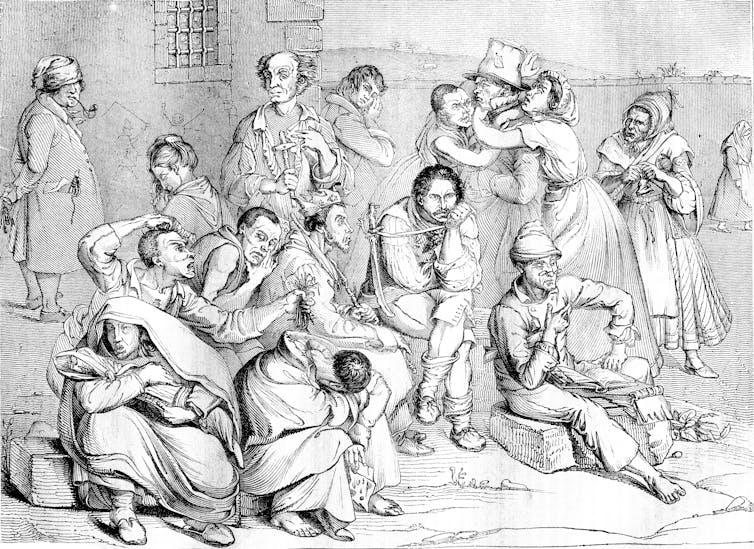
Far smaller numbers of women than men were admitted to prisons. Once there, though, they were seen as liable to be disruptive and volatile – traits the Victorians also associated with Irish migrants.
Alias Grace was inspired by Atwood’s reading of Susanna Moodie’s 1853 account of pioneer life, Life in the Clearings Versus the Bush; two chapters are devoted to Moodie’s visits to the penitentiary and the asylum to see the “celebrated murderess” Marks, whose “fearful hauntings of her brain have terminated in madness”. She was “lighted up with the fire of insanity, and glowing with a hideous and fiend-like merriment”.
Marks was one of many who travelled to Canada from the north-east of Ireland prior to the Great Famine. Atwood’s novel evocatively describes the extreme hardships of the voyage, and the speed of Marks’ ejection from the family into domestic service. Given the shortage of servants in Canada at this time, Marks was able to move from position to position with ease.
Many Irish migrants ended up in prison as well as asylums. High rates of mental illness and institutional confinement were observed in Irish who travelled to new lands; almost 3,000 Irish immigrants found themselves in lunatic asylums in Victorian Ontario. Atwood is alert to the prejudices Irish migrants may have encountered in Canada, while Moodie’s depictions of the Irish in Ontario’s asylum and the penitentiary, and in general terms, are overwhelmingly negative.
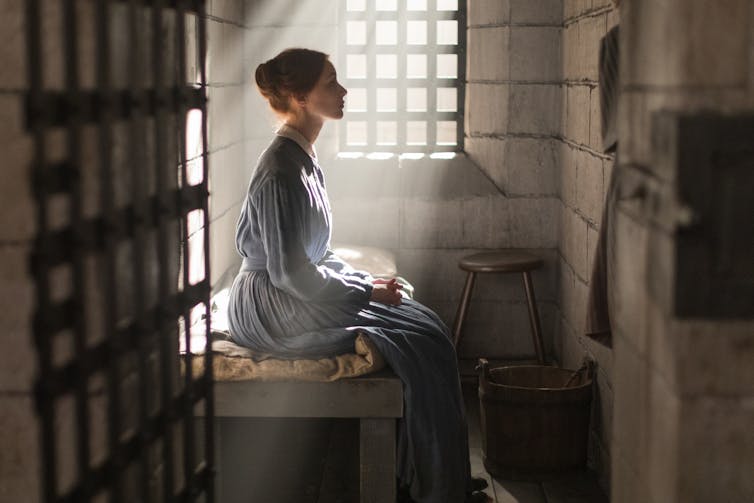
Migration was described by Victorian doctors as dislocating, and liable to result in mental stress and breakdown. So the expectation that Marks might have been suffering from mental illness, or was, as some claimed, simple-minded might well have been shaped by the association between Irishness, criminality and madness. Given her experiences, she was in many ways an ideal candidate for mental breakdown.
 The question remains unanswered – in the real case of Marks and her dramatisation – as to whether she was cunning enough to get away with murder and to shift the blame onto her accomplice, a vulnerable victim of a domineering McDermott, or mad.
Hilary Marland, Professor of History, University of Warwick and Catherine Cox, Associate Professor, History, University College Dublin
This article was originally published on The Conversation. Read the original article.
The link below is to an article reporting on changes at Audible.
For more visit:
http://www.niemanlab.org/2018/08/a-big-shakeup-at-audible-has-left-the-audiobook-giants-podcast-strategy-unclear/
The link below is to an article reporting on Amazon Rapids now being available for free.
For more visit:
https://goodereader.com/blog/e-book-news/amazon-rapids-ditches-subscription-model-and-is-now-free
The link below is to an article on 12 things readers think nonreaders should know.
For more visit:
https://www.goodreads.com/blog/show/1348-12-things-readers-really-want-nonreaders-to-know
The link below is to an article that takes a look at the new ‘Comedy Women in Print Prize.
For more visit:
https://www.theguardian.com/books/2018/aug/10/helen-lederer-launches-prize-for-funny-female-writers-comedy-women-in-print

Stephanie Trigg, University of Melbourne
It was an ordinary lecture to first-year students, on “Women Writers and Modernism.” My brief was to introduce the different ways men and women responded to the social, intellectual and artistic challenges of the modernist movement.
This is a subject about the literature of the early 20th century, but it tackles some difficult social questions too. While men were facing the horrors of war, the challenges of industrialisation and the disruption of many familiar intellectual and social hierarchies, women were gaining access to education, greater participation in the democratic process, and fuller employment.
I told the students that several days ago on talkback radio, where the topic was sexual and domestic violence against women, I had heard a caller say that many men felt threatened by women’s increasing participation in the workforce. These were complicated issues, I said, but it did seem that we were still rehearsing arguments that were current over a hundred years ago, and that these patterns of anxiety were part of broader systemic patterns associated with patriarchy and capitalism.
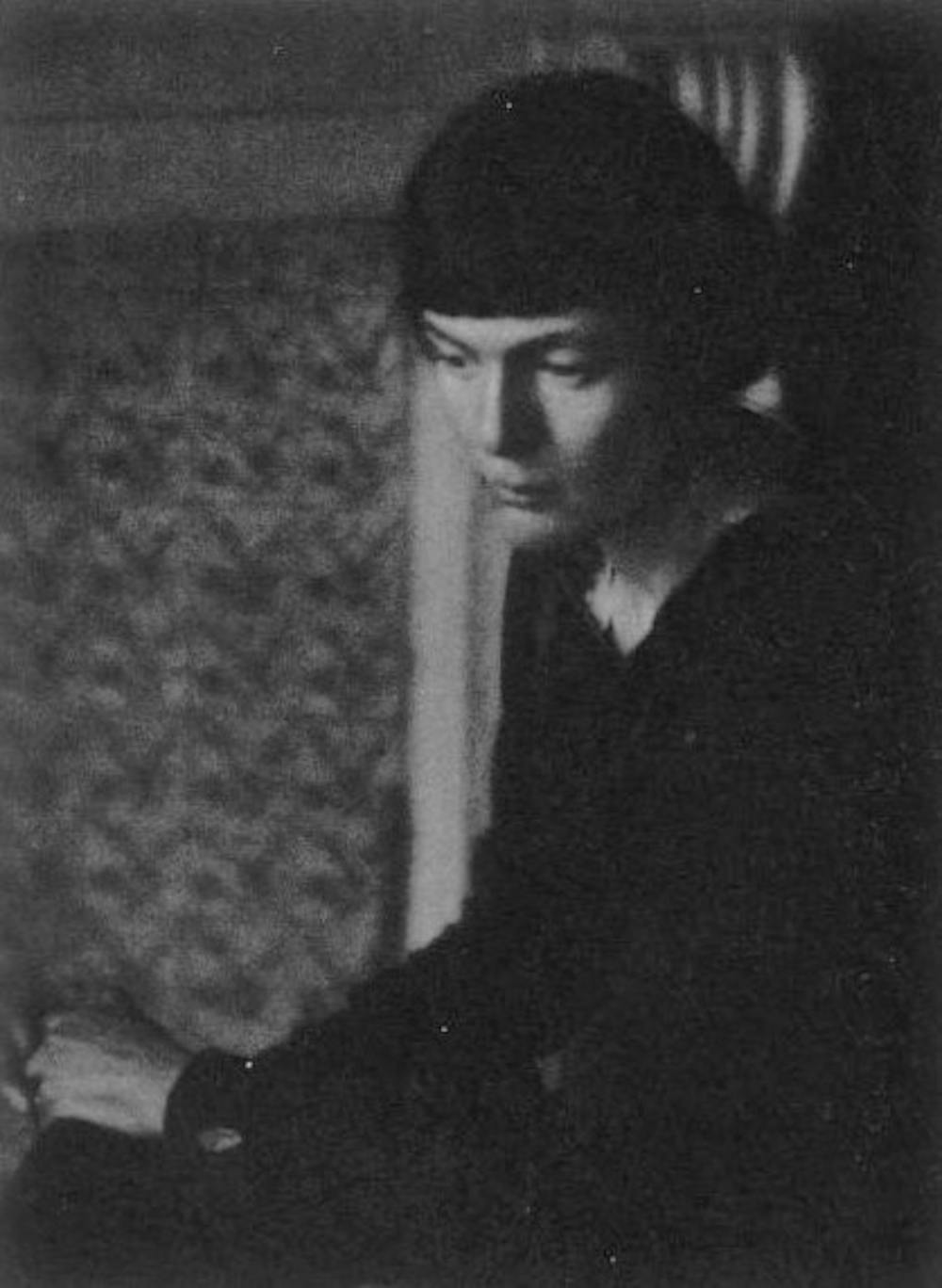
But it was time to turn to my women writers. I began with Hilda Doolittle (re-named “H.D.” by Ezra Pound), and talked about the way many women writers re-wrote classical stories from a woman’s perspective. I clicked on to my next slide, part of her poem written in 1916, Eurydice.
I stopped. Silence fell around me, and I could not speak. I tried again, but could not get out a word. I had been in full rhetorical flight in front of several hundred students, but suddenly felt an awful silence spreading, as my students realised first that something was wrong, and then as they realised why I had stopped.
The elegant and unusual name Eurydice — and the awful death through sexual violence of a young woman, less than a kilometre north of our campus, less than two months ago — was resonating powerfully in the lecture theatre.
Unable to speak, I felt a moment’s panic and shame, fearing the students would think I had staged the whole thing for dramatic effect. For surely I could not be surprised by my own choice of text.
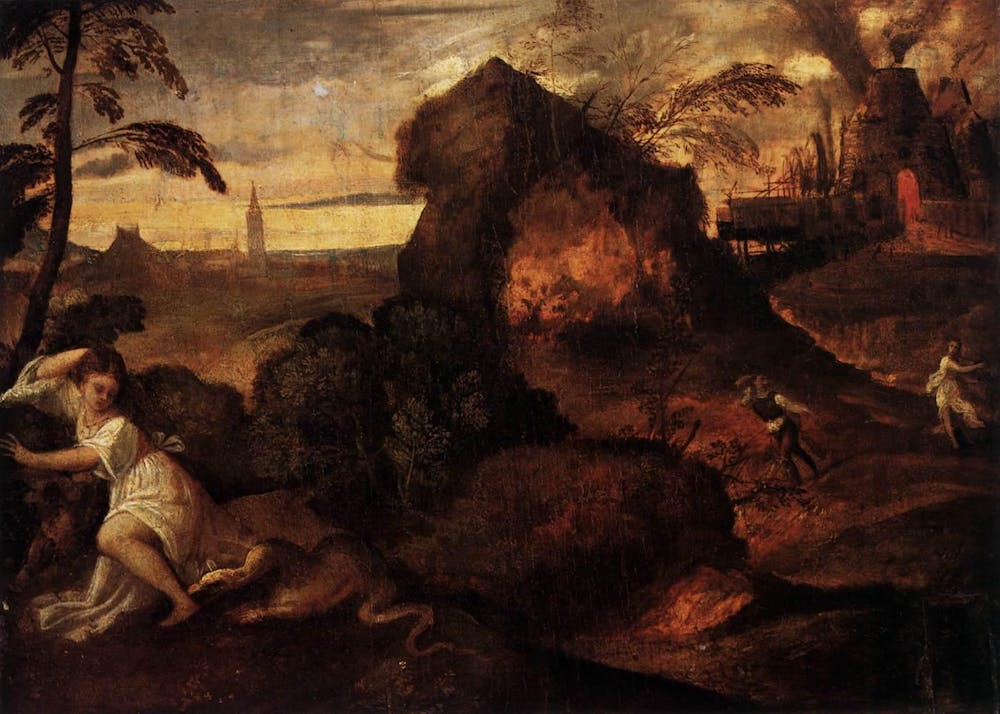
I gathered myself together, reminded the students of the myth of Orpheus and Eurydice (abducted by Hades into the Underworld and released into Orpheus’ care on condition he not look back until he leads her into the sunlight), and read these lines.
So you have swept me back,
I who could have walked with the live souls
above the earth,
I who could have slept among the live flowers
at last;so for your arrogance
and your ruthlessness
I am swept back
where dead lichens drip
dead cinders upon moss of ash;so for your arrogance
I am broken at last,
I who had lived unconscious,
who was almost forgot;if you had let me wait
I had grown from listlessness into peace,
if you had let me rest with the dead,
I had forgot you
and the past.

The students were still and silent as I read. Hearing this voice of a dead woman from the mythical past called up the presence — I think we all felt it — of the young woman whose story we all knew. For those few moments, we held vigil for Eurydice Dixon.
This is what it feels like to be “triggered” by literature, to have a fictional incident or even a name suddenly ambush you from your train of thought, your narrative curiosity, and your readerly pleasure. Literature can take your breath away, even when the trauma it recalls is a communal one, not a personal tragedy.
And yet I only half-heartedly, and only occasionally give “trigger warnings,” advising students that they may encounter violence and trauma of various kinds in literary texts. The best argument for such warnings is not that students can then refuse to read, but that students suffering post-traumatic stress may prepare themselves for the confronting business of discussing literary texts in classes: the emotional engagement with others in a public setting.
Such warnings testify to the very real power of literary texts to challenge and confront us, often in ways we cannot anticipate.
But this incident also reveals the impossibility of such warnings. There was no way I could have known I would be taken so deeply by surprise at my own response; no way I would ever have warned students that a poem about a mythical abduction to the Underworld might trigger this awful feeling.
Literature works in mysterious and unpredictable ways. This episode reminds us of its astonishing capacity to strike emotional chords and resonances. Such moments can make us feel awful, and uncomfortable, and can disrupt our carefully managed public and professional performances of the self, but they can also generate strong emotional connections between people, across time and different cultures. Of course I can’t be sure what all the students were thinking, though an unusual number of them came up to me afterwards and thanked me for the lecture.
 Moreover, if literature produces this sting, it also produces the cure. Seeing H.D.’s beautiful poem on my screen gave me the courage to go on, and to do justice to her work. The poem gave me the words to say next. Reading that poem — finding structure and pattern in its cadences; and finding a voice in its lyrical core — produced poetic order out of emotional chaos.
Stephanie Trigg, Redmond Barry Distinguished Professor of English Literature, University of Melbourne
This article was originally published on The Conversation. Read the original article.
 At the BookShelf
You must be logged in to post a comment.