Unknown's avatar

A tribute to Winston Ntshona: a pioneer of storytelling and activism in South Africa


File 20180806 191013 1yhn3wf.jpg?ixlib=rb 1.1
Winston Ntshona in ‘Sizwe Banzi is dead’.
Supplied by Baxter Theatre

Sarah Roberts, University of the Witwatersrand

A slim, well-thumbed paperback volume occupies a special place on my bookshelf. Its spine is torn and barely legible, but such is its familiarity that I can dispense with such necessities. I can find “Statements: Three Plays” instantly. The plays were Sizwe Bansi is Dead, The Island, and Statements After an Arrest Under the Immorality Act.

Today, I turn to the volume seeking guidance and as a means of paying homage to a remarkable man, Winston Ntshona, who passed away on 2 August 2018. Not a man that I knew personally, but one whose impact resonates in so many in different ways. This publication in itself – an Oxford University Press edition – preserves much of what Ntshona represents in the legacy of theatre-making and theatre-going in South Africa and the world.

A black and white photograph from the Royal Court Theatre production (1974) dominates the front cover. It shows two men and a camera on a tripod in the foreground. The image captures a vital ephemeral moment which has become as iconic as the three names superimposed above: Athol Fugard, John Kani, Winston Ntshona.

These names pronounce a genesis of South African theatre-making founded on creative partnership and collaborative authorship. Together and individually, they represent a paradigm for collective action that fuses storytelling with political activism.

Alphabetical ordering might account for the sequence of surnames, but the image composition contradicts Ntshona’s being named last of the trio. His prominence is asserted through sheer physical presence and position. It is he who is seated in the foreground in a relaxed, expansive pose, elbow resting on the table in the role of the eponymous Sizwe Banzi.

Behind the table, the beam of Kani’s gleaming smile is as arresting as his appearance in dapper bow-tie and crisp white dust coat. Ntshona’s role was invariably to be the foil to Kani’s more urbane, eloquent and flamboyant personae.

The two bodies declare what words cannot capture: an extraordinary complementary relationship between two very different individual performers and storytellers. They share an outward orientation of their bodies and gestures in a reciprocal acknowledgement of each other and simultaneously offer this interaction to an audience.

Ntshona leans into a chair with the dignified air of assurance and a right to occupy his seat: a man who is at one with an identity he is forging. His head is tilted upwards in an expression that suggests a man with a vision or a dream of prosperity.

Theatre paradigm

In the early 1970s I was an undergraduate at what was then named the University of Natal (Durban) studying Speech and Drama.

The performance of “Sizwe Banzi is Dead”, a play about the struggle for human dignity in apartheid-era South Africa, was to take place in the Student Union Building. I recall (with absolute clarity) my doubts that two actors could project a presence that would fill that enormous space. The multipurpose assembly hall accommodated sporting and recreational events and its multi-volume high glass windows tempted the eye to the intense blue of sky and ocean behind and beyond a rudimentary temporary stage.

I sat in what must have been – from the perspective of the two performers – a relatively homogeneous sea of animated young middle-class white faces. We waited, slightly apprehensively, seated uniformly on blue plastic chairs (as we might for an eventual graduation ceremony) ill-equipped, unprepared even, for a seminal experience of theatre as “a great reckoning in a little room”.

Some 35 years later, I vividly recall the impact of Ntshona’s voice – deep, rich and resonant – along with his vibrant presence. Even more memorable was his slow, smile spreading across his face. That silent spellbinding action conveyed the resilience of the spirit, the conviction of simple dignity more than words could express.

Nothing But the Truth

Decades later I met Ntshona (4 July 2002). Kani’s solo authored play “Nothing But the Truth” had just received a tumultuous standing ovation at its Grahamstown Festival premiere. In the somewhat overwhelming aftermath of the performance and its reception, Ntshona was the first person to be admitted to Kani’s dressing room. They had taken different routes on the journey from what might be called protest idiom to what author Zakes Mda has called “a theatre of reconciliation” in which Kani has figured so authoritatively. Respectful of the longstanding brotherhood, no one wished to intrude on what these two legends might wish to say to one another.

I was surprised to be called to the dressing room and introduced. Ntshona had one question for me. He wanted to know how it was that I knew the inside of the New Brighton township home in which Kani had grown as featured in the play.

As production designer I hadn’t been inside the house nor had I had access to photographs. Instead, the stage design was based on the sketch layout that Kani had talked me through: condensing, abstracting and selecting details. It tended towards an expressionist rather than realist rendering.

I could only marvel at the generosity of a consummate artist, profoundly familiar with the world of a New Brighton home and his pleasure at having his memory of a particular place being triggered by the creative efforts of another.

His joy at the reception of Kani’s play and performance remains inspirational. The capacity to acknowledge and value participatory collaboration has emerged as a core strength of emergent South African theatre at its most vigorous and committed. Ntshona embodied those attributes.

In an age that venerates celebrities, public achievement as a marker of status and self-promotion in the arts and culture sector, Ntshona remains a role model of a modesty of being and accomplishment. The personae that Ntshona created epitomise moral and ethical integrity conjoined with steadfast purpose. “The Island” (1973) ends with Winston, in the role of Antigone saying:

I honoured those things to which honour belongs.

The words seem fit as an epitaph to him, his work, artistry and achievements.

<!– Below is The Conversation's page counter tag. Please DO NOT REMOVE. –>
The Conversation

Winston Ntshona, actor, born 6 October 1941; died 2 August 2018.

Sarah Roberts, Associate Professor of Dramatic Art, University of the Witwatersrand

This article was originally published on The Conversation. Read the original article.
Unknown's avatar

Children’s Book Council of Australia (CBCA): 2018 Book of the Year Awards


The links below are to articles looking at the winners in the CBCA 2018 Book of the Year Awards.

For more visit:
https://blog.booktopia.com.au/2018/08/17/cbca-winners-2018/
https://cbca.org.au/winners-2018

Unknown's avatar

2018 Hugo Awards


The links below are to articles reporting on the 2018 Hugo Awards for science fiction and fantasy.

For more visit:
https://www.theguardian.com/books/2018/aug/20/hugo-awards-women-nk-jemisin-wins-best-novel
https://goodereader.com/blog/e-book-news/here-are-the-2018-hugo-award-winners

Unknown's avatar

2018 Davitt Awards


The link below is to an article that takes a look at the 2018 Davitt Awards.

For more visit:
https://blog.booktopia.com.au/2018/08/14/davitt-awards-2018/

Unknown's avatar

Six things you should do when reading with your kids


File 20180711 27036 1foaon8.jpg?ixlib=rb 1.1
Stories take children on imaginary adventures.
Photo by Mazyar Hooshidar. , Author provided

Ameneh Shahaeian, Australian Catholic University

There is magic in stories. We all remember hearing them as children, and we loved them. Imaginary adventures set in faraway places. Tales about how the dishwasher isn’t working. It doesn’t matter! Whether made up by parents or read from books, kids love to hear stories.

Our recent work showed reading to children positively impacts long term academic achievement more than many other activity (including playing music with them, or doing craft). We found the more frequently parents read to their children, the better their children’s NAPLAN scores in different areas.


Read more:
If you can only do one thing for your children, it should be shared reading


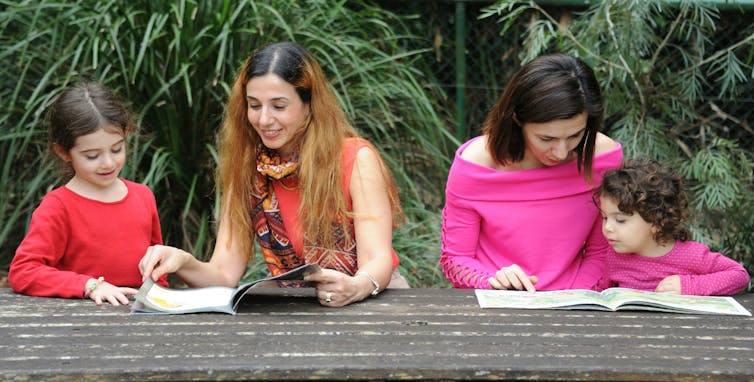
In our most recent study, we asked parents to read a wordless storybook to their three to five-year-old children titled The Wolf and Seven Little Goats. We also tested children in many areas of their important cognitive skills, such as language proficiency, memory, self-control, and friendship skills.

Through examining the different ways parents tell stories, we have pinpointed which elements of shared reading are most beneficial for children’s cognitive development.

1. Tune in to your child

Perhaps the most important aspect of reading to children is to tune in to your child. Listen to your child’s cues. Do they like the story? Do they know the vocabulary? Are they paying attention to the pictures more, or the text?

Try to coach your child, not to instruct them. Instead of saying: “look they are going to cook some food, maybe they are hungry”, you can ask “what are they doing?” or “why do you think they’re doing that?”.

Be sensitive about whether they are listening and engaged or uninterested and disengaged. If they are disengaged, are there questions you can ask to make them more interested? Do you think they’ll like a different type of story better? The best books for your child are the ones they enjoy most.


Read more:
Research shows the importance of parents reading with children – even after children can read


2. Ask questions

Parents who ask lots of questions engage in a more fun and informative way with their children. Ask them if they know the vocabulary, if they can guess what the characters are going to do next, and why they’ve done what they’ve done.

These questions are not only helpful because they help children gain new knowledge and ways of thinking, it also helps strengthen the emotional bond between parent and child. Children like to feel they’re a part of the task, not that they’re being told how to do things.

3. Go beyond describing images or reading text

How would you describe what’s happening in this scene?
Author provided, Author provided

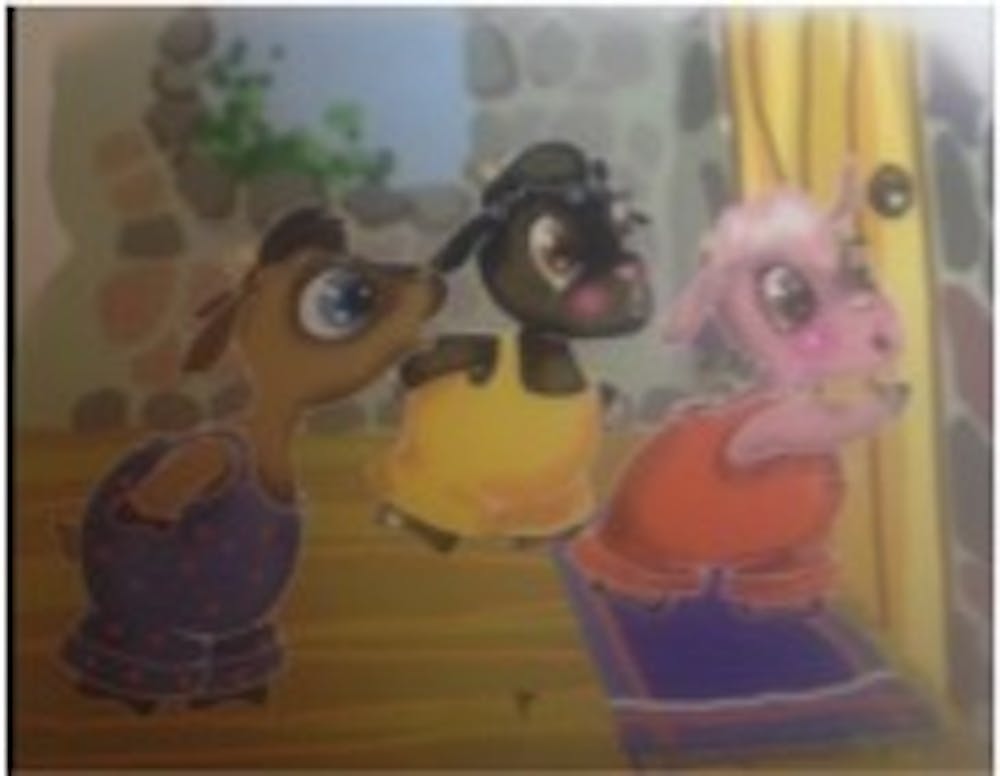
In our study, we gave parents a wordless picture book. An important difference we observed between parents was some only describe what they see. Some go beyond the picture.

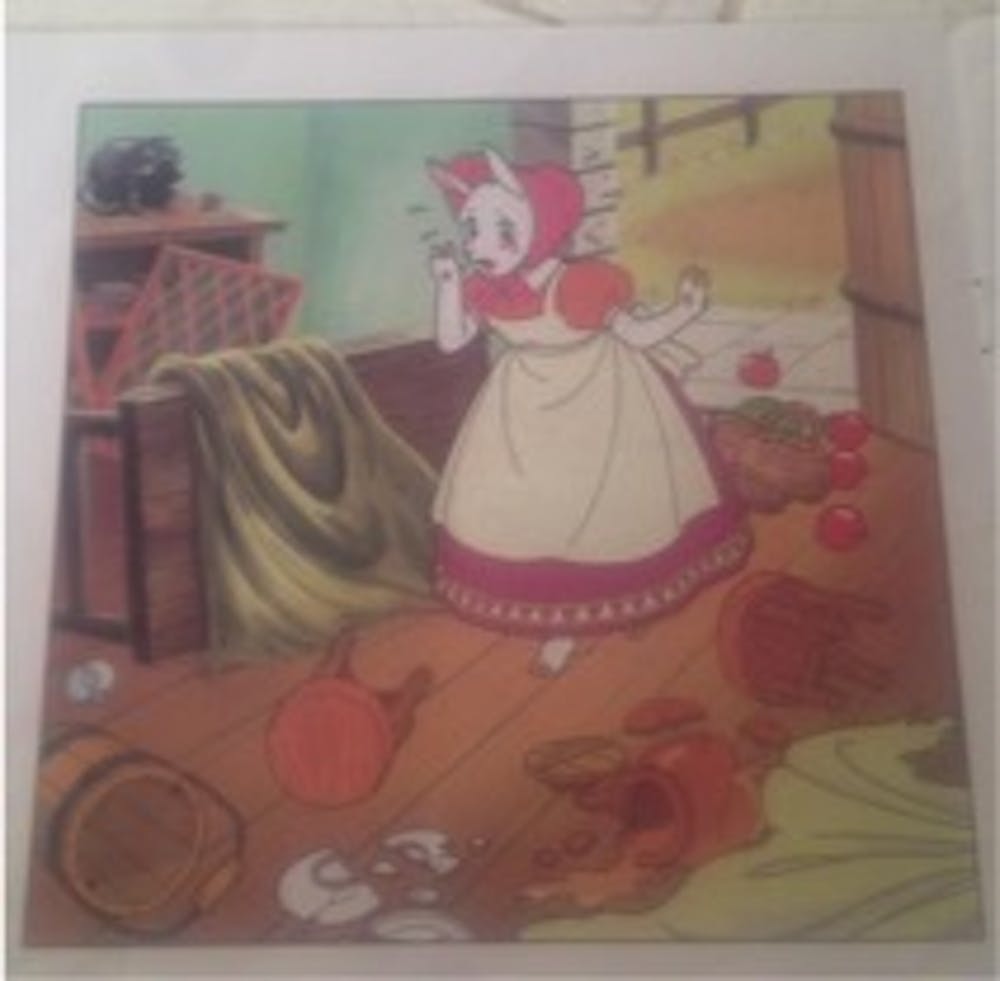
For example, when the mother goat in the picture book comes home and sees the door to the house open, one parent said:

When their mother came home and was looking forward to seeing her children and hugging them and telling them a story, she suddenly saw that the door is open. She was shocked!

Another parent said:

The mother came home and saw the door is open; she went inside and looked for the children.

This parent is only describing the picture.

The first parent is imagining what is beyond the picture and text. This is a richer way to tell a story to children, and ultimately leads to better cognitive developmental outcomes for children. This is because it teaches abstract thinking, which is the basis for many of the higher order cognitive abilities such as problem solving and critical analysis.

4. Make logical links between different parts of the story

This wolf is a cunning creature.
Author provided, Author provided

Another element that has a strong link to the development of children’s cognitive skills is the way parents build logical links between different parts of the story.

Often the events in books unfold very quickly. One minute, the wolf eats the little goats, and the next minute he is found by the mother. Some parents try to make the sequence of events more logical than others.

For example, in this picture, when the wolf is coming to knock on the door, one parent said:

The wolf, who realised the mother is not home, came and knocked on the door.

This sentence is lacking logical links. How did the wolf know the mother is not home? Why should he come and knock on the door? What did he want?

Another parent said:

The wolf, who was sunbathing in the bush, saw that the mother is going to get some food. He thought, oh, the little goats are alone at home, and it’s a good time for me to go and trick them and maybe get a good lunch!

The parent here is clearly providing logical links between these different parts of the story.

5. Add relevant details

Keep added details relevant.
Author provided, Author provided

We also found most parents add many details to the story to make it more interesting or comprehensive. But relevant details are the most useful in terms of improving children’s learning. Relevant details are the kind of details that help make the story easier to understand.

For example, one parent said:

The little goat, who was wearing the yellow shirt and was the smallest said: ‘we shouldn’t open the door! How do we know this is our mother? She has just left.’

Here, wearing a yellow shirt is a descriptive detail, but it doesn’t add much to the story.

Another mother said:

The smallest one, who was also the cleverest and very careful, said…

This second parent is clearly adding a detail (that the smaller one is also the cleverest and careful) that makes the story more meaningful and easier to follow.


Read more:
Enjoyment of reading, not mechanics of reading, can improve literacy for boys


6. Talk about mental and emotional concepts

<!– Below is The Conversation's page counter tag. Please DO NOT REMOVE. –>
The Conversation

We found parents who not only describe the events of a story but also discuss abstract concepts related to emotions, desires and thoughts tend to have children who are better cognitively skilled. These children develop a better understanding of others’ emotions, better friendship skills, and even improved memory and higher order cognitive skills that are useful in later life. These lead to academic success as well as better skills to build friendships and perform well in social relationships.

Ameneh Shahaeian, Research Fellow in Developmental and Educational Psychology, Australian Catholic University

This article was originally published on The Conversation. Read the original article.
Unknown's avatar

Lessons on Scholarly Reading


The link below is to an article that takes a look at some lessons on scholarly reading.

For more visit:
https://www.chronicle.com/article/Lessons-on-the-Craft-of/244134

Unknown's avatar

Technology hasn’t killed public libraries – it’s inspired them to transform and stay relevant


File 20180817 165949 1oadgi7.jpg?ixlib=rb 1.1
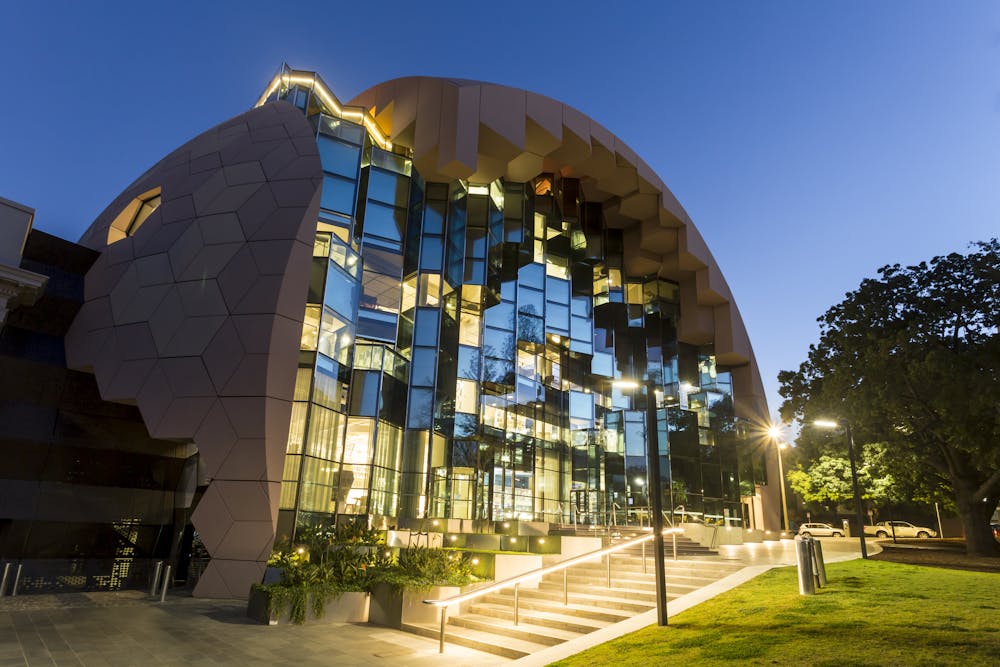
The State Library in Victoria illustrates that libraries are so much more than just places that contain books.
from shutterstock.com

Danielle Wyatt, University of Melbourne and Dale Leorke, University of Tampere

In 2017, archaeologists discovered the ruins of the oldest public library in Cologne, Germany. The building may have housed up to 20,000 scrolls, and dates back to the Roman era in the second century. When literacy was restricted to a tiny elite, this library was open to the public. Located in the centre of the city in the marketplace, it sat at the heart of public life.

We may romanticise the library filled with ancient books; an institution dedicated to the interior life of the mind. But the Cologne discovery tells us something else. It suggests libraries may have meant something more to cities and their inhabitants than being just repositories of the printed word.


Read more:
State libraries need our support and participation to survive


Contemporary public libraries tell us this too. Membership has generally declined or flat-lined, but people are now using libraries for more than borrowing books. Children come to play video games or complete homework assignments together. People go to hear lectures and musical performances, or attend craft workshops and book clubs.

Libraries have become vital for the marginalised, such as the homeless, to access essential government services such as Centrelink, and to stay connected. They have become defacto providers of basic digital literacy training – such as how to use an iPad or access an eGov account. Others cater to tech-enthusiasts offering advanced courses on coding or robotics in purpose-built spaces and laboratories.

We do romanticise libraries as being repositories of ancient knowledge.
Clarisse Meyer/Unsplash

Yet the future of Australia’s public libraries is unfolding according to a contradictory, double narrative. One-off funding for “feature” libraries built by star architects exists in parallel with cuts and closures of libraries on the margins. In Victoria’s city of Geelong, for example, three regional libraries on the city’s periphery faced closure scarcely a year after the opening of the A$45m Geelong Library and Heritage Centre.

Part of the reason for this is that the expanded contribution of libraries to our communities and cities isn’t recognised at higher levels of government.


Read more:
Has the library outlived its usefulness in the age of Internet? You’d be surprised


How libraries are changing

In the early 2000s, as archives shifted online, futurists predicted an imminent death to public libraries. But the threat of obsolescence made libraries take proactive steps to remain relevant in a digital world. They thought creatively about how to translate services they have always offered – universal access to information – into new formats.

Libraries digitised their collections and networked their catalogues, exponentially extending the range of materials users could access. They introduced e-books and e-readers to read them with. They mounted screens to watch movies or to play video games.

They also installed computers crucial to that 14% of the population who don’t have access to the internet at home. And they wired up their spaces with free WiFi, retrofitting extra power-points so users could plug in their own devices.

Libraries have a lot of programs around technology and the use of computers.
from shutterstock.com

Besides offering new technologies and services, libraries offer people a welcoming, safe space to gather without the pressure to spend money. Investing in attractive, versatile furnishings, they have actively encouraged people to dwell in their spaces, whether this is to read a newspaper, complete a job application online, or to study.

In an age where communication technologies create both efficiency as well as forms of isolation, such spaces assume a renewed social importance.


Read more:
Friday essay: why libraries can and must change


How libraries shape the city

As vital as libraries are to individuals, their value is also connected to broader civic agendas. Libraries have deliberately sought to change perceptions of themselves from spaces of collection to spaces of creation. Some, such as the State Library of Victoria, see themselves facilitating creativity not only in an artistic sense, but also as entrepreneurial hubs for start-ups and budding innovators.

Public libraries have promoted their relevance to cities by strategically aligning themselves with government visions of economic growth. For instance, the Geelong Library and Heritage Centre was a signature investment in Geelong’s Digital Strategy, promoted as a “platform” to build “digital capacity” and a visible symbol of the city’s transition to a digital future.

Others, such as Dandenong library in Victoria, attract high levels of funding as part of urban renewal projects aimed at revitalising declining urban precincts.

These high-profile libraries, usually in urban centres, overshadow the uncertain fate of smaller libraries on the periphery, fighting to stay viable due to insufficient funding.

The Geelong Library and Heritage Centre cost millions of dollars to build, while three local libraries lost funding.
from shutterstock.com

This contradiction is occurring because provisioning for libraries is not embedded at high levels of urban planning and policy making. There is no nationally consistent model for allocating funds between the states and local government. Nor is there a consistent framework across Australia for evaluating library performance.

<!– Below is The Conversation's page counter tag. Please DO NOT REMOVE. –>
The Conversation

Critically and most revealingly, libraries are evaluated based on traditional metrics, such as loan and membership numbers, capturing only a fraction of the full value they contribute to our individual and collective life. Failure to recognise this by governments and policymakers puts at risk the diverse and nuanced ways libraries might shape Australia’s future.

Danielle Wyatt, Research Fellow, University of Melbourne and Dale Leorke, Postdoctoral researcher, University of Tampere

This article was originally published on The Conversation. Read the original article.

Unknown's avatar

Send Web Articles to Kindle and Kindle Apps


The link below is to an article that takes a look at how to send web articles to Kindle and Kindle Apps.

For more visit:
https://blog.the-ebook-reader.com/2018/08/09/how-to-send-web-articles-to-kindles-and-kindle-apps/

Unknown's avatar

Ebook Piracy Declining in Europe


The link below is to an article that takes a look at reports of declining ebook piracy in Europe.

For more visit:
https://goodereader.com/blog/e-book-news/e-book-piracy-is-declining-in-europe

Unknown's avatar

Changes at Audible Channels


The link below is to an article that reports on changes underway at Audible Channels.

For more visit:
https://goodereader.com/blog/audiobooks/audible-channels-is-scaling-back-on-original-content