

Unknown's avatar

The open access shift at UWA Publishing is an experiment doomed to fail


Open access publishing enables free and easy dissemination of work, but this does not meant that it engages with literary culture. Titles are isolated from bookshops, reviews, and cultural conversations.
Photo by Fred Kearney on Unsplash, CC BY-SA

Emmett Stinson, Deakin University

There has been no shortage of bad news for Australia’s literary and publishing sector in the last year. Major literary journals Island and Overland have been defunded. Only 2.7% of Australia Council funding went to books and writing. The Chair in Australian Literature at University of Sydney is not being renewed.

Two major projects by literary academics were recommended for funding by the Australian Research Council’s peer-review process in 2018, but were rejected by ministerial discretion. Melbourne University Publishing’s CEO, Louise Adler, resigned after the university asked for a change in editorial direction.

And now University of Western Australia has announced dramatic changes to its highly-decorated press, University of Western Australia Publishing. These changes involve not renewing the contract of Director Terri-ann White, deemed “surplus to requirements”, and an end to current publishing activities.

It would be hard to blame writers and literary academics for feeling paranoid. Just because you’re paranoid, it doesn’t mean they’re not out to get you.

A decline in literary publishing

In 2006, Mark Davis published The Decline of the Literary Paradigm in Australian Publishing.

He argued that between WWII and the 1990s, Australian publishers embraced their role in shaping national culture by subsidising unprofitable literary works with profits from more commercial titles. But by the 2000s, publishers had become neoliberal organisations that sought to maximise profits rather than support literary culture.

We are now seeing this same logic applied by universities.

Universities are increasingly focused on metrics driving enrolments, international rankings and research excellence. This, in turn, supports government funding and research grant income. Universities increasingly prioritise these metrics over cultural contributions that are harder to quantify.


Read more:
Why Australia needs a new model for universities


A statement released by UWA claims the changes will help “to guarantee modern university publishing into the future”, foreshadowing “a mix of print, greater digitisation and open access publishing.”

This statement might appear to mirror recent events at Melbourne University Press last year, but these situations are very different.

A leading literary publisher

Academics had long questioned Melbourne University Press’ publication of works with commercial and political appeal but no clear scholarly or cultural value.

Professor Ronan McDonald summed up this view earlier this year when he wrote that Melbourne University Press was “a trade press irritatingly obliged to publish a few academic titles”.

Melbourne University reaffirmed its commitment to the Press by hiring a respected scholarly publisher, founding director of Monash University Publishing Nathan Hollier, with a track record of producing scholarly titles alongside prize-winning works for a general readership.

UWA Publishing, on the other hand, is one of our leading literary publishers, cultivating authors and significant titles often overlooked by commercial publishers.
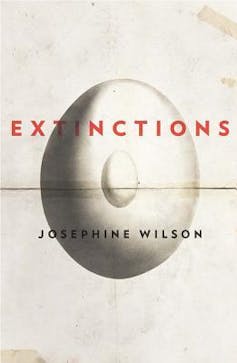
It published Josephine Wilson’s Extinctions, which won the Miles Franklin Award in 2017; is one of Australia’s foremost publishers of poetry; and has published scholarly works by leading Australian humanities academics, such as John Frow, Ross Gibson, and Ken Gelder. It has also published a series of traditional Noongar stories retold by the award-winning author Kim Scott

It has always balanced commitments to scholarly publishing with a significant literary list.

Open access university presses: a failed experiment

The notion that a respected publishing house can be replaced by open access publishing is disproved by examining other Australian university presses, such as the now-closed University of Adelaide Press, founded in 2009 with a mission to be an open access publisher.


Read more:
Grief, loss, and a glimmer of hope: Josephine Wilson wins the 2017 Miles Franklin prize for Extinctions


While the press generated many interesting titles, it failed to have a cultural impact. Open access enables free and easy dissemination of work, but this does not meant that it engages with literary culture. Scholars can access works freely, but titles are isolated from bookshops, reviews, and cultural conversations.

Sydney University Press, which was relaunched in 2003 after closing in 1987, has employed a “hybrid approach” to open access. It is now returning to a more standard university publishing model, establishing a research series with dedicated editorial boards of academics, and even publishing a novel, Joshua Lobb’s The Flight of Birds, shortlisted for the Readings New Fiction Prize in 2019.

Open access has an important role to play in academic publishing, but it is laughable to claim UWA Publishing’s cultural impact can simply be replaced through open access.

Can it be saved?

There is a campaign underway to save UWA Publishing, including a petition with over 6,000 signatures.

It is hard to know at this stage if it will have any effect. It may be the publishing house is the victim of larger financial pressures currently affecting University of Western Australia.

This, of course, is the problem for the literary sector more generally: when cuts are needed, literature is always first on the chopping block.The Conversation

Emmett Stinson, Lecturer in Writing and Literature, Deakin University

This article is republished from The Conversation under a Creative Commons license. Read the original article.

Unknown's avatar

Reading progress is falling between year 5 and 7, especially for advantaged students: 5 charts


Are we failing to challenge the reading
skills in advantaged students?
from shutterstock.com

Peter Goss, Grattan Institute

There is a hidden problem with reading in Australian schools. Ten years’ worth of NAPLAN data show improvements in years 3, 5 and 9. But reading progress has slowed dramatically between years 5 and 7.

And, somewhat surprisingly, the downward trend is strongest for the most advantaged students.

Years 5-7 typically include the transition from primary to secondary school. Yet the reading slowdown can’t just be blamed on this transition, because numeracy progress between the years has improved. So, what is going wrong with reading?

Reading base camp is higher each year

Progress in reading is like climbing a mountain. The better your reading skills, the higher you are. The higher you are, the further you can see. And the further you can see, the more sense you can make of the world.

Like a real mountain, the reading mountain must be tackled in stages. NAPLAN – the National Assessment Program, Literacy and Numeracy – provides insight into those stages, by measuring reading skills at years 3, 5, 7 and 9.

The good news is that the average level of reading skills of year 3 students – reading base camp – is getting higher.

To make the results easier to interpret, I’ve converted the NAPLAN data into the equivalent year level of reading achievement. For instance, in 2010, children in year 3 were reading at equivalent year level 2.6 when they sat NAPLAN. This means they were four-and-a-half months behind a benchmark set at the long-run average for metropolitan non-Indigenous students.

By 2019, the mean reading achievement among all year 3 children was equivalent to year 3.0, meeting this benchmark.

Over ten years, the improvement has been worth about five months of extra learning.


Reading progress improved in years 7-9

There is more good news in secondary school. Recent cohorts have made better progress between years 7 and 9 than earlier cohorts. My best estimate is that learning progress has increased by almost three months of learning over this two-year stage of schooling.


Students in years 3-5 haven’t made the same gains. But (if anything) they are heading in the right direction.


But progress in years 5-7 has fallen

Something is going wrong between year 5 and 7. Students are making six months less progress than they used to. It’s not that they are getting worse at reading; they just aren’t climbing as fast as previous cohorts.


This drop in reading progress can’t simply be attributed to the transition from primary to secondary. Among other things, numeracy progress during this stage of schooling has increased by about six months since 2010.

It’s as if students have started skipping a term in each of their final two years of primary school, but only in English, not in maths. And not all groups of students are affected equally.

Advantaged students are affected the most

Reading progress has slowed the most for students from advantaged backgrounds. For instance, students whose parents are senior managers make ten months less progress from year 5 to 7 than earlier cohorts.


Interestingly, the student groups with the biggest slowdown in years 5-7 have also shown the most improvement in year 5 reading.

This pattern – big gains in year 5 that evaporate by year 7 – rules out poor early reading instruction as a cause. This reading problem isn’t about phonics, but a failure to stretch students in upper primary school.

My analysis also shows:

  • the years 5-7 reading slump is happening in every state and territory
  • Queensland and Western Australia had big drops in years 5-7 reading progress in 2015, the year those two states moved year 7 from primary to secondary
  • students from English-speaking backgrounds are affected more than those who don’t speak English at home
  • neither gender nor Indigenous status affects the strength of the slowdown.

So, what is going on?

Maybe some primary school teachers focus more on helping students reach a good minimum standard of reading, and not on how far they go. This fits with the trend in year 5; no need to push hard if students are already doing well.

But it doesn’t explain the large drop in progress in Queensland and WA the year they shifted year 7 to secondary school.

Maybe schools push hard on literacy and numeracy until students have done their last NAPLAN test in that school. This would help explain the 2015 drop in reading progress for Queensland and WA, but not the divergent picture for reading and numeracy progress, including in the Queensland/WA change-over year.

Maybe students are reading less as technology becomes ubiquitous. This could explain the difference between reading and numeracy. But why would it reduce progress between years 5 and 7 but not between years 3 and 5 or 7 and 9?

Increased use of technology also fails to explain the sudden slump in Queensland and WA in 2015.

Other potential explanations need to explain the complex pattern of outcomes, including the fact the reading slowdown is so widespread even while numeracy progress is going the other way.

My best guess is that some advantaged primary schools focus on literacy and numeracy until the year 5 NAPLAN tests are done, but then switch to project-based learning, leadership or year 6 graduation projects. These “gap year” activities don’t displace maths hour (which drives numeracy progress) but may disrupt reading hour or other activities that build reading skills.

Meanwhile, disadvantaged primary schools are very aware of the need to keep building their students’ reading levels to set them up for success in secondary school.

This story is speculative, but it fits the data.

What next?

Education system leaders need to figure out what is happening in reading between years 5 and 7, and quickly. They should look closely at upper primary years, as well as the transition to secondary school. This is much more subtle than a traditional back-to-basics narrative.

In the meantime, teachers in years 5, 6 and 7 should be aware their students are making less progress than previous cohorts, and focus on extending reading capabilities for students who are already doing well. All students deserve to climb higher on their reading mountain.The Conversation

Peter Goss, School Education Program Director, Grattan Institute

This article is republished from The Conversation under a Creative Commons license. Read the original article.

Unknown's avatar

Websites and Web Applications for Book Summaries


The link below is to an article that takes a look at websites and web applications that provide book summaries.

For more visit:
https://www.makeuseof.com/tag/7-alternatives-to-sparknotes-cliffsnotes-for-book-summaries/

Unknown's avatar

Downloading Books from Google Books


The link below is to an article that looks at how to download ebooks from Google Books.

For more visit:
https://www.makeuseof.com/tag/download-books-for-free-from-google-books/

Unknown's avatar

Considering ‘A Most Rare Compendium’


The link below is to an article that considers ‘magical treasure hunting,’ by looking at the 18th century guide, ‘A Most Rare Compendium.’

For more visit:
https://lithub.com/a-most-rare-compendium-an-18th-century-guide-to-magical-treasure-hunting/

Unknown's avatar

The State of Crime Writing


The link below is to an article that considers the state of crime writing.

For more visit:
https://crimereads.com/the-state-of-the-crime-novel-a-roundtable-discussion-with-crime-authors/

Unknown's avatar

Poor Writing… Even in Classics


The link below is to an article that considers poor writing, including that found in classics.

For more visit:
https://www.theparisreview.org/blog/2019/10/28/the-cult-of-the-imperfect/

Unknown's avatar

Best PDF Ebook Readers


The link below is to an article taking a look at the best PDF ebook readers.

For more visit:
https://blog.the-ebook-reader.com/2019/10/30/the-best-e-ink-ereaders-for-reading-pdfs-fall-2019/

Unknown's avatar

2019 TS Eliot Prize Shortlist


The link below is to an article taking a look at the shortlist for the 2019 T. S. Eliot Prize for poetry.

For more visit:
https://www.theguardian.com/books/2019/oct/17/ts-eliot-prize-shortlist-jay-bernard-sharon-olds-anthony-anaxagorou

Unknown's avatar

Libraries & Ebook Borrowing Update


The links below are to articles reporting on the continuing controversy concerning ebook borrowing at libraries.

For more visit:
https://www.booksandpublishing.com.au/articles/2019/10/16/140906/more-than-100000-sign-petition-condemning-macmillans-new-ebook-lending-terms/
https://the-digital-reader.com/2019/11/03/libraries-arent-pulling-any-punches-when-explaining-publisher-imposed-delays-to-patrons/
https://the-digital-reader.com/2019/11/03/libraries-are-boycotting-macmillan-ebooks/