Unknown's avatar

‘I want to stare death in the eye’: why dying inspires so many writers and artists


from www.shutterstock.com

Claire Hooker, University of Sydney and Ian Kerridge, University of Sydney

This is one of our occasional Essays on Health. It’s a long read.


It may seem paradoxical, but dying can be a deeply creative process.

Public figures, authors, artists and journalists have long written about their experience of dying. But why do they do it and what do we gain?


Read more:
On poetry and pain


Many stories of dying are written to bring an issue or disease to public attention.

For instance, English editor and journalist Ruth Picardie’s description of terminal breast cancer, so poignantly described in Before I say Goodbye, drew attention to the impact of medical negligence, and particularly misdiagnosis, on patients and their families.
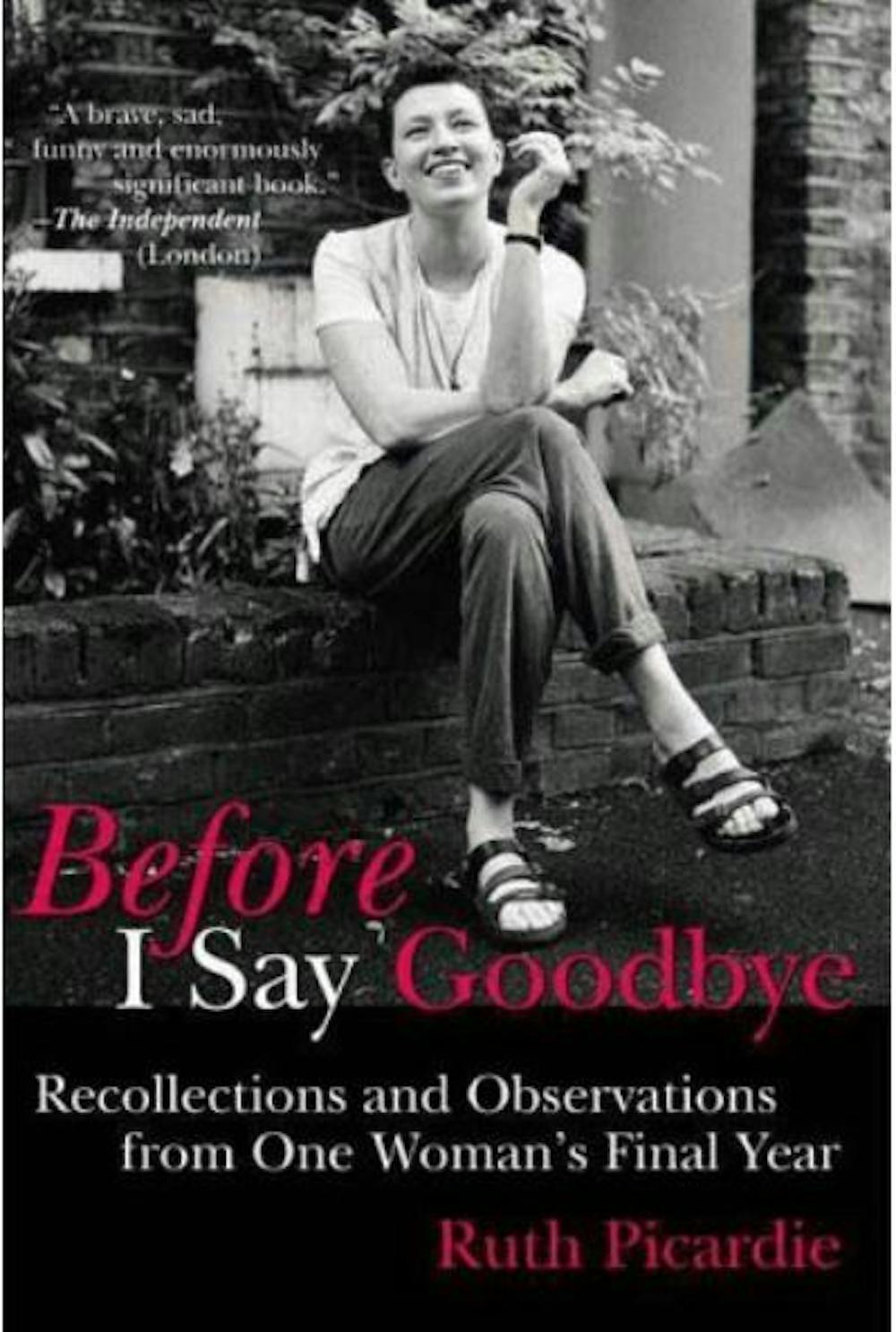
English editor and journalist Ruth Picardie’s description of terminal breast cancer drew attention to the impact of medical negligence and misdiagnosis.
Penguin Books

American tennis player and social activist Arthur Ashe wrote about his heart disease and subsequent diagnosis and death from AIDS in Days of Grace: A Memoir.

His autobiographical account brought public and political attention to the risks of blood transfusion (he acquired HIV from an infected blood transfusion following heart bypass surgery).

Other accounts of terminal illness lay bare how people navigate uncertainty and healthcare systems, as surgeon Paul Kalanithi did so beautifully in When Breath Becomes Air, his account of dying from lung cancer.

But, perhaps most commonly, for artists, poets, writers, musicians and journalists, dying can provide one last opportunity for creativity.

American writer and illustrator Maurice Sendak drew people he loved as they were dying; founder of psychoanalysis Sigmund Freud, while in great pain, refused pain medication so he could be lucid enough to think clearly about his dying; and author Christopher Hitchens wrote about dying from oesophageal cancer despite increasing symptoms:

I want to stare death in the eye.

Faced with terminal cancer, renowned neurologist Oliver Sacks wrote, if possible, more prolifically than before.

And Australian author Clive James found dying a mine of new material:

Few people read

Poetry any more but I still wish

To write its seedlings down, if only for the lull

Of gathering: no less a harvest season

For being the last time.


Read more:
Vale Clive James – a marvellous low voice whose gracious good humour let others shine


Research shows what dying artists have told us for centuries – creative self-expression is core to their sense of self. So, creativity has therapeutic and existential benefits for the dying and their grieving families.

Creativity provides a buffer against anxiety and negative emotions about death.
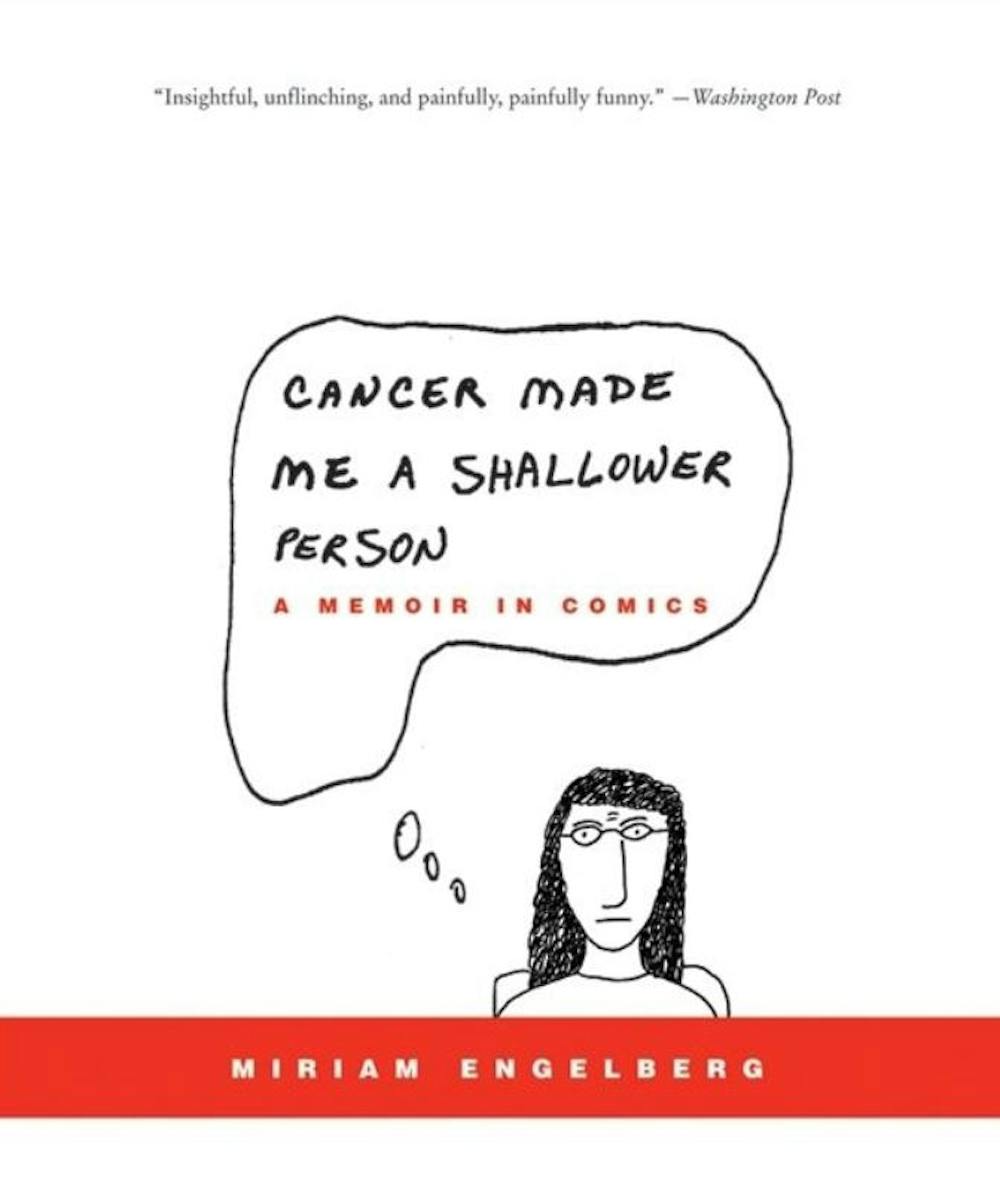
Cartoonist Miriam Engelberg chose a graphic novel to communicate her experience of cancer.
Harper Perennial

It may help us make sense of events and experiences, tragedy and misfortune, as a graphic novel did for cartoonist Miriam Engelberg in Cancer Made Me A Shallower Person, and as blogging and online writing does for so many.

Creativity may give voice to our experiences and provide some resilience as we face disintegration. It may also provide agency (an ability to act independently and make our own choices), and a sense of normality.

French doctor Benoit Burucoa wrote art in palliative care allows people to feel physical and emotional relief from dying, and:

[…] to be looked at again and again like someone alive (without which one feels dead before having disappeared).

A way of communicating to loved ones and the public
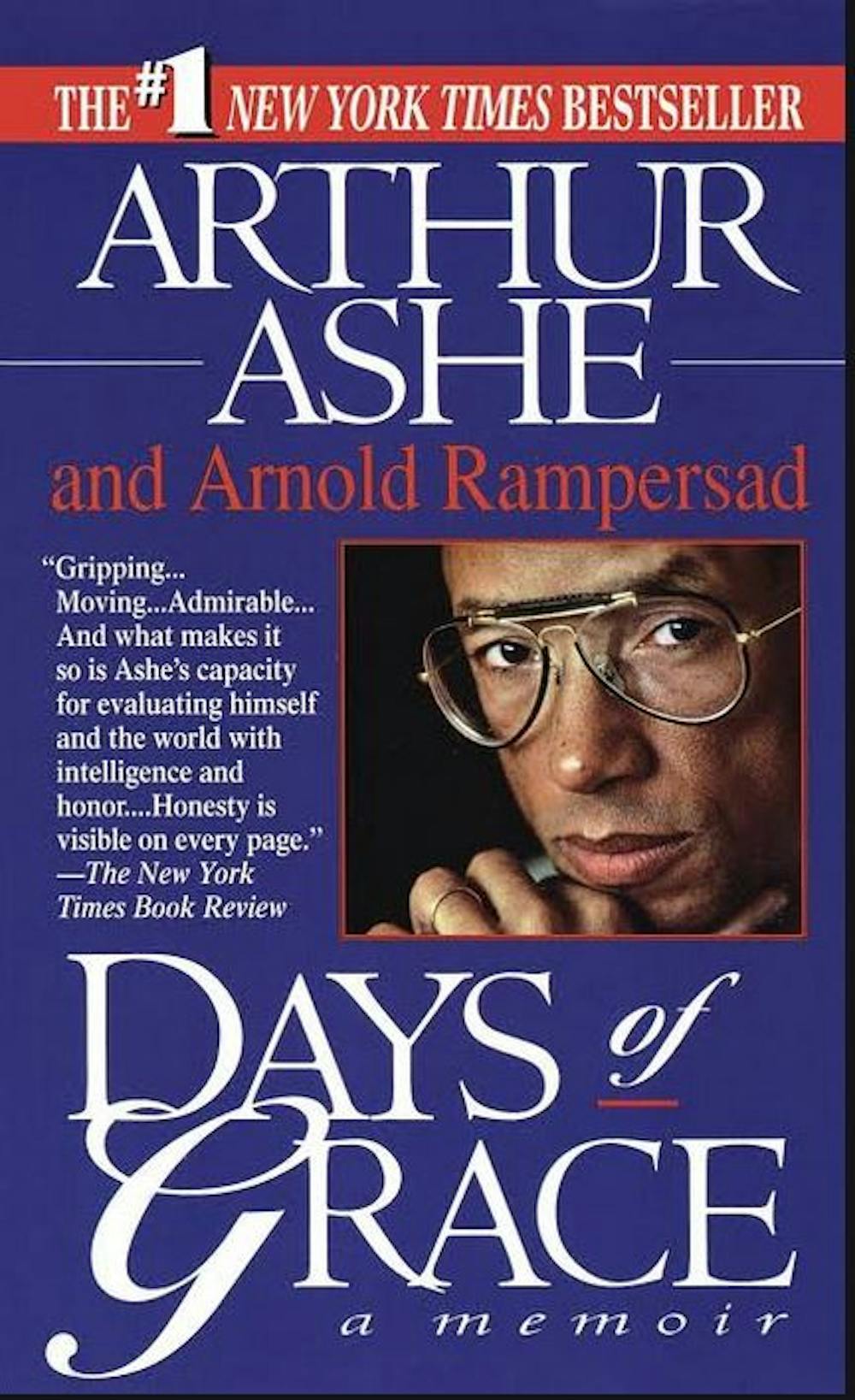
American tennis player and social activist Arthur Ashe wrote about his heart disease and subsequent diagnosis and death from AIDS.
Ballantine Books

When someone who is dying creates a work of art or writes a story, this can open up otherwise difficult conversations with people close to them.

But where these works become public, this conversation is also with those they do not know, whose only contact is through that person’s writing, poetry or art.

This public discourse is a means of living while dying, making connections with others, and ultimately, increasing the public’s “death literacy”.

In this way, our conversations about death become more normal, more accessible and much richer.

There is no evidence reading literary works about death and dying fosters rumination (an unhelpful way of dwelling on distressing thoughts) or other forms of psychological harm.

In fact, the evidence we have suggests the opposite is true. There is plenty of evidence for the positive impacts of both making and consuming art (of all kinds) at the end of life, and specifically surrounding palliative care.

Why do we buy these books?

Some people read narratives of dying to gain insight into this mysterious experience, and empathy for those amidst it. Some read it to rehearse their own journeys to come.

But these purpose-oriented explanations miss what is perhaps the most important and unique feature of literature – its delicate, multifaceted capacity to help us become what philosopher Martha Nussbaum described as:

[…] finely aware and richly responsible.

Literature can capture the tragedy in ordinary lives; its depictions of grief, anger and fear help us fine-tune what’s important to us; and it can show the value of a unique person across their whole life’s trajectory.

Not everyone can be creative towards the end

Not everyone, however, has the opportunity for creative self-expression at the end of life. In part, this is because increasingly we die in hospices, hospitals or nursing homes. These are often far removed from the resources, people and spaces that may inspire creative expression.

And in part it is because many people cannot communicate after a stroke or dementia diagnosis, or are delirious, so are incapable of “last wordswhen they die.


Read more:
What is palliative care? A patient’s journey through the system


Perhaps most obviously, it is also because most of us are not artists, musicians, writers, poets or philosophers. We will not come up with elegant prose in our final days and weeks, and lack the skill to paint inspiring or intensely beautiful pictures.

But this does not mean we cannot tell a story, using whatever genre we wish, that captures or at least provides a glimpse of our experience of dying – our fears, goals, hopes and preferences.

Clive James reminded us:

[…] there will still be epic poems, because every human life contains one. It comes out of nowhere and goes somewhere on its way to everywhere – which is nowhere all over again, but leaves a trail of memories. There won’t be many future poets who don’t dip their spoons into all that, even if nobody buys the book.The Conversation

Claire Hooker, Senior Lecturer and Coordinator, Health and Medical Humanities, University of Sydney and Ian Kerridge, Professor of Bioethics & Medicine, Sydney Health Ethics, University of Sydney

This article is republished from The Conversation under a Creative Commons license. Read the original article.
Unknown's avatar

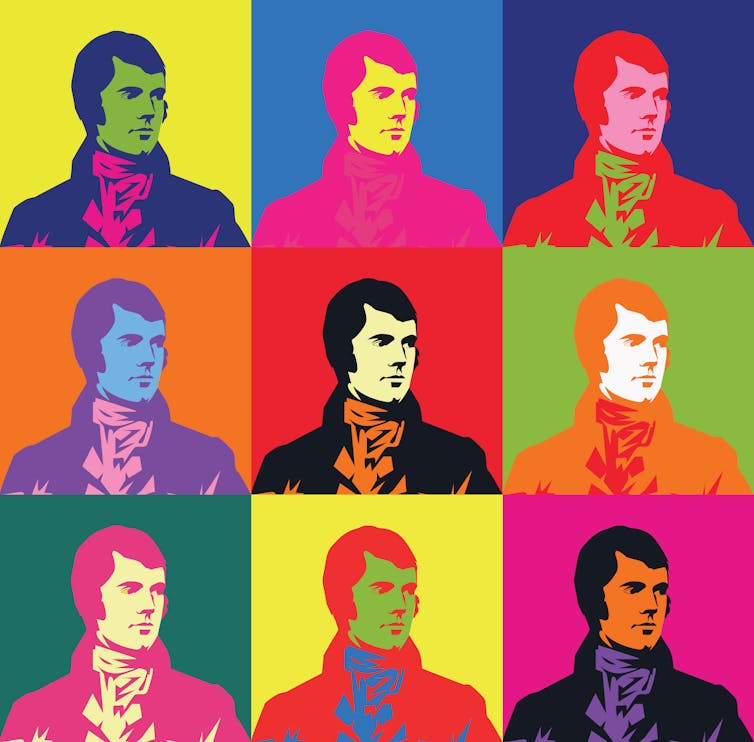
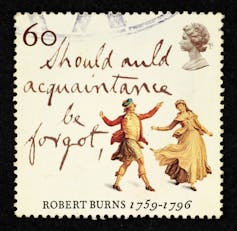
Remembering Robert Burns has never been straightforward


Shutterstock

Gerard Lee McKeever, University of Glasgow

The memory of the Ayrshire-born Scottish poet Robert Burns has always been complicated, especially in Dumfries, the town where he died in July 1796. In the years following his untimely demise at the age of 37, literary tourists including Dorothy Wordsworth and John Keats visited this market town in south-west Scotland in search of their hero. What they found, however, was a vision of Burns and of Scotland itself that seemed out of place, difficult to comprehend and yet intensely personal.

Burns’s own relationship to Dumfriesshire was enigmatic from the start. When he arrived to take up the tenancy of Ellisland farm in the summer of 1788, he declared himself in a “land unknown to prose or rhyme”. But Burns’s view of the region would evolve many times. By August of the same year, he was commemorating the Nith Valley’s “fruitful vales”, “sloping dales” and “lambkins wanton”, and had already written back in October 1787 that: “The banks of Nith are as sweet, poetic ground as any I ever saw.”

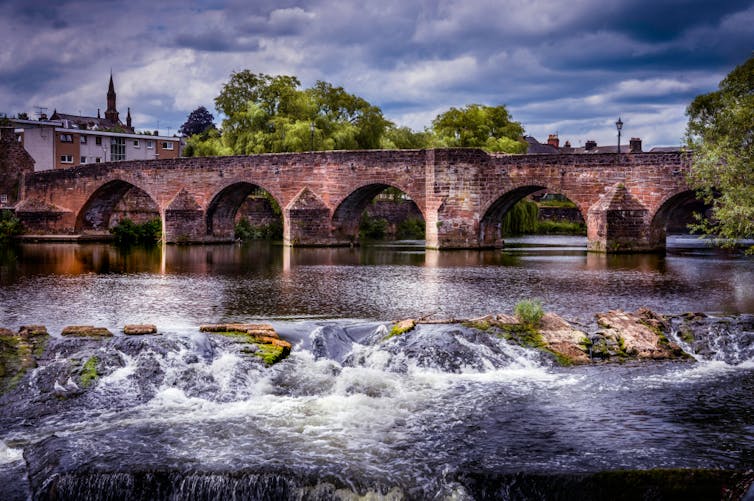
Dumfries, where Burns died in 1796.
Shutterstock

Burns composed some of his best-known work during these years, including what many consider his masterpiece, Tam o’ Shanter. And yet a shift in focus from poetry to songwriting – as he worked to collect, revise and compose lyrics for collections of national song – changed the sense of both place and personality in his writing. In his earlier years, Burns’s poetry had often been intensely self-reflective, rooting a version of himself in the Ayrshire landscape where he was raised. Now, his persona receded into the background due to the inherently communal nature of folksong.

At the same time, Burns’s employment as an excise officer and his eventual poor health in Dumfries would lead 19th-century commentators such as the historian Thomas Carlyle to accuse the town of wasting the poet’s talents through a lack of patronage. That underestimates Burns’s agency as a member of the lower middle class, who took pride in supporting his family independently. Yet still, what emerged was a lingering sense of the Ayrshire Burns as the true Burns, where the Dumfries Burns was only a tragic, diminished echo of himself.


Shutterstock

Poetic pilgrimage

In 1803, Dorothy Wordsworth set off from the Lake District on a tour of Scotland in the company of her brother William and Samuel Taylor Coleridge. Among key items on their itinerary was a pilgrimage to Burns sites in and around Dumfries. Yet the poet’s memory would not be easily reckoned with.

In her tour journal, Wordsworth quoted Burns’s own A Bard’s Epitaph – “thoughtless follies laid him low, | And stain’d his name” – to underline the moral failings of a poet already famous for his love affairs and heavy drinking. She wrote:

We could think of little else but poor Burns, and his moving about on that unpoetic ground.

Burns proved an inescapable but difficult presence in Dumfries for Wordsworth. He became representative of a south-west Scotland that defied easy comprehension: neither quite “the same as England” nor “simple, naked Scotland”.

Further north at Ellisland farm, Wordsworth remembered catching a view back home to “the Cumberland mountains”. The idea was taken up by her brother in a poem originally titled Ejaculation at the Grave of Burns, in which William imagined himself and Burns as the hills of Criffel and Skiddaw staring at one another across the Solway Firth. Yet the dead poet remained out of reach, leaving these tourists to their personal musings about Dumfriesshire in the terms of tragedy: a visit to Burns in 1803 was already seven years too late.

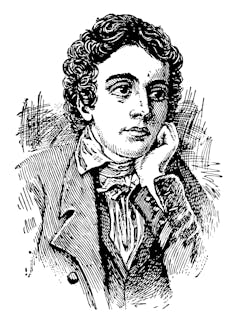
Keats made a pilgrimmage to Burns’s grave.
Shutterstock

If anything, the situation was even more pronounced in John Keats’s account of his 1818 walking tour, in which Dumfries shoulders much of the blame for the tragic story of this “poor unfortunate fellow”. Keats would find himself disgusted at the tourism industry that had already sprung up at the poet’s birthplace further north in Ayrshire.

But when confronted with the spectacle of Burns’s death, Keats apparently struggled to make much sense of Dumfries at all. Performing a kind of theatrical bewilderment in On Visiting the Tomb of Burns, he wrote that the town seemed “beautiful, cold – strange – as in a dream”.

Memory and imagination

It is difficult to overstate the impact of Burns’s legacy in south-west Scotland, for better or worse. His influence on following generations of poets in the region could be both inspiring and suffocating, while civic pride in his memory took on new forms in Dumfries as elsewhere throughout the 19th century, not least in the extravagant centenary celebrations in 1859.


Shutterstock

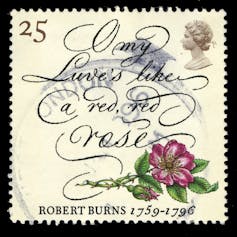
Today, when the poet’s birthday is marked on January 25 around the world, many different and contradictory versions of Burns will be remembered. In their complex responses to Dumfries, where the poet’s death has often seemed more tangible than his birth, early literary tourists like the Wordsworths and Keats show that this is nothing new.

After all, the role of a national poet – a vehicle for our thoughts and dreams – underlines how much of both memory and geography is the work of the imagination.The Conversation

Gerard Lee McKeever, British Academy Postdoctoral Fellow, University of Glasgow

This article is republished from The Conversation under a Creative Commons license. Read the original article.
Unknown's avatar

Sci-fi author William Gibson: how ‘future fatigue’ is putting people off the 22nd century


Shutterstock/HQuality

Andre Spicer, City, University of London

The future isn’t what it used to be, at least according to the Canadian science fiction novelist William Gibson. In a interview with the BBC, Gibson said people seemed to be losing interest in the future. “All through the 20th century we constantly saw the 21st century invoked,” he said. “How often do you hear anyone invoke the 22nd century? Even saying it is unfamiliar to us. We’ve come to not have a future”.

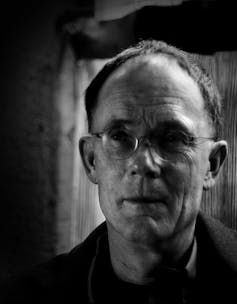
Portrait of William Gibson taken on his 60th birthday on March 17, 2008.
GonzoBonzo/Wikimedia, CC BY-SA

Gibson thinks that during his lifetime the future “has been a cult, if not a religion”. His whole generation was seized by “postalgia”. This is a tendency to dwell on romantic, idealised visions of the future. Rather than imagining the past as an ideal time (as nostalgics do), postalgics think the future will be perfect. For example, a study of young consultants found many suffered from postalgia. They imagined their life would be perfect once they were promoted to partner.

“The Future, capital-F, be it crystalline city on the hill or radioactive post-nuclear wasteland, is gone”, Gibson said in 2012. “Ahead of us, there is merely … more stuff … events”. The upshot is a peculiarly postmodern malaise. Gibson calls it “future fatigue”. This is a condition where we have grown weary of an obsession with romantic and dystopian visions of the future. Instead, our focus is on now.

Gibson’s diagnosis is supported by international attitude surveys. One found that most Americans rarely think about the future and only a few think about the distant future. When they are forced to think about it, they don’t like what they see. Another poll by the Pew Research Centre found that 44% of Americans were pessimistic about what lies ahead.

An imagined city of the future.
Shutterstock/JuanManuelRodriguez

But pessimism about the future isn’t just limited to the US. One international poll of over 400,000 people from 26 countries found that people in developed countries tended to think that the lives of today’s children will be worse than their own. And a 2015 international survey by YouGov found that people in developed countries were particularly pessimistic. For instance, only 4% of people in Britain thought things were improving. This contrasted with 41% of Chinese people who thought things were getting better.

Rational or irrational pessimism?

So why has the world seemingly given up on the future? One explanation might be that deep pessimism is the only rational response to the catastrophic consequences of global warming, declining life expectancy and an increasing number of poorly understood existential risks.

But other research suggests that this widespread pessimism as irrational. People who support this view, point out that on many measures the world is actually improving. And an Ipsos poll found that people who are more informed tend to be less pessimistic about the future.


Read more:
The end of the world: a history of how a silent cosmos led humans to fear the worst


Although there may be some objective reasons to be pessimistic, it is likely that other factors may explain future fatigue. Researchers who have studied forecasting say there are good reasons why we might avoid making predictions about the distant future.

Distant forecasts

For one, forecasting is always a highly uncertain activity. The longer the time frame one is making predictions about and the more complicated the prediction, the more room there is for error. This means that while it might be rational to make a projection about something simple in the near future, it is probably pointless to make projections about something complex in the very distant future.

Economists have known for many years that people tend to discount the future. That means we put a greater value on something which we can get immediately than something we have to wait for. More attention is paid to pressing short-term needs while longer-term investments go unheeded.

Psychologists have also found that futures that are close at hand seem concrete and detailed while those that are further away seem abstract and stylised. Near futures were more likely to be based on personal experience, while the distance future was shaped by ideologies and theories.

When a future seems to be closer and more concrete, people tend to think it is more likely to occur. And studies have shown that near and concrete futures are also more likely to spark us into action. So the preference for concrete, close-at-hand futures mean people tend to put off thinking about more abstract and distant possibilities.

The human aversion to thinking about the future is partially hardwired. But there are also particular social conditions that make us more likely to give up on the future. Sociologists have argued that for people living in fairly stable societies, it is possible to generate stories about what the future might be like. But in moments of profound social dislocation and upheaval, these stories stop making sense and we lose a sense of the future and how to prepare for it.

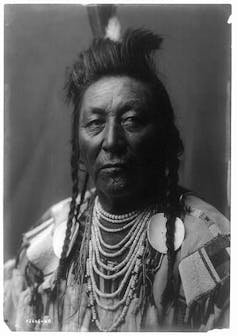
Plenty Coups portrait by Edward Curtis dated 1908.
Wikipedia

This is what happened in many native American communities during colonialism. This is how Plenty Coups, the leader of the Crow people, described it: “When the buffalo went away the hearts of my people fell to the ground, and they could not lift them up again. After this nothing happened.”

But instead of being thrown into a sense of despair by the future, Gibson thinks we should be a little more optimistic. “This new found state of No Future is, in my opinion, a very good thing … It indicates a kind of maturity, an understanding that every future is someone else’s past, every present is someone else’s future”.The Conversation

Andre Spicer, Professor of Organisational Behaviour, Cass Business School, City, University of London

This article is republished from The Conversation under a Creative Commons license. Read the original article.
Unknown's avatar

10½ commandments of writing


Things to keep in mind for writers young and old.
Kenny Luo/Unsplash

Sean Williams, Flinders University

Every author is asked by new writers for advice. There is, however, no all-encompassing, single answer that also happens to be correct. Quite a lot of commonly offered suggestions (“write every day”) don’t work for everyone and must be approached with caution.

A few years ago, I set out to create a list that will benefit all new writers. I put ten commandments through the wringer of my peers, who suggested modifications and noted that this list applies not just to new writers but to writers at every stage of their career. Indeed, I’ve needed reminding of more than one myself.

Here, then, are the 10½ commandments of writing – with an extra one for free.

1. Read widely

To succeed as a writer, you must occasionally read. Yet there are wannabe-novelists who haven’t picked up a book in years. There are also, more tragically, writers too busy to engage with the end-product of our craft. If the only thing you’re reading is yourself you are bound to miss out on valuable lessons.

The same applies to reading only within a favourite genre. A varied diet will strengthen your literary muscles.

2. Write

No need to thrash out 1,000 words a day or pen a perfect poem before breakfast, but you do have to write. The fundamental qualification for being a writer is putting words on the page.

If you aren’t doing that now, it’s possible you never will.

3. Follow your heart

When you really want to write literary fiction, but the market wants paranormal romance, write literary fiction. Chasing paranormal romance will be futile. Writing well is hard enough without cynicism getting in the way.

Passion doesn’t always pay, but it increases the odds of your work finding a home.

The best books come from the heart.
Brooke Cagle/Unsplash

4. Be strategic

But the choice is never between just literary fiction and paranormal romance. You might have poetry and narrative non-fiction passion projects as well, and it’s possible narrative non-fiction will appeal to the widest audience. If a wider audience is what you want, narrative non-fiction is the one to choose.

If, however, you don’t give two hoots about your audience, write what you like.

There are lots of different kinds of writers and lots of different paths to becoming the writer you want to be.

5. Be brave

Writing is hard, intellectually and physically. It also takes emotional work, dealing with exposure, rejection, fear and impostor syndrome. It’s better you know this upfront, in order to fortify yourself.

These crises, however, are surmountable. We know this because there are writers out there, leading somewhat normal lives, even healthy and happy ones. You can too, if you don’t give up.

The ones who persist are the ones who prevail.

6. Be visible

Many writers would prefer they remain hidden in a dark cave for all eternity. But stories demand to be communicated, which means leaving that cave. Whether it’s you or your written word, or both, broaching the bubble of self-isolation is important.

This doesn’t mean assaulting every social platform and attending every festival and convention. Find the kind of engagement that suits you and embrace it, and don’t overdo it. Remember: you still have to write.

You have to come out from there at some point.
Matthew Henry/Unsplash

7. Be professional

Don’t lie. Don’t belittle your peers and don’t steal from them. Keep your promises. Communicate. Try to behave like someone people will want to work with – because we all have to do that, at some point.

8. Listen

Heed what people you’re working with are saying, because you never know what gems of knowledge you might glean – about craft, about the market, about something you’re working on – among the knowledge you (think you) already possess.

9. Don’t settle

Every story requires different skills. You’ll never, therefore, stop learning how to write. The day you think you’ve worked it out is the day the ground beneath you begins to erode, dropping you headlong into a metaphorical sinkhole – and nobody wants that. Least of all your readers.

Readers can tell when you’re getting lazy, just like they can tell when you’re faking. You’re one of them. Deep down, you’ll be the first to know.

10. Work hard

Put in the hours and you’re likely to get some return on your investment. How many hours, though?

There’s a wonderful saying: “Even a thief takes ten years to learn her trade.” Writing is no different to any other career. Hope for overnight success; plan for being like everyone else.

The bonus commandments

When I put this list to my friends, several raised the importance of finding your people. Although I agree this is an important principle, I would argue it is implicit in commandments 6-8: these have no meaning without engaging. I decided to encapsulate this as 10.5. Embrace community

Find those who will walk alongside you.
Kenny Luo/Unsplash

After I’d been teaching and giving talks on this topic for several years, someone suggested another commandment that lies beneath the rest. It is so fundamental none will work unless you have this in spades. It is 0. Really want it, which sounds so obvious that it barely needs stating – except it does.

One day, I may no longer want to write. If that happens, I will take every mention of writing from this list and substitute the name of a new vocation – because this list applies to everything.The Conversation

Sean Williams, Lecturer, Flinders University

This article is republished from The Conversation under a Creative Commons license. Read the original article.
Unknown's avatar

Holocaust poetry and the reclamation of many identities


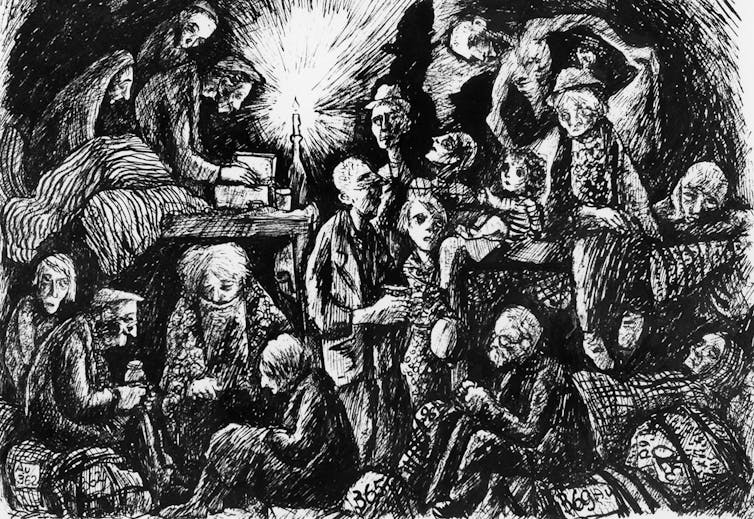
In the Living Quarters by Bedrich Fritta portrays Terezín (Theresienstadt) ghetto where early Holocaust poetry was written.
Wikimedia

Marian de Vooght, University of Essex

The first Holocaust poems were written 90 years ago, when the full extent of the horror was yet to be known. Starting in the 1930s, those first works foreshadowed the catastrophe that was soon to come. As the second world war erupted and the Nazi killings began, people continued to write poetry that recorded direct experiences of persecution and lamented the murder of loved ones.

While many writers of Holocaust poetry are Jewish, there are those who belong to other groups targeted by the Nazi regime. Including those who were perceived to have disabilities, Roma and Sinti people, political and religious opponents and homosexual men.

Writing poetry of the Holocaust has often been a way to reclaim identity, as writer and translator Lou Sarabadzic puts it:

Victims of the Holocaust are not the Other in these lines, but rather the authors, the ones we listen to, the ones expressing emotions.

As such, they continue to be written today as people continue to reckon with the memories and impact of the Holocaust.

Diverse backgrounds

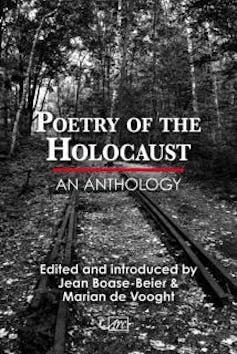
Published in 2019, Poetry of the Holocaust: An Anthology brings together poems from 19 languages that were previously unavailable in English. The translations in this book are followed by the original texts. These include poems in languages not normally associated with the Holocaust, such as Norwegian and Japanese, and from places like Argentina, Denmark and South Africa.


Author provided

Holocaust poetry in the 1930s and through the war wrestled with the incomprehensible reality its writers were facing. The earliest poems in Europe responded to the foreboding of the fascist regime and its politics of elimination.

In 1932, the German poet Eduard Saenger wrote in reaction to the sinister change of atmosphere that he was witnessing in his country:

A silent wind sends fear through the land / with an edge like the howling of wolves.

Like Saenger, many wrote poems warning of the approaching dark times and also in reaction to specific events, like the book burnings of May 1933 and Kristallnacht in November 1938.

During the war, the poems documented life in ghettos, prisons and concentration camps. They spoke of mass shootings and of seeing neighbours deported.

Writing in the Terezín (Theresienstadt) ghetto in the early 1940s, the Czech teenager Dagmar Hilarová expressed the desire to die rather than undergo further humiliation and torture:

Like a bird with wounded wings / To lie down, / And not to wait for morning.

Poems written in concentration camps were memorised or hidden, often later found by others. Sallie Pinkhof wrote a poem in Bergen-Belsen in 1944, in which he mocked the state of his body:

What a hoot / these loose-fitting tendons / and bones in my foot!

Pinkhof did not survive but his poems were preserved by fellow camp inmates. An anonymous poem found in the Zigeunerlager (Gypsy Camp) of Auschwitz-Birkenau opens with the wish:

Do not wake me from my dream, / so the world need never know / how they treat a Roma.


Read more:
Nazis murdered a quarter of Europe’s Roma, but history still overlooks this genocide


After the war

For many the horror of the Holocaust is both lifelong and unspeakable. As the memory and impact of the catastrophe continue to be felt by survivors, their children and people touched by its reverberations, poems continue to be written about the Holocaust to express what is almost beyond words. Dutch poet Chawwa Wijnberg (2001), whose father was executed by the Nazis:

Always present is the unsaid / the unsaid / that rips the wound open

Silence is a recurrent theme. Rita Gabbai-Simantov, a Sephardic-Turkish poet who lives in Greece and writes in Ladino, Judaeo-Spanish, about Thessaloniki – “old Saloniki” – and its wiped-out Jewish community (1992): “As you walk, your companion / will be silence”.

After her visit to Auschwitz, the Lithuanian poet Janina Degutytė recorded in 1966 the enduring silence of the people who were deported from her country and murdered:

Lips gasp for air … / The only sound is the rustling of golden leaves, / The rustling flow of time: which was – is – will be …“.

Later poetry also gave voices to persecuted groups who were previously unrepresented. In 1995, French writer André Sarcq was the first to express the fate of gay men who for decades after the war, in France and elsewhere, could not speak about their experience in concentration camps. This was because homosexuality continued to be outlawed and they felt, in Sarcq’s words, like “the rag of a pool of souls”.

The poet Janina Degutytė wrote a poem about Lithuanian victims after visiting Auschwitz in Poland.
Szymon Kaczmarczyk/Shutterstock

Poetry of the Holocaust continues to be written in our time. A striking example is the poem by Angela Fritzen, a journalist who has Down’s syndrome. Written after visiting an exhibition in Bonn, Germany in 2016, the poem is about the fate of people with disabilities during the Nazi era. “To have strength” is how Fritzen ends her deeply felt poem.

Holocaust poetry is a rich and diverse genre that continues to be added to. Both the older and the contemporary poems need readers, because Holocaust poetry is about communication. The poets felt the need to share their pain and it is vital that readers take the chance to empathise with what they have been through. By way of reflecting on the experience of others we recognise what it means to be human.

The translators of the quoted lines of poetry in this article are: Jean Boase-Beier (Saenger, Fritzen, Sarcq), Anna Crowe (Gabbai-Simantov), Maria Grazina Slavėnas (Degutytė), Marian de Vooght (Pinkhof, Sarcq) and Philip Wilson (Hilarová).The Conversation

Marian de Vooght, Visiting Fellow, Department of Government, University of Essex

This article is republished from The Conversation under a Creative Commons license. Read the original article.

Unknown's avatar

Comma again? Philip Pullman’s Oxford comma rage doesn’t go far enough


Philip Pullman thinks this coin needs another comma. What do you think?
HM Treasury/PA

Roslyn Petelin, The University of Queensland

High-profile author Philip Pullman tweeted on Sunday about the new 50 pence English coin due for release by the Royal Mint on Friday, January 31.

“The ‘Brexit’ 50p coin is missing an Oxford comma, and should be boycotted by all literate people,” he said.

An Oxford comma is the comma inserted before “and” or “or” in a list to separate the final item in a list from the items that go before it.

Sir Philip lives in Oxford, which voted to remain in the European Union. He has written several bestselling books, including the fantasy trilogy His Dark Materials. He argues that the commemorative coin requires a comma between “prosperity” and “and” – a very controversial opinion.

When The Guardian republished his tweet in an article, hundreds of responses were posted within hours. Moderators removed many comments – presumably the most heated ones.

Exciting passions

The mention of the Oxford (or Harvard or serial) comma unfailingly attracts passionate advocates (of which I am one) and determined detractors.

As Comma Queen Mary Norris, former copy editor at The New Yorker, says:

Nothing, but nothing — profanity, transgender pronouns, apostrophe abuse — excites the passion of grammar geeks more than the serial, or Oxford, comma. People love it or hate it, and they are equally ferocious on both sides of the debate. Individual publications have guidelines that sink deep into the psyches of editors and writers. The Times, like most newspapers, does without the serial comma. At The New Yorker, it is a copy editor’s duty to deploy the serial comma, along with lots of other lip-smacking bits of punctuation, as a bulwark against barbarianism.

Although its use is widespread in North America, the Oxford comma is not as widely used in Australia and the UK.

The Australian government’s Style Manual for Authors, Editors and Printers merely says “sometimes a comma is placed between the last two items to ensure clarity” and doesn’t use it in the manual’s title.

The UK National Curriculum authority warns students will be penalised if they use a serial comma in a list of simple items such as “apples, cheese, and milk”.

Many of the detractors say: “I was taught at school not to use it.”

To them I would say: “Well, you were taught wrong!”

As one poster on The Guardian article comments:

The use of the Oxford comma is not standard practice [in the UK], merely because of the ignorant, narrow-minded grammar school teachers we had.

Many believe it should be used only to avoid ambiguity, as in Robert Fulford’s example of a blooper that occurred in a newspaper reporting on a documentary about Merle Haggard: “Among those interviewed were his two ex-wives, Kris Kristofferson and Robert Duvall.”

My argument is deciding whether or not to use the Oxford comma is an unnecessary burden. I advocate using it at all times, although most journalists aren’t fans of the comma – perhaps because they can save a couple of spaces by omitting it.


Read more:
Grammarians rejoice in the $10 million comma


The 50p coin

To return to the quote on the coin in question, “Peace, prosperity and friendship with all nations”, placing an Oxford comma after “prosperity”, as Pullman advocates, doesn’t go far enough, in my opinion, to sort out the problem with the quote.

The intent of the quote seems to apply “with all nations” to the three nouns, but by parsing out each section we can see this does not work.

Does “Peace with all nations” make grammatical sense? No.

Does “Prosperity with all nations” make grammatical sense? No.

Whatever committee adapted US President Thomas Jefferson’s 1801 inauguration principles “peace, commerce, and honest friendship with all nations” by merely deciding to drop the Oxford comma and echo the rest of his words has resulted in this egregiously inept wording.

As admirable (or pedantic, depending on your feelings about the Oxford comma) as Pullman might be in advocating for the use of the Oxford comma on the coin, it’s clear this coin has committed more than one crime against the rules of grammar.The Conversation

Roslyn Petelin, Course coordinator, The University of Queensland

This article is republished from The Conversation under a Creative Commons license. Read the original article.
Unknown's avatar

If you can read this headline, you can read a novel. Here’s how to ignore your phone and just do it


Fewer people are reading novels for pleasure than in the past.
from shutterstock.com

Judith Seaboyer, The University of Queensland

Public anxiety about the capacity of digital-age children and young adults to read anything longer than a screen grab has come to feel like moral panic. But there is plenty of evidence to suggest we must take such unease seriously.

In 2016, the US National Endowment for the Arts reported the proportion of American adults who read at least one novel in 2015 had dropped to 43.1% from 56.9% in 1982.

In 2018, a US academic reported that in 1980, 60% of 18-year-old school students read a book, newspaper or magazine every day that wasn’t assigned for school. By 2016, the number had plummeted to 16%.

Those same 12th graders reported spending “six hours a day texting, on social media and online”.


Read more:
Why it matters that teens are reading less


American literacy expert and neuroscientist Maryanne Wolf describes the threat screen reading poses to our capacity for “the slower cognitive processes such as critical thinking, personal reflection, imagination, and empathy that are all part of deep reading”.

She asks:

Will the mix of continuously stimulating distractions of children’s attention and immediate access to multiple sources of information give young readers less incentive either to build their own storehouses of knowledge or to think critically for themselves?

But rather than taking up defensive positions on either side of the digital-analogue reading divide, Wolf encourages us to embrace both. As parents and teachers we can help our children develop a bi-literate reading brain. There are several ways we can do this.

Reading pathways

Reading is a learned skill that requires the development of particular neural networks. And different reading platforms encourage the development of different aspects of those networks.

Screen-reading children, immersed from toddlerhood in the pleasures and instant gratification of skimming, clicking and linking, develop cognitive skills that make them adept power browsers, good at the useful ability to scan for information and analyse data.


Read more:
Three easy ways to get your kids to read better and enjoy it


But Wolf suggests this kind of reading “can short-circuit the development of the slower, more cognitively demanding comprehension processes that go into the formation of deep reading and deep thinking.”

Unless the cognitive skills required for deep reading are similarly developed and nurtured, new generations of readers – distracted by the ready availability of digital information – may not learn to venture beyond the shallows of the reading experience.

We can help children gain a love of reading on paper from an early age.
from shutterstock.com

Along with others concerned with early childhood education Wolf advises encouraging paper literacy from infancy. She doesn’t recommend forbidding devices. Instead we should regularly turn them off and make the time and space to read books on paper with children.

We can model our own reading practices by setting aside our own smart phones to lose ourselves in a book.


Read more:
Love, laughter, adventure and fantasy: a summer reading list for teens


But how can secondary and tertiary teachers help inexperienced readers? The problem is likely to be aliteracy, meaning students can read but they choose not to because they don’t see it to be important for learning. And because they haven’t read much, it’s hard work. The problem can seem intractable. But it can be done.

Turn off the phone and read

My first venture into helping tertiary students read better was a 2011-2013 cross-university government-funded project that set out to foster what we termed “reading resilience”. We found if students were persuaded to prioritise reading as they did a test or an essay, they would invest the time to get into the zone that is the other world of the text.

We complemented complex texts with a guide that encouraged students to think critically as they read and to keep going when the language seemed impenetrable, the narrative incomprehensible (or dull) and the length endless. Or when the siren call of the smart phone became irresistible.

They experimented with switching off their devices for blocks of two hours while they simply read. And they did read.

Students prioritised this difficult work because we rewarded pre-class reading with marks. Some classes uploaded one-page, carefully argued responses; others answered complex feedback-rich quizzes.

Can you ignore your phone for two hours and keep reading?
from shutterstock.com

I surveyed a large first-year introduction to literary studies at the University of Queensland in 2013 before testing a version of the same “reading resilience” course in 2014. The rise in reading rates was exponential.

The number of students who completed all ten primary texts (including the poem Beowulf and Toni Morrison’s Beloved) more than tripled, and the number who completed the ten accompanying secondary texts (selected chapters from an introduction to literary theory and criticism) went up by more than six times.

Reported student satisfaction for this course from 2008 to 2012 had ranged between 64% and 75%. Once reading resilience was introduced, many complained about the reading load yet the level of overall satisfaction jumped to 86%.

We can all do it

It’s not just readers raised in a digital-age who have difficulty with long-form text. Have you have lost the skill of deep reading? Are you finding it increasingly difficult to stay with, say, a literary novel? You are not alone.

Wolf, who despite having two degrees in literature, confesses to the shocking discovery that recently she found herself struggling to stick with a beloved Herman Hesse novel.


Read more:
5 Australian books that can help young people understand their place in the world


We too can switch off our devices and set aside a space and time to revitalise the neural pathways that once made us immersive readers.

As Wolf argues, the skills of “deep reading” that involve “slower, more time-consuming cognitive processes […] are vital for contemplative life”. Deep readers are likely to be more thoughtful members of the community at a time when good citizenship may never have been more important.The Conversation

Judith Seaboyer, Senior Lecturer, The University of Queensland

This article is republished from The Conversation under a Creative Commons license. Read the original article.
Unknown's avatar

Curious Kids: why does reading in the back seat make you feel sick?


Looking out the window instead might stop you feeling sick, but that doesn’t work for everyone.
Vadiar/Shutterstock, CC BY

Wayne Wilson, The University of Queensland

Why does reading in the back seat make you feel sick? – Jane, aged 10, from Coburg North, Australia.

Hi Jane, your question about why reading in the back seat makes you feel sick is a very good one. The answer has to do with our eyes, our ears and our brain.

Reading in the back seat can make you feel sick because your eyes and ears are having an argument that your brain is trying to settle!


Read more:
Curious Kids: Why do our ears pop?


When you’re reading in the back seat, your eyes see that your book is still. Your eyes then tell your brain you are still.

But your ears feel the car is moving. Your ears then tell your brain you’re moving.

How can your ears tell you’re moving?

Your ears don’t just hear, they help with your balance too.

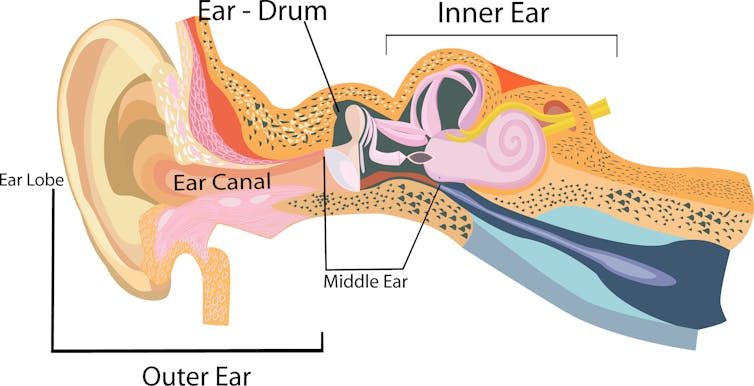
Your ear has three main parts:

  • the outer ear is the bit you can see on the side of someone’s head
  • the middle ear is your eardrum and some tiny bones and muscles
  • the inner ear is the part of your ear that can help with your balance.
The ear includes more than what you see on the outside.
sanjayart/Shutterstock

Your inner ear contains cells that have hairs sticking out the top. Scientists call these “hair cells”.

Some of these hair cells help us to hear. When sound hits those hair cells, the hairs move and the cells send signals to the brain. Our brains use those signals to hear.

Other hair cells help us to keep our balance. When the car we’re sitting in moves, that movement makes the hairs on those hair cells move too, and they send different signals to the brain. Our brain uses those different signals to tell we’re moving.

Why doesn’t the brain like this?

Some people’s brains don’t like it when their eyes say they’re still but their ears say they’re moving.

When eyes and ears argue like this, the brain can think that something dangerous might be about to happen.

If this happens, the brain can get the body ready to fight or run away (scientists call this the “fight or flight” response).

The conflict between our eyes and ears make the brain think something dangerous might happen.
wavebreakmedia/Shutterstock

One of the things the brain can do is take blood away from the stomach to give to the muscles.

Giving blood to the muscles can help us to fight or run away. But taking blood away from the stomach can make us feel sick.

What can you do about it?

If reading in the back seat makes you feel sick, you might need to settle the argument between your eyes and your ears.

One way to do this is to stop reading and to look out the car window. This could help your eyes to tell your brain that you’re moving as you see the world whizz by, and your ears to tell your brain that you are moving as you feel the car moving.


Read more:
Curious Kids: Do astronauts get space sick when they travel from Earth to the International Space Station?


But this suggestion won’t work for everyone. Some people will still feel sick when they ride in a car, even if they aren’t reading.

This is because while our eyes and our ears help us to balance, so do our skin and our muscles. This creates many opportunities for arguments that our brain has to settle!


Hello, curious kids! Have you got a question you’d like an expert to answer? Ask an adult to send your question to curiouskids@theconversation.edu.auThe Conversation

Wayne Wilson, Associate Professor in Audiology, The University of Queensland

This article is republished from The Conversation under a Creative Commons license. Read the original article.

Unknown's avatar

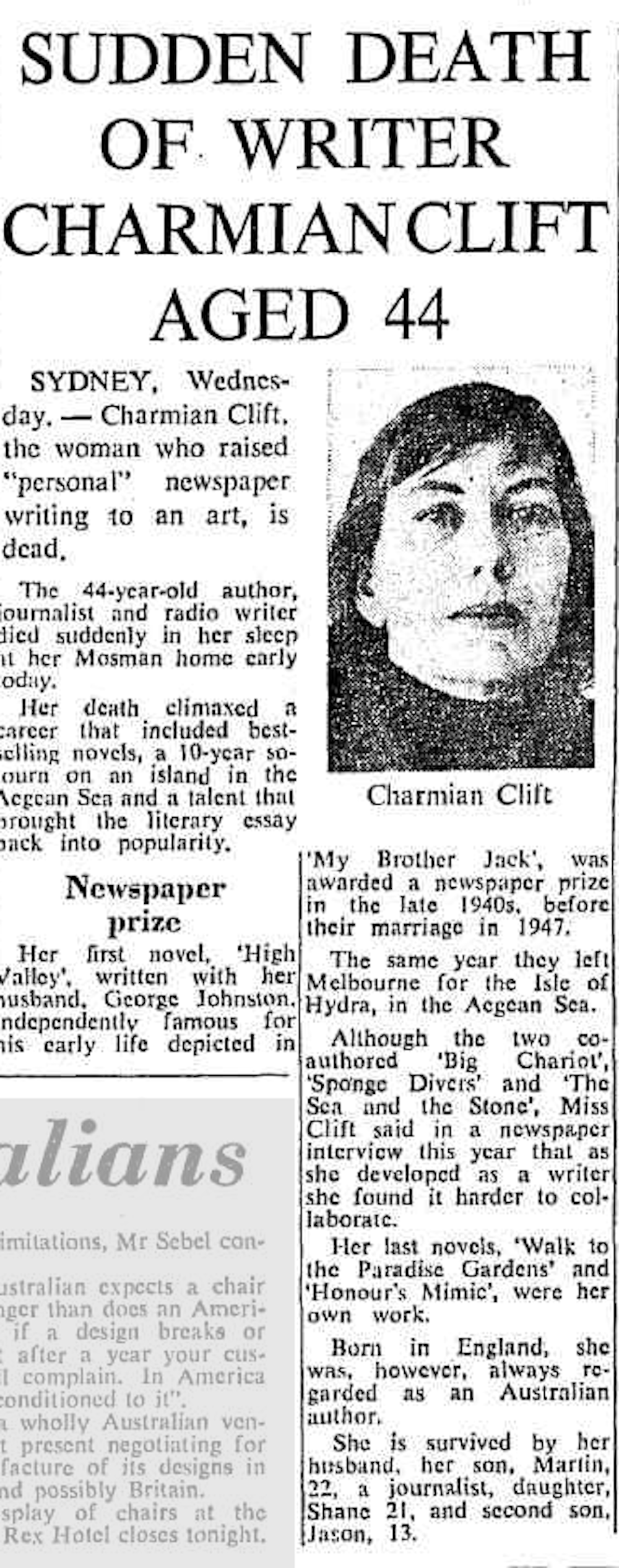
‘A woman ahead of her time’: remembering the Australian writer Charmian Clift, 50 years on


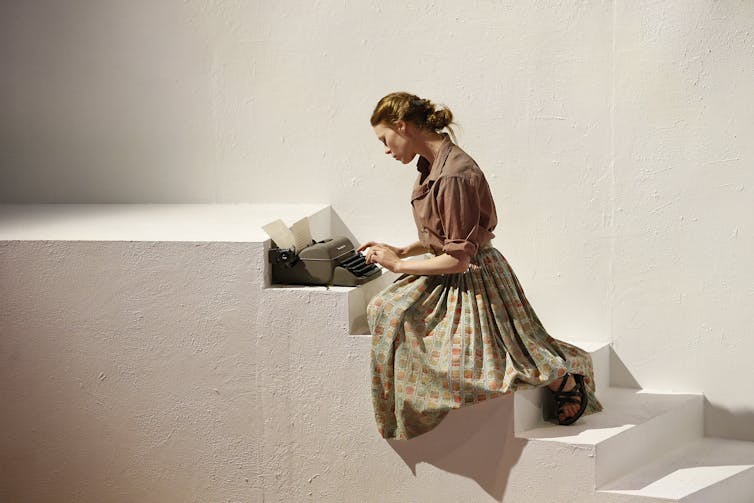
Anna McGahan as Charmian Clift in Sue Smith’s play Hydra. Long overshadowed by her husband George Johnston, recent years have seen a resurgence of interest in Clift’s life and work.
Jeff Busby/Queensland Theatre

Tanya Dalziell, University of Western Australia and Paul Genoni, Curtin University

Fifty years after her death, Australian writer Charmian Clift is experiencing a renaissance. Born in 1923, Clift co-authored three novels with her husband George Johnston, wrote two under her own name, produced two travel memoirs, and had weekly column widely syndicated to major Australia papers during the the 1960s.

Clift has long been overshadowed by the legacy of Johnston, whose novel My Brother Jack is considered an Australian classic. Her novels and memoirs are sadly out of print, yet she is increasingly recognised for her important place in Australian culture.

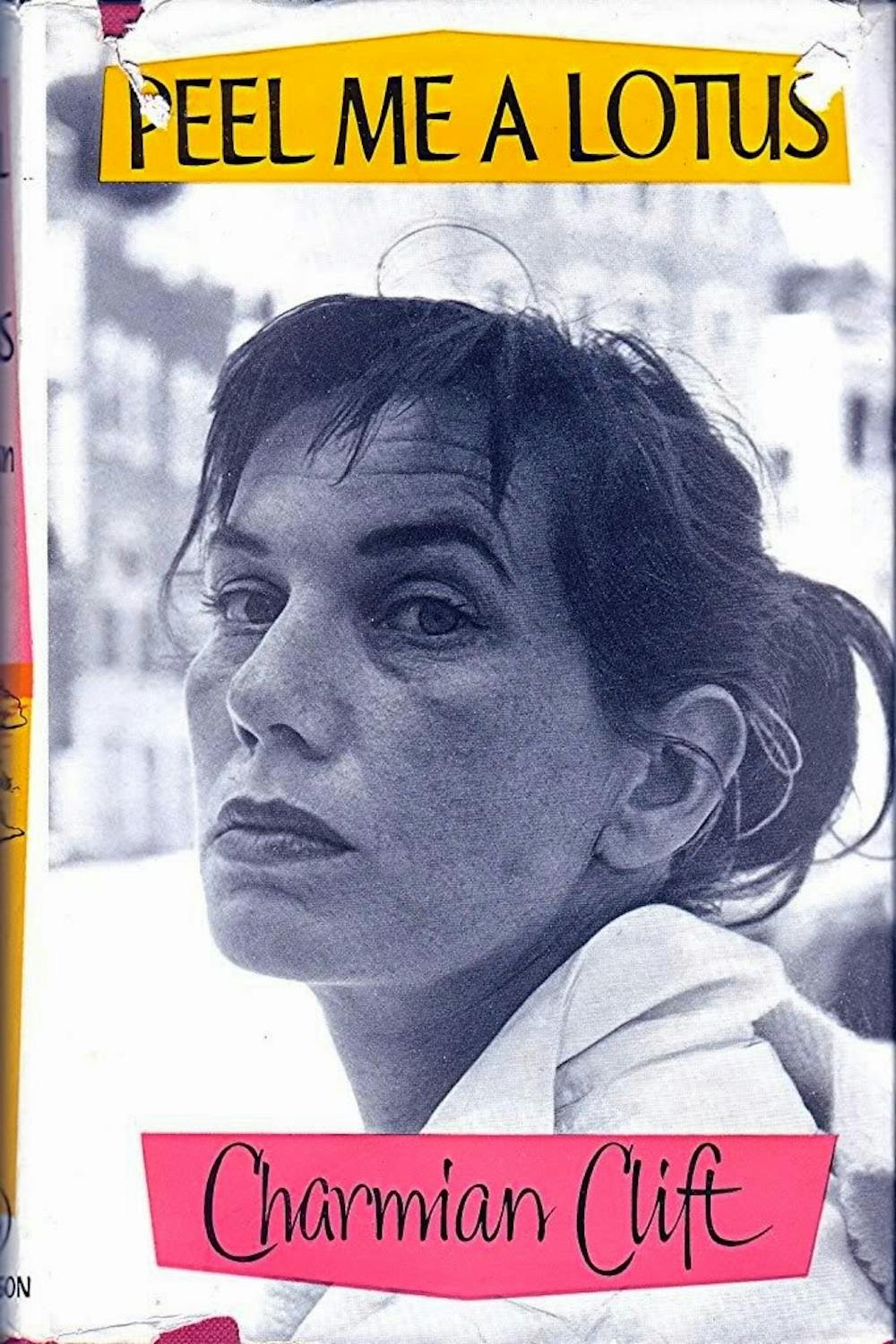
Charmian Clift, pictured on the front cover of her memoir, Peel Me a Lotus.
Hutchinson, 1959

In 2018 she, along with Johnston, was inducted into the Australian Media Hall of Fame in recognition of her work as a columnist. She is also being reimagined in fiction, as the subject of A Theatre of Dreamers (2020), a forthcoming novel by English author, Polly Samson, and in Tamar Hodes’ The Water and the Wine (2018).

The revival of interest in Clift is more than a collective nostalgia or feminist correction of the historical record, although both are relevant. Many of her readers from the 60s still remember her newspaper column, and the impact that it had on their view of Australia’s place in the world, with great affection.

Younger generations, particularly women, have also been exposed to Clift’s clear and passionate voice after the columns were published in several volumes in the years following her death. That Clift and her writing continue to resonate with contemporary Australia tells us something about both her and the nation.

The Hydra years

Much of the renewed interest in Clift is focused not only on her writing, but also on the near decade that she and Johnston lived on the Greek Island of Hydra. In late 2015, artist Mark Schaller’s Melbourne exhibition, Homage to Hydra, featured paintings depicting Clift and Johnston’s island lives, with several featuring other residents from Hydra’s international population of writers and artists, including Canadian poet and songwriter, Leonard Cohen.

The same year, Melbourne musicians Chris Fatouros and Spiros Falieros debuted Hydra: Songs and Tales of Bohemia, marrying Cohen’s songs to a narrative about Clift and Johnston’s time on Hydra.


Read more:
Friday essay: a fresh perspective on Leonard Cohen and the island that inspired him


In 2018, our book, Half the Perfect World: Writers, Dreams and Drifters on Hydra, 1955-1964, told in detail of the fabled decade of Clift’s life as a bohemian expatriate.

To date in 2019, Sue Smith’s play, Hydra, has been staged in Brisbane and Adelaide, casting Clift in ways that resonate sympathetically with the concerns of contemporary audiences. As Smith writes in her script’s introduction:

Charmian was a woman ahead of her time. We see this in the choices she made both in her personal life, whether it be scandalising the Greek locals by wearing trousers and drinking in bars, to insisting upon her personal and sexual freedom and, of course, through her work.


Read more:
Sue Smith’s Hydra: how love, pain and sacrifice produced an Australian classic


‘Charm is her greatest creation’

Modern readers might respond to Clift the writer, but the focus on her years on Hydra suggests there is also great interest in her charismatic personality and tempestuous life with Johnson, as their dream of a cheap and sun-soaked creative island life slowly soured.

While researching the couple’s lives on Hydra, we came across a suggestive, eye-witness diary entry by a fellow writer, New Zealander Redmond Wallis, written in 1960.

Charm is her greatest creation, Charmian Clift, the great Australian woman novelist. Charmian is very curious. She is, potentially at least, a better writer than George but she has and is deliberately creating a picture of herself … which one feels she hopes will appear in her biography some day.

The head of a literary coterie, beautiful, brilliant, compassionate but still the mother of 3 children, running a house. Sweating blood against almost impossible difficulties – a husband inclined to unfounded jealousy, the heat, creative problems, the children, the problems foisted on her by other people … and yet producing great art.

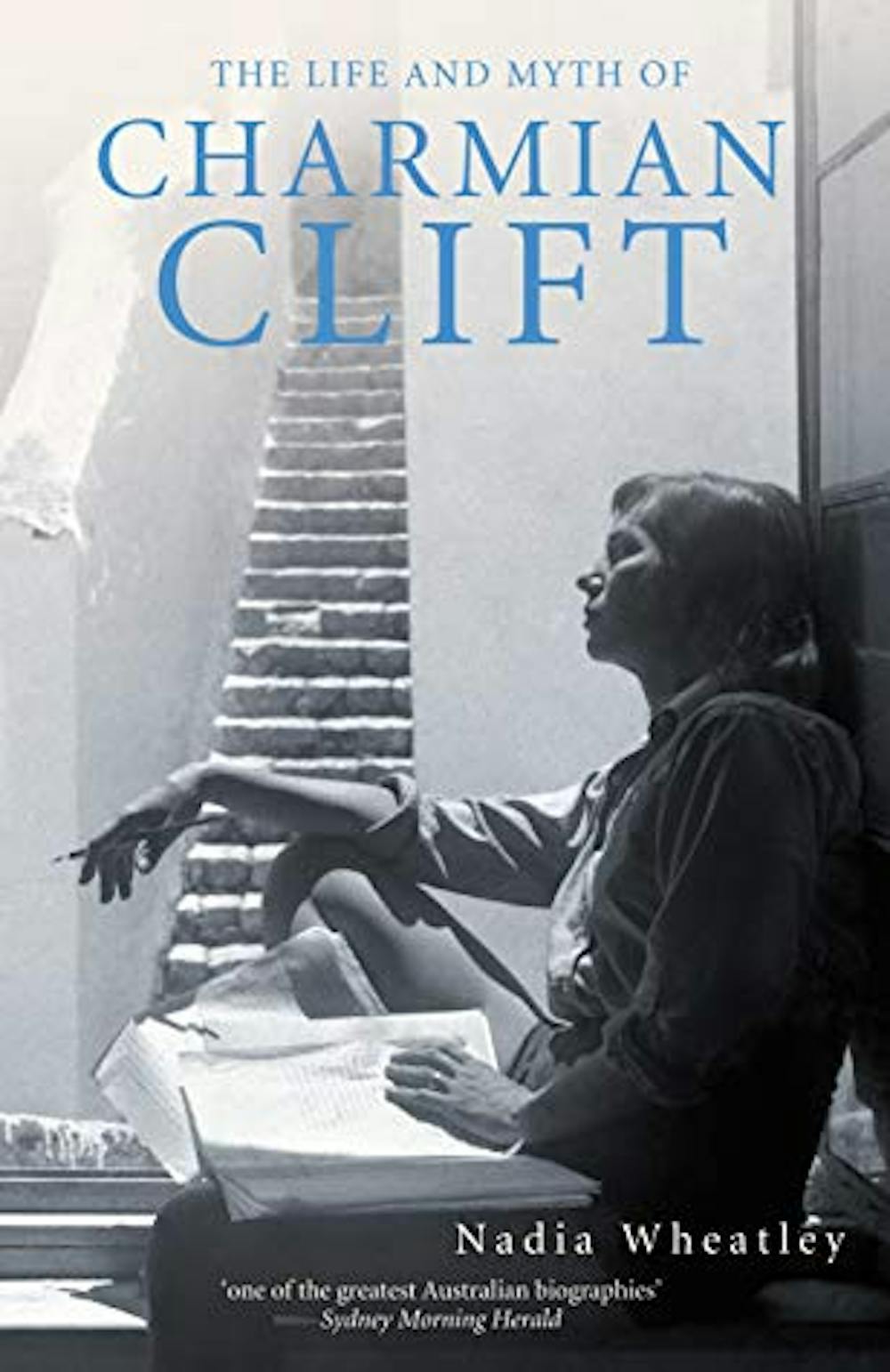
Wallis’s observations are accurate, and prophetic, in noting Clift’s capacity for self-mythologising and her belief that both she and her Hydra idyll would be remembered. Nearly four decades after Clift returned from Greece to Australia amid the acclaim for My Brother Jack, she did become the subject of an excellent biography, Nadia Wheatley’s The Life and Myth of Charmian Clift (2001).

Nadia Wheatley’s biography of Clift.
Goodreads

But there were also failures amongst the success. The vision she and Johnston shared for a writing life on Hydra floundered amid poverty, alcoholism and illness. Their return to Australia in 1964 was an unlikely triumph for Johnston following the success of My Brother Jack, but Clift did not return with the same profile.

Wheatley also traced another of Clift’s great disappointments – her failure to complete her long-dreamt of autobiographical novel The End of the Morning, a struggle that was the subject of Susan Johnson’s 2004 novel, The Broken Book.

Clift did, however, leave an autobiography of sorts, in her newspaper articles. These often focused on domestic circumstances and everyday thoughts – ranging from conscription, to the rise of the Greek military junta after she left Hydra, to the changing social circumstances in Australia, and her daughter’s engagement.

These articles might not have always reflected the experiences of her readers – not everyone invited Sidney Nolan over for drinks – but Clift’s first-person narratives of a life lived with great passion and a sceptical eye to the consequences, garnered a large readership.

These readers responded to an incisive intellect with a vision of a culturally enriched Australia. She understood well the need for the country to outgrow its entrenched conservatism in order to realise its potential; and she emerged as a generous spirit who realised that the dreams and passions that drove her life were found everywhere in Australian suburbs.

Clift’s death reported by The Canberra Times in July, 1969.

Wallis’s detection of Clift’s hubris and narcissism paints her as a potentially tragic figure. It was a fate she perhaps fulfilled, when Johnston eventually wrote of Clift’s infidelities on Hydra. Clift took her own life on July 8 1969, an event that curtailed her voice while leaving behind a legacy of loyal and grieving readers.

A natural cosmopolitan

Clift’s is one of the voices – and one of the most important female voices – that rose above the crowd during the post-war period, as the western world unknowingly girded itself for the social revolution that was to come.

Through her columns she advocated for a bolder, more outward looking future, and as someone who was naturally cosmopolitan she was avidly interested in seeing Australia become more open to the world and better integrated into the Asia-Pacific.

She didn’t always get it right (an essay decrying the rise of the Beatles and the Rolling Stones stands out!), but she helped navigate the path to a more broad-minded and inclusive vision of Australia.

Over the years Clift has emerged as someone who was not only modern, but also engaged in that most post-modern of activities, self-creation. For while Wallis scorned Clift’s self-mythologising at the time, it might now be recognised as the finest gift of the creative artist – to re-make oneself in the image of a world yet to be made. It was her gift to her readers and Australia.The Conversation

Tanya Dalziell, Associate Professor, English and Literary Studies, University of Western Australia and Paul Genoni, Associate Professor, School of Media, Creative Arts and Social Inquiry, Curtin University

This article is republished from The Conversation under a Creative Commons license. Read the original article.
Unknown's avatar

Summer reads: When you can’t travel, let a book transport you


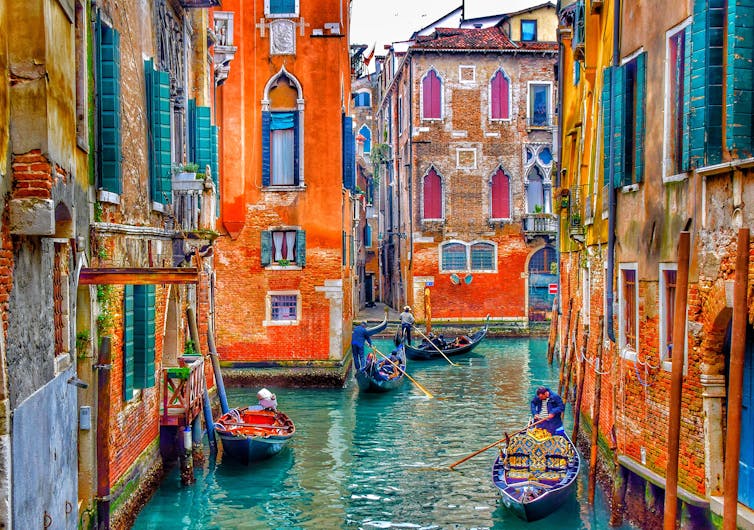
If you can’t get to Venice, Italy, allow a book translated from Italian to transport you there.
Tom Podmore/Unsplash

Amy McLay Paterson, Thompson Rivers University

I don’t understand beach reads. And I’m not the only one. There’s no universal consensus about the category, though the marketing tends to revolve around those books popularly considered disposable, unserious, or at the very least, books “you don’t mind getting wet.”

Last year, I toted Anna Karenina along with me — it got soaked, and I abandoned it in an AirBnB in Dubrovnik, Croatia, after I’d finished reading it. It lasted nearly the whole trip and left a gaping, souvenir-sized hole in my suitcase; it was perfect. So as much as I’d like to dissolve the beach read label entirely, I must also admit I have a type: I want a meaty, absorbing book that takes me further into a vacation by connecting with the cultures that produced it. I want a book that can’t be disposed of, one that will take me somewhere entirely new.

What I really want is to decouple the notion of summer reading as a lifestyle marker of class or gender. If the “pursuit of intellectual betterment” feels inaccessible or off-putting, I would like to propose at least the pursuit of expanding our emotional connections.

In a cultural climate where the limits of empathy are increasingly under a microscope, forging cross-cultural connections feels like a pressing task. Much has been made of the relationship between fiction reading and empathy, but what happens when the limits of our worldview are bounded by the English language? While linguistic diversity is growing in Canada, the majority of Canadians still speak only English at home, and comparatively few books are translated into English. If, as José Ortega y Gasset proposes, reading in translation should transport the reader into the language — and therefore the perspective — of the author, then reading translated works may be one of the best ways to expand empathy beyond the boundaries of language.

I’m not going abroad this summer, at least not physically. I’ll be staying in Canada, with only my books to pull me to other times and places. While in recent years, I’ve focused on keeping up with new releases, this year I’m fixated on atmosphere and transportation, in a mix of old favourites and new-to-me classics from around the world.

Italy

‘Arturo’s Island,’ 1957.
Arnoldo Mondadori Editore

I won’t tell you to read Elena Ferrante, because you’ve probably heard that before. Instead, I will be delving into the work of Elsa Morante, a possible inspiration for Ferrante’s pseudonym. Arturo’s Island, originally published in English in 1959, has been published in a new translation by Ann Goldstein (translator of Ferrante’s Neapolitan novels). The novel promises a mix of the remote island setting steeped in Morante’s preoccupation with social issues and the spectre of war.


Poland

‘Flights,’ 2018.
Riverhead Books

One of my favourite themes in European literature is that of movement and fluidity, the running sense of unity of purpose amidst myriad diverse pockets of culture. The ubiquity of trains and boats support transcontinental journeys by characters who switch language mid-conversation. Last year’s Man Booker International winner, Flights by Olga Tokarczuk takes traveling and travelers as the subject of its interconnected musings, making it an ideal choice for the vacation headspace. This year’s winner, Celestial Bodies from Oman’s Jokha Alharthi, has an English edition but has not yet been published in Canada.


Croatia

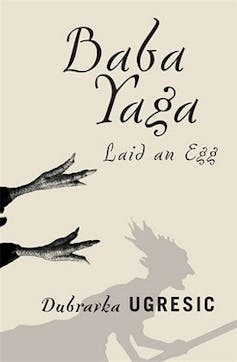
‘Baba Yaba Laid an Egg’ 2009.
Canongate Books

In my opinion, no contemplation of Pan-European lore can be complete without Dubravka Ugrešic’s Baba Yaga Laid an Egg. Once labeled a witch herself and driven into exile from Croatia, Ugrešic’s take on Baba Yaga explores the shifting nature of popular folklore.


Nigeria

‘Half of a Yellow Sun,’ 2006.
Knopf

Half of a Yellow Sun by Nigerian author Chimamanda Ngozi Adichie is not a translation, but it will take you to a place that only briefly existed: Biafra, a West African state founded in 1967. While the brutality of recent war may not make a particularly appetizing subject for vacation, Adichie contrasts the brutality with sumptuous descriptions of pre-war food and luxury, giving her vision of Biafra the aura of a lost dream. Adichie has referred to the war as a shadow over her childhood.


Norway

‘Kristen Lavransdatter,’ 2005.
Penguin Books

There are no beaches in Kristen Lavransdatter and many more Christmases than summers, but if you start Nobel Prize-winner Sigrid Undset’s oeuvre now, it may take you until winter to finish it. Set in Medieval Norway, the book follows the titular Kristen from childhood until death, focusing on her tumultuous love affair and marriage to Erlend Nikulaussøn. Tiina Nunnally’s translation, focusing on plain, stripped-down language, presents a change in philosophy from the first English translation that cut large portions of the text and enforced stiff, archaic language absent from the original Norwegian.


Argentina

‘Fever Dream,’ 2017.
Riverhead Books

Samanta Schweblin’s Fever Dream is slight in length but packs a heavy punch in both atmosphere and psychological investment. The story of a vacation gone terribly wrong, the novel’s Spanish title closely translates to “rescue distance,” a recurring concept instantly familiar to parents of young children and terrifying as it becomes repeatedly destabilized. Fever Dream is so unsettling that I sometimes hesitate to recommend it, but I’ve found myself repeatedly drawn back to its tantalizing surrealism.


Canada

‘Secwépemc People, Land and Laws,’ 2017.
McGill-Queen’s University Press

I’ve spent much of my life moving around, and as a recent settler on unceded Secwepemc territory, I want to learn more about the land I live on. In a summer steeped in fiction, Secwépemc People, Land, and Laws by Marianne and Ronald Ignace is the only history on my list, but in many ways it feels similar to the others, reaching out to add a new dimension to a place in which I’m still mostly an outsider. For better or for worse, Kamloops feels the most like itself in summer, the climate wants to have its stories told. It can feel intimidating to contemplate a 10,000 year history I know nothing about, but also comforting and necessary to reach back and hear the tales of the land I now call home.The Conversation

Amy McLay Paterson, Assessment and User Experience Librarian, Thompson Rivers University

This article is republished from The Conversation under a Creative Commons license. Read the original article.