
The link below is to an article that looks at the role of digital archives and libraries.
For more visit:
https://blog.openlibrary.org/2020/10/07/on-bookstores-libraries-and-archives-in-the-digital-age/

The link below is to an article that looks at the role of digital archives and libraries.
For more visit:
https://blog.openlibrary.org/2020/10/07/on-bookstores-libraries-and-archives-in-the-digital-age/
Ian Milligan, University of Waterloo
A seasonal change is in the air. With a minimal amount of nostalgia about the dwindling days of this unique summer, let’s turn to how we can make the most of the rest of 2020 — clearly a year for the history books.
As a historian, what concerns me is: What will our history of this unprecedented year look like in a quarter century? As the world is reshaped by COVID-19, as well as ongoing protests on a nearly unprecedented scale against racism and police brutality in the United States, Canada and around the world, it’s clear that this will be a year for future historians to make sense of.
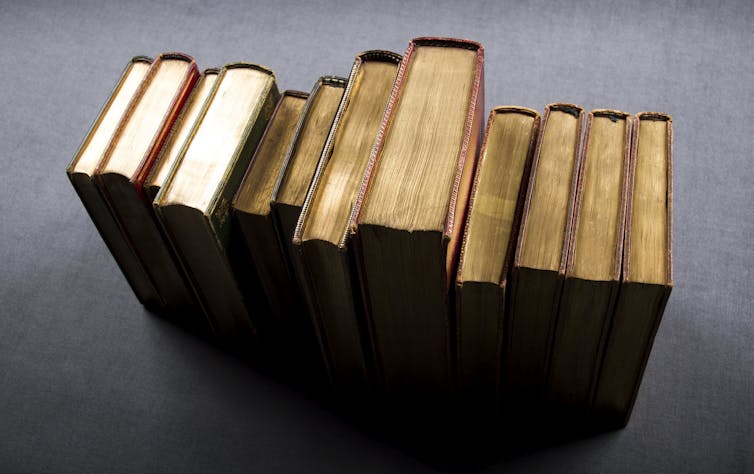
A child today will be a historian of 2020 in the future. What sources will they turn to? How will they verify scattered memories? How will people tell the story of the tumultuous times that we’re living in today? 2020 may be a year for the history “books” but of course, the record we leave behind will be digital in manner.
But right now, Canada, unlike many other countries such as the United Kingdom, France, Denmark and others, doesn’t mandate its national library to capture a comprehensive digital record of Canadian life. This needs to change so we can ensure historians of the future have all the sources possible to write a rich, equitable and robust historical record.
From the role of video and social media in sparking and documenting protests to companies and educational institutions that moved online en masse in a matter of days this past March, 2020 will be a year that will be understood through digital media.
With coronavirus isolation, digital media has been enormously important for our interactions with colleagues, friends and loved ones.
Some trends: Zoom’s daily meeting participants went from 10 million in December to 300 million in April and we “doomscroll” through social media feeds before bed. As The New York Times explained: “The virus changed the way we internet.”
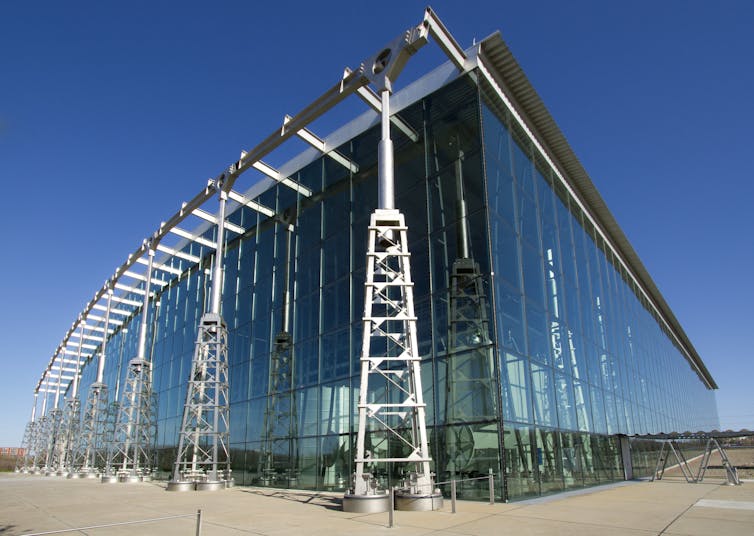
Because in part the British Library is empowered to collect millions of their web pages every year through the use of “legal deposit” power, a historian in the U.K. will have a rich record to explore.
For example, what did Britons think of senior adviser Dominic Cummings’ 418-kilometre trip from London to Durham while his wife was unwell? A researcher will be able to visit the British Library (in most cases, an in-person visit is required due to legal reasons) to consult not only social media feeds of everyday researchers, but news websites, U.K. blogs and beyond.
They will be able to draw on nearly everything published on the U.K. web in 2020. Right now a researcher can already view thousands of pages — and, most importantly, these are stewarded by the British Library for future preservation.
This information will be accessible to our future researcher thanks to the power of legal deposit. Legal deposit is defined by the International Federation of Library Associations as a “statutory obligation [that] requires publishers, distributors and, in some countries, printers, to freely provide copies of their publications to the national collection,” and is a power that builds the collections of national libraries including Library and Archives Canada (LAC).
What this has meant in practice is that when a book or publication is published, there has been a legal requirement to deposit the book with a national library.
What happens when a publication moves online? What about blogs? Should they have a similar responsibility to deposit their material? And, critically, does a national library have a duty to preserve this information at scale?
The British Library has, since April 2013, been “entitled to copy U.K.-published material from the internet for archiving under legal deposit.” In practice, this means that it annually archives websites of the U.K.; it also supplements this archive through curated collections such as the earlier mentioned one around global pandemics. Those tweets, blogs, health websites and so on all form part of the historical record — and once archived, there is no legal ability to retroactively delete them.
Crucially, sweeping collections of material under legal deposit means that material is being amassed that does not seem important today — but could be invaluable to a historian in years to come.
The remarkably forward thinking Library and Archives of Canada Act of 2004 gives Library and Archives Canada similar powers. One section of the act, for example, gives the institution the power to take a “representative sample of the documentary material of interest to Canada that is accessible to the public without restriction through the internet or any similar medium.”
These laws, however, aren’t used to their fullest. Canada’s national library doesn’t carry out a comprehensive snapshot of the entire Canadian web domain, meaning that countless voices will be lost for future historians.
This is not to paint too dire a picture. Library and Archives Canada does a great job of capturing material of interest. During COVID-19, it has selectively captured some 38 million digital assets related to COVID-19 by July 2020, which add to their robust web archives including the Government of Canada web archive, which collects and maintains a comprehensive record of federal government’s websites.
Increasingly, it’s making collections, such as the Truth and Reconciliation Commission’s collection, available online. In doing so, Library and Archives Canada is explicitly noting its collecting powers under the 2004 act, suggesting an increasing willingness to share these materials.
We should laud this great work, and use it as a launchpad for the comprehensive collection of all Canadian material.
While Library and Archives Canada has been collecting material for COVID-19, including social media hashtags as well as media and non-media related websites, even 900 websites being regularly collected is patchwork compared to the sheer amount of information published by Canadians online every day.
To do justice to what’s happening around us, and to make sure that historians of the future can understand this moment, the institution and policy-makers need to move quickly.
We need to aim to collect the entire Canadian web domain on an ongoing basis, both during and after COVID, to enable future researchers to understand our country. This will require additional funds to Library and Archives Canada. But, at what better time?
Ian Milligan, Associate Professor of History, University of Waterloo
This article is republished from The Conversation under a Creative Commons license. Read the original article.
Denise Rosemary Nicholson, University of the Witwatersrand
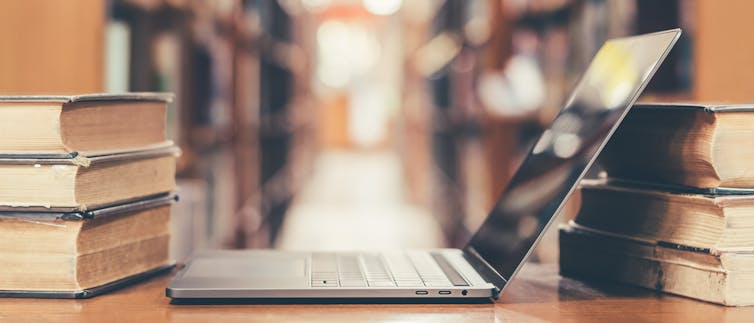
To fulfil their mission in the 21st century, libraries, archives, museums and galleries must engage in a wide variety of new activities.
Libraries, for example, house collections of printed works but must now also provide access to online journals, e-books, multimedia, Africana and archival treasures, images, government publications and legal material, posters and artworks. Collection, development, cataloguing, lending, preservation and replacement must take place online as well as in hard copy.
Academic libraries – and even some school ones – are now embedded in core teaching programmes. They support education and innovation and provide services for people with disabilities. Library services include teaching, literacy programmes, research support, data management, and copyright and plagiarism awareness training.
As knowledge hubs, libraries must meet the various information needs of a country’s citizens. In addition, they promote authors and publishers by purchasing, collecting and preserving their works for perpetuity.
Without access to library and archival collections, creativity and innovation would be almost impossible.
But South Africa’s current copyright law dates back to 1978, and is completely inadequate, outdated and irrelevant in a digital world. It has been a barrier to access to information for far too long.
South Africa’s Copyright Amendment Bill is waiting for President Cyril Ramaphosa’s signature. The bill has been strongly contested. Academic Sanya Samtani, for example, supports the bill with an argument based on her PhD research. For its part, the Coalition for Effective Copyright strongly opposes it.
There is merit in all these arguments. But my view is that there is positive news in the Bill’s provisions for libraries, archives, museums and galleries. For example, it will ensure that valuable documentary records and cultural heritage can be preserved for future generations.
The current Copyright Act has no provisions for libraries, archives, galleries and museums. As an afterthought, limited provisions were included in Section 13 regulations for libraries and archives.
Digitisation is the main form of preserving material in the 21st century. Yet the country’s copyright law doesn’t permit it. This causes serious problems for libraries, archives, museums and galleries. They are currently unable to digitise any of their works without first having to get copyright permission, and to pay high copyright fees.
Such entities have large collections of fragile material which can no longer be handled. The only way to preserve this material – and to make it accessible – is to digitise the content. For example, there are media libraries full of Beta and VHS video tapes, film reels and other material that can no longer be accessed as the technologies are obsolete.
To convert these works to current technologies, libraries and related entities must first get copyright permission. In many instances, rights-holders ignore the requests, or are impossible to trace (making them orphan works). In some cases permission is denied. Collections end up with gaps in them.
These issues affect access to archives, which are used for research, teaching and learning, creating and innovating and sharing information. They get in the way of the civic right to access information provided in the South African Constitution.
Lack of adequate and appropriate copyright limitations and exceptions for libraries, archives, museums and galleries have inhibited or prevented them from carrying out their statutory mandates. They have large collections of valuable documents, posters, artworks, artefacts, newspapers, recordings, and images that cannot be reproduced or even accessed. Often this is because the rights-holders cannot be traced, and there are no provisions for orphan works in the current law.
On top of this, restrictive licences and contracts often prevent libraries and similar entities from carrying out their duties. Cross-border exchanges aren’t permitted. Interlibrary loans are permitted in the current law, but this does not extend to digital sharing.
The new Copyright Amendment Bill takes cognisance of existing international conventions and treaties, treaty proposals and foreign laws. It also draws on the country’s Constitution and the excellent EIFL Model Copyright law, drafted by information specialists in various countries, including South Africa. This document is a practical guide to assist librarians, as well as their legal advisors and policy-makers, when national laws are being updated. It is designed to support access to knowledge and the public interest mission of libraries.
The Bill also implements the principles of the 2015 Cape Town Declaration, signed by South Africa and 12 other African countries. This includes the commitment
to encourage the implementation of fair and balanced copyright laws to facilitate access to information for all.
The Bill doesn’t use the word “digitisation” specifically. But it will allow libraries, archives, museums and galleries to engage in preservation, digital curation and format-shifting. This will ensure their collections are preserved and made accessible for future generations.
They will be able to share information and replace lost or stolen works. They will also be able to provide information, images, recordings or other media for historical events, exhibitions and educational purposes.
Legal deposit libraries will also finally be able to carry out their statutory mandates. These include that they collect, preserve and make accessible the country’s cultural heritage and historical documentary records in the digital space.
The Bill has been given the thumbs up by the International Federation of Library and Institutions – the leading international body representing the interests of library and information services and their users. It represents over 2.3 million libraries worldwide, serving over a billion users. It has labelled the Bill both progressive and practical. The International Council of Archives, the umbrella organisation that promotes international cooperation for archives and archivists, has also formally supported the Bill.
This suggests that South Africa is about to have a copyright law that could serve as a precedent for other countries.
Denise Rosemary Nicholson, Scholarly Communications Librarian, University of the Witwatersrand
This article is republished from The Conversation under a Creative Commons license. Read the original article.
 At the BookShelf