Unknown's avatar

Donald Horne’s ‘lucky country’ and the decline of the public intellectual


File 20170711 5923 73ev3m
Donald Horne saw Australia as a country that had got lucky, but was squandering its luck.
Shutterstock.com

Frank Bongiorno, Australian National University

Steve Irwin and Donald Horne died a year apart, during the twilight of the Howard era. The government offered Irwin’s family a state funeral in 2006. It had not done the same for Horne, although he was famous for his 1964 book The Lucky Country and had been one of the country’s leading journalists, editors and intellectuals for half a century.

That may well tell us something about the value we attach to people who wrestle with ideas rather than crocodiles. It might also say something about a conservative government’s attitude to a renegade, or about the indifference or hostility of the wider political class to independent public intellectuals.

I read The Lucky Country for the first time as an undergraduate in 1990 and didn’t find it all that exciting. I can see now that the failing was that of my 21-year-old self rather than Horne’s. I re-read the book about four years ago and was struck that time by the raw power of Horne’s vision of Australia as a lucky country whose people were “adaptable” but whose elites were mainly “second-rate”.


Goodreads

Horne’s message was that while Australia had been lucky, he was doubtful whether it deserved its luck and was worried that, unless it lifted its game, its good run would not last. But the purpose of Horne’s use of the phrase “the lucky country” is usually forgotten. It is commonly misunderstood as laudatory.

A new collection of Horne’s selected writings, edited by his son Nick, includes selections from The Lucky Country’s beginning and end. Their force, intelligence and insight had quite an impact on me yet again and, when seen in the context of a larger body of his writings, show how Horne refined his views over the years.

Progressive, but not romantic

The selection begins with an essay by a former student, University of Melbourne Vice-Chancellor Glyn Davis, who reminds us that Horne was very much a man of the right early in his career, making his name as a staunchly anti-communist servant of Frank Packer’s media empire.

Horne edited two significant quality publications of that era: The Observer, in the late 1950s, and then the conservative, racist and decrepit Sydney Bulletin after Packer acquired it in 1960. The new collection contains an account, written late in his life, of Horne’s attemp to reform The Bulletin. To the objection that he should not remove the banner that it had carried “from time immemorial” – “Australia for the white man” – Horne replied that it not always been the magazine’s slogan. Previously, it was “Australia for the white man and China for the chow”.

Although he never held public office, Horne was great at clearing away political rubbish of this kind, turning The Bulletin into one of the country’s liveliest and most influential publications. He was increasingly in tune with the modernising impulse in Australian life of the 1960s and ’70s. Modernising, but not revolutionary or romantic, Horne’s progressive views included anti-censorship, anti-White Australia and engagement with Asia.

The Lucky Country was Horne’s first book and, although he would write many fine and wise things in the years ahead, he never again managed that kind of magic. His fiction was not a great success, his history and biography competent and even lively without achieving for him a place in the front rank. But his writings on culture and society, and his more introspective (but not solipsistic) late and posthumous work, remain provocative.

Probably the biggest surprise of The Lucky Country was Horne’s support for the distinctly unfashionable republican movement, a cause to which he devoted much energy and thought in the second half of his life. The dismissal of Gough Whitlam as prime minister in 1975 angered Horne greatly. This was not so much because he was an admirer of Whitlam and all his works – he was not – but because the dismissal suggested that the democratic effort to change Australia had been defeated. The dismissal sparked Horne’s Death of the Lucky Country.

That attitude lost Horne some of his old friends on the right, but he was already making new ones who shared many of his catholic interests and passions. This new edition of selected writings allows us to gain a sense of the range of those concerns, which extended across politics, business and the economy to history, psychology, museums, tourism, everyday life, literature, the arts and much else. In the absence of a biography of Horne – surely something that will happen in due course – this collection traces the main contours of his life through his own writings, including chapters from his much-admired autobiography.

Who will be the next Donald Horne?

In many ways, Horne was an Australian pioneer in the field that eventually came to be called cultural studies. As an academic, he found a home in political science, but he was never the captive of any discipline. The role of roving commentator continued to appeal. Horne did not much like scholarly paraphernalia such as footnotes, bemoaning:

the “universitisation” of intellectual life … an arid division of labour increasingly related to the administrative manipulation of universities into specialist disciplines with career paths measured in citations.

But there were surely greater dangers to the public intellectual looming in the shadows, dangers hinted at in the reaction to Horne’s republicanism. The public culture that had allowed Horne to exercise such influence was already in decay by the time of his death in 2005.

It is not that there are no opportunities today for the kind of discussion Horne valued; there are probably more than ever, in part thanks to social media. It is rather that these occasions are mainly for preaching to the converted.

In Horne’s prime as a writer, that last decade of the post-war golden era between the mid-1960s to the mid-1970s, a renaissance in the local media and publishing industries gave intellectuals with something to say, and the ability to say it well, brief access to a mass market. A central role of the public intellectual, as Horne conceived it, was to change the minds of this audience. Twitter and Facebook, however, are not places where people are likely to be persuaded to alter their thinking but rather to gain confirmation for what one already believes.

Australia has its public intellectuals, but it is hard to think of any who quite manage Horne’s range, insight or authority. There may in fact be good reasons for the more uncertain place of the public intellectual in Australia today, beside the trend towards specialisation and the impact of a more fragmented public culture.

Being white, Anglo and male, Horne would probably not be threatened with rape, or trolled out of the country – as appears to have happened to Yassmin Abdel-Magied. Ours is now hardly the kind of public sphere to encourage the adventurous expression of new ideas. The purpose of intimidation is to warn anyone who imagines that they might have something new and bold to contribute that they can run, but they can’t hide. Even an intellectual terrier such as Horne would have found the going hard.


The ConversationDonald Horne: Selected Writings (ed. Nick Horne) is published by La Trobe University Press in conjunction with Black Inc.

Frank Bongiorno, Professor of History, ANU College of Arts and Social Sciences, Australian National University

This article was originally published on The Conversation. Read the original article.

Unknown's avatar

Not My Review: The Disappearances, by Emily Bain Murphy


Unknown's avatar

From The Secret Garden to Thirteen Reasons Why, death is getting darker in children’s books


File 20170613 23620 1wy8o53
Young adult literature is starting to explore death in depth.
Lionsgate

Erin Farrow, Victoria University

The inevitable and universal nature of death has made it a popular topic of children’s literature. While death has appeared in these stories for centuries, death in young adult novels has become much darker and more complex.

The recent controversy over Netflix’s adaptation of the novel Thirteen Reasons Why, which depicts the aftermath of teen suicide, shows that dealing with death in kids’ fiction can be fraught. While some defended the show’s graphic depiction of suicide, others argued it was gratuitous and dangerous.

This raises the question of whether children’s literature and young adult fiction is still a safe place to discuss death. At the recent Emerging Writer’s Festival panel, Sex, Death and YA, young adult literature was celebrated for exploring such complex themes. While there may be a trend toward darker themes in literature written for a young adult audience, there is still room for hope.

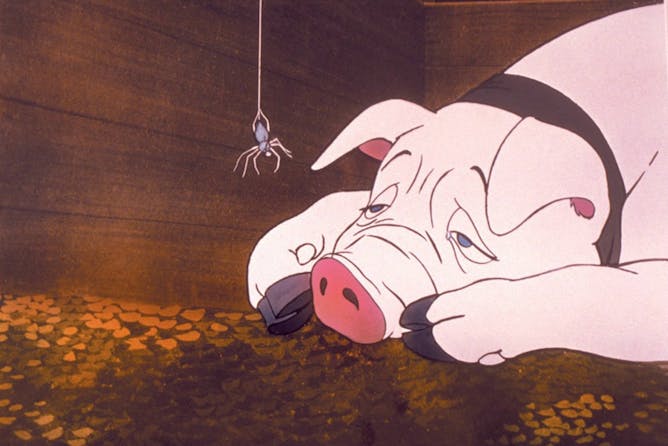
Charlottes’ Web (1973) manages to deal with death by making the subject a spider instead of a person.
Hanna-Barbera Productions

Putting death on the page

When early works of children’s literature broached the topic of death, it was usually to show how the protagonist copes in the aftermath of the death of a family member or friend. In many of these early works, depictions of death were softened for the reader, occurring outside the text. For instance, Mary’s parents in The Secret Garden (1911) die “off page”, which acts as a plot device to facilitate Mary’s arrival at Mistlethwaite Manor, where she discovers the secret garden. Charlotte’s Web (1952) softens the blow by making the characters non-human – in this case a spider.

Modern young adult novels are different. These texts not only depict young adult protagonists dealing with the aftermath of a loved one’s death, but also the trauma of witnessing it. Such as in the case of The Outsiders (1967), when the 14-year-old protagonist Ponyboy is present when his best friend Johnny dies in hospital and when Dally, a member of Ponyboy’s gang, is killed by the police.

In recent years, young adult novels have featured their protagonists doing the killing. The characters in books such as Harry Potter (1997), The Hunger Games (2008) and Tomorrow When the War Began (1993), struggle not only with the inevitability of death and the pain of losing loved ones, but also with the guilt and ethical dilemma of having to kill to survive.

The Fault in our Stars, both novel and film, deals with a terminally-ill character.
Fox 2000 studios

Life after death

There has recently been an influx of novels that present death from the perspective of the protagonist. These novels show characters who are terminally ill, presenting a rarely explored viewpoint in young adult novels – the perspective of dying. In books such as Sonya Hartnett’s Surrender (2005), Jenny Downham’s Before I Die (2007) and John Green’s The Fault in Our Stars (2012) the protagonist portrays the fear and pain of dying, the challenge of accepting one’s own mortality and the guilt of leaving their loved ones to cope after their death.

Other recent novels come from the perspective of someone who is already dead. They speak to the reader, and sometimes even their own friends and family, from beyond the grave, such as in Lauren Oliver’s Before I Fall (2010) and, although technically not a young adult novel, in Alice Sebold’s The Lovely Bones, which has been widely read by young people.

In the beginning of Jay Asher’s 2007 novel Thirteen Reasons Why it is made clear that the protagonist, Hannah Baker, has taken her own life. As the novel continues, Hannah’s story and the reasons for her actions are disclosed through a series of tapes, 13 in total, all recorded before her death.

The Netflix series also demonstrates the shift of how death is portrayed to an adolescent audience. While Asher’s novel leaves the method of Hannah’s suicide largely undisclosed, the series, released ten years after the book, portrays the suicide in excruciating detail.

Talking about death

There are many children’s picture books, such as The Heart and the Bottle by Oliver Jeffers, and Harry & Hopper written by Margaret Wild and illustrated by Freya Blackwood, that talk about death to help parents discuss the concept with young children, possibly for the first time. When talking to kids about loss and grief the Victorian government’s Better Health Channel recommends the use of “storybooks” to explain death, stating that, “It is important to recognise children’s feelings and speak with them honestly and directly about death and grief”.

John Marsden’s Tomorrow series graphically depicts the effect of war on adolescents.
Goodreads

Why is the honest and direct depiction of death in young adult novels often so controversial? Perhaps it comes from a desire to shelter young readers from topics such as war, terrorism, and human mortality – topics that young adult readers not only read about in the news and on social media, but experience. Or perhaps it is because depicting death is seen to be void of hope. But possibly the idea of hope has also shifted, away from a fairytale notion of happily ever after and towards a reality that acknowledges the existence of darkness and light.

The ConversationThere is little research on the possible benefits of discussing death with young people. For those who are yet to be affected by the death of a loved one, reading about it from the perspective of another young adult can offer a way of building resilience. For those readers who have experienced the death of a family member or friend, being able to read about the experiences of others can offer consolation. Death is an indisputable part of adolescent lives, and books can provide a place for them to reflect on its influence on life.

Erin Farrow, PhD Candidate and Academic Sessional, Victoria University

This article was originally published on The Conversation. Read the original article.

Unknown's avatar

How to encourage literacy in young children (and beyond)


File 20170704 13632 caakrr
Ask your child what their toys did while they were out today or invite them to help you read the mail.
Evgeny Atamanenko/Shutterstock

Louise Phillips, The University of Queensland and Pauline Harris, University of South Australia

How can parents best help their children with their schooling without actually doing it for them? This article is part of our series on Parents’ Role in Education, focusing on how best to support learning from early childhood to Year 12.


Literacy involves meaning-making with materials that humans use to communicate – be they visual, written, spoken, sung, and/or drawn. Definitions vary according to culture, personal values and theories.

We look to a broad definition of literacy as guided by UNESCO to be inclusive for all families. Children learn to be literate in a variety of ways in their homes, communities and places of formal education.

What research tells us

New research in three-to-five-year-old children’s homes and communities in Fiji, has revealed that children’s regular engagement in literacy across many different media has supported good literacy outcomes.

There were ten main ways of engaging in literacy-building activities. These included print and information, communication and entertainment technologies, arts and crafts, making marks on paper, screens and other surfaces like sand and concrete, reading and creating images, and talking, telling and acting out stories that were real or imagined.

Children also engaged with reading, recording and talking about the environment, reading signs in the environment, engaging in music, dance, song and, lastly, with texts and icons of religions and cultures.

These activities were enjoyed and valued by children and their families as part of their everyday lives, and were further bolstered by creating books with children in their home languages and English.

Parents and communities include their children in daily activities, encouraging their literacy experiences.
ChameleonsEye/Shutterstock

This research can be used to add to our discussions on how parents can help develop their children’s early literacy.

The Melbourne Institute of Applied Economic and Social Research found daily reading to young children improves schooling outcomes, regardless of family background and home environment.

The OECD Program for International Student Assessment (PISA) results also indicate a strong correlation between parents reading and storytelling with children in the early years and reading achievement at age 15, with those students performing one to two years above their peers.

However, it is not just being read to that matters. The adult-child interactions are also very important.

These interactions need to be lively and engage children with the text-in-hand. Alphabet toys and phonics programs alone offer little to develop literacy, as they focus on a code without contextual meaning. Words, and their letters and sounds, are best understood when seen and applied in everyday experiences, driven by children’s motivations.

How to be a talking, reading, writing, viewing, and listening family

There are several practical things parents can do to encourage broad literacy and learning in early childhood years.

  1. Don’t wait. Read what you are reading aloud to your newborn. Children become attuned to the sound of your voice and the tones of the language you speak as their hearing develops.

  2. Share stories at mealtime. Provide prompts like: “Tell us what your teddy did today”. Alternatively, randomly select from ideas for characters, problems, and settings, for example: “Tell us about an inquisitive mouse lost in a library”. Oral storytelling provides a bridge to written stories.

  3. Record on your phone or write down your child’s stories. Turn them into a book, animation, or slide show (with an app). Children will see the transformation of their spoken words into written words. These stories can be revisited to reinforce learning of words, story structure and grammar.

  4. Talk about their experiences. For example, prompt them to describe something they have done, seen, read or heard about. Research shows children’s oral language supports their literacy development, and vice-versa.

  5. Guide literacy in your children’s play, following their lead. For example, help them follow instructions for making something, or use texts in pretend play, such as menus in play about a pizza place. Children will engage with various texts and the purposes they have in their lives.

  6. Books, books, books. For babies and toddlers, start with durable board books of faces, animals and everyday things with few words that invite interactivity (e.g., “Where is baby?”). Progress to more complex picture books with rhyming language. Talk about personal links with the stories and ask questions (such as “I wonder what will happen next or where they went to”) as these will support comprehension. Look to the Children’s Book Council for awarded quality children’s literature.

  7. Talk about words children notice. Be sure the words make sense to children. Talk about what words look like, what patterns, letters and sounds they make. This builds children’s word recognition and attack skills, and understanding of what words in context mean.

  8. Involve your children in activities where you use literacy. For example, if you make shopping lists or send e-cards, your children could help create these with you. Explain what you are doing and invite children’s participation (e.g., “I’m looking at a map to see how to get to your friend’s house”). Children can meaningfully engage with and create texts and see the place these texts have in their lives.

  9. Use community and state libraries. Most offer interactive family literacy programs. Early Years Counts and The Australian Literacy Educators Association has a range of resources for families.

The ConversationAbove all, be sure the experience is enjoyable, playful, and encourages children’s active involvement. Literacy should be engaging for your children, not a chore.

Louise Phillips, Lecturer, School of Education, The University of Queensland and Pauline Harris, Research Chair in Early Childhood, University of South Australia

This article was originally published on The Conversation. Read the original article.

Unknown's avatar

Not My Review: The Dragon’s Blade (Book 1) – The Reborn King, by Michael R. Miller


Unknown's avatar

Not My Review: The Autobiography of Benjamin Franklin (1793)


The link below is to a book review of ‘The Autobiography of Benjamin Franklin.’

For more visit:
https://www.theguardian.com/books/2017/jul/10/autobiography-benjamin-franklin-100-best-nonfiction-books

Unknown's avatar

Not My Review: How Does Sanctification Work? by David Powlison


The link below is to a book review of ‘How Does Sanctification Work?’ by David Powlison.

For more visit:
https://www.9marks.org/review/book-review-how-does-sanctification-work-by-david-powlison/

Unknown's avatar

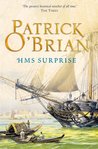
Finished Reading: Aubrey/Maturin Book 03 – HMS Surprise, by Patrick O’Brian


HMS Surprise (Aubrey/Maturin Series, Book 3) (Aubrey & Maturin series)HMS Surprise (Aubrey/Maturin Series, Book 3) by Patrick O’Brian
My rating: 4 of 5 stars

View all my reviews

Unknown's avatar

Book review: The Death of Expertise


File 20170619 28805 17lbqbv
A new book expresses concern that the ‘average American’ has base knowledge so low that it is now plummeting to ‘aggressively wrong’.
shutterstock

Rod Lamberts, Australian National University

I have to start this review with a confession: I wanted to like this book from the moment I read the title. And I did. Tom Nichols’ The Death of Expertise: The Campaign Against Established Knowledge and Why it Matters is a motivating – if at times slightly depressing – read.

In the author’s words, his goal is to examine:

… the relationship between experts and citizens in a democracy, why that relationship is collapsing, and what all of us, citizens and experts, might do about it.

This resonates strongly with what I see playing out around the world almost every day – from the appalling state of energy politics in Australia, to the frankly bizarre condition of public debate on just about anything in the US and the UK.

Nichols’ focus is on the US, but the parallels with similar nations are myriad. He expresses a deep concern that “the average American” has base knowledge so low it has crashed through the floor of “uninformed”, passed “misinformed” on the way down, and is now plummeting to “aggressively wrong”. And this is playing out against a backdrop in which people don’t just believe “dumb things”, but actively resist any new information that might threaten these beliefs.

He doesn’t claim this situation is new, per se – just that it seems to be accelerating, and proliferating, at eye-watering speed.

Intimately entwined with this, Nichols mourns the decay of our ability to have constructive, positive public debate. He reminds us that we are increasingly in a world where disagreement is seen as a personal insult. A world where argument means conflict rather than debate, and ad hominem is the rule rather than the exception.

Again, this is not necessarily a new issue – but it is certainly a growing one.


Oxford University Press

The book covers a broad and interconnected range of topics related to its key subject matter. It considers the contrast between experts and citizens, and highlights how the antagonism between these roles has been both caused and exacerbated by the exhausting and often insult-laden nature of what passes for public conversations.

Nichols also reflects on changes in the mediating influence of journalism on the relationship between experts and “citizens”. He reminds us of the ubiquity of Google and its role in reinforcing the conflation of information, knowledge and experience.

His chapter on the contribution of higher education to the ailing relationship between experts and citizens particularly appeals to me as an academic. Two of his points here exemplify academia’s complicity in diminishing this relationship.

Nichols outlines his concern about the movement to treat students as clients, and the consequent over-reliance on the efficacy and relevance of student assessment of their professors. While not against “limited assessment”, he believes:

Evaluating teachers creates a habit of mind in which the layperson becomes accustomed to judging the expert, despite being in an obvious position of having inferior knowledge of the subject material.

Nichols also asserts this student-as-customer approach to universities is accompanied by an implicit, and also explicit, nurturing of the idea that:

Emotion is an unassailable defence against expertise, a moat of anger and resentment in which reason and knowledge quickly drown. And when students learn that emotion trumps everything else, it is a lesson they will take with them for the rest of their lives.

The pervasive attacks on experts as “elitists” in US public discourse receive little sympathy in this book (nor should these). Nichols sees these assaults as entrenched not so much in ignorance, more as being rooted in:

… unfounded arrogance, the outrage of an increasingly narcissistic culture that cannot endure even the slightest hint of inequality of any kind.

Linked to this, he sees a confusion in the minds of many between basic notions of democracy in general, and the relationship between expertise and democracy in particular.

Democracy is, Nichols reminds us, “a condition of political equality”: one person, one vote, all of us equal in the eyes of the law. But in the US at least, he feels people:

… now think of democracy as a state of actual equality, in which every opinion is a good as any other on almost any subject under the sun. Feelings are more important than facts: if people think vaccines are harmful … then it is “undemocratic” and “elitist” to contradict them.

The danger, as he puts it, is that a temptation exists in democratic societies to become caught up in “resentful insistence on equality”, which can turn into “oppressive ignorance” if left unchecked. I find it hard to argue with him.

Nichols acknowledges that his arguments expose him to the very real danger of looking like yet another pontificating academic, bemoaning the dumbing down of society. It’s a practice common among many in academia, and one that is often code for our real complaint: that people won’t just respect our authority.

There are certainly places where a superficial reader would be tempted to accuse him of this. But to them I suggest taking more time to consider more closely the contexts in which he presents his arguments.

This book does not simply point the finger at “society” or “citizens”: there is plenty of critique of, and advice for, experts. Among many suggestions, Nichols offers four explicit recommendations.

  • The first is that experts should strive to be more humble.

  • Second, be ecumenical – and by this Nichols means experts should vary their information sources, especially where politics is concerned, and not fall into the same echo chamber that many others inhabit.

  • Three, be less cynical. Here he counsels against assuming people are intentionally lying, misleading or wilfully trying to cause harm with assertions and claims that clearly go against solid evidence.

  • Finally, he cautions us all to be more discriminating – to check sources scrupulously for veracity and for political motivations.

In essence, this last point admonishes experts to mindfully counteract the potent lure of confirmation bias that plagues us all.

It would be very easy for critics to cherry-pick elements of this book and present them out of context, to see Nichols as motivated by a desire to feather his own nest and reinforce his professional standing: in short, to accuse him of being an elitist. Sadly, this would be a prime example of exactly what he is decrying.

To these people, I say: read the whole book first. If it makes you uncomfortable, or even angry, consider why.

Have a conversation about it and formulate a coherent argument to refute the positions with which you disagree. Try to resist the urge to dismiss it out of hand or attack the author himself.

I fear, though, that as is common with a treatise like this, the people who might most benefit are the least likely to read it. And if they do, they will take umbrage at the minutiae, and then dismiss or attack it.

The ConversationUnfortunately we haven’t worked how to change that. But to those so inclined, reading this book should have you nodding along, comforted at least that you are not alone in your concern that the role of expertise is in peril.

Rod Lamberts, Deputy Director, Australian National Centre for Public Awareness of Science, Australian National University

This article was originally published on The Conversation. Read the original article.
Unknown's avatar

Read, listen, understand: why non-Indigenous Australians should read First Nations writing


File 20170703 32578 hod947
Alexis Wright won the Miles Franklin award for her 2006 novel Carpentaria.
AAP Image/Dean Lewins

Meera Atkinson, University of Sydney

Do you read Australia’s First Nations (Indigenous) writers? If not, why not? People read for many reasons: information, entertainment, escape, to contemplate in company, to be moved. Reading can also be a political act, an act of solidarity, an expression of willingness to listen and to learn from others with radically different histories and lives.

In his new book, Australia’s Unthinkable Genocide, professor Colin Tatz writes that Australia suffers from “wilful amnesia”; storytelling is a way of remembering.

Despite good intentions, Royal Commissions, and endless policy initiatives such as Closing the Gap, conditions for many First Nations people remain unacceptable. During National Reconciliation Week, the Uluru Statement from the Heart was released, calling for “the establishment of a First Nations Voice enshrined in the Constitution”. Even if there remain differences of opinion within First Nations communities as to process and aims, the onus is on non-Indigenous Australians to respect First Nations demands to speak and be heard.

The time is well overdue for non-Indigenous Australians to engage with the First Nations of this country, and their narratives, on their terms. Interest in the experience and concerns of others is crucial to combating social ills like racism. Writing and reading literature can be acts of intimacy, and as such reading can be a vital form of listening.

Where to start?

In Australia, white writers and scholars are more read than writers and scholars of colour. Non-Indigenous Australians often simply fail to seek out other voices and perspectives. Sometimes it’s a case of not knowing where to start.

Tony Birch and Sandra Phillips have offered excellent suggestions for those keen to explore First Nations writing, and as Michelle Cahill points out, literary journals are also a rich source of discovery.

My own list is by no means definitive or exhaustive. It is but a handful of books I view as important reading. These are unique literary voices that command attention.

Don’t Take Your Love to Town
Ruby Langford Ginibi (Penguin Books 1988, UQP 2007)


Goodreads

This bestselling autobiography precedes the impressive entries into the emerging 21st century First Nations canon that follow. It is a contemporary classic of Australian literature, and it was the first book I read by a First Nations writer. Published the same year of Australia’s contested “bicentenary”, Langford Ginibi’s story continues to test the learned indifference of white Australians. Written during the Royal Commission into Aboriginal Deaths in Custody, Don’t Take Your Love to Town tells the tale of a woman caught at the intersection of gendered and raced injustice with admirable and endearing honesty.

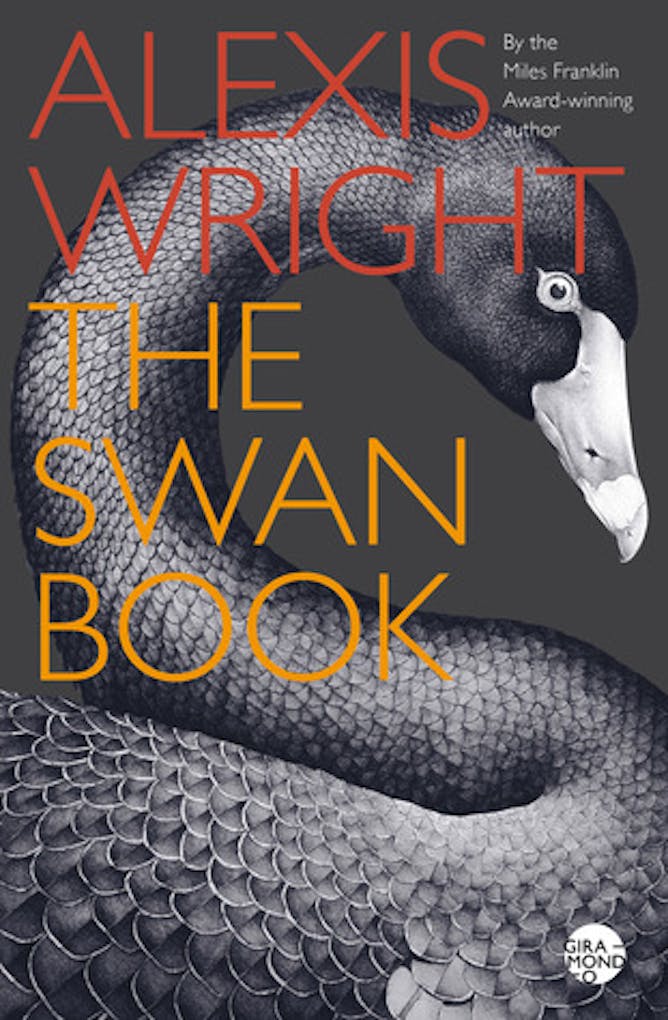
Carpentaria and The Swan Book
Alexis Wright (Giramondo 2006, 2013)


Goodreads

I’ve written about Carpentaria in an essay for Reading Australia, and I discuss both books at length in my forthcoming academic book The Poetics of Transgenerational Trauma. In short, these books matter. This is innovative writing forging cross-cultural trauma testimony that portrays a country in crisis and in desperate need of recovery from the devastating realities of colonialism and racism. There’s no way around it, Wright is not an easy read. These two novels are as far from literary comfort food as it gets. But those able to relax into Wright’s wildly experimental world-making are rewarded with insights and nothing less than a renewed vision of this land and appreciation for the complex communities that inhabit it.

Dirty Words
Natalie Harkin (Cordite Books 2015)

One of my favourite books of recent years, Dirty Words is a whip-smart conceptual collection of poems about the state of the nation and the spectre of its shameful history. Authored by a Narungga scholar and creative practitioner, this slim volume may well knock your socks off and leave you questioning everything you read and hear. Harkin’s poems about the domestic servitude of her Narungga forebears might even move you to tears.

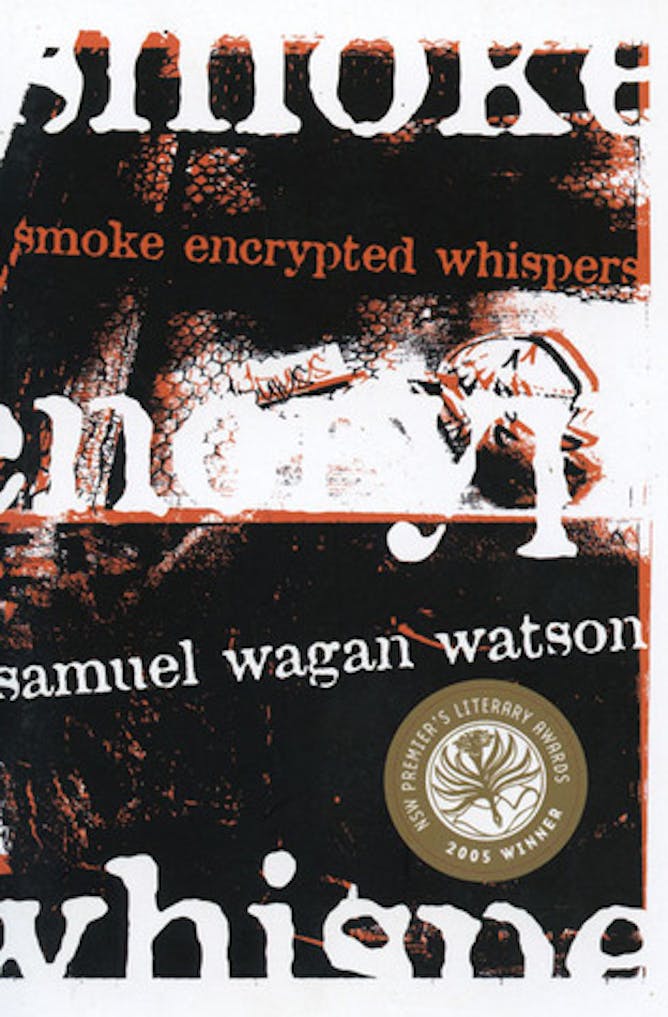
Smoke Encrypted Whispers
Samuel Wagan Watson (UQP 2004)

“Childhood anxieties would eventually help me realise the power of imagination”, writes Wagan Watson in “author’s notes # 1”. This generous, award-winning collection of poems later became a multi-modal arts project when its cycle of 23 poems served as inspiration for musical compositions. Poems like “white stucco dreaming” evoke familial ties within societal divides and the daily rituals of suburbia, while “a verse for the cheated” depicts the hidden tragedies of Queensland’s glamorous coastal tourist traps. At times Wagan Watson turns his muscular lyricism outward to consider the world at large, but he soon circles back to home-grown griefs and wonders.

Other highly recommended titles

Heat and Light
Ellen van Neerven (UQP 2014); Inside my Mother
Ali Cobby Eckermann (Giramondo Poets 2015); Mogwie-Idan: Stories of the Land
Lionel Fogarty (Vagabond Press 2012)

These books do the crucial work of testifying to transgenerational trauma and representing and celebrating surviving First Nations cultures and peoples. Each demonstrates, as Tony Birch puts it, the “potential for Aboriginal writing to productively shift the national story”.

Witnessing trauma

Australians, generally speaking, have an inadequate understanding of transgenerational trauma and underestimate the effects of the extreme and sustained traumas experienced by First Nations communities. Transgenerational trauma is the process by which trauma is passed down through successive generations.

There is some debate about if and how this takes place, but transmission likely has various pathways through families, individuals, and culture at large. Colonialism and its aftermath – frontier wars, slavery, dispossession, and stolen children – proved a hotbed for severe traumas and legacies of transmission. The challenge is for non-Indigenous Australians to take responsibility for their own education and become familiar with the voices and concerns of those who have peopled this continent for eons.

Given the depth and scope of the inequity, clearly much more than reading alone is called for. But reading truth-telling accounts of our history and contemporary Australia by First Nations writers is one way of participating in a national dialogue.


What’s your favourite book by a First Nations writer? Leave your recommendations in the comments below.

The ConversationRead also: a Warlpiri translation of ‘Dreamtime’ and ‘The Dreaming’ – an introduction.

Meera Atkinson, Sessional Tutor, Creative Writing, University of Sydney

This article was originally published on The Conversation. Read the original article.