
 The Last Kingdom by Bernard Cornwell
My rating: 4 of 5 stars

Eleanor Byrne, Manchester Metropolitan University
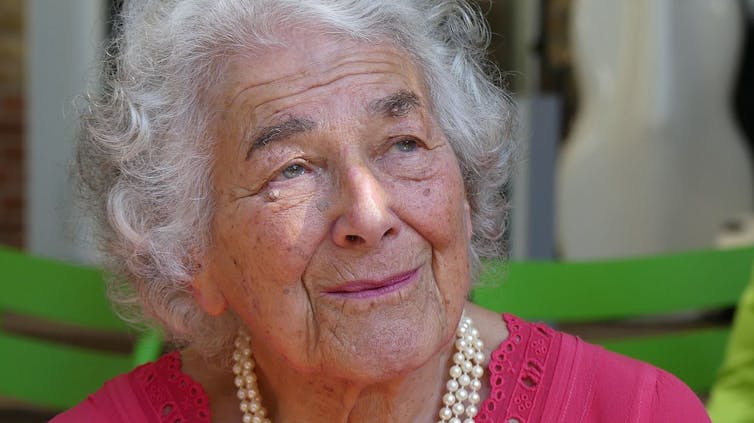
Judith Kerr’s death at the age of 95 was met with an avalanche of tributes from readers, writers and publishers alike. Her illustrated books such as the Mog series and her first book, The Tiger Who Came to Tea (1968) have endured as children’s classics, with illustrations that bear witness to the domestic spaces of the 1960s suburban British home, carrying a focus on children and their pets and the security of a loving family life. The loving depiction of a safe and stable childhood that Kerr created in her books for stands in sharp contrast to her experience of childhood as one involving a sudden cataclysmic destruction of the life she knew in Berlin under the Nazis.
This history speaks to her place in the children’s literary canon as one of its most loved writers but also part of a transnational group of writers who bore witness to the Holocaust and contributed to a distinctive and significant migrant vision and storying of London and Britain.
Both Kerr and her brother made their homes in Britain and all her family took British citizenship after the end of the war. Her London settings can seem quintessentially British, offering an intimate portrait of 1960s London. But her own childhood was marked by constant movement and upheaval, as well as a need to learn new languages, fleeing Germany for Switzerland, France and finally England, where her family lived in impoverished conditions for a number of years in cheap London hotels, often relying on the kindness of friends and connections to survive from week to week.
Her books describing these years show she was conscious of being an outsider —- a “clever refugee girl” as the fellow pupils in her school dismissively referred to her. Visibly different, she was poorly dressed in hand-me-down clothes from the two daughters of a London friend. She sometimes “passed” as English because of her command of the language, but left school at 16 out of desperation to earn money to help her parents survive in London lodgings.
Kerr’s trilogy of less well-known largely autobiographical books about this period sheds light on her illustrated work in perhaps unexpected ways and are testimony to survival after an experience of the almost total destruction of her own security and stability.
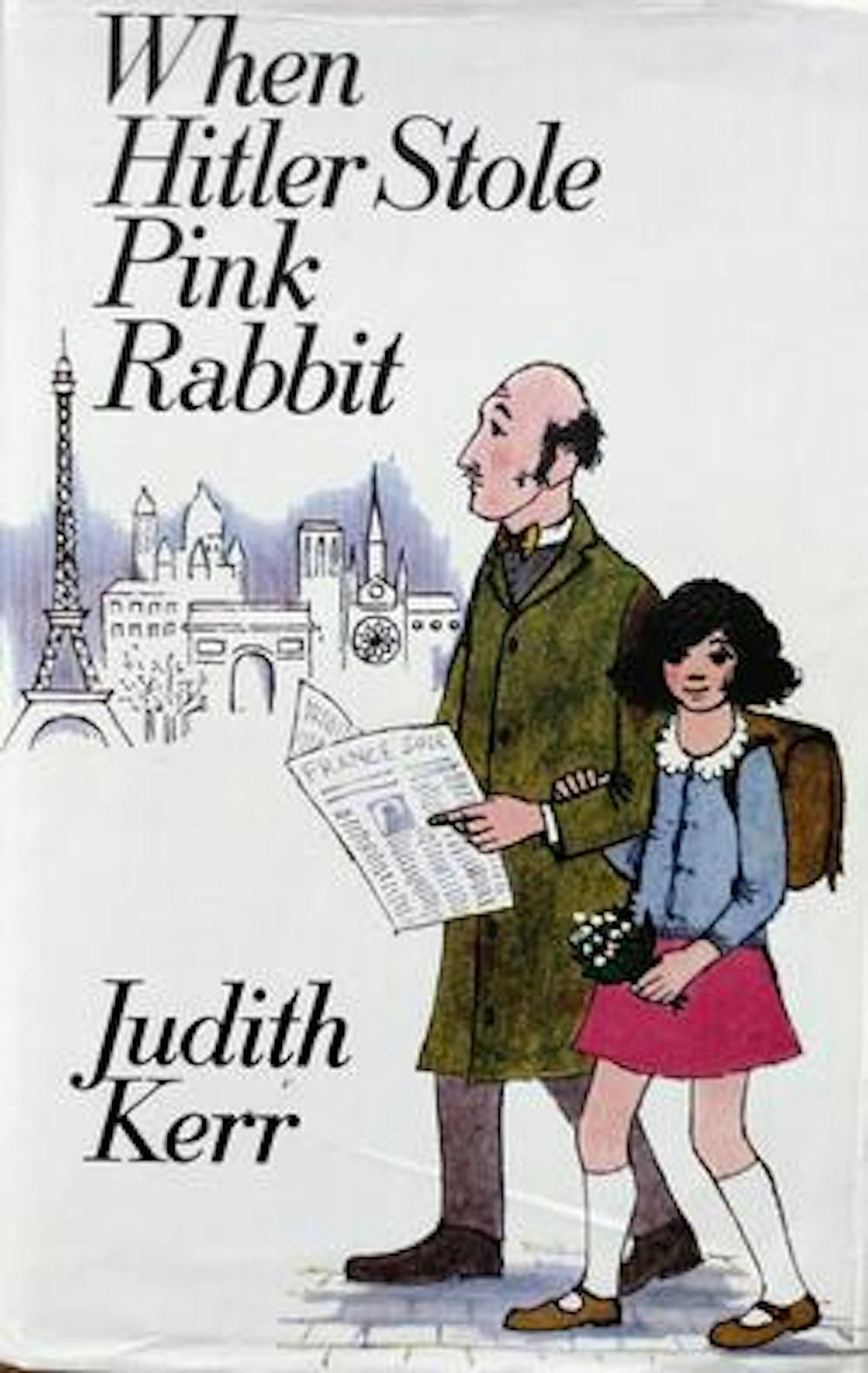
Collectively called Out of the Hitler Time, When Hitler Stole Pink Rabbit (1971), Bombs on Auntie Dainty (1975) and A Small Person Far Away (1978), the trilogy loosely followed her own experiences as a Jewish refugee from Nazi Germany. Her father, Alfred Kerr, a well-established and respected German-Jewish theatre critic was a vocal opponent of the Nazis (his books were burned by them after he fled Germany in 1933).
The first and most well-known is a memoir of leaving Germany and living in exile in Switzerland and France, told through her eyes as a nine-year-old child. The second speaks to her earliest experiences of living in England. It tells of her family’s move to London to escape German advances into France, depicting life among the international refugee population of the hotels in Bloomsbury, with her parents in severely reduced circumstances and her father struggling to cope in a foreign language or to find paid writing jobs. It also recounts her experience of the Blitz and of her brother’s sudden internment on the Isle of Man, as an enemy alien, two weeks before he was set to take his finals at Cambridge University. The last portrays her return to Berlin as an adult, now married to an English scriptwriter, to visit her sick mother after her father’s death.

Literary critics have offered readings of The Tiger Who Came to Tea, reflecting on the tensions between pleasure and fear surrounding the arrival of a tiger with unlimited appetite into the protagonist Sophie’s home. Louise Sylvester offered a reading of the book juxtaposed with extracts from When Hitler Stole Pink Rabbit, in order to construct an argument about how the story might reflect the radical instability of Jewish households during WWII.
Tim Beasley-Murray read the book as a space of carnival, but one which is resolved when it appears to threaten the continuation of normal life, once the father returns from work. Beasley-Murray argued, however, that the father is an ambiguous figure of safety who never meets the tiger but instead resolves the situation by taking the family out for dinner.
Alongside Kerr’s second book in her trilogy another reading might emerge. Her father was truly the centre of their lives in Berlin in the 1930s, his life in London was as series of hard reversals, speaking poor English and finding little written work as a journalist or novelist he underwent a catastrophic collapse of fortunes. And while he was briefly rehabilitated in Germany after the war he died soon afterwards.
This contradictory status of her father is painfully witnessed by Kerr as she comes to grasp the great respect he is held in by the German Jewish émigré community and the frustrating powerlessness of the position he finds himself in. When Kerr narrates going to visit her parents from free lodging she has been given, to their hotel room in central London where evening meals are included in the price paid for the room, her mother argues with the waitress that she should not have to pay for her daughter’s meal as she missed her own the previous day due to illness.
The pain and precarity of the scene are keenly felt. During the war years in London the family had no private home, no kitchen and no food supplies apart from those that were served in the hotel restaurant. Kerr lived apart from her parents when they could no longer afford two rooms, and they all relied on charity and the goodwill of friends. Like the tiger, the war swallowed up not just all the food in the house and the water in the taps but the kitchen itself, the table, the chairs, the bathroom and the parenting that might have taken place in all those domestic spaces. The family did eat in a restaurant every night as lodgers in a hotel because they had no home of their own.
Kerr’s illustrated books were written for her own children and featured thinly disguised family members and pets, but her autobiographical trilogy was also written with her children in mind to try to portray how different her childhood had been to theirs. Reading them together is to bear witness to her immense artistic achievements and to her important accounts of the German-Jewish refugee experience in Britain.
Eleanor Byrne, Senior Lecturer in English, Manchester Metropolitan University
This article is republished from The Conversation under a Creative Commons license. Read the original article.
Shadya Radhi, King’s College London
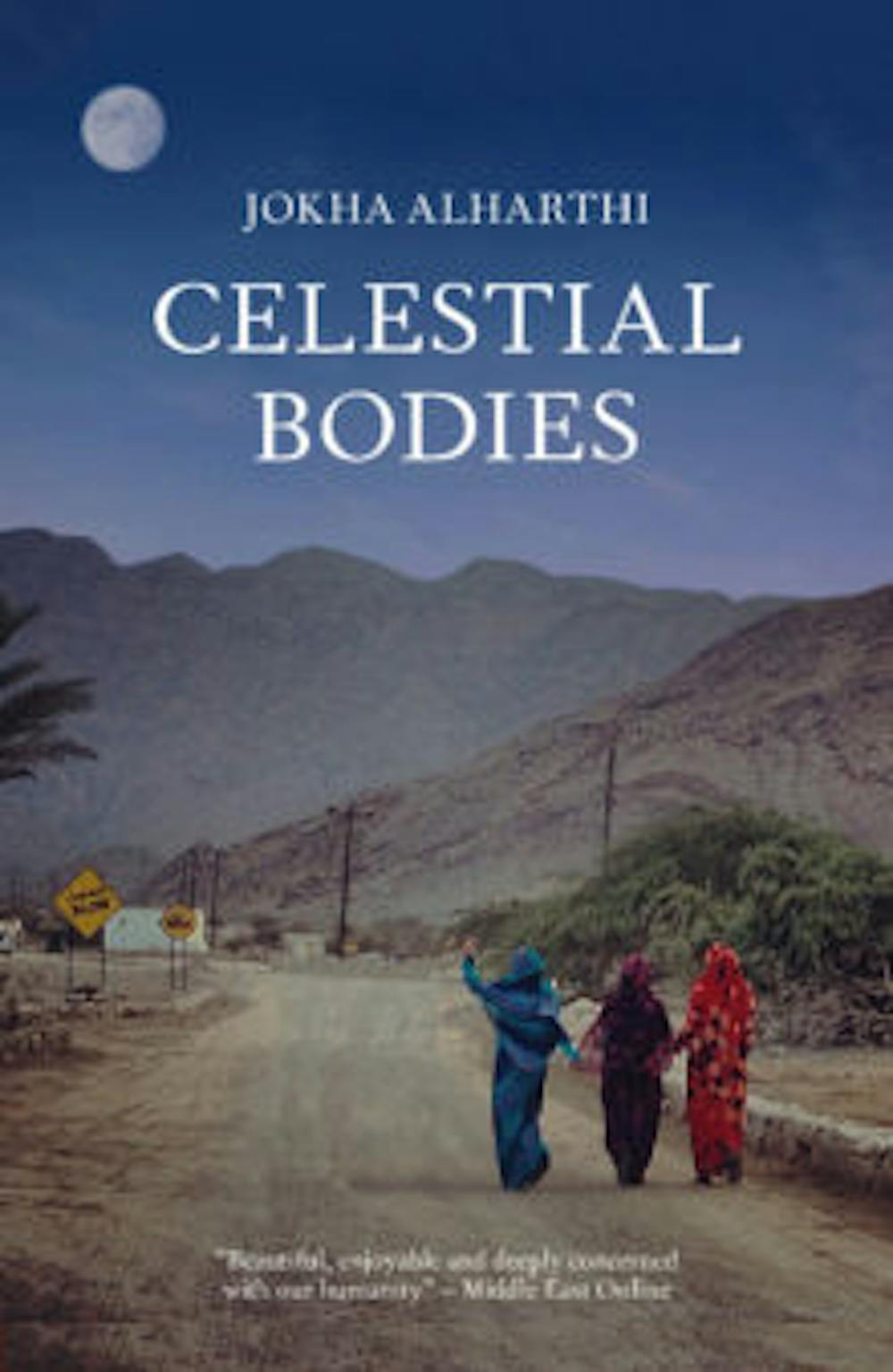
It says something that the winner of the 2019 Man Booker International prize for Literature, Jokha Alharthi, is the first woman from her country to have a novel translated into English. Alharthi – from the Arabian Gulf state of Oman – who won for her novel Celestial Bodies, shares the £50,000 prize with her translator Marilyn Booth. The book has the distinction of also being the first novel translated from Arabic to win the award.
“I am thrilled that a window has been opened to the rich Arabic culture,” Alharthi told journalists after the ceremony in London in May. “Oman inspired me but I think international readers can relate to the human values in the book – freedom and love.”
Celestial Bodies revolves around three sisters from a middle-class background in the small Omani village of al-Awafi. The novel is a fragmented collection of past and present events in Oman as they pertain to particular characters in this small village. These intricate storylines come together to shape the broader narrative of the novel, of a village going through remarkable change.
Celestial Bodies gives the reader a glimpse into a society that isn’t often spoken about in terms of its literature, culture and traditions. And a woman’s perspective is particularly rare – Arab Gulf women only really began publishing their writings in the second half of the 20th century. It’s a trend that is intimately connected to the introduction of girls’ education – spanning half a century between 1928 and 1970 in different Gulf states.
But this doesn’t mean that Arab Gulf women weren’t producing literature before then – they were particularly well known for the tradition of oral storytelling and were especially esteemed for their poetry – the works of Kuwaiti poet Suad al-Sabah and Bahraini poet Hamda Khamis are particularly worth checking out.
But it was the explosion of oil wealth, which forced the Arabian Gulf out of isolation and into the international arena – leading to the establishment of schools and newspapers and media outlets that allowed for literary creativity. Since the 1970s, Arab Gulf women’s writing has evolved – now Arab Gulf women write in a whole range of genres that reflect different themes and issues through their storylines, especially those issues which pertain to the specific experience of women in Arab Gulf society. But the novel is still something of a recent genre for Gulf women.
One common theme in Arab Gulf writings is nostalgia for a simpler past, which is often used in contrast to the remarkably fast growth these countries have undergone with the discovery of oil. The narrative of Celestial Bodies draws a connection between the slave trade in Oman – the backdrop of the story – with the way Omani society started to change with the introduction of oil wealth into the region.
Although Alharthi positions her story within this narrative of tradition versus social change, she does so in a way that offers an objective outlook to the practices and history portrayed in the novel. She does this by portraying neither a romanticising of the past nor an overly optimistic focus on the positive aspects of oil revenue in the present. Instead, Celestial Bodies presents an honest portrayal of change and how it has affected different members of the village she is writing about.
A defining feature of Omani literature is that Oman, in particular out of the Arab Gulf, has remained a traditional society in many aspects, which is oftentimes reflected in the writings produced in the region. The novel makes use of specific cultural and religious features of Oman and the Arab Gulf region, such as references to supernatural spirits – or jinn – as well as the all-important date harvest – as well as allusions to classical Middle Eastern literature and poetry such as Iraqi poets al-Mutanabbi (915-965AD) and Ibn al-Rumi (836-396AD).
You don’t need to be intimately familiar with Arab Gulf customs, literature and traditions to appreciate Celestial Bodies – but to fully grasp the impact of these references and the beauty they add to the text, it’s worth doing some background reading. This literary technique invites the reader to become immersed into Omani culture – and, in turn, play a role in the interpretation of the text itself.
Celestial Bodies is emblematic of the fact that Arab Gulf women are actively producing remarkable works of literature that are very much worth exploring. Worthwhile, not only to offer a glimpse into this society, but also in order to discover a rich literary tradition that has not been accessible to a wider audience beforehand.
In an interview published on the Man Booker International Prize website Alharthi says this about her book:
I hope this helps international readers discover that Oman has an active and talented writing community who live and work for their art … They take on sacrifices and struggles and find joy in writing, or in art, much the same way as anywhere else. This is something the whole world has in common.
Alharthi’s novel offers a glimpse of the world being experienced by women in the Arabian Gulf. I hope that Celestial Bodies will encourage more translations of works from the region, encouraging readers to experience for themselves the cultural riches on offer.
Shadya Radhi, PhD Researcher, King’s College London
This article is republished from The Conversation under a Creative Commons license. Read the original article.
Sue Joseph, University of Technology Sydney
Why do we tell stories, and how are they crafted? In a new series, we unpick the work of the writer on both page and screen.
Decades ago, American journalist and screenwriter Dan Wakefield published Between the Lines: A reporter’s personal journey through public events. In terms of reflection and consideration, Wakefield was years ahead of his time. He writes of the “shadows that lurk behind the printed word … We journalists are trained by the custom and conventions of our craft to remain out of sight, pretending not to be there but simply to know”.
He then returns to many of his own pieces of journalism, and fills in the gaps – what he was feeling, seeing, doing, behind the scenes. What actually happened, as opposed to what was reported. This does not take away from the integrity of the original report but bolsters it in terms of completeness; they are now deeper, richer stories. Possibly “truer”.
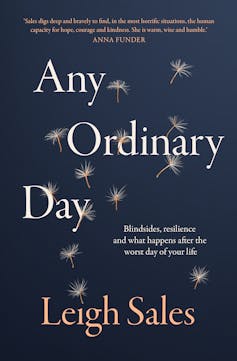
Leigh Sales does this “between the lines” of the individual narratives in her latest (and third) book Any Ordinary Day: Blindsides, resilience and what happens after the worst day of your life.
Sales recounts the stories of seven ordinary Australians whose lives, in a heartbeat, became extraordinary and visible through traumatic incident; Stuart Diver, Louisa Hope, Walter Mikac, Hannah Richell, Michael Spence, James Scott and Juliet Darling.
What makes this book so valuable is that she interweaves discussion of some of her more dubious decision-making processes as a journalist, recognising the depth of her questionable actions. This is courageous writing, particularly from such a high profile professional.
But rather than framing Sales as untrustworthy, her self-effacement pertaining to ethical breaches helps us to see how decisions are made in the field, in the heat of reporting. How mistakes are made, in the name of getting the “story”. She writes shamefully of some of these decisions, but not necessarily regretfully; all were made as part of her own learning curve, manifesting as the skilled anchor we turn to nightly on our screens.
Read more:
Journalism needs to practice transparency in a different way to rebuild credibility
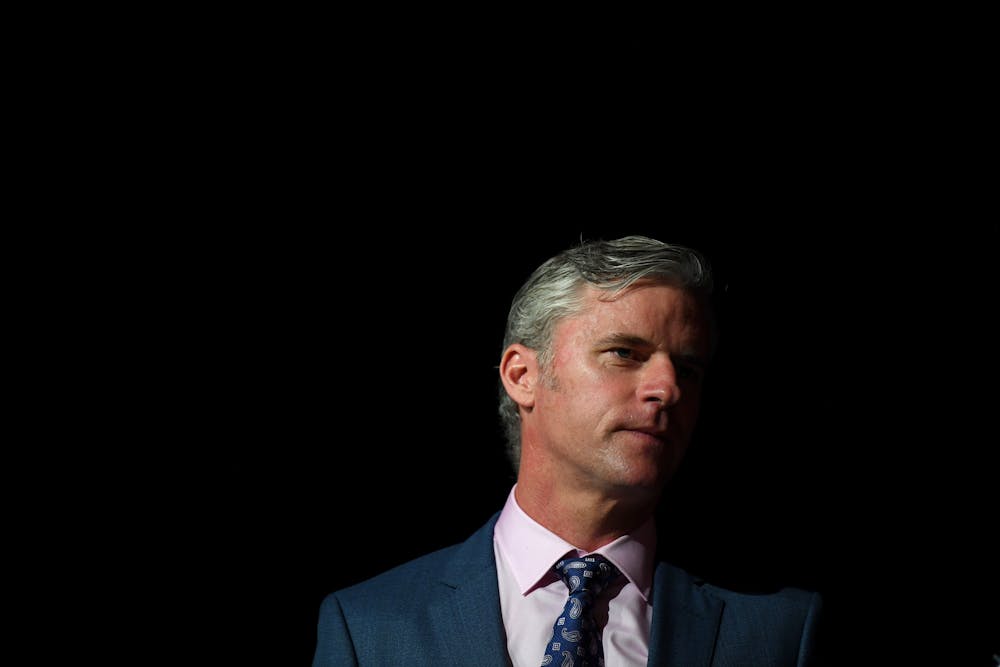
Sales’s book performs as part memoir/part trauma narrative/s/part investigation/part meta; and it is on page 99 that she begins her craft mea culpa. She writes:
When I look back at the mistakes I’ve made as a reporter including experiences that to this day make me feel ashamed, I can see that they were usually due to a failure of empathy […]
Authentic empathic journalistic disclosure is a means to garner more public trust, potentially portraying journalists as robust yet feeling professionals; as mortals with flaws; as fallible, but with a genuine belief in the integrity of their mission – informing the people, for the people.
Shining from the pages of Sales’ text is a self-effacing honesty, rarely accessed, around this type of journalistic thinking, craft and process. Included is not just a discussion of empathy, but demonstration of embodied empathic, on-the-ground interviewing.
The text is framed by trauma. Sales begins this hybrid narrative with her own: the breath-taking story of her near-death experience in 2014, during the emergency delivery of her second child; not only her near-death, but that of her tiny son, as well; and with his survival, the lingering probability of brain damage.
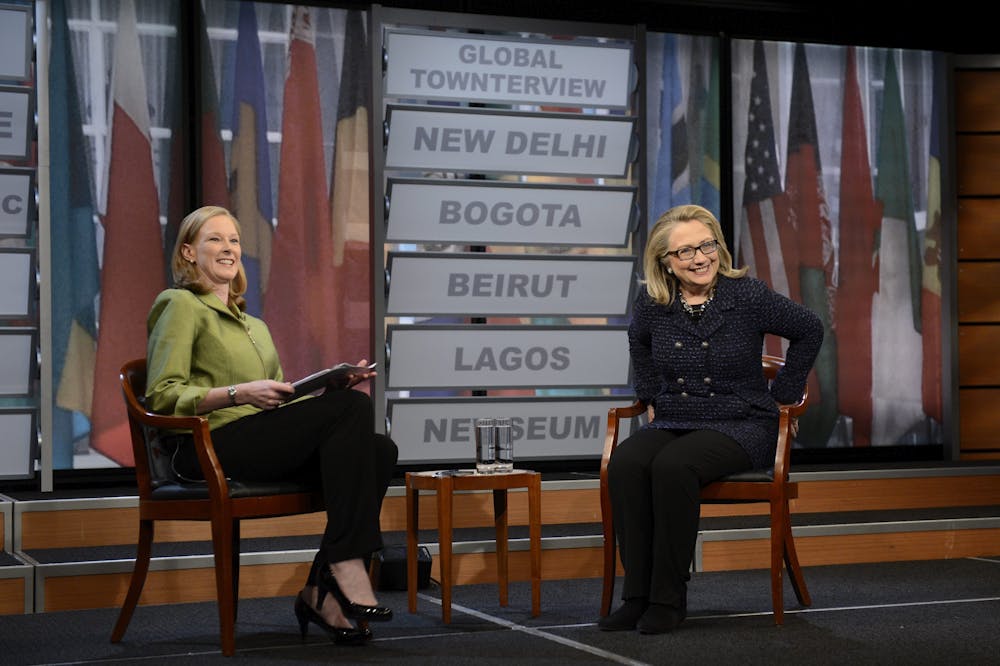
She then launches into well-formed and intimate discussions with the seven people whose stories form the basis of the book. This is Sales’ attempt at dealing with her own brush with death; a gathering of tales about resilience, fears and vulnerability.
The dominant craft on display here is her interviewing skills, and her ability to elicit authentic responses from her subjects. She writes:
I know how to craft a good line of questioning that helps [people] open up. I’m a strong listener and I follow up what people are saying.
These are the two most essential techniques a young journalist or writer can acquire – crafting the right questions and listening – and it takes practise and time to develop and evolve.
What Sales also does supremely well is narrate – intimately and closely, as if she is whispering in your ear. She begins the text with second person point of view (you), unusual from a journalist and difficult to sustain.
But she gets away with it as it helps convey her main theme – ordinary days turning extraordinary in a heartbeat – and she places us in her metaphoric shoes. She switches to singular third person narration (he); then to plural first person (we), before launching into her first person voice. This technique only works when it is apt – and it is apt here.

Her research into the neuroscience around trauma is in depth but accessible; and her quest to discover more about growth following traumatic pain is insightful and (dare I write without sounding mawkish) hopeful.
“What we see about shocking blindsides doesn’t tell us anything remotely like the whole story,” she writes. “Being struck by something awful is not the end of every good part of life”. For everyone, this is knowledge worth having.
The final chapter bookends the text with more of Sales’ own story – the breakdown of her marriage (succinctly and unsentimentally narrated) and an undiagnosed illness of her eldest son (we also learn that her youngest son has shown no sign of damage from his birth ordeal).
Sales tells us of callow mistakes made starting out as a journalist. It is with this hindsight and insight – a glimpse behind the maturing practice – where we sense both her ambition and elation for her assignments. Some she executes well, sometimes fluking it; in undertaking others, she clearly believes she made unethical choices.
But she does not lend herself the freedom of simply hiding behind youth, as she writes: “ … sadly, I can identify similar mistakes when I was a senior reporter”. It is in the candid telling of these fraught back stories that the humanity of Sales is made whole.
Not just the resolute grip of the interviewer on 7.30; nor fellow journalist Annabel Crabb’s best friend – clever, funny, playful – on their podcast Chat 10 Looks 3. But the woman, in love with story and storytelling, growing into her profession.
It is easy to write that empathy must be taught to our young journalists and writers; that it may be the key to subverting the disparaging distrust the public embraces towards industry.
But how to “teach” empathy? It has to be a discussion framed by ethics – the almighty notion of swapping shoes and walking in them. Stopping in the field, just stopping for a moment, and thinking about the person or story you are pursuing. Feeling what it must feel like to be them.
Read more:
Do art and literature cultivate empathy?
Now we have an idiosyncratically Australian text, written by one of the most respected Australian journalists, to teach with; one that expounds honesty about poor ethical choices, and evidence of embodied empathic interviewing. Sales’ deep enmeshing with her interviewees does not undermine the rigour of her interrogation – she still asks the hard questions and mines deeply – and the interviewees always answer, with grace.
We hear and read the back and forth of the interview with her subjects; her reflections and asides set out in print. Would she be asking these questions in this way, if she had not suffered her own cataclysmic trauma with the birth of her second son? Perhaps – I think she was getting there.
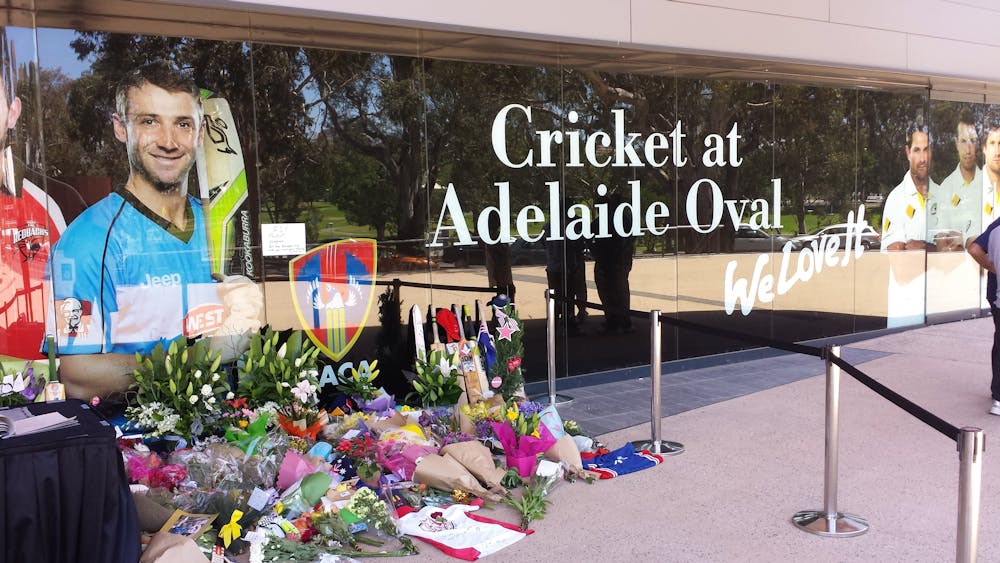
Sales writes of the end of that year, 2014, and broadcasting the coverage of two incidents that vibrated throughout the nation, binding us collectively in their thrall: the public death of cricketer Phillip Hughes and the Lindt Cafe siege in Sydney.
It was all getting a little too much, on the back of her son’s traumatic birth. There was just too much palpable pain adrift, and she no longer felt safe. So she imagined this book, and by using the tools of her trade, she interviewed and wrote until it was done.
Perhaps it is journalistic therapy – conceptually, it definitely began that way, Sales admits. She was looking to write her way out of aggregated pain and sorrow. But I believe the denouement of this text is her greatest gift – the demonstration of empathy not as antithesis to good story re-telling, but as integral.
Sue Joseph, Senior Lecturer, Writing and Journalism, FASS, University of Technology Sydney
This article is republished from The Conversation under a Creative Commons license. Read the original article.
It’s that time of year when I take some time off for a variety of reasons and tasks – in short, it’s annual leave time. Yes, some much appreciated time off work. Last year I attempted a holiday and nearly died – diseased kidneys, blood poisoning, and internal bleeding – all a result of a kidney stone. What followed was months of illness, as that experience proved a catalyst for an old illness to make a renewed appearance also (Chronic Fatigue Syndrome – CFS). Finally, in the last few weeks, I have been reasonably well and have been working at a frantic pace, trying to make up for lost time.
So now I hope to enjoy these next few weeks, do some traveling (including to the previous destination that I never arrived at due to falling ill on the way), get a bit of personal things done (yeah, including a host of medical stuff) and really, just to relax and have a break – an enjoyable break in fact.
So what does this mean for the Blogs? Well, I was going to continue to post in a haphazard manner over the next three weeks, but have since thought better of it and will not do so. So no new posts for the next three weeks – there may be some still to appear on one of the Blogs that I scheduled in advance, but you won’t hear much from me during this period. So enjoy the break from me, as I enjoy the break from everyday usual life.
Sarah Loughran, University of Wollongong
Screen time has arguably become the most concerning aspect of development for modern-day parents. A 2015 poll identified children’s excessive screen time as the number one concern for parents, overtaking more traditional concerns such as obesity and not getting enough physical activity.
This is the issue explored in David Gillespie’s new book, Teen Brain. The tagline explains that the book delves into
why screens are making your teenager depressed, anxious, and prone to lifelong addictive illnesses – and how to stop it now.
This provides some idea of the emotive and provocative way the book’s content is delivered.
Given smartphones and tablets are everywhere, a message on limiting their use could not be more timely. The Australian government recently released guidelines recommending a maximum two hours per day of recreational sedentary screen time for teens.
It also recommended parents establish consistent boundaries around the duration, content and quality of such screen use.
Read more:
Eight things that should be included in screen guidelines for students
However, Gillespie has missed an important opportunity to communicate this with his book. In the introduction Gillespie says he’s “made some pretty outrageous claims” but they will all be backed up by solid science. He delivers on the first part, but too often the solid science is lacking.
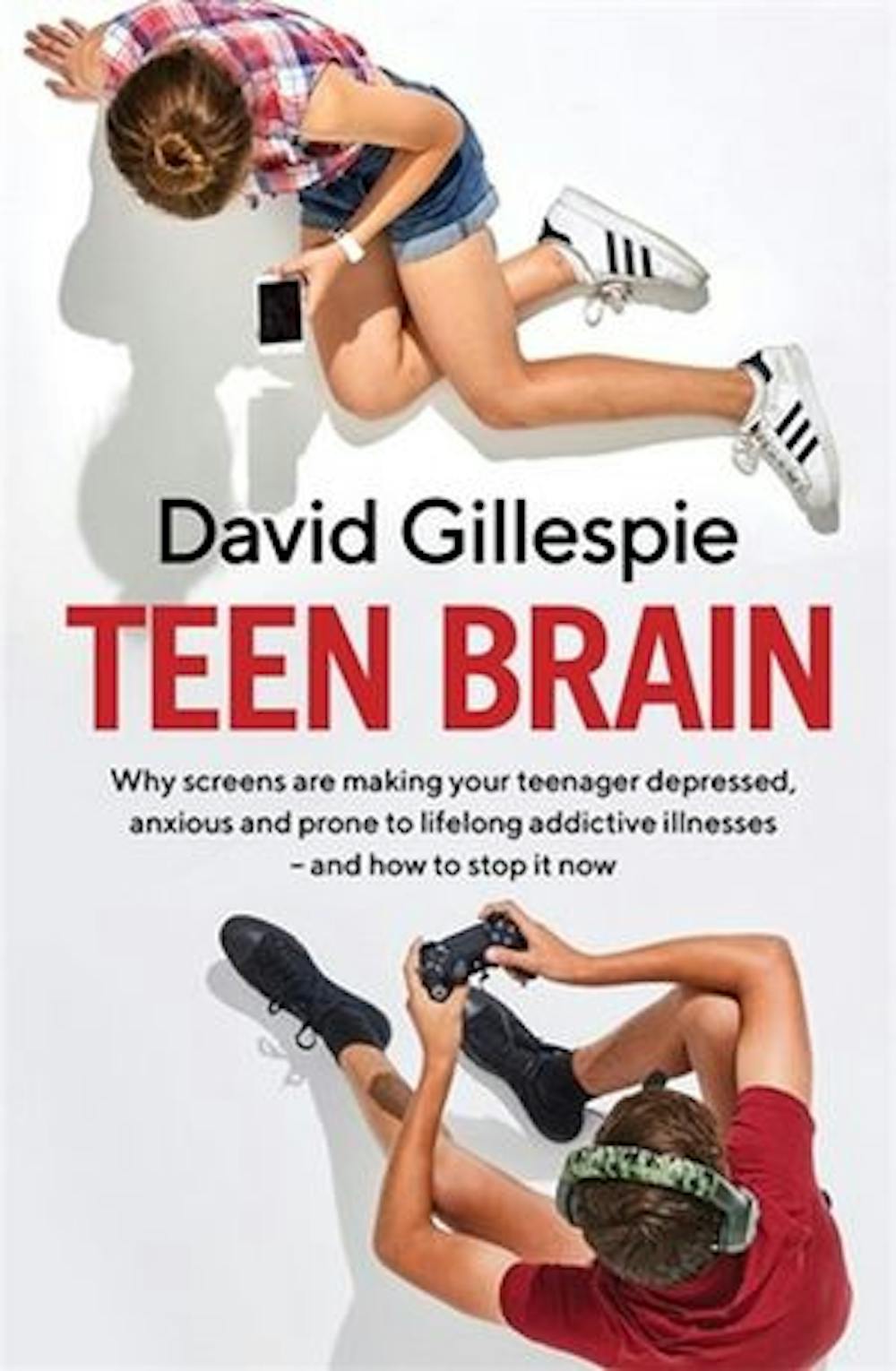
After what can only be described as a controversial introduction – in which puberty is referred to as a period when all “males turn into large, hairy, smelly beasts with no impulse control and a desire for danger and sex” – Gillespie attempts to explain some basics of the workings of the human brain.
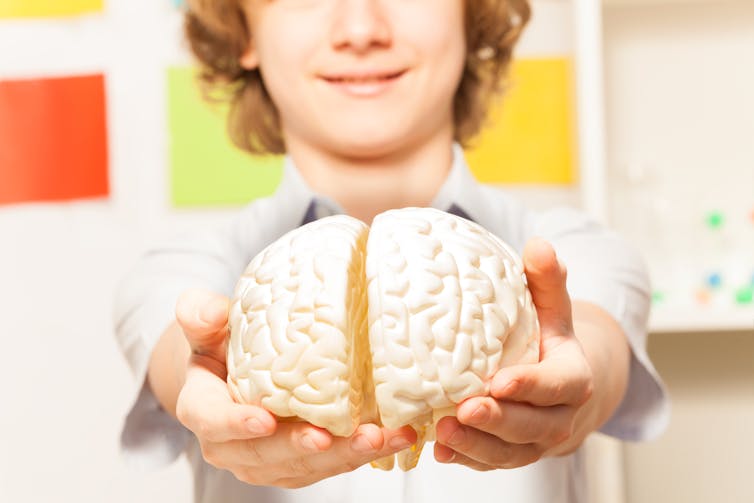
But this explanation is simplified and selective, which is problematic because it is then used as a basis for many of the arguments throughout the book. And the brain, and associated human behaviour, is far more complex than Gillespie’s seeming understanding.
The second section largely focuses on teen issues intertwined with parenting tips, with reference back to the brain basics. This information is aimed at managing, and ultimately avoiding, negative outcomes in teens – such as risk-taking behaviours, addiction and adverse mental-health issues.
According to Gillespie, such consequences are largely attributable to screen-based electronic devices.
This section contains statements that aren’t referenced at all, such as:
the stimulant effect of caffeine is identical to the stimulant effect of the dopamine-stimulating apps installed on your child’s device
Those that are – such as those under the heading “Teen depression and anxiety are on the rise” – often have selective references that fit the author’s narrative rather than reflecting the current state of the science.
In regards to anxiety, the book only presented parts of the research paper that it noted suggested anxiety had alarmingly tripled between 2003 and 2011. What had tripled were the presentations of anxiety symptoms. The overall diagnosis of anxiety actually remained stable.
The paper’s authors themselves state that what the results mean remains unclear. They could reflect a genuine increase in anxiety, but could also be attributed to an increased awareness by GPs or increased help-seeking behaviour of teens.
Then there are statements that are actually just plain wrong. For instance, Gillespie suggests
something else must lie at the heart of the epidemic of teen anxiety and depression, and there’s good evidence that this something is being home-delivered by the modern equivalent of a textbook – the tablet device.
Not surprisingly, this so-called “good evidence” is not provided.
In several places throughout the book, Gillespie links smartphones and electronic devices with dramatic decreases in teen pregnancy, alcohol consumption, illicit drugs and violent crime.

While it’s true there have been declines in teen pregnancy, substance use, and crime, this is not necessarily true for all countries.
For example, a recent study showed although substance use, unprotected sex, crime, and hazardous driving were reducing in US adolescents, the same trends did not apply consistently across other developed countries.
And although the study noted smartphones and social media were one possibility behind these declines, the way in which they might do this, and if in fact they actually do, is yet to be investigated.
Read more:
Australian teens doing well, but some still at high risk of suicide and self-harm
Declines in risk-taking and addictive behaviours in teens can only be seen as a good thing, but Gillespie manages to use this to fit his narrative. That is, that smartphones and electronic devices are indeed responsible for these positive changes, but at a cost.
That cost is that the use of such devices is replacing these teen problems with a whole set of new ones: dramatic increases in teen anxiety, depression, self-harm and suicide. But again, this is done with the use of misleading, or completely absent, evidence.
Gillespie presents a one-size-fits-all kind of approach throughout his book, which is also problematic, because not all teenagers are the same. There are large differences among individuals and how they are able to manage things such as anxiety, drug or alcohol use.
Genetics, as well as our environment, influence our behaviour. So what may work for one teenager, may not necessarily work for another.
The book places a large emphasis on the role hormones play in our reward pathways and addiction. One example is oxytocin. Gillespie says that “teenagers are uniquely susceptible to the power of oxytocin” and that “adolescence is a phase when the addictive power of oxytocin is magnified enormously”.
But there are substantial differences in oxytocin levels between individuals, and how each person’s system reacts to these, which the book completely ignores.
Read more:
How childhood trauma changes our hormones, and thus our mental health, into adulthood
The book culminates with five key points for how parents should “harden up to save their kids”. These include parents making the rules, and breaches of the rules being punished consistently.
Gillespie also advises that “all teens need eight hours’ sleep a night”. This recommendation falls outside the amount of sleep those under 14 years old need (9-11 hours for 5-13 year olds), and only represents the bare minimum recommended for those 14 years and older (8-11 hours for those aged 14-17).
The real shame overall is that the key message, that we should limit our teens’ screen time, is actually a good one. Although research remains scarce, there are some initial reports suggesting excessive screen use may have an impact on teens’ well-being, particularly sleep, anxiety and depression.
But Gillespie has reported it all in a way that is grossly over the top and overstated, and at times incorrect or just plain offensive.
This kind of communication only serves to perpetuate fear and create anxiety – the exact things that the author claims his book will fix.
Sarah Loughran, Research Fellow, University of Wollongong
This article is republished from The Conversation under a Creative Commons license. Read the original article.

 At the BookShelf


You must be logged in to post a comment.