
The link below is to an article that takes a look at places to buy ebooks online.
For more visit:
https://www.makeuseof.com/tag/buy-ebooks-best-ebook-stores/

The link below is to an article that takes a look at places to buy ebooks online.
For more visit:
https://www.makeuseof.com/tag/buy-ebooks-best-ebook-stores/
Roslyn Petelin, The University of Queensland
In her book Wordslut, Amanda Montell argues that patriarchal assumptions deny women an active role in society, claiming that, “In our culture, men run the show”.
With a degree in creative writing and linguistics, having studied “how language works in the real world”, Montell has set out to “verbally smash the patriarchy”. Her aim is to educate a readership of women who need “the knowledge to reclaim the language that for so long has been used against us”.
She promises that:
By the end of this book you’ll have all the nerdy know-how you need to sound like the sharpest word ninja in the room.
The wording of her promise sums up both the strengths and weaknesses of this book. Montell tries too hard to popularise her agenda by adopting up-to-date slang and jargon, although she must be fully aware of how transient and imprecise this strategy makes her argument.
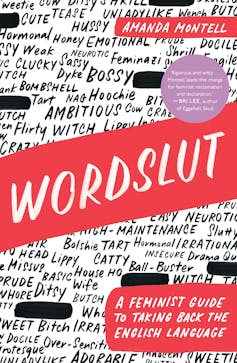
Occasionally, she is also seduced into making irrelevant asides that contribute nothing to her argument. For example, she mentions a seminal feminist paper that was published in 1997, “the same year as Princess Diana’s death and Mike Tyson’s bite fight”.
Despite all this, it is a book that explores the fascinating etymology of words such as “bitch” and “slut” that we were taught never to use in polite company, and which have nonetheless underpinned gendered attitudes.
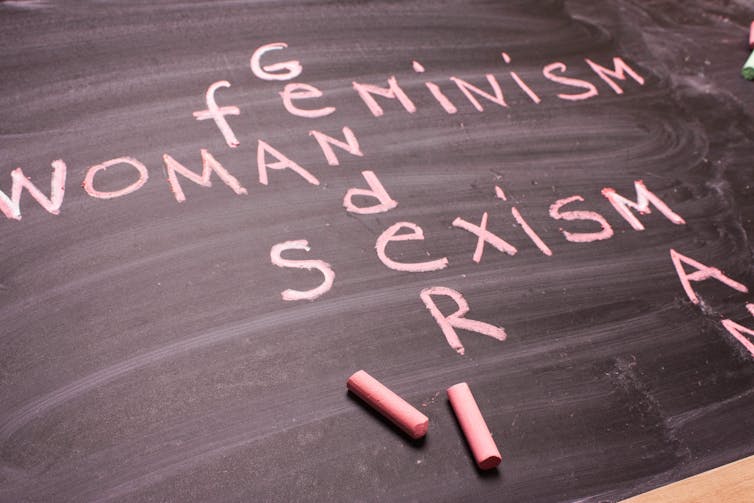
Since the second wave of feminism in the 1970s, sociolinguists have been studying language and gender: how people use language to express gender, how gender impacts how a person talks, and how their speech is perceived.
Montell comprehensively discusses the way in which second-wave feminist activists put the distinction between sex and gender on the “mainstream cultural radar in the mid 20th century”. She notes that “no one ever posed a semantic distinction between sex and gender until the 1960s” and that the word gender didn’t enter the mainstream English lexicon until the 1980s.
As she also notes, the rise of the #MeToo movement with fifth-wave feminism has accelerated discussions around gender and sexuality in the press, with even the Summer 2019 issue of Playboy magazine dedicated to the topic.
Montell’s book ranges across issues relating to sex, gender and language with many provocative pronouncements.

The most astounding, to my mind, is her claim about “valley-girl ‘vocal fry’,” also known by linguists as “creaky voice”, “a raspy, low-pitched noise that we often hear as people trail off at the end of their sentences”. Particularly teenage girls.
Montell says that:
Today’s sharpest linguists … have data suggesting that “teenage girl speak”, one of the most loathed and mocked language styles, is actually what Standard English is going to sound like in the near future. In a lot of ways, it’s already happening. And that’s making a lot of middle-age men very, very cranky.
Her credibility would have been enhanced if she had provided data for this bold claim, as it would seem to me that this is a style of language mostly confined to certain parts of California.
Montell rails against sexism in relation to women, but exhibits it herself in relation to men, particularly older men. Through most of the book she uses the term “dude” to replace the word “man”, oddly claiming that “today dude is one of the most beloved terms in the English language”.
Her ageism is evident when she discusses how labels such as cisgender, transgender, graygender, and pansexual “aren’t surfacing just because it’s suddenly trendy to have an identity that will perplex and/or pissoff all our great-aunts and-uncles at Thanksgiving”. She quotes many male and female linguists throughout the book, but mentions the age of only two, a woman who is “now in her 70s” and a man who is 58 years old.
Read more:
Explainer: what does it mean to be ‘cisgender’?
In his preface to Gwynne’s Latin (2014), the conservative British grammarian Neville Gwynne mentions what he calls the “now-contentious problem of how to express what for the entire history of English literature until the last few decades was the all-embracing ‘he’.”
Surprisingly, he suggests that before then it was never considered “remotely inappropriate or uncomfortable” and goes on to comfort the readers of his book by stating that “on the few occasions [in his book] that you see the all-embracing “he” or equivalent, that it is occurring without any offence being intended”.
Publications such as the Australian government’s Style Manual for Authors, Editors and Printers have accepted the singular “they” for decades, way ahead of those in the UK and the USA. Montell advocates the singular “they”, along with North American linguistics societies and dictionaries, although The Times style guide does not enthusiastically endorse it:
He and his can no longer refer to both sexes equally; he or she will sometimes do. It is often easier to use the plural they for he or she, and sometimes even the ugly their for his or her. Do this only when necessary.
Montell predicts, however, that “20 years from now, introducing yourself with your name and your pronouns could become the norm”.
Read more:
Gender diversity is more accepted in society, but using the pronoun ‘they’ still divides
In a book that aims for an educated readership, we would expect to see an index and a list of references. This book has neither. Montell’s failure to consistently and meticulously cite her sources somewhat diminishes the value of the book.
Much of the research that she mentions, such as a 2003 study of 30 Irish men and 30 Irish women on their swearing habits, features very small populations.
She also makes sweeping generalisations with no evidence: “people above the age of forty have always loathed teen slang”. The smattering of underwhelming cartoons contributes nothing to the text.
The book could also have done with a closer edit. On page four, Montell makes a grammatical and a factual error when she states that “Homo sapiens have been around for 200,000 years”. (Homo sapiens is thought to have originated in Africa more than 315,000 years ago.) Many readers will be put off by the book’s annoyingly gauche and patronising style: “You may or may not have heard of a little thing called patriarchy?”
But is the book worth reading? Yes. Despite my reservations, I enjoyed reading it. Montell puts her linguistics degree to good use in a thorough coverage of historical sociolinguistics that forms the precursor to the contemporary feminist stance practised in many arenas today.
Roslyn Petelin, Course coordinator, The University of Queensland
This article is republished from The Conversation under a Creative Commons license. Read the original article.
The link below is to an article that takes a look at how ‘not’ to get your teen back into books.
For more visit:
https://bookriot.com/2019/07/10/how-not-to-get-your-teenager-back-into-books/
The link below is to an article that considers what will be the next big thing in ebook readers.
For more visit:
https://goodereader.com/blog/electronic-readers/what-will-be-the-next-big-thing-for-e-readers

Jen Webb, University of Canberra
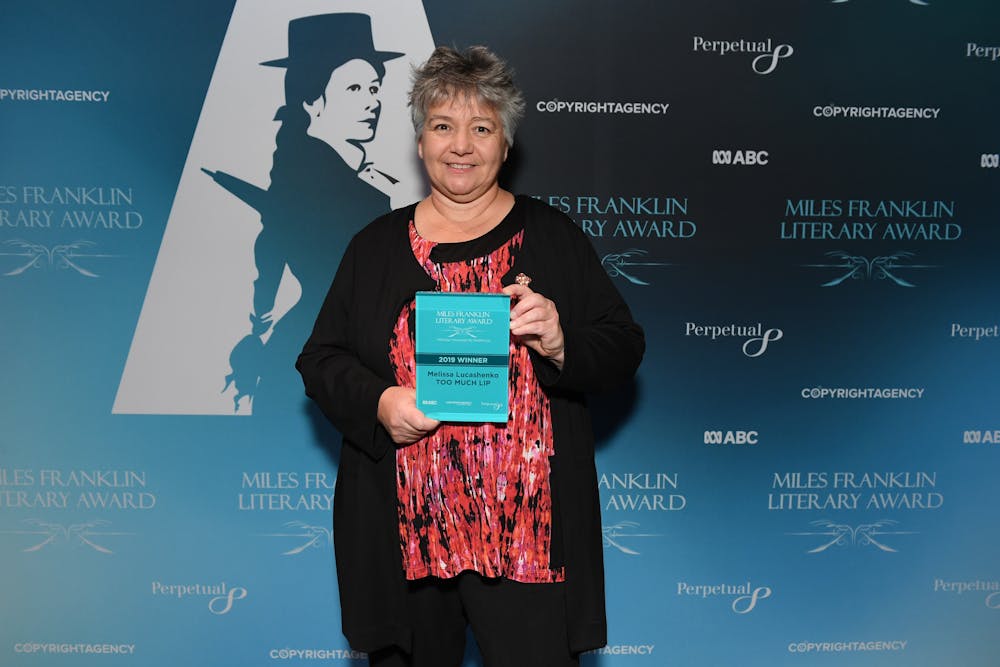
Too Much Lip joins the other prizewinning volumes in Melissa Lucashenko’s trophy cabinet. Her first-ever novel, Steam Pigs (1997), was shortlisted for or won several major prizes, and in the past two decades her books have racked up 26 awards.
Today’s win confirms her status as one of Australia’s top writers of contemporary fiction. Lucashenko has a marvellous knack of crafting fictions that are both drenched in anger, dysfunction and tragedy, and woven through with laugh-out-loud funny scenes, and relationships of great tenderness – with people and other living beings, and with the country in which they live.
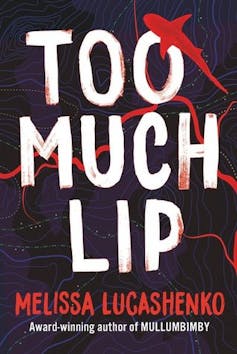
This latest volume is a brilliant addition to her oeuvre. A sustained story about a highly dysfunctional and traumatised family, its chief focus is on Kerry, the sister and daughter who has returned home. It is a home summed up by brother Ken as “a fucking coma ward”.
Pop in bed with the remote welded to the nags. Mum sits doing her cards and reading about the Second Coming of Christ our Lord, and I’m just about ready to harvest [son] Danny for his organs if the useless prick doesn’t move his arse soon. Talk about Limpet Dreaming.
Kerry laughs in response, largely to placate her labile brother; but for her it is not a joyful return. Not only is she here to say goodbye to her dying grandfather, but she is still wounded from the recent loss of her girlfriend Allie, who has been imprisoned for armed robbery, and has ended their relationship. Adding to disaster, Kerry and her family discover plans to develop a sacred site – and not just develop it, but actually build a prison on it.
In an interview about Too Much Lip, Lucashenko says: “I discovered that I was writing hidden history without being aware of how close to home I was. If you stick at it long enough you will eventually discover that you were writing truth where you thought you were writing fiction.”
This novel seems to respond to Emily Dickinson’s famous axiom about creative writing: Tell all the truth, but tell it slant.
Too Much Lip is a performance of truth told slant, the actuality of life and of embodied history wrapped within a work of fiction that comes alive in the characters and events that fill its pages; thrumming with life.
But it is more than a story. Lucashenko’s work is a powerful response to the entrenched racism that still shapes Australian culture; to the public and official turning away from the brutalities and genocide on which this nation was built, or the violence and inequities that characterise contemporary society.
Kerry’s Pop says to her: “We livin’ in the whiteman’s world now. You remember that”, but like Kerry, Lucashenko refuses to be silenced.
In her fictions and public life she makes visible the vibrancy and resilience of Aboriginal communities and their continued connection to land and culture. At the same time she makes agonisingly clear the unhealed wounds of Australian culture, in writing that demands these wounds be addressed.
Jen Webb, Director of the Centre for Creative and Cultural Research, University of Canberra
This article is republished from The Conversation under a Creative Commons license. Read the original article.
Ruth Panofsky, Ryerson University
As you indulge in summer reading, consider this fact. If not for the path-breaking women in Canadian publishing, some of Canada’s best-known writers might not have made it: Margaret Laurence, Farley Mowat, Carol Shields.
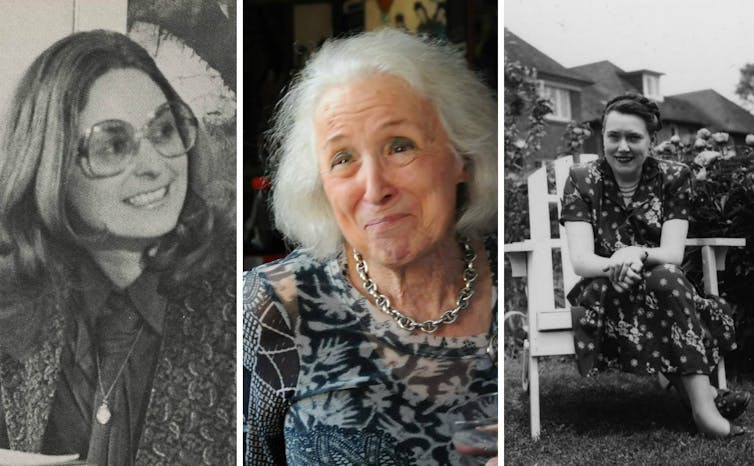
Although it’s known that women have always participated in Canadian publishing, the lasting influence they’ve had on the industry remains largely unacknowledged. It’s time we honoured Irene Clarke, Claire Pratt, Anna Porter and Bella Pomer — Canada’s own Diana Athills, the famous British editor — whose contributions count alongside those of men like Jack McClelland, a name that still dominates the history of Canadian publishing.
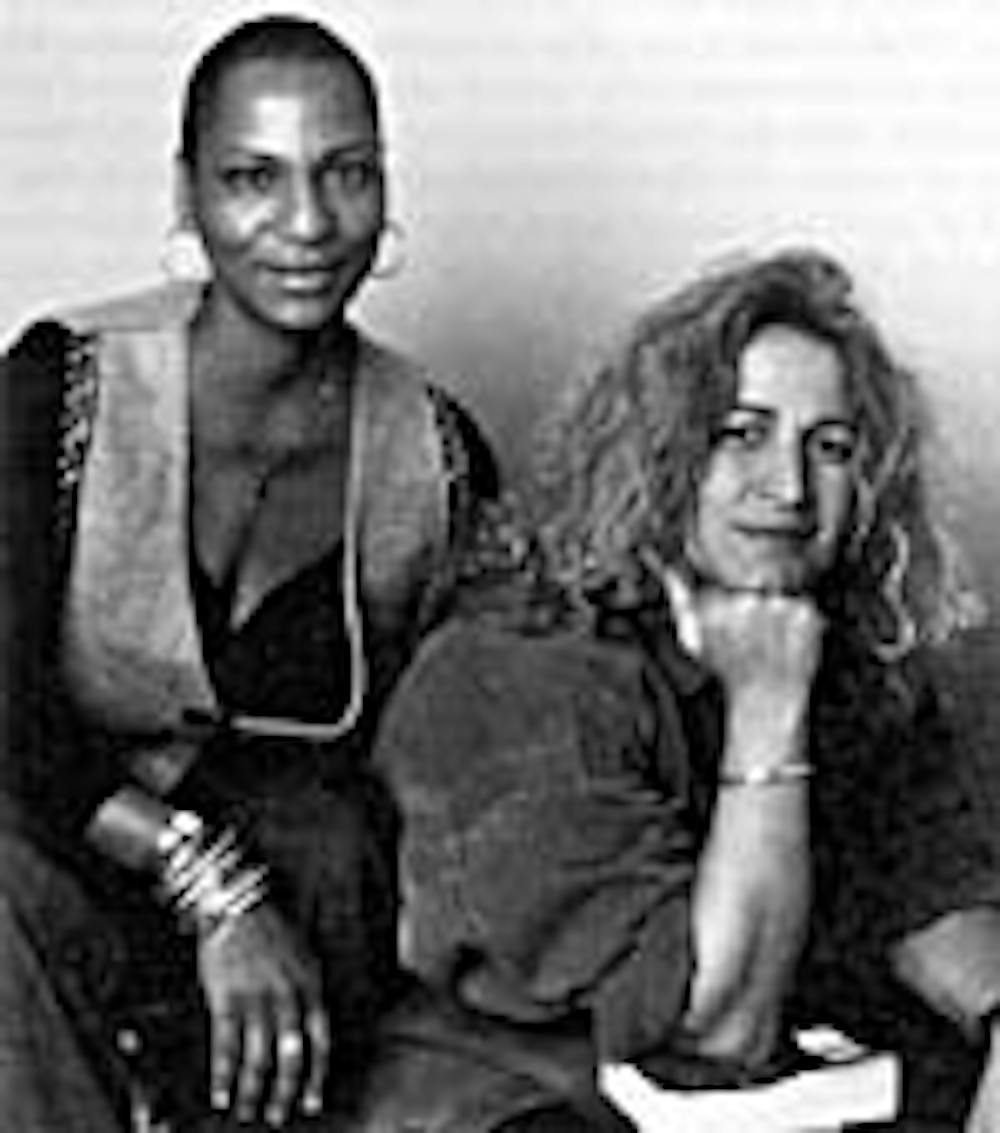
My research focuses on Canadian authors and their publishers, editors and literary agents. It has led to many happy hours immersed in archival collections in Canada, the United States and the United Kingdom, where I’ve uncovered the record of women’s labour in mainstream Canadian publishing. In making a place for themselves in the mainstream press, these women helped lead the way for the feminists who established their own imprints, such as Press Gang Publishers (1970-2002) and Sister Vision Press (1985-2000).
Who were these trailblazing figures?
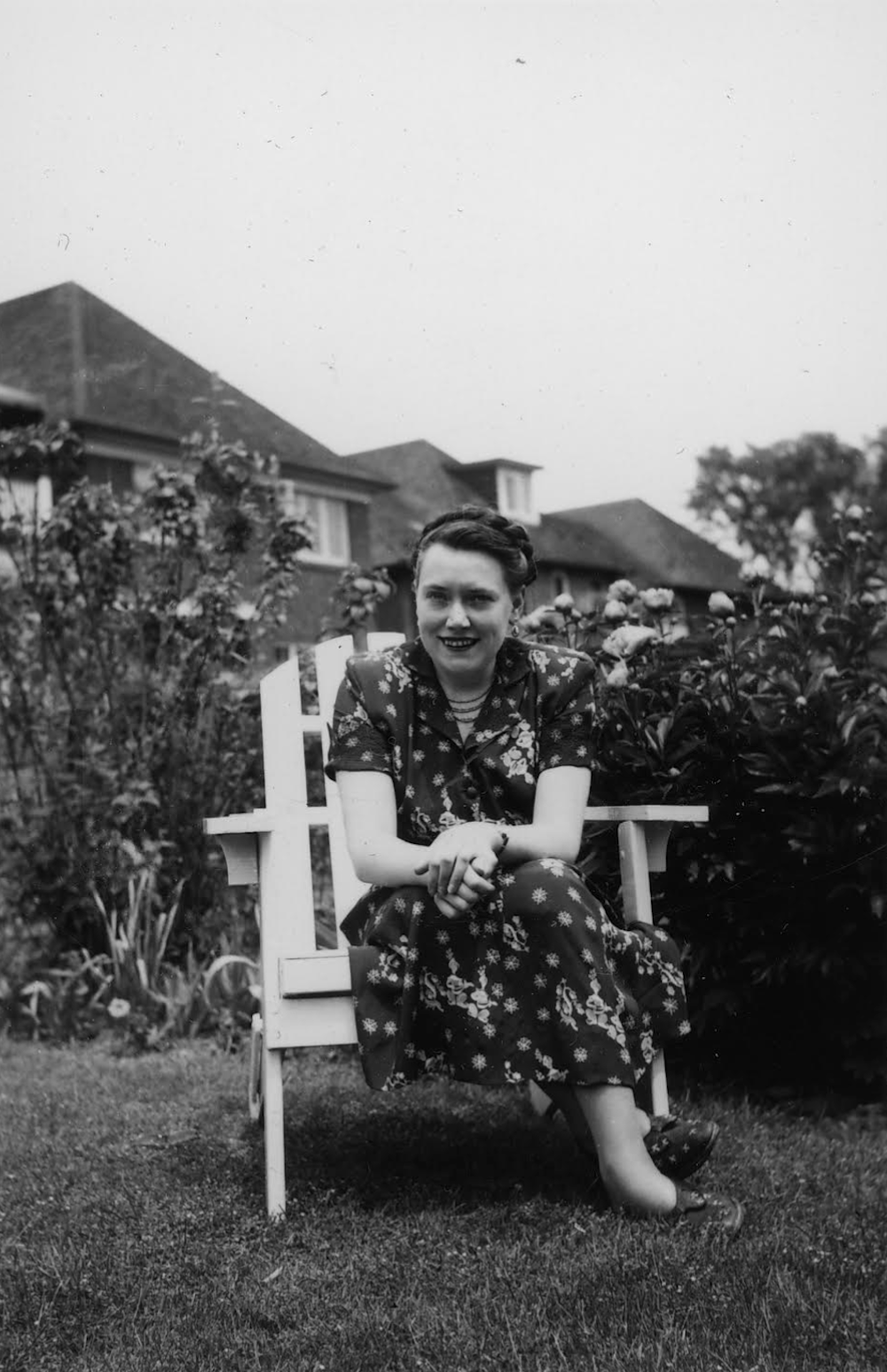
Irene Clarke (1903-1986) was Canada’s first woman publisher of English-language books. In 1930, she co-founded Clarke, Irwin.
At the time, with the world economy in collapse and the country in the grip of the Depression, the decision to launch a publishing company might have seemed foolish. By the late 1940s, however, under Clarke’s leadership, Clarke, Irwin had become one of the country’s five largest educational and trade publishers.
In 1941, Clarke took another bold step and published Emily Carr’s first book, Klee Wyck, under the Oxford University Press Canada imprint. At the time, in an unusual arrangement, Clarke, Irwin shared staff and premises with Oxford.
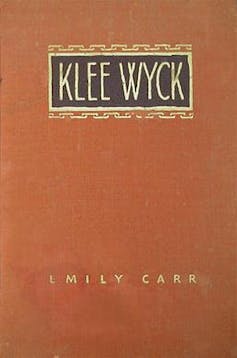
Carr’s book of sketches, which had been rejected by other publishers, won the Governor General’s Literary Award for non-fiction and helped generate new recognition for her paintings.
A close bond formed between Irene Clarke and Emily Carr, two women who broke historic ground, one as a publisher, and the other as a writer and a painter. Clarke not only launched Carr’s literary career. She went on to publish and acquire the copyright to all of Carr’s writing, which now endures alongside her more celebrated paintings.
From 1956 to 1965, Claire Pratt (1921-1995) was senior editor at McClelland & Stewart, where she worked closely with individual writers.
Pratt came to know Margaret Laurence through her fiction set in Africa and recommended the novel This Side Jordan (1960) and The Tomorrow-Tamer and Other Stories (1963) for publication.
When she read the draft of The Stone Angel (1964), the first novel in Laurence’s Manawaka series, the editor was deeply moved. Pratt’s appreciation won the author’s trust and she remained a touchstone figure in Laurence’s life.
Pratt was most vivacious with the spirited poet Irving Layton. Pratt worked with Layton on four volumes issued by McClelland & Stewart, the first of which was the Governor General’s Literary Award-winning A Red Carpet for the Sun (1959).
Layton sought Pratt’s opinion of his poetry. He tested her patience by continually revising a manuscript until the moment it was forwarded to the printers. He bartered constantly: if he were to remove one poem from a collection, might he replace it with another? He also enriched Pratt’s professional life and offered some of the most heartfelt expressions of thanks she received over the course of her career, even an ode glorifying “Saint Claire.”
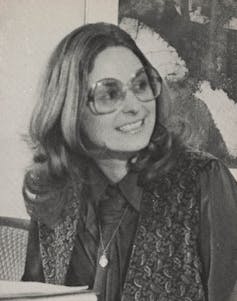
Following a similar path taken decades earlier by Irene Clarke, Anna Porter (born in 1943) became the first woman to head a Canadian publishing company devoted to English-language non-fiction trade books. In 1979, she co-founded Key Porter Books, and then in 1982 assumed the lead as publisher of the firm.
Today, non-fiction is a popular and steadily growing genre that appeals to a wide audience. When Porter established her company, however, she broke new ground by rejecting fiction in favour of the expanding category of non-fiction.
Porter pursued journalist Allan Fotheringham, whose Malice in Blunderland or, How the Grits Stole Christmas (1982) was Key Porter’s first best-selling title and the first of Fotheringham’s six books to be issued by the press.
The crusty Farley Mowat was one of Key Porter’s more outspoken and popular authors. Mowat and Porter shared a long and fruitful connection characterized by impassioned and vigorous debate and reconciliation.
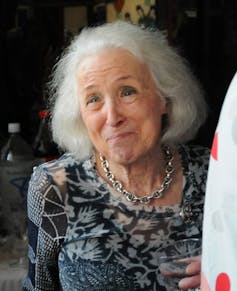
Bella Pomer (born in 1926) established her own literary agency in 1978. One of Canada’s first agents, she was undaunted by the prospect of entering a burgeoning field that soon was dominated by a cluster of women based in Toronto.
Pomer’s most prominent client was Carol Shields. Their agency agreement lasted 20 years, from 1982 to 2002. Pomer’s vision and tenacity helped shape Shields’s career.
When Pomer placed The Stone Diaries with Random House of Canada in 1993 — after 11 lean years of representing Shields — the response was immediate. Critics and readers alike were intrigued by the novel’s structure and captivated by its elusive protagonist, Daisy Goodwill. It was short-listed for the Booker Prize and went on to win the Governor General’s Literary Award and the Pulitzer Prize.
Soon, Pomer was handling the countless administrative details that increased exponentially in the wake of The Stone Diaries. She orchestrated U.S., British and foreign publication of all of Shields’s books, ensuring that each edition received individual attention. She negotiated with publishers and sub-agents to secure handsome royalty advances for Shields’s subsequent books.
As a top agent, Pomer was more than a professional who shared in Shields’s triumph. She was also an attentive listener, an ally and a strong defender of Shields.
Pomer’s business approach to her many book deals was a boon to writers. With understanding and skill, she brokered better terms and royalty advances for her clients and sold their work outside of Canada. Such intervention succeeded in altering Canadian publishers’ negative perception of agents. More importantly, it helped reform dated practices that favoured publishers over authors.
Clarke, Pratt, Porter and Pomer were among the women who changed the face of Canadian publishing. Their achievements, which resonate in today’s highly charged publishing environment, deserve our attention.
[ Like what you’ve read? Want more? Sign up for The Conversation’s daily newsletter. ]
Ruth Panofsky, Professor, Department of English, Ryerson University
This article is republished from The Conversation under a Creative Commons license. Read the original article.
The link below is to an article that takes a look at how to become a book editor.
For more visit:
https://bookriot.com/2019/07/11/how-to-become-a-book-editor/
The link below is to an article that takes a look at what to consider when buying an ebook reader.
For more visist:
https://goodereader.com/blog/electronic-readers/what-to-consider-when-choosing-an-e-reader
 At the BookShelf
You must be logged in to post a comment.