There’s a great moment in George Eliot’s 1861 classic Silas Marner, where a young woman bemoans how people with “neither ache nor pain” want to be “better than well”. Written more than a century before the rise of the “wellness industry” of exclusive gyms, self-help and endless supplements, the phrase is prophetic.
Now comes So you think you know what’s good for you?, a book promoted as the “ultimate health guide” from Australia’s highest profile doctor. A medical journalist with a global reputation, Dr Norman Swan has been a broadcaster with the ABC for almost 40 years.
Despite it’s smug title, and a few possible flaws we will get to later, the book has lots of welcome common sense and evidence-based tips for living healthier. And some surprises too, such as suggestions for how young queer people might best come out.
Perhaps this book’s greatest strength is its key message, often repeated, that with health, it’s better to focus on the bigger picture, the whole complex package, and not obsess too much on a few of the individual bits and pieces of the puzzle. Rise above the nutrients and think more about sharing a decent meal with loved ones, because, “social connectedness is the foundation of well-being.”
The wellness ‘bullshit’
One of the big myths busted early in the book is what Norman delicately calls the “bullshit” idea that wellness is some state of perpetual bliss we can all aspire to. “Wellness and well-being” he writes, “are intermittent phenomena”, appreciated because they stand out from the rest of our lives.
The odd bit of myth-busting aside, the book covers a lot of familiar ground. Sugar rots your teeth. Eating better, exercising more and drinking less booze will boost your chances of staying healthy longer. We’ve heard it before, but it doesn’t hurt to hear it again. And unsurprisingly, it’s convincing when it comes from this respected celebrity.
The idea that if we do all the right things, we’ll achieve a state of perpetual bliss is BS. Shutterstock
Just reading the book’s opening pages made me reach for a mandarin. By day two, I’d decided to get off the couch, stop reading so much George Eliot, and do some more vigorous exercise. By day three, our household was stocking up on extra garlic and discussing extra virgin olive oil around the dinner table with our seven year old.
Food, fads and fasting
The strongest section of the book is about food. Amid the analysis of different dietary fads, there’s some simple advice:
The more plants you eat as a proportion of your diet, the better.
The classic Mediterranean diet, with its olive oil and leafy greens, gets a very big tick. Vegan fasting, despite no strong evidence to support it, is deemed worth a go.
Additives and enhanced food are written off as more about marketing than nutrition. Vitamin and mineral supplements are a multi-billion dollar industry based on very little science. “Largely a con”, says Norman.
The elements of surprise
Despite an early promise in the book there’ll be no human interest stories, there are quite a few anecdotes about the author, which will no doubt please his fans. We learn that Norman almost never sleeps, loves a daily nap, hates almond lattes, is recovering from a salt-addiction and once consulted a dietician who suggested the reason he was hungry all the time was because he ate too much.
Much more seriously we hear stories from a grey Scottish childhood with a father who “hadn’t a clue about child rearing”, and see glimpses into a year-long episode of “stomach-churning anxiety” due to illness, separation, pain and loss.
One powerful story features the four-year old Norman, on a visit with his father to a Christmas carnival. Against his wishes the toddler was “plonked” alone on a fast-moving ride, and his resulting screams of terror were misread by his “gormless dad” as just being the normal fun of the fair.
He uses the anecdote to highlight the stress that can come from a loss of control. And that opens a great section on how society’s structures can undermine our sense of control on a mass scale, and how so much of our health is determined by government policies on housing, education and fairness.
One whole section is titled “The sex thing”, which like the rest of the book, contains a good dose of common-sense. There are musings on whether a rating system is needed for pornography, strong endorsement of the role of condoms, and caution about cosmetic genital surgery.
Particularly welcome was the celebration of the clitoris, whose role in the reality of sex is still stubbornly ignored by too much of the wider screen culture. “The vast majority of women do not orgasm with penetrative sex alone” writes Norman, because “the clitoris is usually the source of women’s orgasms.”
Swan’s book looks at the evidence around women’s orgasms. Shutterstock
And there’s a mention too of the push to label women’s common sexual challenges as a medical condition of low desire. “Call me a cynic,” he writes, “but creating a name for a problem is a prerequisitie for the pharmaceutical industry to find a treatment.”
He’s dead right. My book Sex, Lies and Pharmaceuticals documented how an alliance of sex researchers and drug companies have repeatedly tried to create new categories of illness, in order to build billion-dollar markets. And in my book with Alan Cassels, Selling Sickness, we expose how this problem of medicalising ordinary life is widespread across the medical landscape.
Some non-fatal flaws
One weakness, for me, was the book’s structure. There are lots of very short bites, sometimes not so coherently arranged, and a feeling now and again that words were written very quickly. The section on potential health impacts of screens and devices was just seven pages, compared to other sections that ran for more than 70 pages.
Another minor concern is the referencing. There’s a mountain of references at the end, but no use of endnotes, so it’s sometimes hard to tell which statements arise from evidence, and which are Norman’s analysis.
A deeper concern is that parts of the section on “Living Younger Longer” might feed unhealthy obsessions with constantly measuring all those individual risk factors, such as weight, waste, blood pressure and cholesterol.
The “worried well” are already the target of unbalanced promotion disguised as journalism that urges us to test more and more frequently for the early signs of heart disease, dementia and cancer, without any mention of potential downsides, such as unnecessary diagnosis and treatments that may bring us more harm than good.
The book has the occasional poke at drug or food industry marketing, but it doesn’t go into much detail. You won’t read, for instance, that medicine’s evidence-base has been distorted through commercial funding and influence, or about global campaigns, such as The BMJ’s, to forge more independence from industry, and produce more trustworthy evidence.
Similarly, the book has the occasional enthusiastic plug for the value of medications – for depression, high blood pressure or high cholesterol – but there’s no mention of the huge threat to your health from overdiagnosis and the overuse of tests and treatments.
But let’s not quibble. The book champions the value of context, cautions against getting too distracted by tiny details, and concludes with a warning that we’re all at risk of “knowing more and more about less and less”.
And as Norman Swan reminds us, when it comes to health, going for “good enough” may ultimately be much healthier for us, than trying desperately to be “better than well.”
So you think you know what’s good for you? is published by Hachette Australia
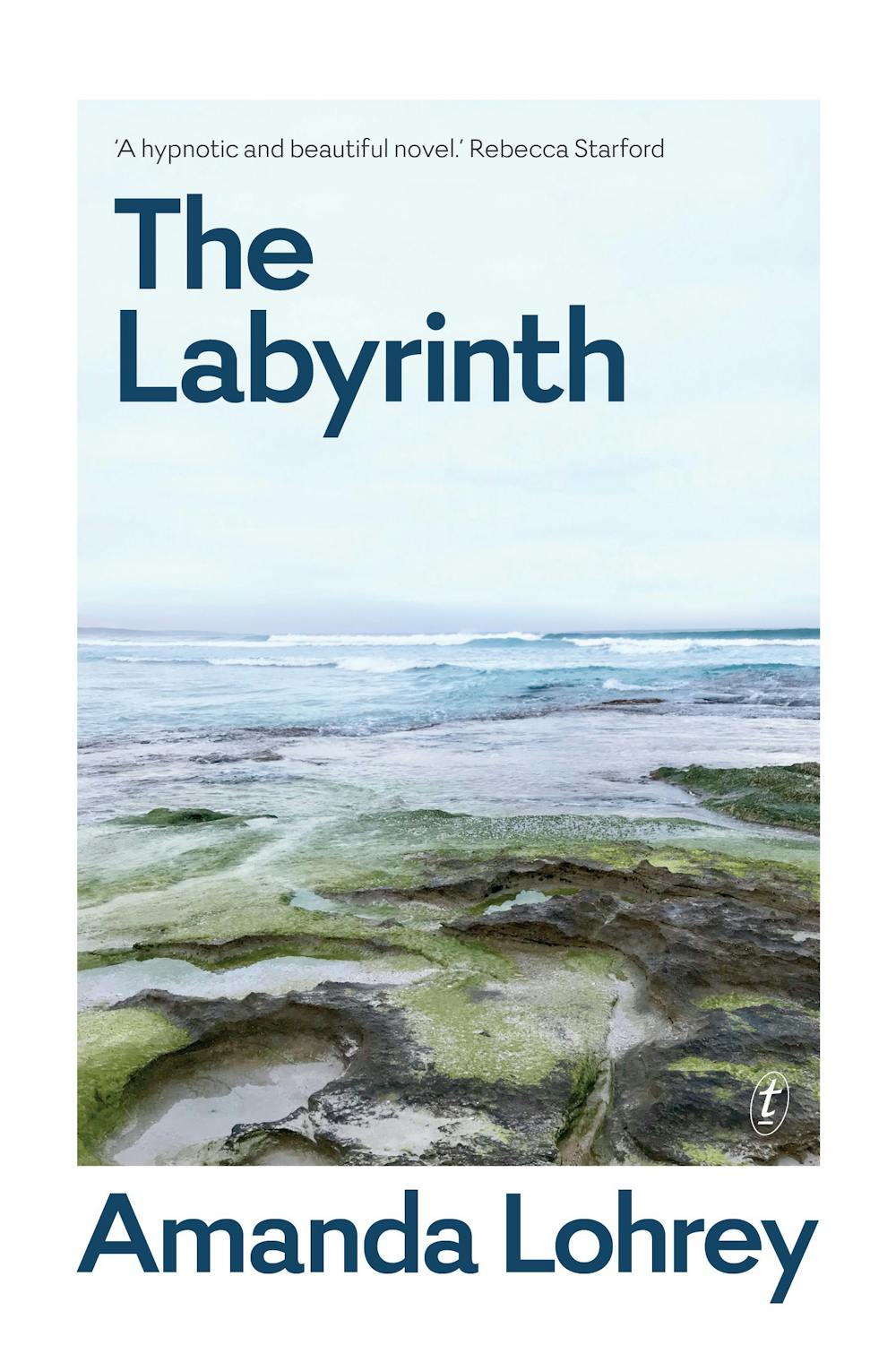
Two of Lohrey’s previous novels (Camille’s Bread in 1996 and The Philosopher’s Doll in 2005) have been shortlisted for the prestigious $60,000 prize. Her latest has been recognised as the literary volume that best presents Australian life now. She is the second Tasmanian author to ever win the prize.
As a long-time fan of Lohrey’s voice and eye, and someone with a lifetime of longing for more recognition of women’s achievements, I am thrilled to see her novel and her protagonist Erica achieve this standing.
Erica is an often prickly but generous and appealing character. Though she grows up “in an asylum, a manicured madhouse”, her childhood is much happier than is the norm for characters in literary fiction. Her father, the chief medical officer of the hospital, trains his children in diversity. All of us are “lunatics”, he teaches them, in that “we are all affected by the moon”. “Evil,” he tells them, is no more than “a chemical malfunction in the brain”.
Text Publishing
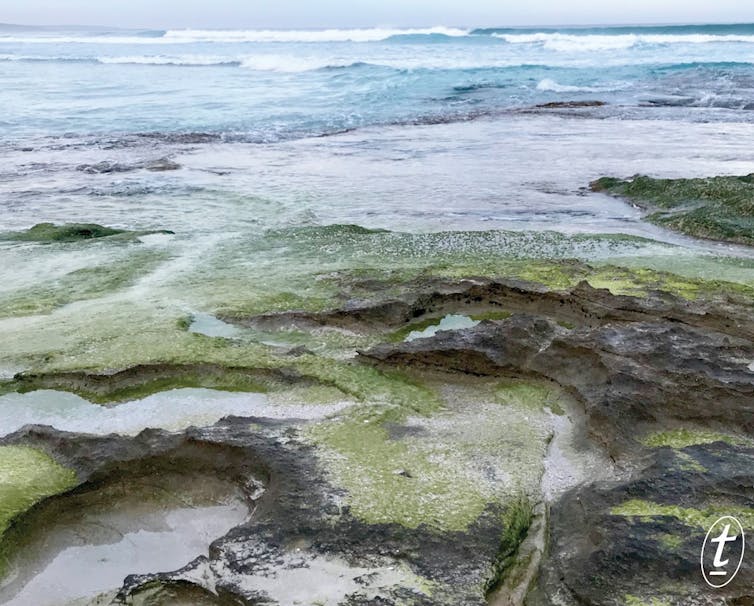
This is an excellent foundation for someone who, in later life, finds herself with a son whose “chemical malfunction” leads him to commit an inadvertent but terrible crime. The beach shack she purchases to be near him, and far from everyone else she knows, is as disorganised and disreputable as her child. But it gives her somewhere to review her life and re-imagine a future.
That future circles around the concept of the labyrinth. Much of the novel is a masterclass in types of these mazes and the meanings and feelings the various designs afford.
A way through
All this operates as a healing process following the agony of her son’s act, trial and imprisonment. She — or rather, her planned labyrinth — gradually draws the attention of other isolates who live in the same coastal community. Various people become closely connected to her and one, Jurko, happens to know about labyrinths and their construction.
The young man, “an illegal immigrant who has overstayed his visa”, is a stonemason (a master of that ancient art) and he gradually inserts himself into her home and her life to become her “surrogate son”.
Sand, he explains, is the best foundation for a labyrinth, and this captures Erica’s attention:
I am struck by the paradox here: sand so volatile in its essence and yet so firm a basis for the rigidity of concrete.
For the reader, this becomes the novel’s coda: though everything seems so unstable, it still affords a firm foundation for our difficult, drifting lives.
As the novel unfolds, Erica’s deepening relationships with her new neighbours, and shared responsibilities and understandings, form a sort of labyrinth that leads her to the point where she can declare: “The fugue is over.”
‘It’s a tremendous honour to be associated with the remarkable Stella Miles Franklin, one of the great Australian mavericks,’ said winning author Amanda Lohrey. Miles Franklin Award







 At the BookShelf
You must be logged in to post a comment.