
The link below is to an article that takes a look at the forgotten women writers of 17th century Spain.
For more visit:
https://www.smithsonianmag.com/smart-news/madrid-exhibit-highlights-forgotten-women-writers-17th-century-spain-180975725/

The link below is to an article that takes a look at the forgotten women writers of 17th century Spain.
For more visit:
https://www.smithsonianmag.com/smart-news/madrid-exhibit-highlights-forgotten-women-writers-17th-century-spain-180975725/
Jordi Cornellà-Detrell, University of Glasgow
It’s exactly 80 years since the end of the Spanish Civil War, when General Francisco Franco’s populist forces finally overcame the leftist resistance and plunged the country into full-blown dictatorship. Decades after his death, Franco continues to cast a long shadow over Spain, from the rise of the far-right Vox party to the hundreds of mass graves of people who died in the war that are still waiting to be exhumed.
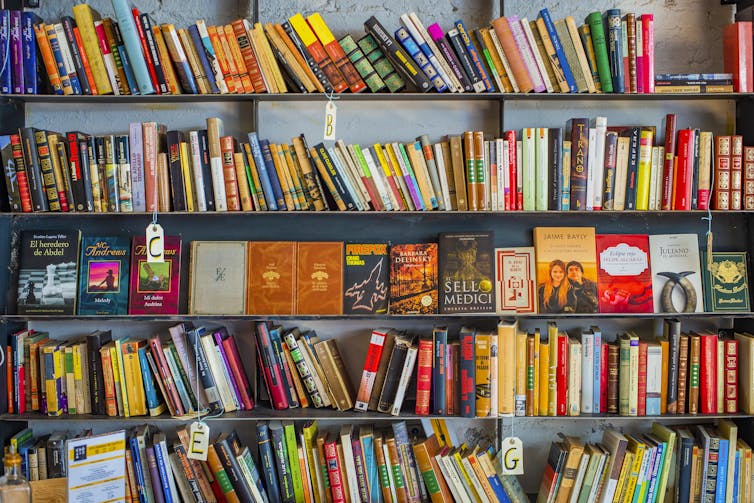
One other hugely important legacy that few people are aware of is the continuing effect on books, both in Spain and throughout the Spanish-speaking world. To this day, translations of many world classics and works of Spanish literature are being reprinted using expurgated texts approved by the dictator’s censors – often without publishers even realising it, let alone readers. It has had a chilling effect on freedom of speech over the years, and must be addressed as a matter of urgency.
Between 1936 and 1966, every single book published in Spain had to be submitted to a national board of censors for examination. The censors would decide whether the text should be banned altogether or was fit for publication, in which case they would stipulate any necessary changes. After 1966, when a new law that partly liberalised freedom of speech was introduced in the country, publishers could voluntarily decide whether to submit a text for censorship. However, the authorities still retained the ability to withdraw any book from circulation that they deemed unacceptable.
Franco’s censorship laws sought to reinforce Catholicism and promote ideological and cultural uniformity. The censors enforced conservative values, inhibited dissent and manipulated history, especially the memory of the civil war. Sexually explicit material was banned, as were alternative political views, improper language and criticisms of the Catholic church.

Spain abandoned these policies after Franco’s death in 1975, yet most of the same texts are still widely available today. Ira Levin’s Rosemary’s Baby is available in more than 20 different Spanish-language editions, for instance, including an electronic one, all of which lack two extended passages that according to the censors glorified Satan. James Baldwin’s Go and Tell it on the Mountain is only available in a version with cuts that include references to birth control and details about the sex lives of the main characters. The publication of this expurgated text is sponsored by none other than UNESCO.
Many literary works by some of Spain’s most important 20th-century writers have suffered similar fates, including those by Ana María Matute, Camilo José Cela, Juan Marsé and Ignacio Aldecoa. In some cases, such as George Orwell’s Burmese Days and Ian Fleming’s Thunderball, censored parts have even survived in retranslated and restored versions.
With no one under the age of 40 even alive during the dictatorship years, few people are even aware of the problem. Public libraries are encouraging people to read thousands of volumes without realising they are censored. Many of these texts have been imported to Latin America, sometimes even being republished in different countries with their censored parts intact. It means that a fairly large proportion of the world’s population is being routinely denied access to literature as it was intended to appear.
It is a well known fact that Spaniards have found it difficult to confront their traumatic recent history. The so-called “pact of forgetting”, a tacit decision among the Spanish political elites not to question or examine the past, was seen by many as vital to make the transition to democracy possible in the late 1970s and 1980s. For years, this included a general amnesia about Franco’s cultural policies: even when books were retranslated to restore censored parts, few people said anything about it.
Spain’s 2007 Law for the Recovery of the Historical Memory was a major step away from these years of forgetting. It condemned the dictatorship and established compensations for people who endured political violence during the regime. It also initiated the removal of statues and other public symbols which glorified Franco’s reign. Yet other cultural artefacts, such as books, were overlooked.
The upshot is that Spain’s literary censorship problem is alive and well today. Indeed, it is arguably getting worse: it is easy to release digital versions of these classics, so Franco’s hand even reaches into Kindles and tablets. We are talking about one of the most long-lasting yet invisible legacies of his regime. The effect on culture in Spain and in other hispanic countries is almost incalculable. Censorship has certainly distorted many people’s perception of the civil war and its consequences. Many readers will also be ignorant of writers’ real points of view regarding important social issues such as gender roles, birth control and homosexuality.
The question is how to deal with this complex problem – particularly now that the Vox party, which is expected to do well in the upcoming election, has promised to repeal the Law of Historical Memory on the grounds that it manipulates the past.
The most important task is to raise awareness among the reading public. This needs clear support from the Spanish government, plus serious engagement from the whole literary sector, including libraries, publishing houses, translators, archives, cultural publications and writers themselves. The technologies that are giving new life to the problem could be used to help: a public database of restored texts, for instance, could become an important tool.
The point is that while Spain has increasingly been addressing the impact of Franco’s regime in the country’s social and historical memory since the early 2000s, the process of coming to terms with the past is far from complete. The pact of forgetting has not only marred Spain’s democratic progress, it has severely damaged the country’s cultural heritage. Spain and the rest of the Spanish-speaking world will not be free from Franco’s censorial shadow until this issue is publicly and decisively addressed. With people on the ascendant who would prefer to turn back the clock, there is no time to lose.
Jordi Cornellà-Detrell, Senior Lecturer in Hispanic Studies, University of Glasgow
This article is republished from The Conversation under a Creative Commons license. Read the original article.
Xavier Aldana Reyes, Manchester Metropolitan University
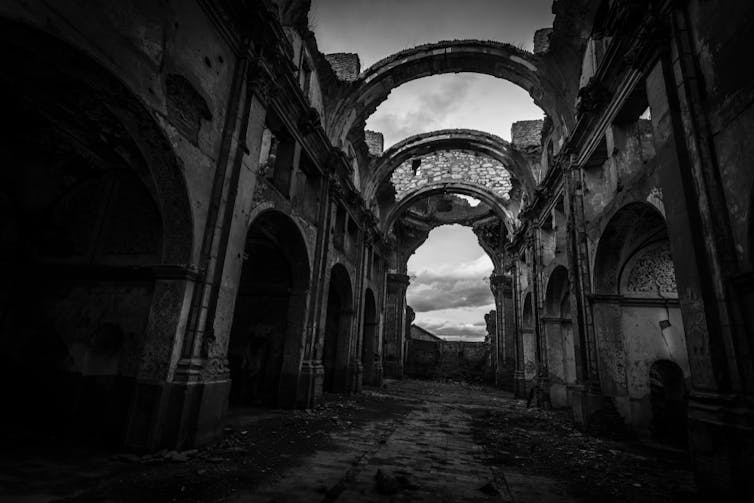
The spectre of the Civil War continues to haunt Spain in many different ways. It manifests itself overtly in conflicts over Catalan independence but also more subtly through art, literature and film. Many will remember Guillermo del Toro’s haunting Mexican-Spanish co-productions The Devil’s Backbone (2001) and Pan’s Labyrinth (2006). But it is especially prevalent in the works of writer Carlos Ruiz Zafón. His novel The Labyrinth of the Spirits, the last in the international best-selling quartet The Cemetery of Forgotten Books, is being published in English in September.
Those who can read Spanish had access to El Laberinto de los Espíritus as early as 2016. But as it is just shy of 1,000 pages, it is not surprising it has taken nearly two years for this mammoth conclusion to see the light of day in translation. Its epic proportions, as well as Ruiz Zafón’s usual concoction of suspense, melodrama and humour – all set against a heavily Gothic Barcelona – is sure to delight his readers.
The introduction of a new character, the detective Alicia Gris, also provides some much needed new blood to a series of books that has been steeped in an exploration of the horrors and silences of the Spanish Civil War.
The other volumes in Ruiz Zafón’s quartet, namely The Shadow of the Wind (2001), The Angel’s Game (2008) and The Prisoner of Heaven (2011), are also variously set during the Civil War and its direct aftermath. They each interweave the classic formulae of Gothic literature with a revisionist social realism strongly imbued with the war and Spain’s recovery from it as traumatic event – the perception of which has been affected by recent historical and social changes.
As I have argued in my book on the Spanish Gothic, the fear in these novels is not strictly spectral. It is derived from the war, the subsequent fascist regime and its followers. The Gothic anti-hero in The Shadow of the Wind, Julián Carax, turns out not to be the villain of the novel, but the man who saves the protagonist from the real monster: police officer Fumero.
The Civil War is imagined in all its cruelty and visceral brutality in Ruiz Zafón’s novels. The war is Gothicised as much as its setting, a fallen, rainy and depressed Barcelona which contrasts strongly with images of the city in the contemporary tourist industry.
Even the library that becomes the catalyst of all events – appropriately named the Cemetery of Forgotten Books – stands as a poetic image for those killed in the war. It is described in The Shadow of the Wind as an “endless necropolis” where volumes “remain unexplored, forgotten forever” until rescued by a daring reader who may become their protector. These daring readers are naturally modern day Spaniards, some of whom have been quite literally digging up the dead since the first exhumation of a war mass grave in 2000.
This casual injunction, a phrase I heard often when growing up in Spain in the 1980s and 1990s, may be read as a distillation of the country’s attitude towards a conflict that took place 80 years ago, but which is still very much present in the lives of the Spanish. It is a bit like a ghost, but more like a cursed legacy. It is an echo of “the sins of fathers (being) visited on their children to the third and fourth generation” that Horace Walpole suggested was the main moral of his The Castle of Otranto (1764) – broadly seen as the first Gothic novel.
It has been suggested that the repression of trauma (a typical Gothic trope) may not be appropriate for the case of the Spanish Civil War. The reason for the relative lateness of the “memory boom” (1990s and 2000s) could be due to a reluctance on the part of those who lived through the conflict to tell their stories. The decision to break with the past after Franco’s death, the argument continues, may have more to do with not wanting to let the past affect the future than with deliberately attempting to silence it.
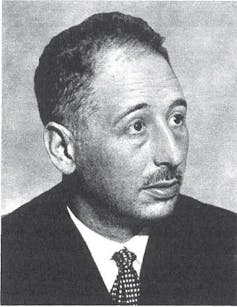
However, the conflicts over the Catalan independence vote in 2017 demonstrate that the very idea that the past may not affect the future is not only untenable, but reactionary. This position may inadvertently mask a desire to let the status quo go unchallenged. On this note, it is interesting that Ruiz Zafón’s books are set in Catalonia, a part of Spain with a history of resistance to centralist policies and whose president during the War, Lluís Companys, was eventually executed by the regime.
The Civil War remains Spain’s favourite modern Gothic tale. This is because Spain, as a country, is only beginning to deal with the war’s legacy openly, with its impact on the lives of those directly affected by it. It could not have begun to do so any sooner given that the crimes committed during Francoism have not even been legally recognised, let alone sanctioned.
Whether the past can ever be truly laid to rest is a contentious issue, but it seems to me that only the recognition of its effects – and the way that current discourses around nationalism have been coloured by them – can lead to the end of the type of alienation, fear and anger that Ruiz Zafón and other artists have been working through in their work. We should continue to read and talk about the Civil War and to condemn the brutal acts of murder and repression that have affected Spain for at least three generations. As philosopher George Santayana once warned, “those who cannot remember the past are condemned to repeat it”.
Xavier Aldana Reyes, Senior Lecturer in English Literature and Film, Manchester Metropolitan University
This article is republished from The Conversation under a Creative Commons license. Read the original article.
 At the BookShelf
