Unknown's avatar

Is Salman Rushdie’s decision to publish on Substack the death of the novel?


EPA/HAYOUNG JEON

Julian Novitz, Swinburne University of Technology

Email newsletters might be associated with the ghost towns of old personal email addresses for many: relentlessly accumulating unopened updates from organisations, stores and services signed up to and forgotten in the distant past. But over the last few years they have experienced a revival, with an increasing number of writers supplementing their income with paid newsletter subscriptions.

Most recently, Salman Rushdie’s decision to use the newsletter subscription service Substack to circulate his latest book has sparked conversation around this platform and its impact on the world of publishing.

What is Substack?

Launched in 2017, Substack allows writers to create newsletters and set up paid subscription tiers for them, offering readers a mixture of free and paywalled content in each edition.

Substack has thus encroached on the traditional territories of newspapers, magazines, the blogosphere – and now trade publishing. Though it is worth noting that until now it has been most enthusiastically adopted by journalists rather than authors.

Rather than monetising the service via advertising, Substack’s profits come from a percentage of paid subscriptions. Substack’s founders see the platform as a way of breaking from the ‘attention economy’ promoted by social media, allowing a space for more thoughtful and substantial writing that is funded directly by readers.


Read more:
Substack isn’t a new model for journalism – it’s a very old one


Not a radical disruption

Rushdie’s decision to publish via Substack signals a surprising inroad into one of the areas associated with trade publishing – literary fiction – and certainly makes for a good news story. He is the first significant literary novelist to publish a substantial work of fiction via the platform and Rushdie himself talks jokingly about helping to kill off the print book with this move.

However, the novella that Rushdie is intending to serialise will almost certainly be available in a more conventional format at some point in the future, given all Substack writers retain full rights to their intellectual property.

Other experiments with digital self-publication by prominent fiction authors, such as Stephen King’s novella Riding the Bullet (first published independently as an eBook), and the fiction first generated on Twitter by writers like David Mitchell and Neil Gaiman, have made their way to traditional publishers.

 
Neil Gaiman has also experimented with digitally distributed fiction.
shutterstock

While this movement provides excellent publicity for Rushdie and the Substack service, it’s perhaps better understood as a limited term platform exclusivity deal than as a radical disruption of the literary publishing ecosystem.

Potentially more interesting is what the “acquisition” of Rushdie by Substack illustrates about their operation as a digital service. Throughout its history, Substack has offered advances to promising writers to support them while they cultivate a subscriber base.

This practice has now been formalised as Substack Pro, where selected writers, like Rushdie himself, are paid a substantial upfront fee to produce content, which Substack recoups by taking a higher percentage of their subscription fees for their first year of writing.

The exact sums paid vary between writers, but it is not dissimilar to a traditional advance on royalties. When coupled with some of the other services that are available to writers with paid subscriptions – like a legal fund and financial support for the editing, design, and production of newsletters – Substack can be seen as operating in a grey area between publisher and platform.

They pursue promising and high-profile writers, generate income, and provide services in ways that parallel the operations of trade publishers, but do not claim rights or responsibilities in relation to the content that is produced.

Although Substack do not see themselves as commissioning writers it could be argued they do play an editorial role in curating content on their platform through not terribly transparent Substack Pro deals and incentives.

The evolution of Substack

Recently Jude Doyle, a trans critic and novelist, has abandoned the platform. They note the irony of how profits generated by the often marginalised or subcultural writers who built paid subscriber bases in the early days of Substack are now being used to fund the much more lucrative deals offered to high-profile right-wing writers, who have in some cases exploited Substack’s weak moderation policy to spread anti-trans rhetoric and encourage harassment.

It could be argued Substack Pro is evolving into an inversion of the traditional (if somewhat idealised) publishing model, where a small number of profitable authors would subsidise the emergence of new writers. Instead, on Substack, profits generated from the work of large numbers of side-hustling writers are used to draw more established voices to the platform.

The founders of Substack have been unapologetic about their policies, considering the “unsubscribe” button to be the ultimate moderation tool for their users. They do, however, acknowledge Substack’s free-market approach may not appeal to all and anticipate competition from alternatives.

Ghost already exists as a non-profit newsletter platform with a more active approach to moderation, and Facebook’s Bulletin provides a carefully curated newsletter service from commissioned writers.

At this stage, the use of newsletters for literary fiction is an experiment, and it remains to be seen if it will be sustainable. As Rushdie puts it: “It will either turn out to be something wonderful and enjoyable, or it won’t.”The Conversation

Julian Novitz, Lecturer, Writing, School of Media and Communication, Swinburne University of Technology

This article is republished from The Conversation under a Creative Commons license. Read the original article.


Unknown's avatar

‘Fifty Shades of Grey,’ 10 years later: Self-publishing wasn’t novel then, but now it’s easier to reach a niche audience


Substantial cultural commentary and numerous studies addressed how the ‘infamous’ novel influenced both readers and the publishing industry.
(Shutterstock)

Elizaveta Poliakova, York University, Canada

It has been 10 years since E.L. James decided to self-publish her first novel, Fifty Shades of Grey. The plot of the story centres on a college student who enters a relationship with a wealthy businessman involving BDSM practices — bondage, dominance/submission, sadism/masochism — and becomes his submissive.

A standing woman in an evening gown is accompanied by a man in a suit.
Some critics commend author E.L. James, pictured here, for enticing more authors to experiment with self-publishing.
(Shutterstock)

The story was first developed as a fan-fiction project in 2009 based on the Twilight series, originally titled Master of the Universe. However, after being reprimanded for the mature content by the administrators of a fan fiction website, James decided to self-publish the book in 2011 with the help of an online publisher, The Writers’ Coffee Shop.

James’s book and its sequels — Fifty Shades Darker and Fifty Shades Freed — became a global sensation. The trilogy sold more than 65 million copies after James signed a contract with a traditional publisher, Vintage Books, an imprint of Random House.

Substantial cultural commentary and numerous studies addressed how the “infamous” novel influenced both readers and the publishing industry.

Some people critiqued the book for linking sex and violence without delving into the level of communication required to make BSDM safe and truly consentual. Others discussed how it harmed women’s already fragile role in a patriarchal world, or commended it for starting dialogue around BDSM — and enticing more authors to experiment with niche topics and self-publishing.


Read more:
Violence dressed up as erotica: Fifty Shades of Grey and abuse


Role of gatekeepers has shifted

This is an interesting time in publishing and other areas of the cultural industries, because the roles of gatekeepers are changing. Today, it is much easier to appeal to a niche audience than it was 10 years ago. Self-publishing is here to stay.

Some people commend self-publishing as a great way to ensure that audiences can access a diversity of genres and voices that have traditionally been marginalized by mainstream publishers. Others condemn it because of the lack of gatekeepers to assess the content being produced. A few consider it a get-rich-quick-scheme.

However, these assumptions are based on a limited knowledge of contemporary self-publishing practices.

Self-publishing isn’t new

The phenomenon of self-publishing is often linked to online book production methods, which allow authors to produce an ebook with a few strokes of the keyboard, making their work available to a global audience. However, there is a much richer history of self-publishing that goes further back than its digital counterpart.

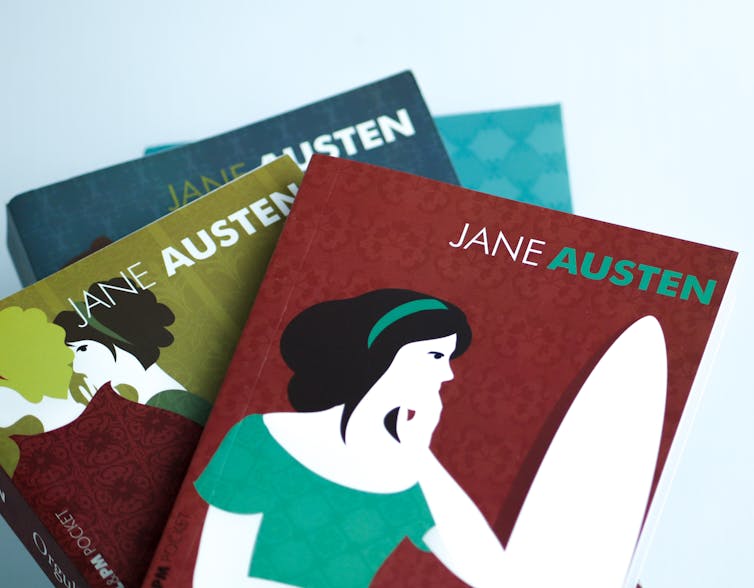
A number of prominent authors started off by privately printing their work. For instance, Jane Austen privately published Sense and Sensibility in 1811, and Mark Twain self-published The Adventures of Huckleberry Finn in 1885. Although self-publishing might appear as the new buzzword, it is not a novel phenomenon in the publishing industry.

Even though self-publishing was a practice some authors adopted in the 18th and 19th centuries, the distribution methods and number of copies were often limited.

A stack of Jane Austen books
Yes, Jane Austen’s ‘Sense and Sensibility’ actually has something in common with ‘Fifty Shades of Grey’: self-publishing.
(Shutterstock)

Amazon & self-publishing

In the past 10 years, the phenomenon of self-publishing grew massively with the help of Amazon, Wattpad and other online publishing tools.

The real game changer to self-publishing was Amazon when it introduced Kindle Direct Publishing in 2007. It became possible for authors to share their work worldwide through a convenient global distributor.

Amazon can be linked to the popularization of electronic books (ebooks) through its promotion of the Kindle — also introduced in 2007 — which prices literary works as low as 99 cents.

In 2012, a year after its publication, Fifty Shades of Grey was the best- and fastest-selling series ever on Kindle.

Self-publishing on the rise

It is difficult to trace the actual number of self-published books because platforms like Amazon assign their own classification, making the ISBN unnecessary. However, Bowker, a company that assesses and reports bibliographical information (such as ISBN data), provides reports showing that self-publishing has been on the rise.

In 2011, the company registered 148,424 printed self-published books with an additional 87,201 ebooks. Only six years later, in 2017, the registered number of self-published books was more than a million. The numbers kept rising the following year, with over 1.5 million self-published books registered in Bowker’s system.

In the past 10 plus years, self-publishing has kept growing as an industry potentially due to ebook adoption and online publishing companies, which indicates that it certainly has the possibility to have a permanent place in the publishing ecosystem.

Wattpad: virtual library of the future?

In 2006, Kevin Kelly, former editor of Wired magazine, proposed the idea of “liquid books” all housed in a universal library, which anyone could access freely. A year after Kelly’s proposal, a platform emerged that made the idea of a universal library a viable possibility.

Wattpad was originally a start-up founded in Canada by Allen Lau and Ivan Yuen in 2007. Originally a website, the company launched a mobile app in 2008, which is now easily accessed from any hand-held device.

At first, the founders of the site uploaded books in the public domain to attract users. Once enough people became aware of Wattpad, writers started to upload their own stories to share with an online audience. Now Wattpad has a range of categories of books and stories for all types of readers, ranging from traditional romance and mystery to spiritual genres and the paranormal. A virtual library of user-generated content, both mainstream and niche, emerged that supported the self-publishing boom.

Wattpad takes prides in the fact that it presents its authors with opportunities to obtain worldwide recognition by working with global media companies. For instance, the self-published novel The Kissing Booth became a Netflix original movie after it found success and a loyal audience on Wattpad. Hence, Wattpad became a place for traditional industries to browse for new content.

Arguably, this signals that self-publishing isn’t going anywhere, and that traditional media companies are quick to take advantage of this new model of production.

After more than 10 years in the industry, Wattpad has developed ties to traditional media outlets that can potentially only get stronger.

What’s next?

Self-publishing could be a solution to a number of problems authors face — from trying to reach a niche market to producing controversial content, as was the case with the work of E.L. James.

Something else to keep in mind when evaluating the usefulness of self-publishing is the possibility of producing and purchasing books and ebooks from home during a pandemic.

Could the pandemic contribute to a shift that potentially makes self-publishing accepted as a viable and legitimate form of book production? Maybe we’ll get an answer in another 10 years.The Conversation

Elizaveta Poliakova, PhD Candidate, Communications and Culture, York University, Canada

This article is republished from The Conversation under a Creative Commons license. Read the original article.
Unknown's avatar

Self-publishing may be the answer to shakeups in the book world amid COVID-19


Sales increases for self-published titles in the pandemic is likely related to the accessibility of ebooks during bookstore and library closures.
(Shutterstock)

Elizaveta Poliakova, York University, Canada

A large publishing takeover has many in the book industry concerned about the potential lack of content diversity in the future. In the fall, Penguin Random House announced it would be taking over Simon & Schuster.

This has prompted an investigation by the United Kingdom’s Competition and Markets Authority into whether the deal would mean a “substantial lessening of competition within any market or markets in the United Kingdom for goods or services.” In Canada, independent publishers have called for a similar review.

Meanwhile, last winter, Coteau Books reported that it entered into bankruptcy protection and closed its operations.

As reported by Stephen Henighan in The Walrus, its closure, and the folding of a Montréal bookstore known for its support of cultural events are “signs that the infrastructure for publishing and distributing Canadian books may be crumbling.”

Even before the pandemic, changes were afoot in publishing. Some authors had criticized the fact that it was difficult for entry-level writers to publish and make a living because a small number of cult-status authors dominate the market. BIPOC and queer authors have also been under-represented in traditional publishing deals, as have books that push the boundaries of mainstream genres.


Read more:
Cultural appropriation and the whiteness of book publishing


The smash success of 50 Shades of Grey, first self-published as fan fiction and then picked up by a major publisher, was a game-changer for starting discussions about categories of literature traditionally assumed to not have the capacity to generate a large audience base. It also generated conversations about the future of independent publishing at large.

In the midst of a shifting publishing industry, some authors are driven to experiment with how they deliver their work to readers, which includes novel forms of book production independent from the traditional publishing gatekeepers.

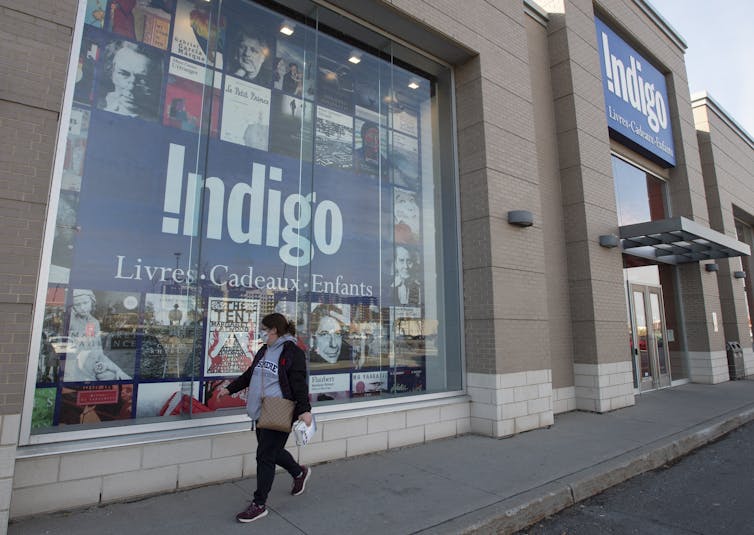
A woman in a face mask walks by an Indigo store window.
Indigo reported last June that it had to close 20 stores. Here, a woman seen walking past Indigo in Laval, Que., in November 2020.
THE CANADIAN PRESS/Ryan Remiorz

Readership, sales

During the pandemic, under pandemic control measures, some are spending more time reading. An online survey by BookNet Canada found that 58 per cent of Canadian readers said they were reading more in the pandemic based on 748 online responses.

But who benefits from the apparent increase in reading? Amazon CEO Jeff Bezos had his net worth double to over $200 billion during 2020. Meanwhile, Canada’s most well-known book retailer, Indigo, reported last June that it had to close 20 locations across the country.

In Canada, book sales were down by 20 to 40 per cent at the start of the pandemic. BookNet’s research team surveyed 51 domestic publishers who flagged that with the sudden closure of retail spaces, the industry experienced a decrease in sales of three million units in the first half of 2020 compared to the sales data from 2019.

This is troubling for local markets in particular because oftentimes big-box stores, online retailers and international conglomerates do not promote homegrown talent. Small publishers advance local writers or foster writing and reading communities, and without them, it is harder for authors to become noticed due to the abundance of international competition.

However, there is a glimmer of hope as some small local bookstores are seeing a consistent drive of shoppers who have been buying local. With pandemic closures or library restrictions, it seems some readers do seek out books from local book vendors. However, there is no way of knowing whether this boom in promoting local businesses will continue.

Conglomerate growth

In contrast to the huge gap in sales that local presses experienced in the past year, Penguin Random House saw a drop in revenue by less than 10 per cent. The company is now in a position to acquire Simon & Schuster for over US$2 billion. In November, Vanity Fair reported that this merger would mean that one out of every three books would be produced by the publishing giant.

Logo of a penguin at Penguin Random House Canada office on a silver post outdoors.
Penguin Random House Canada office seen in Toronto.
(Shutterstock)

If the merger happens, there will only be four main global publishers: Penguin Random House (and Simon & Schuster), HarperCollins, Macmillan and Hachette Book Group. Domestic presses will be affected by this merger who are already struggling to compete in the damaged marketplace.

The Association of Canadian Publishers, which represents more than 100 Canadian owned and controlled book publishers, says the potential consequences of the merger can include effects on staffing, lack of media coverage for domestic businesses and even shelf space in book stores..

Similarly, The Writers’ Union of Canada, representing more than 2,000 Canadian authors, highlights that writers will also face challenges related to their earning potential if the merger goes through.

Self-publishing

One drawback of self-publishing can be both stigma based on the possibility that one’s work has been rejected by a traditional publisher and potentially missing editing and quality control of traditional publishers. But some self-publishers now employ editors both on a paid and volunteer basis.

There is a drive to alleviate some of the stigma surrounding self-publishing, with some writers expressing that their career should not be dictated by traditional mainstream publishers. For all these reasons, self-publishing is becoming a more appealing option for many writers.
Self-publishing refers to authors taking on full financial responsibility of the production, distribution, and marketing stages of a project for which they can hire individuals on a freelance basis.

A number of self-publishing platforms like Lulu and Smashwords reported an increase in sales of self-published titles starting with March 2020 when COVID-19 lockdowns began. One reason for this rise is the production of ebooks. Electronic books are convenient to buy when a significant number of people spend a large portion of time online at home.

Amazon’s Kindle Direct Publishing boasts that in 2020, in India, “thousands of authors” published their work on the platform — reportedly double the number of authors from the year before.

Being a self-publisher means authors control when to publish books and make them available to the readers. For instance, summer releases were delayed by many small presses due to the pandemic. It may be that self-published authors gained audiences who were waiting for new releases during this standstill in the publishing sector.

Growth in the past 10 years

In the past 10 years, self-publishing has kept growing as an industry potentially due to ebook adoption and online publishing companies. It is difficult to trace the actual number of self-published books since some platforms like Amazon assign their own product numbers, making that data private.

But Bowker, a company which provides bibliographical information (such as ISBN data) to those working in the publishing industry, reported an increase of self-published titles in the last decade. Bowker registered 148,424 print self-published books with an additional 87,201 ebooks in 2011.

Only six years later, in 2017, the number of self-published books was more than a million, according to the company’s records. The numbers kept rising the following year, with over 1.5 million self-published books registered in Bowker’s system.

These developments indicate that self-publishing certainly has the possibility to have a permanent place in the publishing ecosystem. These new publishing practices might become appealing to authors who could produce their work and make it available to the public without any gatekeepers.The Conversation

Elizaveta Poliakova, PhD Candidate, Communications and Culture, York University, Canada

This article is republished from The Conversation under a Creative Commons license. Read the original article.

Unknown's avatar

Emper


The link below is to a Cloud-based book formatting tool called Emper.

For more visit:
https://www.emper.net

Unknown's avatar

Using Reedsy Book Editor


The link below is to an article that takes a look at how to use Reedsy Book editor.

For more visit:
https://www.makeuseof.com/reedsy-book-editor-write-publish-book/

Unknown's avatar

Apple Books for Authors


The links below are to articles that take a look at Apple Books for Authors.

For more visit:
https://davidgaughran.com/2020/05/08/apple-books-for-authors-launches-pc/
https://goodereader.com/blog/digital-publishing/apple-books-for-authors-platform-makes-publishing-easy

Unknown's avatar

The Importance of Editing


The link below is to an article that considers the importance of editing to self-publishing.

For more visit:
https://blog.bookbaby.com/2020/05/importance-of-editing-for-the-self-published-author/

Unknown's avatar

Kindle Direct Publishing – Being Used Easily By Hate Groups


The link below is to an article that is very disturbing, with allegations that Amazon’s self-publishing arm, Kindle Direct Publishing is being used to pump out messages of hate.

For more visit:
https://www.propublica.org/article/the-hate-store-amazons-self-publishing-arm-is-a-haven-for-white-supremacists

Unknown's avatar

How to Self-Publish on Amazon


The link below is to an article that looks at how to self-publish on Amazon.

For more visit:
https://www.androidauthority.com/how-to-self-publish-amazon-1080239/

Unknown's avatar

Decreasing Self-Publishing Costs


The link below is to an article that takes a look at decreasing self-publishing costs.

For more visit:
https://digitalpubbing.com/guest-post-3-creative-ways-to-decrease-self-publishing-costs/