Unknown's avatar

In our own voices: 5 Australian books about living with disability


Shutterstock

Jessica White, The University of Queensland

Fiction and non-fiction works about disability and Deafness are often hampered by stereotypical representations. A disability is frequently presented as something to “overcome”, or used to characterise someone (ever notice all those evil characters portrayed as disfigured?).

These representations obscure the joys, frustrations and creativity of living with disability and Deafness.

Dutch author Corinne Duyvis started the #OwnVoices movement on Twitter because she was frustrated that calls for diversity within the publishing industry did not extend to diverse authors. Originating in discussions of young adult fiction, #OwnVoices aims to highlight books written by authors who share a marginalised identity with the protagonist.

Life writing also provides firsthand accounts of disability and Deafness, showing what it is like to navigate a world designed for able-bodied people. In addition, these books help people with disability and Deafness learn more about their condition, and create community.

Australia has an established literary tradition of writing about disability. Here are five books by Australian disabled writers that reveal insights into their lives and conditions.


Read more:
Creating and being seen: new projects focus on the rights of artists with disabilities


1. Alan Marshall’s Hammers Over the Anvil (1975)
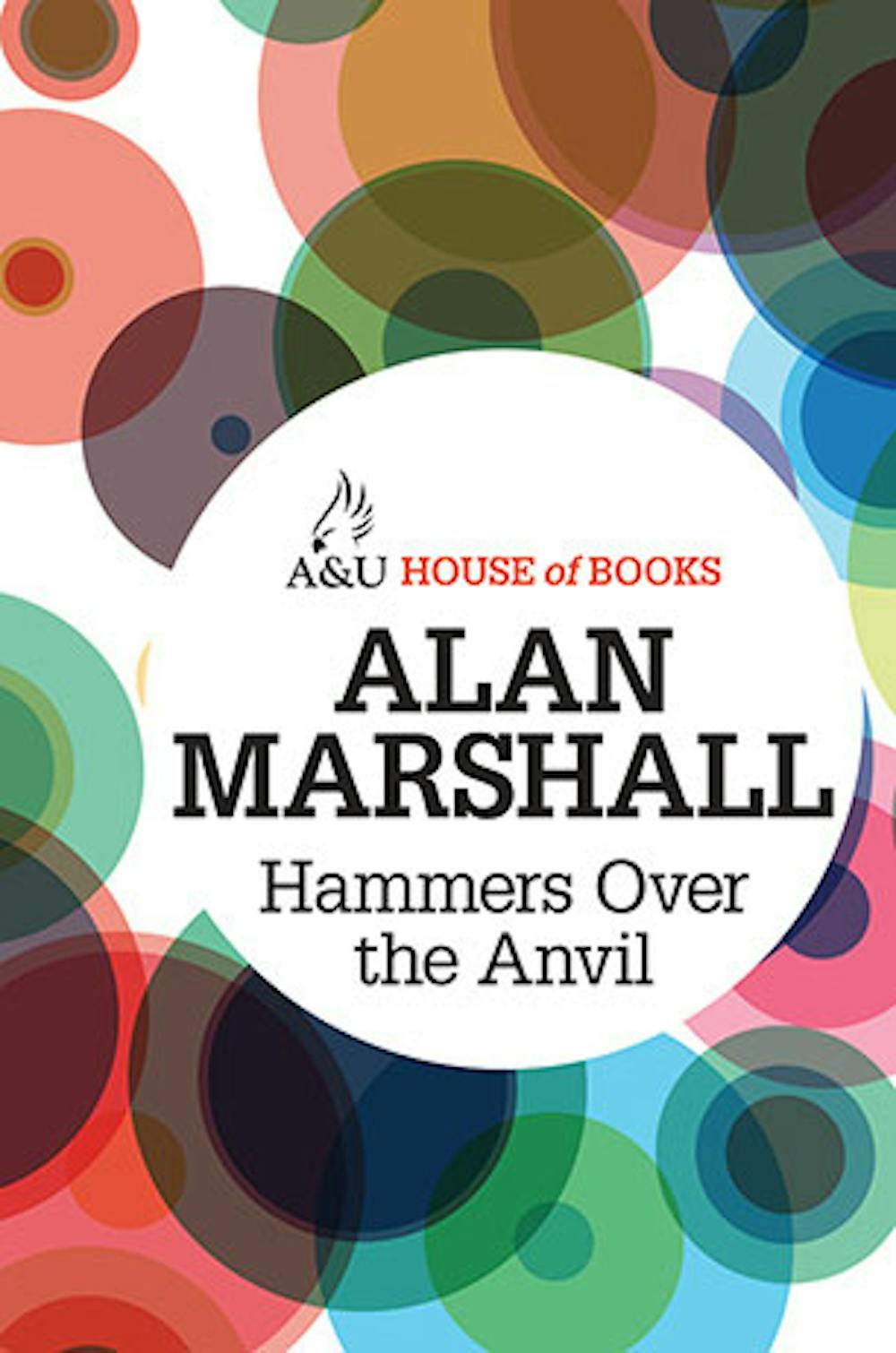
Hammers Over the Anvil book cover

Many readers will be familiar with Marshall’s I Can Jump Puddles (1955), the first book in his series about growing up and living with polio in rural Australia.

Where that book is a cheerful and somewhat sanitised account of living with a disability, Hammers Over the Anvil (1975), the fourth and final book in Marshall’s series, is more realistic.

Marshall’s publisher refused to publish the book, thinking it would tarnish his image. Despite — or perhaps because of — his brutal treatment, Marshall shows a keen sympathy for disenfranchised people and also for animals.

2. Donna Williams’ Nobody Nowhere: The Extraordinary Autobiography of an Autistic Girl (1991)
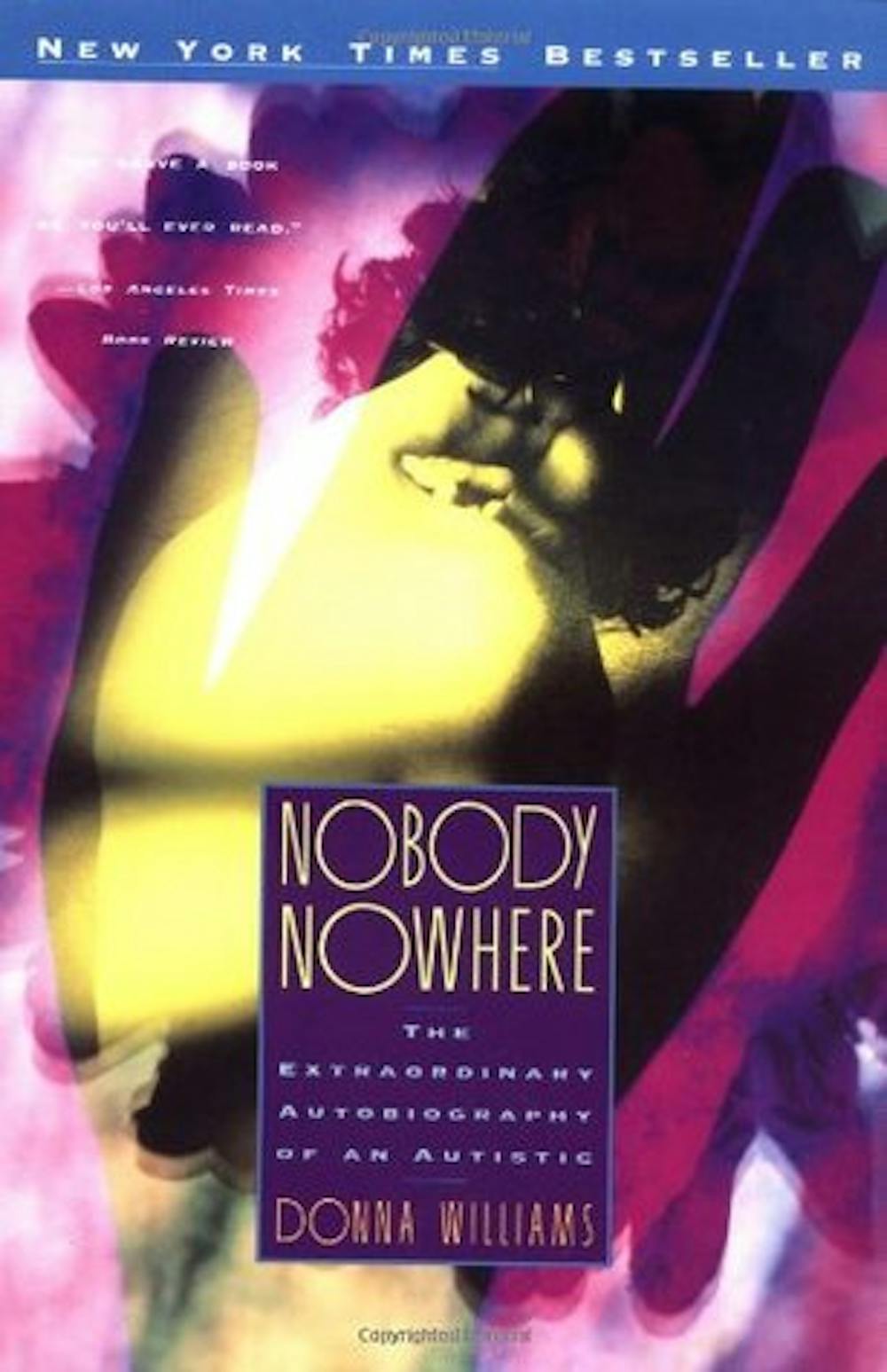
Nobody Nowhere book cover

Donna Williams was not diagnosed with autism until she was an adult; prior to that she was thought to be deaf and psychotic.

Her story begins at age three and is thick with sensory details, which both delight and overwhelm Williams. She recounts interactions with hostile people — including her own mother, who wanted to admit Williams to an institution.

This book was the first full-length, published account by a person with autism in Australia. It became an international bestseller, spending 15 weeks on the New York Times bestseller list, and was translated into 20 languages.

3. Gayle Kennedy’s Me, Antman & Fleabag (2007)
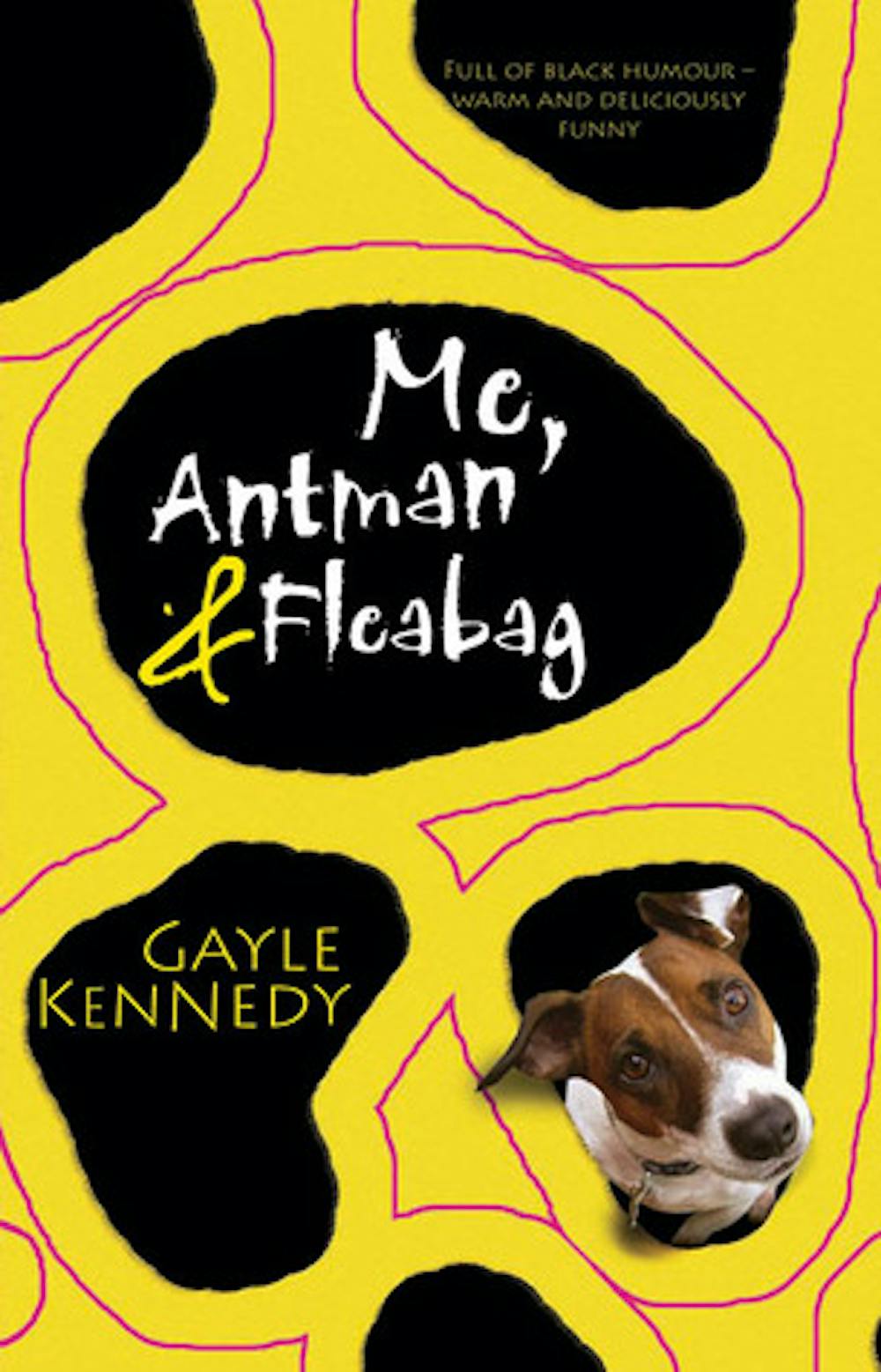
Me, Antman & Fleabag book cover

In this book, Gayle Kennedy, of the Wongaibon people of south west New South Wales, uses a series of engaging vignettes to describe her life as a First Nations woman who had polio.

Kennedy was sent away for treatment. When she returned, her parents seemed like strangers; it took a while to readjust. Though the subject matter sounds heavy, this humorous and accessible work is rich with stories about the importance of family (including dogs!) and the impact of racism.

It is also an important book because it chronicles some of the experiences of First Nations people with disability. It won the David Unaipon award in 2006.

4. Andy Jackson’s Music Our Bodies Can’t Hold (2017)
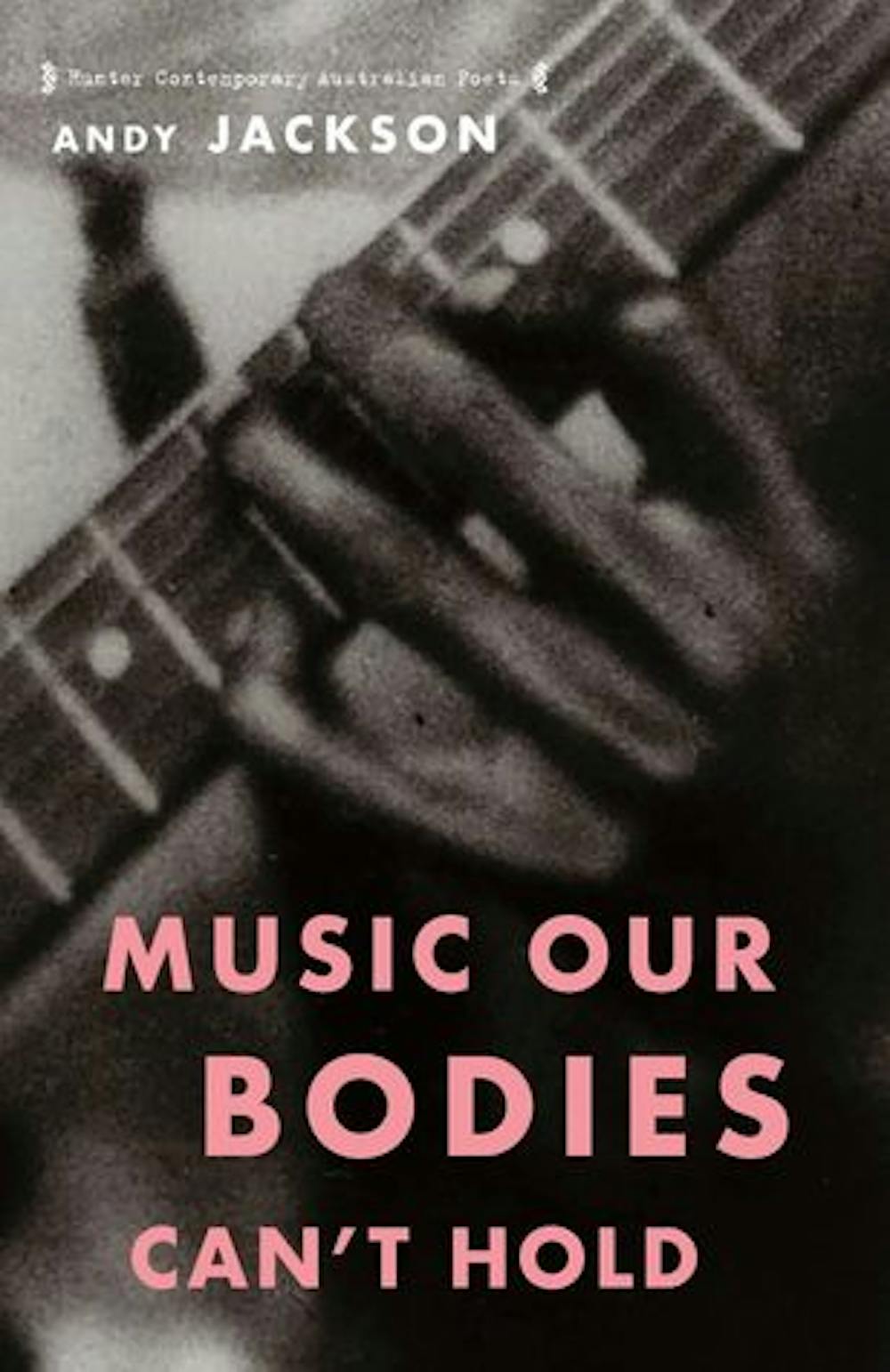
Music Our Bodies Can’t Hold book cover

Poet Andy Jackson, who has a condition called Marfan Syndrome that affects the body’s connective tissue, began performing poetry to give himself more control over representations of his body.

His collection consists of biographical poems of people with Marfan Syndrome, some of whom he interviewed, and historical figures who are thought to have had the condition, including Abraham Lincoln, the ancient Egyptian pharaoh Akhenaten, Mary Queen of Scots, composer Sergei Rachmaninoff and blues guitarist Robert Johnson.

Poetry, with its focus on voice, is strongly connected to the way that bodies express themselves, often in unique ways. As Jackson writes at the end of his poem Jess:

now look at this photo and tell me

you still want sameness.

5. Carly Findlay (ed), Growing Up Disabled in Australia (2021)
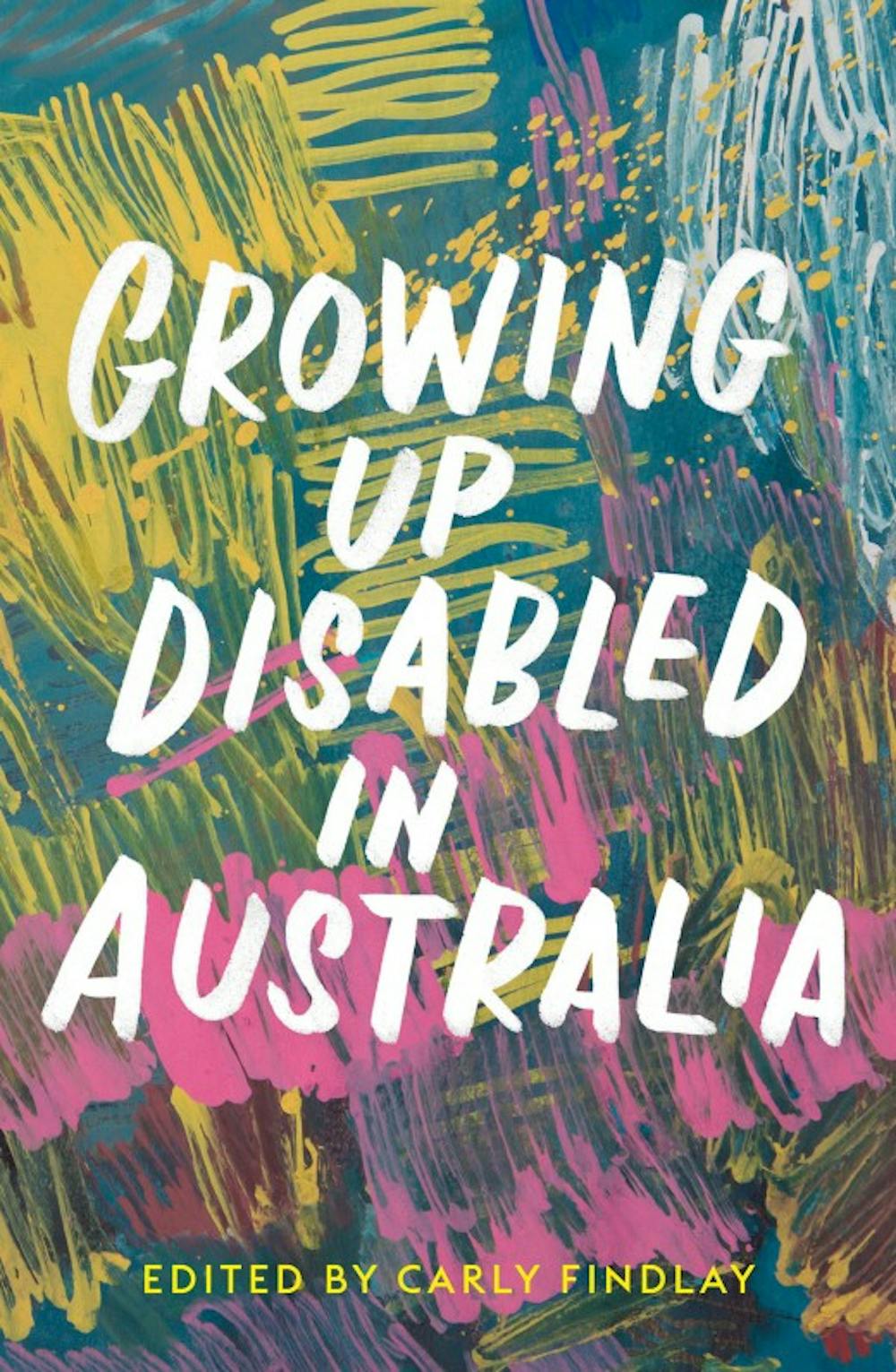
Growing up Disabled book cover

The final book on my list is one I haven’t read yet — but I cannot wait until I can. Edited by Carly Findley, who has ichthyosis, this collection to be released early next year, will highlight the range of childhoods experienced by people with disability in Australia.

We will be able to read about how young people manage ableism and the (sometimes) soreness of not fitting in, and interviews with prominent Australians such as Senator Jordon Steele-John and Paralympian Isis Holt.

I lost most of my hearing when I was four, and when I was growing up I didn’t read a single book that featured a character who was Deaf. Books like Growing Up Disabled will help young Deaf and disabled people recognise themselves in Australian literature.


Read more:
The Shadow Whose Prey the Hunter Becomes review: Back to Back Theatre’s exciting reframing of disability


In my own hybrid memoir, Hearing Maud, I weave together my experiences of Deafness with those of Maud Praed, the Deaf daughter of 19th century expatriate Australian novelist Rosa Praed.

Maud and I were born 100 years apart, and although our lives went in radically different directions many of our circumstances are the same — especially the expectation that we conform to a hearing world. My disability is often invisible, and I wanted to explain the relentless and exhausting attention that is needed for me to function. Deafness is far more complex than simply not hearing.

There are thousands more examples of the ways authors can write about living with disability. The International Day of People with Disability is a great time to start reading.


Read more:
On screen and on stage, disability continues to be depicted in outdated, cliched ways


The Conversation


Jessica White, UQ Amplify Associate Lecturer, The University of Queensland

This article is republished from The Conversation under a Creative Commons license. Read the original article.
Unknown's avatar

Philosophy Books for Beginners


The link below is to an article that lists philosophy books for beginners.

For more visit:
https://bookriot.com/best-philosophy-books/

Unknown's avatar

10 ‘lost’ Australian literary treasures you should read – and can soon borrow from any library


Perfecto Capucine/Unsplash

Rebecca Giblin, University of Melbourne and Airlie Lawson, University of Melbourne

Many culturally important books by Australian authors are out of print, hard to find as secondhand copies, and confined to the physical shelves of a limited number of libraries. Effectively, they have become inaccessible and invisible — even including some Miles Franklin award winners by authors such as Thea Astley and Rodney Hall.

To ensure these works can be read, a team of authors, librarians and researchers are working together on Untapped: the Australian Literary Heritage Project.

By digitising out of print books and making them available for e-lending, the project will create a royalty stream for the authors involved, as well as income for the arts workers we are employing as proofreaders.

Commercial publishing lists, such as Text Classics and Allen & Unwin’s House of Books, do a great job of breathing new life into some of Australia’s lost books. But they often focus on literary fiction, to the exclusion of genre fiction, children’s books and non-fiction, which also need to be preserved.

Here are 10 of our favourites we’re excited to digitise so you can borrow from your local library straight to your e-device. We expect these and other books in the project to be available in the first half of 2021 – and you too can nominate a book for inclusion in the collection here.

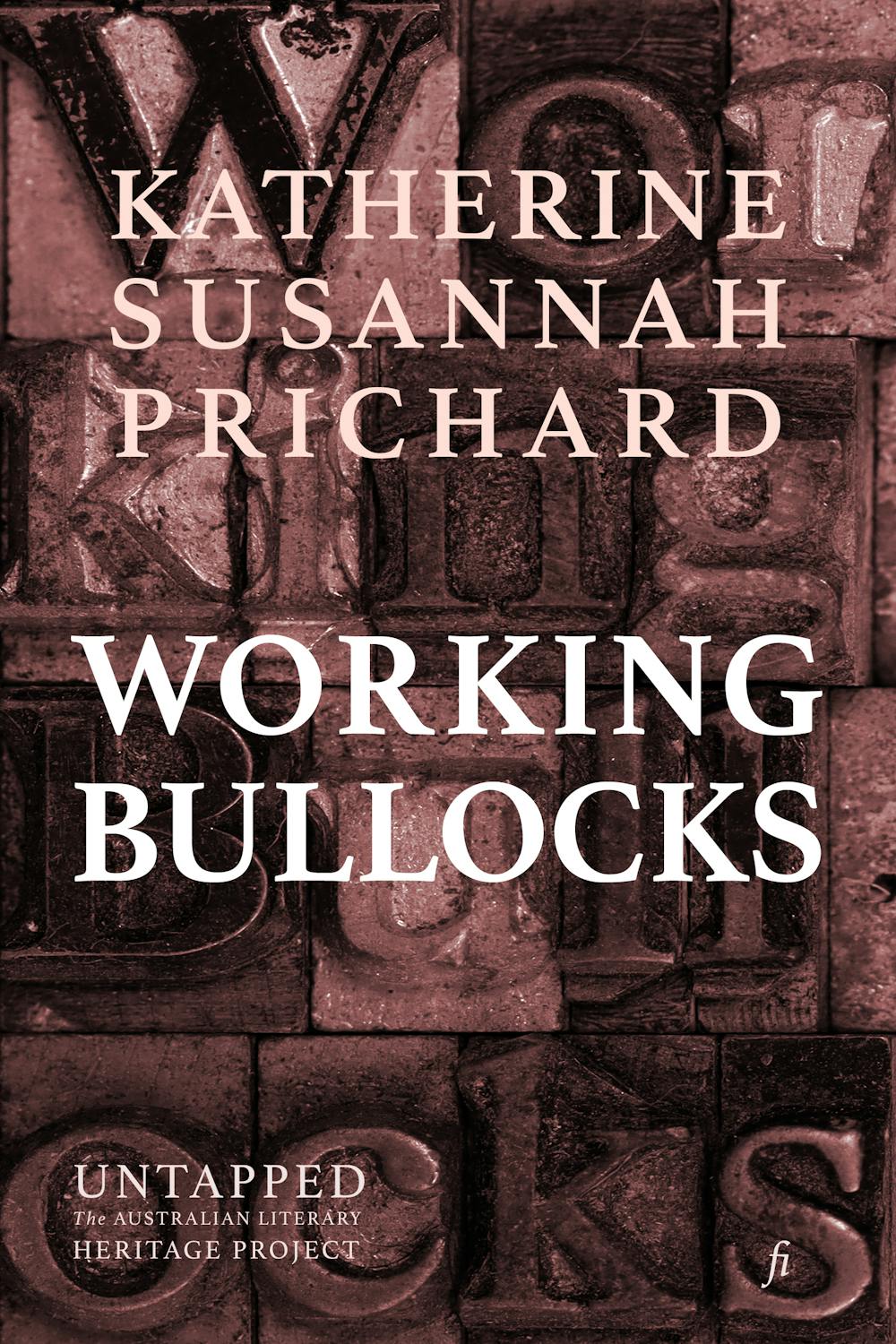
Working Bullocks (1926) by Katharine Susannah Prichard

Book cover

Before Coonardoo (1929), Prichard’s best known work, there was Working Bullocks.

The novel describes the trials of Red Burke, a bullock driver in Western Australia, trying to make a living in a post-war Australia.

Just after the novel’s original publication, it was described by John Sleeman of The Bookman in the UK as “the high-water mark of Australian literary achievement in the novel so far”.

Metal Fatigue (1996) by Sean Williams

Sean Williams has written over 50 books, including co-authored titles with authors such as Shane Dix and Garth Nix which have appeared on the New York Times bestseller list.

Metal Fatigue was Williams’ debut. Set in a small American city 40 years after the end of a nuclear war, the residents must decide if they want to join the newly forming Re-United States of America.

Depicting a dystopic future of violence, shortages and a divided USA, it still feels remarkably current today.

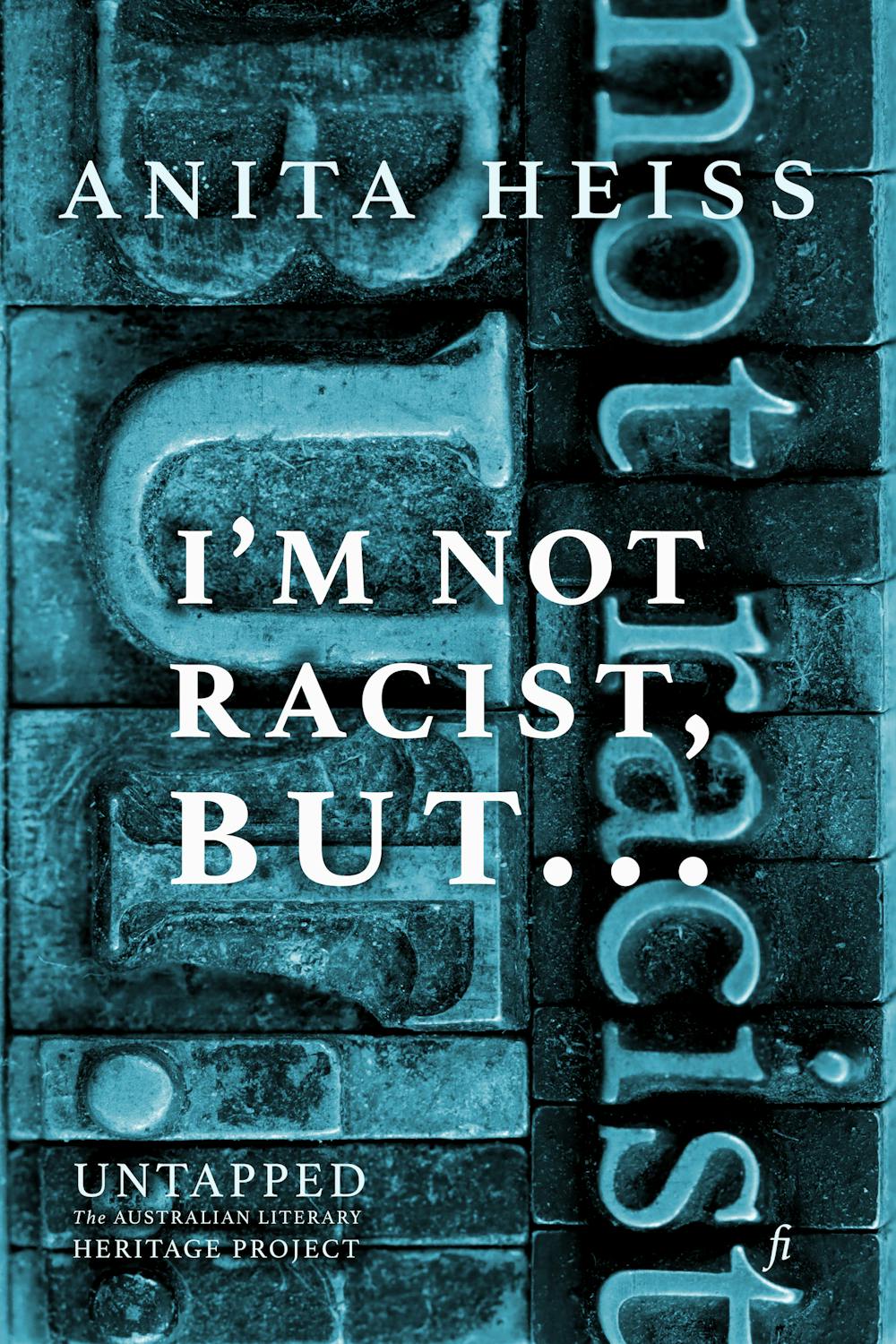
I’m Not Racist, But… (2007) by Anita Heiss

Book cover

This poetry collection from activist, writer and member of the Wiradjuri Nation, Professor Anita Heiss, skewers Australia’s racist underbelly.

I’m Not Racist, But… explores identity, pride and political correctness; proposes alternative words to the national anthem; and reveals how it is to grow up as an Indigenous woman in Australia.

This is a landmark work along Australia’s slow road to racial reckoning.

Space Demons (1986) by Gillian Rubinstein

The multi-award winning Space Demons was Gillian Rubinstein’s first book and began the much-loved trilogy of the same name.

It follows four ordinary kids drawn into a dangerous new computer game – instead of simply watching the game on the screen, they become part of it. And there is no way to know if they will escape.

With its gripping plot and local setting, Space Demons introduced many children to Australian science fiction – and led to many Australians first discovering their love of reading.


Read more:
Curious Kids: Why do adults think video games are bad?


Noonkanbah: Whose Land, Whose Law (1989) by Steve Hawke, with photographs by Michael Gallagher

Book cover

In 1979-80, the Yungngora people protested to stop the American company Amax drilling for oil on a sacred site on Noonkanbah Station, Western Australia.

This book is the detailed first-hand account of what became a high profile, ground-breaking land rights campaign, leading to the formation of the Kimberley Land Council. The Yungngora people wouldn’t have their native title rights recognised until 2007.

Alongside the reporting by Hawke, son of former PM Bob Hawke?, the book includes photographs taken by anthropologist Michael Gallagher.

This is an essential work of Australian history.

The Unlucky Australians (1968) by Frank Hardy

Frank Hardy was known for his political activism around labour rights, and as the author of 16 books. Almost his entire backlist is out of print, with the notable exception of Power Without Glory (1950).

In The Unlucky Australians, Hardy tells the story of the Gurindji people and the opening years of the strike they began in 1966.

Their protest against poor working and living conditions, seeking the return of their traditional lands, lasted nine years.

The Whitlam government returned some of those lands in 1975 with the historic transfer of “a handful of dirt” and the strike led to the passage of the historic Aboriginal Land Rights (Northern Territory) Act in 1976.

A vital piece towards understanding the shameful labour conditions inflicted upon Indigenous Australians, this book should never have gone out of print.


Read more:
An historic handful of dirt: Whitlam and the legacy of the Wave Hill Walk-Off


The Mandala trilogy (1993-2004) by Carmel Bird

Inspired by three real life charismatic and dangerous individuals, these dark stories of abused trust and misplaced faith are transformed, taking on a gothic quality, with complex narratives, unlikely narrators and fairy-tale elements.

The White Garden is an ambitious novel following the misdeeds of the psychiatrist Dr Goddard (or Dr God, for short) in a hospital in the 1960s. Red Shoes takes us into the world of a religious cult. Cape Grimm looks at a religious order after its members are killed by their charismatic leader.

The Mindless Ferocity of Sharks (2003) by Brett D’Arcy

The Mindless Ferocity of Sharks is coming-of-age story about “Floaty Boy”, an 11-year-old with a love of body-surfing, his family, and what happens when his older brother disappears.

Described by the Australian Book Review as “Tim Winton on speed”, D’Arcy shines his own spotlight on Western Australia, exploring the duality of a life spent between the waves and the shore – and what happens when a family becomes torn apart by loss.


Untapped will launch with a free online celebration on November 24 at 6pm. Register for the launch here, nominate a book for inclusion at untapped.org.au – and let us know what you think we should digitise in the comments.The Conversation

Rebecca Giblin, ARC Future Fellow; Associate Professor; Director, Intellectual Property Research Institute of Australia, University of Melbourne and Airlie Lawson, Postdoctoral Fellow, ‘Untapped: the Australian Literary Heritage Project’, University of Melbourne

This article is republished from The Conversation under a Creative Commons license. Read the original article.
Unknown's avatar

10 Public Domain Audiobooks


The link below is to a list of 10 public domain audiobooks.

For more visit:
https://bookriot.com/free-audiobooks-in-the-public-domain/

Unknown's avatar

Five haunted house stories to read during lockdown


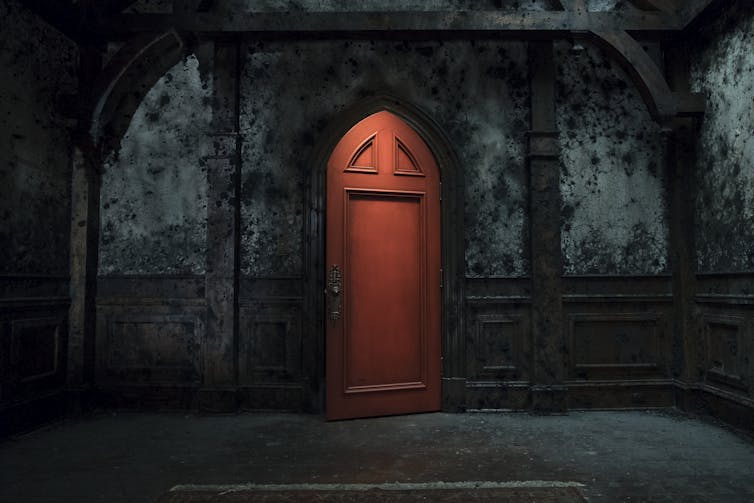
Netflix’s series The Haunting of Hill House was inspired by the book of the same name by Shirley Jackson.
Steve Dietl/Netflix

Daniel Cook, University of Dundee

England is facing a second lockdown and with days getting shorter and colder we are spending more time than ever inside. A recent survey of how reading habits changed during the first lockdown found that people were reading more – and that trend is sure to continue this time round.

While you hunker down in the seeming safety of your home, how about picking up a book about houses that aren’t quite as safe? We’re talking about places where the floorboards creak, the staff are creepy and there’s something not quite right about the children.

The haunted house has been making a comeback on the screen, as we’ve seen with the recent successes of the BBC comedy series Ghosts and Netflix’s adaptations of The Haunting of Bly Manor and Rebecca. It seems our fascination with unsettling places continues to grow.

Many of these stories started in books so here are five classic examples to keep you company this lockdown:

House of Leaves (2000) by Mark Danielewski

Presented as a found document, this is a unique book featuring copious footnotes on some pages while others contain hardly anything at all. This story follows a family as they move into a new house on Ash Tree Lane. As they enter the property they discover that it is somehow bigger on the inside than it is on the outside.

The children, as they tend to in these stories, begin talking of a creature and soon they all hear a growl coming from deep within the house.

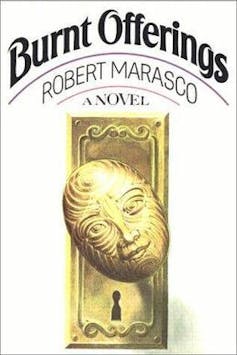
Burnt Offerings (1973) by Robert Marasco

Desperate to get away from their apartment in Queens, the cash-strapped Rolfe family rents a summer home in upstate New York.

Front cover of Burnt Offerings featuring a door knob with a face on it partially turned.

Wikimedia

The place is a secluded haven, with a pool and private beach. This seemingly perfect summer home, however, comes with a curious stipulation in the rental agreement, which insists that the elderly mother of the homeowners stays with them.

Bizarre, catastrophic events ensue. Burnt Offerings is known to have been model for Stephen King’s 1977 bestselling novel The Shining as both narratives deal with abrupt personality changes.

The Haunting of Hill House (1959) by Shirley Jackson

If you’ve watched the Netflix series you should read the book that inspired it – they’re pretty different. The short novel is considered one of the finest examples of horror writing and Jackson a master of the haunted tale.

The story follows Dr Montague who wants to prove the existence of the supernatural. Renting Hill House one summer, he invites various people who have reported paranormal experiences. The house has been the site of many violent deaths and suicides so there’s hope one of those unhappy souls will make themselves known.

Unsurprisingly, when you go looking for ghosts in a novel, you will find them. There are bumps in the night, cryptic writings on the wall and a whole load of unexplained coincidence, what more could you want?

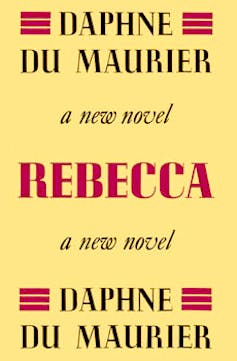
Rebecca (1938) by Daphne du Maurier

The unnamed young woman who narrates the novel falls in love with an older, wealthy man, Maxim de Winter, and moves into his isolated estate in south-west England, Manderley.

Front cover of Rebecca, all text.

Wikimedia

The house is practically a shrine to the memory of his first wife, Rebecca, who died the year before in mysterious circumstances.

Malevolent forces are at work in this house as the young bride’s attempts to start a new life with her husband are foiled at every turn by the housekeeper and Rebecca’s confidante Mrs Danvers.

The book is far more spooky than recent Netflix adaptation, which presents viewers with a thoroughly modern and far more empowered protagonist.

The Yellow Wallpaper (1892) by Charlotte Perkins Gilman

This is an agonising first-person tale of creeping mental and physical decline.

Summering at a colonial mansion, the narrator is confined to an upstairs nursery with ominously barred windows and scratched-up floors. She becomed fixated on the sickly yellow wallpaper covered in “”an interminable string of toadstools, budding and sprouting in endless convolutions”.

The longer she stays in the room the more the walls seems to move and the more it seems like there might be someone moving it from within.

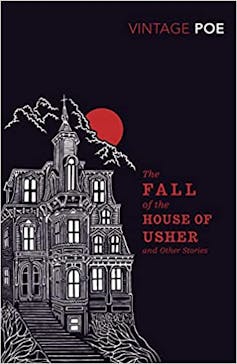
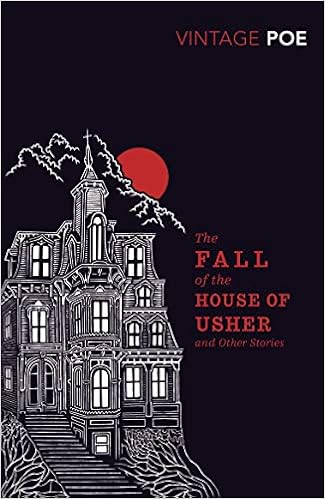
The Fall of the House of Usher (1839) by Edgar Allan Poe

The Fall of The House of Usher cover featuring a gothic house.

Random House Vintage

This short story recounts the terrible events that befall the last remaining members of the once-illustrious Usher clan and the house’s last visitors.

Arriving at the home of his reclusive friend Roderick Usher, our narrator is intrigued by the decaying house, particularly a thin crack extending down the front of the building and into the adjacent lake.

Usher’s mind is disintegrating and he is falling deeper into a madness. Things are not as they seem in the suspenseful tale of horror.The Conversation

Daniel Cook, Senior Lecturer in English, University of Dundee

This article is republished from The Conversation under a Creative Commons license. Read the original article.

Unknown's avatar

Books on Donald Trump


The link below is to an article that considers the multitude of books on the Donald Trump era and looks for the best ones.

For more visit:
https://gen.medium.com/the-best-books-about-the-trump-era-according-to-the-critic-who-read-150-cc43cea9720a

Unknown's avatar

The New York Times Best Sellers Lists


The link below is to an article that evaluates The New York Times Best Sellers Lists.

For more visit:
https://bookriot.com/how-do-readers-rate-new-york-times-bestselling-books/

Unknown's avatar

Iranian Fiction


The link below is to a list of Iranian fiction works regarded as essential in the article.

For more visit:
https://lithub.com/35-essential-works-of-fiction-by-iranian-writers/

Unknown's avatar

Books About Books


The link below is to an article that takes a look at ten books about books.

For more visit:
https://www.barnesandnoble.com/blog/books-about-books/

Unknown's avatar

Climate Crisis Reading


The link below is to an article that looks at books to read that are climate crisis related.

For more visit:
https://lithub.com/climate-crisis-reading-five-books-to-check-out-in-july/