Unknown's avatar

2020 is a year for the history books, but not without digital archives


Canada lags behind some countries with preserving public digital records.
(Flickr/BiblioArchives / LibraryArchives Canada), CC BY-NC

Ian Milligan, University of Waterloo

A seasonal change is in the air. With a minimal amount of nostalgia about the dwindling days of this unique summer, let’s turn to how we can make the most of the rest of 2020 — clearly a year for the history books.

As a historian, what concerns me is: What will our history of this unprecedented year look like in a quarter century? As the world is reshaped by COVID-19, as well as ongoing protests on a nearly unprecedented scale against racism and police brutality in the United States, Canada and around the world, it’s clear that this will be a year for future historians to make sense of.

A child today will be a historian of 2020 in the future. What sources will they turn to? How will they verify scattered memories? How will people tell the story of the tumultuous times that we’re living in today? 2020 may be a year for the history “books” but of course, the record we leave behind will be digital in manner.

But right now, Canada, unlike many other countries such as the United Kingdom, France, Denmark and others, doesn’t mandate its national library to capture a comprehensive digital record of Canadian life. This needs to change so we can ensure historians of the future have all the sources possible to write a rich, equitable and robust historical record.

Social movements, virus

From the role of video and social media in sparking and documenting protests to companies and educational institutions that moved online en masse in a matter of days this past March, 2020 will be a year that will be understood through digital media.

With coronavirus isolation, digital media has been enormously important for our interactions with colleagues, friends and loved ones.

Some trends: Zoom’s daily meeting participants went from 10 million in December to 300 million in April and we “doomscroll” through social media feeds before bed. As The New York Times explained: “The virus changed the way we internet.”

Corner outside of a tall glass building.
Today, archival work means considering digital records. Here, Library and Archives Canada’s Preservation Centre in Gatineau, Que., seen in May 2012.
(David Knox. Library and Archives Canada, IMG_1982 /Flickr), CC BY-NC

Minute-by-minute information

Because in part the British Library is empowered to collect millions of their web pages every year through the use of “legal deposit” power, a historian in the U.K. will have a rich record to explore.

For example, what did Britons think of senior adviser Dominic Cummings’ 418-kilometre trip from London to Durham while his wife was unwell? A researcher will be able to visit the British Library (in most cases, an in-person visit is required due to legal reasons) to consult not only social media feeds of everyday researchers, but news websites, U.K. blogs and beyond.

They will be able to draw on nearly everything published on the U.K. web in 2020. Right now a researcher can already view thousands of pages — and, most importantly, these are stewarded by the British Library for future preservation.

Legal deposit

This information will be accessible to our future researcher thanks to the power of legal deposit. Legal deposit is defined by the International Federation of Library Associations as a “statutory obligation [that] requires publishers, distributors and, in some countries, printers, to freely provide copies of their publications to the national collection,” and is a power that builds the collections of national libraries including Library and Archives Canada (LAC).

What this has meant in practice is that when a book or publication is published, there has been a legal requirement to deposit the book with a national library.

What happens when a publication moves online? What about blogs? Should they have a similar responsibility to deposit their material? And, critically, does a national library have a duty to preserve this information at scale?

The British Library has, since April 2013, been “entitled to copy U.K.-published material from the internet for archiving under legal deposit.” In practice, this means that it annually archives websites of the U.K.; it also supplements this archive through curated collections such as the earlier mentioned one around global pandemics. Those tweets, blogs, health websites and so on all form part of the historical record — and once archived, there is no legal ability to retroactively delete them.

Crucially, sweeping collections of material under legal deposit means that material is being amassed that does not seem important today — but could be invaluable to a historian in years to come.

Canada should aggressively follow

The remarkably forward thinking Library and Archives of Canada Act of 2004 gives Library and Archives Canada similar powers. One section of the act, for example, gives the institution the power to take a “representative sample of the documentary material of interest to Canada that is accessible to the public without restriction through the internet or any similar medium.”

These laws, however, aren’t used to their fullest. Canada’s national library doesn’t carry out a comprehensive snapshot of the entire Canadian web domain, meaning that countless voices will be lost for future historians.

A finger pushing a digital button with documents behind it.
The notion of legal deposit could be expanded in Canada to cover a comprehensive snapshot of the entire Canadian web domain.
(Shutterstock)

This is not to paint too dire a picture. Library and Archives Canada does a great job of capturing material of interest. During COVID-19, it has selectively captured some 38 million digital assets related to COVID-19 by July 2020, which add to their robust web archives including the Government of Canada web archive, which collects and maintains a comprehensive record of federal government’s websites.

Increasingly, it’s making collections, such as the Truth and Reconciliation Commission’s collection, available online. In doing so, Library and Archives Canada is explicitly noting its collecting powers under the 2004 act, suggesting an increasing willingness to share these materials.

We should laud this great work, and use it as a launchpad for the comprehensive collection of all Canadian material.

Patchwork collecting: not enough

While Library and Archives Canada has been collecting material for COVID-19, including social media hashtags as well as media and non-media related websites, even 900 websites being regularly collected is patchwork compared to the sheer amount of information published by Canadians online every day.

To do justice to what’s happening around us, and to make sure that historians of the future can understand this moment, the institution and policy-makers need to move quickly.

We need to aim to collect the entire Canadian web domain on an ongoing basis, both during and after COVID, to enable future researchers to understand our country. This will require additional funds to Library and Archives Canada. But, at what better time?The Conversation

Ian Milligan, Associate Professor of History, University of Waterloo

This article is republished from The Conversation under a Creative Commons license. Read the original article.

Unknown's avatar

Sharing Books During the Pandemic


The link below is to an article that considers how to safely share books during the coronavirus pandemic – how to disinfect books, etc.

For more visit:
https://bookriot.com/how-to-disinfect-books/

Unknown's avatar

The Importance of Bookshops in the Pandemic


The link below is to an article that looks into the importance of bookshops in the midst of the COVID-19 pandemic.

For more visit:
https://www.readitforward.com/authors/the-importance-of-bookstores-during-the-pandemic/

Unknown's avatar

Reading during coronavirus: books can be triggering, but difficult texts teach us resilience, too


Shutterstock

Kate Douglas, Flinders University and Kylie Cardell, Flinders University

We teach English at university. Our weekly engagements include navigating unnerving plot twists, falling in and out of love with iconic characters, and evaluating the complexities of language and genre.

Reading challenges how we think. Each week, in English classes, we explore some of the most significant issues and representations affecting various historical periods and cultures.

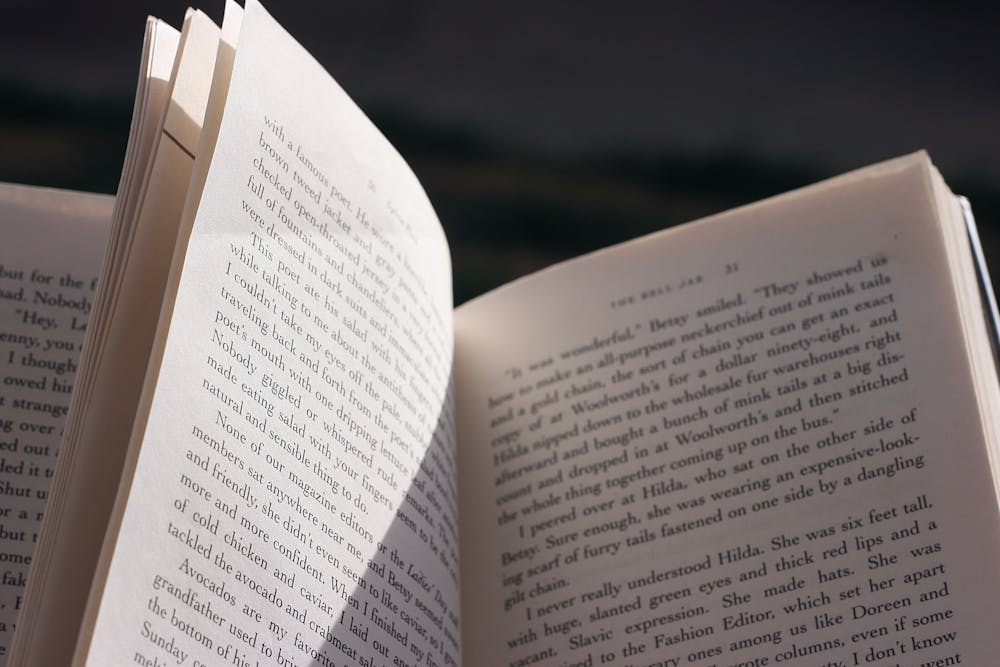
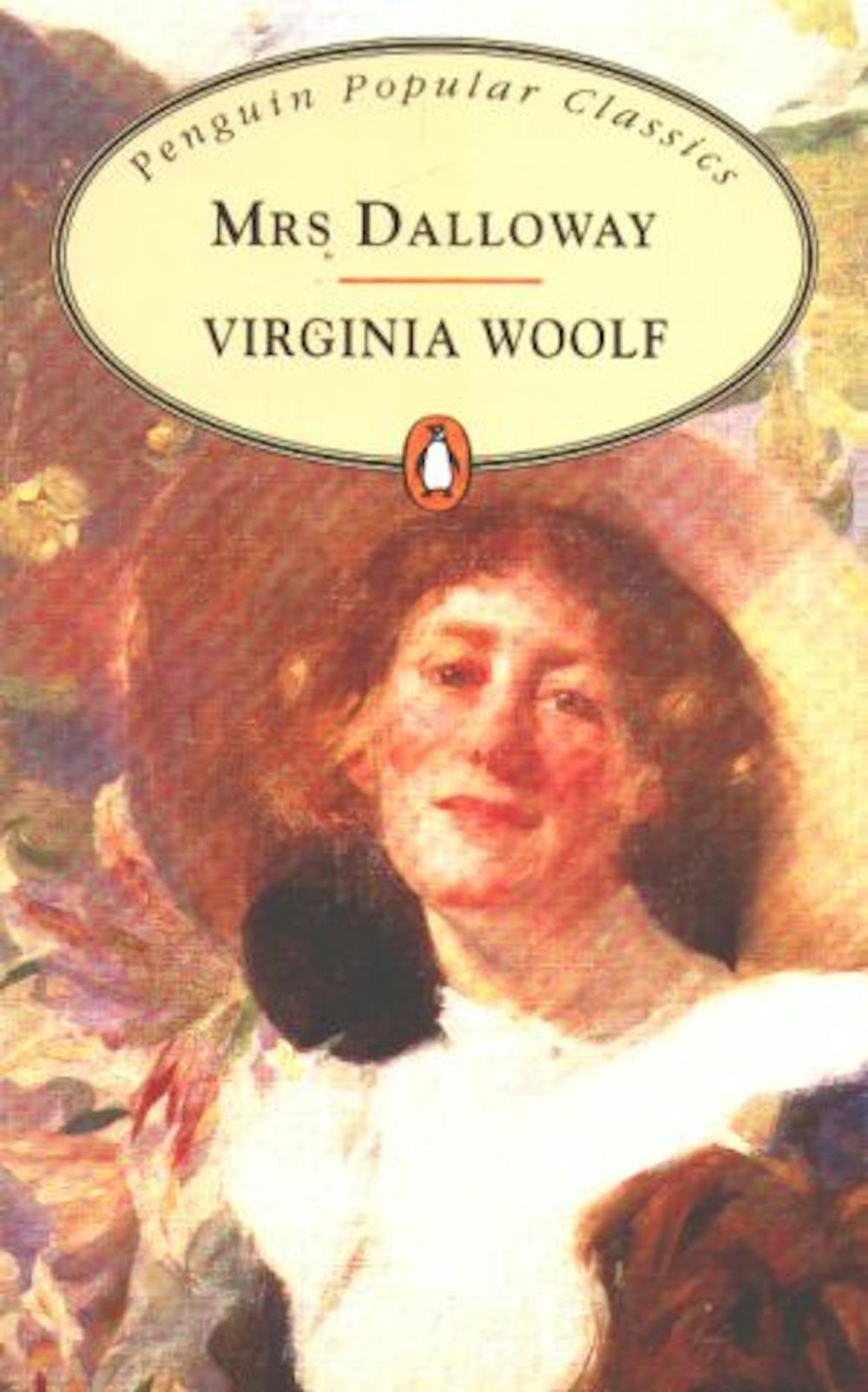
In the first semester, our reading list included classic works of literature that deal with themes including mental illness and psychological as well as physical isolation: Charlotte Perkins-Gilman’s The Yellow Wallpaper, Virginia Woolf’s Mrs Dalloway, and Sylvia Plath’s The Bell Jar.

Then COVID-19 happened.

News reports began circulating on what professors were reading for refuge during the pandemic. An article in the New Yorker pondered why “anxious readers” might be soothed by Mrs Dalloway. This is a text that, in the past, has seen students request trigger warnings for its of “examination of suicidal tendencies” which “may trigger painful memories for students suffering from self-harm”.


Read more:
When literature takes you by surprise: or, the case against trigger warnings


Our teaching suddenly moved online, which created an even more unsettling set of conditions. We were teaching literary texts representing various kinds of trauma to students coping with a range of new (or exacerbated) issues due to sudden loss of employment, social disconnection, anxiety and fear.

Would reading these difficult texts prove to be a solace for our students, a timely example of the social role of literary storytelling, or a trauma all of its own?

What are difficult texts?

Great stories move and they challenge. They draw attention to diverse social and cultural issues and to the transformative potential of empathy. But they can also be difficult and there are a range of reasons why.

The challenge might be intellectual. Or the text confronting on a psychological or emotional level.

A lot of literature is perceived as perpetuating racist stereotypes. Until quite recently, a good deal of canonical literature excluded the perspectives of women. This is something Woolf has written extensively about and that we can see at work in Mrs Dalloway. Part of her novel’s radicalism is its transgressive (for its era) narrowness of scope: a day in the life of a woman.

Sylvia Plath’s The Bell Jar explores mental illness, and could be triggering for some readers.
Flickr/kristina, CC BY-ND

And of course, there are themes in literary texts that are in themselves inherently challenging or traumatic: war, racial violence, and misogyny are staples in Shakespeare’s plays.

In identifying difficult literature, the goal posts shift: what was confronting to past generations may not remain true for current readers. So too, what was acceptable to readers of a certain era may no longer be acceptable in the 21st century.

Universities have seen an escalation of interest in content and trigger warnings. Viewpoints have run at both ends of the extreme. Content warnings are either coddling the minds of the “snowflake generation”; or one step away from censorship. Others consider warnings as essential in protecting students from psychological harm.

As literature scholar Michelle Smith notes, it seems widely accepted a lecturer should give a warning before showing a graphic visual scene. However, the argument trigger warnings should accompany written literature that represents difficult or challenging subject matter has been met with more scepticism and opposition.

This places a great deal of responsibility on teachers to decide where to draw the line.

Teachers face the ambitious balance of wanting to protect our students from representations that might be too difficult and trigger unwanted emotional responses, alongside a desire to expose students to complex representations, and histories — for instance of inequality, discrimination, racism and sexism.


Read more:
If you can read this headline, you can read a novel. Here’s how to ignore your phone and just do it


We use the term “trauma texts” to explore how new literary subjects and voices have emerged in the 21st century. Trauma texts reveal literature’s potential for direct and active political and cultural engagement. When we take these texts into the classroom, we ask students to accept difficulty into their lives (if they can), and to witness complex lives and histories in nuanced, critically engaged ways.

Teaching in the time of COVID has re-energised these ongoing debates. For instance, there is an opportunity to recognise (with renewed vigour) how a reader’s individual experience shapes how they approach a particular literary text. We have developed new understandings of how literary texts operate in moments of great cultural or social upheaval.

Virginia Woolf’s Mrs Dalloway is a radical text for its times.
Flickr/Wolf Gang, CC BY-SA

Iso-lit reading during COVID

In our research and practice we have found many positive outcomes when we teach difficult texts in university English. Our students appreciate the texts we teach address recognisable real-world problems.

These books offer opportunities for readers to show empathy, witness injustice and reflect on the ethics of representation. They offer skills (critical reading and thinking, debate, negotiation) that are transferable to diverse work contexts. They come to understand the value of literature (broadly conceived), and the wide cultural and political influence it may have.

Research has shown reading difficult texts with students requires care, and an awareness of how to approach content and trigger warnings. As life narrative theorist Leigh Gilmore reminds us, when we bring trauma texts into the literary classroom, we should teach as if someone in the room has experienced trauma.

The classroom needs to be a safe space.

In teaching difficult texts, it is a reasonable expectation we provide information (in advance) to students regarding any difficult content. We need to open a dialogue between student and teacher and this needs to be maintained throughout the semester so we can offer ongoing support.


Read more:
What my students taught me about reading: old books hold new insights for the digital generation


As well as empowering our students, this approach provides us with an opportunity to reflect, dynamically, on why we want to teach these texts.

In previous research we have argued that in English, we want to encourage students to confront new ideas and to be challenged by what they read. This is integral to the university experience. We are asking students to be generous readers who have the capacity to look inward and outward.

Now, more than ever we need tools to read and respond to human experiences of crisis and pain. Reading difficult literature is one way by which the eternal and ongoing responsibility of humanism can be fulfilled.The Conversation

Kate Douglas, Professor, Flinders University and Kylie Cardell, Lecturer in English, Flinders University

This article is republished from The Conversation under a Creative Commons license. Read the original article.
Unknown's avatar

Book Publishing and the Global Pandemic


The link below is to an article that looks at publishing in the midst of a global pandemic.

For more visit:
https://www.huffingtonpost.com.au/entry/how-the-publishing-world-is-staying-afloat-during-the-pandemic_n_5ec431c9c5b69985547b5a5b

Unknown's avatar

Reading Has Increased


In the previous post it was noted how difficult reading was to do in the current climate of anxiety and fear regarding coronavirus. However, the link below is to an article reporting on the surge in reading during the pandemic.

For more visit:
https://www.theguardian.com/books/2020/may/15/research-reading-books-surged-lockdown-thrillers-crime

Unknown's avatar

It’s Difficult to Read at the Moment


The link below is to an article that looks at why it’s so difficult to read a book at the moment.

For more visit:
https://www.vox.com/culture/2020/5/11/21250518/oliver-j-robinson-interview-pandemic-anxiety-reading

Unknown's avatar

Surge in Reading During Coronavirus Pandemic


The link below is to an article reporting on a surge in reading during the current Coronavirus pandemic.

For more visit:
https://www.theguardian.com/books/2020/may/15/research-reading-books-surged-lockdown-thrillers-crime

Unknown's avatar

Ebook/Ebook Reader Sales Rising


The link below is to an article that reports on the rise in sales of both ebooks and ebook readers, largely due to the coronavirus pandemic and the closure of traditional bookshops.

For more visit:
https://goodereader.com/blog/e-book-news/ebook-sales-are-undergoing-a-revival-in-2020

Unknown's avatar

Know your place – poetry after the Black Death reflected fear of social change


Chaucer commended those who followed their societal roles and condemned those who didn’t.
Morphart Creation/Shutterstock

Stephen Rigby, University of Manchester

The sharp fall in population caused by the waves of plague which followed the arrival of the Black Death in 1348 led to one of the most dramatic periods of economic and social change in English history. By 1377, the population was around only a half of its pre-plague level but for those who survived there were new opportunities.

With a great deal of land now available, peasants could obtain larger holdings and rent them on more favourable terms. Likewise, those who worked for wages could take advantage of the labour shortage to obtain higher wages enjoy more varied diets – with more meat and dairy – and buy a wider range of manufactured goods.

The second half of the 14th century was thus a period of rising living standards, social mobility and increasing class conflict as the lower orders now sought to obtain improved terms from their landlords and employers.

The dramatic social changes of these years drew several responses from contemporary poets. In the medieval period, imaginative literature was often seen as having an ethical function by teaching virtue, which was defined as fulfilling the expected tasks of their social order. Modern literary critics often see imaginative literature challenging dominant ideologies or providing a sanctioned space for the expression of social dissidence. By contrast, the work of poets in the post-plague era often sought to buttress the social hierarchy against the threats with which it was now confronted.

Langland and Gower against the peasants

Such sentiments are to be found in William Langland’s allegorical poem, Piers Plowman (B-version written c. 1380). Here, the poet expresses his sympathy for those who were genuinely poor or hard-working but echoes post-plague labour legislation and attacked those who, he believed, preferred to beg rather than work.

There had been frequent complaints in parliament about labourers who preferred handouts to work or who took advantage of the labour shortage to demand higher wages. In response, a series of laws were introduced to reduce labour mobility and freeze wages at their pre-plague levels. Langland also calls upon the knightly class to defend the community from those “wasters” who refused to work and criticised the labourers who impatiently demanded higher wages and refused to obey the new legislation.

Contemporary moralists complained about those who rose above their allotted station in life and so in 1363 a law was passed that specified the food and dress that were appropriate for each social class. In line with such attitudes, Langland railed against the presumption of labourers who disdained day-old vegetables, bacon and cheap ale and instead demanded fresh meat, fish and fine ale.

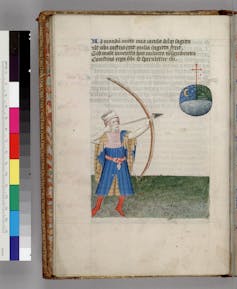
John Gower depicted as an archer in Vox Clamantis.
Berkley

Similar views are expressed in John Gower’s poem Vox Clamantis (the Voice of One Crying in the Wilderness) where the peasants are attacked for being idle and utterly wicked. The common people had fallen into an evil disposition in which they ignored the labour laws and were only willing to work if they received the highest pay.

When the lower orders refused to know their place, as in the Great Revolt of 1381 (also known as the Peasants’ Revolt), they were denounced by contemporary chroniclers as wicked, treacherous, and diabolical. In line with such criticism, Gower’s poem includes an allegorical account of the rising that portrays the rebels as farmyard animals rising up against their masters. They subsequently turn into monsters that attack humanity and becoming followers of Satan in their attachment to wrongdoing and slaughter.

Chaucer’s difficult voice

However, if Langland and Gower were openly hostile to the aspirations of the peasants and the labourers, Geoffrey Chaucer has proved more difficult to read. For many critics, Chaucer is a writer who prefers to present his readers with questions rather than providing them with stock answers. To them, his use of multiple voices and shifting perspectives pose a challenge to the accepted contemporary beliefs and exposes the kind of ideology found in the works of a Gower as partial and inadequate.

Instead of committing to a pious life of study and prayer, the monk pursued the pleasure of hunting.
Morphart Creation/Shutterstock

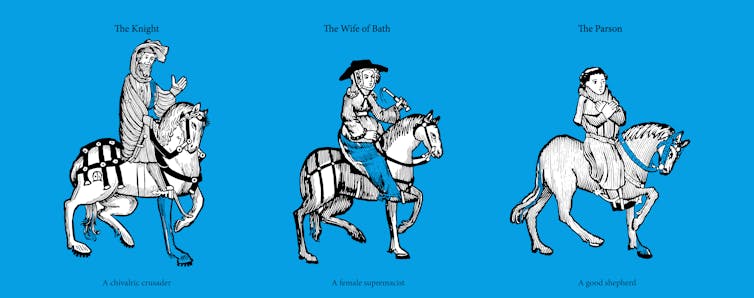
Yet for other critics, Chaucer is much more conservative or even, as the medieval scholar Alcuin Blamires puts it, reactionary in his outlook. After all, among the pilgrims in the Canterbury Tales, those who are presented as admirable are the ones who dutifully perform the traditional functions of their social estate. For example, the Parson is a good shepherd to his flock, the Knight is a chivalrous crusader, and the Plowman works hard and faithfully pays his tithes. It is those who fail in their duties or seek to rise above their station whom Chaucer satirises – as when the Monk prefers hunting to a life of study and prayer or when the Wife of Bath seeks female supremacy in marriage.

Certainly, the Parson offers us a socially conservative message when, at the end of the Canterbury Tales, he preaches that as part of the divinely arranged cosmic order, God has ordained that some people should be of higher social rank and others should be lower. People should, therefore, render honour and obedience not only to God but also to their spiritual fathers and their secular superiors. Nobody should lament their misfortunes or envy the prosperity of others but rather should endure adversity in patience in the hope of obtaining joy and ease in the next life.

Given that medieval literary theory regards the ending of a text as being particularly important in conveying its meaning, we may perhaps regard Chaucer’s views as being in line with his Parson. If so, then Chaucer’s response to the social change of his day may have been rather closer to the views of Gower and Langland than many of his modern readers would like to admit.

Read and listen more from the Recovery series here.The Conversation

Stephen Rigby, Emeritus Professor of Medieval Social and Economic History, University of Manchester

This article is republished from The Conversation under a Creative Commons license. Read the original article.