
The link below is to an article that predicts/announces the demise of the ebook (what nonsense).
For more visit:
https://observer.com/2018/11/ebook-sales-decline-independent-bookstores/

The link below is to an article that predicts/announces the demise of the ebook (what nonsense).
For more visit:
https://observer.com/2018/11/ebook-sales-decline-independent-bookstores/

Albert-László Barabási, Northeastern University
The average American reads 12 or 13 books a year, but with over 3 million books in print, the choices they face are staggering.
Despite the introduction of 100,000 new titles each year, only a tiny fraction of these attract a large enough readership to make The New York Times best-seller list.
Which raises the questions: How does a book become a best-seller, and which types of books are more likely to make the list?
I’m a data scientist. Recently, with help of Burcu Yucesoy, a postdoc in my lab, I put the reading habits of Americans under our data microscope.
We did so by analyzing the sales patterns of the 2,468 fiction and 2,025 nonfiction titles that made The New York Times best-seller list for hardcovers during the last decade.
The first thing the data reminded me is just how few books in my favorite category, science, become best-sellers – a paltry 1.1 percent. Science books compete for a spot on the nonfiction list with everything from business to history, sports to religion.
Yet, on the whole, hardcovers in these categories don’t fly off the shelves, either.
Which nonfiction titles do? Memoir and biographies, with almost half of the 2,025 nonfiction best-sellers falling into this category.
Then we examined the fiction list. Much of the press focuses on literary fiction – books we see debated by critics, lauded as important and culturally relevant, and eventually taught in schools.
But in the past decade, only 800 books categorized as literary fiction made the best-seller list. Most best-sellers – 67 percent of all fiction titles – represent plot-driven genres like mystery or romance or the kind of thrillers that Danielle Steel and Clive Cussler write.
Action sells – there’s no surprise there.
But it was unexpected the degree to which only a handful of authors repeatedly appear: Eight-five percent of best-selling novelists have landed multiple books on the list. Mystery and thriller novelist James Patterson, for example, had 51 books on the best-seller list in the period we explored.
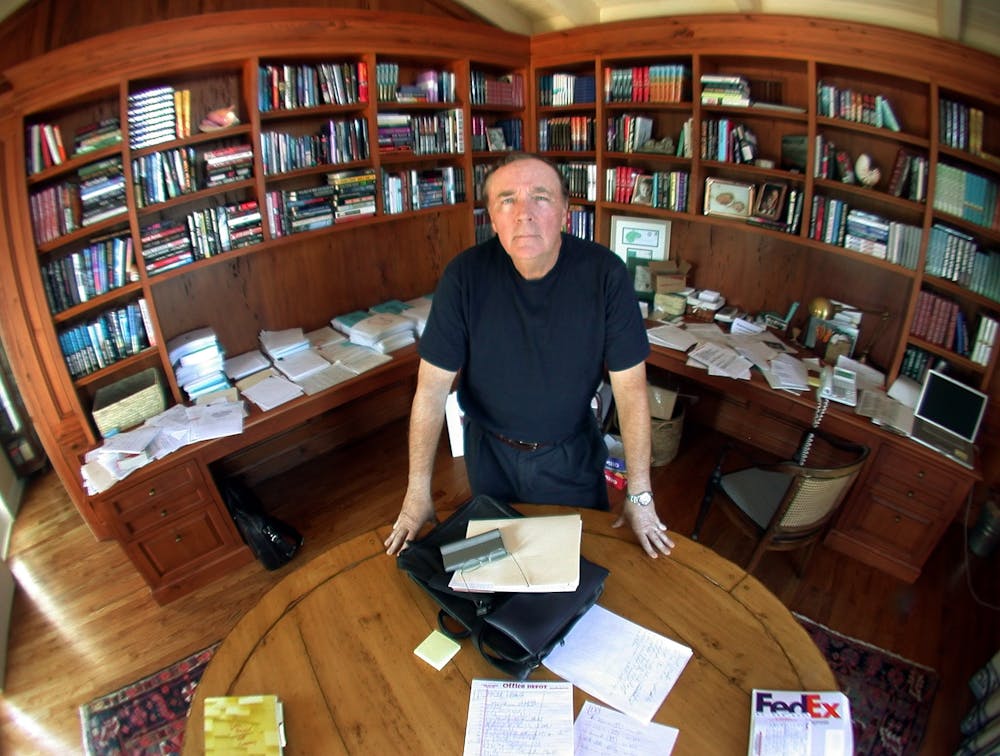
By contrast, only 14 percent of nonfiction authors had more than one best-selling book. Perhaps this is because the genre often requires expertise on a specific subject matter. If an author primarily writes about football, or neuroscience, or even her own life, it’s difficult to generate 10 books on the topic.
Publishers eagerly slap “New York Times Bestseller” stickers on each book that appears on the list’s 15 slots.
A quarter of those, however, have only a cameo appearance, briefly grabbing a spot at the bottom of the list and dropping out after a single week. Only 37 percent have some staying power and spend more than four weeks on the best-seller list. Even fewer – 8 percent – attain the number one spot.
Some rare exceptions can lease out a spot for years: “The Help” by Kathryn Stockett lingered on the fiction list for an astonishing 131 weeks, while Laura Hillenbrand’s “Unbroken” stayed on the nonfiction list for a record 203 weeks.
One big misconception is that you have to write a mega-seller to make the list. The majority of titles on The New York Times best-seller list only sell between 10,000 and 100,000 copies in their first year. “The Slippery Year,” a 2009 memoir by Melanie Gideon, made the list with a yearly sale of fewer than 5,000 copies.
How is this possible?
Our data set shows that just about your only chance of making the list is right after your publication date.
That’s because book sales, we discovered, follow a universal sales curve – there’s a single mathematical formula that captures the weekly sales of all books. And that sales curve has a prominent peak right after the release, meaning you sell the most copies during the first weeks after your book’s release. Fiction sales almost always peak within the first two to six weeks; for nonfiction, the peak can come any time during the first 15 weeks.
https://datawrapper.dwcdn.net/A6uG3/1/
While you might assume that there would be overlooked books that build their audiences slowly and eventually make it onto the hallowed list, there really aren’t.
In other words, what happens during a brief window of time can foretell a book’s success.
For this reason, the timing of the release matters a great deal, especially since the threshold to reach the list varies throughout the year.
In February or March, selling a few thousand copies can land a book on the best-seller list; in December – when sales skyrocket during the holidays – selling 10,000 copies a week might not guarantee a book a spot.
So when should authors publish?
It depends on their circumstances. If they lack a strong fan base, and their hope is to simply make it onto the best-seller list, it’s best to aim for February or March.
At the same time, appearing on The New York Times best-seller list doesn’t necessarily guarantee that a book will sell more copies. Research shows that appearing on the list tends to boost sales only for unknown authors, and the effect disappears after one to three weeks.
So for well-known authors or celebrities who already have built-in fan bases, appearing on the best-seller list might not matter as much. Instead, they’ll likely want to maximize sales – in which case, it’s best to publish in late October: The release will coincide with peak sales in December, when bookstores are packed with Christmas shoppers.
The good news is that if you’re like me – and have written several books that didn’t end up as best-sellers – you still have a chance to break through: Our analysis shows that only 14 percent of novelists made the list with their first book.
Albert-László Barabási, Robert Gray Dodge Professor of Network Science, Northeastern University
This article is republished from The Conversation under a Creative Commons license. Read the original article.
The link below is to an article that explores the need for difficult books and comments on the 2018 Man Booker winner, ‘Milkman,’ by Anna Burns.
For more visit:
https://www.theguardian.com/books/2018/nov/10/anna-burns-milkman-difficult-novel
The link below is to an article reporting on Google Home and Disney adding sound effects and music to ebooks.
For more visit:
https://goodereader.com/blog/e-book-news/google-home-and-disney-adds-sound-effects-and-music-to-books
The link below is to an article that takes a look at the length of books/ebooks – are books/ebooks getting longer?
For more visit:
https://www.theguardian.com/commentisfree/2018/sep/21/the-guardian-view-on-lengthening-books-read-them-and-weep
Andrew Biswell, Manchester Metropolitan University
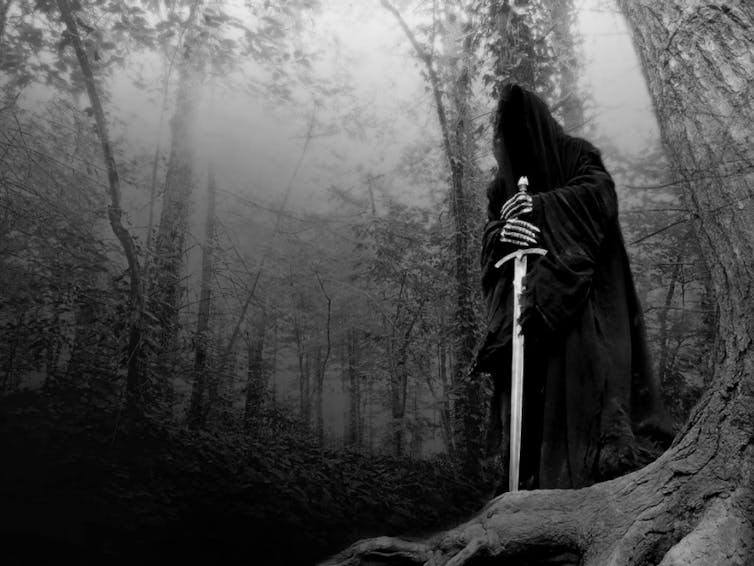
The publication of The Fall of Gondolin by JRR Tolkien completes a publishing project that began in the distant past of 1977, when Christopher Tolkien edited The Silmarillion, the first volume of his father’s posthumous stories.
When Tolkien senior died in 1973, he left four full length published novels and a mass of uncollected papers behind him. His youngest son Christopher, now aged 93, has spent almost half a lifetime annotating his father’s work and preparing it for publication. The 12 volumes of the History of Middle-earth provide an astonishingly detailed account of the languages and landscapes of Tolkien’s fictional world.
This monument of scholarship allows readers of The Lord of the Rings to gain the fullest possible understanding of the careful preparation which stood behind the handful of books published by Tolkien in his lifetime.
As a literary critic who specialises in archival work, I admire the heroic labours of the Tolkien estate in presenting the author’s private papers, letters and illustrations to a wide readership of scholars and enthusiasts. But not all heirs and executors take the same view when it comes to publishing posthumous work, and there are often ethical problems arising from an author’s drafts and manuscripts.
When the first edition of Philip Larkin’s posthumous Collected Poems appeared in 1988, many readers were dismayed to find that the editor had chosen to include a large number of unfinished poems and apprentice work written when Larkin was a student. Critics of that volume argued that Larkin would never have allowed publication of this inferior work, and the overall effect was to diminish the impact of the poems he valued.
Publication of the Collected Poems was followed in 1992 by a volume of Larkin’s letters (heavily cut to remove libels), which revealed the poet to have been seething with racist prejudices. It took many years for Larkin’s reputation to recover from these deep wounds, which had been administered by his own literary executors. There will be no posthumous edition of Larkin’s diaries, which were shredded shortly after his death, according to his own instructions.
Read more:
After years of scandal, Philip Larkin finally has a spot in Poets’ Corner
Virginia Woolf’s letters and journals offer a positive counter example. Edited by her nephew Quentin Bell and published posthumously, Woolf’s Diaries have established themselves as an inspiring series of books for everyone who studies her novels. The pleasure of watching over Woolf’s shoulder as she documents the ups and downs of her writing life is immense.
Other writers have attempted to take control of their reputations more directly. W.H. Auden, who died in 1973, stipulated in his will that no edition of his letters should be published, and he requested that anyone who had letters in their possession should burn them. Fortunately for posterity, many of his friends had already sold their batches of Auden letters to university archives, and other people simply ignored his wishes. Nevertheless, it is unlikely that an edited collection of Auden’s letters will ever appear.
Edward Mendelson, who is Auden’s literary executor, recently wrote an article in which he discussed his own ethical dilemmas as the editor of the Collected Poems. Mendelson’s guiding principle has been to value the poems that Auden chose to include in his two volumes of Collected Longer Poems and Collected Shorter Poems.
But what to do about the poems published in magazines but excluded from Auden’s books? Those appear in the Collected Poems on the grounds that Auden had signed them off for publication. And what about the rejected early work, such as the poem “Spain” – a response to the Spanish Civil War published in pamphlet form but later excluded from the Collected Shorter Poems? That does appear in The English Auden, an edition of poems written in the 1930s, but it is absent from the Collected Poems.
There is another category of “lost” work by Auden, existing only in manuscripts and notebooks, but never collected in book form. Mendelson has recently unveiled his plans to publish some of these poems, carefully edited and contextualised, in a volume of Auden’s “Personal Writing”, which will include poems and verse-letters written for friends. But none of this work will be finding its way into the next edition of the Collected Poems.
Anyone who manages a literary estate faces hard questions about what should or should not be published. In September 2018 Manchester University Press will publish Paul Wake’s edition of Puma, a science fiction novel by Anthony Burgess. The manuscript, completed in 1976, was unpublished in Burgess’s lifetime, but letters in the archive confirm that he was actively seeking to find a publisher shortly after he’d written it. What readers will make of this “lost” novel by Burgess remains to be seen.
The Tolkien example is a story of a son’s devotion to his father’s work and there is much to admire in Christopher Tolkien’s determination to put as much unpublished writing as possible into the public domain.
For the future, as electronic communication becomes more pervasive, it seems likely that writers will find it harder to delete published work from the record, or to edit their past in the ways evidenced by Auden and Larkin. If only they had survived into the age of social media, their Collected Tweets might have been required reading for every diligent student of their poems.
Andrew Biswell, Professor of Modern Literature, Manchester Metropolitan University
This article is republished from The Conversation under a Creative Commons license. Read the original article.
The links below are to articles that take a look at novels on Instagram.
For more visit:
– https://bookriot.com/2018/08/22/nypl-insta-novels/
– https://goodereader.com/blog/e-book-news/will-anyone-read-ebooks-on-instagram
– https://publishingperspectives.com/2018/08/new-york-public-library-initiates-insta-novels-classics-instagram/
The link below is to an article that takes a look at blockchain and ebooks, including copyright issues.
For more visit:
https://copyrightandtechnology.com/2018/08/17/blockchain-comes-to-e-books-drm-included/
The link below is to an article that looks at how to delete Kindle ebooks from your Kindle.
For more visit:
https://bookriot.com/2018/08/21/how-to-delete-books-from-kindle/
The link below is to an article that looks at how to return an accidentally purchased Kindle book.
For more visit:
https://bookriot.com/2018/08/16/how-to-return-a-kindle-book/
 At the BookShelf

You must be logged in to post a comment.