
The links below are to articles looking at the winners in the CBCA 2018 Book of the Year Awards.
For more visit:
– https://blog.booktopia.com.au/2018/08/17/cbca-winners-2018/
– https://cbca.org.au/winners-2018

The links below are to articles looking at the winners in the CBCA 2018 Book of the Year Awards.
For more visit:
– https://blog.booktopia.com.au/2018/08/17/cbca-winners-2018/
– https://cbca.org.au/winners-2018
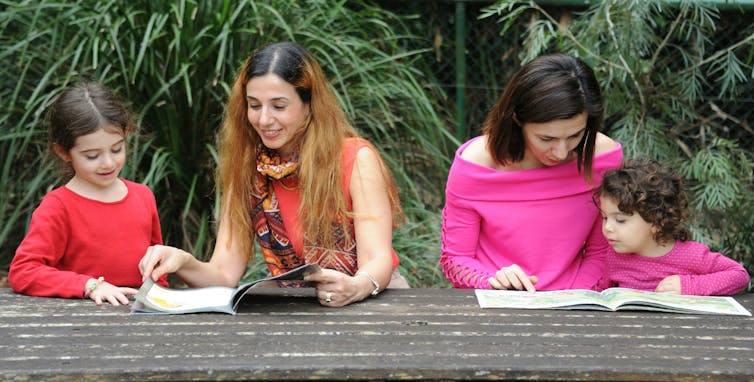
Ameneh Shahaeian, Australian Catholic University
There is magic in stories. We all remember hearing them as children, and we loved them. Imaginary adventures set in faraway places. Tales about how the dishwasher isn’t working. It doesn’t matter! Whether made up by parents or read from books, kids love to hear stories.
Our recent work showed reading to children positively impacts long term academic achievement more than many other activity (including playing music with them, or doing craft). We found the more frequently parents read to their children, the better their children’s NAPLAN scores in different areas.
Read more:
If you can only do one thing for your children, it should be shared reading
In our most recent study, we asked parents to read a wordless storybook to their three to five-year-old children titled The Wolf and Seven Little Goats. We also tested children in many areas of their important cognitive skills, such as language proficiency, memory, self-control, and friendship skills.
Through examining the different ways parents tell stories, we have pinpointed which elements of shared reading are most beneficial for children’s cognitive development.
Perhaps the most important aspect of reading to children is to tune in to your child. Listen to your child’s cues. Do they like the story? Do they know the vocabulary? Are they paying attention to the pictures more, or the text?
Try to coach your child, not to instruct them. Instead of saying: “look they are going to cook some food, maybe they are hungry”, you can ask “what are they doing?” or “why do you think they’re doing that?”.
Be sensitive about whether they are listening and engaged or uninterested and disengaged. If they are disengaged, are there questions you can ask to make them more interested? Do you think they’ll like a different type of story better? The best books for your child are the ones they enjoy most.
Read more:
Research shows the importance of parents reading with children – even after children can read
Parents who ask lots of questions engage in a more fun and informative way with their children. Ask them if they know the vocabulary, if they can guess what the characters are going to do next, and why they’ve done what they’ve done.
These questions are not only helpful because they help children gain new knowledge and ways of thinking, it also helps strengthen the emotional bond between parent and child. Children like to feel they’re a part of the task, not that they’re being told how to do things.
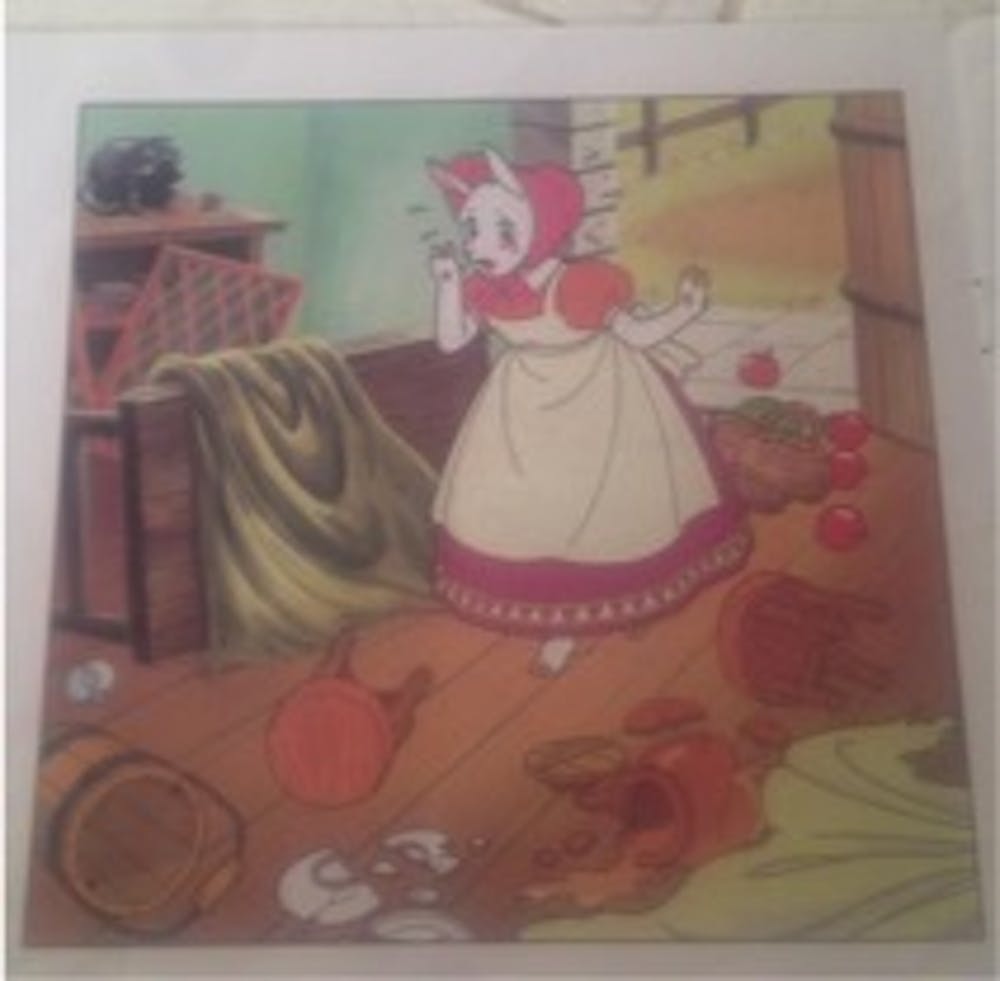
In our study, we gave parents a wordless picture book. An important difference we observed between parents was some only describe what they see. Some go beyond the picture.
For example, when the mother goat in the picture book comes home and sees the door to the house open, one parent said:
When their mother came home and was looking forward to seeing her children and hugging them and telling them a story, she suddenly saw that the door is open. She was shocked!
Another parent said:
The mother came home and saw the door is open; she went inside and looked for the children.
This parent is only describing the picture.
The first parent is imagining what is beyond the picture and text. This is a richer way to tell a story to children, and ultimately leads to better cognitive developmental outcomes for children. This is because it teaches abstract thinking, which is the basis for many of the higher order cognitive abilities such as problem solving and critical analysis.
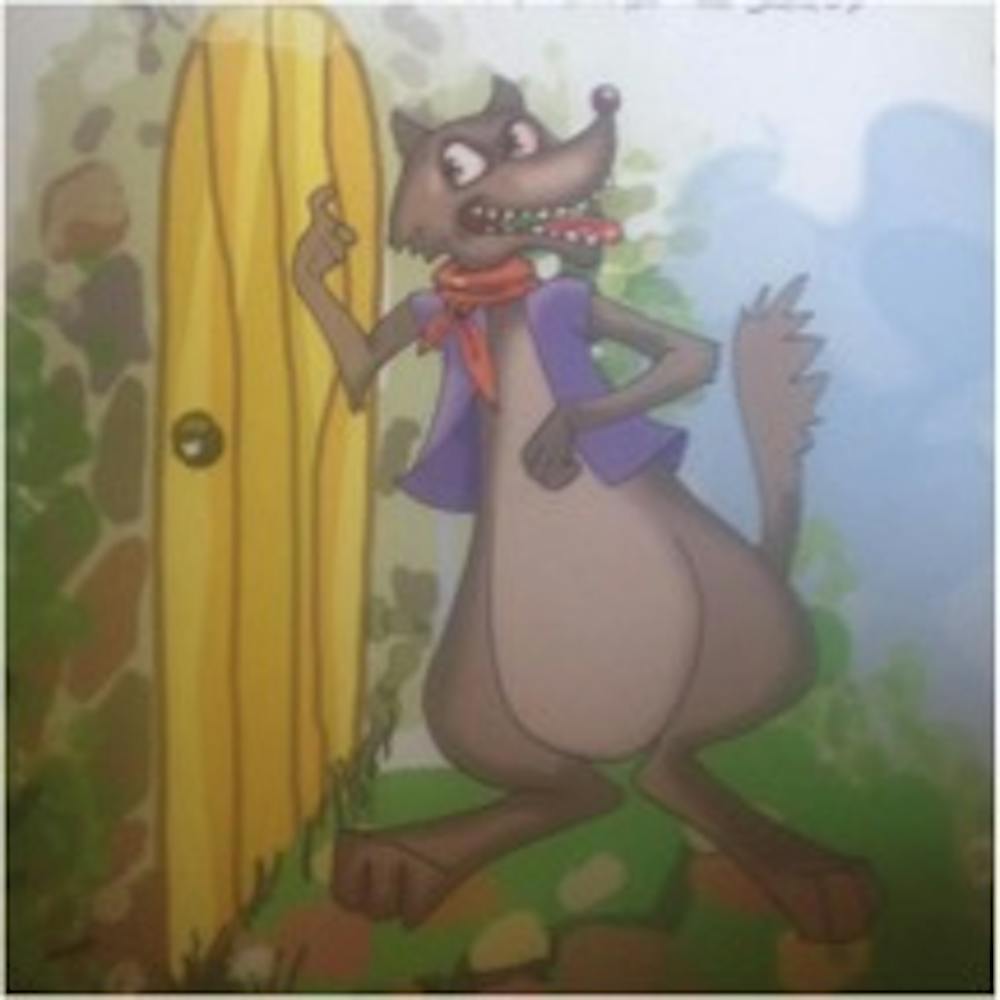
Another element that has a strong link to the development of children’s cognitive skills is the way parents build logical links between different parts of the story.
Often the events in books unfold very quickly. One minute, the wolf eats the little goats, and the next minute he is found by the mother. Some parents try to make the sequence of events more logical than others.
For example, in this picture, when the wolf is coming to knock on the door, one parent said:
The wolf, who realised the mother is not home, came and knocked on the door.
This sentence is lacking logical links. How did the wolf know the mother is not home? Why should he come and knock on the door? What did he want?
Another parent said:
The wolf, who was sunbathing in the bush, saw that the mother is going to get some food. He thought, oh, the little goats are alone at home, and it’s a good time for me to go and trick them and maybe get a good lunch!
The parent here is clearly providing logical links between these different parts of the story.
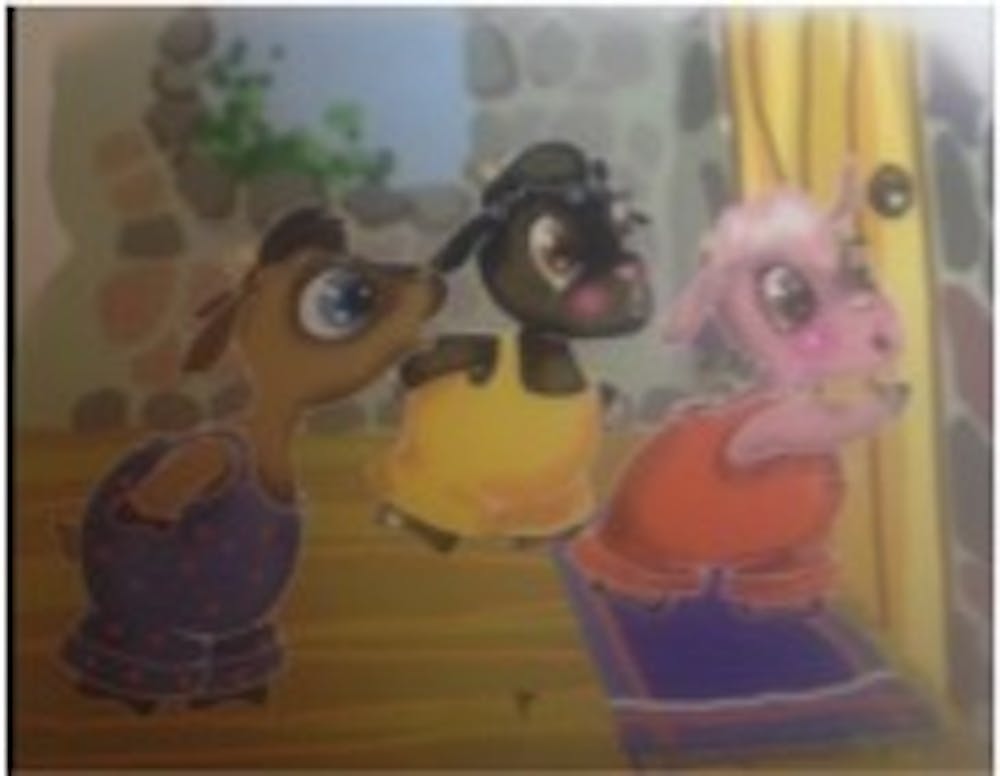
We also found most parents add many details to the story to make it more interesting or comprehensive. But relevant details are the most useful in terms of improving children’s learning. Relevant details are the kind of details that help make the story easier to understand.
For example, one parent said:
The little goat, who was wearing the yellow shirt and was the smallest said: ‘we shouldn’t open the door! How do we know this is our mother? She has just left.’
Here, wearing a yellow shirt is a descriptive detail, but it doesn’t add much to the story.
Another mother said:
The smallest one, who was also the cleverest and very careful, said…
This second parent is clearly adding a detail (that the smaller one is also the cleverest and careful) that makes the story more meaningful and easier to follow.
Read more:
Enjoyment of reading, not mechanics of reading, can improve literacy for boys
<!– Below is The Conversation's page counter tag. Please DO NOT REMOVE. –>

We found parents who not only describe the events of a story but also discuss abstract concepts related to emotions, desires and thoughts tend to have children who are better cognitively skilled. These children develop a better understanding of others’ emotions, better friendship skills, and even improved memory and higher order cognitive skills that are useful in later life. These lead to academic success as well as better skills to build friendships and perform well in social relationships.
Ameneh Shahaeian, Research Fellow in Developmental and Educational Psychology, Australian Catholic University
This article was originally published on The Conversation. Read the original article.
Raluca Radulescu, Bangor University and Lisa Blower, Bangor University
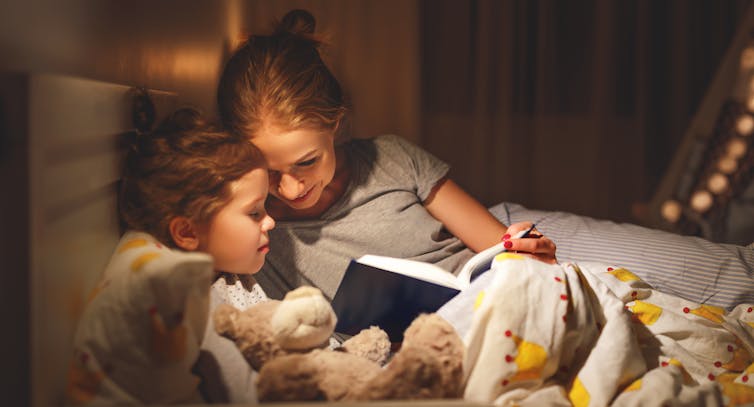
Speaking at the 2018 Hay Festival, His Dark Materials author Philip Pullman said: “To share a bedtime story is one of the greatest experiences of childhood and parenthood.” This couldn’t be more true. Besides helping sleepyheads absorb language through the familiar voices that nurture them, understand the complexities of their world, and the reasons behind their feelings, bedtime stories show how childhood can be the greatest adventure of all.
Age range: two to five years
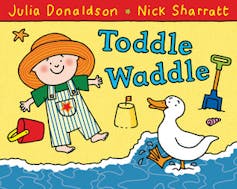
Even the youngest child can engage with sound, colour and fun, and this book (illustrated by Nick Sharratt) is filled with bright joy and wonderful onomatopoeia. From the sound of flip-flops to the excitement of slurping a drink at the beach and the music made by different instruments, the sounds, then words, are a wonderful introduction to the intricacies of language.
Age range: three years+
Hargreaves’ colourful 2D characters behaving to type are a wonderful way to identify with basic emotions by interpreting colour as a feeling. As journalist and author Lucy Mangan puts it in her memoir Bookworm: “Of course uppitiness is purple. Of course happiness is yellow.” These are no fuss, easy to follow collectables – and bitesize too, so you can gobble through second helpings before turning out the light.
Age range: three to eight years

No child should grow up without The Lorax. They’ll never be the same when they’ve learned about the Swannee-swans, Humming fish, and Bar-ba-loots bears, their Truffula trees being cut by the mysterious and scruple-free Once-ler. While the environmental message of the book is even more urgent now than it was when The Lorax was first published in 1971, the story is just as entrancing, instructive – without preaching – and, above all, as hopeful as ever. A wonderful wise Lorax speaks for the trees, and for all the world’s children, who want to keep the future green.
Age range: two to eight years
A funny picture book for younger readers that will resonate with many parents for its keen perspective on patience. It positively encourages under-fours to shout along with grumpy Bella who gets up on the wrong side of the bed. It shows the child that it’s ok to feel angry – heck, they’ll be a teenager soon enough – but it also gives them permission to express it, and reminds them that tomorrow is always a new day.
Age range: three to eight years
The Moomins’ home, Moominvalley, is a place of wonder and fun, populated by fairy-like, round creatures that resemble hippopotamuses, but enjoy human hobbies such as writing memoirs (Moomin papa), making jam (Moomin mama), and playing make-believe (Moomintroll and Snork Maiden). Their adventurous side comes out at all opportunities, stirred by friends Little My and Snufkin, or by mysterious intruders.
First published between 1945 and 1970, in recent years the stories have been tailored for both younger (soft and flap books) and older children (hardback storybooks). The Moomin books tell dream-like stories while tackling questions about love, friendships, encounters with strangers, and so on. An all-round winner.

Age range: four to 11 years
The first true book written for children about children never fails to bewitch and baffle. Young Alice-like readers can explore the topsy-turvey Wonderland, while the grown-ups reading to them will appreciate the metaphorical Mad Hatter and role of the white rabbit as leader in the adventure in a way they wouldn’t have been able to as a child. Carroll’s book is a celebration of a child’s wonder and curiosity, and fears of growing bigger too. It invites you to talk dreams and nightmares, to accept the weird and extraordinary and, best of all, to conjure up your own adventure down the rabbit hole. It’s a rite of passage, ideal for sharing.
Age range: five to 12 years
In a world where comic book superheroes and heroines reign supreme, these legends can entrance a young mind forever. This selection of Norse myths brings all the gritty dark stuff about trickster Loki together with tales of hammer-wielding Thor, and the machinations of Asgardean king Odin and goddess of love, battle and death, Freyja. It tickles the imagination of the young and challenges the parent too. Fabulous illustrations by Jeffrey Alan Love accompany Crossley-Holland’s delightful retelling, bringing these ancient stories to life in a way that no other anthology has.
Age range: eight to 12 years

This chocolate wonderland is the perfect read-aloud book, thanks to Dahl’s masterful use of the English language. Amid all the magic and invention is a wagging finger providing moral lessons on the perils of being greedy, or a brat or overly competitive – and that goes for the adult reader too. Thank goodness then for Willy Wonka, the man who really never grew up, and his band of oompa-loompahs who punish the bad, reward the good, then provide reason for it all through song.
In truth, there is no right book to share – there are plenty of them available these days – nor should there be any chronological order to how and what we read. These are just some suggestions on ways to make bedtime a little more magical. But never underestimate how marvellous it can be to reread a childhood favourite to the little one you’re now tucking in to bed. It could inspire a passion for reading and spark an interest that lasts a lifetime.
 The age ranges used in this article are mostly based on interest and reading level ratings from Book Trust.
Raluca Radulescu, Professor of Medieval Literature and English Literature, Bangor University and Lisa Blower, Lecturer in Creative Writing, Bangor University
This article was originally published on The Conversation. Read the original article.

A changing climate means the frequency of extreme weather events such as heat waves, flooding, hurricanes and wildfires has become a common occurrence. Temperatures are increasing on the land and in the ocean, the sea level is rising and amounts of snow and ice are diminishing, as greenhouse gas emissions and concentrations have increased. Unfortunately, children and young people are taking the brunt of climate change and this will continue into the future.
Doctors are seeing the serious effects of global warming on children’s health and are concerned that it could reverse the progress made over the past 25 years in reducing global child deaths. Not only that, children are at risk of mental health issues such as depression and anxiety due to natural disasters caused by climate change.
A UNICEF survey of children aged nine to 18 in 14 countries showed that children are deeply concerned about global issues affecting their peers and them personally, including climate change. Children across all countries feel marginalised because their voices are not being heard nor that their opinions considered.
Given the enormity of the climate challenge, it is surprising how limited coverage of our changing climate receives in current children’s fiction. The children’s publishing sector is booming. UK sales of children’s books rose by 16% in 2016 with sales totalling £365m. Globally, children’s book sales have risen steadily across all age categories.
Some picture books do explain climate change (such as The Magic School Bus and Climate Change by Joanne Cole and Bruce Degen). And there are plenty of young adult novels that feature dystopian climate futures (such as Carbon Diaries by Saci Lloyd). But few fiction books for eight to 11-year-olds discuss the issue.
In my view, the lack of “environmental diversity” in children’s literature is just as important as the debate about the lack of cultural and social diversity. After all, children will be responsible for the future protection of our fragile planet, and so their knowledge and engagement are critical.
Stories not only develop children’s literacy but convey beliefs, attitudes and social norms which, in turn, shape children’s perceptions of reality. They allow children to move from a position of powerlessness to a position of possibility. Through fiction, children are able to explore different perspectives and actions beyond what they know by living in the story world of characters for whom they care.
Through literature, children can develop a better understanding of global issues and engage in critical inquiry about themselves in the world. And so combining narrative structure with factual information has the power to take children beyond what is on the page. This could allow them to expand their understanding of difficult scientific concepts such as climate change.
As children engage in the printed word, they can be inspired to make a difference in the real world. This is what a group of Portuguese children is doing after watching their district burn because of the worst forest fires in their country’s history. The fires that occurred in June 2017 have been linked to climate change, and killed over 60 people. The children are now seeking crowdfunding to take a major climate change case to the European Court of Human Rights alleging that the states’ failure to tackle climate change threatens their right to life.
When I decided to write my first children’s novel, I never intended it to be an eco-themed book. But given that I am an environmental researcher, it seemed the most natural thing to do. The result is My Dad, the Earth Warrior, a funny story about the relationship between a boy called Hero and his dad who have grown apart since the death of his mother. Then one day dad has a freak accident and wakes up claiming to be an Earth warrior sent to protect Mother Earth. This plunges Hero into an increasingly bizarre and dangerous world.
Climate change can be a dark, apocalyptic issue to discuss in a story to overcome this, I did not make it a central topic but used the changing weather as an underlying theme throughout this book. The persona of the Earth warrior provides an alternative perspective on our relationship with the natural world. At the end of the book, I encourage readers to join the tribe and become Earth warriors. I hope by taking a humorous approach to a serious topic, I can not only engage and entertain children but also inspire them to think beyond the book. This is something that writer and illustrator Megan Herbert has done by teaming up with climatologist, Michael Mann, for their crowdfunded picture book The Tantrum that Saved the World.
 We need children to care about the planet if they are to the tackle climate challenge that lies ahead. Storytelling can play a part in raising awareness and inspiring children and young adults to take action and become the next generation of Earth warriors.
Gary Haq, SEI Associate, Stockholm Environment Institute, University of York
This article was originally published on The Conversation. Read the original article.

Nicola Daly, University of Waikato
There are many factors that shape the value we place on different languages.
Some languages seem more pleasant to listen to, easier to learn or more logical. These perceptions are generally influenced by our attitudes towards the speakers of a language and the different situations in which the language is spoken.
One reflection of the differential status of languages comes through in bilingual children’s picturebooks. Here I explore how te reo Māori (the indigenous language of New Zealand) is represented and argue that the way languages are displayed in bilingual picturebooks can disrupt the status quo.
Read more:
Why children’s books that teach diversity are more important than ever
As a sociolinguist, I am interested in the representation of languages in bilingual picturebooks. This not only reflects existing attitudes towards languages, but it can also be powerful in shaping future societal attitudes.
As well as telling a story or giving information, the presence of a minority language in a picturebook can serve a symbolic function. The way in which languages are presented in bilingual children’s books may encourage readers to value a language, or perhaps use this language more frequently, thus positively affecting its vitality.
Read more:
Indigenous picture books offering windows into worlds
To show the different ways in which minority indigenous languages can be featured in children’s picturebooks, I examine the linguistic landscapes of some Māori-English picturebooks that are disrupting the status quo of language hierarchies.
Linguistic landscape is a term used to describe the (usually visual) presence of different languages in public spaces. In my work with picturebooks I use this term to describe the space occupied by languages within a book. Language hierarchies relate to the idea that in any society some languages have more status than others.
I use these concepts to examine the comparative presentation of different languages in three areas: which language is presented first, which language uses a bigger font, and which language presents more information.
I argue that these three factors are reflections of the relative status of languages in a bilingual picturebook and they subtly indicate to the reader which language is more important.
In Aotearoa/New Zealand the indigenous Māori language (te reo Māori) has official language status, but it is spoken by a minority of the population (3.73% of the total population and 21.3% of the Māori population). However, some bilingual picturebooks have opted to assign primary status to te reo Māori in terms of order and font size.
Children’s picturebooks are often underestimated, but some bilingual picturebooks disrupt the status quo and promote an alternative language hierarchy.
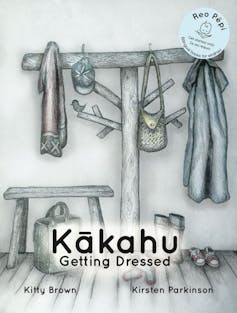
For example, Kākahu – Getting Dressed (Brown & Parkinson, 2015) is a board book in a series self-published purposefully by Reo Pēpi to encourage the use of te reo Māori with young children. On its front cover, the Māori word in the title (Kākahu) is much larger than the English (Getting Dressed). In the body of the book, Māori is privileged in several ways.
Māori is given first on the page, with English underneath; Māori is presented in a much larger font size than English; and Māori is given in a bold typeface, whereas English is given in normal typeface.
Te Wairua o Waitangi, which can be translated as “The Spirit of Waitangi”, is also part of a self-published series, written by Sharon Holt and designed to support teachers to bring te reo Māori into English medium classrooms via song.
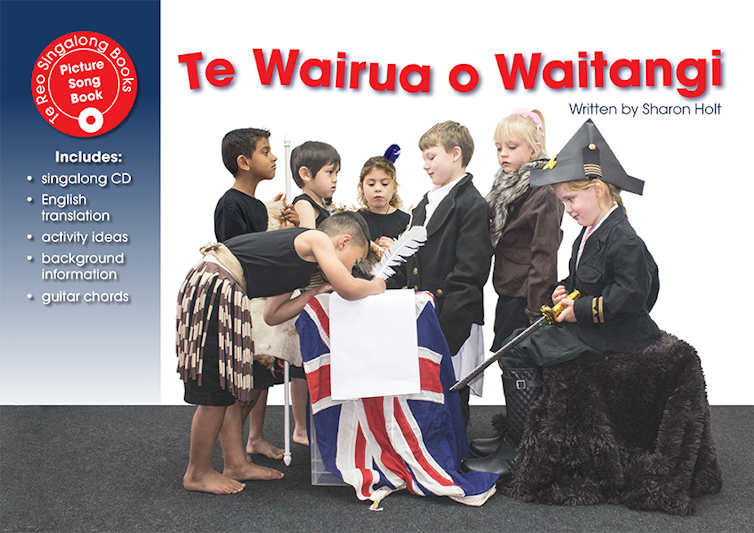
This book (and others in the Te Reo Singalong series) features a brightly coloured title in te reo Māori only. It is bigger and more bold than any other writing (in English) on the cover.
The first few pages before the body of the story feature publishing information, a translation of the lyrics, and teaching notes for teachers in English. However, in the body of the book, only te reo Māori is used. At the back of the book, the lyrics for the song are given in Māori only with guitar chords. The picturebook includes a CD recording of the song, which also features a title in Māori and not English.
The many different factors that influence the status of a language are often inter-related, but if a language is not valued, this may lead to people using it in fewer situations, and even to its eventual demise.
 The two picturebooks I have discussed illustrate how an often underestimated form of children’s literature can be used to support an indigenous language with a minority of speakers. Children and adults reading and listening to these books will see, albeit subconsciously, which language is being given higher status. In this way, new language attitudes are being formed and this may result in the adjustment of existing language hierarchies.
Nicola Daly, Senior lecturer in children’s literature and language teaching., University of Waikato
This article was originally published on The Conversation. Read the original article.

Elizabeth Hale, University of New England and Lynnette Lounsbury, Avondale College of Higher Education
Two of Australia’s most popular children’s storytellers live in a treehouse. It’s a Thirteen-Storey one, at least it started out that way. The storytellers are Terry Denton and Andy Griffiths, responsible for an array of children’s comedies, who live in a fantasy treehouse paradise. There they write and illustrate their stories, distracted by the lemonade fountains, see-through shark-infested swimming pool and a marshmallow gun that shoots directly into your mouth.
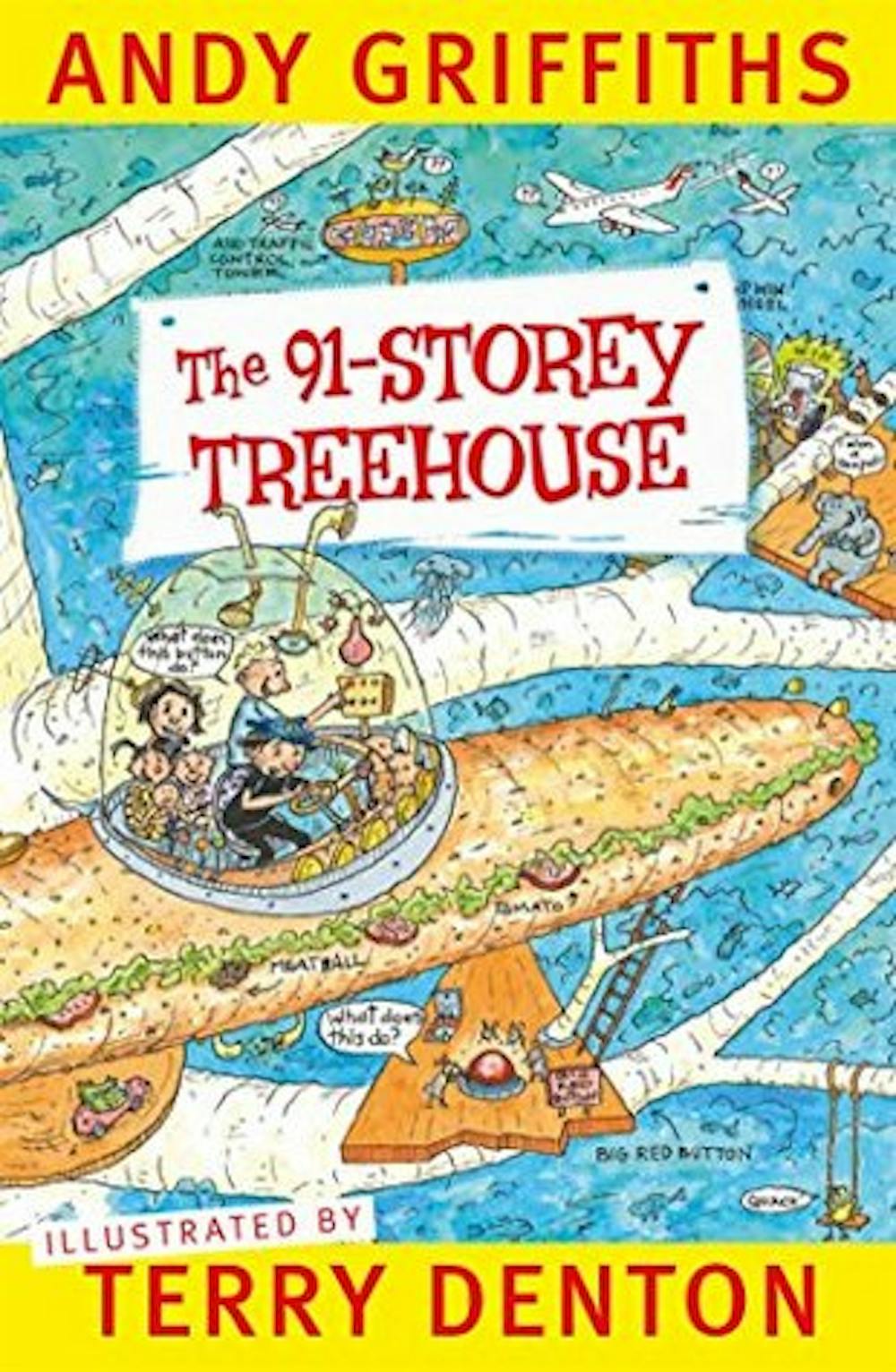
Since its arrival on the literary scene in 2011, this Treehouse has grown by 13 storeys at a time. The next edition will be 104 storeys. The books have sold over 3 million copies in Australia alone. The treehouse now contains a detective agency, a mashed potato and gravy train and a machine that makes money… or honey… depending on what you’d prefer. These delights interrupt Andy and Terry as they write for their publisher, Mr Bignose. Indeed the treehouse functions as a metaphor for the writing process … its storeys provide food for the stories produced inside.
Treehouses feature often in children’s stories. In Dav Pilkey’s popular Captain Underpants series, the heroes George and Harold write comics in their treehouse and retreat to it when things get out of hand, to regroup and create their way out of trouble. There are, of course, Tolkien’s Ents, the walking trees who fight on the side of good against Sauron and his army. Or Dr Seuss’s Lorax, who guards the Truffula trees from devastation. Ents and the Lorax are guardians of the ecosystem. When they act we know that something is badly out of kilter – in these cases in the fight between good and evil.
Mention Enid Blyton’s Faraway Tree stories, meanwhile, and many a grown-up gets misty-eyed. Mary Pope Osborne’s Magic Tree House series has been going strong for 25 years, and has nearly 100 titles. Carter Higgins’s Everything You Need for a Treehouse helps you get kitted out for your own woodland home. And mythology is full of trees.
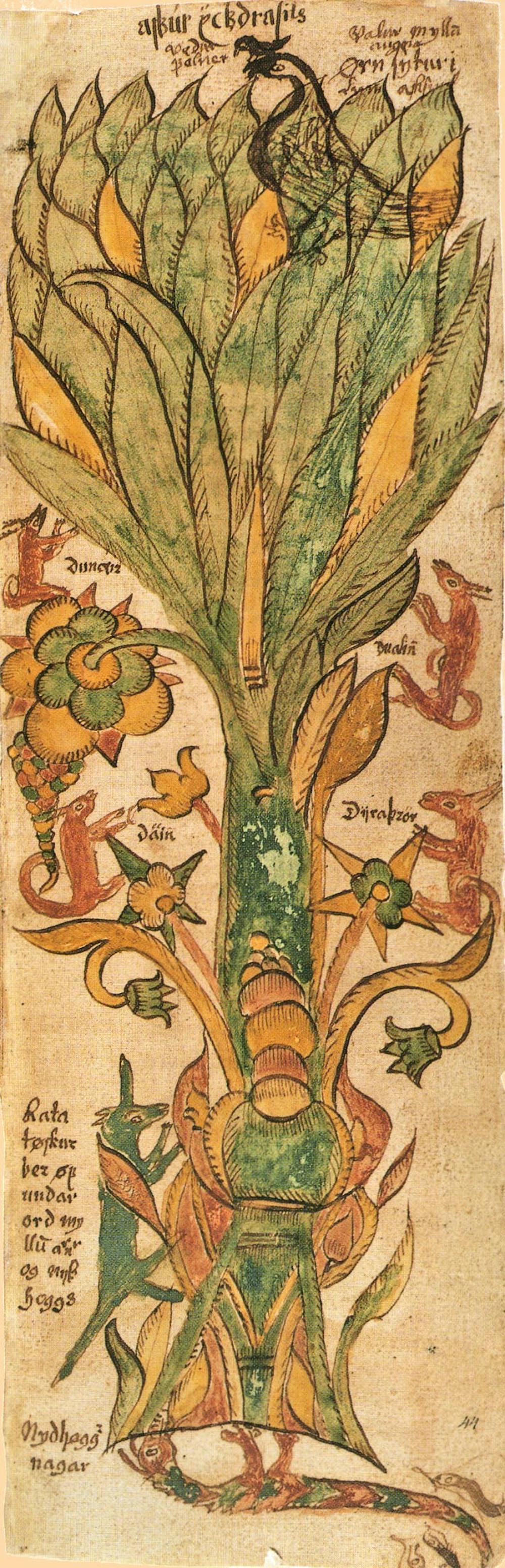
The World Tree of ancient Norse mythology, Yggdrasil, is similar to the thirteen-storey treehouse, linking the nine realms of the world (of fire, of ice, of elves, of gods, of fertility, of giants, of dwarves, of humans, and of the dishonorable dead). In Ovid’s Metamorphoses, when King Eresichthyon of Thessaly cut down the Greek Goddess Demeter’s favourite oak tree she teamed up with her sister Fames to torment him with a hunger so eternal that he eventually ate himself.
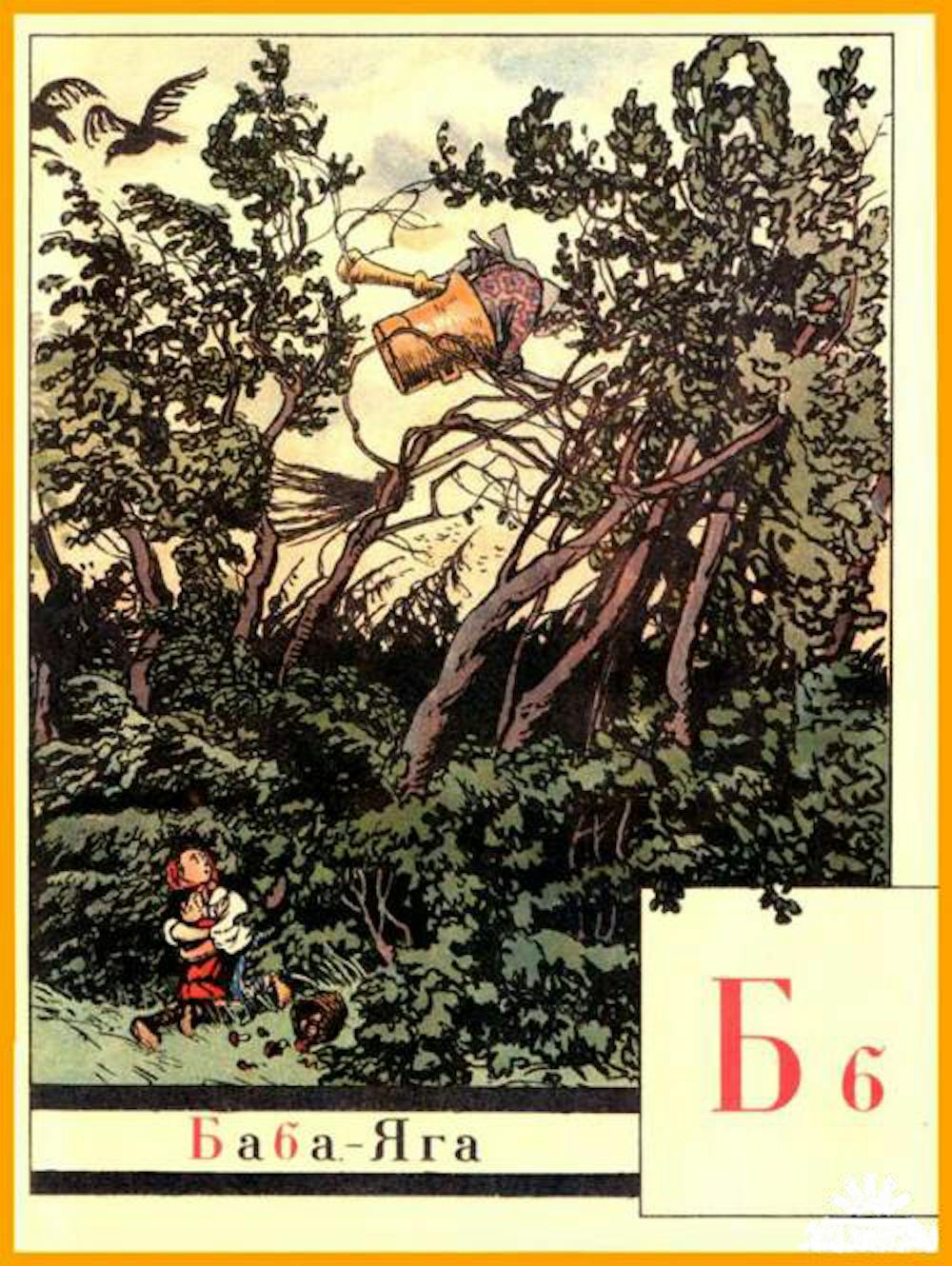
The Russian witch, Baba Yaga, lives in a mobile treehouse on a chicken foot, like an old-fashioned Grey Nomad. The Biblical serpent tempted Eve to taste fruit of the tree of knowledge. And many European forests are inhabited by tree creatures, such as sylphs and dryads, eco-friendly creatures that appear in fantasy literature such as Polish writer Andrzej Sapkowski’s The Witcher.
So it’s not surprising that living in the trees gives Andy and Terry and George and Harold access to fantasy spaces, and to magic and mystery. A technical term for this is liminality: in a liminal space, you are on the borders of things, or thresholds (the word come from the Latin for threshold, limen). If you live in a tree, you are up in the air, but connected to the earth.
At heart, most myths respond to fundamental practical needs. Tree house stories recognise that children need time in nature. For generations of urban children, these books offer a fantasy of unsupervised creative spaces where they can control their own adventures, face dangers that test them and engage with others in a less restricted way.
In Vitamin N: The Essential Guide to a Nature Rich Life (2016), author Richard Louv coined the phrase “Nature deficit disorder” to describe the human costs of alienation from the natural world. Opportunities for play in nature have dramatically declined in urbanised societies and with them, benefits such as creativity, problem-solving and emotional and intellectual development.
Writers like Denton and Griffiths recognise the child’s need for nature. So does Tina Matthews, in whose Waiting for Later a tree provides company for a child whose family is too busy to spend time with her. And so does mythology which regularly takes characters into nature, to confront, to challenge or to come to terms with life.
 While the Thirteen-Storey Treehouse may not be directly inspired by Yggdrasil or Demeter’s Oak, or hop about like Baba Yaga’s hut, it understands the relation between creativity and time in the woods, taking part in a grand literary tradition that goes as far back as myth itself.
Elizabeth Hale, Senior Lecturer in English and Writing (children’s literature), University of New England and Lynnette Lounsbury, Lecturer in Communications and History, Avondale College of Higher Education
This article was originally published on The Conversation. Read the original article.
Margaret Kristin Merga, Curtin University; Paul Gardner, Curtin University; Saiyidi Mat Roni, Edith Cowan University, and Susan F Ledger, Murdoch University
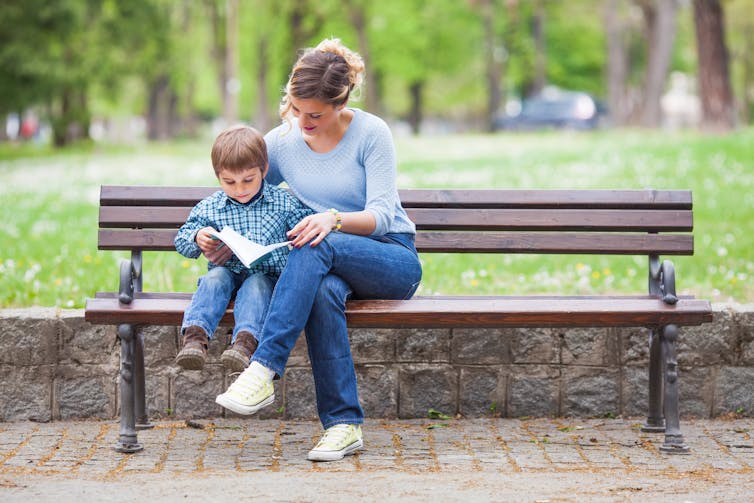
Reading to your child is one of the most successful ways of instilling a love of reading in them. But in our recent study, more than one-quarter of primary-school-aged respondents claimed they were never read to at home.
Children typically enjoy being read to, and see educational, social and emotional benefits to the practice. But families are busy, and finding time to read aloud can be eaten up by the demands of everyday life.
Not all parents have been read to themselves as children, so may not have experienced a model they can then follow with their own children. And many adult Australians may be struggling readers themselves.
With this in mind, here are five suggestions that can help make the experience of reading to your children fun, relaxing and educational.
For many people, the best time to read with their children is at night, once the children are in bed. But if you find your child too cranky and disengaged at this time (or if you are feeling tired yourself), you might want to try reading to them earlier in the day.
Read more:
Three easy ways to get your kids to read better and enjoy it
Whatever the time, it’s important to give the book and your children all of your attention. Phones and other devices with enabled notifications should be switched off. Everyone should be comfortable, and children should associate time spent being read to with enjoyment.
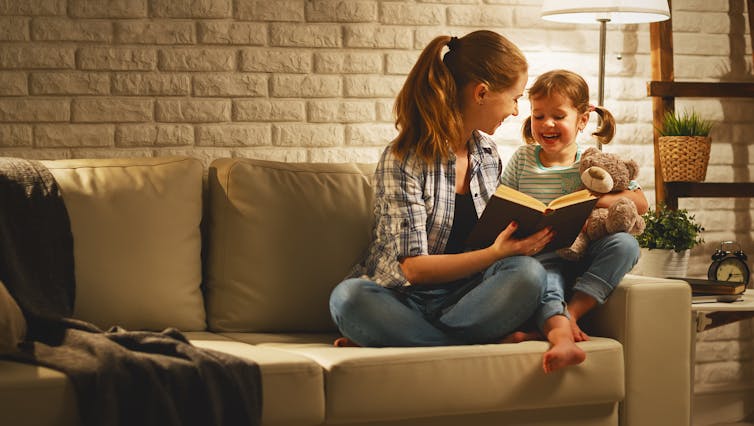
Where possible, we strongly suggest reading to your child becomes part of the daily routine. The more often children are read to, the more substantial the benefits. Reading to children is both an opportunity to model how the written word sounds and a chance for family bonding.
Children don’t typically enjoy having the story stopped every few seconds for comprehension checking, so we suggest you keep interruptions to a minimum.
But recapping is useful when picking up a book again after a break. If parents let their children provide this recap (“So, where are we up to?”) this also enables informal comprehension checking. Opportunities for prediction are also beneficial (“Wow… what do you think might happen next!”).
Sharing your response to a book and encouraging children’s responses stimulates critical thinking. These techniques and others can enhance learning and comprehension, but they shouldn’t upset the fluidity of the reading experience or turn it into a test.
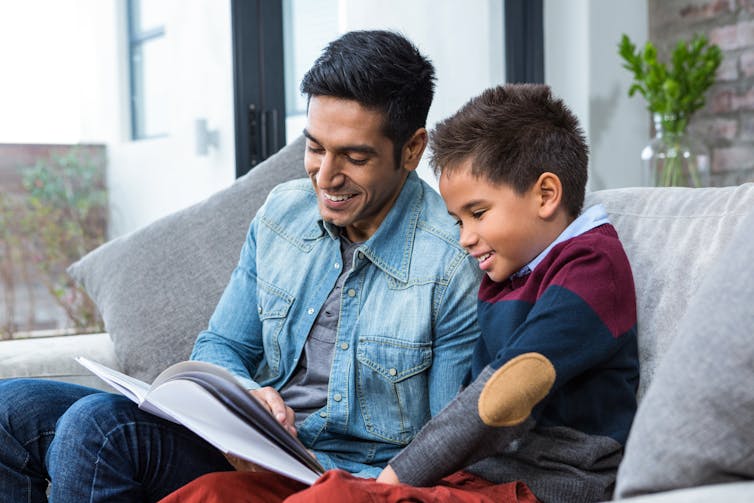
You can share the task of the reading itself with your children if they want to. This is beneficial for a range of reading skills, such as reading comprehension, word recognition and vocabulary building.
You can start reading to your child from early infancy to support their developing language abilities, so it’s never too early to start. The skills infants and young children develop through shared reading experiences can set them up for literacy achievement in their subsequent schooling years.
Read more:
Research shows the importance of parents reading with children – even after children can read
Reading to your children remains important beyond the early years, too, with continuing benefits for literacy development and cognitive skills.
We should read to young people for as long as possible. There is no age where the benefits of being read to completely expire.
Very recent research in the UK found struggling adolescent readers can make remarkable gains on their reading comprehension when books are read to them at school. This is perhaps due to the opportunity for students to enjoy books that are too hard for them to read themselves.
We suggest you select a book that interests both you and your child. Reading together is a great opportunity to share your passions while broadening your children’s horizons through making diverse book choices.
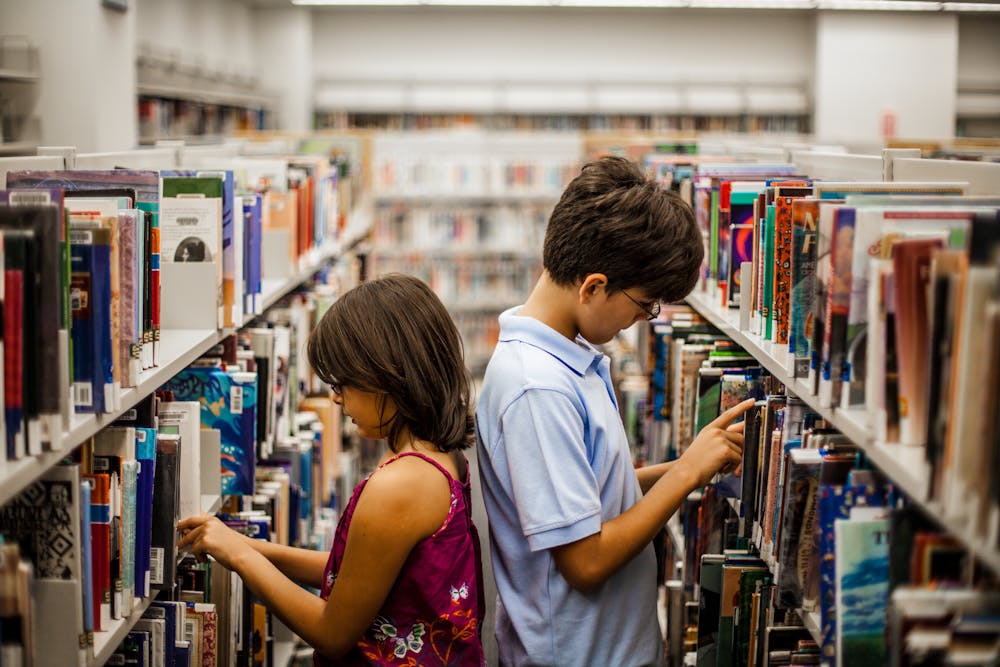
Don’t be afraid to start reading chapter books to your children while they are still very young. The age to begin this will vary depending on your child’s attention span, but it’s often possible to begin this with pre-schoolers.
As long as the story isn’t too complex, children love to be taken on an enjoyable journey into books that are too hard for them to read independently. This can also help to extend child’s vocabulary, among other benefits.
Read more:
How building your child’s spoken word bank can boost their capacity to read
It’s a good idea to take your children to the library and model how you choose interesting books for shared reading. Research shows many primary and high school children are easily overwhelmed by choice when they attempt to pick what books to read independently, so helping them with this is a valuable skill.
Not all of us are destined to be award-winning voice actors, and that’s OK. It’s great to use expression and adopt different voices for the characters in a book, but not everyone will feel able to do this.
At multiple points in our research, we’ve come across people who have praised the reading efforts of parents who weren’t confident readers, but who prevailed nonetheless. For example, in our recent paper a respondent described being read to by her mother who struggled with dyslexia. This mother, and many other parents, have inspired a love of reading in their children through their persistence.
 Being taken into the virtual reality of story is a memorable, pleasurable experience that stays with us forever. Reading aloud provides parents with a valuable opportunity to slow down, relax and share the wonderful world of books with their children.
Margaret Kristin Merga, Senior Lecturer in Education, Curtin University; Paul Gardner, Senior Lecturer: Literacy Education, Curtin University; Saiyidi Mat Roni, Lecturer, Edith Cowan University, and Susan F Ledger, Associate Dean Engagement, Murdoch University School of Education, Murdoch University
This article was originally published on The Conversation. Read the original article.
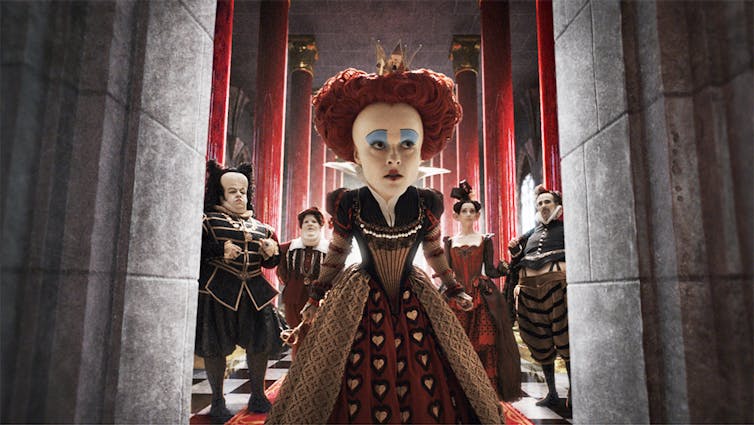
Still from DIsney’s Alice Through the Looking Glass (2016)
Anna Cermakova, University of Birmingham and Michaela Mahlberg, University of Birmingham
This year, women’s history month follows what seems an unprecented upsurge of events that revealed the widespread abuse of women in both professional and private life. So it is not surprising to also see an increased interest in the representation of gender in literature – or rather, as a recently published big data study shows, a significant under-representation of women in literature.
Both female writers as well as female protagonists have been lagging behind their male counterparts for centuries. Gender inequality has naturally become a contemporary topic that has also made it into schools. To mark World Book Day, which we celebrated on the first day of women’s history month, Votes For Schools, a voting platform for schools, in collaboration with Let Toys Be Toys, a campaign promoting gender equality in the toy and publishing industries, published a lesson plan for primary schools asking the question “Do bestselling books encourage sexism?”
Votes For Schools then put this question to primary school pupils and got an interesting result: 79% of students said “No” and only 21% said “Yes”. But another vote on “Do we need more female villains in books?” tells a bit of a different story: the result is 67.5% “Yes” and 32.5% “No”. The response further revealed that 80% of female pupils wanted more female villains in books compared to 54% of male voters.
Stories in which male heroes go through all sorts of adventures before they come to the rescue of the beautiful, but passive, princesses are all too familiar. The Observer newspaper collaborated with Nielsen research on a large market study which found that lead characters were 50% more likely to be male than female, and male villains were eight times more likely to appear compared to female villains. This kind of gender stereotyping is, however, just a continuation of a tradition established in children’s literature much earlier than that.
It was in the latter half of the 19th century that booksellers and book reviewers – “the cultural gate-keepers” as the American literary critic Anne Lundin calls them – started to distinguish between reading suitable for boys and that for girls. At the beginning of the 19th century, the book market was much more general, it did not even clearly delineate between adult and child readers.
From the 1880s, The Times newspaper started to devote separate review essays to literature for boys and for girls. Lundin notes it was rather critical particularly of the books addressed at girls – and it was not the quality of writing that was criticised so much as the subject matter: “Writing for girls … lacked the dynamism of boys’ books.”
Research at the University of Birmingham looks at gender in children’s literature with the help of corpus linguistic methods. As part of the GLARE project, which explores gender in children’s literature from a cognitive corpus stylistic perspective, a specialised corpus of 19th-century children’s books has been collected. This collection of 71 books was selected to represent what has been called the “Golden Age” of English children’s literature and contains classics such as Alice in Wonderland and The Water Babies.
A quick look in the GLARE corpus confirms observations on bias of gender representation. Among the books written by female authors, there are only seven where the word “girl” is used much more frequently than “boy”. Among the books by male authors, there are only two where “girl” is used more frequently than “boy”.
The highest relative frequency of “girl” is in the 1886 book A World of Girls: The Story of a School by the female author L. T. Meade. The book was greeted by The Academy review journal on publication (November 20, 1886) as “light and pleasant reading” with “many a quiet, useful hint about the education and general training of young girls”. The highest relative frequency of the occurrence of “boy” can be found in the 1858 cautionary tale Eric, Or, Little by Little: A Tale of Roslyn School by Frederic William Farrar.
But women who wrote books for children also often dealt with male worlds – the relative frequency of “boy” is similarly high in the 1883 novel Jackanapes by the female writer Juliana Horatia Ewing. A review described it as: “The wistful tale of heroic sacrifice in which the orphaned son of a Waterloo cavalry officer … dies saving the life of his childhood friend on the field of battle.”
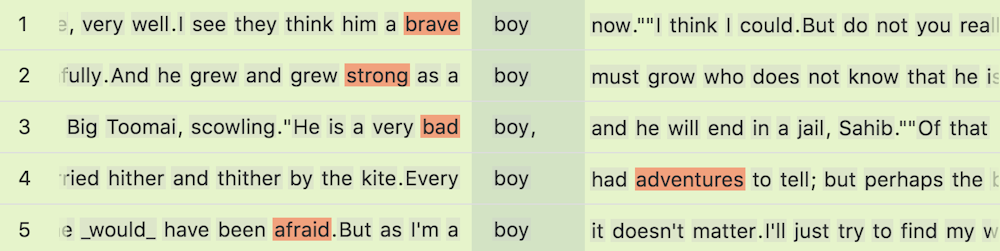
These books are good examples of reading expectations of boys and girls at the time – and the following selection from the corpus provides us with some insights.
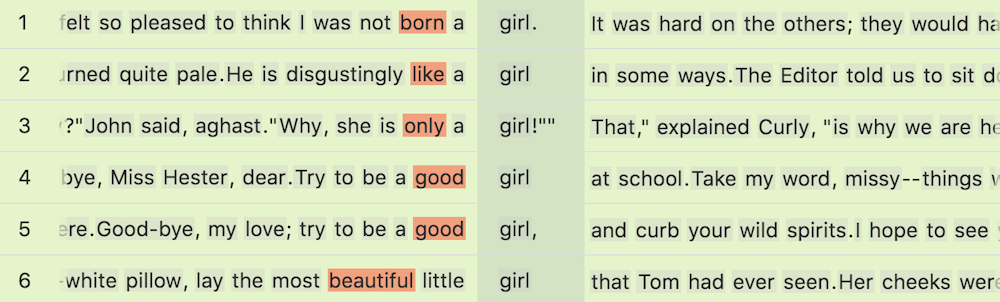
In these examples, girls are well behaved and beautiful – and they certainly appear inferior to boys. Boys are strong and brave and ready for the adventures ahead of them. But boys are also trouble sometimes. In many respects, this has not changed much.
Male villains in children’s books outnumber their female counterparts. In fact, not everyone might easily come up with a top ten list like that of the British author MG Leonard. Her list features the likes of Mrs Wormwood in Matilda, Bellatrix Lestrange in Harry Potter, Cruella de Vil in The Hundred and One Dalmatians or Mrs Coulter in His Dark Materials.
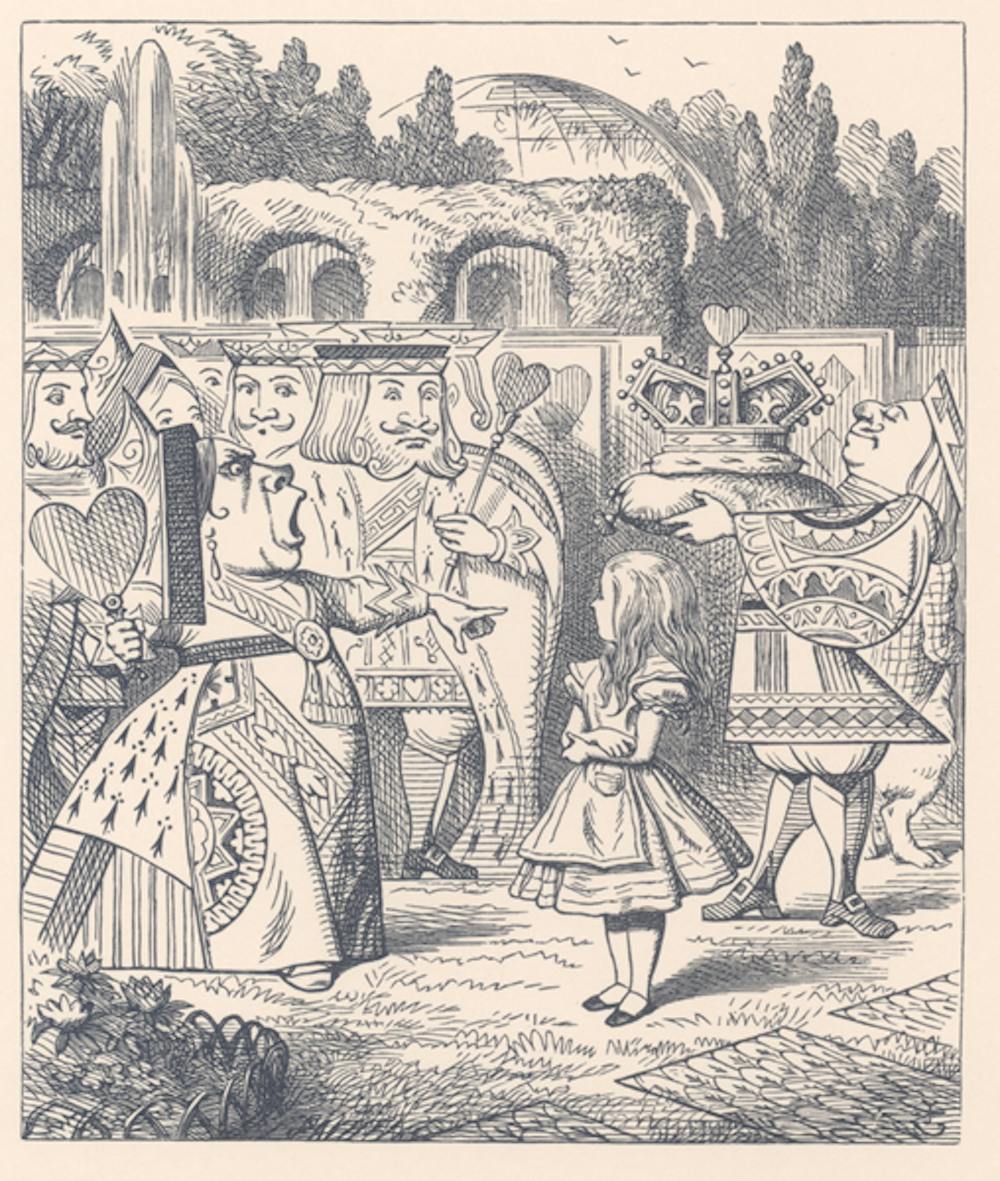
The female villain is usually represented as a witch – as the White Witch from Narnia – or a queen, as the wicked queen in Snow White or the Queen of Hearts in Alice in Wonderland. Witches embody an unattractive (often old), powerful female figure who is turned to for advice or help when everything else fails – as with the witch in the Little Mermaid fairy tale. Witches are feared and excluded from society, as illustrated in this example from The Book of Dragons (1899) by Edith Nesbit quoted from the GLARE corpus:
And besides a King he was an enchanter, and considered to be quite at the top of his profession, so he was very wise, and he knew that when Kings and Queens want children, the Queen always goes to see a witch. So he gave the Queen the witch’s address, and the Queen called on her, though she was very frightened and did not like it at all. The witch was sitting by a fire of sticks, stirring something bubbly in a shiny copper cauldron.
 Children’s books are not only fiction. They provide vital opportunities for children to make sense of their own world. How many more women’s history months will it take to see a greater variety of fictional female characters, not just beautiful princesses, good girls and evil queens?
Anna Cermakova, Marie Sklodowska-Curie Fellow, Centre for Corpus Research, University of Birmingham and Michaela Mahlberg, Professor of Corpus Linguistics, University of Birmingham
This article was originally published on The Conversation. Read the original article.
Shalini Vohra, Sheffield Hallam University
The children’s writer Michael Morpurgo has written a new novel inspired by his autistic grandson, which is set to be published later this year. Flamingo Boy is set in the Camargue in the south of France during World War II and features a boy who “sees the world differently”.
Morpurgo explained how it didn’t occur to him to write a book about autism until his grandson was born, which isn’t totally surprising – as autistic characters in books are few and far between.
Fiction plays a significant role in shaping how people understand and respond to autism. And in this way, books are often used by both schools and parents to help children and young people understand more about autism.
But the limited and skewed portrayal of autism means it is often
misrepresented rather than represented in fiction. For an autistic child or young person this can be extremely isolating and they are often unable to find a version of “themselves” in a book.
The sad reality is many authors and publishers – perhaps from fear of causing offence – appear to steer clear of autistic characters in their narrative. As a consequence, books with autistic characters are either tucked away in the special section of bookshops and libraries, or absent altogether.
My research looks at the role fiction plays in creating awareness and acceptance of autism among children, as well as how the portrayal of autism in children’s books shapes how autism is understood and responded to. As part of the research, I recently put on an interactive discussion at the Festival of Social Science around the topic of how autism is portrayed in children’s fiction.
The panel included Vicky Martin, writer of M is for autism and M in the middle, and Amanda Lillywhite, writer and illustrator of picture books including Friends, written for the Neuro Foundation which works to improve the lives of those affected by neurofibromatosis – a genetic condition caused by a mutation in one of their genes. On the panel was also Elaine Bousfield, founder of new publishing house Zuntold. And the audience consisted of autistic children, young people and adults. As well as parents of autistic children, secondary school teachers, academics and the general public.
One of the key topics discussed at the event was around the idea of “co-production”. This is where books are written in collaboration with autistic children and young people – much like the M in the Middle series, which was authored by Martin, but written jointly with girls of Limpsfield Grange, a school for autistic girls.
The story of M has captured the hearts of readers and already resulted in a sequel to the first book. The girls of Limpsefield Grange have also featured in an ITV documentary Girls with autism. Why? Because M is the story of an autistic teenage girl who is interesting, endearing and real.
She’s written and created with a group of teenage autistic girls. Big chunks of the book is written verbatim, with their very words, and the rest is heavily edited by them. It doesn’t get more real than that. M is the one girl they all created together.
Similarly, as a part of her book for the Neuro Foundation, Lillywhite spent time with children with neurofibromatosis. They spoke about themselves and their experiences of things that matter not just to them but also to many other children, such as bullying. And while all the characters in the book have the genetic disorder neurofibromatosis, the stories aren’t about that and are just as relevant for every child.
Autism is extremely diverse and perhaps the only way to have a good representation of it in fiction is by having lots of autistic characters – in comics, in picture books and in novels.
Publishers too have an important role to play in garnering collaborations and bringing work co-produced with autistic children and young people to market – much as in the M books. Publishing house Zuntold, for example, has an interactive novel writing project which encourages people to write the next piece.
Ultimately, every story – whether in life or fiction – has characters, and all characters are different. So given that autism affects more than one in 100 people, there needs to be more done to represent the outside world inside story books.
 Millions of people have a relative on the autism spectrum. And it is only by making autistic characters a part of mainstream books that we can hope for widespread understanding and acceptance of autism.
Shalini Vohra, Senior Lecturer in Marketing, Sheffield Hallam University
This article was originally published on The Conversation. Read the original article.

Erin Farrow, Victoria University
The inevitable and universal nature of death has made it a popular topic of children’s literature. While death has appeared in these stories for centuries, death in young adult novels has become much darker and more complex.
The recent controversy over Netflix’s adaptation of the novel Thirteen Reasons Why, which depicts the aftermath of teen suicide, shows that dealing with death in kids’ fiction can be fraught. While some defended the show’s graphic depiction of suicide, others argued it was gratuitous and dangerous.
This raises the question of whether children’s literature and young adult fiction is still a safe place to discuss death. At the recent Emerging Writer’s Festival panel, Sex, Death and YA, young adult literature was celebrated for exploring such complex themes. While there may be a trend toward darker themes in literature written for a young adult audience, there is still room for hope.
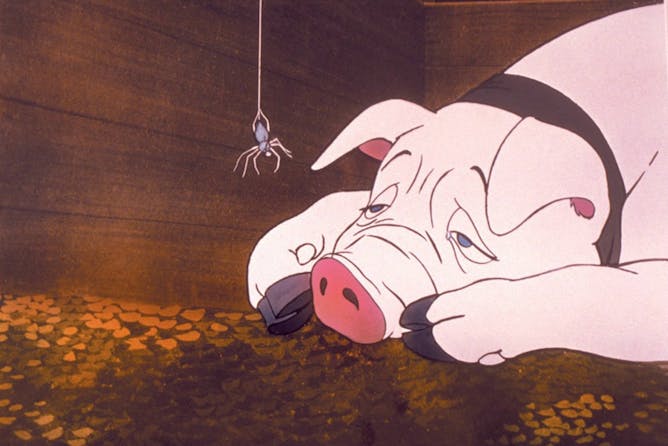
When early works of children’s literature broached the topic of death, it was usually to show how the protagonist copes in the aftermath of the death of a family member or friend. In many of these early works, depictions of death were softened for the reader, occurring outside the text. For instance, Mary’s parents in The Secret Garden (1911) die “off page”, which acts as a plot device to facilitate Mary’s arrival at Mistlethwaite Manor, where she discovers the secret garden. Charlotte’s Web (1952) softens the blow by making the characters non-human – in this case a spider.
Modern young adult novels are different. These texts not only depict young adult protagonists dealing with the aftermath of a loved one’s death, but also the trauma of witnessing it. Such as in the case of The Outsiders (1967), when the 14-year-old protagonist Ponyboy is present when his best friend Johnny dies in hospital and when Dally, a member of Ponyboy’s gang, is killed by the police.
In recent years, young adult novels have featured their protagonists doing the killing. The characters in books such as Harry Potter (1997), The Hunger Games (2008) and Tomorrow When the War Began (1993), struggle not only with the inevitability of death and the pain of losing loved ones, but also with the guilt and ethical dilemma of having to kill to survive.

There has recently been an influx of novels that present death from the perspective of the protagonist. These novels show characters who are terminally ill, presenting a rarely explored viewpoint in young adult novels – the perspective of dying. In books such as Sonya Hartnett’s Surrender (2005), Jenny Downham’s Before I Die (2007) and John Green’s The Fault in Our Stars (2012) the protagonist portrays the fear and pain of dying, the challenge of accepting one’s own mortality and the guilt of leaving their loved ones to cope after their death.
Other recent novels come from the perspective of someone who is already dead. They speak to the reader, and sometimes even their own friends and family, from beyond the grave, such as in Lauren Oliver’s Before I Fall (2010) and, although technically not a young adult novel, in Alice Sebold’s The Lovely Bones, which has been widely read by young people.
In the beginning of Jay Asher’s 2007 novel Thirteen Reasons Why it is made clear that the protagonist, Hannah Baker, has taken her own life. As the novel continues, Hannah’s story and the reasons for her actions are disclosed through a series of tapes, 13 in total, all recorded before her death.
The Netflix series also demonstrates the shift of how death is portrayed to an adolescent audience. While Asher’s novel leaves the method of Hannah’s suicide largely undisclosed, the series, released ten years after the book, portrays the suicide in excruciating detail.
There are many children’s picture books, such as The Heart and the Bottle by Oliver Jeffers, and Harry & Hopper written by Margaret Wild and illustrated by Freya Blackwood, that talk about death to help parents discuss the concept with young children, possibly for the first time. When talking to kids about loss and grief the Victorian government’s Better Health Channel recommends the use of “storybooks” to explain death, stating that, “It is important to recognise children’s feelings and speak with them honestly and directly about death and grief”.

Why is the honest and direct depiction of death in young adult novels often so controversial? Perhaps it comes from a desire to shelter young readers from topics such as war, terrorism, and human mortality – topics that young adult readers not only read about in the news and on social media, but experience. Or perhaps it is because depicting death is seen to be void of hope. But possibly the idea of hope has also shifted, away from a fairytale notion of happily ever after and towards a reality that acknowledges the existence of darkness and light.
 There is little research on the possible benefits of discussing death with young people. For those who are yet to be affected by the death of a loved one, reading about it from the perspective of another young adult can offer a way of building resilience. For those readers who have experienced the death of a family member or friend, being able to read about the experiences of others can offer consolation. Death is an indisputable part of adolescent lives, and books can provide a place for them to reflect on its influence on life.
Erin Farrow, PhD Candidate and Academic Sessional, Victoria University
This article was originally published on The Conversation. Read the original article.
 At the BookShelf

You must be logged in to post a comment.