Unknown's avatar

Five books to read to children that adults will enjoy


Alison Baker, University of East London

Recent research from the Literacy Trust has indicated that children’s interest in and enjoyment of reading increased during lockdown. However, some children who were less confident as readers did not report that their reading was as easily supported by parents when schools and libraries were closed. As some parts of the UK go into lockdown, what books can parents and carers share with children that both adults and children can both enjoy?

Oi Frog! by Kes Gray

In this wonderful picture book for kids aged three to six, an officious cat explains to a frog why it must sit on a log, even though it is bumpy and there is a danger of splinters in the bottom. All animals must sit on objects that rhyme, such as pumas on satsumas and gorillas on chinchillas. The inventive rhymes, combined with Jim Field’s colourful illustrations, will provide many laughs and make repeated sharing enjoyable.

Illustrations by Jim Field.

Look Up! by Nathan Bryon

Rocket loves looking up at the stars and wants to be an astronaut when she grows up, like Mae Jamieson, the first Black woman to travel into space. Her brother Jamal, who is more interested in looking down at his phone, has promised to take her to the park to see a meteor shower, but first, they have to go to the supermarket, where Rocket tries to get the other shoppers excited with amazing space facts. Can she interest her neighbours? And will anyone else come to the park? Rocket’s enthusiasm is infectious, and the tender portrayal of the siblings’ relationship will delight adults and children six and up.

Illustrations by Dapo Adeola.

Harriet Versus the Galaxy by Samantha Baines

Harriet has had to move in with her gran because her dad’s lorry driving job takes him away from home. While looking for her hearing aid under her bed, Harriet finds an alien and discovers that when she wears her aid she can understand its language. Harriet learns that her gran is a member of an intergalactic security agency and Earth is under attack. Can Harriet, her new friend Robin, her gran and a sock munching alien save the planet? This funny and exciting book, from inclusive publishers Knights Of, has short chapters and lively illustrations, making it a perfect shared book for readers not quite ready to read a novel for themselves (ages six to 11).

Illustrations Jessica Flores.

Nevermoor: The Trials of Morrigan Crow by Jessica Townsend

Ten-year-old Morrigan Crow was born on the unluckiest day, Eventide, and as such is blamed for all misfortunes that befall her town. Worst of all, Morrigan is cursed to die midnight on her eleventh birthday. However, just before the curse can come true she is whisked away by traveller, adventurer and hotel proprietor Jupiter North to the hidden Free State city of Nevermoor, home of the Wundrus Society. Can Morrigan pass the trials to join the mysterious society? Can she outwit the Free State immigration officers? And is Morrigan’s life still in danger?

This book is enormous fun. Jessica Townsend has created a fantastic cast of characters, and it would be a wonderful book to read with or to children aged eight and above. The audiobook, read by Gemma Whelan, would also be wonderful to share.

Sawbones by Catherine Johnson

Film writer and novelist Catherine Johnson is well known for her historical novels, and this is one of her best. In 18th-century London, Ezra McAdam, a mixed-race 16-year-old surgeon’s apprentice, foils a break-in at his master’s house. This sets off an exciting chain of events that include grave robbing and murder. Along the way he is befriended by Loveday Finch, the daughter of a man whose murdered body has similar injuries to corpses that Ezra has dissected; can Ezra and Loveday survive to find out the truth behind her father’s murder? A fantastically exciting read to be shared and discussed with readers aged ten and above.The Conversation

Alison Baker, Senior Lecturer in Early Childhood Studies, University of East London

This article is republished from The Conversation under a Creative Commons license. Read the original article.

Unknown's avatar

In 20 years of award-winning picture books, non-white people made up just 12% of main characters


Early childhood books shortlisted over the years.
Helen Caple, Author provided

Helen Caple, UNSW and Ping Tian, University of Sydney

A highlight for Australian children’s literature is the announcements of the Children’s Book Council of Australia (CBCA) Book of the Year award winners. This year’s winners will be announced on Friday October 16 — right before the start of CBCA’s Book Week on October 19.

Making the shortlist brings great exposure for the books and their creators. The shortlisted books are put on special display in public school libraries and supermarket shelves. They are even made into teaching resources, suggesting an exploration of the book’s themes, for instance.

Crucially, award lists contribute to the “canon” of literary works that become widely read. This canon is distributed through libraries, schools and homes. Sometimes, benevolent relatives give them as gifts.

We investigated the diversity — including ethnicity, gender and sexuality — of the 118 shortlisted books in the early childhood category of Book of the Year between 2001 and 2020. We also examined diversity among the 103 authors and illustrators who have made the shortlist over the past 20 years.

Our yet unpublished study found most (88%) human main characters in the shortlisted books were white; none of the main characters were Asian, Black or Middle Eastern.

Why diversity matters

The CBCA was formed in 1945, as a national not-for-profit organisation promoting children’s literary experiences and supporting Australian writers and illustrators. The first awards began in 1946.

There were originally three categories for Book of the Year: older readers, younger readers and picture book.

In 2001, “early childhood” was added as a category. This was for picture books for children up to six years old.

Picture books are significant for not only developing early literacy skills, but also for the messages and values they convey about society. They help children learn about their world.


Read more:
Children’s books must be diverse, or kids will grow up believing white is superior


The diversity children see represented in that world affects their sense of belonging and inclusion. At this age, cultural values and bias settle in and become the foundation for how we develop. These values and biases have a profound influence on our successes and struggles in our adult lives.

A positive for gender diversity, but not ethnicity

We used visual content analysis to examine ethnic diversity, we well as gender, disability, sexuality and linguistic variation in the 118 early childhood category shortlisted books — between 2001 and 2020.

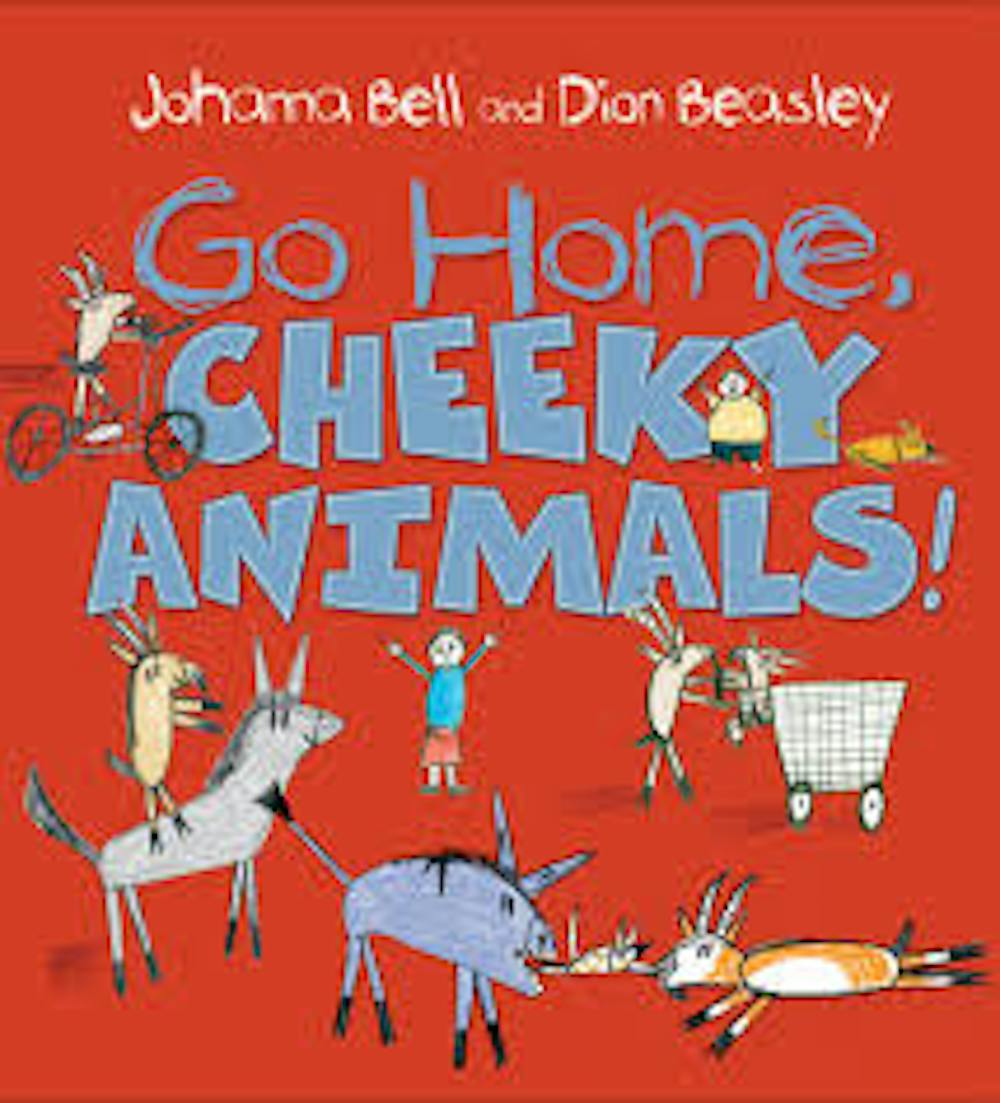
The cover of picture book Go Home Cheeky Animals
Illustrator Dion Beasley.
Allen & Unwin

We also examined diversity among the 103 authors and illustrators who have made the shortlist over the past 20 years. Only one person — Alywarr illustrator Dion Beasley, from the Northern Territory, and winner in 2017 for Go Home Cheeky Animals — identifies as Indigenous.

Female authors and illustrators, however, were more represented (66%) than male (34%).

Looking at the picture books, we first identified four major types of characters: human (52.5%), animal (41.5%), object (4.4%) and imaginary (1.4%).

We then distinguished between main characters and those in supporting roles that make up the story world in which the main characters act.

One of the most encouraging findings was the gender parity among main characters. We identified 52 solo human main characters across all 118 books. Fifty-one of these are children, with 25 boy and 24 girl main characters (two main characters were not identified by gender).


Read more:
Five tips to make school bookshelves more diverse and five books to get you started


This placed boys and girls equally in the role of the protagonist, which stands in contrast to previous research looking at best-selling picture books.

But in terms of ethnicity, the human main characters are overwhelmingly white (88%). There are just two Indigenous main characters and one who is multiracial. There have been no Asian, Black or Middle Eastern main characters.

Looking at the wider story world, supporting characters are still overwhelmingly white. But this world does marginally include characters of Asian, Black and Middle Eastern heritage. Overall, human characters appear in 85 (72%) of the 118 books.

White characters appear in 74 of these books, and only nine books have no white characters. Non-white characters appear in a total of 18 books (21%).

Our results for ethnic diversity don’t correlate well with the latest Australian census data (from 2016). The cultural heritage of Australia’s population is described as: 76.8% white, 10% East and Southeast Asian, 4.6% South Asian, 3.1% West Asian and Arabic, 2.8% Aboriginal and Torres Strait Islander, 1.5% Maori and Pacific Islander, 0.7% African, 0.6% Latin American.

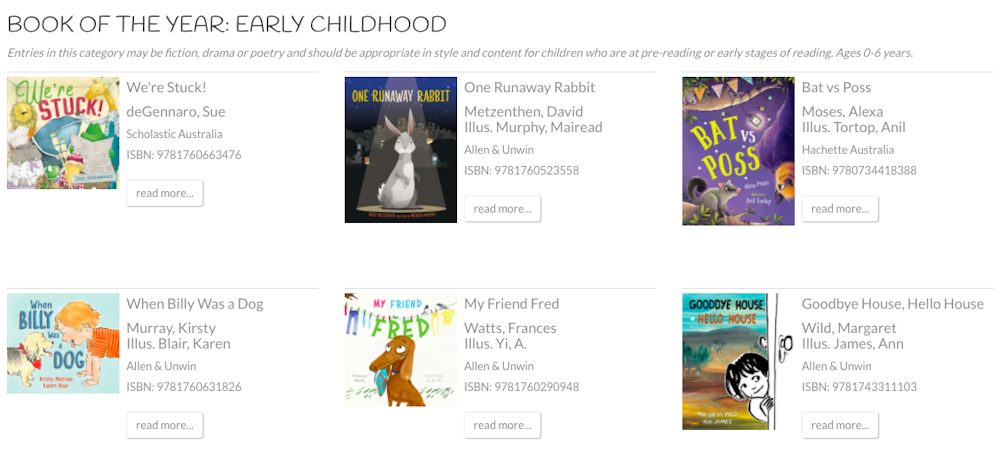
The 2020 Early Childhood Book of the Year shortlist.
CBCA/Screenshot

The CBCA early childhood shortlist minimally represents other forms of diversity. We see only two main characters living with a disability and no characters who are sexually and gender diverse.

Other types of diversity

Linguistic variation is also minimal, in only four books, which does not reflect the linguistic diversity of the wider Australian population.

In response to our queries regarding their judging criteria, the CBCA said:

we do not select books for entry into our awards. It is the publishers and creators who select the books for entry. Our main criterion is literary merit, we do not actively exclude diversity, themes or genre.

Only two of the six 2020 shortlisted books in the early childhood category have human main characters. And these are both white.

The age of zero to six years is a crucial stage of development. It is important for young readers to see people and surroundings that are like their own to cultivate a sense of belonging. It is equally important to see a different world they are not familiar with.


Read more:
5 reasons I always get children picture books for Christmas


If award-winning books sit at the top of reading lists, these books also need to embrace and reflect the full and rich diversity that makes up our country.The Conversation

Helen Caple, Associate Professor, UNSW and Ping Tian, Lecturer , University of Sydney

This article is republished from The Conversation under a Creative Commons license. Read the original article.
Unknown's avatar

The Best Children’s Books?


The link below is to an article that looks at the best children’s books.

For more visit:
https://www.npr.org/2020/08/31/905804301/welcome-to-story-hour-100-favorite-books-for-young-readers

Unknown's avatar

2020 New Zealand Book Awards for Children and Young Adults Winners


The link below is to an article reporting on the winners of the 2020 New Zealand Book Awards for Children and Young Adults.

For more visit:
https://www.booksandpublishing.com.au/articles/2020/08/13/155169/nz-book-awards-for-children-and-young-adults-2020-winners-announced/

Unknown's avatar

Children’s books must be diverse, or kids will grow up believing white is superior


Shutterstock

Helen Joanne Adam, Edith Cowan University; Caroline Barratt-Pugh, Edith Cowan University; Libby Jackson-Barrett, Edith Cowan University, and Robert Stanly Somerville, Edith Cowan University

Global support for the Black Lives Matter movement isn’t only about standing up against the injustice done to George Floyd, or Indigenous Australians in custody. People are also standing up against the entrenched racism that leads to a careless approach towards the lives of people who aren’t white.

Research shows 75% of Australians hold an implicit bias against Indigenous Australians, seeing them negatively, even if this is unconscious. Children absorb this bias, which becomes entrenched due to messages in the media and in books, and continues to play out at school and the broader community.

Making sure children have access to books showing diversity is one step in breaking the cycle that leads to entrenched racism.

Children develop bias from an early age

Children develop their sense of identity and perceptions of others from a very early age – as early as three months old. Because of this, young children are particularly vulnerable to the messages they see and hear in the media and in books.

Research over many years has shown books can empower, include and validate the way children see themselves. But books can also exclude, stereotype and oppress children’s identities. Minority groups are particularly at risk of misrepresentation and stereotyping in books.

First Nations groups are commonly absent from children’s books. Excluding the viewpoints, histories and suffering of First Nations Peoples can misrepresent history, and teach kids a white-washed version of the past.


Read more:
Captain Cook ‘discovered’ Australia, and other myths from old school text books


A world of children’s books dominated by white authors, white images and white male heroes, creates a sense of white superiority. This is harmful to the worldviews and identities of all children.

Sharing stories through books

Evidence shows sharing Aboriginal and Torres Strait Islander stories helps break down stereotypes and prejudice. And this, importantly, helps empower Aboriginal children and improve their educational engagement and outcomes.

But research suggests many classrooms have books that are monocultural literature, and Aboriginal and Torres Strait Islander books are notably absent.

There are some encouraging signs, with an increase in the publication of books by and about Aboriginal and Torres Strait Islander peoples. We are also seeing bookshops and publishers reporting a rise in demand for books on race and racism.

Books can empower and validate children’s identities. But they can also make them feel inferior.
Shutterstock

This can also help adults become informed about Australia’s colonial history. Reading these books can help challenge their own unconscious biases and misunderstandings.


Read more:
Bias starts early – most books in childcare centres have white, middle-class heroes


The challenge for teachers and parents is to access suitable children’s books and share them with the children in their care. We can use these stories as a foundation for conversations about culture and community.

This can help to drive change and support reconciliation.

Other ways of sharing diverse stories

Creating Books in Communities is a pilot project run by the State Library of Western Australia that helps create books with families about their everyday experiences. These books represent the families’ culture and language.

Projects like these are another way we can recognise and extend the voices of Aboriginal and Torres Strait Islander peoples.

Another project, On Country Learning, involves children and teachers learning through culture alongside Aboriginal elders. A preliminary review of the program shows it enriches teacher knowledge and motivates all children to learn.

Reading and listening to the stories of Aboriginal and Torres Strait Islander peoples can help teachers gain important knowledge and understanding. This helps them effectively engage with and teach Aboriginal and Torres Strait Islander students.


Read more:
9 tips teachers can use when talking about racism


And it helps them teach all students about Aboriginal and Torres Strait Islander languages, histories and cultures.

To see real and lasting change children need everyday story books with heroes and characters that reflect their diverse backgrounds. To help this happen we can support groups such as the We Need Diverse Books Movement and LoveOZYA , which actively call for and promote diverse books for young people.

Affirmation of all children’s culture, language and identity at this pivotal time in world history is critical to the future of all our children.

Parents and teachers can source Aboriginal literature from websites such as: Magabala Books, IAD Press, Aboriginal Studies Press, Fremantle Press, UWA Publishing, BlackWords, Batchelor Institute Press.The Conversation

Helen Joanne Adam, Senior Lecturer in Literacy Education and Children’s Literature: Course Coordinator Master of Teaching (Primary), Edith Cowan University; Caroline Barratt-Pugh, Professor of Early Childhood, Edith Cowan University; Libby Jackson-Barrett, Senior Lecturer, Edith Cowan University, and Robert Stanly Somerville, Head of Teaching and Learning, Kurongkurl Katitjin Centre for Australian Indigenous Education and Research, Associate Professor, Edith Cowan University

This article is republished from The Conversation under a Creative Commons license. Read the original article.

Unknown's avatar

P is for Pandemic: kids’ books about coronavirus


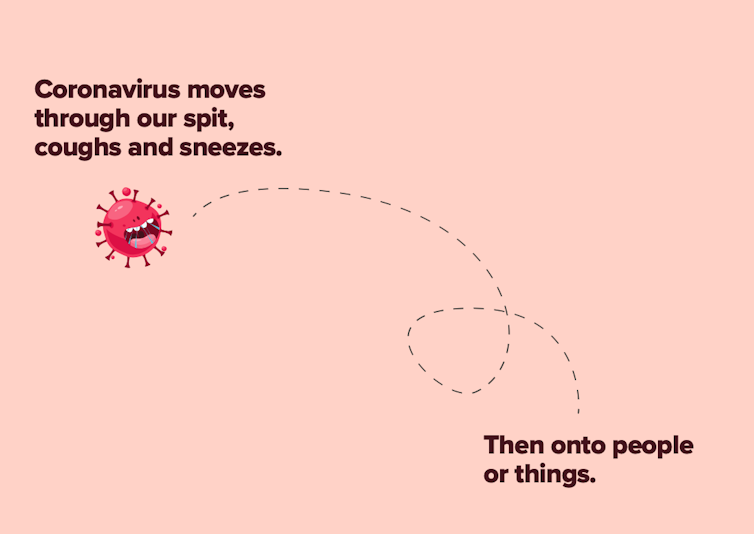
NSW Health

Shih-Wen Sue Chen, Deakin University; Kristine Moruzi, Deakin University, and Paul Venzo, Deakin University

With remarkable speed, numerous children’s books have been published in response to the COVID-19 global health crisis, teaching children about coronavirus and encouraging them to protect themselves and others.

Children’s literature has a long history of exploring difficult topics, with original fairy tales often including gruesome imagery to teach children how to behave. Little Red Riding Hood was eaten by the wolf in a warning to young ladies to be careful of men. Cinderella’s stepsisters had their eyes pecked out by birds as punishment for wickedness.

More recently, picture books have dealt with issues including September 11, the Holocaust, environmental issues and death.

But this wave of coronavirus books is unique, being produced during a crisis rather than in its aftermath.

Many have been written and illustrated in collaboration between public health organisations, doctors and storytellers, including Hi. This is Coronavirus and The Magic Cure both produced in Australia.

These books explore practical ways young children can avoid infection and transmission, and provide strategies parents can use to help children cope with anxiety. Some books feature adult role models, but the majority feature children as heroes.

The best of these books address children not just as people who might fall ill, but as active agents in the fight against COVID-19.

Our top picks

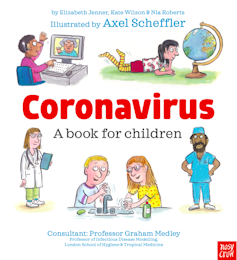
Coronavirus: A Book for Children

Written in consultation with an infectious diseases specialist and illustrated by Axel Scheffler of The Gruffalo, this nonfiction picture book offers children information about transmission, symptoms and the possibility of a cure, reassuring readers that doctors and scientists are working on developing a vaccine.

The last few pages answer the question “what can I do to help?”

Coronavirus: A Book for Children shows a diversity of characters taking action to manage the effects of the virus. Children are told to practice good hygiene, not to disturb their parents while they are working from home and keep up with their schoolwork.

It is also hopeful: reinforcing the idea that the combination of scientific research and practical action will lead to a point when “this strange time will be over”.

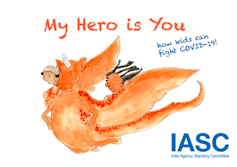
My Hero is You! How kids can fight COVID-19

Written and illustrated by Helen Patuck, My Hero is You! is an initiative of a global reference group on mental health, and is a great book for parents to read with their children.

Sara, daughter of a scientist, and Ario, an orange dragon, fly around the world to teach children about the coronavirus.

Ario teaches the children when they feel afraid or unsafe, they can try to imagine a safe place in their minds.

Based on a global survey of children and adults about how they were coping with COVID-19, My Hero is You! translates the results of this comprehensive survey into a reassuring story for kids experiencing fear and anxiety. It also acknowledges the global nature of the health crisis, showing children they are not alone.

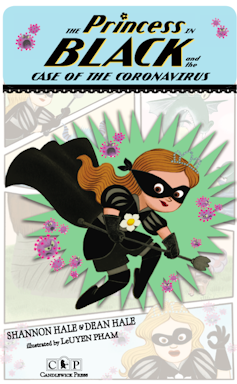
The Princess in Black and the Case of the Coronavirus

The Princess in Black is an existing series, with seven books published since 2014 and over one million copies sold. In the books, Princess Magnolia enlists children to help with a problem she cannot defeat alone: here, of course, that problem is coronavirus.

For fans of the series, Magnolia and her pals are familiar characters encouraging readers to solve the problem of coronavirus by washing their hands, staying at home, and keeping their distance.

The Princess in Black shows a deft use of humour to introduce children to complex ideas in a familiar and friendly manner.

Little heroes

Children’s books have often sought to entertain and educate children at the same time. The immediacy of these books, with their practical solutions and strategies for children to manage fears and anxieties about sickness and isolation, is a phenomenon we haven’t seen before.

With free online distribution and simple messages, these books present children with individual actions that have both personal and collective benefits.

Importantly, the heroes identified in these stories include children themselves. Their fears are acknowledged, but at the same time they are told they can fight the virus successfully.


A frequently updated list of children’s books on the pandemic is available from the New York School Library System’s COVID-19 page.The Conversation

Shih-Wen Sue Chen, Senior Lecturer in Writing and Literature, Deakin University; Kristine Moruzi, Research fellow in the School of Communication & Creative Arts, Deakin University, and Paul Venzo, , Deakin University

This article is republished from The Conversation under a Creative Commons license. Read the original article.
Unknown's avatar

Free Sesame Street Ebooks


The link below is to an article that looks at Sesame Street ebooks that are currently available for free, including Kindle.

For more visit:
https://goodereader.com/blog/e-book-news/100-sesame-street-ebooks-available-for-free

Unknown's avatar

Free Audiobooks for Kids From Audible


The links below are to articles reporting on free audiobooks on offer from Audible for kids while schools are closed.

For more visit:
https://ebookfriendly.com/hundreds-audible-audiobooks-free-coronavirus-pandemic/
https://goodereader.com/blog/audiobooks/audible-offering-hundreds-of-kids-audiobooks-for-free
https://bookriot.com/2020/03/19/audible-launches-audible-stories-for-children-and-teens-while-school-is-out/

Unknown's avatar

Coronavirus: five books to keep young people happy during lockdown – children’s author


George Rudy via Shutterstock

Mimi Thebo, University of Bristol

Stories can be mirrors that help young people express feelings about a given situation. They give children a vocabulary for what is happening. But, because of how fiction works in the brain, stories can also be windows. When we read fiction, we inhabit other bodies and feel the concerns of other people. This helps young people to develop empathy – but has another profound effect. Reading stories makes us feel experienced and increases resilience.

I’ve chosen some wonderful books that all function both as mirrors and windows for children as the world faces the effects of Coronavirus. They are beautifully written and/or illustrated and should fire young imaginations, while comforting the whole family.

The Red Tree

This is a beautiful picture book – sparse of text – with lush landscapes in Sean Tan’s magical style. The reader loses themselves in pages that are achingly evocative of yearning, loss and wonder in a kind of heady cocktail of intense emotion, boredom and stoicism.

For a child, there is always hope.
Amazon

Dark leaves fall in our character’s bedroom, but by the end, they have coalesced into a beautiful red tree.

There is space here for even a very young reader to express what they think is happening page by page. The art could stimulate imitation. I can also imagine making a little red tree trunk and branches and adding a leaf to it, day by day.

There is very little reading to be done, so a slightly older child could also “read” it to a younger one.

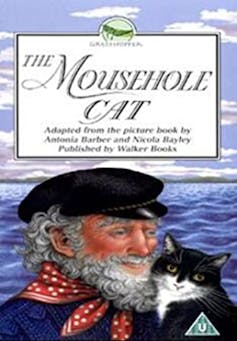
The Mousehole Cat

Antonia Barber sets her classic story on the Cornish coast. The narrative is about a cat who saves the day when her community is threatened. It is wordier than many picture books, but narrated by the cat in clear, beautifully written prose – it’s a pleasure to read aloud.

Moving story of bravery, sacrifice and companionship.
Amazon

Nicola Bayley’s illustrations are engaging and immersive – who wouldn’t like to go to the seaside right now? – and the characters easily inspire affection.

Touching on concepts of scarcity and sacrifice, this is a very empowering story for a young listener or reader. The smallest character in the story is the hero who saves everyone – by singing. It would be easy to live in this story for a while, going fishing from the laundry basket, practising storm singing, repeating some of the turns of phrase.

The illustrations are inspiring for young artists and could also be the basis of remembering visits to the seaside, pretend beach picnics or natural history lessons.

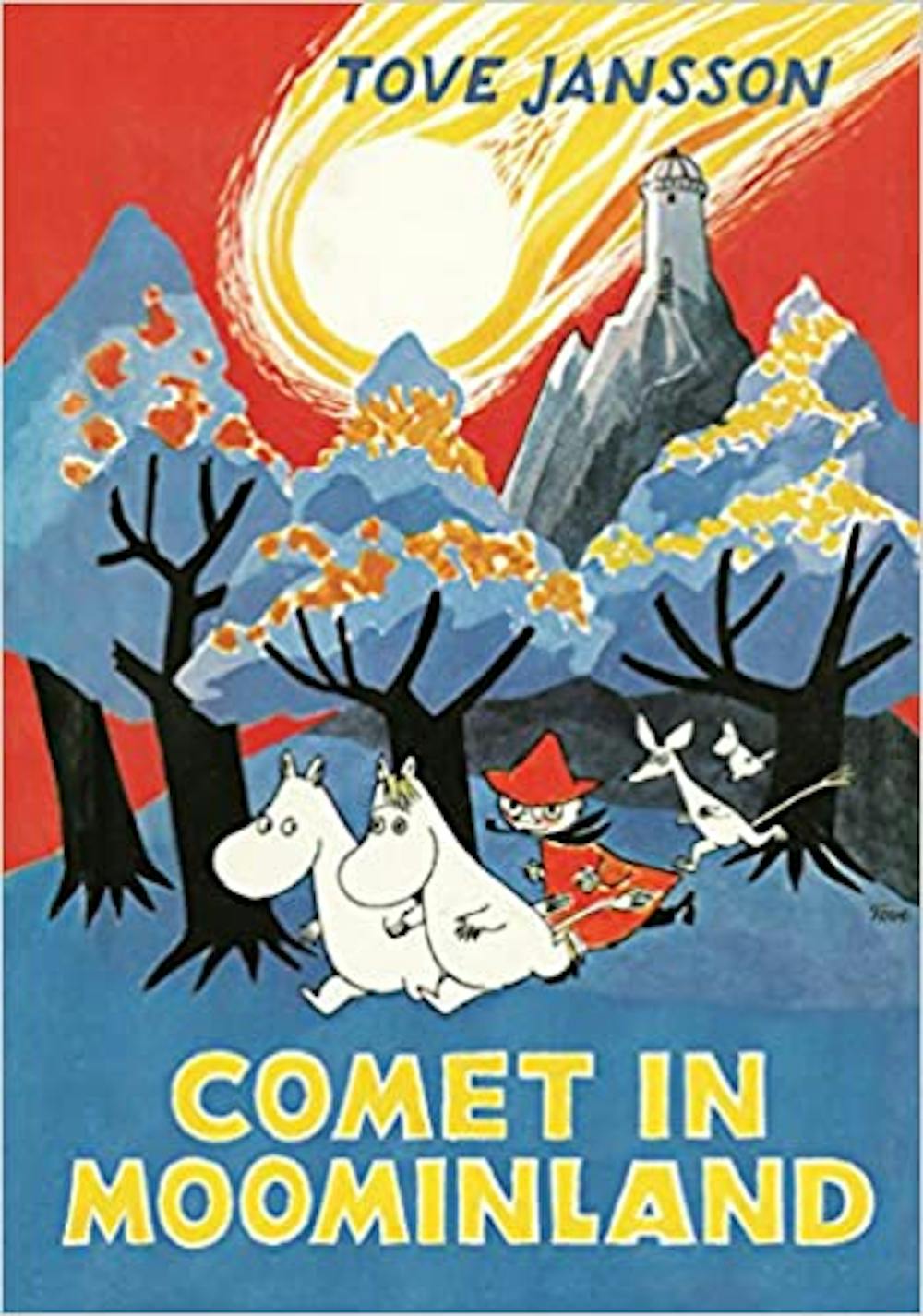
Comet in Moominland

A trip to Tove Jansson’s Moominland always makes everything better. Here, the family flee from an approaching comet, meeting many favourite characters on the way.

Full of adventures and narrow escapes.
Amazon

The much-beloved Moomins are eccentric hippo-like people, very accommodating of difference and otherness. That said, many of the characters have their little ways, and being accommodating isn’t always comfortable. The realism of the relationships gives even the silliest of Jansson’s stories the texture of real life.

Quirky line drawings are immensely endearing and the story, while exciting with elements of real fear, never feels as if it will end badly. The language is fun, with word play and characters’ attitudes and, again, the child is the hero. It’s not hard to draw a Moomin, and there are endless opportunities for drama. Year twos or threes can probably read it to themselves, with someone on hand for the tricky bits, but it’s fun enough to engage older children, and silly enough for littlies.

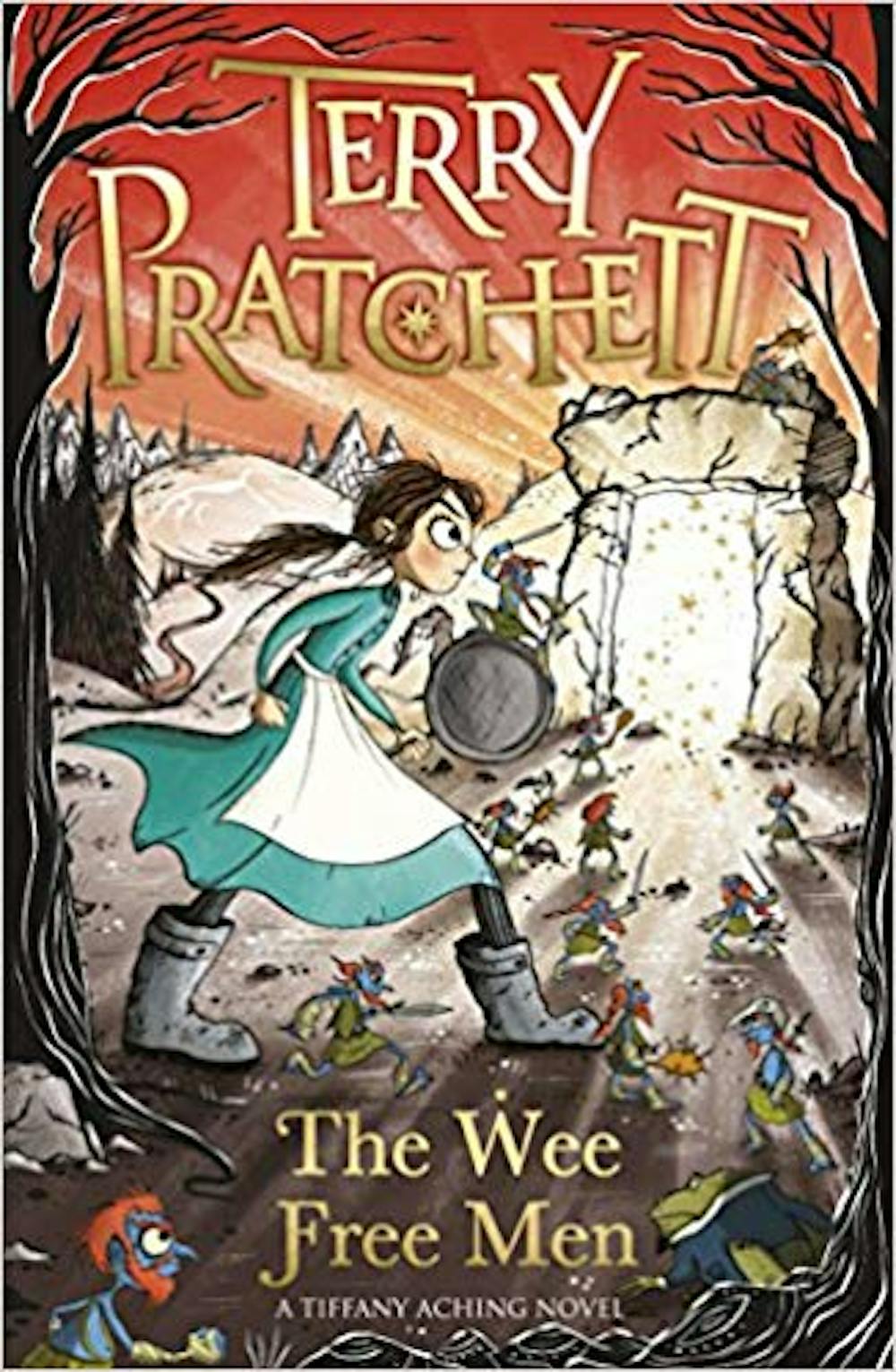
The Wee Free Men

Tiffany Aching comes from chalkland, where nobody has it easy, and everyone works hard. When a rift opens on her doorstep and her despised little brother is taken, she discovers she’s not ordinary, after all. Armed with a cast-iron frying pan, she takes on the full force of Fairyland.

A riotous out-loud read.
Amazon

This is a riotous out-loud read from the late Terry Pratchett, featuring a tribe of “pictsies” who speak in a Scottish accent that sounds a lot like the stand-up comic Billy Connolly. Tiffany’s gran has recently passed away – and the danger feels quite real – but we know that Tiff will get us through. She certainly does, battling forces of depression and self-doubt to do so – another young leader in a time of community danger. Even hardened teenagers might smile at the best bits and tweens will devour it whole. Children as young as six or seven can follow along.

The narrative is a role-play bonanza and there are opportunities to investigate British folklore, identities in the United Kingdom and gender roles. Illustrations in the text might inspire art and mapping the settings would be an interesting exercise. Further adventures of some of the characters could be written, and geography lessons about chalk grassland would be easy to work in.

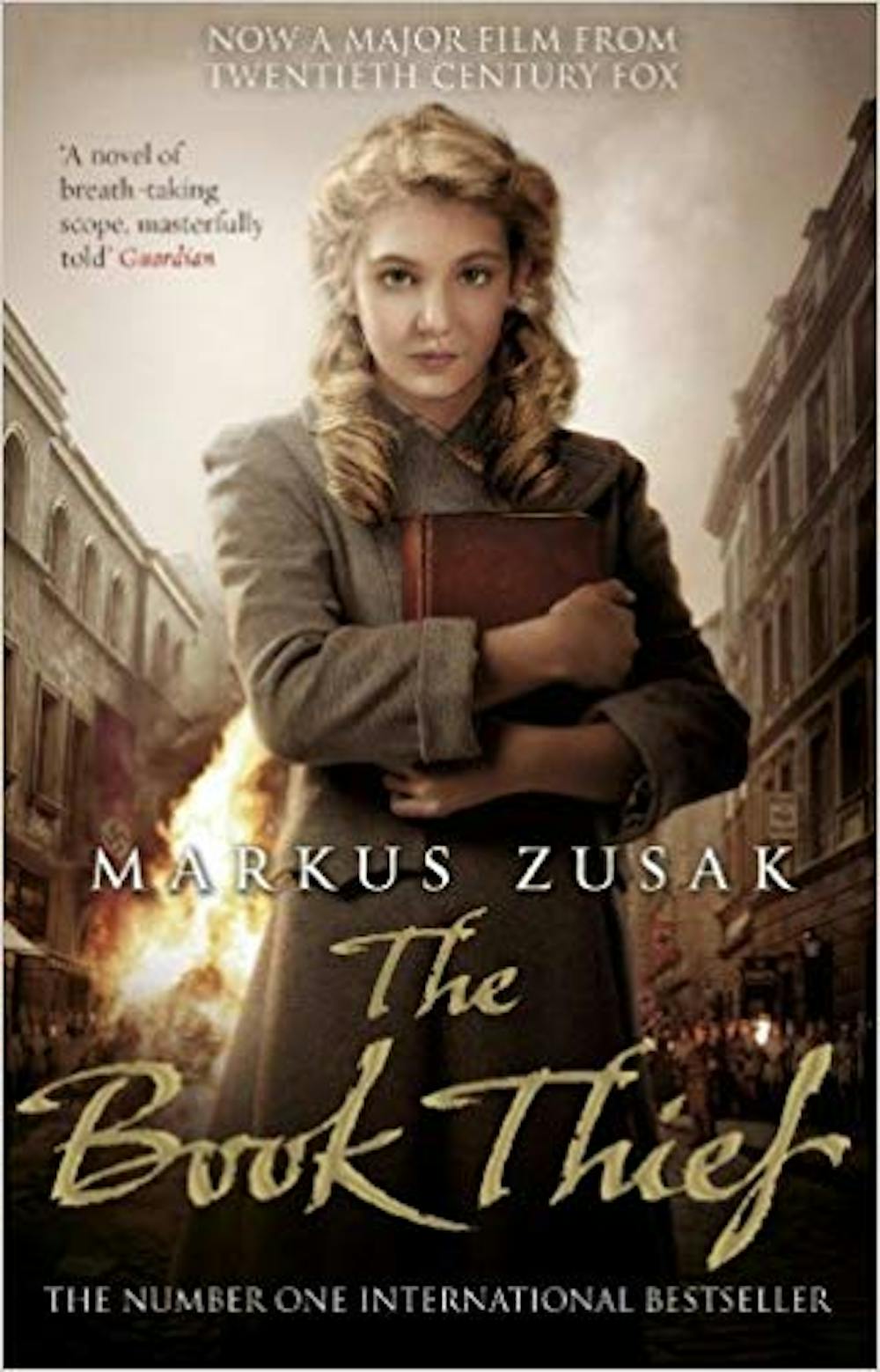
The Book Thief

For resilient older children and teens, Markus Zusac’s story is set in a time of many lives lost – Germany during the second world war – and narrated by Death. It is gorgeously written (an international bestseller, adapted for film) and, while the subject matter is difficult, the narrative pulses with life and hope.

Navigating trauma and hard times.
Amazon

For a young person engaged with current events, questioning authority and impatient of parental efforts to shield them from the grimmer elements of our current reality, this book could be a lifeline.

Liesel Meminger is illiterate when the story begins, but takes a book that has been dropped at her brother’s graveside. As she begins to read and to leave childhood behind, she steals many more books. Love, death and the importance of even futile actions inform the story of Liesel’s coming of age and provide ways of thinking about what it means to be human.

This could be read together silently, perhaps taking chapters in turn, rationed out as a treat for discussion or not. It’s a natural accompaniment to history lessons, geography, or some online German instruction and watching the film could lead to a discussion of adaptation. But perhaps you could just leave a copy of it out for anyone who needs it to find and make their own.

Many of these titles are available electronically, but local bookshops are delivering and posting orders. After all, there’s nothing more comforting than snuggling behind the protective embrace of an open book.The Conversation

Mimi Thebo, Reader in Creative Writing, University of Bristol

This article is republished from The Conversation under a Creative Commons license. Read the original article.
Unknown's avatar

Children Who Own More Books Read Better


The link below is to an article that claims children who own more books read better – which is fairly obvious I suppose.

For more visit:
https://lithub.com/children-who-own-books-more-likely-to-be-good-readers-reveals-obvious-study/