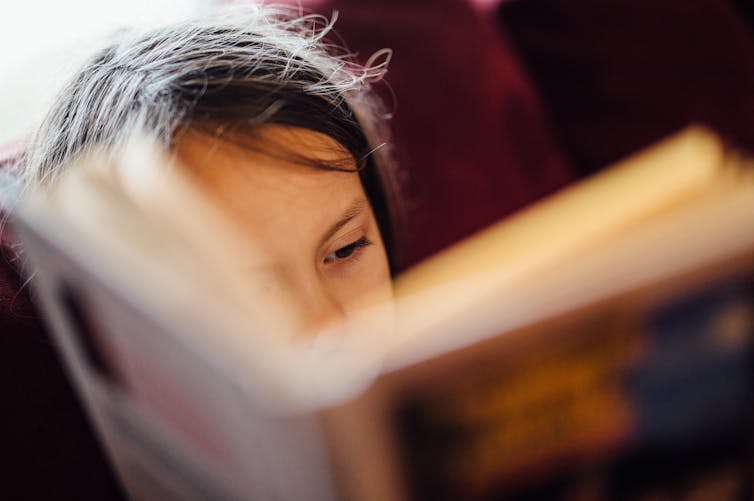
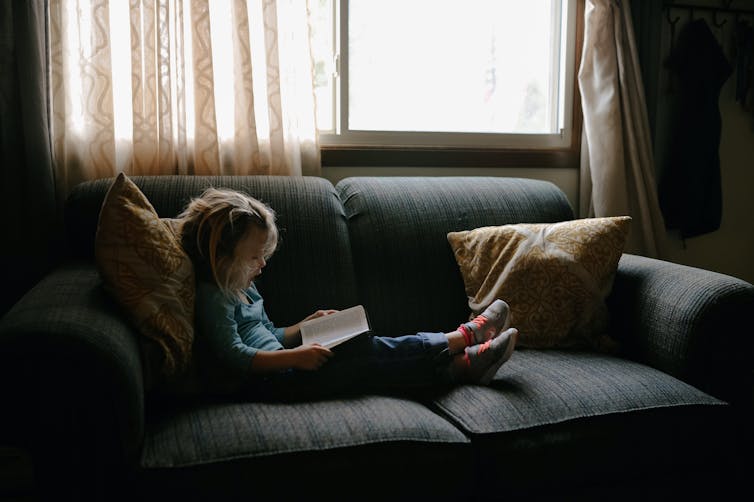
Parents at a loss to find activities for their children during COVID lockdowns can encourage them to escape into a book. New research shows how reading books can help young people escape from their sources of stress, find role models in characters and develop empathy.
Recent media reports have highlighted a concerning rise in severe emotional distress in young people. Isolation and disruption of learning in lockdown have increased their anxiety. Given the recent surge in COVID-19 cases and lockdowns in Australia, parents and educators may look to connect young people with enjoyable activities that also support both their well-being and learning.
A lot has been written about the role of regular reading in building literacy skills. Now, my findings from a BUPA Foundation-funded research project on school libraries and well-being provide insight into how books and reading can help young people deal with the well-being challenges of the pandemic.
The findings suggest books can not only be a great escape during this challenging time, but also offer further well-being benefits.
Reading-based interventions have been used successfully to support children who have experienced trauma. In a recent study, around 60% of young people agreed reading during lockdown helped them to feel better.
My research project confirms young people can use books and reading to escape the pressures of their lives. As one student said:
“If you don’t know what to do, or if you’re sad, or if you’re angry, or whatever the case is, you can just read, and it feels like you’re just escaping the world. And you’re going into the world of the book, and you’re just there.”
If you enjoy reading, there’s a good chance you have favourite characters who hold a place in your heart. The project found young people can find role models in books to look up to and emulate, which can help to build their resilience. A student described her experience reading the autobiography of young Pakistani activist and Nobel laureate Malala Yousafzai:
“I thought it was incredible how no matter what happened to her, even after her horrific injury, she just came back and kept fighting for what she believed in.”
Other research has linked connecting with characters to mental health recovery, partly due to its power to instil hope in the reader. Building relationships with characters in books can also be used as “self-soothing” to decrease anxiety.
Young people also celebrate their affection for book characters in social networking spaces such as TikTok, where they share their enjoyment of the book journey with favourite characters.
Young people are taking to TikTok to share their love of books with millions of others.
Developing empathy through reading
Research supports the idea that reading books builds empathy. Reading fiction can improve social cognition, which helps us to connect with others across our lives. My previous work with adult readers found some people read for the pleasure they get from developing insight into other perspectives, to “see the world through other people’s eyes”.
In the project, a student described how reading books helped him to understand others’ perspectives. He explained:
“You get to see in their input, and then you go, ‘Well, actually, they’re not the bad guy. Really, the other guy is, it’s just their point of view makes it seem like the other guy’s the bad guy.’ ”
Your teacher librarian can help you
If parents are not sure what books will best suit their child’s often ever-changing interests and needs, they can get in touch with the teacher librarians at school. Even during lockdown they are usually only an email or a phone call away.
The library managers in the project played an important role in connecting students with books that could lead to enjoyable and positive reading experiences.
For example, a library manager explained that she specifically built her collection to make sure the books provided role model characters for her students. She based her recommendations to students on their interests as well as their needs. To support a student who had a challenging home life, she said,
“I recommend quite a number of books where we’ve got a very strong female character […] in a number of adverse situations and where she navigates her way through those.”
In challenging times, many parents are looking for an activity that supports their children’s well-being. And as reading is also linked to strong literacy benefits, connecting them with books, with the support of their teacher librarian, is a smart way to go.
When I tell people I’m an environmental psychologist, they often assume that means I am a “tree hugger” and they are not entirely wrong. But it really means I spend a lot of time thinking and finding out about people’s relationships with the natural world, trees included.
So when I dropped in at my local book store and saw a whole collection of new books for children about trees, I found myself wondering: What kinds of books help kids connect with trees?
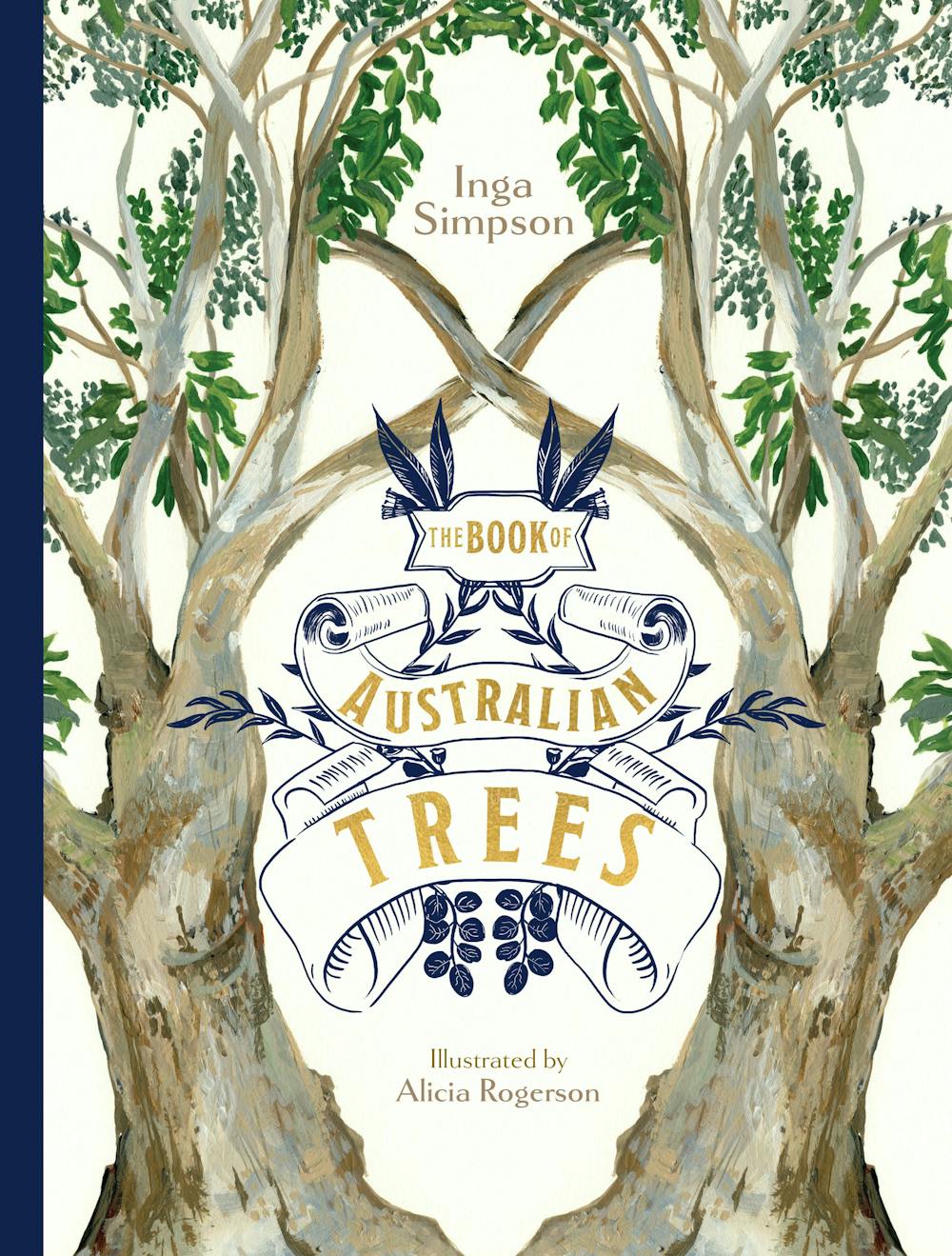
The question was prompted by a recent publication, The Book of Australian Trees by Inga Simpson and Alicia Rogerson. Its not the only tree book published this year, but it’s notable for its focus on Australian trees.
The last few years have seen the publication of some remarkable books about trees for children, for example Peter Wohlleben’s Can you hear the trees talking (a 2019 young reader’s edition of his book The Hidden Life of Trees) and Piotr Socha and Wojciech Grajkowski’s The Book of Trees (2018).
I love both these books, but they also illustrate why books about Australian trees and plants are needed. When Socha and Grajkowski declare: “In winter, the only green trees are coniferous trees”, or when Wohlleben suggests young readers go outside and find a birch log (likely in in their family’s store of firewood) kids in the southern hemisphere might feel lost.
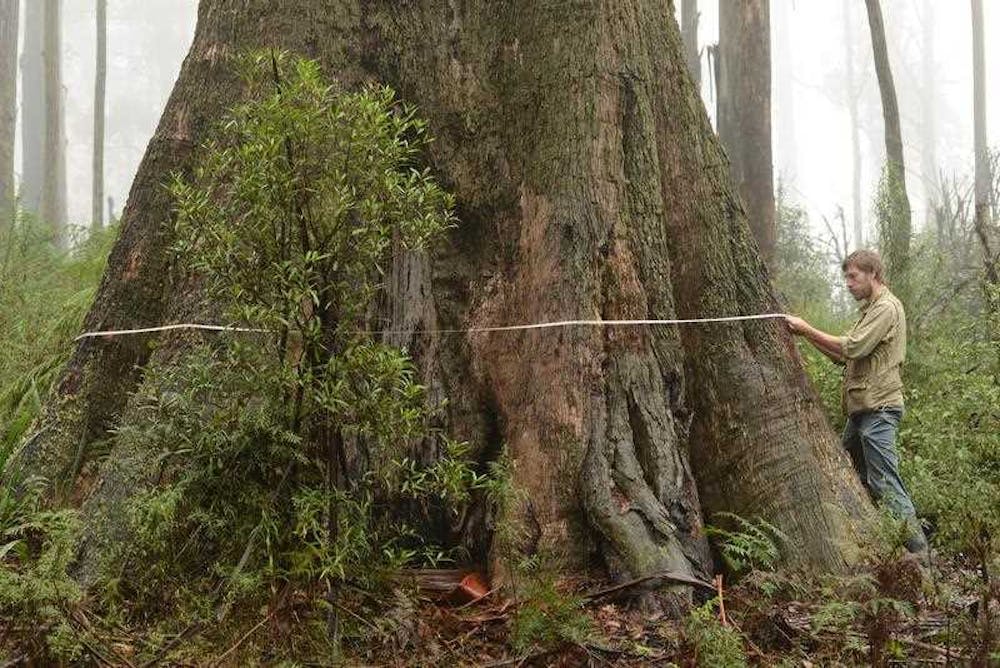
A researcher measures a Mountain Ash in a forest in Victoria. Australian National University
Learning to love plants and trees
Having books that help children learn to love trees really matters to me. There is increasing concern that people are less connected with the natural world than in the past. Plants are of particular concern, as there is evidence of lower appreciation, knowledge and concern for plants compared with animals. Various writers have noted the negative implications of these trends for human health and well-being, environmental action, and conservation.
The introduction to Simpson and Rogerson’s book echoes some of these pathways for connection. “Trees tell stories about places,” Simpson writes and while trees may all seem the same, “if you look more closely, they are each a little different, like people”.
Goodreads
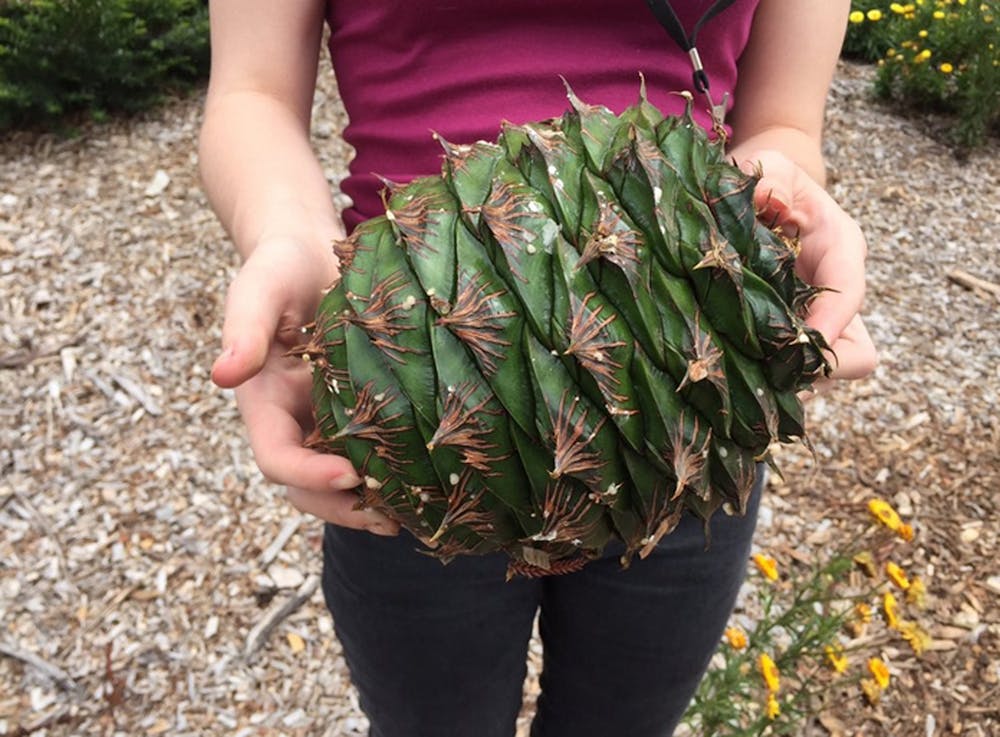
The book introduces just 16 different trees, most from the eastern mainland states of Australia. Each species is introduced with a single painting by Rogerson, often showing the trunk and lower canopy but sometimes just a part of the trees such as a Bunya Pine nut or a flower.
Simpson’s text is brief. It includes visual characteristics of the tree, the kinds of soils or climate in which it grows, and usually a an insight to cultural associations with the tree. Some entries refer to “famous trees”, for example Centurion, the tallest mountain ash tree found in Tasmania. Others refer to Australian literary references to trees, like the “Old Man Banksias” of May Gibbs’ Snugglepot and Cuddlepie stories.
I enjoyed Simpson’s evocative description of trees, particularly of bark and the ways it differs across trees and seasons. These often emphasise the links between visual attributes of trees and familiar human characteristics. Brush box branches “grow out like arms, with crooked elbows, then wrists and long fingers”. But while Simpson describes the kind of environments in which the trees typically grow, there is little sense of story or sense of place in these descriptions.
Books on trees and plants often focus purely on ecological qualities. Simpson incorporates cultural aspects of trees as they offer an important means of connection. But these are not always well considered. Linking magnificent Flame Trees to Cold Chisel’s 1984 song about “lost loves or old flames” seems unlikely to resonate with younger readers. Only a single entry (Bunya Pine) references relationships with First Nations peoples that have been maintained over many thousands of years.
The book is beautifully illustrated and celebrates the beauty of trees of this land — the flyleaf paintings of leaves, bark, cones, seeds, and blossoms lend themselves to a plant-rich conversation with younger readers.
The cone from a Bunya Pine. Australian Botanic Gardens
4 more to choose from
Other recent books about trees make great use of stories, emotion, science and tree-related activities to help children connect with trees.
Goodreads
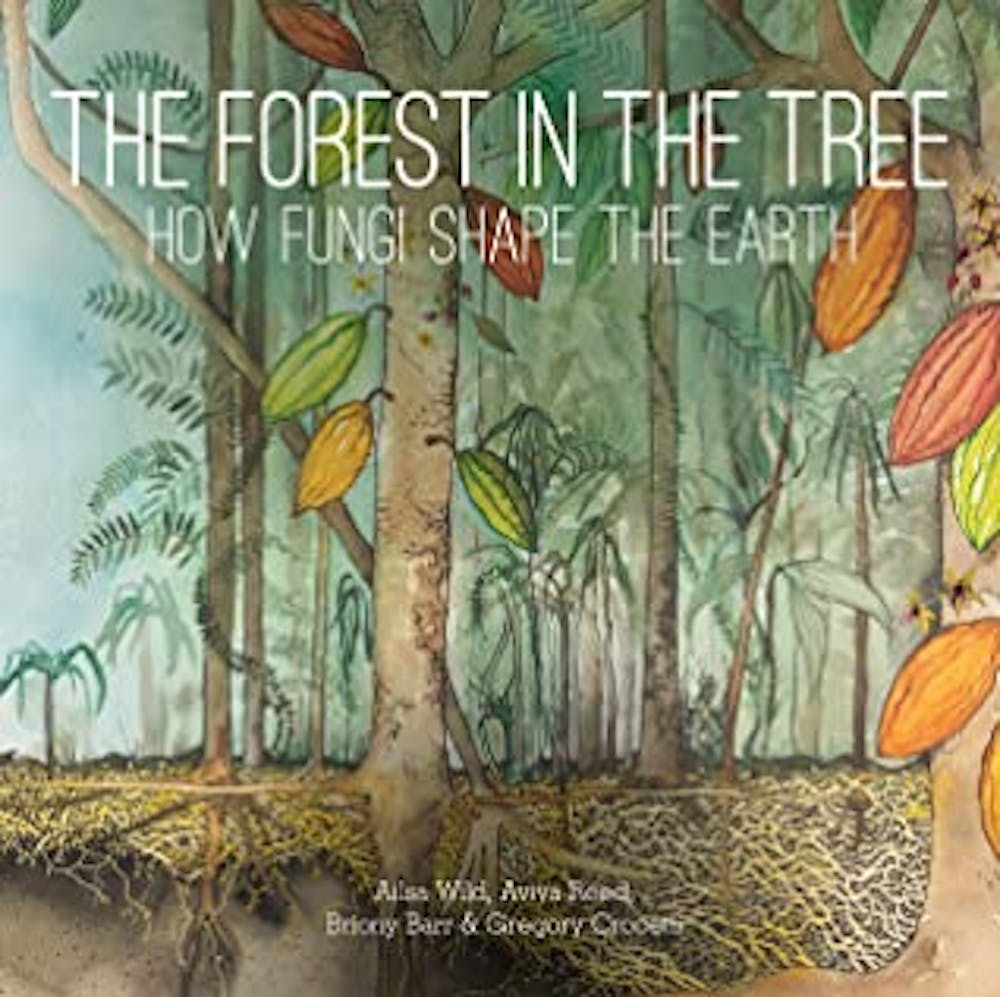
The Forest in the Tree (by Australian team Ailsa Wild, Aviva Reed, Briony Barr and Gregory Crocetti) skilfully weaves story and science to explore symbiotic relationships between trees and fungi. Characters include Broma the Cacao tree and We, Gloma the fungal network that connects the forest system. It is sure to fascinate and inform older children.
Goodreads
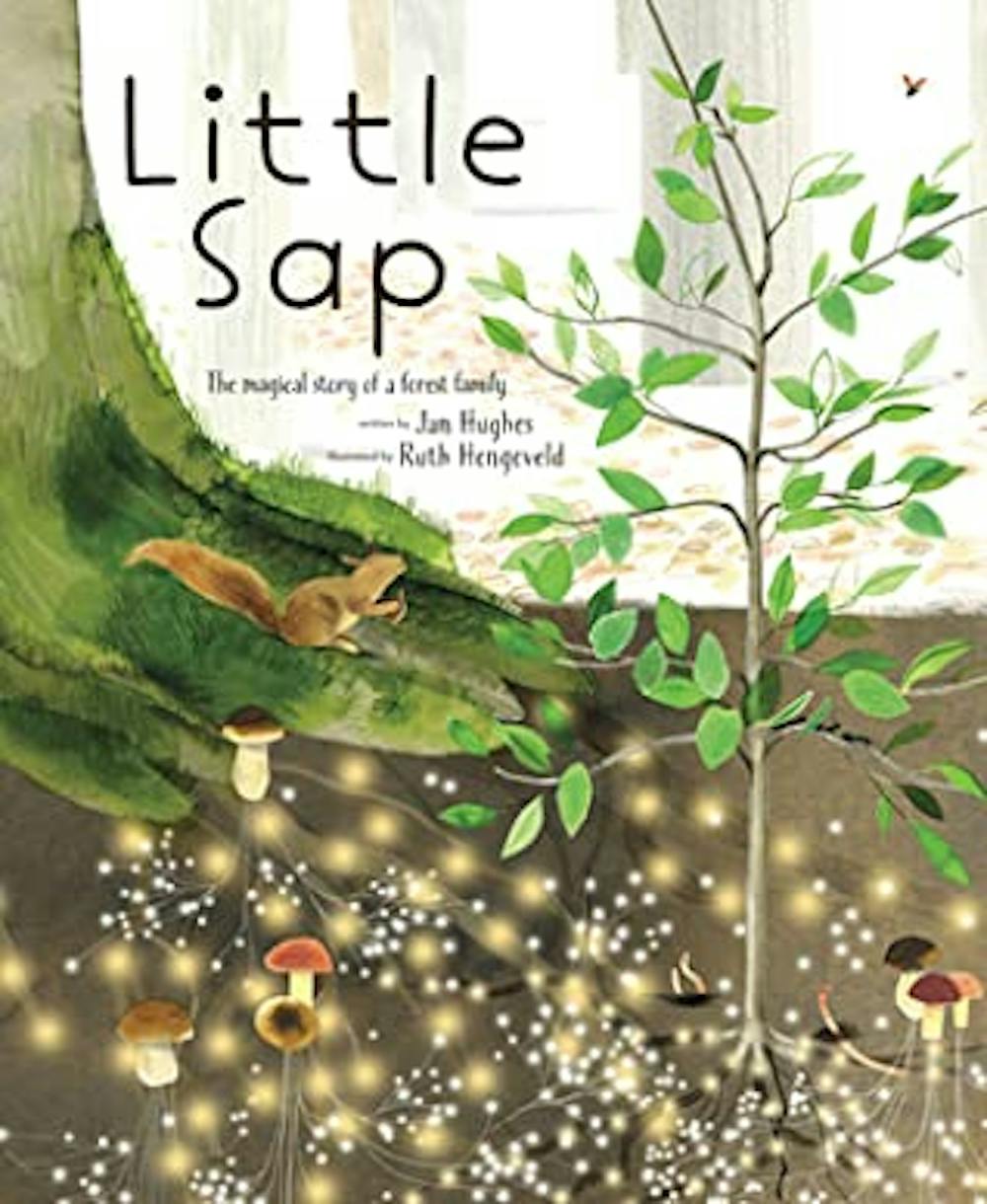
Little Sap (by Jan Hughes and Ruth Hengeveld) is written for a much younger audience. It tells a moving tale of a mother tree and a young sapling who eventually takes her place in the canopy. The authors note they found inspiration in the science of Suzanne Simard and Monica Gagliano among others.
Peter Wohlleben has also published a book for younger children. His book Peter and the Tree Children is a tale about Peter the forester and Piet the squirrel, and all they learn while walking in the forest.
Goodreads
I found it less engaging than his earlier book Can you hear the trees talking which is structured around curious questions like “How do trees make babies?” or “Is there a forest internet?”.
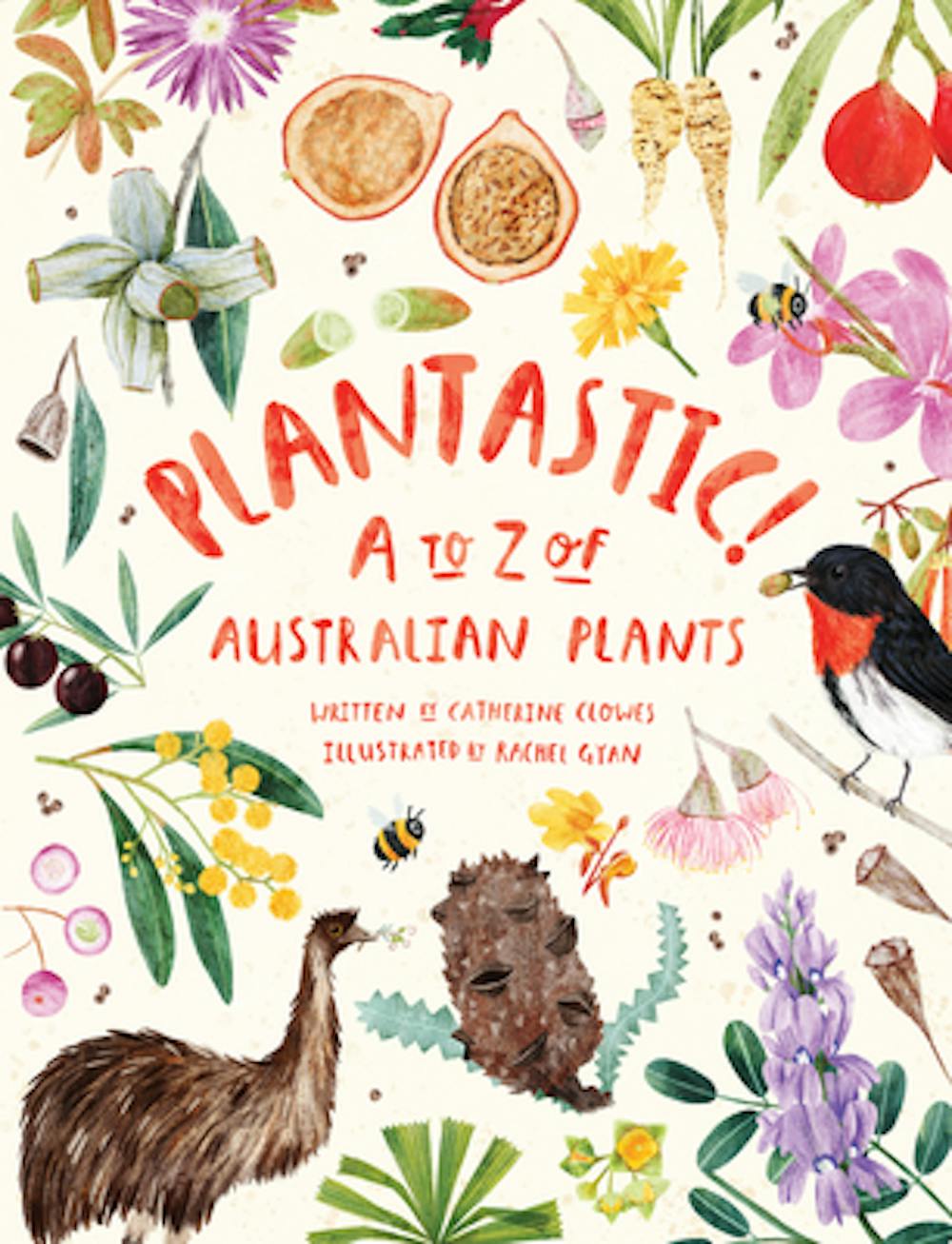
Finally, Plantastic! A new A-Z to 26 of Australia’s most unique and incredible native plants by Catherine Clowes and Rachel Gyan deserves a mention. Its not only about trees, but suggests some great activities that will encourage Australian kids to get out into nature and explore the wonder of plants.
Around one in three (36%) Australian children grow up in families experiencing adversity. These include families where parents are unemployed, in financial stress, have relationship difficulties or experience poor mental or physical health.
Our recent study found one in four Australian children experiencing adversity had language difficulties and around one in two had pre-reading difficulties.
Language difficulties can include having a limited vocabulary, struggling to make sentences and finding it hard to understand what is being said. Pre-reading difficulties can include struggling to recognise alphabet letters and difficulties identifying sounds that make up words.
Learning to read is one of the most important skills for children. How easily a child learns to read largely depends on both their early oral language and pre-reading skills. Difficulties in these areas make learning to read more challenging and can affect general academic performance.
What are language and pre-reading difficulties?
International studies show children experiencing adversity are more likely to have language and pre-reading difficulties when they start school.
Language difficulties are usually identified using a standardised language assessment which compares an individual child’s language abilities to a general population of children of the same age.
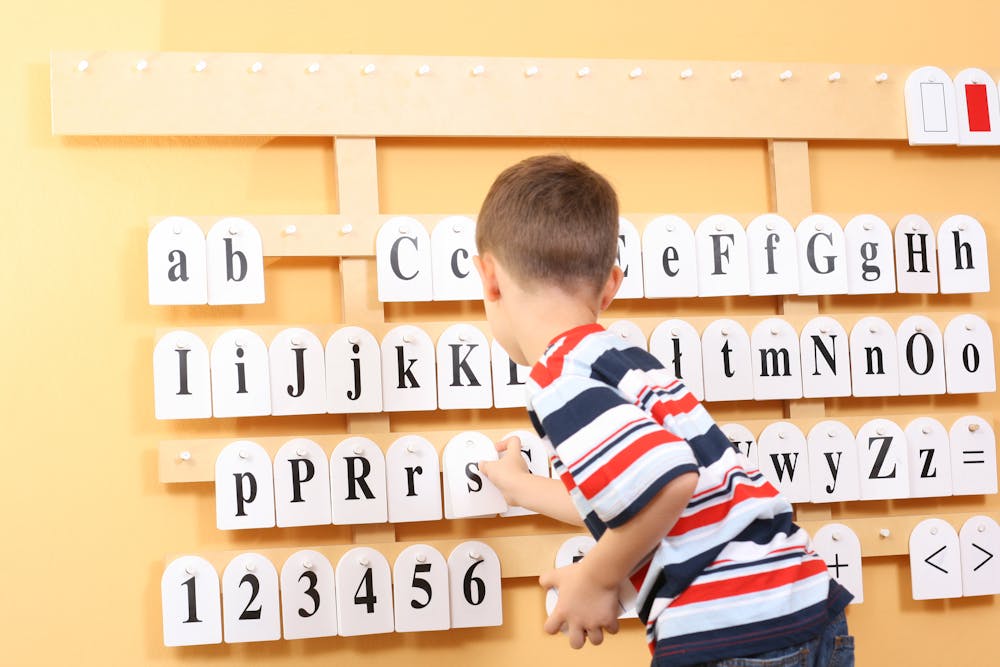
Pre-reading difficulties are difficulties in the building blocks for learning to read. For example, by the age of five, most children can name at least ten letters and identify the first sound in simple words (e.g. “b” for “ball”).
Most five year old children can name at least ten letters and identify the first sound in simple words. Shutterstock
Children who have not developed these skills by the time they start school are likely to require extra support in learning to read.
1 in 4 children in adversity had language difficulties
We examined the language, pre-reading and non-verbal skills (such as attention and flexible thinking) of 201 five-year-old children experiencing adversity in Victoria and Tasmania.
We defined language difficulties as children having language skills in the lowest 10% compared to a representative population of Australian 5-year-olds. By this definition, we would expect one in ten children to have language difficulties.
But our rates were more than double this — one in four (24.9%) of the children in our sample had language difficulties.
More than half couldn’t name alphabet letters
Pre-reading difficulties were even more common: 58.6% of children could not name the expected number of alphabet letters and 43.8% could not identify first sounds in words.
By comparison, an Australian population study of four year olds (children one year younger than in our study) found 21% could not name any alphabet letters.
Again, our rates were more than double this.
Interestingly, we didn’t find these differences for children’s non-verbal skills. This suggests language and pre-literacy skills are particularly vulnerable to adversity.
Families experiencing adversity may also have fewer resources (including time and books) to invest in their children’s early language and learning.
Why is this important?
It is really challenging for children starting school with language and pre-reading skills to catch up to their peers. They need to accelerate their learning to close the gap.
It is challenging for children entering school behind their peers to catch up. Shutterstock
Put into context, if a child starts school six months behind their peers, they will need to make 18 months gain within a year to begin the next school year on par with their peers. This is not achievable for many children, even with extra support, and a tall order for many schools.
These can include struggling academically, difficulties gaining employment, antisocial behaviour and poor well-being.
What can we do?
These results should be concerning for us all. There are clear and extensive social costs that come with early language and pre-reading difficulties, including a higher burden on health and welfare costs and productivity losses.
These impacts are particularly worrying given the significant school disruptions experienced due to the COVID-19 lockdowns. School closures will have substantially reduced children’s access to additional support and learning opportunities, particularly for those experiencing adversity, further inhibiting opportunities to catch up.
Our best bet is to ensure as many children as possible start school with the language and pre-reading skills required to become competent early readers.
For example, ensuring all children have access to books at home has shown promise in supporting early language skills for children experiencing adversity.
We know which children are at greatest risk of struggling with their early language and pre-reading skills. We now need to embed this evidence into existing health and education services, and invest in supports for young children and families to address these unequal outcomes.
There’s nothing like being reasoned with by a 4-year-old girl.
“‘Stop it,’ ordered Beezus. ‘Stop it this instant! You can’t eat one bite and then throw the rest away.’
‘But the first bite tastes best,’ explained Ramona reasonably, as she reached into the box again.
Beezus had to admit that Ramona was right. The first bite of an apple always did taste best.”
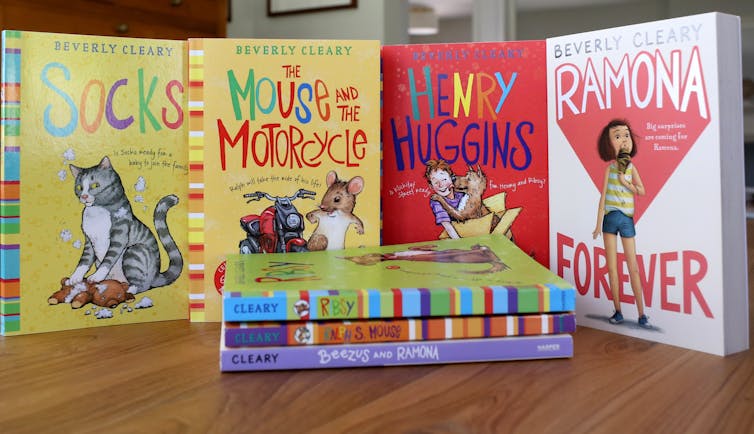
The author of this scene is Beverly Cleary, who died on March 25, 2021, at the age of 104. The book is “Beezus and Ramona.” Most readers appreciate Ramona’s arguments, admiring the innocence, the free-spiritedness, the insight that inspires her to take a whole carton of apples and indulge in one first bite after another, only ever tasting “the reddest part.”
Many fans love Cleary’s work for a lifetime – first as young children, then as adults. As a mother of twin boys, I have been surprised at how her writing continues to resonate. But what is it that makes Cleary’s characters so enduring?
Novels that teach
As a scholar of 18th-century British literature, I recognize the pressure on novelists to teach children through their writing. This expectation was set in the 18th century when it was assumed that the modern novel, newly developed, would teach as well as please. Reading was expected to be, in the words of Horace, both “dulce” (literally sweet, or enjoyable) and “utile” (literally useful, or instructive).
Though readers have, at least since the early 20th century, generally let go of this expectation for authors who write for adults, the expectation persists for those who write for children. With a writing career beginning in the early 1950s, Cleary directly challenged such a notion.
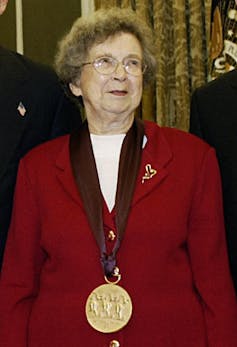
Cleary was a 2003 recipient of a National Medal of Arts, which honors artists and patrons of the arts. Getty Images/Time Sloan
Cleary once told PBS that her fans love Ramona “because she does not learn to be a better girl.” She went on to explain what inspired her to create Ramona’s character: “I was so annoyed with the books in my childhood because children always learned to be better children, and in my experience, they didn’t.”
In fact, Cleary’s Ramona doesn’t just challenge the assumption that readers must learn “from” and “with” fictional characters; one of Ramona’s distinguishing characteristics is rebelliousness.
Take, for example, the time Ramona’s parents are disappointed by her report card:
“‘Now, Ramona.’ Mrs. Quimby’s voice was gentle. ‘You must try to grow up.’
Ramona raised her voice. ‘What do you think I’m doing?’
‘You don’t have to be so noisy about it,’ said Mrs. Quimby.”
The scene continues:
“Ramona had had enough. … She wanted to do something bad. She wanted to do something terrible that would shock her whole family, something that would make them sit up and take notice. ‘I’m going to say a bad word!’ she shouted with a stamp of her foot.”
Then, in the culmination of the scene: “Ramona clenched her fists and took a deep breath. ‘Guts!’ she yelled. ‘Guts! Guts! Guts!’ There. That should show them.”
Gendering Ramona
So exactly where does Cleary’s Ramona fit? She doesn’t. She’s an outlier of school standards and gender expectations. Before there were terms like “gender nonbinary,” “gender nonconforming” or “genderqueer,” there was Ramona. Ramona defies categorization. Her friendship with Howie offers one of many examples:
“‘At my grandmother’s,’ said Howie. ‘A bulldozer was smashing some old houses so somebody could build a shopping center, and the man told me I could pick up broken bricks.’
‘Let’s get started,’ said Ramona, running to the garage and returning with two big rocks. … Each grasped a rock in both hands and with it pounded a brick into pieces and the pieces into smithereens. The pounding was hard, tiring work. Pow! Pow! Pow! Then they reduced the smithereens to dust. Crunch, crunch, crunch. They were no longer six-year-olds. They were the strongest people in the world. They were giants.”
This passage is from “Ramona the Brave,” which both is and isn’t of its time. Published in 1975, the novel may be seen as an expression of second-wave feminism, which sought to recognize gender as a social construct and to challenge how mainstream society kept women from fulfilling their potential. However, it also previews third-wave feminism by insisting that women need not abandon their femininity to claim equity for themselves.
Ramona, though quite boyish, insists on writing her last name, “Quimby,” with the “Q” shaped into a cat “with a little tail,” reminding the reader of her feminine side.
I see in Cleary’s writing a nostalgia for the time in childhood before gender is clearly defined. By looking back to that time, children and adult readers alike may imagine a future in which people are able to think beyond gender.
Cleary now
Most of Cleary’s books are set in the mostly white Grant Park neighborhood of Portland, Oregon, where she grew up. The lack of racial diversity in Cleary’s work is a likely consequence of her having followed the adage adhered to by many writers: “Write what you know.” However, current readers might wish that she had stretched herself and her abilities a bit further to have imagined a more racially or ethnically diverse cast of characters.
“I needed a friend like Ramona,” Watson said. “Cleary introduced to me this rambunctious girl, and I love her. … The power of her storytelling is the respect she had for young readers. She had a deep understanding that a girl articulating how she feels is an asset, not a flaw.”
As I’ve read Cleary’s books to my own Gen-Z sons, I have been particularly struck by how her writing has gotten them interested and invested in female as well as male protagonists. They love the books about Henry and Ribsy, but they love the Ramona books too. When it is so common for boys and men to ignore–or merely “glance” at–women’s writing about girls, this is significant. Through Cleary’s work, my sons can see that the big guys don’t always know best or win. Such perspectives can create new normals that are less, well, normative.
For many lovers of classic literature, opportunities to devour the works of undiscovered authors can be enough to make people’s eyes light up. For those who aren’t as keen on the genre, the appeal of these titles is a little less obvious. In fact, it’s one of the reasons museum professionals are running into issues when it comes to inspiring new generations to read such works.
Engaging young people is a challenge for museums and the traditional approaches that literary heritage museums take when dealing with classic authors is becoming a problem. This is because literary heritage museums usually focus on presenting the biographical story, personal effects or archival collection of an author. Relevant and interesting perhaps to those already familiar with an author’s works, but perhaps less successful at engaging would-be readers. The language of some of these authors can also be a barrier to new readers, as can the difficulty of reading “a classic” – which might be seen as irrelevant or out of touch with the modern world.
As the community, learning and engagement officer at Wirksworth Heritage Centre in Derbyshire, my role is to engage audiences of all ages with the local history of Wirksworth. A key element to Wirksworth’s heritage is its literary connections to writers (including George Eliot, DH Lawrence and Daniel Defoe) and the inspiration they took from the people and the landscape of Wirksworth. My PhD research considers how literary heritage is presented in museums throughout the country. I have a particular interest in Nottingham, which was awarded the Unesco City of Literature bid in 2015 due to its rich literary heritage, but also has some of the lowest literacy levels in the country.
Since COVID-19, finding new ways to share our literary heritage both inside and outside of museum walls has become incredibly important. So how should museums show that these authors remain relevant in the 21st century? Literary heritage museums are doing this in a whole host of ways, but here are the three examples of approaches I believe are particularly successful.
1. Retelling stories
From the Austen Project to the many graphic novel retellings and classic novels reimagined as text messages, retelling stories with a contemporary twist is a well-trodden (if not always well-reviewed) path. It’s also a method of interpretation that literary heritage museums are beginning to embrace.
Using new and creative formats can remove some of the barriers to young people wanting to experience these stories and can inspire them to try the “real thing”. As part of my own curatorial work with Dorking Museum, I wrote a book entitled Forster in 50 which accompanies the exhibition Forster at 50. The book provides visitors with an overview of five of Forster’s novels in only 50 words with illustrations, providing more of an accessible introduction to EM Forster’s work.
2. Using technology to draw audiences in
Technology and literature may have seemed like a mismatch once upon a time, but more and more museums are using different technologies to engage audiences with their collections. Before its closure in 2016, the DH Lawrence Heritage Centre presented the 1915 censorship trial of Lawrence’s The Rainbow through a series of Twitter posts in their exhibition No Right to Exist: The Rainbow and Other Books Which Shocked. This condensed the complexities of the trial into a series of 140 character posts, allowing younger audiences to explore the debate in a familiar format and go on to consider what we consider scandalous in literature today.
My own work has included the co-production of Walking with Lawrence, a digital walking tour written from Lawrence’s perspective which allows the listener to connect the author with the city they see today. The use of a creative narrative which is listened to rather than read provides a format that’s easier to understand, removing some of the barriers created by large amounts of text.
3. Collaborating with creative partners
Working with creative partners such as artists and writers can help museums to reach new audiences, providing more approachable information for younger generations in particular. Graphic novels and comic books are incredibly helpful in this respect. I’m working with Wirksworth Heritage Centre’s writer in residence Helen Greetham, who’s currently producing a graphic novel about the literary heritage of George Eliot in Wirksworth.
A similar project is underway in Eastwood, Nottinghamshire, working with young people to produce their own Lawrence-inspired graphic stories. The Eastwood Comics project aims to engage “700 further young people (who) will learn about the author and his birthplace by taking part in activities inspired by the young writers’ research”. Here, participation in creative projects and reading new stories help new generations to connect with Lawrence’s heritage in more meaningful ways than regurgitating information about the author.
The pandemic has provided an unprecedented challenge to the heritage sector, but the closure of our sites doesn’t mean we can’t continue to connect people to our history. These new and innovative ways that museums have engaged and inspired younger generations can continue regardless of whether physical buildings are open. In the months ahead, I hope more buildings take similar approaches.







 At the BookShelf
You must be logged in to post a comment.