Unknown's avatar

Remembering Robert Burns has never been straightforward


Shutterstock

Gerard Lee McKeever, University of Glasgow

The memory of the Ayrshire-born Scottish poet Robert Burns has always been complicated, especially in Dumfries, the town where he died in July 1796. In the years following his untimely demise at the age of 37, literary tourists including Dorothy Wordsworth and John Keats visited this market town in south-west Scotland in search of their hero. What they found, however, was a vision of Burns and of Scotland itself that seemed out of place, difficult to comprehend and yet intensely personal.

Burns’s own relationship to Dumfriesshire was enigmatic from the start. When he arrived to take up the tenancy of Ellisland farm in the summer of 1788, he declared himself in a “land unknown to prose or rhyme”. But Burns’s view of the region would evolve many times. By August of the same year, he was commemorating the Nith Valley’s “fruitful vales”, “sloping dales” and “lambkins wanton”, and had already written back in October 1787 that: “The banks of Nith are as sweet, poetic ground as any I ever saw.”
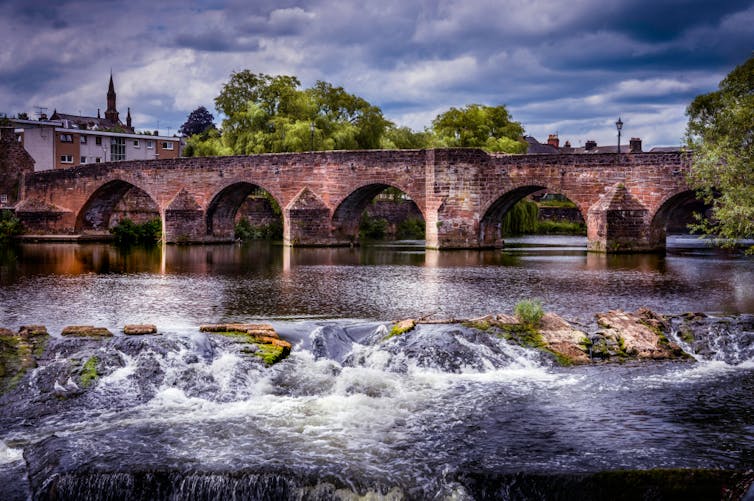
Dumfries, where Burns died in 1796.
Shutterstock

Burns composed some of his best-known work during these years, including what many consider his masterpiece, Tam o’ Shanter. And yet a shift in focus from poetry to songwriting – as he worked to collect, revise and compose lyrics for collections of national song – changed the sense of both place and personality in his writing. In his earlier years, Burns’s poetry had often been intensely self-reflective, rooting a version of himself in the Ayrshire landscape where he was raised. Now, his persona receded into the background due to the inherently communal nature of folksong.

At the same time, Burns’s employment as an excise officer and his eventual poor health in Dumfries would lead 19th-century commentators such as the historian Thomas Carlyle to accuse the town of wasting the poet’s talents through a lack of patronage. That underestimates Burns’s agency as a member of the lower middle class, who took pride in supporting his family independently. Yet still, what emerged was a lingering sense of the Ayrshire Burns as the true Burns, where the Dumfries Burns was only a tragic, diminished echo of himself.

Shutterstock

Poetic pilgrimage

In 1803, Dorothy Wordsworth set off from the Lake District on a tour of Scotland in the company of her brother William and Samuel Taylor Coleridge. Among key items on their itinerary was a pilgrimage to Burns sites in and around Dumfries. Yet the poet’s memory would not be easily reckoned with.

In her tour journal, Wordsworth quoted Burns’s own A Bard’s Epitaph – “thoughtless follies laid him low, | And stain’d his name” – to underline the moral failings of a poet already famous for his love affairs and heavy drinking. She wrote:

We could think of little else but poor Burns, and his moving about on that unpoetic ground.

Burns proved an inescapable but difficult presence in Dumfries for Wordsworth. He became representative of a south-west Scotland that defied easy comprehension: neither quite “the same as England” nor “simple, naked Scotland”.

Further north at Ellisland farm, Wordsworth remembered catching a view back home to “the Cumberland mountains”. The idea was taken up by her brother in a poem originally titled Ejaculation at the Grave of Burns, in which William imagined himself and Burns as the hills of Criffel and Skiddaw staring at one another across the Solway Firth. Yet the dead poet remained out of reach, leaving these tourists to their personal musings about Dumfriesshire in the terms of tragedy: a visit to Burns in 1803 was already seven years too late.
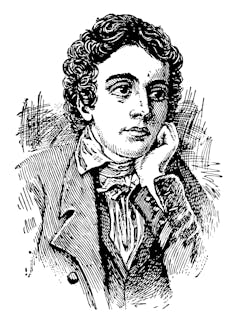
Keats made a pilgrimmage to Burns’s grave.
Shutterstock

If anything, the situation was even more pronounced in John Keats’s account of his 1818 walking tour, in which Dumfries shoulders much of the blame for the tragic story of this “poor unfortunate fellow”. Keats would find himself disgusted at the tourism industry that had already sprung up at the poet’s birthplace further north in Ayrshire.

But when confronted with the spectacle of Burns’s death, Keats apparently struggled to make much sense of Dumfries at all. Performing a kind of theatrical bewilderment in On Visiting the Tomb of Burns, he wrote that the town seemed “beautiful, cold – strange – as in a dream”.

Memory and imagination

It is difficult to overstate the impact of Burns’s legacy in south-west Scotland, for better or worse. His influence on following generations of poets in the region could be both inspiring and suffocating, while civic pride in his memory took on new forms in Dumfries as elsewhere throughout the 19th century, not least in the extravagant centenary celebrations in 1859.
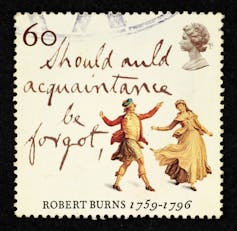

Shutterstock

Today, when the poet’s birthday is marked on January 25 around the world, many different and contradictory versions of Burns will be remembered. In their complex responses to Dumfries, where the poet’s death has often seemed more tangible than his birth, early literary tourists like the Wordsworths and Keats show that this is nothing new.

After all, the role of a national poet – a vehicle for our thoughts and dreams – underlines how much of both memory and geography is the work of the imagination.The Conversation

Gerard Lee McKeever, British Academy Postdoctoral Fellow, University of Glasgow

This article is republished from The Conversation under a Creative Commons license. Read the original article.
Unknown's avatar

Robert Burns was no peasant poet, he was a master of self-promotion


File 20180124 107937 d6541t.jpg?ixlib=rb 1.1
Farmer Schwarmer.
Jacqueline Abremeit

Murray Pittock, University of Glasgow

In the Edinburgh World Heritage website’s story about Scotland’s bard, it notes that when Robert Burns “the ploughman poet” came to the city in 1787, he was “a new boy in town and a great looking heart throb”. It’s a familiar description, dating back to the writer Henry Mackenzie’s review of the iconic Kilmarnock edition of Burns’ poetry in The Lounger for December 1786, describing him as “the heaven-taught ploughman”.

The comparison Mackenzie intends is one with Shakespeare as portrayed by Milton in L’Allegro, whose “wood-notes wild” derive not from education but from inspiration: Burns is to be for Scotland what Shakespeare was for England.

But it was the ploughman label that stuck. Burns is often seen as a “peasant poet”, aligned with the likes of English writer John Clare – and he probably wouldn’t have had it any other way.

Farmer glories

During his lifetime, Burns presented himself as “nature’s bard”, ignorant and free of the “rules of Art”. He walked round Edinburgh in farmer’s boots, portraying a deliberately rustic air.

Yet Burns was well read and reasonably educated: he knew the work of Dryden, Fielding, Goldsmith, Milton, Pope, Sterne and many others. He appears to have been influenced both by French bawdy poetry and the troubadour tradition of Provence. In the preface to his Poems (1786), Burns identifies himself as “obscure” and “nameless”, yet cites Virgil and Theocritus.

And Burns certainly wasn’t living in deprivation. He earned much the same from his Edinburgh edition of Poems in 1787 as Adam Smith did from The Wealth of Nations, and in the 1790s his income was as high or higher than Jane Austen’s. It was similar, in fact, to those ministers of the Kirk he liked to bait so much.

He was supported by many wealthy Freemasons. He was the regular correspondent of gentlemen in a strongly class-segregated era, and dined with them. Yet Burns is still often remembered as if he was living on the margins.

This image absolutely suited him: his greatness appeared to be a mystery – and mystery is a lasting source of power. He seemed to have sprung from the soil with no visible means of support. A “celebrity” in the modern sense of a famous person is a 19th-century word: Burns was arguably the first poet to think of himself as a brand.

Brand Burns

This self-creation helped to bring him both national and international recognition. In Germany, he came to be seen as both representing the progressive universalism of the radical Enlightenment and a one-stop shop for the folk tradition.

In America he was perceived as the good European, the man of “independent mind” who was a foe to tyrants and an adoptive son of the United States. In the British Empire, he represented the sentiment, communitarianism, egalitarianism and humanitarianism on which many Scots liked to congratulate themselves.

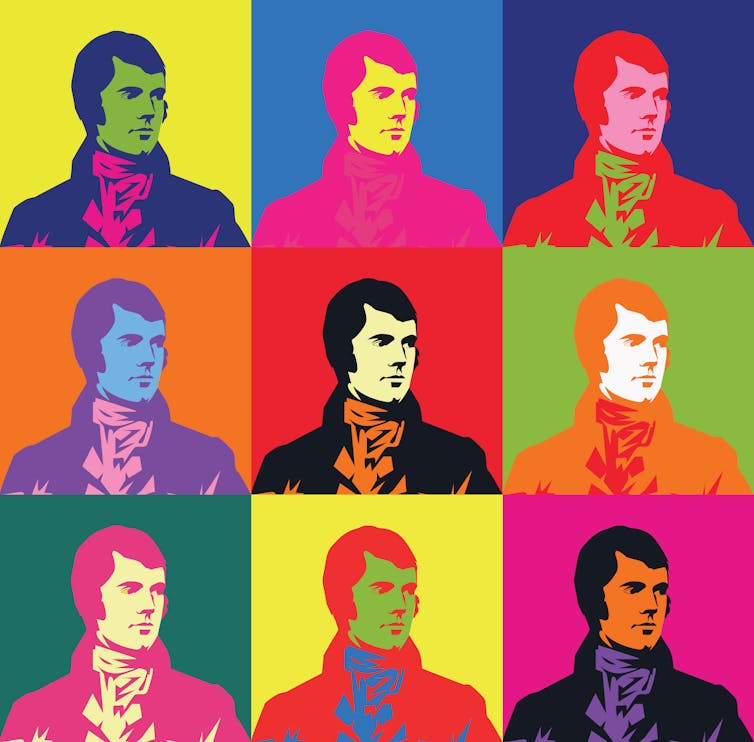
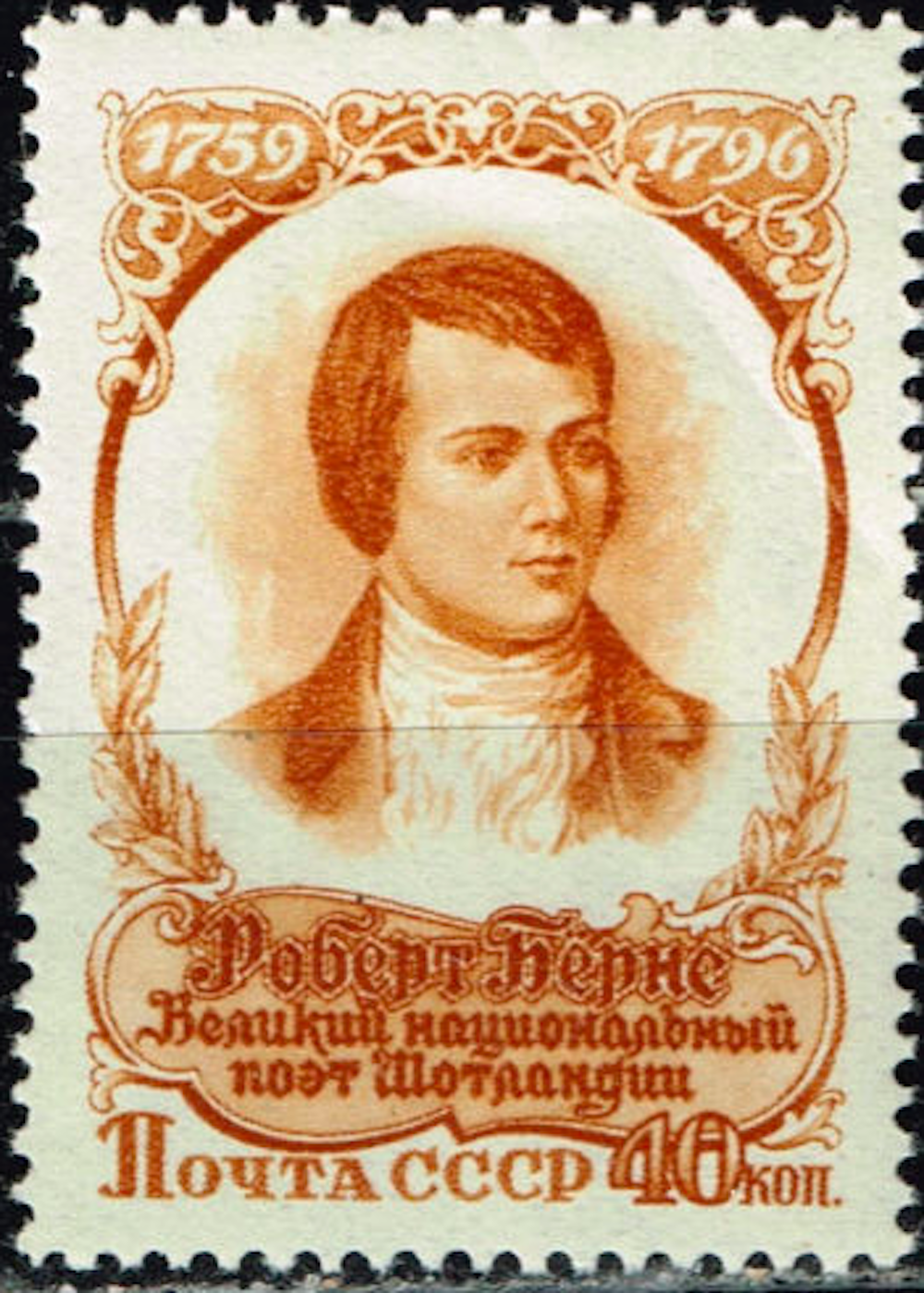
Comrade Rabbie.
Wikimedia

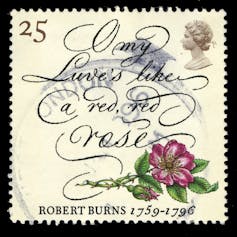
In the USSR, he came to be the “good kulak” (peasant) who would have understood the benefits of collective farming, and the Soviets became the first to issue a commemorative stamp for the poet in 1956.

In China during the Cultural Revolution, he represented the lack of contradiction between the agricultural and intellectual; for Kofi Annan in an United Nations address in 2004, he was the supreme internationalist, the advocate of harmonious neighbourliness worldwide.

Much of this affection stems from the fact that Burns is in many respects the supreme poet of sentiment, certainly in the Anglophone world. We overlook that his paeans to the routine life of rural poverty are distanced by education: in The Cottar’s Saturday Night, he quotes Alexander Pope’s Windsor Forest; in Tam o’ Shanter, he knowingly celebrates sex, drink and dancing in the narrative voice of the Romantic collector of tradition, in a story he invents and sends to such a Romantic collector.

When Burns is knowingly sophisticated, he sometimes appears transparently simple: in Auld Lang Syne the praise of a vanished past, the persisting nature of relationships despite the transience of life, the sugaring of nostalgia, all deflect us from the lack of any promised future. Again we see what we want to see: from It’s A Wonderful Life to When Harry Met Sally and beyond, Hollywood has recognised the song’s extraordinary evocation of sentimental intensity.

Similarly, people often project a political agenda onto Burns that is hard to justify. In To a Mouse, for example, the ploughman does nothing to help the mouse.

Nor is the nature of “Man’s dominion” changed really, despite the ploughman being “sorry” for it. Sorry doesn’t cut the mustard, but the sentiment buttered Burns’s bread and still does worldwide. Most of his supposed politics turns out to be more feeling.

Supper man

The other element that has done much for the poet’s reputation is the Burns Supper. The first was in Alloway in Ayrshire on July 21, 1801 – celebrations switched from his date of death to his birth later, possibly influenced by the adjacent date of dinners on January 24 for the great British Whig Charles James Fox.

To a cola.

The custom of the Burns dinner or supper spread rapidly. We see it in London in 1804, India in 1812, New York in 1836, and Copenhagen, Paris and Madrid by 1859.

Today, some nine million people attend official Burns Suppers each year alone, and 100,000 Immortal Memories are given. Scotland’s Year of Homecoming was built around Burns in 2009, and in 2018, Scottish Nationalist MSP Joan McAlpine’s parliamentary motion on Burns’ importance to the Scottish economy gained cross-party support.

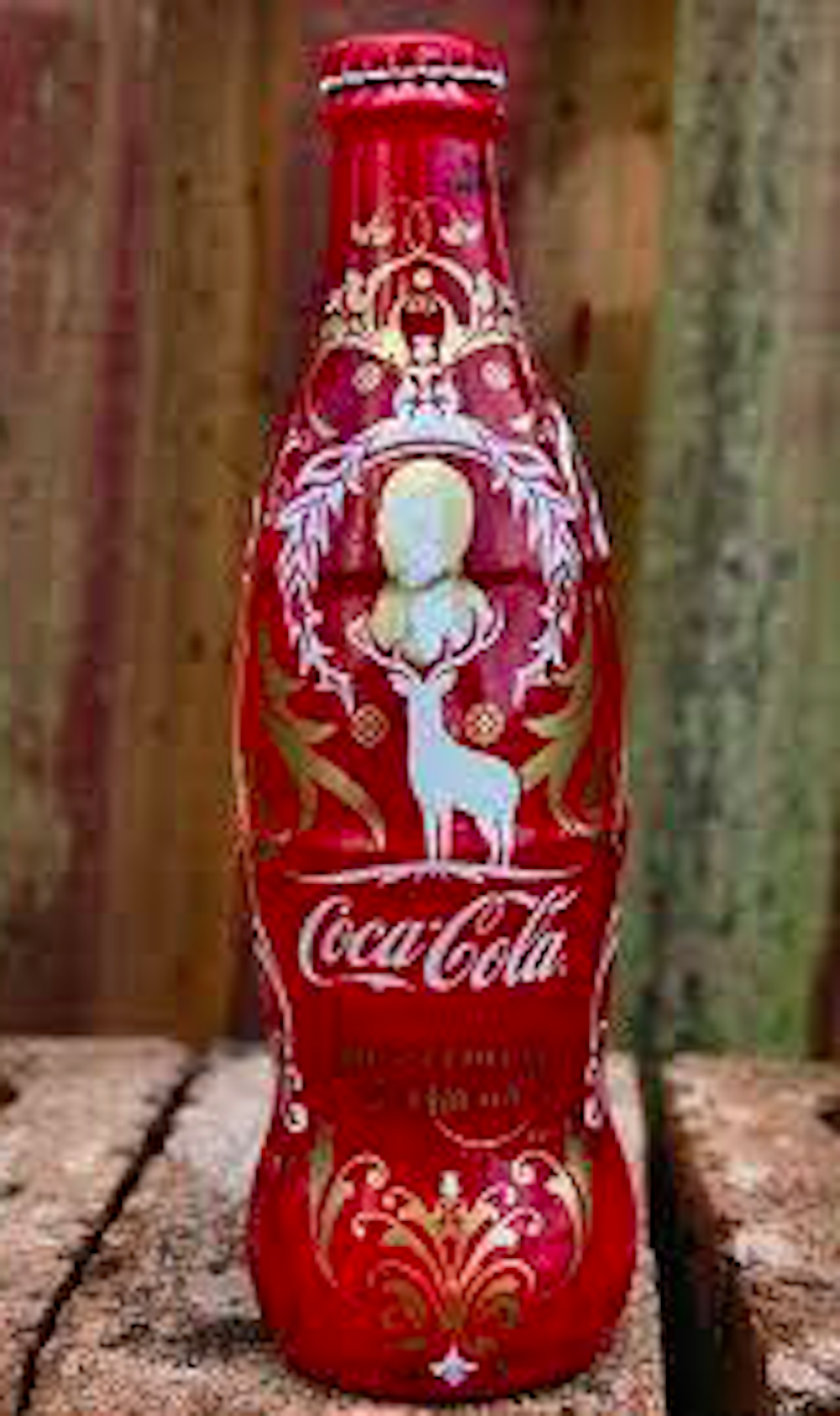
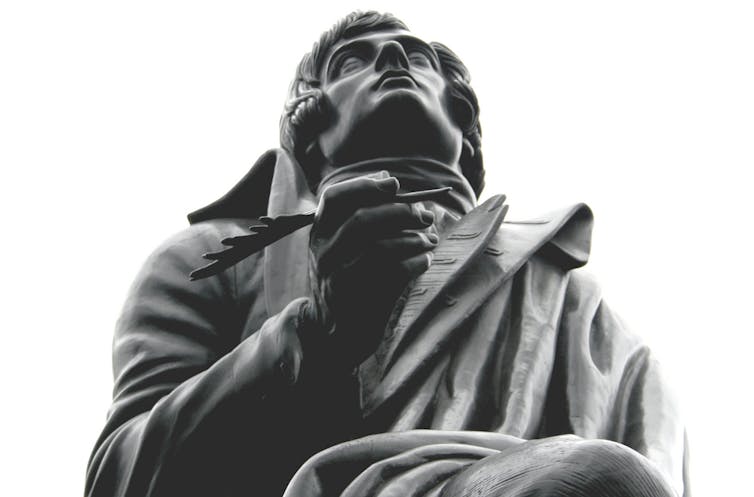
Burns has been translated several times as often as Byron; he has more statues than any secular figure except Queen Victoria and Christopher Columbus; and is the only person to have appeared on a Coca Cola bottle. He’s a synecdoche of the way Scotland wants to be perceived: humane, egalitarian, caring, international.

The Conversation“O wad some Pow’r the giftie gie us/ To see oursels as ithers see us!” The memory of Robert Burns is indeed immortal. And he knew what he was doing all along.

Murray Pittock, Bradley Professor of English Literature, University of Glasgow

This article was originally published on The Conversation. Read the original article.