“Italy had its renaissance, Germany its reformation, France had Voltaire”, the historian Will Durant once commented.
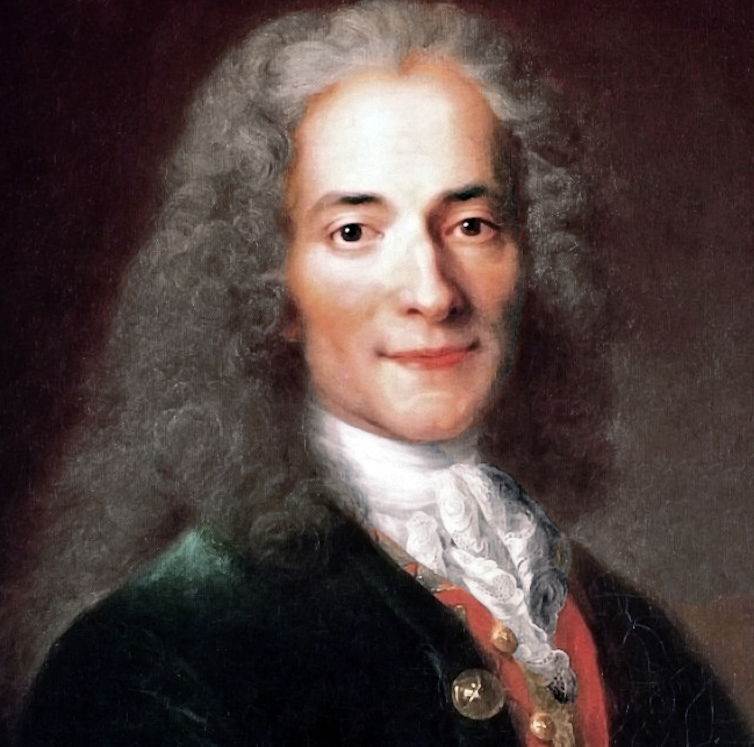
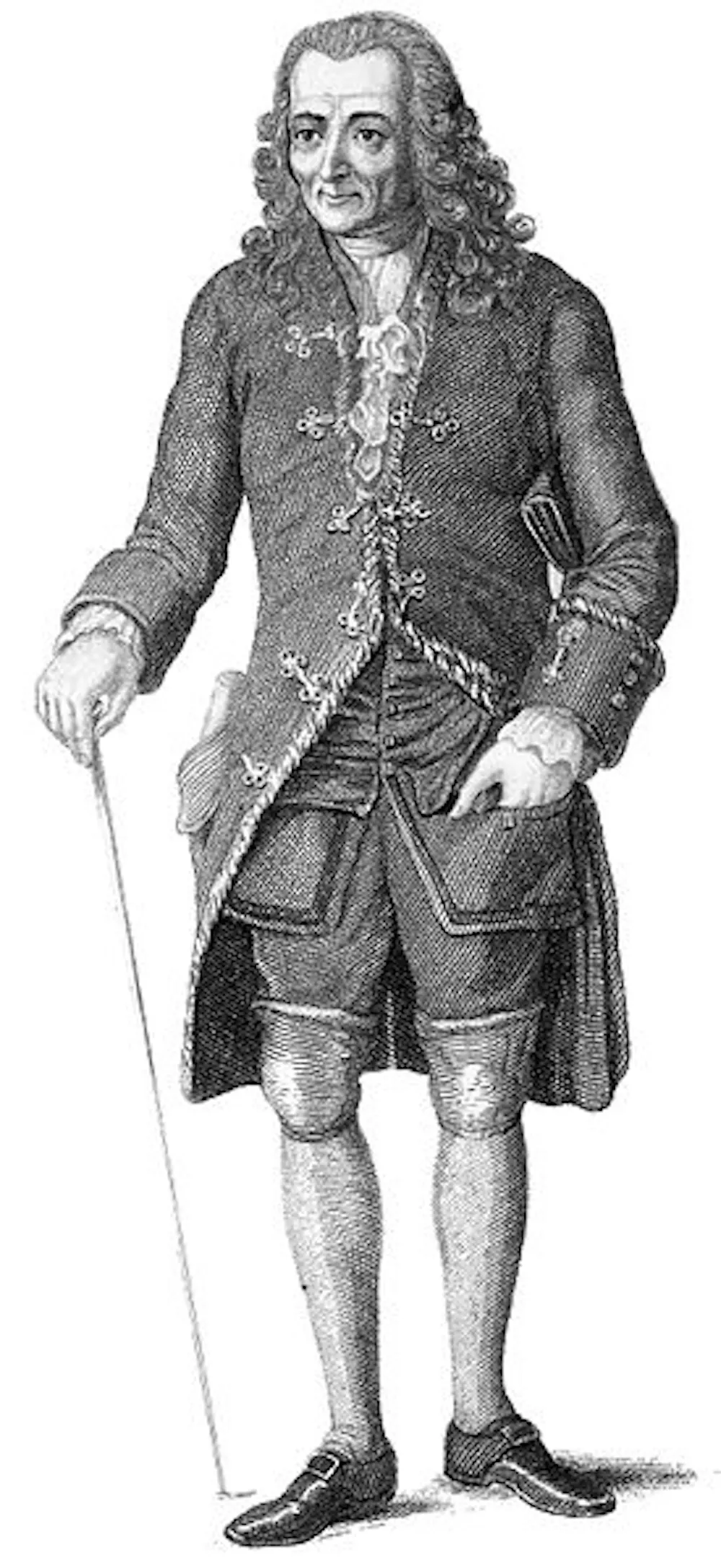
Born François-Marie Arouet, Voltaire (1694-1778) was known in his lifetime as the “patriarch” of the French enlightenment. A man of extraordinary energy and abilities, he produced some 100 volumes of poetry, fiction, theatre, biblical and literary criticism, history and philosophy.
Among his myriad works, Voltaire’s Candide, or Optimism (1759) is widely recognised as the masterpiece. A darkly satirical novella taking aim at human folly, pride and excessive faith in reason’s ability to plumb the deepest metaphysical truths, it remains as telling in this era of pandemics and wild conspiracy theories as when first published.
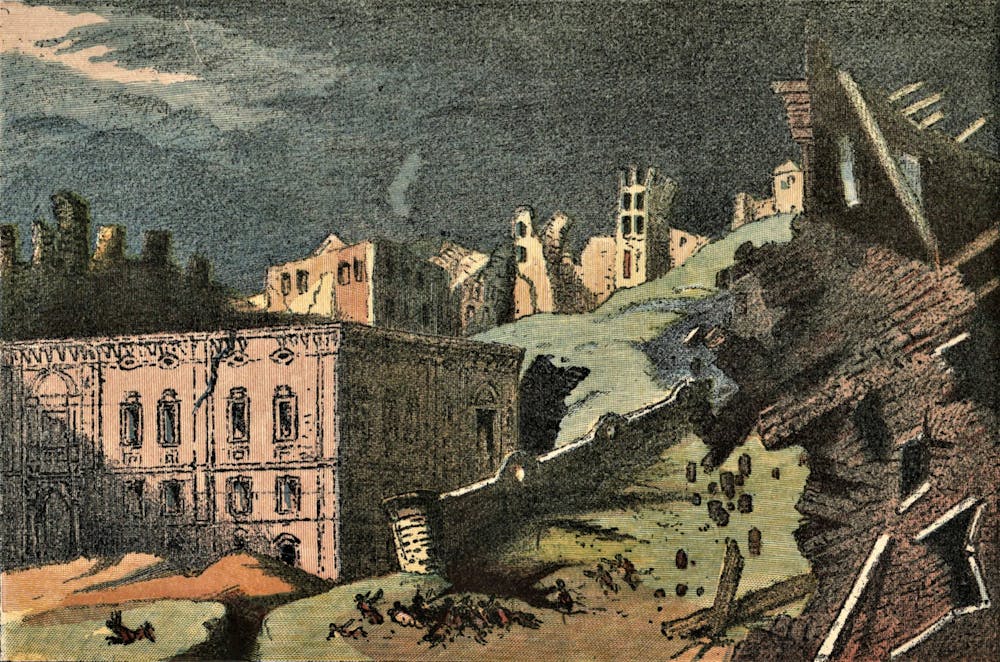
In 1755, meanwhile, on November 1, a huge earthquake had struck the Portugese capital, Lisbon, followed by a tsunami. Within minutes, tens of thousands were dead.
The recriminations soon began. Protestants saw in Lisbon’s destruction divine judgement on Catholicism. Catholics proposed, with equal implausibility, the especial sinfulness of the Lisbonites as the disaster’s cause. Pyres were erected in the streets to burn heretics, as scapegoats for the disaster.
This combination of senseless death and even more senseless human responses outraged Voltaire. His first response was the impassioned “Poem on the Lisbon Disaster” of 1755:
As the dying voices call out, will you dare respond
To this appalling spectacle of smoking ashes with,
[…] ‘God is avenged. Their death is the price of their crimes’?
Then, several years later, came Candide.
A depiction of the Great Lisbon Earthquake of November 1, 1755. Wikimedia Commons
A simple lad
As his name suggests, Voltaire’s hero, Candide, is a simple lad. Raised in a magnificent castle in Westphalia, in North-Western Germany, he is moved by just two passions. The first is abiding love for his sweetheart, Cunégonde.
The second is admiration for his teacher, Pangloss (“all tongue”), an exalted Professor of “métaphysico-théologo-cosmolonigologie” possessed of the happy ability to explain everything that happens, despite appearances, as “for the best”.
It is demonstrable,“ said he, “that things cannot be otherwise than as they are; for […] all is necessarily for the best end. Observe, that the nose has been formed to bear spectacles — thus we have spectacles. Legs are visibly designed for stockings — and we have stockings […] Pigs were made to be eaten — therefore we eat pork all the year round. Consequently, they who assert that all is well have said a foolish thing, they should have said: all is for the best.”
These two men had defended what the former called “theodicy”: the idea that a perfect God could only have created the best possible world. Hence, the human perception that events like pandemics, earthquakes, massacres and tsunamis are bad must be mistaken.
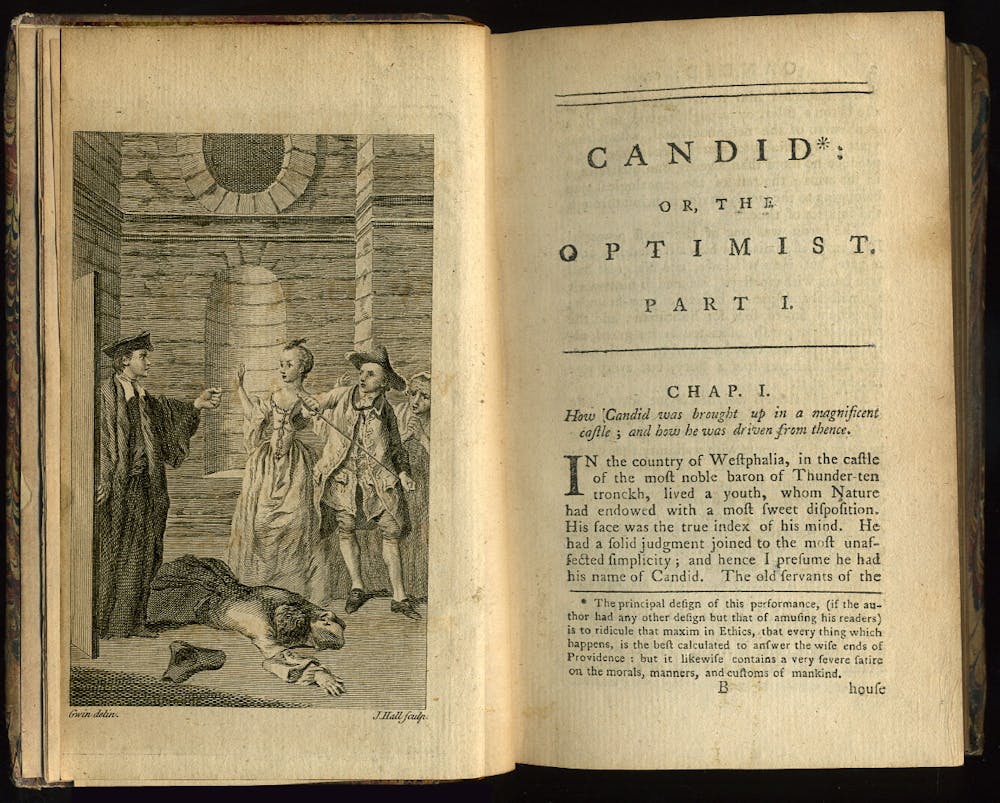
Frontispiece and first page of an early English translation by T. Smollett et al. of Voltaire’s Candide, 1762. Wikimedia Commons
Candide’s fate is set up by Voltaire as a reductio ad absurdum (reduction to absurdity) of this optimistic theory. Our hero is first expelled from his Edenic childhood garden, when Cunégonde’s father comes upon she and Candide illicitly experimenting in what Voltaire delicately calls “natural philosophy”.
Fleeing war, rapine and zealotry in Bulgaria and Holland, Candide arrives in Lisbon just in time for the earthquake. He is selected for execution by fire as a heretic, before escaping to save Cunégonde from disputing, lustful representatives of the West’s two great biblical faiths, Judaism and Christianity.
The lovers flee together to the Americas. In Buenos Aires, however, the Spanish governor seizes Cunégonde for his wife. Candide and his servant, Cacambo, are forced to flee through yet more bloody misadventures in the new world.
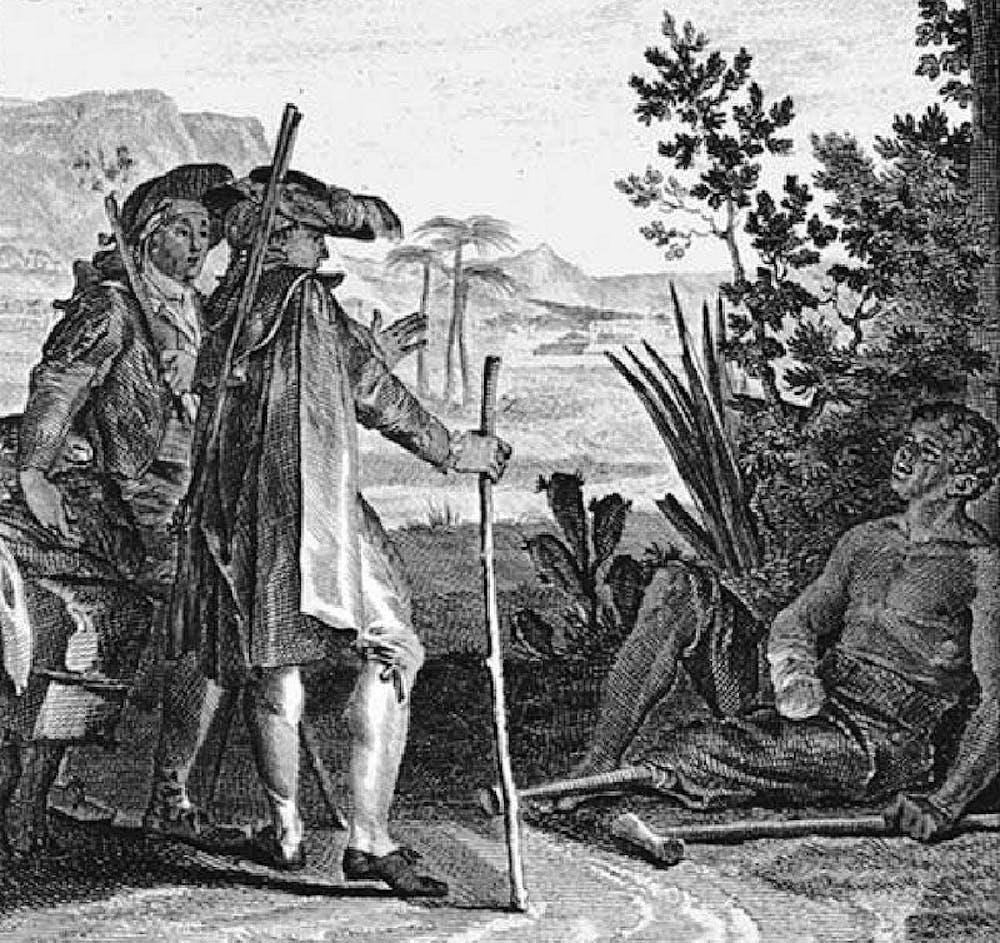
In a rightly famous passage, which finally sees Candide recant of his teacher Pangloss’ theodicy as the “abomination […] of maintaining that everything is right when it is wrong”, they come upon a crippled African slave whose masters are Dutch merchants in Surinam:
“Yes, sir,” said the negro, “it is the custom. […] When we work at the sugar-canes, and the mill snatches hold of a finger, they cut off the hand; and when we attempt to run away, they cut off the leg; both cases have happened to me. This is the price at which you eat sugar in Europe.”
Candide and Cacambo meet a maimed slave of a sugar mill near Surinam. Wikimedia Commons
To this Europe, the increasingly disillusioned Candide returns. The riches he acquired in the new world are soon fleeced by cunning social climbers in Paris and Venice. He is reunited with Pangloss, who has recanted nothing of his optimism, despite being enslaved, flogged, hanged and brutally maimed, explaining that “I am a philosopher and I cannot retract […]”
Soon enough, Candide also hears news that Cunégonde is now a slave in Turkey, after her own litany of unlikely sufferings. So, he hits the road one last time. Reunited at last with his half-broken beloved, they retire to a little farm with their friends near Constantinople.
Here, despite everything, Pangloss still sometimes comes to mindlessly philosophise, as the story famously closes:
“There is a concatenation of events in this best of all possible worlds: for if you had not been kicked out of a magnificent castle for love of Miss Cunegonde: if you had not been put into the Inquisition: if you had not walked over America: […] if you had not lost all your sheep from the fine country of El Dorado: you would not be here eating preserved citrons and pistachio-nuts.”
“All that is very well,” answered Candide, “but let us cultivate our garden.”
Laughter
In the entry on “wit” (esprit) in his famous Philosophical Dictionary of 1764, Voltaire reflects that it is:
the art either of bringing together two things apparently remote, or of dividing two things which seem to be united, or of opposing them to each other […]
It is the art of Voltaire’s Candide to leave readers unsure whether they should be weeping, screaming, laughing or all at the same time. Atrocious sufferings are recounted with the innocence of a children’s fairy tale.
Elevated questions of metaphysical philosophy, which for a century had divided the greatest Western minds, are brought crashing down to earth amid the clamours of warring armies, collapsing cities, inhumane barbarism and slavery.
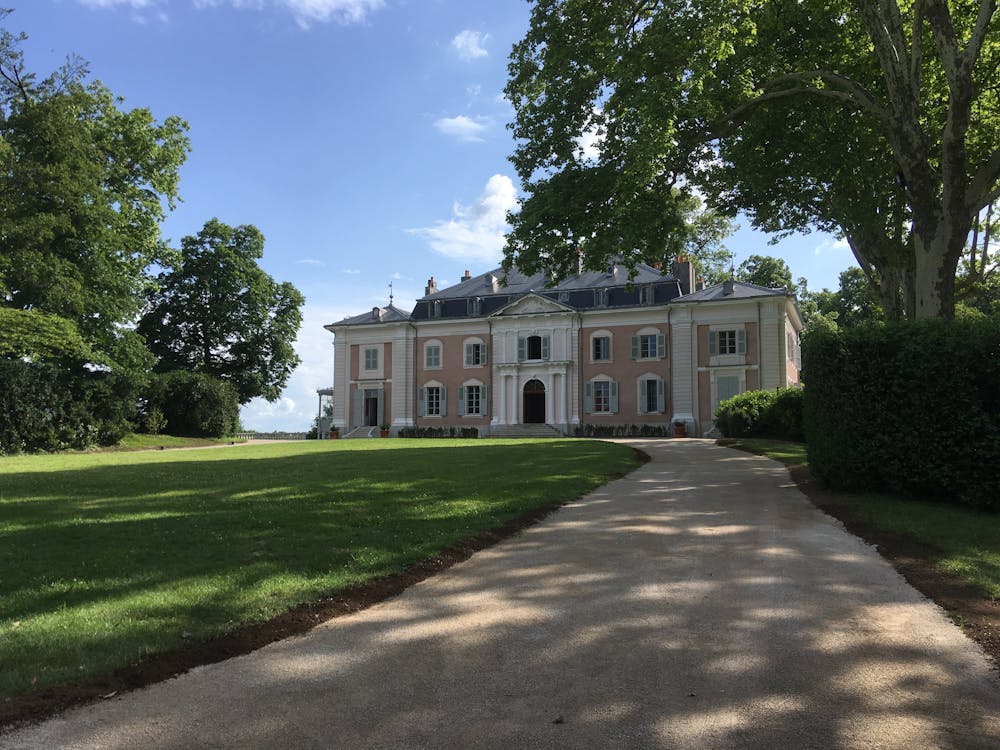
Voltaire’s chateau, with garden, at Ferney, where he eventually lived for 20 years. Wikimedia Commons
It is easy to see why critics have read Voltaire’s novella as a document written in despair. But the laughter of the book suggests this is only half the story.
Voltaire is enraged at human cruelty and idiocy. He scorns the Panglossian pride, which pretends to justify the unjustifiable with blithe self-assurance and vain sophistries. He despises any theory clever enough to explain away human suffering, but not humane enough to decry it.
But this is because he believes human beings can be better. For Voltaire, we can and should challenge all fair-sounding ideologies reconciling us to indignities visited on others we would not accept for ourselves.
Stateless, Voltaire had ended up in 1758 in rural retreat in Ferney, near the Swiss-French border. At the tender age of 65, he embarked on a legendary campaign against religious fanaticism — associated with his famous slogan: Écrasez l’infâme! (let us crush the infamous!).
His Treatise of Toleration of 1763, was sparked by anger at the wrongful execution of Protestant Jean Calas by Catholic zealots in Toulouse.
In 1778, the legendary author and advocate for multi-faith society finally returned to Paris, to be hailed as a hero. Fatigued by the journey, Voltaire died soon after, claiming: “I die adoring God, loving my friends, not hating my enemies, and detesting superstition.”
In 1791, the revolutionary government honoured Voltaire as an inspiration. His remains were re-interred in the Pantheon.
There is no pandemic in Voltaire’s Candide, and today’s conspiracy theories make Pangloss’ inhumane, hyper-rationalism look balanced.
But there are few other books you could read with greater sympathy in 2021 than this little gem of irony, calamity, and restrained outrage at human folly and prejudice. And none that are more cutting and entertaining.
Academic freedom has become a common topic of Australian public debate. Yet the concept is rarely examined or critiqued in detail.
That has not stopped it becoming a totemic issue for many on the political right. They consider Australian universities to be increasingly prone to doctrinaire and censorious attitudes. In particular, they point to issues of identity politics, climate change and other so-called “progressive” causes.
Prominent cases include the 2018 sacking of geophysicist Peter Ridd by James Cook University and protests against Bettina Arndt’s visit to the University of Sydney to give a controversial speech on date rape that same year. The federal Coalition government responded by commissioning the Independent Review of Freedom of Speech in Australian Higher Education Providers by former chief justice Robert French.
Among many helpful insights, Evans and Stone point out that academic freedom is not the same thing as freedom of speech. The latter is already at least partially protected by various specific and implied rights to freedom of speech in law.
The exercise of academic freedom, however, as Geoff Sharrock has noted in The Conversation, invokes a particular kind of social relationship. It is both public-facing and aims to be an expression of a public good.
Academic discourse seeks to be both well-reasoned and true. An academic opinion is thus different to an academic merely expressing their personal views.
For instance, climate scientists do not need to “believe” in climate change. Instead they must justify any assertion they make based on rigorous standards of scientific evidence and proof.
Thus, as Evans and Stone note, universities do not provide academic staff with an untrammelled right to say what they like on any issue. Theirs is a more narrowly conceived right based on an underlying obligation to justify their public utterances through the application of disciplinary expertise and values.
Adrienne Stone, one of the authors of Open Minds, discusses the distinction between academic freedom and freedom of speech.
The most contentious debates about academic freedom in Australia have not been about such academic concepts, however. Instead they have been more interested in trying to out a perceived underlying left-wing bias. This shows how skewed the understanding of academic freedom has become in Australia.
The French Review found no substantial evidence of any organised attempt to limit the capacity of students to encounter alternative political ideas. Evans and Stone note:
If anything, today’s students are less radical and politicised than their predecessors.
The federal government followed up the French Review by commissioning Sally Walker to report on universities’ adoption of a code of free speech.
What are the real threats?
Glyn Davis’s foreword draws attention to concerns he also expressed in a recent Conversation article. He says threats to academic freedom might arise from direct government intervention, or from the rise in tied grants from big business, or from philanthropic trusts directing teaching and research.
What has been much less self-evident, or at least less acknowledged, is the possibility that the very way Australian universities are now constituted and governed may pose an even more fundamental threat.
[Universities] are not commercial institutions, nor are they instruments of government. They are special communities dedicated to teaching and research.
But towards the end of their book, they implicitly suggest things might not be so rosy:
Academics should not be required to support the university’s brand or to avoid embarrassing it if doing so comes at the expense of academic freedom. On the contrary, academics should be able to speak out about research, teaching and university governance even when doing so involves harsh and even disrespectful criticism.
It is easy for academics to conclude that essentially unaccountable senior university administrators, not disciplinary professors or other disciplinary experts, have become the ultimate determiners of a particular discipline’s educational and research priorities, and thus of the true limits of academic freedom in its broadest sense.
Ask about virtually any problem in the university today and the solution proposed will inevitably be administrative. Why? Because we think administrators, not professors, guarantee the quality of the product and the achievement of institutional goals. But how is that possible in an academic environment in which knowledge and understanding are the true goals? Without putting too fine a point on it, it’s because they aren’t the true goals any longer.
In such a context, even an everyday event like the Australian National University’s recent announcement of a brand relaunch can start to seem much less benign. The university itself describes it as part of a “journey to foster cohesion, reduce the issue of brand fragmentation and use research to address the cognitive dissonance between how we see ourselves versus how our community and the world sees us”.
Brand managers, like most senior university managers, are generally not practising academics. Thus, they should not be expected to understand, let alone articulate or defend, academic freedom.
One of the many ways Open Minds may prove to be of lasting value is in helping academics question the propriety of such managerial pronouncements, by framing them properly as issues of academic freedom.
This is why academic freedom is a central concern for Academics for Public Universities. We would argue this issue ultimately requires us to reexamine and revitalise the underlying public character of our universities.




 At the BookShelf
You must be logged in to post a comment.