The link below is to a book review of ‘Pastors and Their Critics – A Guide to Coping with Criticism in the Ministry,’ by Joel R. Beeke and Nick Thompson.
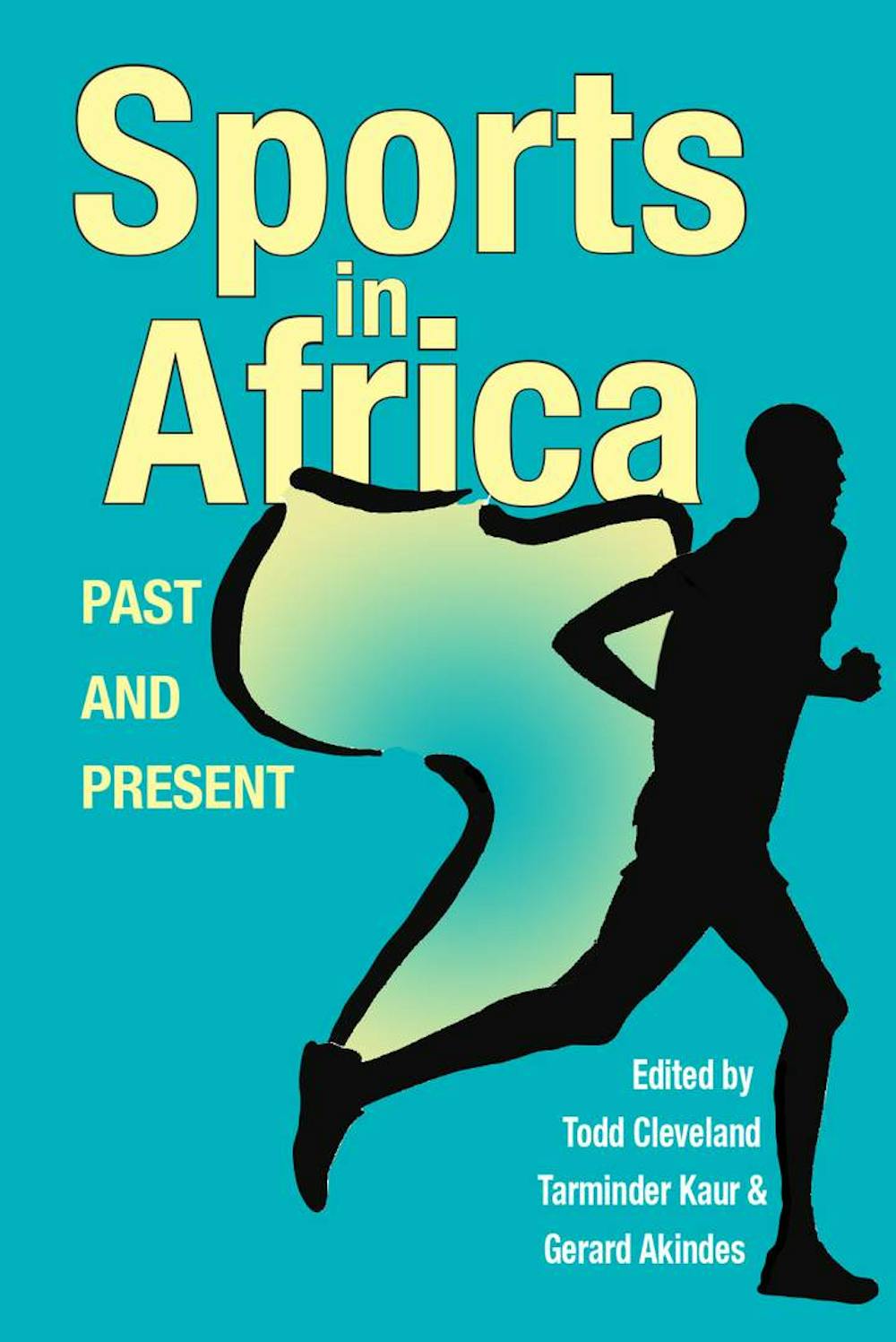
The efforts of a range of academics across Africa have produced a new anthology of articles about sport on the continent. It’s an important book because it’s a subject that’s been largely neglected.
Sports in Africa, Past and Present engages with the core themes that have emerged from a series of conferences. Chapters provide an array of sporting windows through which to view and understand key developments in Africans’ experiences with leisure and professional sporting activities.
The history of African sports is also a history of Africans’ reception and appropriation of an assortment of “modern sports” that European colonisers introduced. If Europeans colonised Africa, as the maxim goes, with a gun in one hand and the Bible in the other, they were also equipped with soccer, rugby and cricket balls.
Notwithstanding the intentions of the colonial powers, historians of African sports have established that the indigenous practitioners were hardly passive consumers. They contested various aspects and fashioned new meanings of these sports.
Various chapters address the roles that sport played during and after decolonisation. It helped shape local and national identities in newly independent African states. They also look at the ways in which individuals, communities and governments have used sports in contemporary Africa for social and political ends.
Covering a continent
One of the themes in the book is the impact of colonisation, and how African players responded to various restrictions on their participation.
Africans were typically banned from white settlers’ sports clubs and associations. They often responded by forming teams and leagues of their own. This helped foster the development of distinct identities. In certain cases, these autonomous efforts at sporting organisations even simulated institution building in an imagined post-colonial state.
Trishula Patel’s chapter on cricket in Rhodesia (now Zimbabwe), for example, examines how the game helped reinforce various identities of the resident Indian community. Members struggled to negotiate racial discrimination at the hands of the white settler regime. Mark Fredericks demonstrates how the end of apartheid in South Africa, and the attendant unification of rugby and other sports leagues, signalled the death knell for community sports. In practice this meant the end of mass-based sports in black communities.
David Drengk’s chapter on surfing along the then Transkei Wild Coast and Todd Leedy’s chapter on the history of bicycle racing complicate ideas of interracial interactions during the apartheid era. Meaningful interactions could and did occur between black and white South Africans, or at least basic tolerance and respect.
The Nigeria women’s national soccer team has faced gender discrimination in a deeply patriarchal society. Chuka Onwumechili and Jasmin M. Goodman set out how players have used a series of sports-related strategies to push back against a range of sexist structures and entities. These include the Nigerian Football Federation.
Solomon Waliaula’s chapter offers significant insight into the pay-to-watch football kiosks that are ubiquitous throughout the continent, though his focus is on Kenya. He refutes the notion that because participants pay to watch European soccer, western culture dictates the dynamics in these settings. Instead, he argues, these spaces function based on local realities, cultural norms and social relations.
Christian Ungruhe and Sine Agergaard consider the acute challenges that West African football migrants face in Europe when their playing careers end.
Going back in time, Francois Cleophas reconstructs the experiences of Milo Pillay, a South African-born ethnic Indian physical culturalist. His weightlifting story illustrates the racial challenges that athletes faced, and at times surmounted, during the apartheid era.
Michelle Sikes uses the example of elite sprinter Seraphino Antao to highlight the challenges and opportunities that sports generated in the final years of British colonial control in Kenya and early independence. In an attempt to cultivate a common identity and purpose, leaders opportunistically trumpeted Antao’s successes. Politicians throughout the continent similarly used sports to build national unity in the aftermath of imperial overrule.
Marizanne Grundlingh examines the museum associated with South Africa’s Comrades Marathon, the world’s oldest and largest ultramarathon. In particular, she considers the ways that the race is remembered through gift-giving. Former participants donate various items for display, adding to the emerging subfield of sports as heritage.
Positive change through (studying) sports
Research on sports in Africa has gained considerable traction. But, like books such as Sports in Africa, the introduction of this topic into the classroom has lagged behind.
Three chapters address course design, approaches and learning outcomes. They also consider how African sports content can hone students’ critical analysis capabilities, digital research methods and intercultural learning skills.
Todd Cleveland draws on his experiences teaching the history of sports in Africa to offer lessons and insights. Matt Carotenuto’s chapter brings the reader into the world of a liberal arts institution. He offers advice based on his experiences teaching courses in African athletes and global sport.
Ohio University Press
Peter Alegi’s chapter looks at his experiences teaching an undergraduate seminar that examines the intertwined relationships between sports, race and power in South Africa.
We hope that the book can help precipitate positive change in the classroom and on the continent. And that it can enable practitioners, supporters and observers to better understand the lifeworlds in which sports are played and take on meaning.
This article is the first in a series examining African sport. The articles are each based on a chapter in the new book Sports in Africa: Past and Present published by Ohio University Press.
In the third decade of the new millennium, despite many publishers still seeing black women’s writing as having a limited market, readers have far more access than before to publications by writers from the global South. In particular, the perspectives of black women are certainly more visible in the public domain.
Yet gaps and erasures – based on intellectual authority, financial resources and visibility in the knowledge commons – mean that it’s still easier for work by black, postcolonial and decolonial feminists from global centres to secure publication and wide distribution.
As a result, the growing audience of radical young readers grappling with questions about race, gender, sexuality and freedom in global peripheries often have to turn to critical writing outside their national contexts, which inflect the topics they want to explore. Even for many restless and radical readers in the global North, much remains silenced and absent.
It reminds us that black women writers in South Africa have distinct experiences of being stereotyped. Wanner sums this up in her confrontation with one reviewer who described her work as “chick lit”.
And if black women are the majority in South Africa and I am therefore the standard, shouldn’t it just be called a good book? And I was chick lit versus what? Could she point out to me the male authors in South Africa whose books she’d referred to as ‘cock lit’? Take (JM) Coetzee, with his women characters who aren’t well-rounded and don’t seem to have any agency; was he cock lit?
Undocumented and innovative
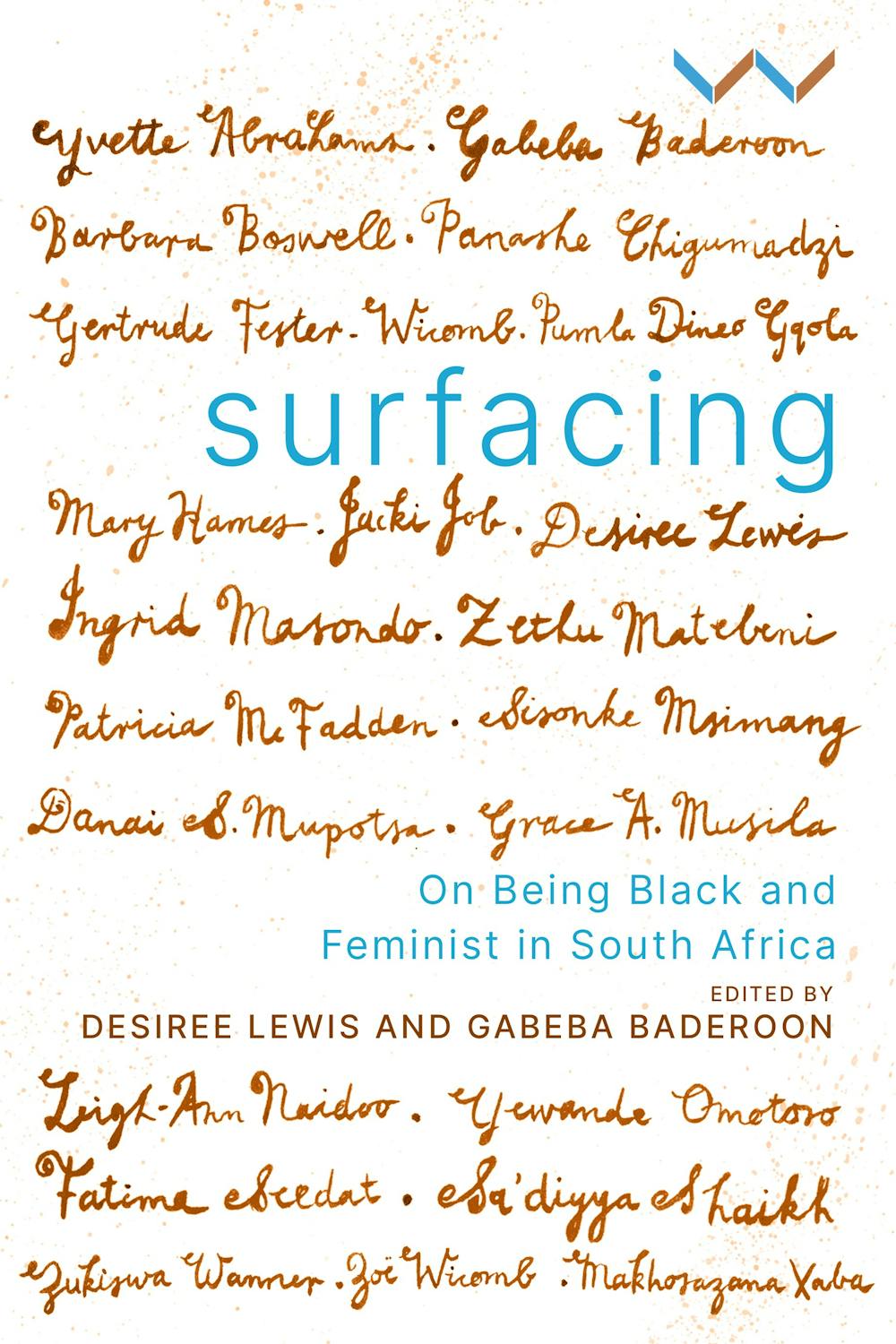
Surfacing traces a path within black South African feminist thought in 20 dazzling chapters. The collection shows how radical black South African women have been part of several traditions of undocumented intellectual and artistic legacies. In the book Mary Hames recalls, for example, the radical spaces outside conventional classrooms in which she studied banned material during the anti-apartheid struggle.
Our aim as editors was to show how writers in the academy, fiction-writing, journalism and the art world are grappling innovatively with essential topics. Like the politics of self, the complexities of sexual freedoms and identities beyond the blunt frameworks of human rights models. And how to think about “knowledge” more completely and adventurously.
The rich descriptions and interpretations of local realities in Surfacing refine the categories of transnational and black feminism. They bring the breadth of black feminist engagement in the south of the continent into fuller view.
Sara Baartman and Winnie Mandela
The book is acutely aware of the contrast between the absence of acknowledgement of most black South African women writers and the way certain women, like Khoi historical figure Sara Baartman and activist and politician Winnie Mandela, have been made into global icons. It therefore starts with reflections on them.
Sara Baartman has been exhaustively examined in the north and Winnie Mandela has been the subject of numerous biographical, fictional and non-fictional projects by white scholars.
Intervening into this legacy, author Sisonke Msimang writes an emphatically self-reflexive study which reframes Winnie Mandela. Yet in doing so her interest “was never about ‘cleaning up’ her image or revising facts. It was about recognising that the facts about her required contextualisation.”
Most publications by black South African women are seen as testimonial or fictional. But the contributors of Surfacing seek both to contribute to and to interpret existing bodies of knowledge. In addition, the collection will undoubtedly be remembered for its enthralling writing.
New narratives
Many chapters take the elastic form of the personal essay. For example, academic and poet Danai S. Mupotsa draws on poetry to talk about experiences of both intimate and public scale. Academic and author Pumla Dineo Gqola pens a playfully serious letter to the South African artist Gabrielle Goliath. And photographer and curator Ingrid Masondo collaboratively authors an essay with the photographers about whom she writes.
In other pieces, academic and author Barbara Boswell recounts her fascinating exchanges with feminist student activists during the #RhodesMustFall protests in her essay about the meanings of pioneering feminist author Miriam Tlali for the present. Academic Grace Musila’s delightful My Two Husbands unfurls the experience of being a brilliant student whose intellectual accomplishment was seen by some men as undermining theirs. Yet within her family her education constituted a cherished and defining achievement.
Several chapters in the collection trace the intersections of religion and feminist thinking in South Africa. Academics Sa’diyya Shaikh and Fatima Seedat offer vivid reflections as Muslim feminists on the costs of feminist neglect of the gender of divinity. Dancer, choreographer and academic jackï job’s striking memoir traces a shift from Christian expectations of how to be a “lady” to finding a language in dance for becoming “more than just this body”. And scholar and activist gertrude fester-wicomb recounts her experience as a Christian lesbian anti-apartheid activist of the constrained spaces for queerness during the 1980s.
How to recover histories in the face of reticence is evocatively described by essayist and novelist Panashe Chigumadzi. Through patient listening, she discovers how to hear the language of her grandmother’s silences. In The Music of My Orgasm, anthologist, essayist and poet Makhosazana Xaba movingly testifies to the heritage of feminism she received from her grandfather and her mother. She describes how she learned to cultivate the pleasures of her own body as a force of radical sexual and political liberation.
In their tender relationship to the land on which they grow organic food and medicine, historian and farmer Yvette Abrahams and sociologist and activist Patricia McFadden’s chapters map a visionary future of sharing and abundance.
Why these writings matter
Throughout the book, it is therefore made clear that foregrounding the positionality of the writer – the social and political contexts that shape their identities – can deepen what is being said.
Who the author is and what perspective she speaks from are in fact integral to her view of the world.
Contrary to advocates of “universality” and “detachment”, this stance seeks to strengthen growing efforts to “surface” the rich diversity of ways of seeing and understanding our world.
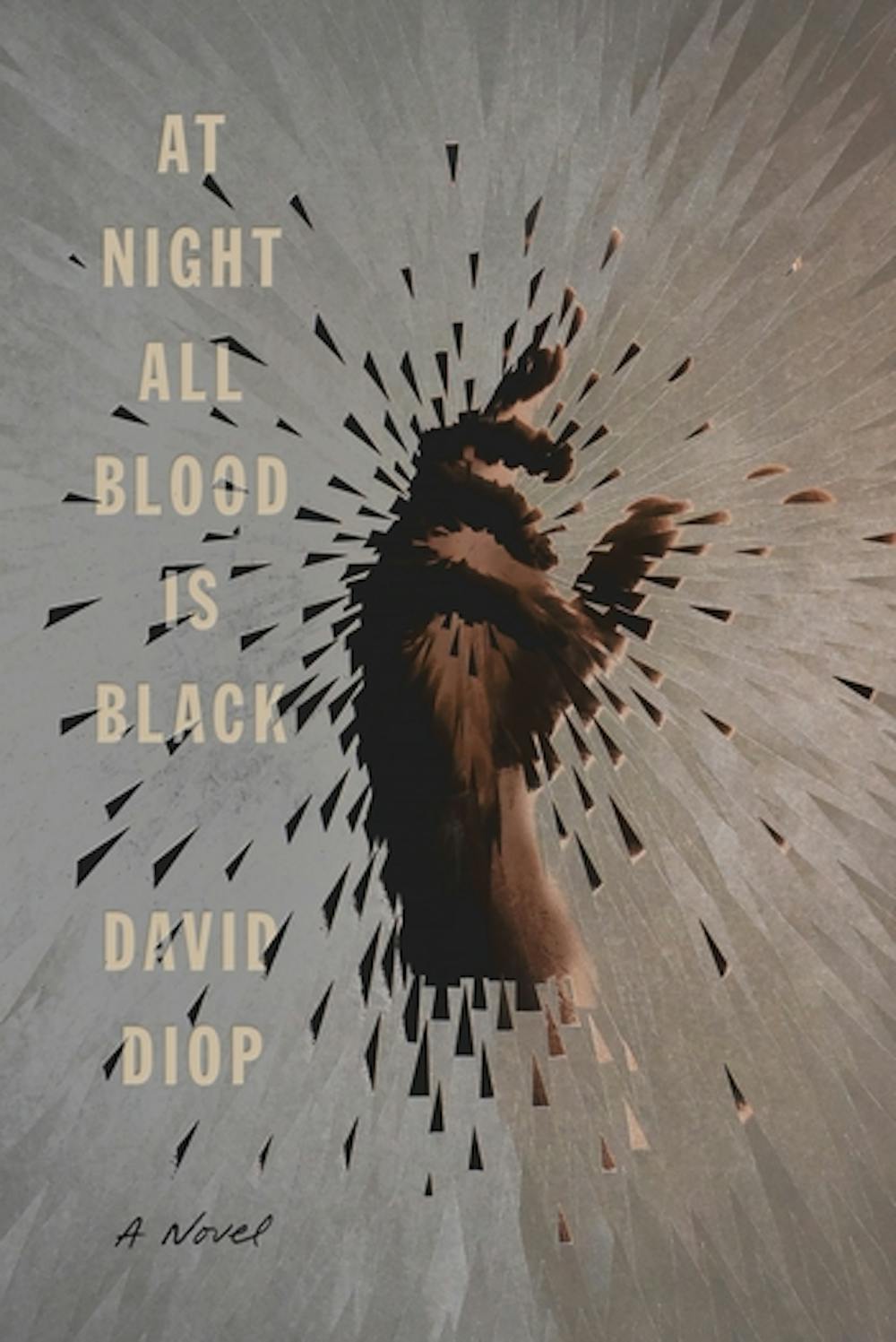
Born to a French mother and a Senegalese father, David Diop has won the prestigious annual International Booker prize for translated fiction. He shares the prize with his translator Anna Moschovakis for the novel, At Night All Blood is Black (2018). The book tells the story of a Senegalese soldier who descends into madness while fighting for France in the first world war. It has been a bestseller in France and won several major literary awards. Literature scholar Caroline D. Laurent, a specialist in Francophone post-colonial studies and how history is depicted in art, told us why the novel matters.
Who is David Diop?
Diop is a Franco-Senegalese writer and academic born in Paris in 1966. He was raised in Dakar, Senegal. His father is Senegalese, his mother French and this dual cultural heritage is apparent in his literary works. He studied in France, where he now teaches 18th-century literature.
At Night All Blood is Black is Diop’s second novel: his first – 1889, l’Attraction universelle (2012) – is about a Senegalese delegation at the 1889 universal exhibition in Paris. His next book, about a European traveller to Africa, is set to come out this summer.
What is At Night All Blood is Black about?
Its tells the story of Alfa Ndiaye, a Senegalese tirailleur (infantryman) and the main narrator of the novel (he uses the first-person pronoun ‘I’ in most of the text). He is fighting on France’s side – and on French soil – during World War I.
The novel starts with the narration of a traumatic event that the African soldier has witnessed: the long and painful death of his best friend, Mademba Diop. The traumatic event directs Alfa’s vengeance, that could also be perceived as self-punishment. He kills German soldiers in a similar way, reproducing and repeating the traumatic scene. He then cuts one of their hands off and keeps it with him.
This results in Alfa being sent to a psychiatric hospital where doctors attempt to cure him. It deals with the concepts of war neurosis and shell shock that appeared then (what we now refer to as post-traumatic stress disorder).
Pan Macmillan US
The form of the novel associates elements of an inner monologue as well as a testimony. This allows the reader to see, through the perspective of a colonial subject, the horrors of war.
In this sense, Diop writes a nuanced text: he describes the violence perpetrated and experienced by all sides. Alfa Ndiaye becomes a symbol of the ambivalence of war and its destructive power.
Why does the book matter?
It’s important because it addresses what I would refer to as a silenced history: that of France’s colonial troops. Though the colonial troops, and especially the Senegalese tirailleurs, a corps of colonial infantry in the French Army, were established at the end of the 1800s, they became ‘visible’ during World War 1 as they took part in combat on European soil.
Despite this, the involvement of African soldiers during the two World Wars is rarely taught in French schools or discussed in the public sphere. The violence exercised during recruitment in French West Africa, their marginalisation from other troops and the French population notably through a specific language (the français tirailleur) – created to prevent any real communication – and their treatment after the wars go against a specifically French narrative that emphasises the positive aspects of France’s colonialism and its civilising mission.
The lack of visibility of the history of Senegalese tirailleurs is also connected to the ongoing dispute about specific events. One in particular is the massacre of Thiaroye. In December 1944, between 70 to 300 hundred (the numbers are disputed) Senegalese tirailleurs were killed at a demobilisation camp in Thiaroye, after having asked to be paid what they were owed for their military service.
Diop also manages to shatter stereotypes associated with Senegalese tirailleurs. In French historical and literary representations, they are seen as both naïve children in need of guidance and barbaric warriors. Senegalese tirailleurs partook, against their will, in war propaganda: this representation was to create fear on the French side as well as on the German side (Die Schwarze Schande – the Black Shame – presented African soldiers as rapists and beasts).
Diop appropriates this in order to complicate it: while Alfa’s violence in killing his enemies follows this logic, one realises that this causes – and was caused by – great distress. Moreover, Diop also inverts this vision as he questions who is human and inhuman: Alfa asserts that his Captain, Armand, is more barbaric than he is.
Diop thus manages to question representations of black soldiers dictated by colonial stereotypes – in order to dismantle them.
Why does this Booker win matter?
Diop receiving the International Booker prize is of great importance because At Night All Blood is Black exposes a specifically French history that is connected to France’s colonial endeavours. And even though the novel focuses on France, it connects to other histories as it indirectly points to the fact that other European colonial powers also resorted to using colonial troops during wars and erased their role in subsequent commemorations.
The novel also shows the importance and power of translation as Anna Moschovakis has managed to translate all of the beauty and horror of Diop’s prose. In the same way that Diop manages to combine his dual heritage in his text, Moschovakis has allowed English readers to be exposed to a history that is specific to France, and yet similar to other histories.
My heart sank last week to see conservative Australian commentator Alan Jones championing a contentious book about climate science which has gained traction in the United States.
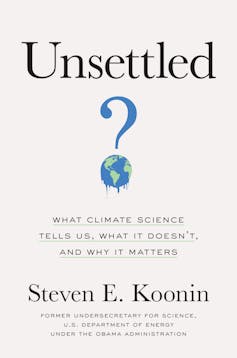
BenBella Books
The book, titled Unsettled: What Climate Science Tells Us, What It Doesn’t, and Why It Matters, is authored by US theoretical physicist Steven Koonin. Notably, Koonin is not a climate scientist.
As the title suggests, the book’s bold central theme is that climate science is far from settled, and should not be relied on to make policy choices in areas such as energy, transport and economics.
Jones cited Koonin’s book in a Daily Telegraph column last week. He decried the “nonsense” of governments in Australia and abroad aiming for net-zero carbon emissions, saying it was as though Koonin’s book “didn’t exist”.
So does the book hold up? I have been researching and writing about climate change since the 1980s. I wanted to give the book a fair reading, so I put any preconceived thoughts aside and tried to fairly weigh up Koonin’s arguments. If true, they would be very important findings.
Koonin frames his book as a brave attempt to reveal how the climate science we’ve been relying on all these years is, in fact, uncertain. But the book’s major flaw is to imply these uncertainties are news to climate scientists.
This is patently untrue. Science is never settled. But there is enough confidence in the science to justify significant climate action.
Scientific uncertainty does not justify climate inaction. Shutterstock
Uncertainty is par for the course
Koonin opens the book by saying he accepts that Earth is warming, and humans are contributing to this. But he muddies the waters with passages such as the following:
Past variations of surface temperature and ocean heat content do not at all disprove that the (approximately 1℃) rise in the global average surface temperature anomaly since 1880 is due to humans, but they do show that there are powerful natural forces driving the climate as well.
In other words, Koonin says, the real question is “to what extent this warming is being caused by humans”.
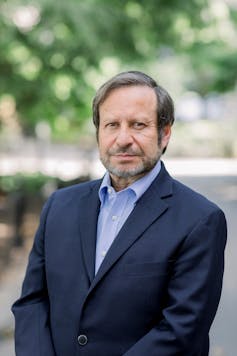
The book’s author, Steven Koonin, is not a climate scientist. Kelly Kollar
No rational person could deny that natural forces drive the climate. The climate record shows significant climate changes long before humans existed; clearly we’re not responsible for the planet being much warmer many millions of years ago.
However the five assessment reports of the Intergovernmental Panel on Climate Change have expressed steadily increasing confidence that humans are the dominant cause of global warming this century.
Koonin attacks former US secretary of state and now Biden climate envoy, John Kerry, who once said of climate change “the science is unequivocal”.
It is true to say climate science is somewhat uncertain. Science is always a work in progress. Scientific integrity demands a willingness to look carefully at new data and theories to see if they require us to revise what we thought we knew.
But Koonin is wrong to imply scientists are somehow unaware of, or deny, this uncertainty. To the contrary, I have heard decision-makers express exasperation when we scientists seek to qualify our advice on the basis that our knowledge is limited.
Every reputable climate scientist I know is always willing to look at new data. But policy-makers must make decisions based on the current scientific understanding.
Koonin states, accurately, that few in the general public receive scientific information directly from research papers. Most people receive climate change information after it’s been filtered by governments and the media – which, in Koonin’s mind, often overstate the seriousness of climate change.
However Koonin fails to note the opposite forces at play – governments and media organisations, such as the Murdoch press in Australia and Fox News in the US, which systematically misreport climate science and underestimate the climate threat.
Humans are the dominant cause of global warming this century. Shutterstock
Ignorance is not bliss
Koonin concludes by questioning the wisdom of reaching net-zero emissions in the second half of this century – a central goal of the Paris Agreement. He argues that when one balances the cost and efficacy of slashing emissions “against the certainties and uncertainties in climate science”, the net-zero goal looks implausible and unfeasible.
This is effectively an assertion that ignorance is bliss: because we don’t have perfect understanding that allows us to make exact projections about the future climate, we should not take serious action to reduce emissions.
Koonin proposes a different response: for society to adapt to a changing climate, and embrace “geoengineering” technology to artificially control Earth’s climate.
Both adaptation and geoengineering have their place in the climate response. But neither are sufficient substitutes for dramatically cutting carbon emissions.
The world must urgently reduce emissions. Shutterstock
Proceed with caution
Under the Hawke government, science minister Barry Jones was one of the first public figures in Australia to sound warnings about climate change.
Jones and I both appeared on a panel at a landmark climate conference in 1987. I recall Jones, when asked how decision-makers should respond, said we should consider the consequences of both acting and not acting.
If policymakers acted on inaccurate climate science, Jones argued, the worst that would happen is our energy would be cleaner – albeit, at that time, more expensive. But if the science was right and we ignored it, the consequences could be catastrophic.
Jones was essentially describing the precautionary principle, which is contained in a number of international treaties including the UN’s Rio Declaration, which states:
Where there are threats of serious or irreversible damage, lack of full scientific certainty shall not be used as a reason for postponing cost-effective measures to prevent environmental degradation.
The principle demands we act to avoid disastrous outcomes, even if the science is uncertain. Because the uncertainty works both ways: things might get worse than we expect, rather than better.
The fundamental point of Koonin’s book is true, but irrelevant. The science is not settled – but we know enough to act decisively.
Samuel Beckett originally subtitled his 1953 play Waiting for Godot “a tragicomedy in two acts”. Vivian Mercier, the critic for the Irish Times, dubbed it “a play in which nothing happens, twice.”
Two tramps, Vladimir and Estragon, wait on the side of a country road. Each act begins with the pair reunited after spending the night apart. As they await their enigmatic patron, Godot, Estragon laments being beaten by nameless figures during the night, and Vladimir seeks to pass the time by stirring his companion into repartee.
These two are ill-starred but well-suited: Estragon’s feet are in constant pain, and Vladimir’s unspecified affliction induces frequent and painful urination. Estragon’s shoes stink, while Vladimir adheres to a diet of garlic to ease the symptoms of his condition. Vladimir remembers, and Estragon forgets.
Memory stretches into the deep past. The present sits on the cusp of a hopeful future. Time’s recurrence is marked by the moon and the sun. The endless wait for a rendezvous … for what, exactly?
To receive instructions? To be delivered from this tormented life? To relieve the tramps of their little canters, their bombastic declarations, their pleas? To relieve the steadfast audience?
From its first performances in the 1950s, Waiting for Godot enjoyed a positive critical reception. Yet its earliest audiences thought otherwise, ensuring the interval was the most popular part of the play by voting with their feet. Over time, though, Godot would become a celebrated avant-garde play, and a popular cultural reference for fruitless waiting.
This waiting is eerily prescient in a time of pandemic.
From Dublin to Paris
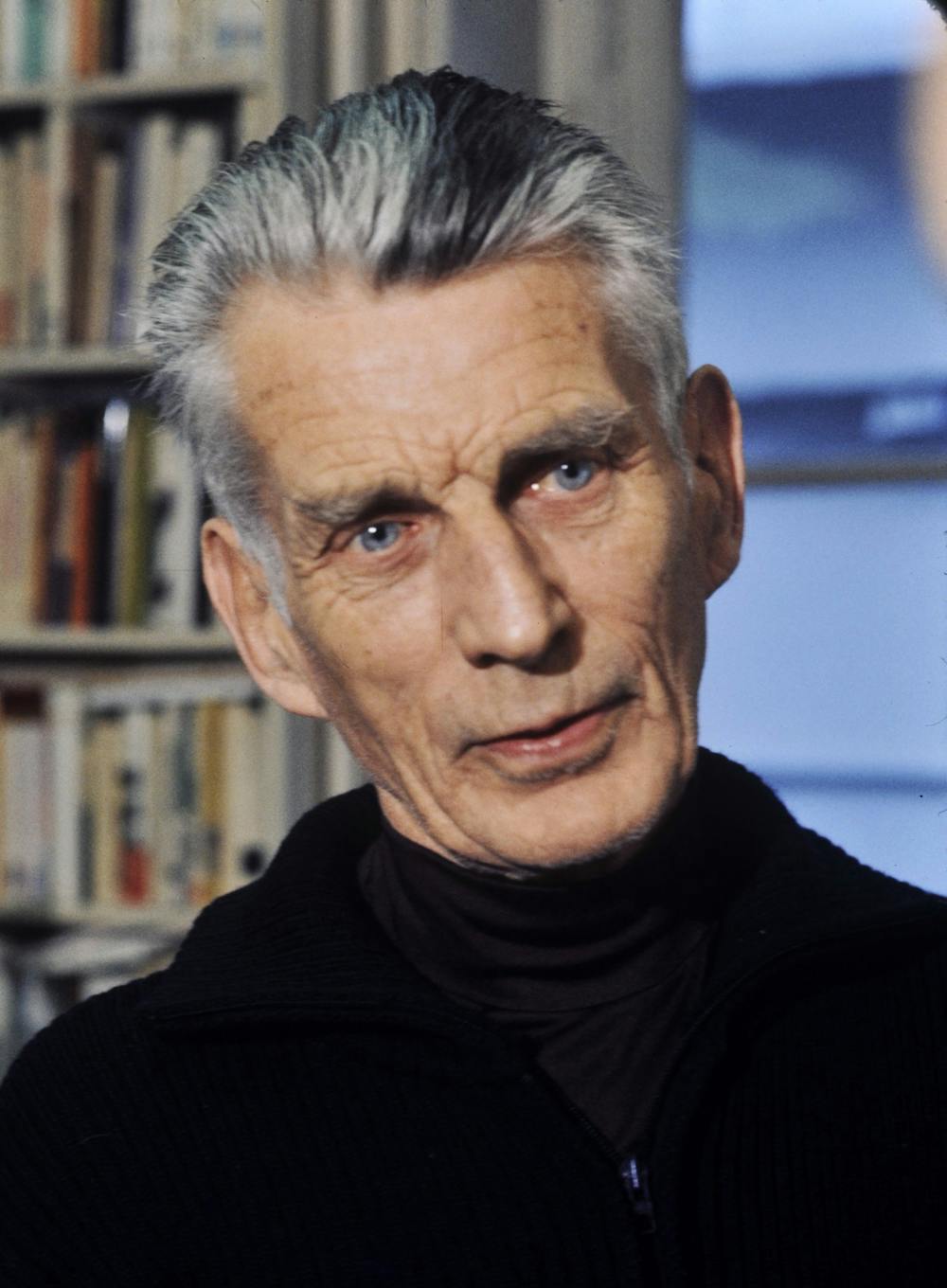
Samuel Beckett photographed in 1977. Wikimedia Commons
Samuel Beckett was born in Dublin in 1906. As a child he boarded at the Portora Royal School in Enniskillen (Oscar Wilde’s alma mater), before a degree in Modern Languages and Literature at Trinity College Dublin.
His enduring relation with Paris began soon after. During his two-year position as lecteur d’anglais at the Ecole Normale Superiéure (1928-29) Beckett met and became close with James Joyce, who introduced him to the Parisian literary and artistic avant-garde.
Beckett spent two years in London (1933-35) undergoing a course of psychoanalysis under Walter Bion at the Tavistock Clinic, during which he wrote his first published novel, Murphy (1938). Following travels in Germany and Italy, Beckett settled in Paris in 1938, as war looked increasingly likely.
Beckett joined the French Resistance but his cell was infiltrated and he was forced to flee to Roussillon for the duration of the war, where he composed the novel Watt (published in 1953) in English. Back in Paris, Beckett embraced French and embarked upon one of modern literature’s most eccentric and fruitful monastic episodes: the “siege in the room” which yielded the trilogy Molloy (1951), Malone Dies (1953) and The Unnamable (1953).
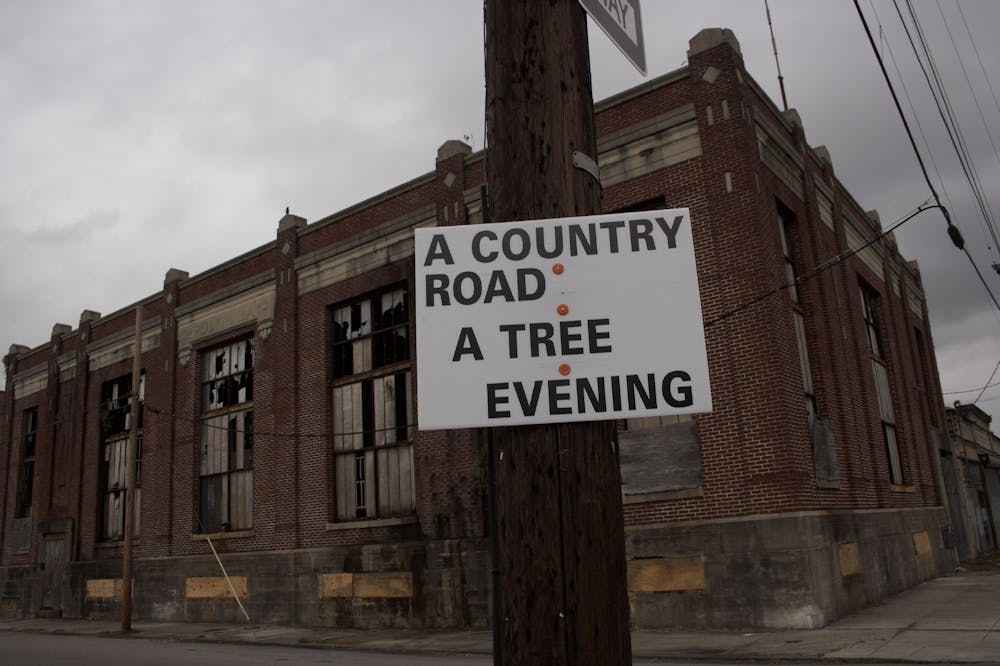
The script opens with the stage directions ‘A country road. A tree. Evening.’, as in this New Orleans street art. Derek Bridges/flickr, CC BY-NC-SA
Beckett’s trilogy contributed to the new wave of French postwar novels renowned for their spare style and forensic treatment of plot, a movement that came to be known as the nouveau roman (“New Novel”).
Beckett wrote Waiting for Godot between October 1948 and January 1949. It was his first play to reach the stage — his first full playscript, Eleuthéria, was written in 1947 but only published posthumously.
Nothing, twice
Despite appearances, Godot is a surprising blend of suspense and dramatic action. Themes repeat over both acts: the same waiting, the same fights. A messenger boy appears in each act — or, perhaps, two different boys in each act, brothers. The horizon of time is scanned twice, once in each act.
The symmetry of Vladimir and Estragon, endlessly waiting for the unseen Godot, is echoed by another pair, Pozzo and Lucky, who pass by in each act. In Act 1, Pozzo is the grand landlord — a revenant of the Irish Big House literary tradition — whipping his servant Lucky into service.
Pozzo’s pomposity is matched by Lucky’s silence, and when Pozzo compels Lucky to speak, finally, Lucky’s cascade of logorrhea stands in contrast to Pozzo’s grandiloquence.
In Act 2 Pozzo returns, blinded, his authority diminished to the merely rhetorical. His final speech echoes Macbeth on time and the brevity of life. In Shakespeare’s play, Macbeth pronounces:
Life’s but a walking shadow, a poor player / That struts and frets his hour upon the stage / And then is heard no more
Pozzo’s final passionate outburst reduces life to:
the same day, the same second […] They give birth astride the grave, the light gleams an instant, then it’s night once more.
Estragon’s complete indifference to Pozzo’s swansong has Vladimir wonder at his own dilemma, inducing an irrevocable moment of clear vision:
At me too someone is looking, of me too someone is saying, he is sleeping, he knows nothing, let him sleep on.
This burden of recognition places Valdimir within a tragic mode, out of step with the farcical tragicomedy around him. He is no longer immersed in the condition of waiting, but breaks through to understand the act of waiting as a condition of life.
Audible yawns – from those who stayed
Godot premièred at the Théâtre du Babylone in Paris in January 1953. The play drew positive attention from reviewers and from some of the biggest names in French theatre and literature. Its fame rose slowly — then abruptly, when a fistfight broke out in the interval of one performance, between the play’s defenders and those offended or shocked by its (in)action and the cruel plight of the character Lucky.
Its English-language premiere in London in August 1955 was met with “waves of hostility” and audible yawning from audience members who remained after interval.
The play’s fate in the United States was little short of catastrophic: billed as “the laugh sensation of two continents”, its opening night in January 1956 at the Coconut Grove Playhouse in Miami was farcical.
Even Alan Schneider’s expert direction couldn’t salvage the play from a disruptive rehearsal atmosphere, complicated sets and an ill-suited venue. The interval, again, turned out to be the most popular part of the performance.
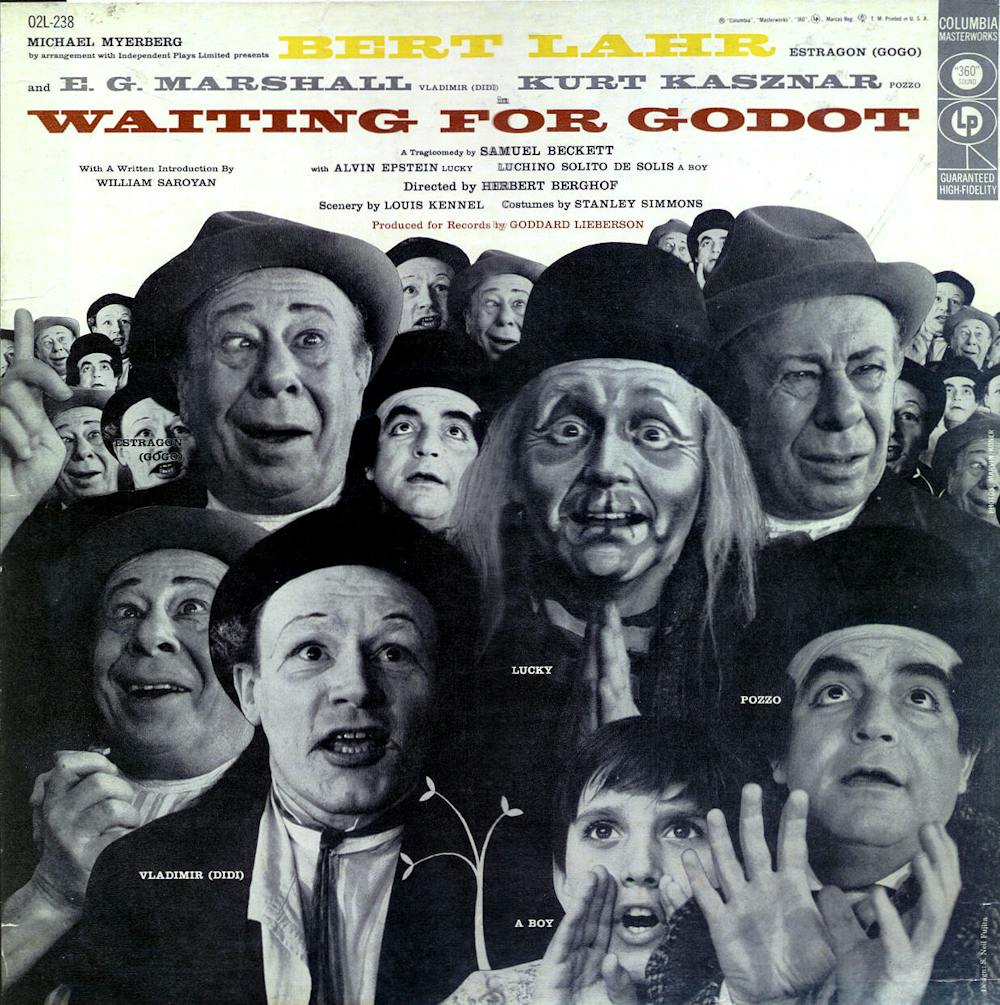
Bert Lahr (who played the Lion in 1939’s The Wizard of Oz) played Estragon in Miami and would be instrumental in the play’s success later that year on Broadway, an event that remained one of his career highlights.
Waiting for Godot played on Broadway for only 10 weeks, but Bert Lahr’s performance was immortalised by Columbia Records. Internet Archive
During those early years, Godot was also performed in prisons, including a landmark production by the San Francisco Actors Workshop at San Quentin State Prison in 1957. Inmates were astounded a playwright could capture limbo with such insight and sensitivity.
All of us are waiting
Over time its fame has grown to the point where Godot is a definitive meeting point of the avant-garde and popular culture. The play has inspired numerous parodies and spin-offs, perhaps most notably the 1996 mockumentary Waiting for Guffman, in which the cast of a small-town musical production in Missouri awaits the arrival of a legendary Broadway producer.
The claustrophobia of Beckett’s next play, Endgame (1957), might capture the experience of lockdown in the current pandemic (“Beyond [the wall] is the other hell”), but Godot captures the distortions of time combined with the uncertainty of respite.
Populations across the globe have endured various kinds of waiting: waiting for published infection numbers, for hospital beds, for oxygen supplies, for borders to reopen, for opportunities to see loved ones. Running through our individual narratives, waiting has proved to be a truly global, shared experience.
How do we remember pre-pandemic times – that past “a million years ago,” as Vladimir pronounces in the play – and what do we forget?
Estragon exclaims: “Nothing happens. Nobody comes, nobody goes. It’s awful.” But dilatory time and static place also offer opportunities for new perception: a long moment to consider our circumstances and ourselves anew.
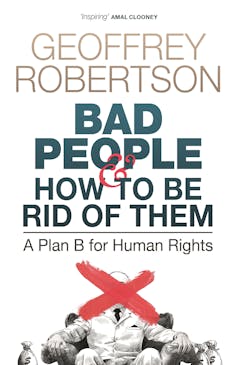
Geoffrey Robertson is one of Australia’s most acclaimed international jurists and human rights advocates. His latest book, Bad People – and How to Be Rid of Them, explains the history of international human rights law and acknowledges its failings.
Bad People is not a textbook; it is aimed at anyone with an interest in the international human rights framework and its enforcement mechanisms.
Most importantly, it is a call to action for Australians and others in democracies to demand the introduction of “Magnitsky laws”.
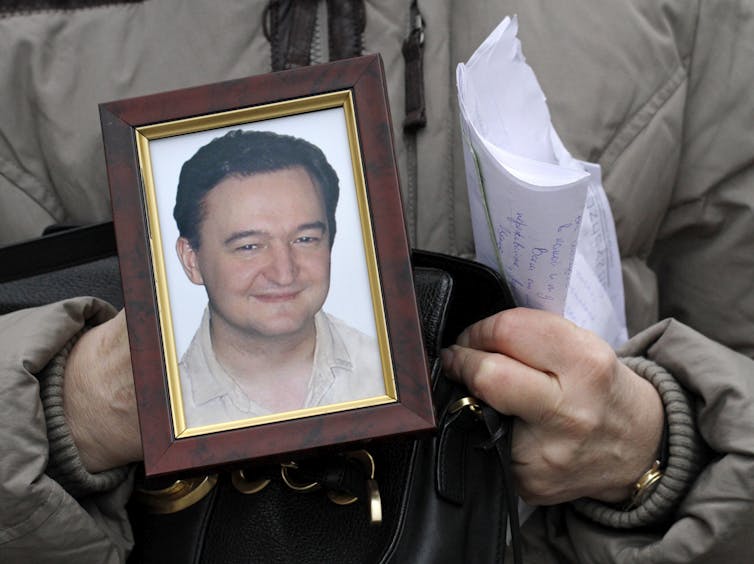
Magnitsky laws are named after a Russian whistleblower, Sergei Magnitsky, who was tortured and died after exposing a massive tax fraud scheme involving Russian officials. These laws seek to combat human rights abuses by naming, blaming and shaming individuals, denying them the right to enter democratic nations, stripping them of ill-gotten funds, and barring them and their families from local schools and hospitals.
Magnitsky was a Moscow lawyer and tax auditor who died in custody in Russia at the age of 37. Alexander Zemlianichenko/AP
The US was the first country to pass such laws in 2012 to sanction Russian officials and Chechen warlords, sending a strong signal to the Kremlin that action could and would be taken for human rights breaches.
Since then, the US has used the Global Magnitsky Act to impose sanctions on more than 200 individuals and entities from two dozen countries, including Saudi Arabia, China, South Sudan, Myanmar, Iraq and Cambodia.
Robertson’s response to the failure of the international human rights framework is to promote powerful Magnitsky laws as a “plan B” to coordinated international action.
Bad People – and How to Be Rid of Them, by Geoffrey Robertson. Penguin Books Australia
How international courts have been weakened
Robertson charts the rise of human rights immediately after the horrors of the second world war, and then despairs of the growing trend of nations retreating from the jurisdiction of international courts or refusing to comply with their rulings.
Robertson describes how the United Nations succeeded in establishing a coherent human rights regime, but failed to carve out effective accountability mechanisms to enforce breaches. Instead, enforcement relies on individual nations’ leaders being motivated to legislate human rights into their domestic laws.
Although the UN Universal Declaration of Human Rights has been broadly accepted, punishment for war crimes and crimes against humanity has been inconsistent and complex.
Consequently, Robertson argues the International Criminal Court (ICC) does not serve as a deterrent to perpetrators of most human rights abuses.
Eroded confidence in international law
The book provides a useful history of the ICC and the way the US, China and Russia have limited its operations by using their veto powers when legal action is proposed against them or their allies.
In the past four years, for instance, Russia has vetoed ICC action 14 times, China five times and the US twice. Robertson suggests the mere threat of a veto by superpowers behind the scenes have seen other initiatives withdrawn.
As a result, Robertson laments the once-powerful ICC is now confined to punishing rebel warlords and leaders of pariah countries.
More than 70 years after the Universal Declaration of Human Rights, the growing threats of isolationist foreign policies and anti-democratic regimes are pulling at the threads of our international human rights framework. Shifting geopolitical balances and the populist politics of Vladimir Putin, Xi Jinping, Narendra Modi, Donald Trump and the Brexit campaign have eroded confidence in a global system of law and order.
Australia is not immune from this trend. In February 2020, the ICC prosecutor described Australia’s offshore detention regime as “cruel, inhuman, or degrading treatment”.
But, the ICC decided not to prosecute the Australian government, despite saying its actions appeared “to constitute the underlying act of imprisonment or other severe deprivations of physical liberty” forbidden under international law.
The problem with Magnitsky laws
Robertson’s solution is to impose sanctions against individuals, corporations and other entities.
He argues Magnitsky laws are not an alternative to coordinated international criminal justice, but an assertion of the fundamental values that countries insist should be respected by other nations.
The problem is these types of sanctions can be abused for political reasons. We have already seen the tit-for-tat actions of nations that bring sanctions against the citizens of their enemies, such as the Russian counter-sanctions against US citizens in 2013, including former Vice President Dick Cheney’s chief of staff.
Among democratic nations, it is unlikely Magnitsky laws would ever be used against friendly allies. Can you imagine any of Australia’s allies sanctioning an Australian official for a First Nations’ death in custody or for the over-representation of First Nations people in the country’s criminal justice system?
If enforcement of human rights breaches is seen as political or inconsistent, then Magnitsky laws may not be the universal panacea Robertson suggests. However, this doesn’t mean the push for individual accountability is not justified. As he writes,
human rights are not rights in any meaningful sense unless they are capable of enforcement.
Robertson leaves us with a sensible pathway to a better world through laws that hold individuals accountable for their evil deeds. Magnitsky sanctions might, at least, make murderers, crooks and abusers think twice before implementing their plans.
Geoffrey Robertson will be speaking across Australia in the coming weeks, with engagements in Melbourne on May 22 and Sydney on May 25 and 26, to be followed by Brisbane, Adelaide and Perth.













 At the BookShelf
You must be logged in to post a comment.