
 Grant Takes Command by Bruce Catton
My rating: 4 of 5 stars

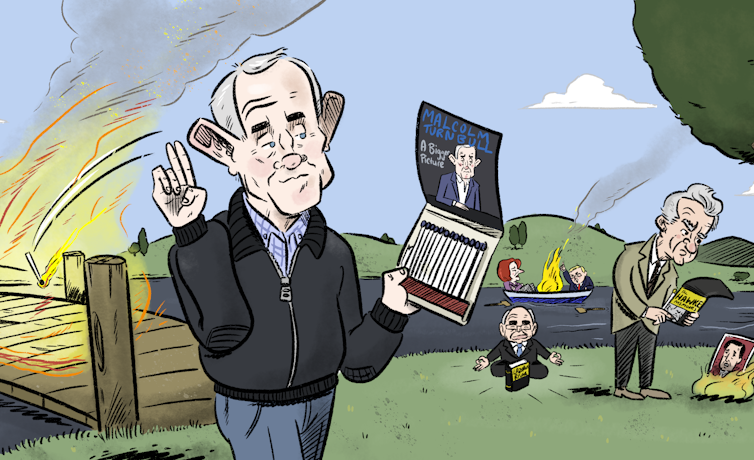
Wes Mountain/The Conversation, CC BY-ND
Joshua Black, Australian National University
Landing in the middle of the coronavirus pandemic, it may seem strange former prime minister Malcolm Turnbull’s memoir has generated so much political controversy.
Turnbull has been accused of hypocrisy and championing socialism, and has been threatened with expulsion from the Liberal Party.
In A Bigger Picture, Turnbull deals candidly with his antagonists inside the Coalition, who fought him bitterly on the same-sex marriage reform and climate policy. Similarly, he names and shames those he blames for the leadership insurgency of August 2018. All of this was expected, but none of it must please the current government.
But is the book any more inflammatory than previous prime ministerial memoirs?
Political controversy is a trademark of political memoir publishing in Australia. A Bigger Picture is just another page in that story.
Until the 1960s, prime ministerial memoirs were the exception, not the rule. Between 1945 and 1990, just three former prime ministers chose to publish books about their political lives. Two of them – Billy Hughes and Robert Menzies – produced two books each, and both political veterans sought to avoid “telling tales out of school”. Both seemed more interested in foreign affairs, particularly our imperial relationship to the UK in the case of Menzies.
The dismissal of the Whitlam government provoked both Sir John Kerr and Gough Whitlam to publish their memoirs. After reading extracts of Kerr’s Matters for Judgement, Whitlam decided to “set the record straight immediately” by writing The Truth of the Matter. His second book, The Whitlam Government, was also designed to make a political splash. Promising to explain the “development and implementation” of his policy program, the book was timed for release on the tenth anniversary of the dismissal itself, ensuring maximum publicity.
Since then, political controversy has accompanied prime ministerial memoirs, in part because incumbent political parties and leaders have had a vested interest in how these books might affect their popularity.
In his 1994 political memoir, Bob Hawke accused his rival and successor, Paul Keating, of calling Australia “the arse-end of the world” during an argument about the Labor leadership. Further, Hawke accused Keating of failing to support Australia’s involvement in the Gulf War against Saddam Hussein’s invasion of Kuwait in 1990.
Keating, who was attacked in parliament in October 1994 over the claims, called both allegations “lies”. Hawke offered to take a lie-detector test to prove his sincerity. Senior ALP figures recorded their outrage at Hawke’s memoir. But Hawke hit back, describing them as “precious self-appointed guardians of proper behaviour”.
Hawke’s predecessor also damaged his relationship with his own party in the process of publishing his memoirs. Malcolm Fraser’s Political Memoirs, written with journalist Margaret Simons, was recognised as one of Australia’s top ten books of 2010. His outspokenness – in the book and in his post-prime-ministerial life more generally – earned him many attacks from Coalition MPs.
John Howard handled the politics of his memoirs better than most politicians. Though the book was antagonistic toward his former treasurer, Peter Costello, Howard promised to “deal objectively” with events and relationships in Lazarus Rising. Ever the party stalwart, Howard and his publishers re-issued the book after the 2013 election with a new chapter that touted Tony Abbott’s “high intelligence, discipline […] good people skills”.
Kevin Rudd and Julia Gillard both publicly took aim at one another in their memoirs, which made for plenty of media fodder. In My Story, Gillard described Rudd’s leadership as a descent into “paralysis and misery”. Rudd returned fire, calling her book her “latest contribution to Australian fiction”. However, he was unable to dent the book’s commercial success.
Four years later, Rudd in The PM Years accused Gillard of plotting “with the faceless men” to become prime minister. In a bid to patch over the historic rifts, he subsequently promised the Labor Party’s 2018 National Conference that the “time for healing” had come.
Critics of Turnbull’s book – such as Sky News’ Andrew Bolt and 2GB’s Ben Fordham – have argued that he and his publishers, Hardie Grant, were wrong to “betray confidences” and divulge “private conversations”.
In reality, political memoirs have always pushed against conventions of political secrecy. In the 1970s, British cabinet minister Richard Crossman published his Diaries, which included detailed descriptions of how cabinet functioned. The British establishment subsequently conducted the Radcliffe review into political memoirs and diaries. It found such material should be kept secret for 15 years, but that civil servants could do little to stop their political masters from publishing.
In 1999, Australia’s Neal Blewett was warned that publishing his A Cabinet Diary, recorded seven years earlier, could lead to prosecution under the Crimes Act because it revealed confidential cabinet discussions. Calling the public service’s bluff, Blewett published anyway. He explained in the book that “a few egos will be bruised, but cabinet ministers are a robust lot”. His diary shed significant light on the trials and tribulations of a ministerial life.
Since then, countless MPs and ministers have published books that claim to accurately represent personal conversations, some based on private notes (as Costello claimed in his memoirs), others on diary entries (as is the case in Turnbull’s book). In recent years, politicians have reproduced text messages and email exchanges in their books, as Bob Carr did in his 2014 book, Diary of a Foreign Minister. In each version of history, the author is the essential policymaker.
Read more:
View from The Hill: Malcolm Turnbull gives his very on-the-record account of Scott Morrison
In his book, Turnbull reveals private conversations and WhatsApp exchanges with colleagues, world leaders, public servants and more. His accounts of cabinet discussions are hardly ground-breaking: cabinet debates about the economy and national security under the Abbott government, for instance, were thoroughly detailed in Niki Savva’s The Road to Ruin, while the acrimonious debates about energy policy, same-sex marriage and home affairs inside the Turnbull government were laid bare in David Crowe’s Venom. Similarly, Turnbull’s criticisms of News Corporation’s biased reporting have been aired elsewhere, and stop short of Rudd’s argument in The PM Years that Rupert Murdoch should be the subject of a royal commission.
Turnbull’s book is another addition to the history of incendiary political memoir publishing in Australia. Political parties and their media associates have confirmed once again that a successful parliamentary memoir requires deft political management.
Ultimately, A Bigger Picture is not the compendium of revelations that some may perceive. Instead, it is another picture of politics in which “character” and “leadership” reign supreme at the expense of all other political forces.
Joshua Black, PhD Candidate, School of History, National Centre of Biography, Australian National University
This article is republished from The Conversation under a Creative Commons license. Read the original article.
The link below is to an article/book review concerning lessons from the book by Albert Camus, ‘The Plague.’
For more visit:
https://lithub.com/what-we-can-learn-and-should-unlearn-from-albert-camuss-the-plague/
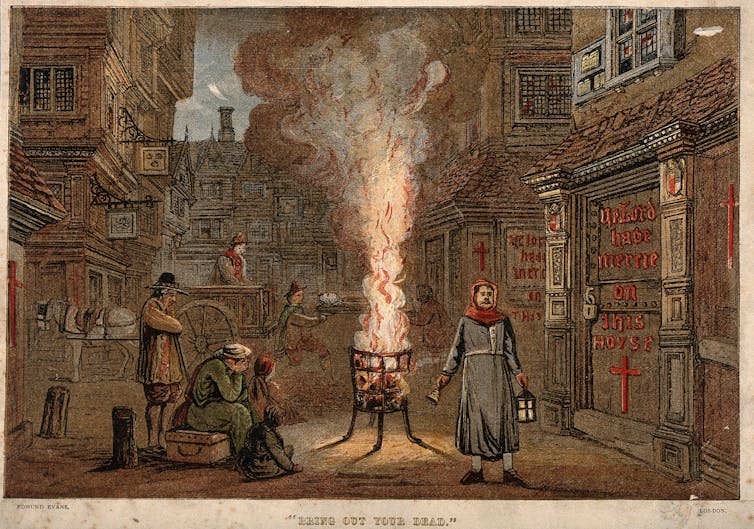
David Roberts, Birmingham City University
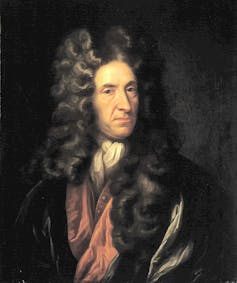
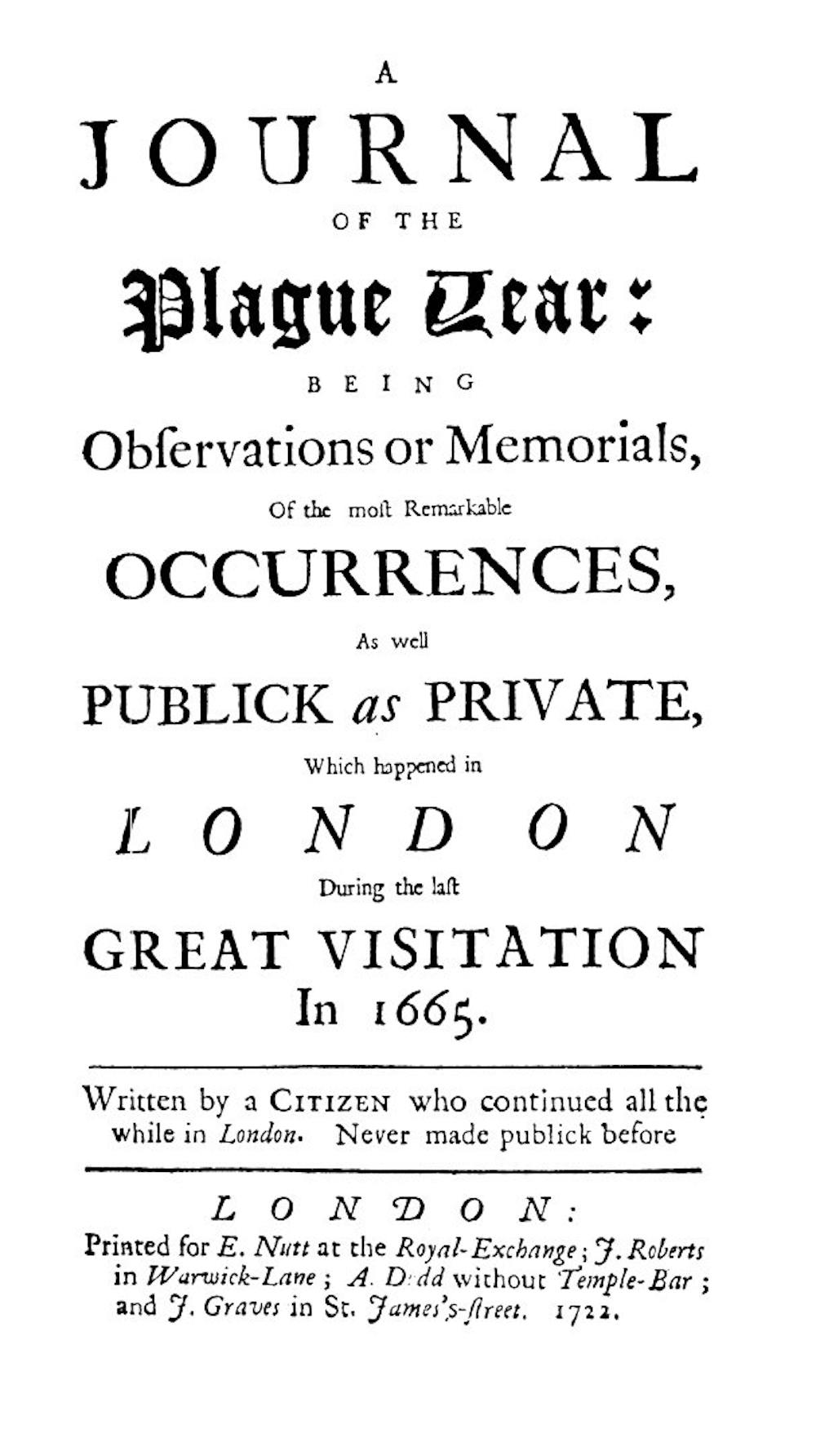
In 1722, Daniel Defoe pulled off one of the great literary hoaxes of all time. A Journal of the Plague Year, he called his latest book. The title page promises “Observations of the most remarkable occurrences” during the Great Plague of 1665, and claims it was “written by a citizen who continued all the while” in London – Defoe’s own name is nowhere to be found.
It was 60 years before anyone twigged. From oral testimonies, mortality bills, lord mayor’s proclamations, medical books and literature inspired by the 1603 plague, Defoe had cooked the whole thing up.
And yet this extraordinary book lies like the truth. It’s the most harrowing account of an epidemic ever published – and it really leaps off the page now in the era of COVID-19. We feel what it was like to walk up a main thoroughfare with no one else about. We read of the containment orders published by the government, and how people got round them. We share the distress of families denied proper funerals for their loved ones.
We learn of the mass panic as people tried to understand where the disease came from, how it was transmitted, how it could be avoided, what chance you had if you caught it, and – most modern of all – how fake news and fake practitioners multiplied answers to all those questions.
Bubonic plague was, of course, far nastier than coronavirus. In its ordinary form – transmitted by fleabites – it was around 75% fatal, while in its lung-to-lung form, that figure went up to 95%. But in the way it was managed – and the effect it had on people’s emotions and behaviour – there are eerie similarities amid the differences. Defoe captured them all.
His narrator, identified only as HF, is fascinated by what happened after the lord mayor ordered victims to be locked in their homes. Watchmen were posted outside front doors. They could be sent on errands to fetch food or medicine and took the keys with them, so people contrived to get more keys cut. Some watchmen were bribed, assaulted or murdered. Defoe describes one who was “blown up” with gunpowder.
HF becomes obsessed with the weekly mortality figures. They charted deaths by parish, giving a picture of how the plague was moving around the city. Still, it was impossible to be sure who had died directly of the disease, just as in the BBC news today we hear people have died “with” rather than “of” COVID-19. Reporting was difficult, partly because people were reluctant to admit there was an infection in the family. After all, they might be locked in their homes to catch the disease and die.
HF is appalled by those who opened up taverns and spent their days and nights drinking, mocking anyone who objected. At one point he confronts a group of rowdies and gets a torrent of abuse in return. Later, exhibiting one of his less appealing traits, he is gratified to hear that they all caught the plague and died.
He is a devout Christian, but the stories that worry him most are the ones that still shock everyone today, regardless of their beliefs. Is it possible, he asks, that there are some people so wicked that they deliberately infect others? He just can’t square the idea with his more kindly view of human nature. Yet he hears plenty of stories about victims breathing into the faces of passers by, or infected men randomly hugging and kissing women in the street.
When Prince Charles and Boris Johnson fell ill recently, we were told the virus “does not discriminate”. HF has something to say about that. For all his uncertainties, he is adamant about one thing. Plague affected the poor disproportionately. They lived, as they do now, in more cramped conditions, and were more susceptible to taking bad advice.
They were more likely to suffer ill health in the first place, as now, and they had no means of escape. Near the start of the outbreak in 1665, the court and those with money or homes in the country fled London in droves. By the time the idea had occurred to the rest of the population, you couldn’t find a horse for love or money.
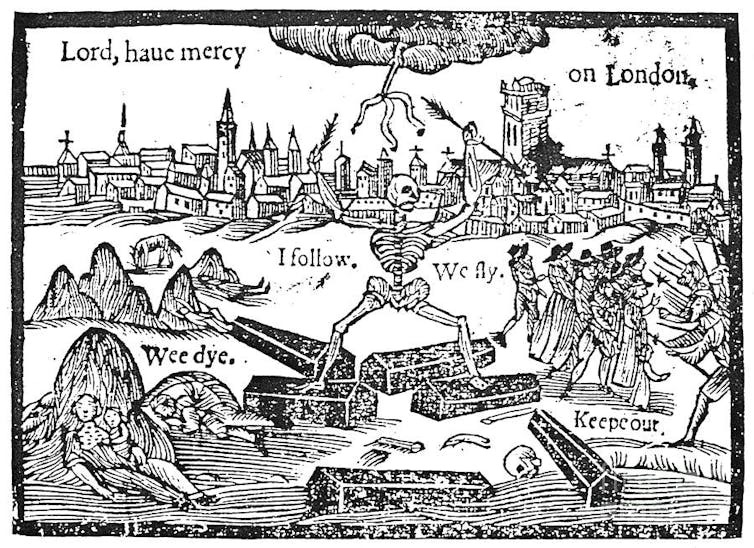
Throughout the journal, HF tells us he hopes his experiences and advice might be useful to us. There’s one thing in particular governments might learn from the book – and it’s tough. The most dangerous time, he reports, was when people thought it was safe to go out. That was when the plague flared up all over again.
Plague literature is a genre in its own right. So what draws writers and readers to such a grisly subject? Something not entirely wholesome, perhaps. For writers, it’s the chance to explore a world in which fantasy and reality have swapped places. We depend on the writer as heroic narrator, charting the horror like the best news reporter.
For readers, it’s the feeling that you might sneak with him to the very edge of the plague pit and live to tell the tale. For his closing words, HF hands us a doggerel poem that sums up his feelings and ours:
A dreadful plague in London was
In the year sixty five,
Which swept an hundred thousand souls
Away: yet I alive!
David Roberts, Professor of English and National Teaching Fellow, Birmingham City University
This article is republished from The Conversation under a Creative Commons license. Read the original article.
Roslyn Petelin, The University of Queensland
When a literary luminary such as Thomas Kenneally declares so early in 2020 that he is certain a “more original” novel “will not be published this year”, the reviewer faces a challenge. The book in question is The Dictionary of Lost Words, the debut novel by South Australian writer Pip Williams.
Occasionally, I finish a book that I want to immediately read again, such as Alan Bennett’s delectably quirky book, The Uncommon Reader, which I have re-read several times.
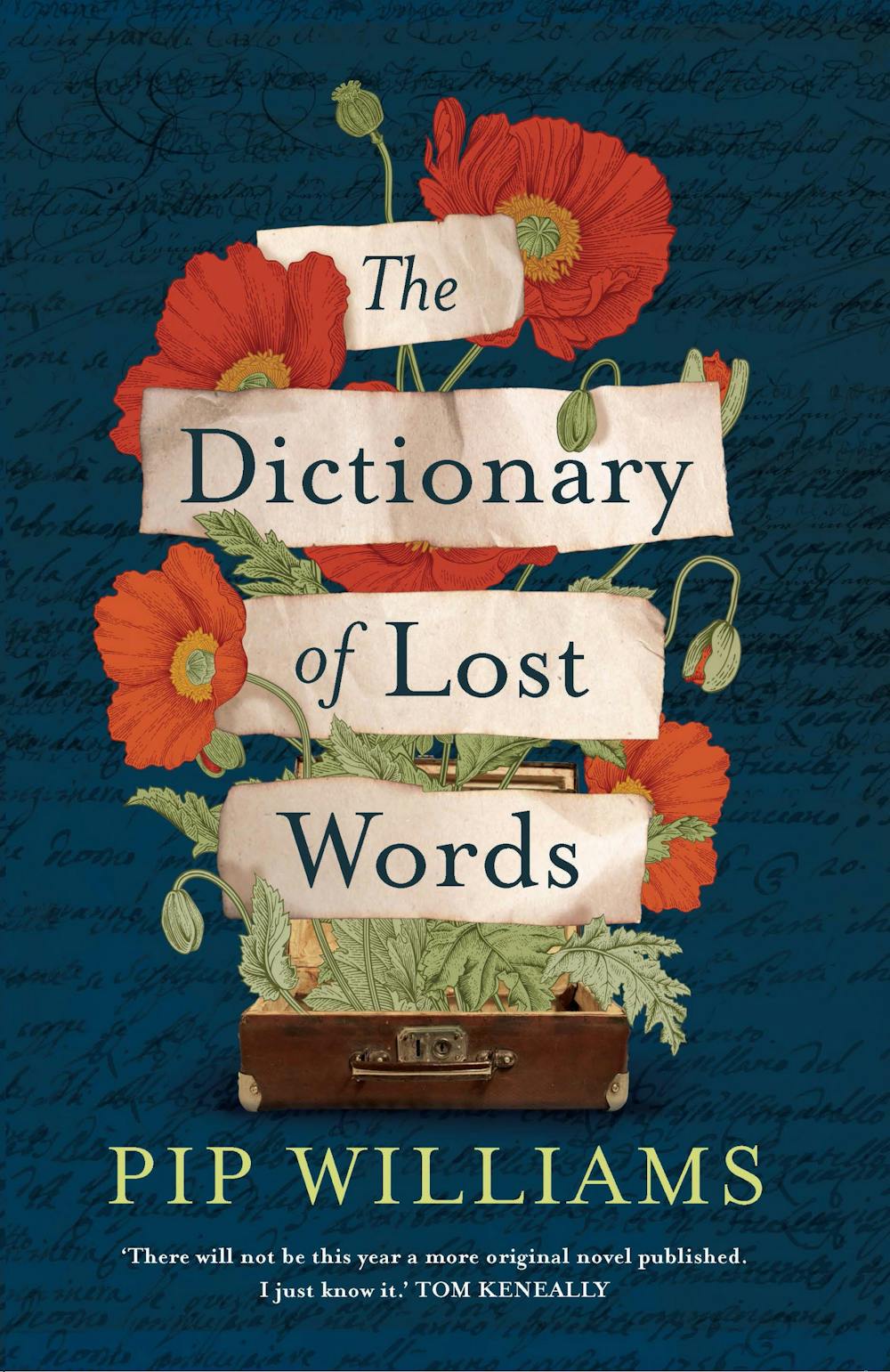
I have now read Williams’s book twice. I raced through it the first time to see how it would turn out and needed to read it a second time to pick up what I had missed the first time round. In its 383 pages it covers a timespan of more than 100 years: 1882–1989.
The novel is set mainly in Oxford, but events occur in Bath, Shropshire, and Adelaide, Australia.
It is based on true events, the central one being the compilation of Oxford University Press’s New English Dictionary (now the Oxford English Dictionary) by a team of lexicographers led by Sir James Murray, and helped by all of his 11 children.
Murray began compiling the dictionary in 1879. It was unfinished at his death in 1915 and completed by his fellow editors in 1928. The second edition appeared in 1989; it is currently being completely revised.
Other historical figures who play key roles in the novel are printer Horace Hart and lexicographer Henry Bradley, who succeeded Murray.
Williams’s fictional central character, Esme Nicoll, born in 1882, lives with her father Harry, a lexicographer who works on the dictionary in a corrugated iron shed, grandly called the Scriptorium. It sits in the garden of Murray’s house, Sunnyside, at 78 Banbury Road in Oxford. Esme has lost her mother at a very young age.
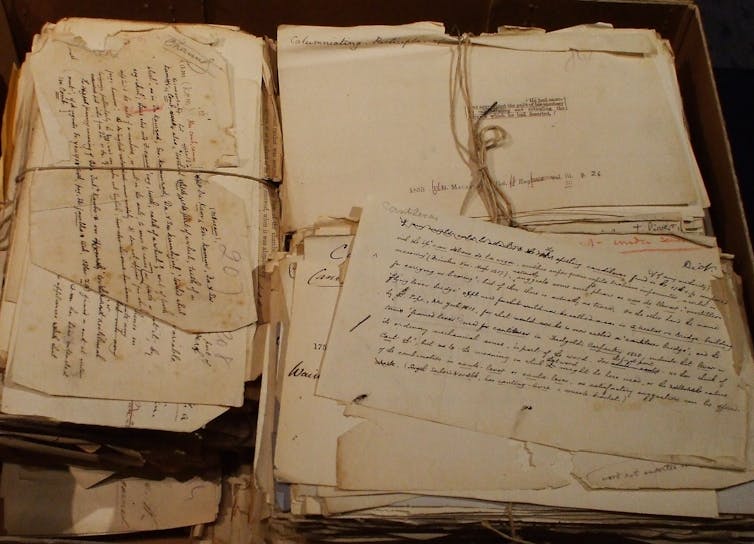
She spends her days beneath the sorting table in the “scrippy”, where the lexicographers sort and assess the potential contributions sent to Murray by volunteers following his worldwide appeal for words to be included in the new dictionary.

One day, a lexicographer drops off a slip of paper. It falls under the table and Esme rescues it. She places it inside a small wooden suitcase kept under the bed of the Murrays’ housemaid Lizzie. The word is “bondmaid”, which is exactly what Lizzie is. Lizzie supplies her own entry: “Bonded for life by love, devotion or obligation. I’ve been a bondmaid to you since you were small, Essymay, and I’ve been glad for every day of it”. The word is not discovered to be missing until 1901.
Over several years, Esme secretes a trunkful of words:
My case is like the Dictionary, I thought. Except it’s full of words that no one wants or understands, words that would be lost if I hadn’t found them.
Esme and Lizzie also collect words from stallholders in Oxford’s Covered Market, many of them “vulgar”.
Esme‘s gathered words comprise the book published many years later, titled in the novel as Women’s Words and Their Meanings, after Lizzie passes Esme’s collection on to a compositor at the Press. However, when Esme subsequently presents a copy of the volume to an editor who takes over after Murray’s death, he rejects it as unscholarly and not a “topic of importance”, confirming Esme’s experience that “all words are not equal”.
She responds to him: “you are not the arbiter of knowledge, sir. It is not for you to judge the importance of these words, simply allow others to do so”.
Williams grafts an emotional story onto other historical figures and interweaves the themes of women’s equality and the suffrage movement. The suffragist-suffragette divide is layered into the narrative when Esme’s actor friend, Tilda, heeds Emmeline Pankhurst’s “deeds, not words” call to action and ends up committing arson.
A minor character is Esme’s godmother Edith, whose earnest epistles to Esme and her Dad move the plot along, including a painful episode when Esme is treated harshly at a Scottish boarding school. Esme undergoes many changes in fortune, finding some happiness as the story unfolds.
Reviewing this book, I’m reminded of a quote in Putnam’s Monthly magazine of American literature, science and art from April 1855:
I proclaim to all the inhabitants of the land that they cannot trust to what our periodicals say of a new book. Instead of being able by reading the criticism to judge the book, it is now necessary to read the book in order to judge the criticism.
My advice to readers is similar: experience The Dictionary of Lost Words for yourselves rather than getting swept away by the hype. Don’t gobble it, as I did the first time round – savour its heart-wrenching detail.
Unfortunately, a close read does reveal the need for a tighter copy edit. “Radcliffe” is spelt two different ways on opposite pages; “braille” is misspelt; the main street in Oxford is known as “the High” rather than “High Street”. I circled (in pencil) dozens of instances of my pet peeve “different to”.
Regardless, it has had an astonishing pickup by international publishers, who clearly expect it to be a commercial success. It will certainly be a popular book-club choice. Time will tell whether it takes its place beside literary classics.
The Conversation has been contacted by Affirm Press who assure us one of the typing errors mentioned did not go to final printing of the book and appeared only in the advance copies. Another error mentioned will be fixed in subsequent printings.
Roslyn Petelin, Course coordinator, The University of Queensland
This article is republished from The Conversation under a Creative Commons license. Read the original article.
Matthew Sharpe, Deakin University
Some weeks ago, I got an email from a student who had returned to Northern Italy over Christmas to see family.
Unable to return to Australia, they were in lockdown. The hospitals were filling up fast, as COVID-19 began to spiral out of control. Sales of Albert Camus’ 1947 novel The Plague (La Peste) were spiking. Everyone was buying it.
Rereading The Plague over these past weeks has been an uncanny experience. Its fictive chronicle of the measures taken in the city of Oran against a death-dealing disease that strikes in 1940 sometimes seemed to blur into the government announcements reshaping our lives.
Oran is a city like anywhere else, Camus’ narrator tells us:
Our citizens work hard, but solely with the object of getting rich. Their chief interest is in commerce, and their chief aim in life is, as they call it, ‘doing business’.
Like people anywhere else, the Oranians are completely unprepared when rats begin emerging from the sewers to die in droves in streets and laneways. Then, men, women and children start to fall ill with high fever, difficulties breathing and fatal buboes.
The people of Oran initially “disbelieved in pestilences”, outside of the pages of history books. So, like many nations in 2020, they are slow to accept the enormity of what is occurring. As our narrator comments drily: “In this respect they were wrong, and their views obviously called for revision.”
The numbers of afflicted rise. First slowly, then exponentially. By the time the plague-bearing spring gives way to a sweltering summer, over 100 deaths daily is the new normal.
Read more:
Coronavirus weekly: as the world stays at home, where is the pandemic heading?
Emergency measures are rushed in. The city gates are shut, and martial law declared. Oran’s commercial harbour is closed to sea traffic. Sporting competitions cease. Beach bathing is prohibited.
Soon, food shortages emerge (toilet paper, thankfully, is not mentioned). Some Oranians turn plague-profiteers, preying on the desperation of their fellows. Rationing is brought in for basic necessities, including petrol.
Meanwhile, anyone showing symptoms of the disease is isolated. Houses, then entire suburbs, are locked down. The hospitals become overwhelmed. Schools and public buildings are converted into makeshift plague hospitals.
Our key protagonists, Dr Rieux and his friends Tarrou, Grand and Rambert, set up teams of voluntary workers to administer serums and ensure the sick are quickly diagnosed and hospitalised, often amongst harrowing scenes.
In these circumstances, fear and suspicion descend “dewlike, from the greyly shining sky” on the population. Everyone realises that anyone – even those they love – could be a carrier.
Come to think of it, so could each person themselves.
The failure of the governors to consistently impose “social distancing” is shown up spectacularly in the novel’s most picturesque scene. The lead actor in a rendition of Gluck’s Orpheus and Eurydice collapses onstage, “his arms and legs splayed out under his antique robe”.
Terrified patrons flee the darkened underworld of the opera house, “wedged together in the bottlenecks, and pouring out into the street in a confused mass, with shrill cries of dismay”.
Arguably the most telling passages in The Plague today are Camus’ beautifully crafted meditative observations of the social and psychological effects of the epidemic on the townspeople.
Epidemics make exiles of people in their own countries, our narrator stresses. Separation, isolation, loneliness, boredom and repetition become the shared fate of all.
In Oran, as in Australia, places of worship go empty. Funerals are banned for fear of contagion. The living can no longer even farewell the many dead.
Camus’ narrator pays especial attention to the damages visited by the plague upon separated lovers. Outsiders like the journalist Rambert who, by chance, are marooned inside Oran when the gates shut are “in the general exile […] the most exiled”.
Today’s world knows many such “travellers caught by the plague and forced to stay where they were, […] cut off both from the person(s) with whom they wanted to be and from their homes as well”.
Camus’ prescient account of life under conditions of an epidemic works on different levels. The Plague is a transparent allegory of the Nazi occupation of France beginning in spring 1940. The sanitary teams reflect Camus’ experiences in, and admiration for, the resistance against the “brown plague” of fascism.
Camus’ title also evokes the ways the Nazis characterised those they targeted for extermination as a pestilence. The shadow of the then-still-recent Holocaust darkens The Plague’s pages.
When death rates become so great that individual burials are no longer possible – as in scenes we are already seeing – the Oranaise dig collective graves into which:
the naked, somewhat contorted bodies were slid into a pit almost side by side, then covered with a layer of quicklime and another of earth […] so as to leave space for subsequent consignments.
When this measure fails to keep up with the weight of these “consignments”, as with the genocidal actions of the Einzatsgruppen, “the old crematorium east of the town” is repurposed. Closed streetcars filled with the dead are soon rattling along the old coastal tramline:
Thereafter, […] when a strong wind was blowing […] a faint, sickly odour coming from the east remind[ed] them that they were living under a new order and that the plague fires were taking their nightly toll.
Camus’ plague is also a metaphor for the force of what Dr Rieux calls “abstraction” in our lives: all those impersonal rules and processes which can make human beings statistics to be treated by governments with all the inhumanity characterising epidemics.
For this reason, the enigmatic character Tarrou identifies the plague with people’s propensity to rationalise killing others for philosophical, religious or ideological causes. It is with this sense of plague in mind that the final words of the novel warn:
that the plague bacillus never dies or disappears for good; that it can lie dormant for years and years in furniture and linen-chests; that it bides its time in bedrooms, cellars, trunks, and bookshelves; and that perhaps the day would come when, for the bane and the enlightening of men, it would rouse up its rats again and send them forth to die in a happy city.
There is nevertheless truth in the description of Camus’ masterwork as a “sermon of hope”. In the end, the plague dissipates as unaccountably as it had begun. Quarantine is lifted. Oran’s gates are reopened. Families and lovers reunite. The chronicle closes amid scenes of festival and jubilation.
Camus’ narrator concludes that confronting the plague has taught him that, for all of the horrors he has witnessed, “there are more things to admire in men than to despise”.
Unlike some philosophers, Camus became increasingly sceptical about glorious ideals of superhumanity, heroism or sainthood. It is the capacity of ordinary people to do extraordinary things that The Plague lauds. “There’s one thing I must tell you,” Dr Rieux at one point specifies:
there’s no question of heroism in all this. It’s a matter of common decency. That’s an idea which may make some people smile, but the only means of fighting a plague is common decency.
It is such ordinary virtue, people each doing what they can to serve and look after each other, that Camus’ novel suggests alone preserves peoples from the worst ravages of epidemics, whether visited upon them by natural causes or tyrannical governments.
It is therefore worth underlining that the unheroic heroes of Camus’ novel are people we call healthcare workers. Men and women, in many cases volunteers, who despite great risks step up, simply because “plague is here and we’ve got to make a stand”.
It is also to these people’s examples, The Plague suggests, that we should look when we consider what kind of world we want to rebuild after the gates of our cities are again thrown open and COVID-19 has become a troubled memory.
Matthew Sharpe, Associate Professor in Philosophy, Deakin University
This article is republished from The Conversation under a Creative Commons license. Read the original article.


 At the BookShelf

You must be logged in to post a comment.