In our series Art for Trying Times, authors nominate a work they turn to for solace or perspective during this pandemic.
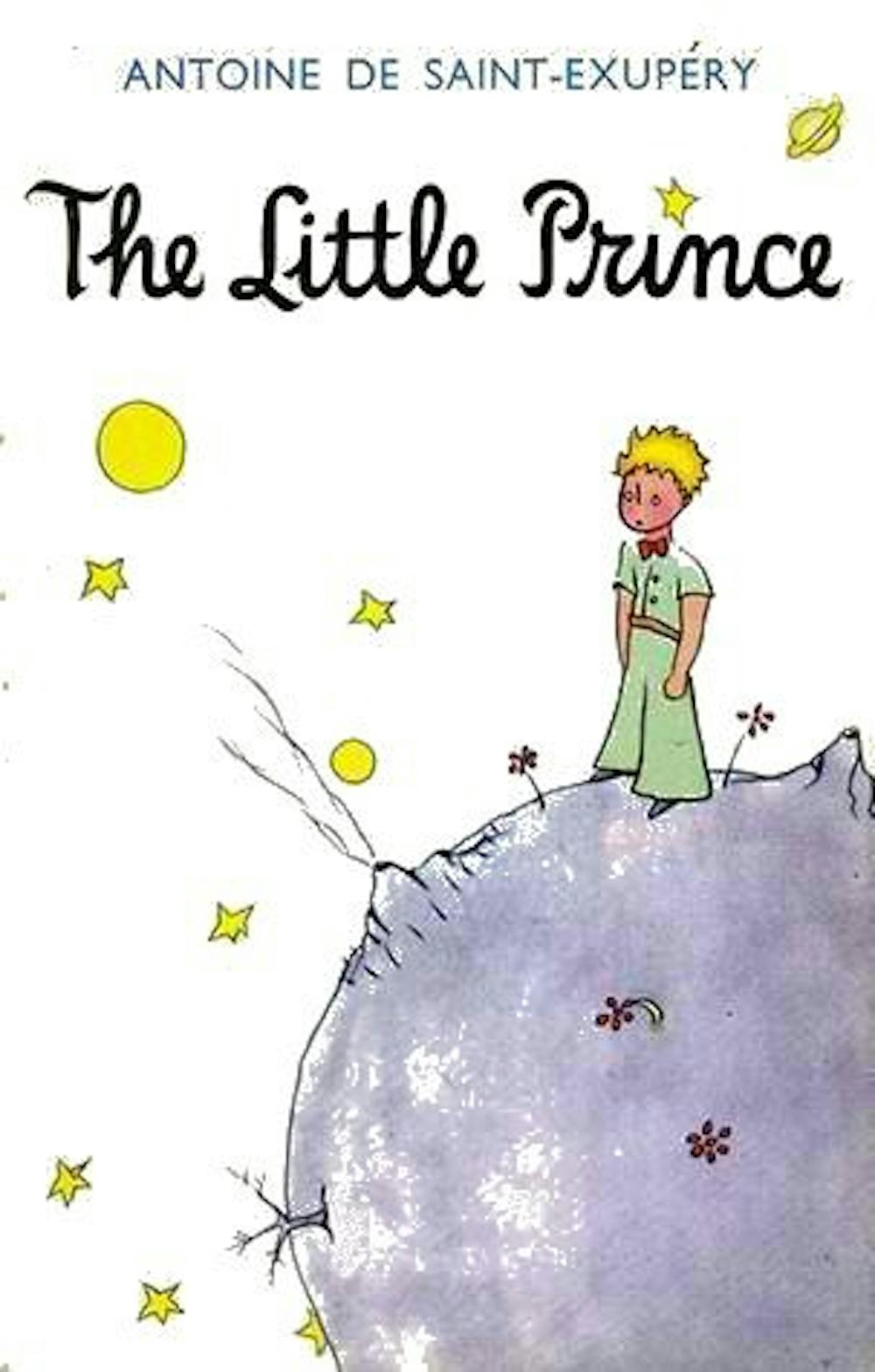
During the lockdown in Sydney, I turned to my shelf of well-loved books and found Antoine de Saint-Exupéry’s The Little Prince. Browsing through it again, I realised that the situation in which the book’s narrator finds himself uncannily resembled my own: crash-landed in the middle of a desert, his plane’s motor broken, he had nowhere to go.
He was stuck – stuck in a place that seemingly provided little hope of surprise or wonder.
The first night, then, I went to sleep on the sand, a thousand miles from any human habitation. I was more isolated than a shipwrecked sailor on a raft in the middle of the ocean.
But little did he know! The next morning, a boy appears seemingly out of nowhere who claims to be a prince from a faraway planet.
His account of intergalactic travels takes the desert castaway to a number of places as strange as they are familiar: one planet inhabited by a king and nobody else, another by a conceited man, a third by a lamplighter, a fourth by a businessman, a fifth by a tippler and so on.
In Saint-Exupéry’s book, first published in French in 1941, the point is that all these individuals live in their own little worlds.
The king believes everybody arriving on his planet to be a subject. The conceited man considers each comer a potential admirer. The lamplighter turns the single streetlight on his little planet on and off, on and off, multiple times a day. The businessman counts all the stars he can see in the belief this will make them his own. The tippler drinks to forget that he feels guilty for drinking.
Even though they pursue different ends, there is a certain uniformity to these characters: in the uncompromising resoluteness with which they apply themselves to their tasks, they reduce and diminish their lives and worlds.
The lockdown cuts back the radius of our actions. Even though some of the frantic activity that defines our days continues online, it deprives us of many of our usual interactions. No more twice-daily commutes, no more school runs, no more rushing to social engagements, no more travel.
Rather than looking for adventure outside, in public and faraway places, lockdown involves taking a fresh look at things close to home. And this long hard look in the mirror can bring the realisation that our pre-pandemic lives resembled those of the king, the conceited man, the lamplighter, the businessman, and perhaps even the tippler in more ways than we are prepared to admit.
‘People where you live,’ the little prince said, ‘grow five thousand roses in one garden, … yet they don’t find what they are looking for.’
In some sense, and in addition to other central themes such as love, friendship and loss, The Little Prince is a story about looking: about how we see only what we are prepared to see; about the narrowness that can come with our perspectives, professional and otherwise; about the way grownups and children look at the world differently.
Moments of rupture, of crisis, and distress, when everything we took for granted suddenly seems up in the air, always also harbour an opportunity to take stock and to reassess. To look at our life and the lives of those around us from the point of view of an intergalactic traveller, or, indeed, a child.
‘Men,’ said the little prince, ‘set out on their way in express trains, but they do not know what they are looking for. Then they rush about, and get excited, and turn round and round…’
Back home in lockdown with my little daughter (aged seven), I was fortunate to have my own guide who took me to once familiar but long-forgotten places: listening to the sounds of the sea in an empty seashell; throwing paper planes down a cliff; blowing dandelion seeds; gazing at the stars at night. Our radius had shrunk considerably. And yet the world seemed rich and marvellous and full of wonder.
At one point in the book, the little prince explains to the castaway that real seeing is not even a physical activity but a matter of the heart.
And now here is my secret, a very simple secret: It is only with the heart that one can see rightly; what is essential is invisible to the eye.
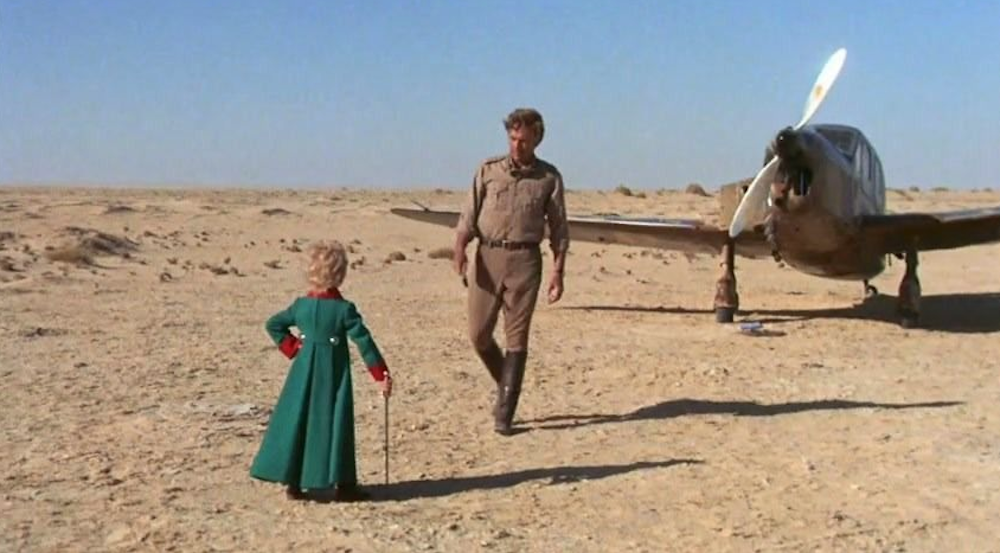
Richard Kiley and Steven Warner in a 1974 film version of The Little Prince. Paramount Pictures
What changes our world and our being in the world is that there are things, activities, and people we care for deeply; and we make them as special (for us) as they are. In Saint-Exupéry’s book it is a flower with four thorns back on his home planet, that the little prince misses and holds dear. But it could be anything, really …
Saint-Exupéry’s book ends with the little prince returning home and the narrator repairing his plane and returning to civilisation. And yet, he never looks at the world again with the same eyes.
The knowledge that somewhere up there among the myriad little planets there was one with a prince and his beloved flower, a sheep, and three volcanoes (one extinct) made all the difference.
And what about us? Will we too look at the world differently once this has passed? Or will we return to the routines and habits that defined our worlds before?
Ask yourselves: Is it yes or no? Has the sheep eaten the flower? And you will see how everything changes …
In our Art for Trying Times series, authors nominate a work they turn to for solace or perspective during this pandemic.
That we are all spending more time at home these days goes without saying; for those of us in Melbourne, our four walls feel restraining when most ways of leaving them are proscribed. So let me persuade you of a marvellously legitimate alternative to breaking the law, sorting your messy passwords, or rearranging your higgledy-piggledy books into some kind of order. It’s called vicarious escape.
Oddly enough, if my bookshelves had been in proper order I might have missed out on this experience. During the first lockdown I was looking for inspiration among the over-familiar titles when I discovered a book I had bought but not read, and then forgotten I owned. In triumph I carried it as far as the couch, stretched out (the sun was streaming through the windows), and turned to page one.
This was not a cop-out, you understand, for the book was Literary Criticism. It would be instructive, even demanding; it could almost count as work. It was a book born of impressive knowledge but written in a lively, deceptively simple style; it offered new and clever perceptions about a writer of whom you might think everything had long been said. It plunged me back into the beloved novels of Jane Austen, and I read it with delight.
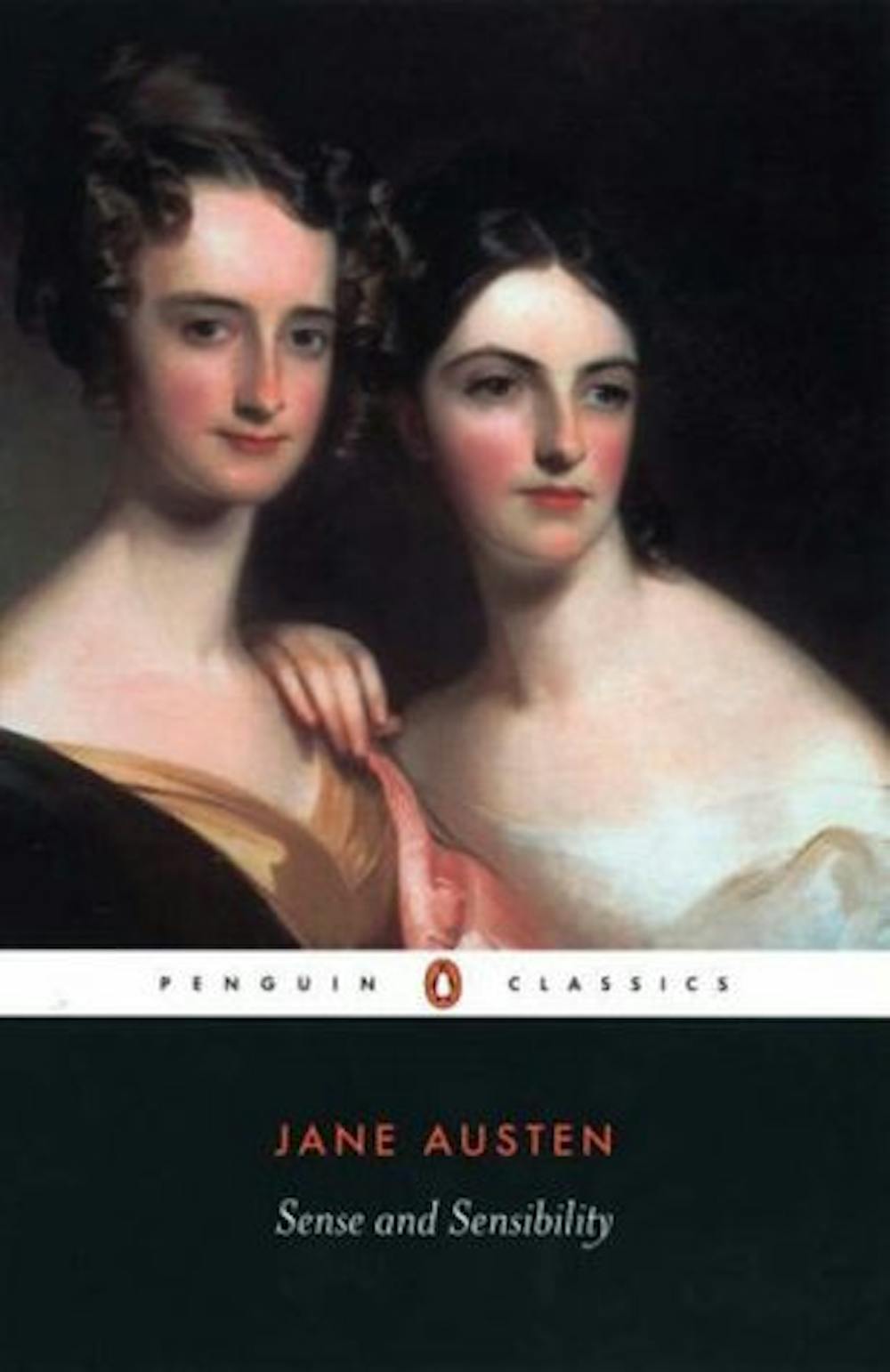
By the time I had reluctantly reached the last page, the next lockdown was imminent, and I rejoiced that one effect of my excellent discovery was to know exactly what I must do next. I would reread one, two, or all of Jane Austen’s major works, beginning with Sense and Sensibility, the first of the six to enthral an unsuspecting 19th century English audience.
Published anonymously in 1811, its first run had sold out. What I did not anticipate was the light this book could throw on life under COVID-19.
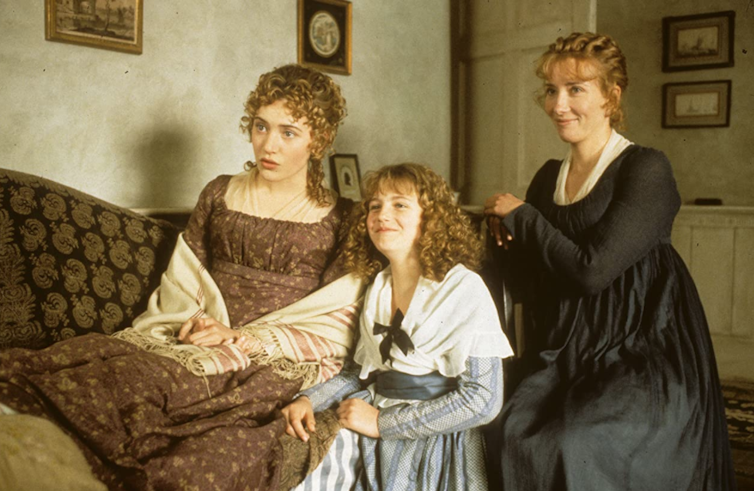
The novel concerns two sisters, Elinor and Marianne. The contrasting natures of the two girls provides Austen’s title, but there is also a younger daughter, Margaret, and an older stepbrother by the mother’s first marriage whose new wife forces the mother and daughters out of the large family house into a cottage in a small village in another county.
It is this move that puts the sisters in a situation that has parallels with ours. The tiny village of Barton could offer no social life. A little like people obliged to work from home, the girls found themselves with no external stimuli, other than Nature, with which to fuel their inner thoughts and mutual exchanges.
Thrown back on their own resources then, the two older sisters work on their existing accomplishments. Elinor sketches and paints, Marianne practises her piano-playing; they walk daily, sew and read. Their every activity seems to the modern reader almost weirdly extended: a short stroll will occupy two hours; Marianne, at least in intention, will read for six.
Now that lack of time is no longer an excuse, we might even think of emulating them, but there is one great difference (at least for me). Each sister has in the other, on tap, a daily companion who provides companionship and stimulation. There is no mention of boredom or restlessness; depression results only from romantic mishaps. How? Their neighbour Sir John turns up, some social life takes off, and Marianne falls in love. Well, this is a novel.
Literary isolates
I briefly put aside the Dashwood sisters to consider darker examples of literary isolates. Dostoevsky’s Underground Man leapt to mind. He lives utterly alone in a basement; his first words announce that he is “a sick man… a spiteful man … an unattractive man” whose liver is diseased. As a solitary he qualifies, but he’s hardly an example to follow.
Back to Jane. But could even she help someone without a sister? Someone whose props, given the age we live in, are texts and emails, both of which seem determined to shorten our exchanges. “U?” is all we need say to seek an opinion by SMS.
The phone seems currently the only resource by which we Melburnians could copy the sisters’ ability to introduce, develop, and thoroughly draw out a conversation. But even that we can’t count on. Usually our life-saving story isn’t nearly finished before the friend we’ve rung rudely interrupts with what she wants to say.
No. The only escape must be vicarious, and preferably delivered by the divine Jane, with her potential Mr Rights completely taken in by her unscrupulous Miss Wrongs; where Incomes (salaries are for the middle classes, wages for the servants) can suddenly become desperately insufficient or dangerously excessive; where heart-stopping vicissitudes abound. All related in elegant prose that flashes with pointy wit and lashes with quiet disdain.
The lockdown does permit you to lose yourself in a beguiling other world – if you have a Jane Austen on hand.







 At the BookShelf
You must be logged in to post a comment.