Can a person be in two places at the same time? This is the question at the heart of Stephen King’s latest bestseller, The Outsider. King’s story begins with the public arrest of Terry Maitland, a popular small-town baseball coach, for a murder committed a few days earlier. Maitland is placed at the scene of the murder by multiple witnesses, fingerprints, and DNA evidence.
However, Maitland also has an airtight alibi – at the time of the murder he was in another city 70 miles away, his presence there supported by numerous witnesses, fingerprints, and video evidence. So unshakeable is the evidence for Maitland’s simultaneous presence both at the murder scene and at the other location, that the investigators eventually find themselves forced to entertain the question of whether one person can be in two places at the same time.
Curiously, bilocation – the phenomenon of one person being in two places at the same time – also featured prominently in one of the highest grossing films of 2017, The Last Jedi, the eighth instalment of the Star Wars saga. At the end of the film, we saw Luke Skywalker fighting Kylo Ren on the planet Crait while simultaneously meditating on another planet, Ahch-To.
Bilocation and multilocation
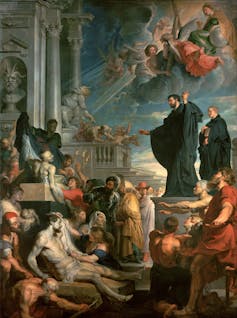
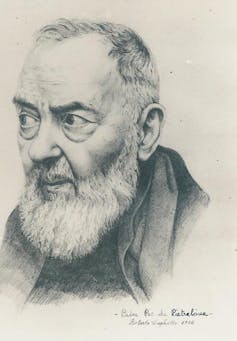
As surprising as it may sound, bilocation has intrigued and exercised philosophers, scientists and theologians for centuries. There are two reasons for this. First are the numerous reports of bilocation, most of which concern saints, mystics, or other pious persons. For example, in the biography of the 16th-century Saint Francis Xavier, co-founder of the Jesuit order, it is claimed that he was in two places at the same time, performing missionary work in two locations many miles apart. More famously, in the 20th century it was claimed that Padre Pio, a Capuchin priest, had bilocated on many occasions, both within his native Italy and beyond.
Busy man: Saint Francis Xavier, by Peter Paul Rubens. Kunsthistorisches Museum
The second reason thinkers have taken bilocation so seriously is because it is implied by a traditional interpretation of the Catholic doctrine of the Eucharist – which holds that Christ’s body and his blood are really present in the bread and wine wherever the Eucharist is validly celebrated. Since the Eucharist is validly celebrated in many different places at the same time, it must be that Christ’s body is really present in many different places at once. Because such a phenomenon would involve being in more than two places at the same time, it is often referred to as “multilocation”.
Explaining and rejecting bilocation
While bilocation has often been heralded as a miracle (as has multilocation), others have simply dismissed the possibility of it outright. The great Christian theologian, St Augustine, was suspicious of reports of bilocation and suggested that they were due to demonic deception. In the 17th century, the philosopher John Locke argued that it was a matter of logic that a person could not be in two places at the same time. Others have suggested that cases of bilocation involve a kind of mental projection, and even Padre Pio seemed to insinuate as much when he explained his episodes of bilocation as “an extension of his personality”.
Padre Pio: moving explanation of bilocation. Roberto Dughetti – Lucia Dughetti, CC BY-SA
One of the most intriguing attempts to get to grips with the idea of bilocation can be found in the work of maverick Enlightenment philosopher André-Pierre Le Guay de Prémontval. Prémontval wrote an essay in which he claimed to show how it was possible for him “to be present, and really present, as much in Paris as in Rome and as much in Rome as in Paris” for the whole of an hour.
Prémontval’s explanation involved his body being transported backwards and forwards between the two cities at incredible speed. Because fast-moving objects leave an impression in the eye for a short time after they have moved on, to those in either city it would appear that he was there for the whole hour even though he would have been elsewhere for more than half the time.
Prémontval’s idea would seem to work in theory – think of the unbroken circle of light we see when a luminous object is rotated very quickly in a circle – but not in practice, as the speed of travel required is still beyond the ability of human beings. In any case, since his idea involves a person being moved very rapidly between two locations, even if it were put into practice it would not amount to true bilocation (someone actually being in two different places at the same time), but would constitute only apparent bilocation (someone appearing to be in two different places at the same time).
Stranger than fiction
It would be easy to dismiss these attempts to get to grips with bilocation as quaint but passé, were it not for the fact that modern physics tells us that it is a genuine feature of the natural world. The 2012 Nobel Prize for Physics was awarded to two physicists who proved that atoms and electrons can be in two places at the same time. By firing photons at an atom Serge Haroche and David J. Wineland were able to bring it to a state where it was simultaneously moving and not moving, occupying locations just 80 nanometers apart.
But, while bilocation may be a reality at the quantum level – and there seems to be nothing in principle to prevent it applying to much larger objects like our own bodies – scientists believe that technical limitations will prevent us from being able to put human beings in different places at the same time.
Not that this should concern King – who, as you would probably expect, preferred the supernatural to the esoteric when working out the paradox of bilocation in The Outsider.
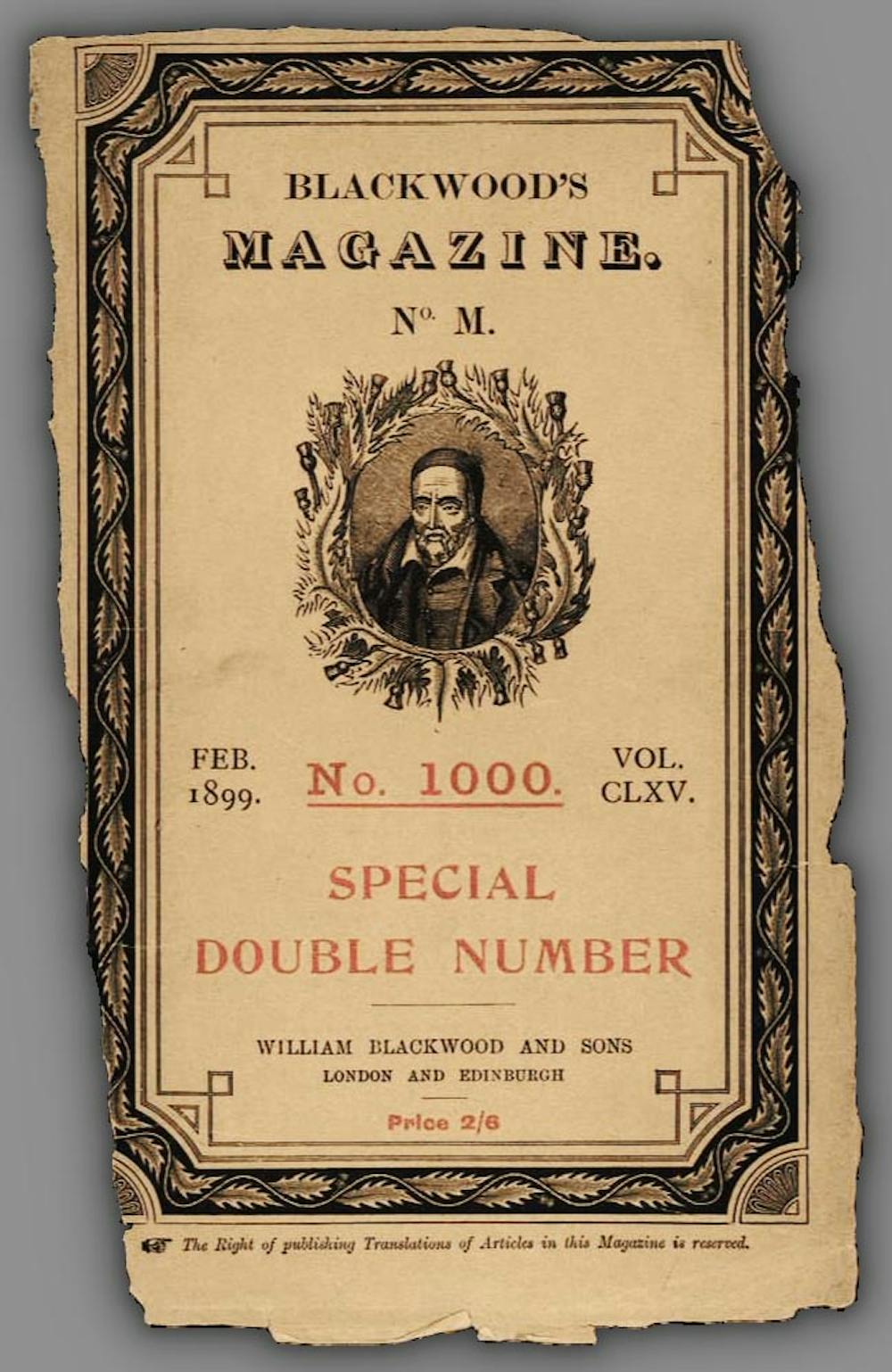
Joseph Conrad’s Heart of Darkness – or “The Heart of Darkness”, as it was known to its first readers – was first published as a serial in 1899, in the popular monthly Blackwood’s Magazine. Few of that magazine’s subscribers could have foreseen the fame that Conrad’s story would eventually garner, or the fierce debates it would later provoke.
Already, in 1922, the American poet T.S. Eliot thought the book was Zeitgeist-y enough to provide the epigraph for his epoch-defining poem, The Waste Land – although another American poet, Ezra Pound, talked him out of using it.
The same thought occurred to Francis Ford Coppola more than 50 years later, when he used Conrad’s story as the framework for his phantasmagoric Vietnam War movie, Apocalypse Now. Echoes of Heart of Darkness can pop up almost anywhere: the chorus to a Gang of Four song, the title of a Simpsons episode, a scene in Peter Jackson’s 2005 King Kong remake.
Consider one final Heart of Darkness allusion, from Mohsin Hamid’s 2017 Man Booker-shortlisted novel, Exit West. In the novel’s opening pages, a man with “dark skin and dark, woolly hair” appears in a Sydney bedroom, transported there by one of the mysterious portals that have appeared around the globe, connecting stable, prosperous countries with places that people need to escape from.
The “door”, as these wormholes are called, is “a rectangle of complete darkness — the heart of darkness”. This is a more complicated kind of Conrad reference. Here, “heart of darkness” is a shorthand for European stereotypes of Africa, which Conrad’s novel did its part to reinforce.
Hamid’s line plays on racist anxieties about immigration: the idea that certain places and peoples are primitive, exotic, dangerous. For contemporary readers and writers, these questions have become an unavoidable part of Conrad’s legacy, too.
Up the river
Heart of Darkness is the story of an English seaman, Charles Marlow, who is hired by a Belgian company to captain a river steamer in the recently established Congo Free State. Almost as soon as he arrives in the Congo, Marlow begins to hear rumours about another company employee, Kurtz, who is stationed deep in the interior of the country, hundreds of miles up the Congo River.
The second half of the novel – or novella, as it’s often labelled – relates Marlow’s journey upriver and his meeting with Kurtz. His health destroyed by years in the jungle, Kurtz dies on the journey back down to the coast, though not before Marlow has had a chance to glimpse “the barren darkness of his heart”. The coda to Marlow’s Congo story takes place in Europe: questioned by Kurtz’s “Intended” about his last moments, Marlow decides to tell a comforting lie, rather than reveal the truth about his descent into madness.
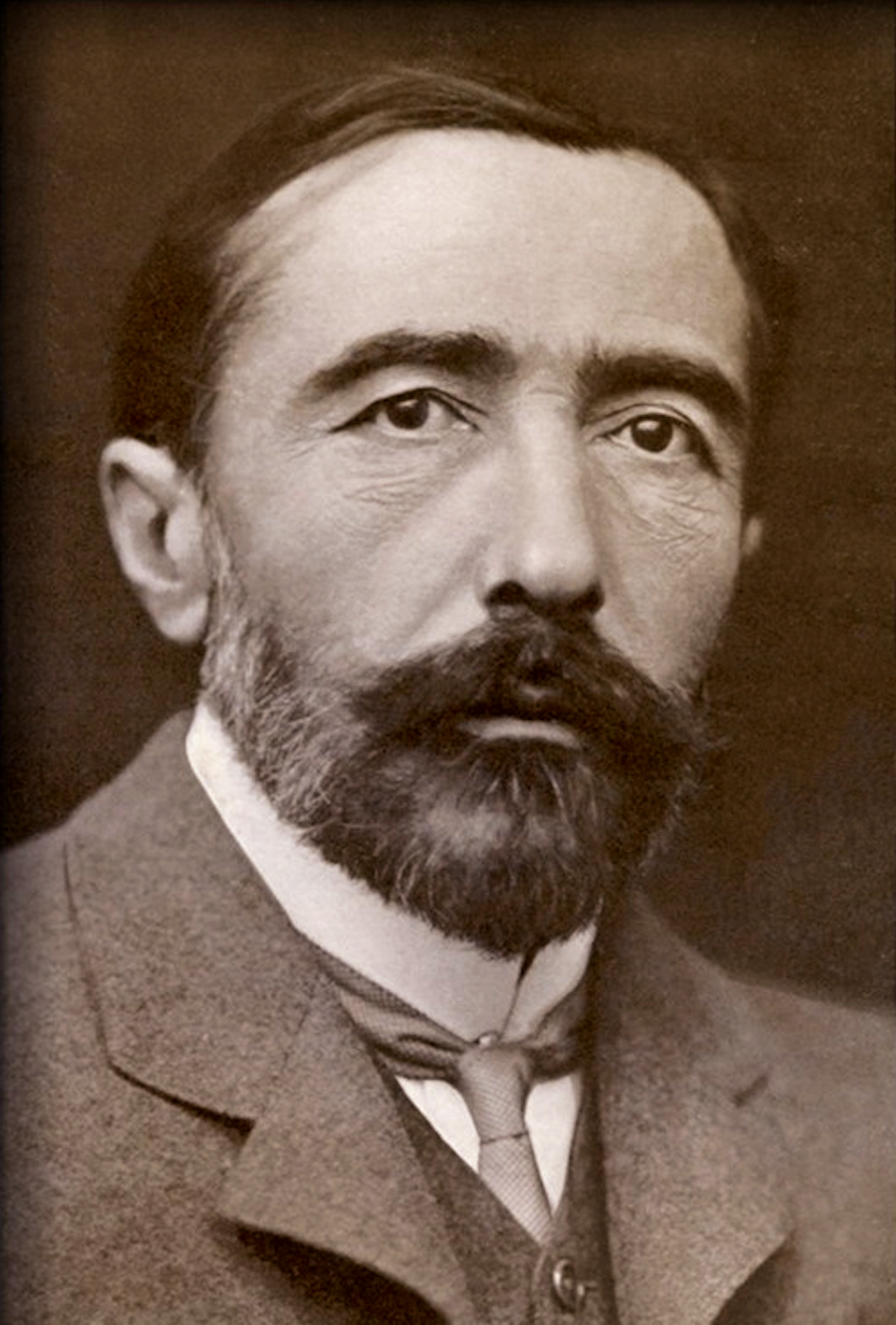
Although Conrad never met anyone quite like Kurtz in the Congo, the structure of Marlow’s story is based closely on his experiences as mate and, temporarily, captain of the Roi des Belges, a Congo river steamer, in 1890. By this time, Conrad, born Józef Teodor Konrad Korzeniowski in the Russian-ruled part of Poland in 1857, had been a seaman for about 15 years, rising to the rank of master in the British merchant service. (The remains of the only sailing ship he ever commanded, the Otago, have ended up in Hobart, a rusted, half-submerged shell on the banks of the Derwent.)
The remains of the Otago, the ship Conrad commanded, in Hobart. John Attridge
Sick with fever and disenchanted with his colleagues and superiors, he broke his contract after only six months, and returned to London in early 1891. Three years and two ships later, Conrad retired from the sea and embarked on a career as a writer, publishing the novel that he had been working on since before he visited the Congo, Almayer’s Folly, in 1895. A second novel, An Outcast of the Islands, followed, along with several stories. Conrad’s second career was humming along when he finally set about transforming his Congo experience into fiction in 1898.
Darkness at home and abroad
Heart of Darkness opens on a ship, but not one of the commercial vessels that feature in Conrad’s sea stories. Rather, it’s a private yacht, the Nellie, moored at Gravesend, about 20 miles east of the City of London. The five male friends gathered on board were once sailors, but everyone except Marlow has since changed careers, as Conrad himself had done.
Like sail, which was rapidly being displaced by steam-power, Marlow is introduced to us as an anachronism, still devoted to the profession his companions have left behind. When, amidst the gathering “gloom”, he begins to reminisce about his stint as a “fresh-water sailor”, his companions know they are in for one of his “inconclusive experiences”.
Setting the opening of Heart of Darkness on the Thames also allowed Conrad to foreshadow one of the novel’s central conceits: the lack of any absolute, essential difference between so-called civilized societies and so-called primitive ones. “This, too”, Marlow says, “has been one of the dark places of the earth”, imagining the impressions of an ancient Roman soldier, arriving in what was then a remote, desolate corner of the empire.
During the second half of the 19th century, spurious theories of racial superiority were used to legitimate empire-building, justifying European rule over native populations in places where they had no other obvious right to be. Marlow, however, is too cynical to accept this convenient fiction. The “conquest of the earth”, he says, was not the manifest destiny of European peoples; rather, it simply meant “the taking it away from those who have a different complexion or slightly flatter noses than ourselves.”
The idea that Africans and Europeans have more in common than the latter might care to admit recurs later, when Marlow describes observing tribal ceremonies on the banks of the river. Confronted with local villagers “stamping” and “swaying”, their “eyes rolling”, he is shaken by a feeling of “remote kinship with this wild and passionate uproar”.
Whereas most contemporary readers will be cheered by Marlow’s scepticism about the project of empire, this image of Congo’s indigenous inhabitants is more problematic. “Going up that river”, Marlow says, “was like travelling back to the earliest beginnings of the world”, and he accordingly sees the dancing figures as remnants of “prehistoric man”.
Heart of Darkness suggests that Europeans are not essentially more highly-evolved or enlightened than the people whose territories they invade. To this extent, it punctures one of the myths of imperialist race theory. But, as the critic Patrick Brantlinger has argued, it also portrays Congolese villagers as primitiveness personified, inhabitants of a land that time forgot.
Kurtz is shown as the ultimate proof of this “kinship” between enlightened Europeans and the “savages” they are supposed to be civilising. Kurtz had once written an idealistic “report” for an organisation called the International Society for the Suppression of Savage Customs. When Marlow finds this manuscript among Kurtz’s papers, however, it bears a hastily-scrawled addendum: “Exterminate all the brutes!” The Kurtz that Marlow finally encounters at the end of the novel has been consumed by the same “forgotten and brutal instincts” he once intended to suppress.
Adventure on acid
The European “gone native” on the fringes of empire was a stock trope, which Conrad himself had already explored elsewhere in his writing, but Heart of Darkness takes this cliché of imperial adventure fiction and sends it on an acid trip. The manic, emaciated Kurtz that Marlow finds at the Inner Station is straight out of the pages of late-Victorian neo-Gothic, more Bram Stoker or Sheridan Le Fanu than Henry Rider Haggard. The “wilderness” has possessed Kurtz, “loved him, embraced him, got into his veins” — it is no wonder that Marlow feels “creepy all over” just thinking about it.
Heart of Darkness was first serialised in Blackwood’s Magazine. Wikimedia
Kurtz’s famous last words are “The horror! The horror!” “Horror” is also the feeling that Kurtz and his monstrous jungle compound, with its decorative display of human heads, are supposed to evoke in the reader. Along with its various other generic affiliations — imperial romance, psychological novel, impressionist tour de force — Heart of Darkness is a horror story.
Conrad’s Kurtz also channels turn-of-the-century anxieties about mass media and mass politics. One of Kurtz’s defining qualities in the novel is “eloquence”: Marlow refers to him repeatedly as “A voice!”, and his report on Savage Customs is written in a rhetorical, highfalutin style, short on practical details but long on sonorous abstractions. Marlow never discovers Kurtz’s real “profession”, but he gets the impression that he was somehow connected with the press — either a “journalist who could paint” or a “painter who wrote for the papers”.
This seems to be confirmed when a Belgian journalist turns up in Antwerp after Kurtz’s death, referring to him as his “dear colleague” and sniffing around for anything he can use as copy. Marlow fobs him off with the bombastic report, which the journalist accepts happily enough. For Conrad, implicitly, Kurtz’s mendacious eloquence is just the kind of thing that unscrupulous popular newspapers like to print.
If Kurtz’s “colleague” is to be believed, moreover, his peculiar gifts might also have found an outlet in populist politics: “He would have been a splendid leader of an extreme party.” Had he returned to Europe, that is, the same faculty that enabled Kurtz to impose his mad will on the tribespeople of the upper Congo might have found a wider audience.
Politically, Conrad tended to be on the right, and this image of Kurtz as an extremist demagogue expresses a habitual pessimism about mass democracy — in 1899, still a relatively recent phenomenon. Nonetheless, in the light of the totalitarian regimes that emerged in Italy, Germany and Russia after 1918, Kurtz’s combination of irresistible charisma with megalomaniacal brutality seems prescient.
These concerns about political populism also resonate with recent democratic processes in the US and the UK, among other places. Only Conrad’s emphasis on “eloquence” now seems quaint: as the 2016 US Presidential Election demonstrated, an absence of rhetorical flair is no handicap in the arena of contemporary populist debate.
Race and empire
Heart of Darkness contains a bitter critique of imperialism in the Congo, which Conrad condemns as “rapacious and pitiless folly”. The backlash against the systematic abuse and exploitation of Congo’s indigenous inhabitants did not really get underway until the first decade of the 20th century, so that the anti-imperialist theme was ahead of its time, if only by a few years. Nor does Conrad have any patience with complacent European beliefs about racial superiority.
Heart of Darkness sees horror in the Congo’s rainforests. Shutterstock.com
Nonetheless, the novel also contains representations of Africans that would rightly be described as racist if they were written today. In particular, Conrad shows little interest in the experience of Marlow’s “cannibal” shipmates, who come across as exotic caricatures. It is images like these that led the Nigerian novelist Chinua Achebe to denounce Conrad as a “bloody racist”, in an influential 1977 essay.
One response to this criticism is to argue, as Paul B. Armstrong does, that the lack of more rounded Congolese characters is the point. By sticking to Marlow’s limited perspective, Heart of Darkness gives an authentic portrayal of how people see other cultures. But this doesn’t necessarily make the images themselves any less offensive.
If Achebe did not succeed in having Heart of Darkness struck from the canon, he did ensure that academics writing about the novel could no longer ignore the question of race. For Urmila Seshagiri, Heart of Darkness shows that race is not the stable, scientific category that many Victorians thought it was. This kind of argument shifts the debate in a different direction, away from the author’s putative “racism”, and onto the novel’s complex portrayal of race itself.
Perhaps because he was himself an alien in Britain, whose first career had taken him to the farthest corners of the globe, Conrad’s novels and stories often seem more in tune with our globalized world than those of some of his contemporaries. An émigré at 16, Conrad experienced to a high degree the kind of dislocation that has become an increasingly typical modern condition. It is entirely appropriate, in more ways than one, for Hamid to allude to Conrad in a novel about global mobility.
The paradox of Heart of Darkness is that it seems at once so improbable and so necessary. It is impossible not to be astonished, when you think of it, that a Polish ex-sailor, writing in his third language, was ever in a position to author such a story, on such a subject. And yet, in another way, Conrad’s life seems more determined than most, in more direct contact with the great forces of history. It is from this point of view that Heart of Darkness seems necessary, even inevitable, the product of dark historical energies, which continue to shape our contemporary world.
A stick insect in Borneo: variation and natural selection has resulted in insects with the astonishing ability to mimic features in their natural environment. Shutterstock
Charles Darwin’s On the Origin of Species (originally published in 1859) shares a deplorable fate with many other classics: it is known to everyone, yet rarely read.
This is a shame, not only because there is much more to Darwin’s theory than the familiar principles of mutation, variation, natural selection, and evolution that have entered popular knowledge as Darwinian buzzwords. The book also gives unique insight into the intellectual milieu in which he developed his theory and his struggles to convince his peers of its veracity.
Indeed in this age of the counter-factual and pseudo-factual, acquaintance with the foundations of our scientific tradition — and insights into the struggles of their creation — seems a matter of some urgency.
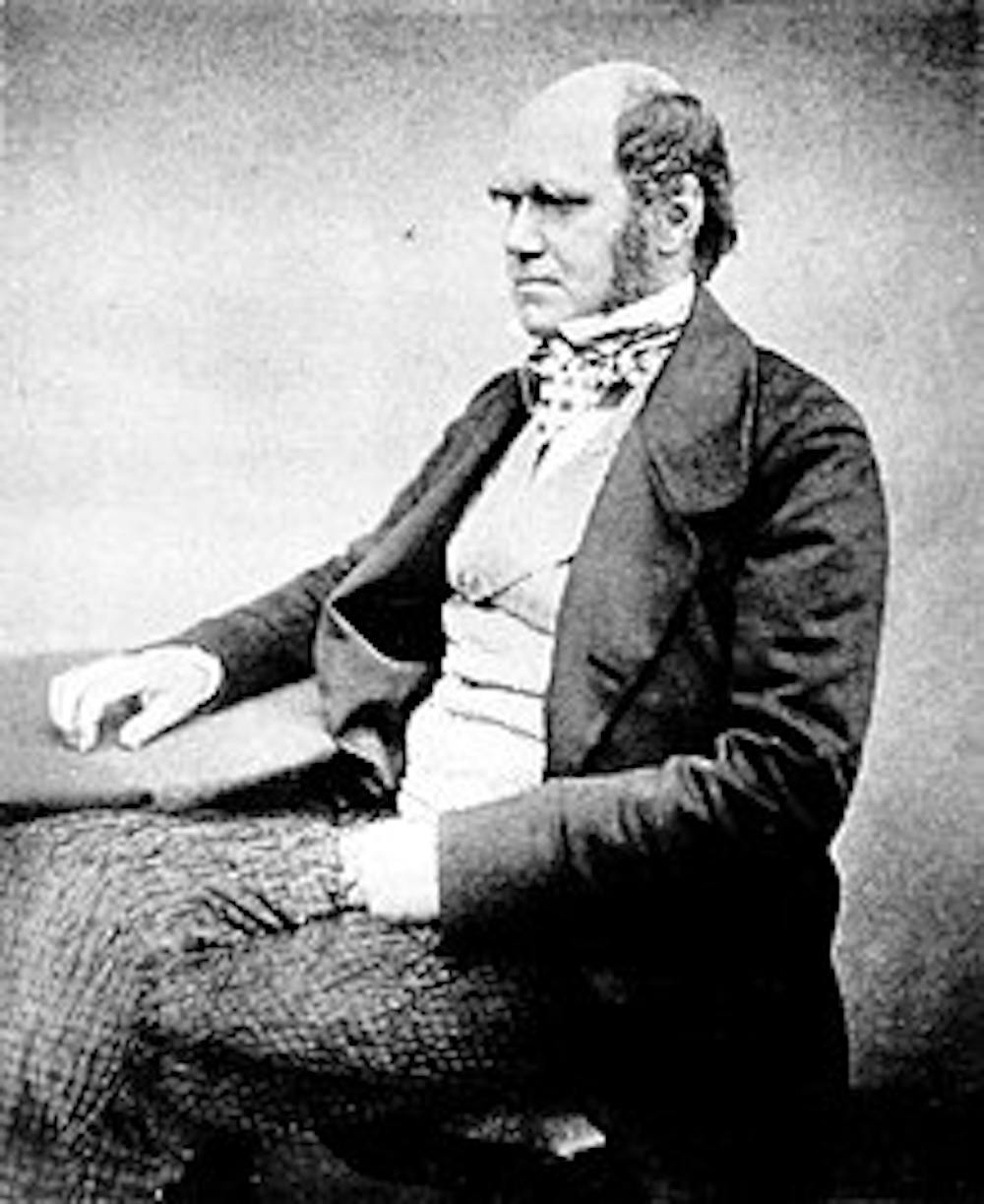
Charles Darwin aged 51. Wikimedia Commons
In the introduction alone, we learn that Darwin first conceived of his theory when travelling the world as a naturalist on board HMS Beagle (1831-6), that he had kept collecting data in support of it ever since, that he even wrote a rough draft (he calls it “a sketch of the conclusions”) many years earlier, and that he was prompted to publish it (20 years later) only because his contemporary Alfred Russel Wallace had recently sent him a “memoir” reaching a similar conclusion.
The core of the theory, as laid out in the first few chapters of the book, is quickly explained. Plants and animals produce more individuals than nature can sustain in each generation. These individuals vary in looks and in physical and behavioural characteristics, and they are able to pass on this variation to the next generation. Those individuals better suited to their environment have an advantage and are in turn more likely to survive to give their features to future generations.
Yet the bare bones of his theory of evolution are only part of what shapes this book. Darwin also communicates the obstacles he had to overcome to ensure its success and to turn it into what it became: a foundational text of the biological sciences that influenced all sorts of other disciplines, including anthropology, religious studies, and the Classics.
Creationism and evolution
At the time Darwin wrote, the prevailing form of explanation of the origins of life was creationism, which held that a divine Creator had generated life in all its variety. To creationists, the theory of evolution offered a rival way of explaining the origin of species – through descent from common ancestors, not a divine agent.
Charles Darwin’s 1837 sketch, his first diagram of an evolutionary tree from his First Notebook on Transmutation of Species. Wikimedia Commons
Darwin was well aware that his theory might prove difficult to accept for those believing in a Creator. His obsession with the factual was one way of addressing this problem, direct rebuttals of creationism were another. Throughout the book, he repeatedly addresses creationist views and shows that they are incompatible with the evidence.
Darwin himself was not against the idea of a divine creator. Rather, he sought to situate the scientific reading of the world within a religious worldview. In the book’s conclusion he states: “I should infer from analogy that probably all the organic beings which have ever lived on this earth have descended from some one primordial form, into which life was first breathed by the Creator.”
This is to say that, while life was first created by a God, it later became subject to the laws of mutation, variation, and natural selection – the evolutionary forces described by Darwin.
This really was a congenial move, offering a compromise between religious and scientific explanations of life. As long as divine creation occurred prior to and outside of nature and its laws of cause and effect, both explanations could, at least in principle, stand side by side. And to some extent it worked. Some of Darwin’s contemporaries found that life’s subsequent capacity to evolve brought out the real spark of the original act of creation. Others, however, did not buy it. To them, Darwin’s theory constituted a frontal attack on religion, the idea of a divine creator, and the tenet that God had created man in his own image.
An ominous absence
In this context, it is noticeable that in On the Origin of Species Darwin stays well clear of the problematic issue of human descent. If there is a striking omission in the book, it is man. Darwin originally intended to include a chapter on human evolution but later decided against it. As a result, the descent of Homo sapiens does not really feature in this elaborate discussion of the forces that drive the evolution of species.
Editorial cartoon depicting Charles Darwin as an ape, 1871. Wikimedia Commons
Darwin obviously considered the book controversial enough without agitating his readers unnecessarily by touching on human evolution. And his instincts did not betray him: Right from the day of its publication, the book became something of a bestseller. Also right from the start, it elicited mixed responses. Some saw it for the foundational work of the biological sciences it eventually became. Others decried it as a serious threat to the core of humanity.
Darwin eventually came to address human evolution in a separate volume, entitled The Descent of Man. Published in 1871, 12 years after On the Origin of Species, this book offered a detailed discussion of man’s descent from ape-like ancestors as well as the link between sexual selection and human race. Invariably, perhaps, its publication caused a fresh wave of outrage, criticism, and debate. By then, however, Darwin’s theory had already become accepted in certain parts of academe and beyond.
The power of the factual
Mistletoe on a tree in England. Scrappy Annie/flickr, CC BY
Throughout his writing, Darwin sought to counter potential adverse responses to his theory with an onslaught of fact. On the Origin of Species is peppered with examples from the natural world illustrating the principles of evolutionary theory in practice.
The struggle for existence, for example, becomes tangible in several seedlings of the mistletoe competing for resources on the same branch of a tree; variation and natural selection has resulted in insects with the astonishing ability to mimic features in their natural environment such as leaves or branches. Correlations between physical characteristics of animals emerge in a whole plethora of minute observations such as these:
Hairless dogs have imperfect teeth; long-haired and coarse haired animals are apt to have … long or many horns; pigeons with feathered feet have skin between their outer toes; pigeons with short beaks have small feet, and those with long beak large feet.
Darwin was well-versed in the zoological and botanical literature of the day. He cites other scholars’ works in support of his theory whenever possible (and yet curiously, repeatedly apologises for not citing enough evidence). The result is a rich exposition of life in all its manifestations, which sometimes veers into the finicky – a problem made worse by Darwin’s notoriously long sentences – but never loses sight of its central argument.
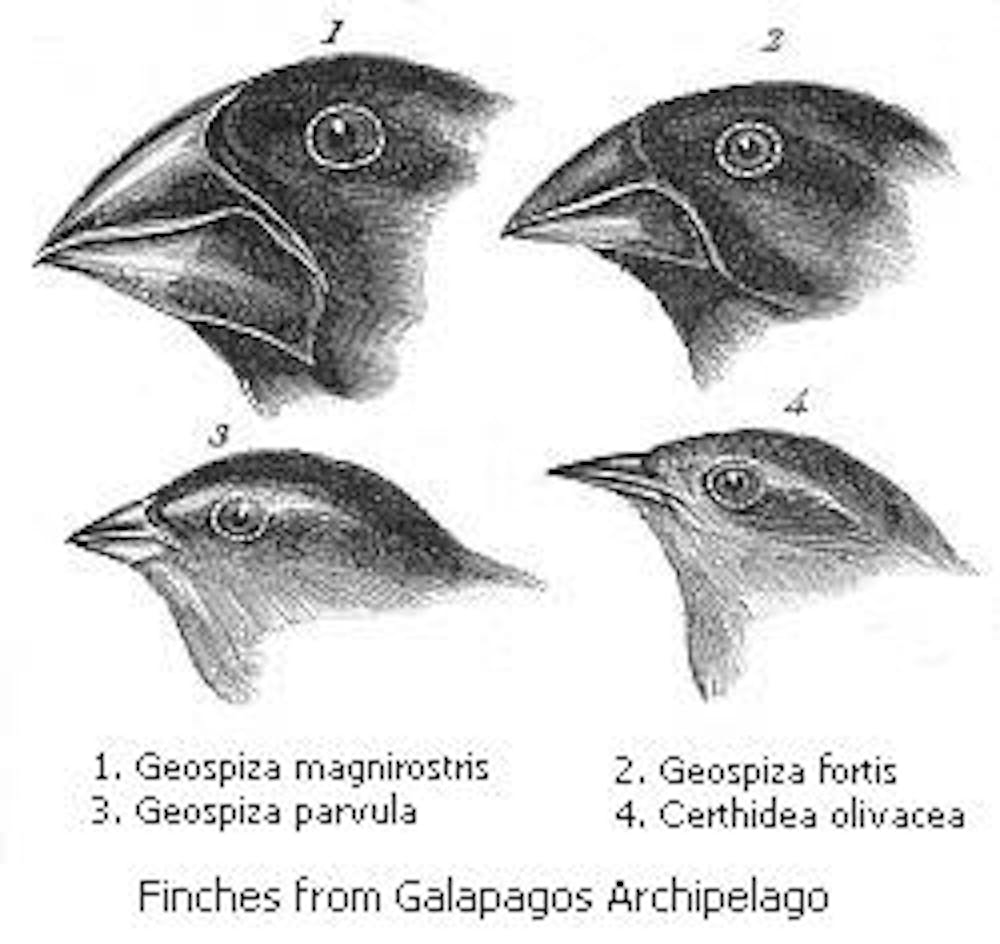
Darwin s finches. Wikimedia Commons
Darwin’s sustained concerns with presenting a convincing case reveal the kind of reception he anticipated his book would have. He was well aware that it had the potential to redefine the foundations of biology. He explicitly says so in the conclusion: “When the views advanced by me in this volume … are generally admitted, we can dimly foresee that there will be a considerable revolution in natural history.”
And Darwin’s views certainly did revolutionize. Yet before they could do so, they had to be accepted as fact. To ensure this he evoked the power of the factual itself.
Ultimately Darwin was successful. Even though these days creationism is witnessing a revival in some circles, no serious student of biology would doubt that the origin of species (including the human species) is grounded in exactly those evolutionary forces Darwin described.
Evolutionism within and beyond Darwin
As is frequently the case with the most powerful ideas, Darwin’s theory of evolution caught on in other areas of thought, too. In particular, during the latter part of the 19th century, all sorts of theories emerged seeking to apply the concept of evolution elsewhere. It became fashionable to speak of the “evolution” of human societies, for example, or of human cultures, religions – even of the cosmos.
Charles Darwin’s working room in Down House, where he wrote On the Origin of Species, Kent, United Kingdom. shutterstock
A common explanatory pattern used in this context was the idea that phenomena such as culture or religion evolved from simple (“primitive”) forms to more complex ones. And, as one might guess, “more complex’ often equated simply with the present, Western culture and society, and the religion that shaped it: Christianity. The ideological point of this mode of explanation is easily discerned: Evolutionism here fed into ideas of European superiority, domination, and colonialism.
A particular nasty interpretation of Darwin’s theory came to be known as “social Darwinism”. It transferred the ideas of a “struggle for existence” and the “survival of the fittest” to human society, where they were used as an argument against social benefits for the poor and disadvantaged. In the most serious consequence, this lead to racism, eugenics, forced sterilisations, and the euthanasia of “unfit” people.
Yet this was a blatant misuse of Darwin’s theory, which was never meant as a prescription about how to manage a society. Moreover, ideas about racial superiority lacked any scientific basis and were not shared by Darwin. Quite the contrary: his insights into the common biological foundations of all humanity made Darwin a strong supporter of abolitionism (the doctrine advocating for the abolition of slavery). People simply twisted Darwin’s ideas to promote their own notions of superiority and the ideological agendas based on them.
Darwin today
Social Darwinism ultimately came to an end because it was unsupported by science. At the same time, ideas about cultural evolution fell out of fashion, as did ideas about allegedly “primitive” societies. These days, cultures of the past and present are no longer set against each other but appreciated in their own right, without seeking to establish a hierarchy between them.
Yet evolutionary theory is still going strong in disciplines such as computer science, medicine, and agriculture. In computer science, “genetic algorithms” solve optimisation problems by mimicking the process of natural selection. In medicine, the looming catastrophe of widespread antibiotic resistance is fundamentally an evolutionary problem: by overusing antibiotics, we have inadvertently favoured those rare bacteria that can withstand our drugs.
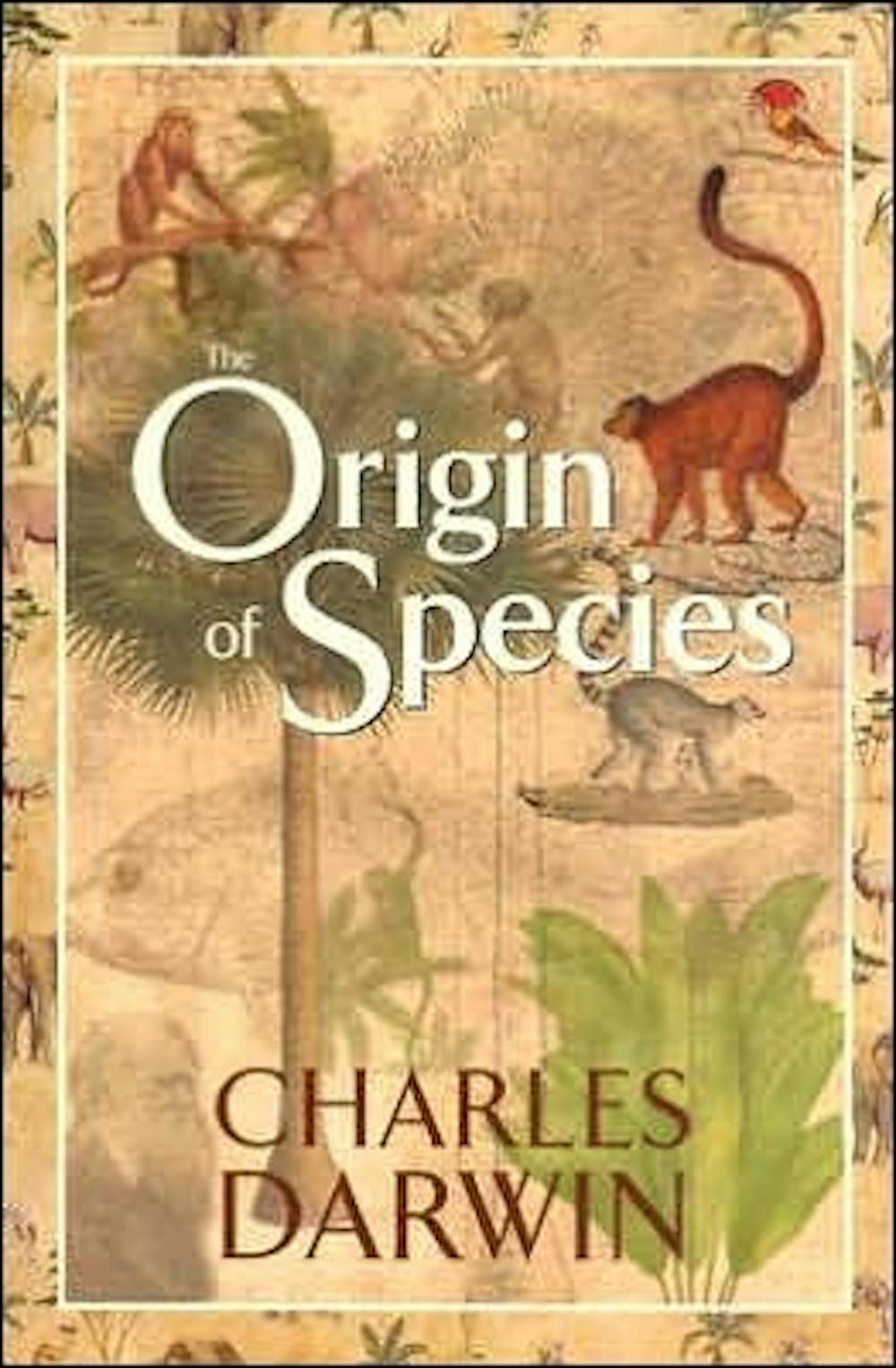
goodreads
To prevent a decidedly bleak future where antibiotics are useless, researchers are increasingly using evolutionary theory to develop new ways of preventing resistance. Cancer, obesity and autoimmune conditions such as allergies and asthma can be understood (and possibly treated) through the lens of evolutionary science.
About 170 years after its first publication, On the Origin of Species and the theory it has come to represent still define the way in which the biological sciences conceive the dazzling diversity of life. Its continuing legacy consists in laying out a view of life as “one grand system” and in having described the biological mechanisms shaping it.
Yet the book also shows that the ultimate prevalence of the theory of evolution over rival forms of explanation did not come easily. Darwin had to think carefully how to convince his contemporaries of its validity. He had to defend himself against accusations of blasphemy; some of the resulting ridicule targeted him personally.
The traces of this struggle are clearly visible in his work. This alone makes it a must-read for all budding scientists, both real and armchair.



 Not that this should concern King – who, as you would probably expect, preferred the supernatural to the esoteric when working out the paradox of bilocation in The Outsider.



 The paradox of Heart of Darkness is that it seems at once so improbable and so necessary. It is impossible not to be astonished, when you think of it, that a Polish ex-sailor, writing in his third language, was ever in a position to author such a story, on such a subject. And yet, in another way, Conrad’s life seems more determined than most, in more direct contact with the great forces of history. It is from this point of view that Heart of Darkness seems necessary, even inevitable, the product of dark historical energies, which continue to shape our contemporary world.



 The traces of this struggle are clearly visible in his work. This alone makes it a must-read for all budding scientists, both real and armchair.
 At the BookShelf


You must be logged in to post a comment.