Unknown's avatar

Guide To The Classics: The Prophet by Kahlil Gibran


File 20181126 140531 j0fbaq.jpg?ixlib=rb 1.1
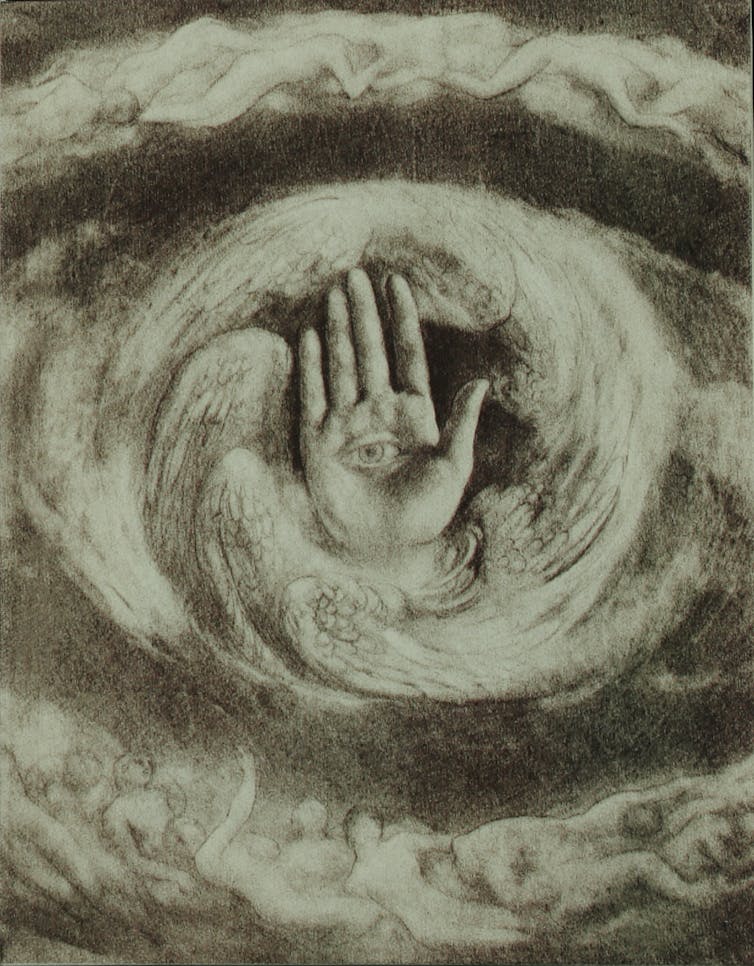
Kahlil Gibran, The Divine World (1923), Illustration for The Prophet, Charcoal.
Gibran Museum

Antonia Pont, Deakin University

Kahlil Gibran (original spelling at birth “Khalil”) is a strange phenomenon of 20th Century letters and publishing. After Shakespeare and the Chinese poet Laozi, Gibran’s work from 1923, The Prophet, has made him the third most-sold poet of all time.

This slim volume of 26 prose poems has been translated into over 50 languages; its US edition alone has sold over 9 million copies. Its first printing sold out in a month, and later, during the 1960s, it was selling up to 5,000 copies a week.
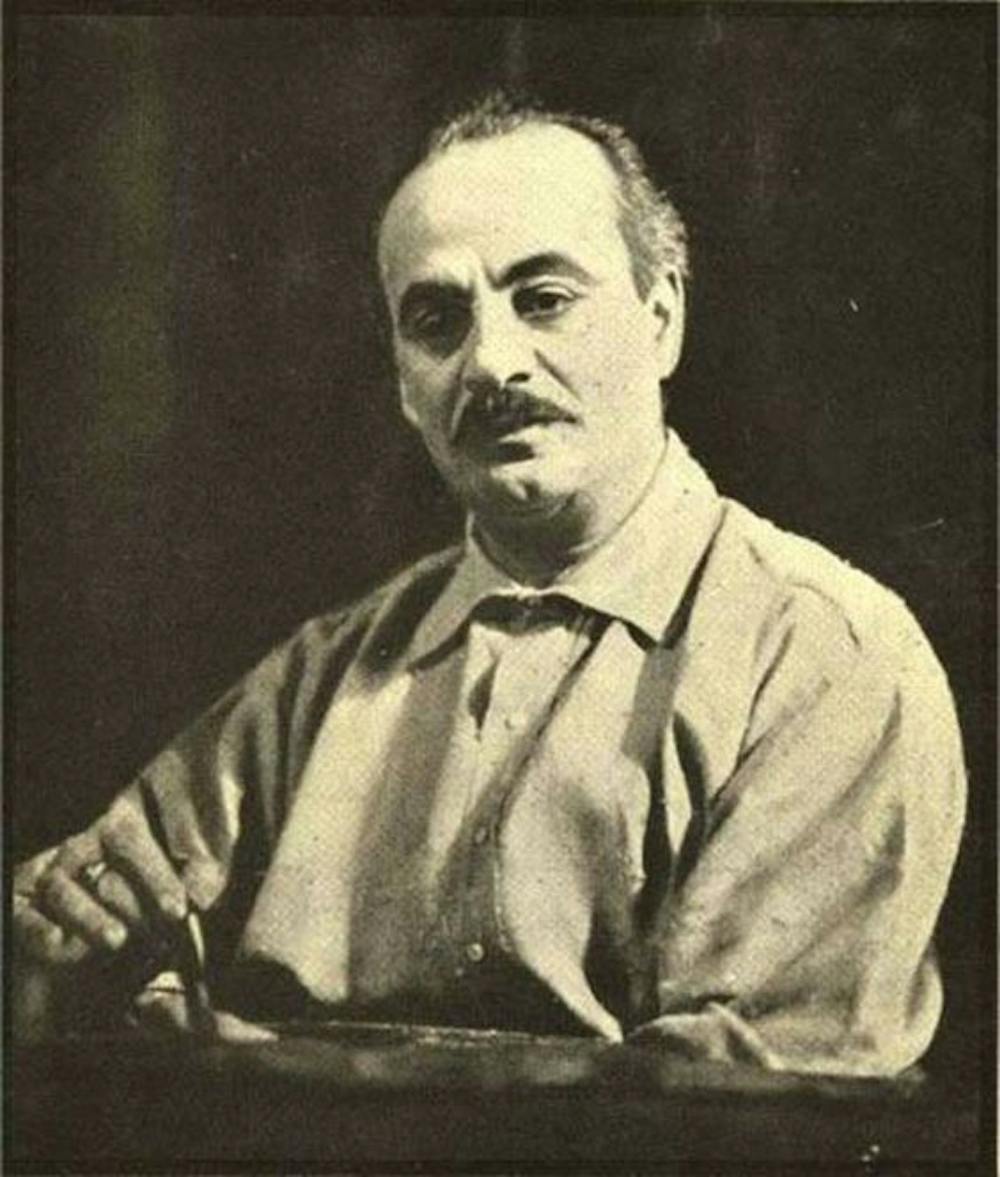
Kahlil Gibran.
Gibran Museum

It has seemingly been able to speak to various generations: from those experiencing the Depression, to the 1960s counter culture, into the 21st century. It continues to sell well today.

What is fascinating about the Gibran/Prophet phenomenon is the bile of critics in the West in relation to the work. Outside of English-speaking countries, the Lebanese-born Gibran attracts far less disdain. Professor Juan Cole, from the University of Michigan, has noted that Gibran’s writings in Arabic are in a very sophisticated style.

The midwife of the New Age

The Prophet is interesting for a number of reasons, not only for its ability to sell. It is written in an archaic style, recalling certain translations of the Bible (Gibran was intimate with both the Arabic and King James versions) and has an aphoristic quality that lends itself to citation — for weddings, funerals, courtships — and accessibility. There are at least two high schools named after its author and it was quoted in a eulogy given at Nelson Mandela’s funeral.

The Prophet declares no clear religious affiliation, while at the same time operating in a quasi-spiritual or inspirational register. Many might even class it in that category of writing known as “wisdom texts”.
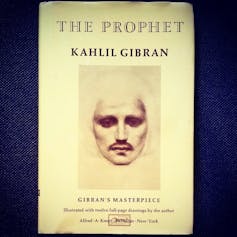
Image of the The Prophet by Kahill Gibran.
Allen Clive Patrick Duval/flickr

Gibran has been referred to as the midwife of the New Age, due to the role The Prophet played in opening a space for spiritual or personal counsel outside organised religion and its official texts. The Prophet appears to embrace all or any spiritual tradition (or at least to exclude none explicitly), and this vagueness or openness (depending on one’s reading) may account for part of its widespread appeal.

The book, which presents advice on a number of core aspects of being human — such as love, parenting, friendship, Good and Evil, and so on — employs a simple narrative device.

An exiled man, Almustafa, who has been living abroad for 12 years, sees the ship that will carry him back “to the isle of his birth” approaching. Filled with grief at his imminent departure, the townspeople gather and beseech him to give them words of wisdom to ease their sorrow:

In your aloneness you have watched with our days, and in your wakefulness you have listened to the weeping and laughter of our sleep.

Now therefore disclose us to ourselves, and tell us all that has been shown you of that which is between birth and death.

Gibran himself had been in the US for 12 years at the time of writing and, it could be argued, was in a kind of exile from Lebanon, the country of his own birth.

Among many subjects, The Prophet offers contemplations on marriage:

… stand together yet not too near together:

For the pillars of the temple stand apart,

And the oak tree and the cypress grow not in each other’s shadow.

On children:

You may give them your love but not your thoughts

for they have their own thoughts

You may house their bodies but not their souls,

for their souls dwell in the house of tomorrow, which you cannot visit, not even in your dreams.

And pain:

Even as the stone of the fruit must break, that its heart must stand in the sun, so we must know your pain.

The woman behind the poet

Biographers have emphasised Gibran’s tendency to pretension, to self-aggrandising, to fictionalising his own history, and his relations with women such as his sister, Marianna (who supported him with menial work), and especially his patron and confidante, Mary Haskell.

The latter remained devoted to him her entire life and also financed much of his lifestyle, enabling his artistic projects up until and beyond his success with The Prophet. Haskell had a penchant for enabling the less fortunate (although she herself was not wealthy), and Gibran was not her first project of this kind.

She continued to edit his work discreetly well into her own marriage, to which she had resigned herself after their engagement stalled. Gibran had a tendency to get involved, as Joan Acocella writes in her detailed New Yorker piece, with older women who could be useful to him.
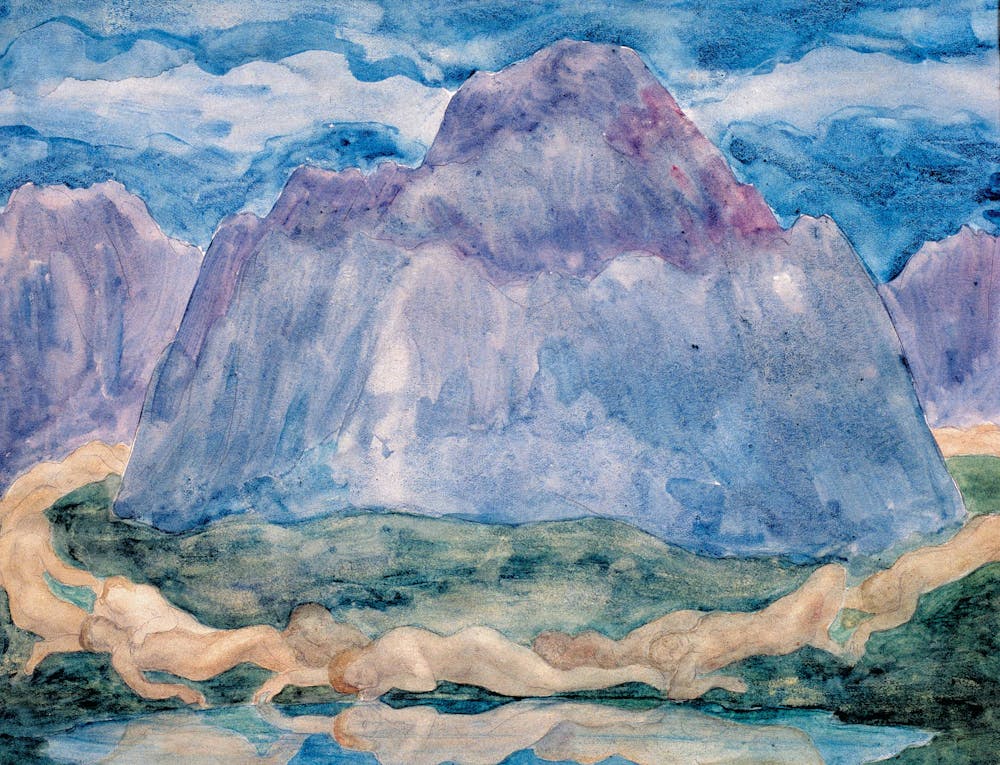
Kahlil Gibran, Nude Figures Lying at the Foot of a Mountain by a Lake, (1923-1931), Watercolour.
© Gibran Museum

He was a beautiful, “oriental” young man. Having grown up, from the age of 12, in the ghettos of Boston’s South End, he survived by hoisting himself, or finding himself flung, into more privileged circles thanks to his looks, his talent (he could paint and write) and his “mysterious” appeal of being the “other”.

Anglo-Americans could, in other words, accessorise with him. And they did. He was “discovered” by Fred Holland Day, a teacher, who dabbled in the worlds of Blavatsky and the occultism that was de jour, and who liked to photograph young men, both in exotic garments and out.

In Gibran’s case, since evidence suggests that he evaded a sexual relation with Haskell, he at least did not leave her with the financial burden of children (not uncommon in his time). He ended his life primarily close to his sole-remaining sibling, Marianna and his secretary, and later biographer, Barbara Young.

Due to the extensive number of edits that Haskell offered on most of Gibran’s works across his career (including his first publication, a short poem), it is almost certain that “his” output — like many artistic achievements — might be more accurately deemed a collaboration. The enduring convention of signing works with a singular name has tended to result in the eclipsing of efforts of crucial contributors, often women.
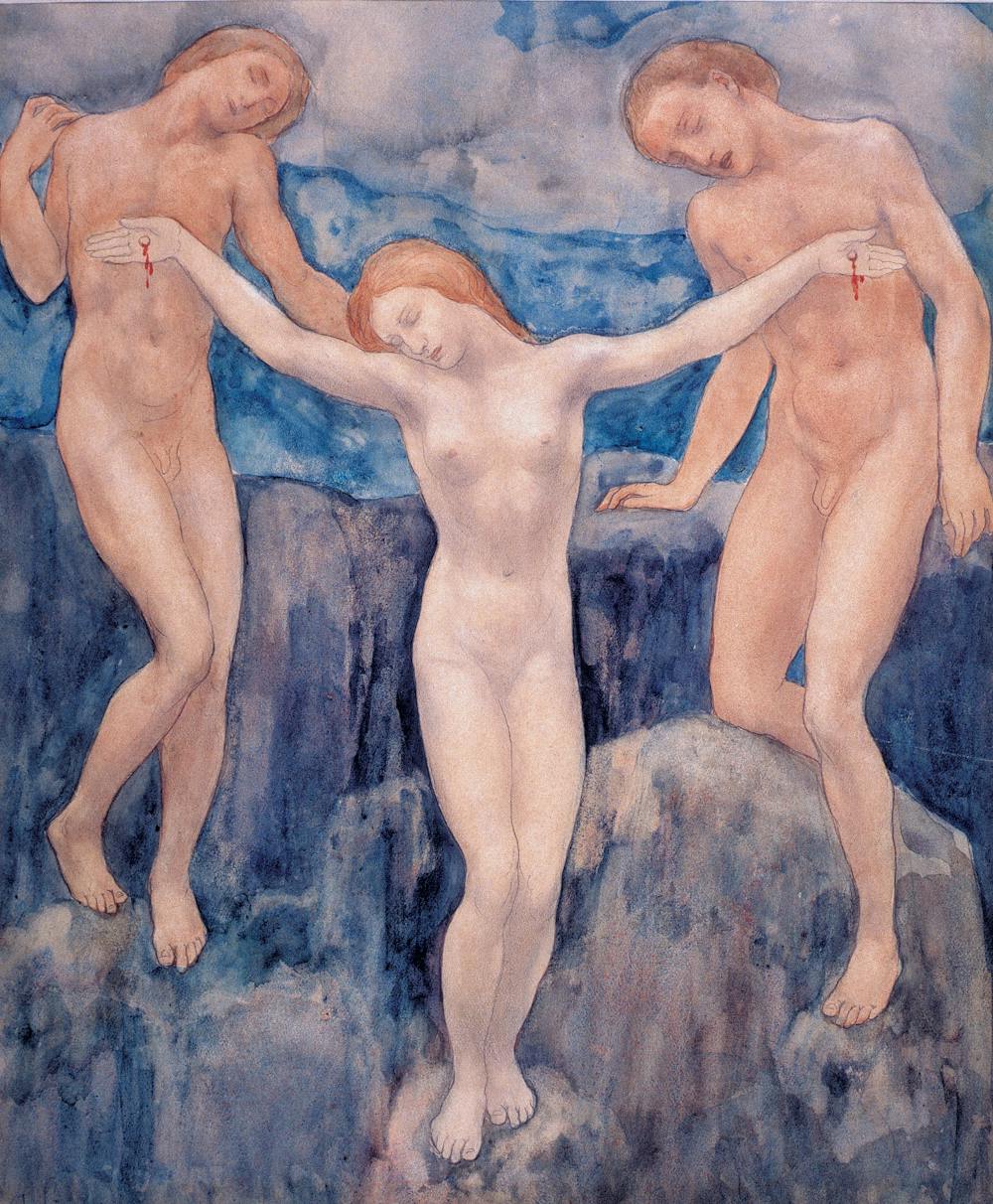
Kahlil Gibran, Pain (1923), Illustration for The Prophet, Watercolour.
© Gibran Museum

Death and dualism

Despite the indifference of Western critics to Gibran’s work, Gibran’s credentials were not shoddy; he was a trained artist (at the Académie Julian) had his first exhibition at 21, and produced over 700 works in his lifetime, including portraits of Yeats, Jung and Rodin.

Gibran died young, at age 48, from cirrhosis of the liver, due to a propensity for large quantities of arak, supplied to him by his sister, Marianna. One wonders whether Gibran was able to find any solace in his own words in his final days of frailty.

In The Prophet, he (and, we could speculate, Haskell) write(s):

Trust the dreams, for in them is hidden the gate to eternity … For what is it to die but to stand naked in the wind and to melt into the sun?

And what is it to cease breathing but to free the breath from its restless tides, that it may rise and expand and seek God unencumbered?

Only when you drink from the river of silence shall you indeed sing.

Gibran has been criticised for his style of playing confoundingly but reassuringly on opposites, which, some argue, can mean anything. (One must note, however, that this unsettling of binary structures is a feature of enduring wisdom texts such as the Tao Te Ching, as well as recalling writings of Sufism and other traditions.)

Furthermore, for the son of destitute immigrants, who rose to fame via his beauty, talent and a blind conviction of his own specialness (which he nourished along with a small obsession with Jesus Christ, the subject of a later, and arguably better work), perhaps life had presented to him its own stark dualities: abjection/acclaim; poverty/wealth; indifference/desire; disdain/popularity; exoticism/racism.

Momentary respite
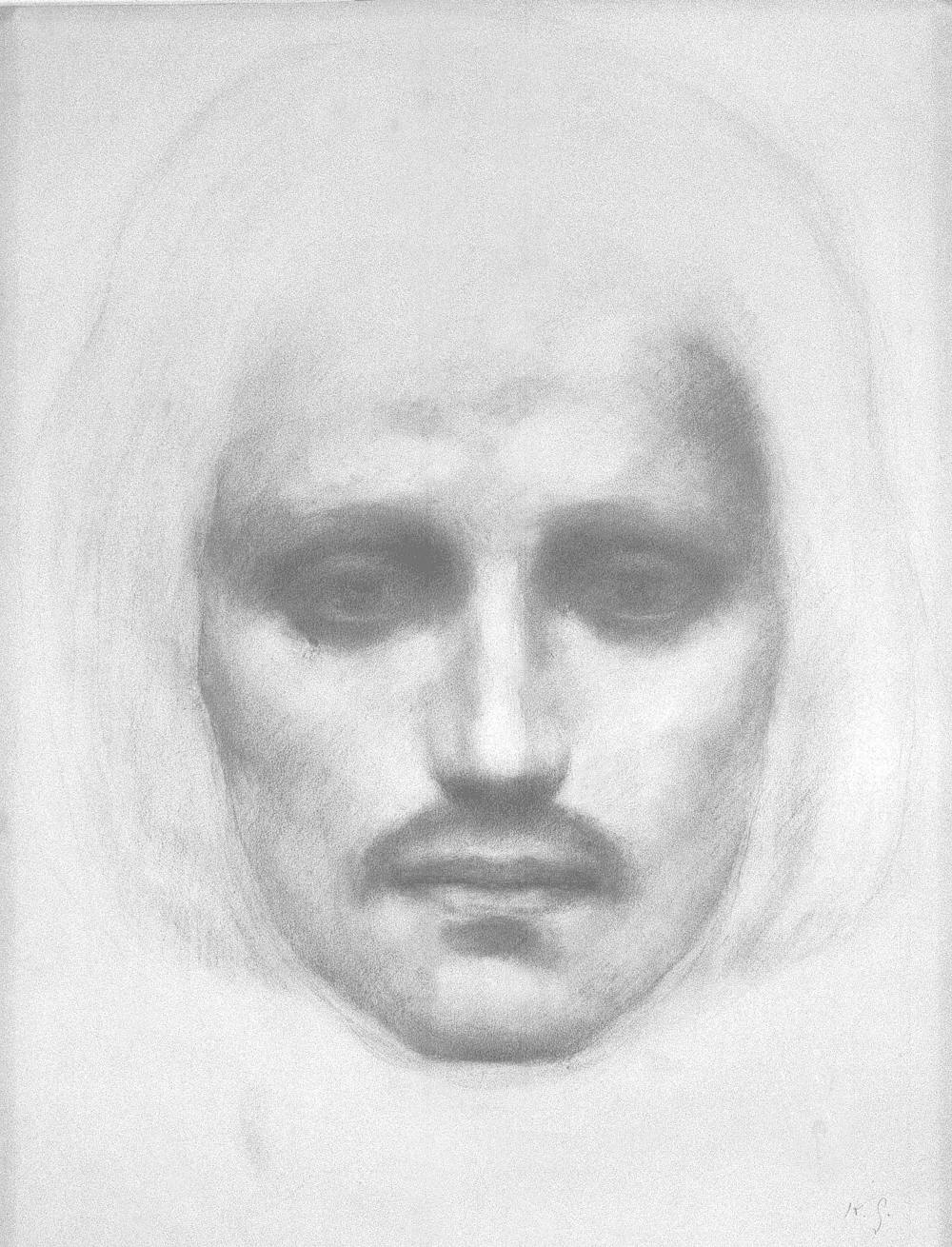
Kahlil Gibran, The Face of Almustafa (1923)
(Frontispiece for The Prophet), Charcoal.

© Gibran Museum

For someone who undoubtedly “made it” (according to the grim criteria of the New World), Gibran may well have had more than a kernel of wisdom and know-how for those trying to survive its heartless, capricious climes. The fact is that millions of people have found momentary respite in his shifting, evocative words.

In a century where authority figures – whether political or representing various spiritual traditions – have seemed not only to fail their flocks, but to have actively betrayed them, Gibran’s perhaps fuzzy but lyrical advice has come to fill a vacuum of integrity and leadership. We need not badger readers of this work (who included, incidentally, the likes of John Lennon and David Bowie) who might use it to express their love, notate their grief, or ease their existential terrors.

The Prophet has worked as a widespread balm, as effectively as anything quick and concise can. Cheaper than an ongoing tithe to pharmaceutical companies, at $8.55, the going rate at Book Depository, it neither incites hatred, nor violence, nor religious divisiveness.

It says the kinds of things that we sometimes wish a trusted other might say to us, to calm us down. In these aggravated times, perhaps we can appreciate its sheer benignity and leave its boggling success be.


The exhibition, Kahlil Gibran: The Garden of the Prophet, opens at the Immigration Museum, Melbourne, on November 28.The Conversation

Antonia Pont, Senior lecturer, Deakin University

This article is republished from The Conversation under a Creative Commons license. Read the original article.
Unknown's avatar

Not My Review: The Lady Janies (Book 2) – My Plain Jane by Cynthia Hand, Jodi Meadows and Brodi Ashton


Unknown's avatar

In the 1600s Hester Pulter wondered, ‘Why must I forever be confined?’ – now her poems are online for all to see


File 20181120 161627 mneb7m.png?ixlib=rb 1.1
For centuries, Pulter’s manuscript lay untouched at the University of Leeds’ Brotherton Library.
University of Leeds Library, Brotherton Collection, MS Lt q 32, CC BY-NC-SA

Samantha Snively, University of California, Davis

In 1996, a graduate student named Mark Robson was creating a digital catalog of the University of Leeds’ Brotherton Library when he discovered a small manuscript on the shelf. The elegantly titled “Poems Breathed Forth by the Noble Hadassas” contained 120 poems and a half-finished prose romance.

As far as Robson could tell, the manuscript hadn’t been read in over 250 years. He hadn’t heard of the “Noble Hadassas” – nor had anyone he asked.

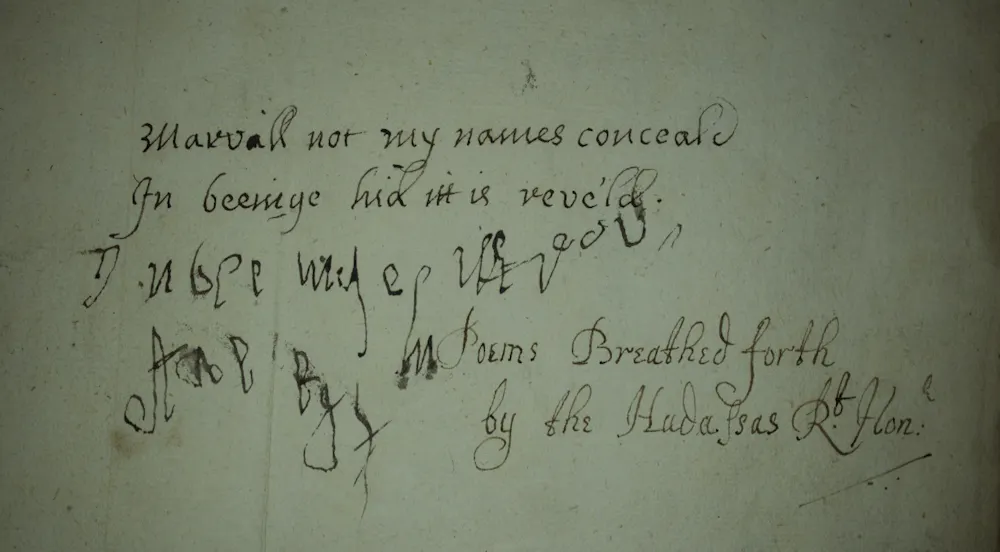
But a riddle scribbled in the manuscript offered a hint about her true name: “Marvel not my name’s concealed / In being hid it is revealed.”

The clue written in the manuscript.
University of Leeds Library, Brotherton Collection, MS Lt q 32., CC BY-NC-SA

In the Biblical story of Esther, “Hadassah” is Esther’s Jewish name. In early modern England, “Hester” and “Esther” were versions of the same name. They’re also anagrams. That allusion to “Esther” – in addition to a couple of references to an estate named Broadfield – gave scholars just enough evidence to search public records for possible authors.

The mystery manuscript turned out to be a collection of poems by a 17th-century English woman named Hester Pulter.

At first glance, the verses of a self-taught, unpublished poet might not seem remarkable. But Pulter was writing in an era of chaos and change in England. She was eager to explore some of the most exciting scientific ideas of the time. And in a time when women were expected to be silent and chaste, she took risks in her poetry and confidently expressed her ideas.

Now, a collaboration between literary scholars across the globe is bringing Hester Pulter’s poems to the public, in the form of an open-access digital edition called The Pulter Project, which launched on Nov. 15, 2018.

Who was Hester Pulter?

Pulter was born into the aristocratic Ley family in 1605 and married Arthur Pulter when she was relatively young. After marrying, she spent much of her life at the isolated Pulter estate, which was over a day’s journey from London. She wrote most of her poems at home and would occasionally travel to London to visit other family members.

Since Pulter mainly kept to herself and rarely left her home, most of what we know about Hester comes from public records. She gave birth to 15 children, only two of which survived to adulthood, and lived through the English Civil War, which lasted from 1642 to 1651.

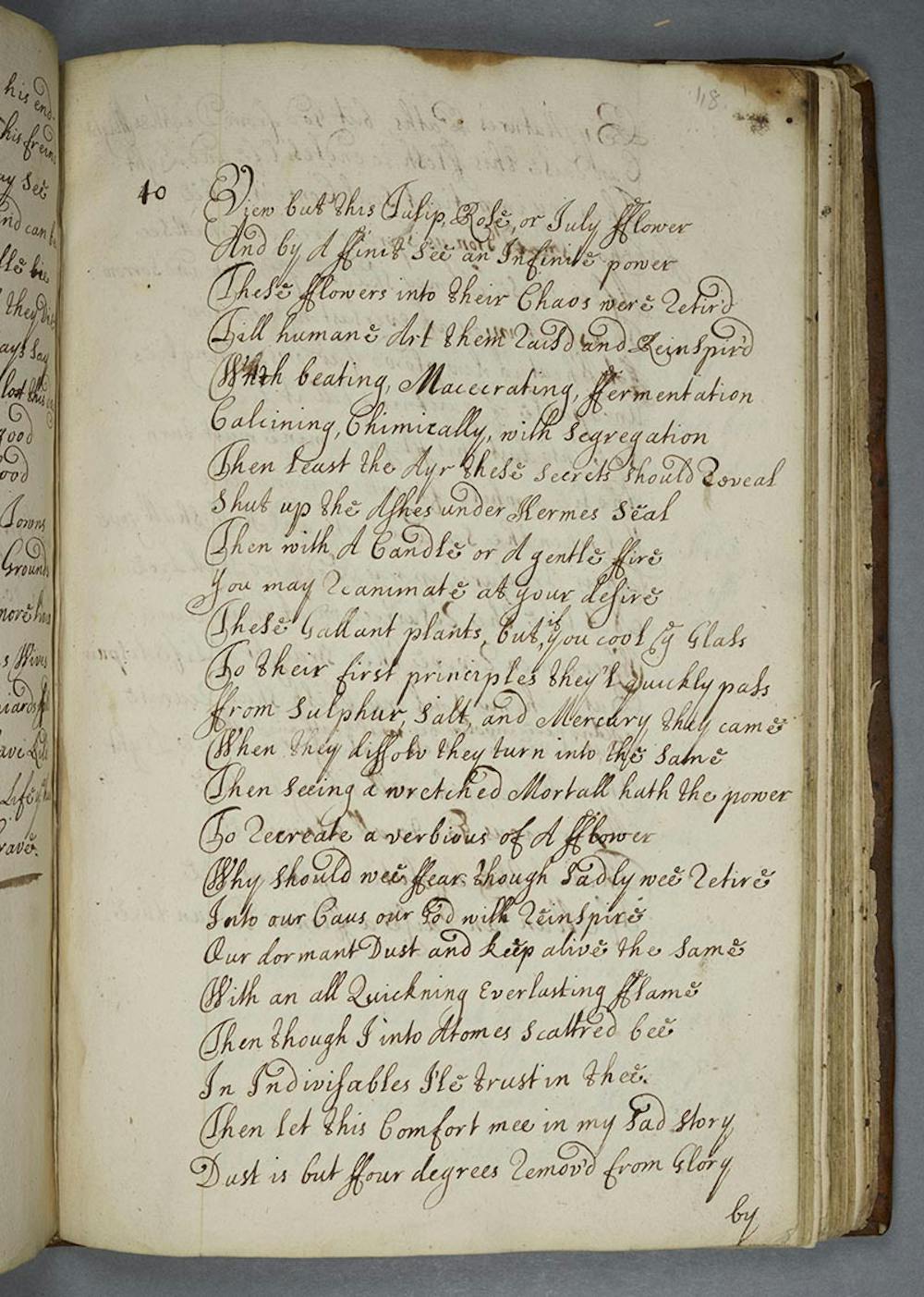
The original manuscript of Hester Pulter’s ‘View But This Tulip.’
University of Leeds Library, Brotherton Collection, MS Lt q 32

Literary scholar Alice Eardley, who produced the first scholarly edition of Pulter’s works in 2014, has suggested that Pulter’s relative isolation inoculated her from pressure by readers or literary society to conform to a certain style or subject matter. It gave her the freedom to write innovative, opinionated, emotionally complex poetry.

Pulter’s poems, which range from the political to the autobiographical, appear to have been written throughout the 1640s and 1650s. In the 1660s, Hester worked with a scribe to create a presentation copy of her draft poems, making notes and annotations on the manuscript.

It’s likely she never intended to publish her poems, however. In 17th-century England, women who published risked being seen as vulgar and sexually suspect. In order to avoid slander, the few women who did publish usually wrote about topics more aligned with proper womanly values: household guides, devotional books and diaries or memoirs of their husbands.

An aristocratic woman like Hester would have been expected to behave modestly, keep quiet and focus on her household rather than write about political conflicts and scientific experimentation. Pulter’s small family may have read her work, but it seems that her poems sat untouched after her death until they were rediscovered in 1996.

Poetry that’s observant, personal and political

Although Pulter lived a relatively isolated existence, her poems reveal a deep intellectual engagement with the most pressing issues and ideas of the mid-1600s. From the references she makes in her work, it’s clear that she had read works of natural history, alchemy and descriptions of America like William Wood’s “New England’s Prospect.”

She also appears to have kept up with major scientific discoveries, including Galilean astronomy and the microscope. In “Universal Dissolution,” she acknowledges Galileo’s discoveries, describing the sun as the “front and center of all light,” the star around which all other “orbs perpetually do run.”

Pulter was also a keen observer of nature. In “The Pismire,” she describes watching an ant colony at work for an afternoon. “View But This Tulip” shows off her familiarity with alchemy and early experimental practices, and in it she begins to think about the human body as composed of recyclable atoms. These poems place her within a culture of experimental observation that was part of the rise of modern science.

And she certainly didn’t shy away from expressing her political views.

Hester’s parents were Royalists – supporters of Charles I – and she remained a Royalist even when many of her extended family and neighbors supported Parliament instead. Many of her poems express grief at the havoc the civil war caused in England, and mourn a breakdown of religious and social hierarchy.

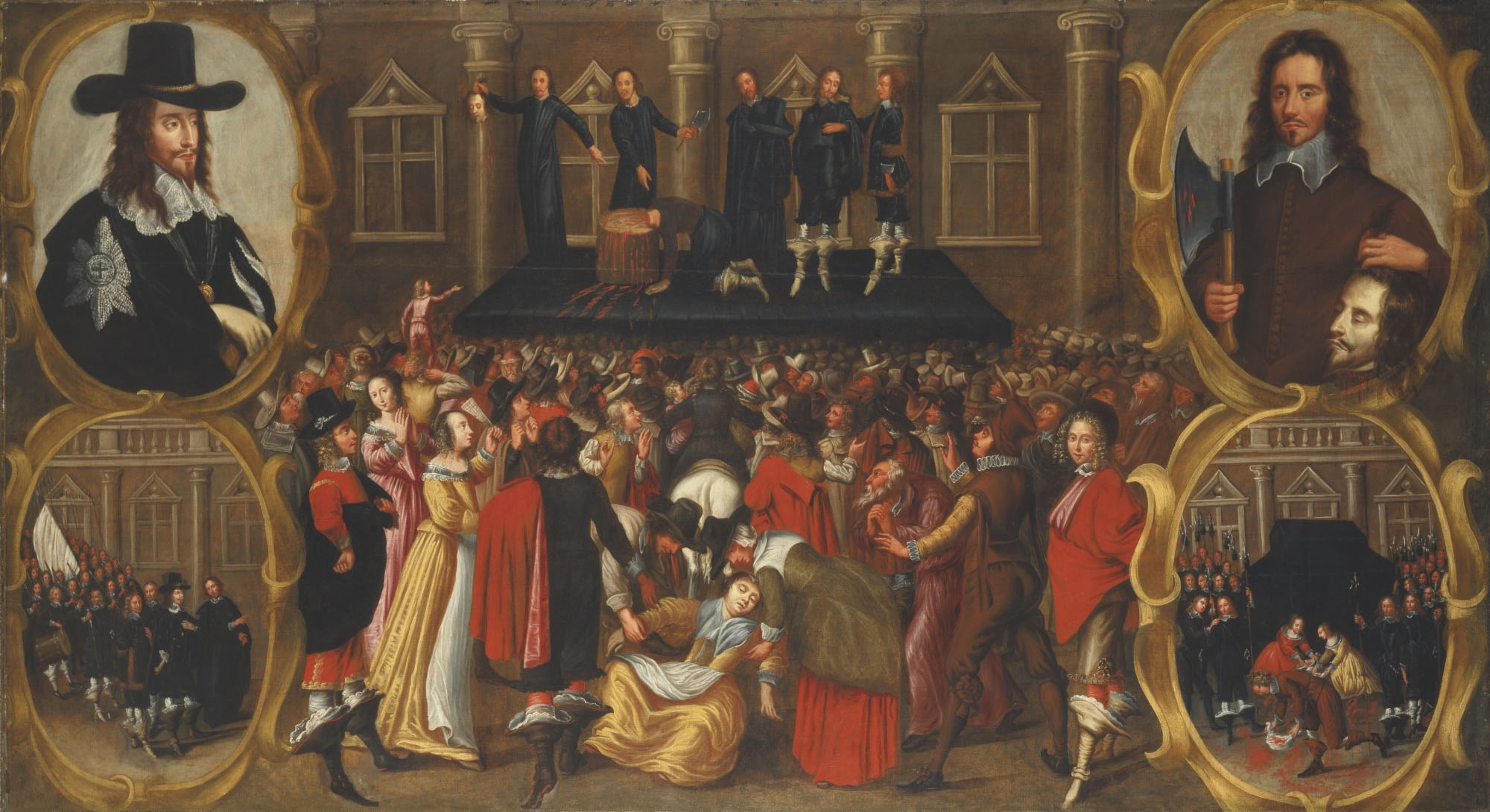
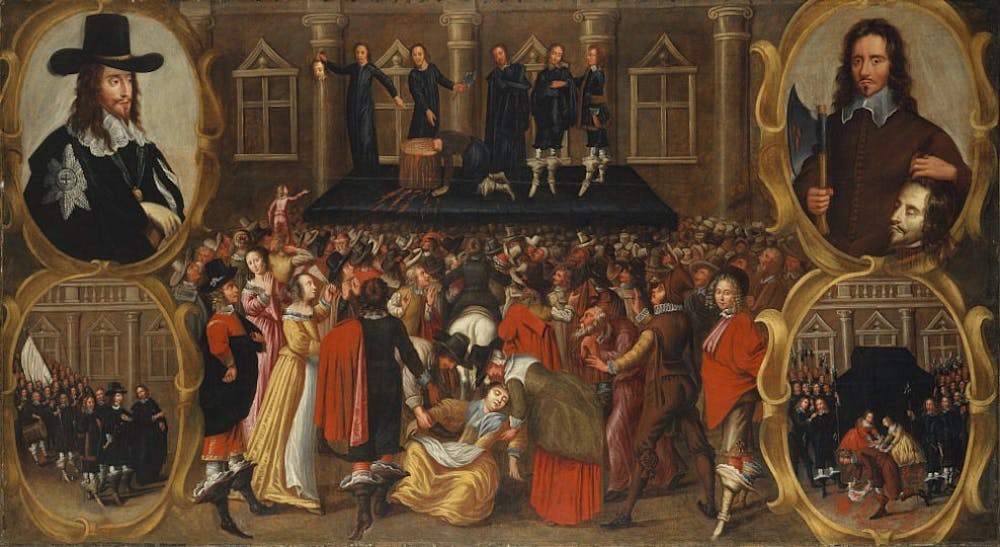
A 17th-century oil painting depicts the execution of Charles I.
Scottish National Gallery

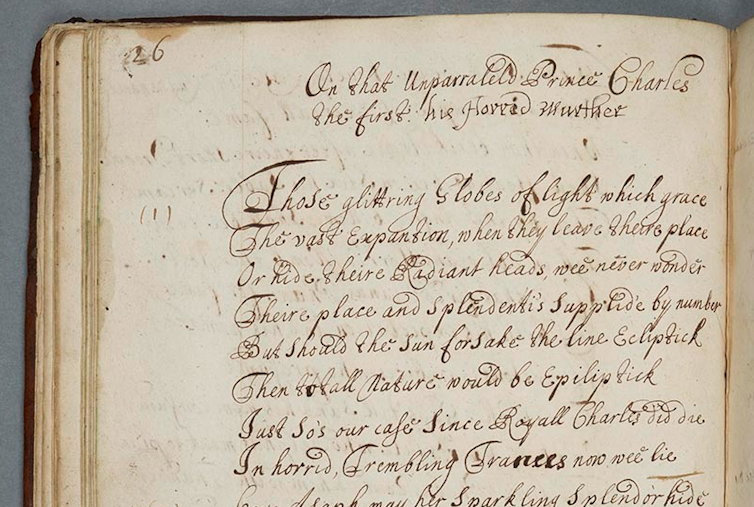
In “On that Unparalleled Prince Charles, His Horrid Murder,” she compares a country without a king to the universe without a sun, both of which fall into chaos.

But her political poems avoid outright tribalism. Instead, they’re nuanced and well-informed, and they critique the ruling class for their role in social collapse.

Pulter is equally comfortable writing about personal experiences like her illnesses or a child’s death. She surveys the effects of time on her body in “Made When I Was Sick, 1647,” and in “Upon the Death of My Dear and Lovely Daughter, Jane Pulter,” deals with the grief of losing yet another child. It’s tinged with envy of parents with healthy children:

    All you that have indulgent parents been,
    And have your children in perfection seen
    Of youth and beauty: lend one tear to me,
    And trust me, I will do as much for thee,
    Unless my own grief do exhaust my store;
    Then will I sigh till I suspire no more.

She also expresses early feminist ideas, and addresses, in complex ways, how society constricts women’s behavior, devalues their work and diminishes their intellectual value.

From “Why Must I Thus Forever Be Confined?”:

    Why must I thus forever be confined 
    Against the noble freedom of my mind?
    Whenas each hoary moth, and gaudy fly 
    Within their spheres enjoy their liberty.

Reaching new readers

Hester Pulter is clearly worth knowing. Her works speak to the major issues of 17th-century England and provide a rare lens on English culture.

In an effort to bring Pulter’s poems to the public, early modern literature professors Wendy Wall and Leah Knight created The Pulter Project. They collaborated with a host of other scholars from the U.S., Canada, Australia and England to create a free, digital edition of Pulter’s works.

The Pulter Project allows readers to toggle between scans of the manuscript, basic and annotated editions of poems, and explanatory notes. Readers can also explore “curations” for each poem, which are images and selections from texts relevant to the content of a given Pulter poem.

Editors draw on their expertise of 17th-century English culture to contextualize the poems and also make connections to modern culture. The curated materials for “Made When I Was Not Well,” for example, discuss “invisible woman syndrome,” the social phenomenon of women disappearing from public view when they reach middle age, or are ridiculed and criticized for attracting public attention.

Curations for “My Love is Fair” explore racialized beauty standards, topics just as relevant for 17th-century readers as they are for today’s intersectional feminists.

The Pulter Project shows what’s possible when the literary canon is expanded to include new writers and more women. Poets like Hester Pulter change our understanding about who could – and did – participate in the scientific, political and intellectual debates of centuries ago.The Conversation

Samantha Snively, PhD Candidate in Early Modern Literature, University of California, Davis

This article is republished from The Conversation under a Creative Commons license. Read the original article.
Unknown's avatar

A view of Johannesburg through lenses from a different era


File 20181102 83632 1eg4s21.png?ixlib=rb 1.1
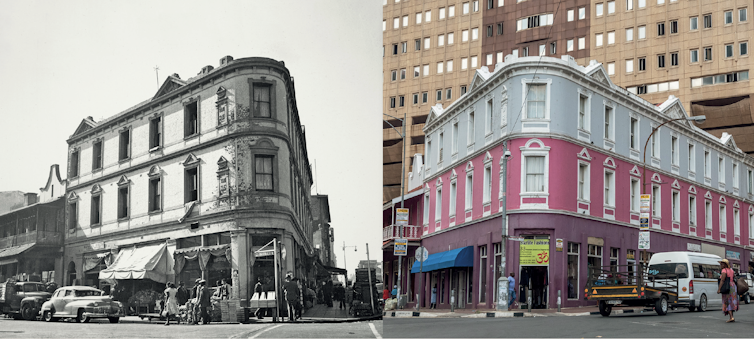
Carmel Building in Diagonal Street, Johannesburg.
Museum Africa (left) Yeshiel Panchia (right)

Kathy Munro, University of the Witwatersrand

Johannesburg was always a much photographed place from its earliest days. It was a city that grew up with photographers and their cameras. As a town of migrants and immigrants, people wanted to send postcards and photographic souvenirs back home.

Some proof is in a new book, Johannesburg Then and Now, by history blogger, Marc Latilla. It is a series of photographic juxtapositions of early photographs of the city – dating from the 1880s to the 1940s – with contemporary images of the same street scene or building by photographer Yeshiel Panchia.

The book is descriptive rather than analytical, with the emphasis on Johannesburg buildings, places and streets and not its people. Latilla’s love and passion for his city comes through in his descriptions.

Young city

At a mere 132 years Johannesburg is a young city compared with cities of the world. London and Rome go back over 2000 years.

It started as a mining camp with a gold bonanza once George Harrison had found gold on the Main Reef in 1886. The new mining settlement was named Johannesburg – the origins of the name and who precisely was the “Johannes” of Johannesburg is still in dispute. The camp grew over time to a city. Today it is a metropolis that dominates the province of Gauteng, both as the provincial capital and the financial heartland of South Africa.

Johannesburg is a fractured city, divided in all sorts of ways. Geographically it’s split by the mines of the Witwatersrand – one can still see their remains south of the city while the north has a very different landscape.

Another divide was created by the railway which cut the town in half with the most affluent suburbs to the north and the less affluent to the south.

The city’s economic divide was also evident in the architectural styles of the residential areas which reflected status: from the working class, to the lower and upper middle class, and then at the very top end the grand estates on the northern ridges for the Randlords and newly enriched capitalist class.

The town was also divided by race from its earliest days. While there was always economic integration, segregated residential areas for different racial groups were the norm. The township of Soweto was created in the 1930s when the white government started separating black people from white people.

This policy of racial and class separation was perpetuated further when apartheid became official policy in 1948. It also led to forced removals of black people to townships outside the “white” city.

Growing in circles

Johannesburg has always grown in concentric circles. Municipal boundaries were periodically extended, mapped and basic services of water, sewerage, lighting, tramways financed by an increasing number of ratepayers brought into the net to support the city. Soweto, once the internationally recognised site of the 1976 youth uprising, is now part of the city, but so is the glitzy new glass and concrete post-modern city of Sandton.

The Johannesburg that has been captured in this book though is the old Johannesburg; what was called the Central Business District and its surrounding suburbs. This is Johannesburg from 1886 to a date more or less 50 years later when the city celebrated its jubilee with the Great Empire exhibition at Milner Park in 1936.

I should declare an interest – I was first asked by Penguin Books if they could use an image of an old early title deed that I had written about and then to give the book a preliminary early opinion. As historian I found myself drawn in to assist in some fact checking and comments to help the author. Of course the selection of photographs and his commentary remain his entirely.

The old photographs were taken by countless unknown and mainly anonymous photographers. They are remarkable in their own right. It was so much more difficult to take and make a photograph in 1900 than in our digital age. Those old photos in black and white are works of art as much as are the perfect colour and light reflected images of today. The sources of the old photographs are primarily from collections held by the University of the Witwatersrand, Museum Africa and the Transnet Heritage library. The early photographs are tend to be undated, so that the “then” can be any time from circa 1890 to the 1930s and even later, while the now photographs are all in colour and clearly belong to the last few years.

Superb find

My favourite photo is the old aerial view of the Harrow Road redevelopment when the first Johannesburg freeway was engineered (Harrow has since been renamed after a famous Johannesburger, the liberation struggle stalwart Joe Slovo). The photo allows us to see precisely how Harrow Road was widened and changed direction in the fifties. This single photo is a superb find.

A book such as this makes a contribution to heritage because it captures, assembles and documents the old and now the new. Where old photographs have been found recording what a particular building looked like and the building is still there, such photographic documentation strengthens the heritage preservation case.

However, none of the grit, crime, grime, litter or lack of maintenance we battle against today is visible in the modern photographs. This is the Johannesburg we don’t see: the crisis of homelessness and densification of dwellings. Who, for example, would know in the photo of Plein Street park that it is actually now a dormitory area for dozens of homeless people without jobs? Is it the city or history or harsh economic realities that has failed them? Of course one can argue that modernization and urbanization always left victims and the city of gold did not bring fabled wealth to all .

Johannesburg Then and Now is a fascinating book. It’s important for cities to preserve their pasts , because “Roots” matter as much as “shoots”. This book can perhaps start a discussion about what ought to be appreciated and “saved”. The book will remind city planners to include heritage in their planning for a 21st century city.

Johannnesburg Then and Now is published by Penguin.The Conversation

Kathy Munro, Honorary professor in the School of Architecture and Planning, University of the Witwatersrand

This article is republished from The Conversation under a Creative Commons license. Read the original article.
Unknown's avatar

Silent images speak through time in one family’s story of Poland under the Nazis


File 20181120 161624 8wzrnr.jpg?ixlib=rb 1.1
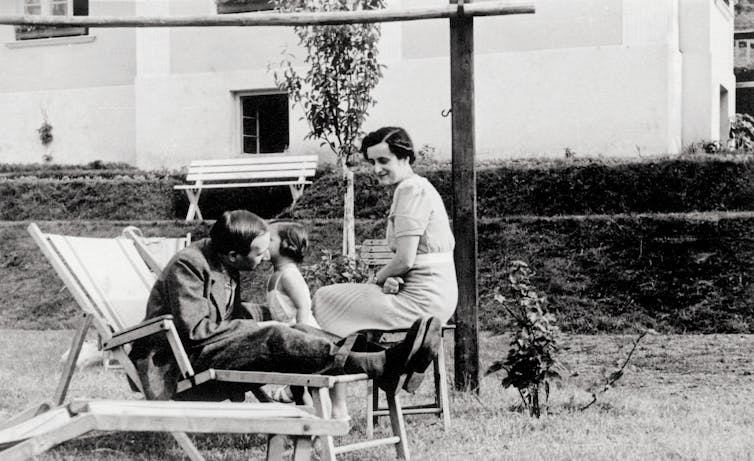
One of the photographs from Terry Kurgan’s book.
Supplied/Jasek Kurgan

Michael Godby, University of Cape Town

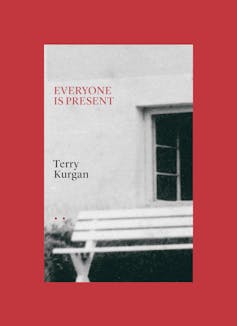
The first photograph in Terry Kurgan’s Everyone is Present shows what appears to be a mid-20th century idyllic scene of a young family at a spa in southern Poland.

It’s a scene that puts one in mind of the reverie in old photographs described by French theorist Roland Barthes in Camera Lucida and the nostalgic fragments used so evocatively by the Anglo-German novelist W.G Sebald in Austerlitz and elsewhere.

But Kurgan, the Johannesburg-based artist, writer and curator, is more forceful in her efforts to wrest meaning from this and other images. She “longs to be able to sit inside this photograph”, as she puts it, to work actively on its subject. She juxtaposes this image with others from the album she inherited from her grandfather, Jasek, to include the rest of the extended family and something of their complicated histories.

And she correlates the album with correspondence with family members and extracts from Jasek’s diary. That woman in the photograph is Jasek’s wife, Tusia, Kurgan’s grandmother. The child is Kurgan’s mother and the man reclining on the deck chair is Doctor Lax, who at that time was Tusia’s lover.

This photograph, she discovers, must have been taken in the summer of 1939, as Kurgan writes, “on the eve of one of the greatest atrocities of the twentieth century”.

In other photographs taken at the spa, people are shown reading newspapers that were likely reporting the threat from Nazi Germany. But there appears to be no reaction to this impending catastrophe. It’s the silence of these images on such matters that drives Kurgan to devise forceful new techniques to unlock their meaning.

She scans the photographs and scrutinises them on her computer screen: clothing, expressions, gestures all take on new significance as their detail is revealed. Objects or, as Kurgan calls them, “stuff”, are discovered and identified in the shadows and revealed as the repositories of intensely personal histories: what happened to the furniture when the apartment was abandoned? What happened to the cat? Did anybody water the flowers?

Connectedness, strife and betrayal

In another bid to get closer to her subject, Kurgan Googles the spa depicted in these early images. It is now trading on the days of its former glory, typified in the furniture and other objects shown in Jasek’s photographs.

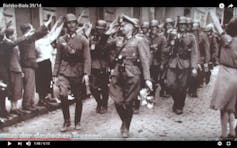
The photograph that underpins the second section of the book on the family’s flight from Poland as the Nazis invaded – and were welcomed by a large section of the local population – shows the street below the family’s apartment in the town of Bielsko. It is deserted except for two unknown men who appear to react to Jasek at the window.

Locals welcome Nazis as they invade Poland.
Supplied

Kurgan uses Google Street View to determine that the neighbourhood has changed very little over the past 70 years. But while Google allowed Kurgan an astonishing proximity to this distant place, it’s the random connection with the two men on the street in Jasek’s photograph that she ultimately finds to be more meaningful and real. She writes:

As social beings, we want to matter, to be noticed, to connect.

In a similar bid for connection, Kurgan regularly elides time when she wants to communicate the horror of the Holocaust, the Polish population’s complicity in this history, and even the lasting influence of previous generations of one’s own family.

She reacts to Jasek’s account of his arrival at Auschwitz – the concentration camp at which more than 1.1 million people were killed during the Holocaust – while it was still an ordinary Polish market town:

This short sentence plummets through the page, through my desk, through this grey concrete floor, and through the deep red Johannesburg earth.

And, on Jasek’s photograph of Roza, formidable mother of his perennially flirtatious wife: “She rebuffs him and ourselves in that split-second moment, and forever, as we gaze at her across more than seventy-five years. Now.”

Kurgan weaves major themes of modern Jewish history around Jasek’s account, in the diary and the photographs, of the family’s perilous flight from Poland via Romania, Turkey, Syria, Iraq, India and Kenya to Cape Town.

She notes repeatedly the different forms of betrayal perpetrated on Eastern Europe’s Jews by the people they had lived among for generations, when endemic anti-Semitism erupted on the back of the Nazi invasions, whether through direct assault, complicity or simply looting. Again, these are the histories of “stuff”.

For the affluent, their flight was not quite comparable to the current waves of migration moving, as Kurgan notes, in the opposite direction into Europe. But the experience of prejudiced bureaucracy, arbitrary closing of borders and abrupt implementation of quotas must have been just as humiliating.

Jasek’s photographs seemingly ignore these awful realities. They focus for the most part on family life with its own versions of strife and betrayal. Indeed, by all accounts, it was impossible for those caught up in it to make sense of this maelstrom.

History is now

In the end, Kurgan herself visited Poland: both the sites of her personal family history and those monuments of evil, the death camps.

Noticing her own reflection in a mirror as she tries with her camera to capture “a molecule of air they might have breathed”, she accepts the impossibility of this “very particular kind of retrieval”.

But that, of course, is the point. History is as much about the questions we ask as the answers it provides. In this book – by turns lyrical, angry, frustrated and forgiving – time collapses. The photographic present joins the past to the present. Everyone is present. Now.

Fourthwall’s production of the book, the quality of its images and the sensitivity of its design provide an excellent vehicle for both the strength and the delicacy of Kurgan’s essay.The Conversation

Michael Godby, Emeritus Professor, University of Cape Town

This article is republished from The Conversation under a Creative Commons license. Read the original article.

Unknown's avatar

Book: Are short prime ministerships the new normal?


File 20181106 74754 yhd9jn.jpg?ixlib=rb 1.1
Malcolm Turnbull was the latest prime minister to be ousted before the end of his term in August, 2018.
AAP/Sam Mooy

Benjamin T. Jones, Australian National University

This is an edited extract from Elections Matter: Ten Federal Elections that Shaped Australia (Monash University Press 2018), edited by Benjamin T. Jones, Frank Bongiorno and John Uhr.


In 2004, the Australian Labor Party, led by Mark Latham, was expected either to win or closely contest the upcoming election. Instead, John Howard’s Liberal-National Coalition secured a comfortable victory, increasing its majority in the House of Representatives and securing a majority in the Senate.

Although disappointed, Labor took comfort in the fact that it had taken the coalition five attempts to oust the Hawke-Keating Labor governments. The conventional wisdom was that Australians simply do not change governments quickly. With the turbulent Whitlam years seen as an exception to the rule (and even he secured two successive victories), in post-war Australian politics, long terms in office was an expectation.


Read more:
Moment after moment of madness: Liberals manage the ugliest, messiest leadership challenge in history


This view might now be considered the old normal. Following the landslide Kevin07 victory, many predicted Kevin Rudd would be a long-serving prime minister, perhaps handing the reins to his popular deputy, Julia Gillard, in a third or fourth term. That he did not even see out one full term in office marked a new era in Australian politics.

Rudd’s swift dismissal cannot be explained away by his personal traits or leadership style. With Australia’s first female prime minister at the helm, Labor clung onto power following the hung parliament result of 2010 with support from nominally conservative rural independents Tony Windsor and Rob Oakeshott. Once again, a new prime minister would not see out a full term, with Rudd wrestling back control after a second leadership challenge.

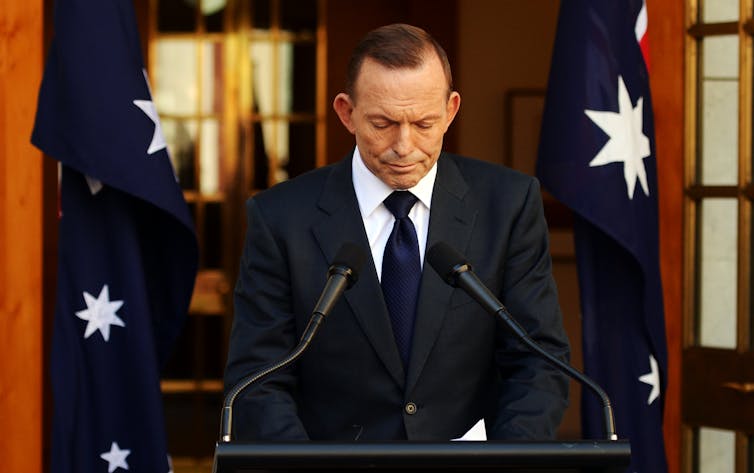
Tony Abbott was defeated by Malcolm Turnbull in a leadership ballot in 2015, following Labor’s pattern of not allowing prime ministers to serve out their terms.
AAP/Sam Mooy

This could perhaps be explained away as a particularly dysfunctional episode of Labor rule, except the Coalition would then follow the same pattern. In 2013, the newly-elected Abbott government promised strong and stable government under Coalition rule. “The adults are back in charge”, he smugly claimed. And yet, Abbott too would fail to see out his first term as prime minister, losing a leadership challenge to Malcolm Turnbull in 2015.

Turnbull won the 2016 election by a single seat in the lower house and the Coalition has consistently trailed Labor in the polls. As with the previous three terms of parliament, the prime minister who claimed electoral victory would not survive till the end.

This is the new normal of Australian political life. The coup against Turnbull marked the fourth consecutive term with a change of prime minister. John Howard in 2004-7 was the last prime minister to serve a full term in office, and even he was plagued by persistent leadership rumours leading to a public promise that he would hand over power to his deputy Peter Costello.

The new normal is marked by electoral volatility. The major parties can no longer take for granted a primary vote in the high 30s. As the Greens, Palmer United, One Nation, and the Xenophon Team, have shown, Australia is more willing than ever to cast large numbers of votes for minor parties as well as independents. It is no longer a truism that Australians do not change government quickly.

The old normal would presume that an incoming federal government will set the national agenda for a decade or more. Especially after the 2010 result, one term governments are entirely conceivable. The most pronounced feature of the new normal is the ease with which a prime minster can be replaced. Dumping a first term prime minster, considered political hubris for so long, is now a regular occurrence.

The BBC dubbed Australia the “coup capital of the democratic world” in 2015. Should Scott Morrison lose the 2019 election, there will have been six prime ministers in the six years since 2013.

Although the new normal represents a profound change, it is far from unprecedented. Australia had three prime ministers in 2013. While this may have seemed historic, it is the fifth time this has happened (1945, 1941, 1939 and 1904).

The early Federation period saw a high turnover of prime ministers. It was only when Billy Hughes took the top job in 1915 that Australia saw its first long-serving prime minister (seven years, 105 days) albeit with three different parties.


Read more:
Grattan on Friday: Morrison ticks the boxes but can’t hide the dysfunction


To the pessimist, the frequent change of prime ministers over the last decade can be seen as evidence of political instability and turmoil. Alternatively, much like Australian politics at the dawn of the 20th century, it could be seen as evidence of the flexibility built into Westminster democracy. It is a system that allows parties and leaders to change without always needing a fresh election. With Australian federal elections already frequent, every three years compared to four in the US or five in the UK, it is perhaps a blessing that a new prime minister does not necessitate a new election.

Kevin Rudd’s changes to the party rules mean it is probable – but by no means assured – that the next Labor government will serve a full term without changing leader. While it is unlikely the ALP will oust their next prime minister, there is no such guarantee from the public now used to a short turn-around of both parties and leaders.

How long the new normal lasts is entirely up to the electorate. The old saying goes that in a democracy, you get the government you deserve. This is particularly true of Australia, with around 95% of the adult population taking part in federal elections. Voters are empowered and elections do matter.The Conversation

Benjamin T. Jones, Australian Research Council Fellow, School of History, Australian National University

This article is republished from The Conversation under a Creative Commons license. Read the original article.
Unknown's avatar

Not My Review: The Folk of the Air (Book 1) – The Cruel Prince by Holly Black


Unknown's avatar

Not My Review: The Secrets of Moldara by Brianne Earhart


Unknown's avatar

Not My Review: Frankenstein by Mary Shelley


Unknown's avatar

Guide to the classics: Euripides’ Medea and her terrible revenge against the patriarchy


File 20181118 44249 1qa6aiz.jpg?ixlib=rb 1.1
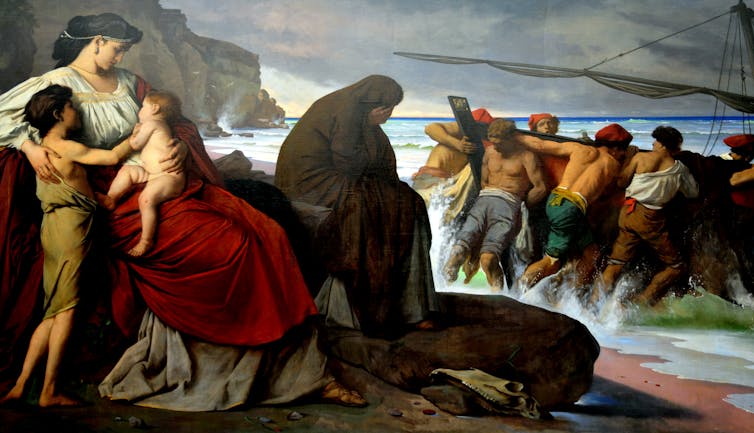
Anselm Feuerbach’s depiction of Medea, circa 1870: the play is particularly cogent today in the context of the #MeToo movement’s assault on patriarchal power.
Wikimedia Commons

Paul Salmond, La Trobe University

The Athenian poet Euripides was the last of the three great Greek tragedians (after Aeschylus and Sophocles) and also the least successful.

Greek tragedies were performed competitively at religious festivals in Athens in honour of the god Dionysus. While 18 of his 90-odd plays have survived, Euripides claimed only four festival victories. One prize was awarded posthumously, indicating that at the Dionysia, as with the Oscars, death could be a handy avenue to success.

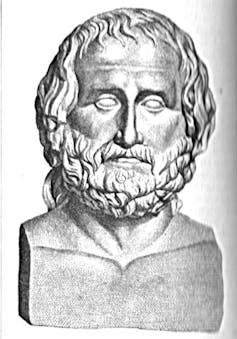
Sculpture of Euripides.
Wikimedia

It’s not difficult to see how Euripides estranged the festival judges. Unlike the intricate plotting of Sophocles, exemplified by the intriguing whodunit devices employed in Oedipus The King, Euripides’ interest lay in the psychological motivations of his characters. Some scholars accordingly describe his plays as more modern than his contemporaries.

Euripides challenged conventions by depicting strong, passionate female characters and cynical, often weak male mythological heroes. He was considered more of a social critic than his contemporaries, who disparaged his emphasis on clever women.

In Aristophanes’ comedy The Thesmophoriazusae, the women of Athens use an annual fertility festival to plot secret revenge on Euripides for his depiction of them as crazed, sex-addicted killers. The central joke is not that Euripides is defaming women in his plays, but rather that he is onto them and must be stopped before he reveals more.


Read more:
Guide to the classics: Thucydides’s History of the Peloponnesian War


The Story

Euripides’ dismissal by some as a misogynist sits uncomfortably alongside his complex and sympathetic female characters. Medea is a case in point: a sorceress and former princess of the “barbarian” kingdom of Colchis, she mourns the loss of her husband’s love, the hero Jason. To further his political ambitions, Jason abandons Medea in order to marry a Corinthian princess.

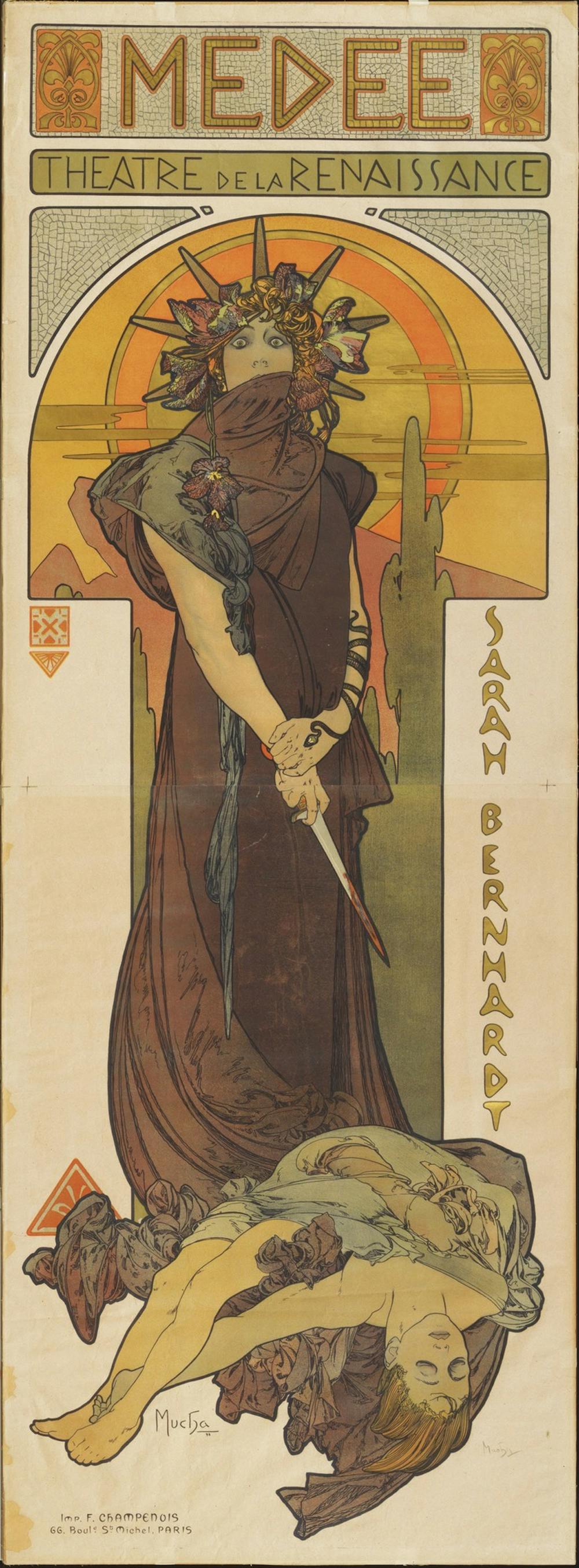
An 1898 poster for the play.

Medea confides her grief to her nurse and the Chorus of Corinthian women who sympathise, but fear her response; and these fears are well-founded. Medea takes horrible vengeance on Jason by murdering his new wife then slaughtering their own children.

The play ends like a brutal thunderclap as Medea escapes to Athens in a dragon-drawn chariot, flanked by the corpses of her sons, mocking Jason’s agony and revelling in her victory.

Jason predicts justice will pursue Medea (“The curse of children’s blood be on you! Avenging justice blast your being!”) but so complete is his defeat, this threat seems empty. Medea has inflicted savage sacrifices to wreak her revenge and now, revealed in all her supernatural splendour, no one can touch her.

The Athenians don’t seem to have responded particularly well to Medea in so far as the festival judges placed it third. This might in part be attributable to poor timing. Medea was performed first in the spring of 431 BC, a few weeks before the Spartan king Archidamus invaded Attica – initiating the 27-year Peloponnesian War that proved catastrophic for Athens. War had been brewing for a decade and in their state of profound anxiety perhaps Athenians were simply in no mood for the horrors Euripides was offering.

But there are other reasons for Medea’s failure. As a barbarian from the wild realm of Colchis (in modern Georgia) Medea would be inherently untrustworthy to an Athenian audience. They might sympathise with her feelings of isolation and homesickness (“Of all pains and hardships none is worse than to be deprived of your native land”) but she remained associated with the Eastern “other” that marched into Greece under the Persian king Xerxes and sacked Athens 50 years previously.

Traditionalists might also have objected to Medea’s sexual politics. In Medea more than his other plays (The Trojan Women excepted) Euripides depicts a world where the steadfastness and bravery of women count for nothing amid the machinations of men (“we women are the most wretched…I’d rather stand three times in the front line than bear one child”).

Artemisia Gentileschi, Medea, circa 1620.
Wikimedia Commons

Medea’s lament may seem admirably subversive to a modern audience but it appears that the festival judges had little appetite for the gender conflict that so fascinated Euripides. It’s worth noting that Euripides’ plays grew in popularity after his death, so it’s likely their “salacious” content enjoyed a better reception outside the formal competition environment.

Despite Euripides’ popularity with modern audiences Medea remains a challenging play. Although scenarios of fathers “avenging” themselves on their wives through killing their children are depressingly familiar to us, the resolve of a mother to destroy her enemies through sacrificing her children is fundamentally distancing.

Medea may be a prisoner to her passion (“Oh, what an evil power love has in people’s lives!”) but she plans her vengeance with cold brutality. Only her female confidants sense with dread what she is up to and who can they tell?

Adaption of the classic

That said, Medea’s remorseless depiction of a woman forced to strike against an oppressive patriarchy did see it embraced by the 1960s counterculture. Pasolini adapted the play in his polarising style in 1969, but Medea’s themes were not borrowed to the extent of other Greek works during the American cinematic Renaissance of the 1970s (Roman Polanski, for instance, used Sophocles’ Oedipus as his canvas for 1974’s Chinatown).

A sympathetic depiction of a grieving mother killing her children to ruin her husband seemed too great a hurdle for filmmakers. Decades later, however, Ridley Scott channeled Medea’s denouement in having Thelma and Louise take violent revenge against the patriarchy and refuse to be taken – “escaping” in their airborne chariot, their male pursuers looking on impotently.

Thelma and Louise take violent revenge against the patriarchy and refuse to be taken – “escaping” in their airborne chariot.

Medea is particularly cogent today in the context of the #MeToo movement’s assault on patriarchal power. Euripides’ fascination with women outscheming their “masters” and striking back lethally springs from an anxiety at the heart of Athenian society.

Medea, Hippolytus and Aristophanes’ comedies seemingly demonstrate that the cloistering of Athenian women did not result from a male assumption they were unintelligent or weak. On the contrary, it reflects a belief in a vicious cycle where the subjugation of women made them intent on revenge, making it a social necessity to oppress them further.

As a modern articulation of Medea’s themes, the play’s central message was distilled to its essence in Clint Eastwood’s 1992 revisionist Western Unforgiven. A “chorus” of prostitutes commission bloody revenge on men who mutilated one of their sisterhood.

When townsmen gather angrily outside the brothel after one of the murders, the group matriarch screams from above “He had it coming! They all have it coming!” To Medea, truer words were never spoken.The Conversation

Paul Salmond, Honorary Associate, Classics and Ancient History, La Trobe University

This article is republished from The Conversation under a Creative Commons license. Read the original article.