Unknown's avatar

Book Review: The Tin Ticket – The Heroic Journey of Australia’s Convict Women, by Deborah J. Swiss


Chapter 8: The Yellow C

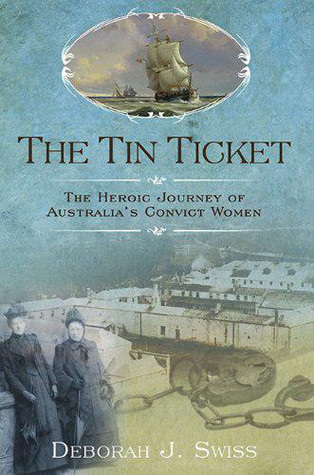
Chapter 8 of The Tin Ticket brings a mixture of news for the three main characters of The Tin Ticket to this point. The conclusion of the previous chapter recorded the birth of William, the son of Janet Houston. This chapter begins with the reunion of old friends in Agnes and Janet, along with Ludlow Tedder. Sadly it also delivers the terrible news of William’s death, not long after Janet’s return to Cascades, following the forced separation of mother and child. The heartbreaking scene of a convict child’s burial and the resulting depression is only broken when Janet and Agnes are again reunited, and soon after they in turn are reunited with Ludlow Tedder in the Crime Class at Cascades.

However, there is good news also, as all three are released from their servitude by the end of the chapter. Agnes and Janet complete their time, while Ludlow is granted a Ticket of Leave for good behaviour. The chapter ends with a reunited Ludlow Tedder and her daughter, before the final conclusion of the chapter with the marriage of Ludlow Tedder to a free settler, the widower William Manley Chambers. There is now the promise of a new beginning for all three women – Agnes, Janet and Ludlow (along with Arabella). What will the future hold?

Buy this book at Amazon:
http://www.amazon.com/gp/product/B0043RSIWI/

Unknown's avatar

Book Review: The Tin Ticket – The Heroic Journey of Australia’s Convict Women, by Deborah J. Swiss


Chapter 7: Liverpool Street

Liverpool Street continues the story of Ludlow Tedder and her daughter Arabella, and the journey they embark upon as convicts to Van Dieman’s Land aboard the Hindostan. Once again the Tin Ticket enters the story, with Ludlow Tedder being assigned #151. Ludlow’s journey to Australia is softened somewhat for her and her daughter by being appointed the nurse aboard the Hindostan.

Woven into the account of Ludlow Tedder’s journey to Van Dieman’s Land are fascinating insights to what transportation meant to countless others, with snippets of information concerning other female convicts who were forced from the land of their birth to a country on the other side of the world. There is of course the description of Ludlow Tedder’s own experience aboard the Hindostan as well, with what she and her daughter endured during the crossing of the world’s oceans.

Upon arrival in Van Dieman’s Land, the accounts of other female convicts and their experiences of convict life continue to be interwoven into that of Ludlow Tedder’s experience, providing a much richer understanding of what being a female convict in Van Dieman’s Land during 1839 really meant. The horrific conditions endured by convicts at Cascades and by children who were housed at the Queen’s Orphanage, separated from their mothers who were only allowed a single monthly visit, were truly shocking. Conditions were atrocious at both facilities by the modern standards of today, but apparently were far better than those experienced in the slums of Britain. They were most certainly not easy times.

The chapter concludes with Ludlow Tedder serving as a nurse at the Liverpool Street Nursery and with her coming into contact with another of the books main characters, Janet Houston. Janet re-enters the narrative with a newly born son, William.

Buy this book at Amazon:
http://www.amazon.com/gp/product/B0043RSIWI/

Unknown's avatar

Book Review: The Tin Ticket – The Heroic Journey of Australia’s Convict Women, by Deborah J. Swiss


Chapter 6: Ludlow’s Choice

Chapter 6 introduces a new character to the narrative of The Tin Ticket – Ludlow Tedder, a 45-year-old widow who is working hard to try and provide for her family. There is a very brief biographical description of her life to that point and a very good description of her then life as a servant in the home of a barrister, Fitzowen Skinner and his wife Laura. It is not an easy life and with so much work for not much pay – certainly not enough to provide all the necessaries for her family. And it is this that brings her into the story of The Tin Ticket. To try and get that little bit extra so she can purchase what she needs for her young daughter she pawns a few pieces of cutlery, but is found out in tragic circumstances for her family.

As a result she seeks to escape justice but her life on the run is cut short in very quick time and she is imprisoned at Newgate. There she awaits trial and is quickly condemned to be transported to Van Dieman’s Land for ten years, though tempered with the mercy of being able to take her youngest daughter with her. Yet again the injustice of the British law system can be seen in the sentence – 10 years transportation in appalling conditions for a very petty crime.

The chapter also provides a selection of other similar petty criminal cases and examples of the corruption that influenced the sentencing of prisoners at that time.

Buy this book at Amazon:
http://www.amazon.com/gp/product/B0043RSIWI/

Unknown's avatar

Book Review: Breaking Ships – How Supertankers and Cargo Ships are Dismantled on the Beaches of Bangladesh, by Roland Buerk


I usually like to own the books I read and these days I prefer to own them as ebooks. This particular book however I do not own. I did try and find a digital copy but was unable to do so. The book I have read was lent to me from a guy I work with and I believe he found it among some books that were being disposed of. So it has had something of a rough history I would say.

The edition I read was a hardcover book published in 2005 by Chamberlain Bros., a member of Penguin Group (USA) Inc. It is 169 pages in length, though the Forward and Introduction need to be added to that total. It took me less than a day to read, which demonstrates that the book is a very easy and interesting book to read.

Breaking Ships is a fascinating read, although I was familiar with the subject covered in the book, having seen a TV program on the very subject some months before. Indeed, the reason the book was lent to me was because the breaking up of ships in Bangladesh had been discussed during a meal break at work. We had been discussing the mammoth task of chopping up these ships and the recycling of everything contained therein – as well as the environmental damage caused and the poor wages of those that worked in the ship breaking yards.

However, the book has given me a better appreciation of conditions in the business, as well as conditions throughout Bangladesh and the massive impact this business has for the entire country. The book is a real eye opener for the entire process and all the people involved in breaking up a ship. The book’s main concern as far as the ships being recycled is the ‘Asian Tiger,’ a gigantic 38 000 ton oil tanker. The Asian Tiger’s dismemberment is traced right from the initial beaching of the ship until there is nothing left – including a look at all those involved in the work, the villages that provide the workers, how the material being recycled is sold and used thoughout Bangladesh, etc. It is a most fascinating read as I have already said. The book features many photos which I think adds greatly to the value of the work.

This book introduces the western reader to a different world, with a glimpse behind the scenes at industrial life in a third world country that has very little of that which we would expect in such an industry – good wages, work safety, environmental protection, etc. It’s well worth a read.

The video below is of footage taken from the beaches near Chittagong in Bangladesh, showing something of what it is like in the ship breaking business of Bangladesh.

Unknown's avatar

Book Review: The Tin Ticket – The Heroic Journey of Australia’s Convict Women, by Deborah J. Swiss


Chapter 5: More Sinned Against Than Sinning

Having arrived in Van Dieman’s Land at the conclusion of the previous chapter, chapter 5 begins with an account of the disembarkment of the female convicts from the Westmoreland and their arrival in the Van Dieman’s Land colony proper at Hobart Town, an already bustling centre of some 14 000 people. Agnes McMillan and Janet Houston are abruptly introduced to the ‘winterish’ Tasmanian summer of December 1836, as they are much some distance through Hobart Town to the Cascades Female Factory housed in an old rum distillery some 2 miles outside of town at the base of Mount Wellington.

The first section of chapter 5 covering the convicts arrival at and journey through Hobart Town provides a fascinating insight into what life was like in colonial Van Dieman’s Land in 1836. The description of Hobart Town is wonderful, as is the colour of society set forth as the convict brigade marches thorugh the town. This is a great encapsulation of what is what like to live in those early heady days of Tasmania.

The remainder of the chapter narrates the life of Agnes as a female convict on assignment, though it seemed more often than not, her time was spent in the crime class at Cascades Female Factory. The conditions of her imprisonment at Cascades were far in excess of what was deserved for the ‘crimes’ she committed. Indeed, the chapter title is very appropriate – ‘more sinned against than sinning.’

Buy this book at Amazon:
http://www.amazon.com/gp/product/B0043RSIWI/

Unknown's avatar

Book Review: The Tin Ticket – The Heroic Journey of Australia’s Convict Women, by Deborah J. Swiss


Chapter 4: Sweet Sixteen

Having introduced Elizabeth Fry to the narrative in the previous chapter, chapter 4 sees the paths of Agnes McMillan and Janet Houston cross with that of Elizabeth Fry. It is a crossing of paths that lifts the quality of life that would otherwise have been for the two young convicts as they arrive at Newgate Prison and then prepare for their departure to Van Dieman’s Land aboard the Westmoreland at anchor in the Thames at Woolwich. The conditions in which the the two young girls find themselves in both places having been ameliorated through the constant and industrious efforts of Elizabeth Fry and the Quakers.

It is in this chapter that the reasoning behind the title of the book becomes apparent, as Agnes McMillan is issued with a Tin Ticket with #253 stamped onto it. Her friend Janet was issued a tin ticket with #284 stamped onto it. These two numbers identified the two girls aboard the ship and they accompanied them in everything that they did and in everything that was recorded regarding them on the way to the Cascades Female Factory in Van Dieman’s Land.

With the full compliment of convicts, the Westmoreland weighed anchor in the early hours of the morning of August 12, 1836. Sailing down the Thames and through the Channel, the Westmoreland, her crew and convict cargo were on their way to Van Dieman’s Land. The remainder of the chapter provides a description of the journey to Hobart Town in Van Dieman’s Land, complete with a colourful description of life aboard a prison hulk in its journey to the other side of the world. The chapter ends as the Westmoreland arrives at Hobart Town on December 3, 1836 and the beginning of a new life beckoning in the penal colony of Van Dieman’s Land.

Buy this book at Amazon:
http://www.amazon.com/gp/product/B0043RSIWI/

Unknown's avatar

Book Review: The Tin Ticket – The Heroic Journey of Australia’s Convict Women, by Deborah J. Swiss


Chapter 3: The Angel of Newgate

Chapter 3 is something of a departure from the main narrative of The Tin Ticket to this point, however the new character introduced into the plot plays an important role in the further development and future of the lives of both Agnes McMillan and Janet Houston, who were to be sent to Van Dieman’s Land (now Tasmania). Their destiny was a direct consequence of the activities of this new player in The Tin Ticket – Elizabeth Fry.

‘The Angel of Newgate’ tells the story of how Elizabeth Fry, a Quaker, was determined to minister to the poor of London and the destitute women of Newgate Prison. Elizabeth Fry and her generous assistants and helpers, transformed the lives of the incarcerated women of Newgate Prison. These poor women, poor in more ways than one, passed their days in terrible conditions at Newgate. The description given in The Tin Ticket is heart-wrenching stuff. Elizabeth Fry most certainly moved outside of her comfort zone to minister to these desperate women and offer compassion to those that society had cast aside. What a remarkable woman, who was not afraid to face ridicule in her efforts to ameliorate the condition of the female and young prisoners of Newgate.

Chapter 3 of The Tin Ticket continues to paint a most depressing picture of society in early 19th century England and London in particular. The dreadful reality of life in the early industrial age of Great Britain is presented front and center in this chapter. Yet it is the deplorable attitude of those that held the power and the better places in society that truly mark out this period in the history of Great Britain as one of the most disgraceful. It is only the rare examples of compassion, godliness and humanity as shown in Elizabeth Fry and others of her ilk, that mitigate this period of English history. One cannot imagine the plight of female and young convicts of this era if there had been no social conscience within society at that time.

Buy this book at Amazon:
http://www.amazon.com/gp/product/B0043RSIWI/

Unknown's avatar

Book Review: Born Digital – Understanding the First Generation of Digital Natives, by John Palfrey and Urs Gasser


‘Born Digital – Understanding the First Generation of Digital Natives,’ by John Palfrey and Urs Gasser was published by Basic Books in 2010 and as such it can be said to be outdated, but that is only because of the pace of change in the digital age. Though much has changed in the last three years (now 2013) in the digital realm, this book remains relevant in the issues that it raises, which include privacy, security and safety.

The book is primarily concerned with ‘digital natives,’ or those born post 1980, who have only known a digital world and have therefore lived all of their life in a digital world. The book’s thrust is not just at this first generation (and those beyond), but also to parents and teachers of this generation, and even beyond to regulators, government, etc. Born Digital seeks to educate the first generation and those who hold influence with the first generation, as well as to provide encouragement and warning to the opportunities and dangers presented by the digital age and the Internet. The book is however relevant to anyone that experiences life in the digital realm, which in reality is pretty much everyone.

Overall I think Born Digital provides a very balanced look at what it means to live in the digital age as both the dangers and opportunites are presented in a very fair presentation of the fact and life examples. There is little in the way of over the top alarm in presenting the dangers – neither are they glossed over. The dangers of the digital world are not highlighted over and above the opportunities that are presented to digital natives by the digital world. Neither are the opportunities presented in some wonderful over the top manner while the dangers are swept under the carpet. A very balanced view is maintained throughout.

The first four chapters are concerned with giving the first generation and those involved with the first generation an understanding of what life in the digital age means for a person. There are great opportunities, but there are also dangers and the realities of personal identity, curated dossiers, privacy and safety are all addressed. Important issues of pornography, identity theft and cyber-bullying (to name just a few) are raised and possible solutions offered to address these serious concerns.

The opportunities of creating various forms of content on the Internet are balanced by the concerns of copyright and piracy. Legislative changes are a possible means of addressing outdated approaches to these issues, though more innovative approaches are probably needed if the creativity of digital natives is not to be stunted. Then there is the issue of accuracy of information and the decisions being made on the basis of information gleaned from the Internet. There are obvious dangers with simply trusting every source online, though there is certainly great value in the amount of information being distributed throughout the World Wide Web at every moment and in every location where it is available. But this also leads to overload, with the sheer magnitude of information that is available online. How do we deal with all of this information while remaining productive and capable of taking it all in? These are all areas that we need to contend with in the digital age. There is also the problem of what all of this information and digital stimulus does to a person, especially if the digital native is exposed to massive amounts of violence and other related content. How does all of this impact on the life of a young person and how can it be mitigated?

The three chapters titled ‘Innovators,’ ‘Learners’ and ‘Activists’ highlight more of the positive aspects of the digital age. There are great opportunities to be had on the World Wide Web for those able and willing to look at new ways of doing things in cyberspace. The digital world offers a plethora of means for enhancing educational and activist pursuits, which often compliment more traditional ways of doing things. All and all, the opportunities to improve our lives far outweigh the negatives of the digital age, though there are damgers that need to be guarded against.

Born Digital is a great introduction to the current age of human experience and expansion into the digital age. It seems to me to be a very balanced and well thought out presentation of the main issues confronting digital natives and those tasked with the various roles of guiding them in their formative years, as well as the many opportunities just waiting to be embraced in this brave new world of rapidly changing technology.

There does however seem to be a lot of unnecessary repeating of what has already been said throughout almost every chapter (if not every chapter), which is probably the most negative thing I can say about the book. If the constant repitition wasn’t there, the book would certainly be much smaller and perhaps be a more engaging read. Having said that, I did enjoy reading the book and think that it will provide a useful overview of the digital age’s opportunities and dangers to both the digital native and/or the parent/teacher of him/her. Despite the rapid changes online in the digital world and the fact that this book was clearly penned prior to the current online landscape, this book still has a role to play in addressing the curent issues and opportunities presented by life in the digital age that we now live in.

Buy this book at Amazon:
http://www.amazon.com/Born-Digital-Understanding-Generation-ebook/dp/B003P9XDX4/

Unknown's avatar

Book Review: Iron Kingdom – The Rise and Downfall of Prussia 1600-1947, by Christopher Clark


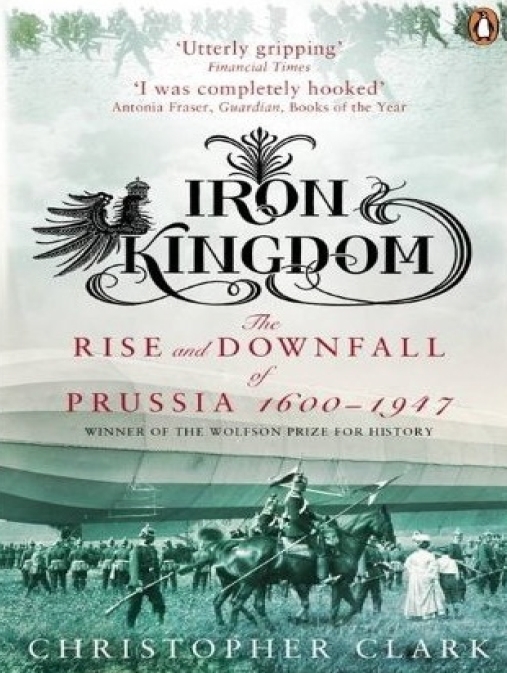
The ‘Iron Kingdom – The Rise and Downfall of Prussia 1600-1947,’ by Christopher Clark is a somewhat massive work at 820 pages. It is a book that I wanted to read right from the moment I came across it, which wasn’t all that long ago. You see, I didn’t know all that much about Prussia. I knew it was tied up with the history of Germany, that Prussia fought the Napoleonic French forces at Waterloo and that the Napoleonic French forces had earlier defeated the Prussians. What I didn’t know about Prussia, this book soon made me aware of – as well as reminding me that I actually knew a lot more about Prussia than I had thought.

Doubtless 800+ pages seems somewhat daunting to many readers, many of whom would baulk at the size of this work and move on to much smaller books that can be completed in less time. Having said that, this book isn’t too difficult to read at all. I spent a bit longer than a week reading it and enjoyed it immensely. I read somewhere someone say that this book reads like a novel, which though I don’t think it is a description that is entirely accurate, it certainly points in the right direction as the book is really quite easy to read. I found myself quite caught up in it all, as I followed the development of the Prussian nation and empire and its eventual transformation into a greater German nation and empire, before it was destroyed by the Nazis and the defeat of World War II, following which the Prussian state basically ceased to exist as an allied retaliation for the war.

The book doesn’t just follow the military history of Prussia – indeed it could be said that the military history is somewhat sparse on the ground in this work with very little time really devoted to the wars of Prussia, though each one is treated within the body of the work. This history of Prussia digs into all facets of Prussian history, including the development of the monarchy and nation, the culture, education, the politics, the social welfare development and policies of Prussia, etc. It is more of a thorough introduction to the history of Prussia, a work that whets the appetite for more and perhaps encourages a deeper research of Prussian history. The experience of reading the Iron Kingdom has me wanting to research more the 30 Years War, the Austrian-Hungarian Empire, a number of the other wars involving the Prussians and perhaps more detailed biographical works regarding the Great Elector, Frederick the Great, Bismark, etc.

So my overall impression after reading the book was that I wasn’t disappointed in it at all, even though I would have liked to have found out more about the various wars. Certainly I am the richer for having read the Iron Kingdom and it is a book I could see myself reading again at some point. I highly recommend the Iron Kingdom, especially to those interested in the development not only of Prussia and Germany, but also of Europe. A great read that I really enjoyed.

Buy this book at Amazon:
http://www.amazon.com/Iron-Kingdom-Downfall-1600-1947-ebook/dp/B002RI9PMM/

Unknown's avatar

Book Review: The Tin Ticket – The Heroic Journey of Australia’s Convict Women, by Deborah J. Swiss


Chapter 2: Crown of Thieves

‘Crown of Thieves’ opens well enough for Agnes and her friend Janet. They have freedom to enjoy, but too soon the 2nd chapter continues the narrative of despair and forced labor that petty thieves were required to fulfill as payment for their crimes. First in Glasgow and then in Kilmarnock, where their hopes for a better life were cut short as a consequence of their short careers in petty crime. In such a setting, in such a time, there was little for street kids to do in order to survive and so to petty thieving they often returned. It was their undoing in a society that knew little of compassion and nothing of social welfare.

From Kilmarnock, via the trial in Ayr, the lives of Agnes McMillan and Janet Houston were propelled in an entirely unexpected direction – transportation to Van Diemen’s Land for a period of seven years. In reality there would be no return. They were convicts headed for Tasmania, Australia, as it is now known. The chapter ends with their arrival in London and Newgate Prison.

The Tin Ticket brings to life the harsh realities of life for the homeless and poor of Britain. They were products of a harsh system that punished those that could do little to help themselves and seldom was help offered to enable them to lift themselves out of their predicament. Certainly deserved criminals were transported to the penal colonies, but far too often it was those who fell through the cracks of an unsympathetic society that were punished for what they had become in order to survive. The recorded history of transportation takes on a human face through the stories of Agnes McMillan and Janet Houston. It is a reminder that convicts were real people and often not all that criminal at all.

Buy this book at Amazon:
http://www.amazon.com/gp/product/B0043RSIWI/