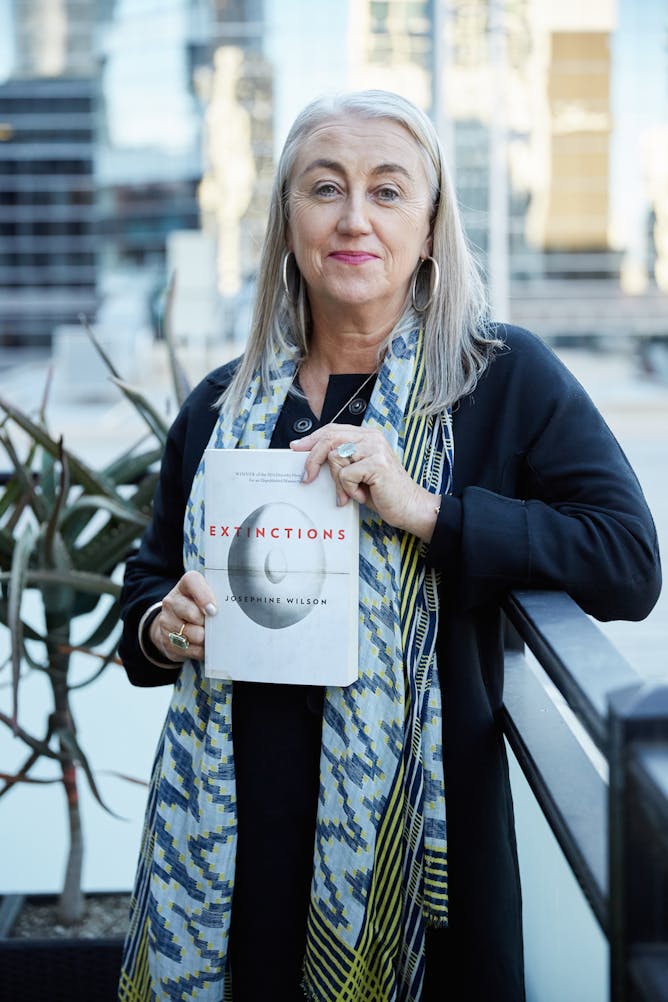
Josephine Wilson has won the 2017 Miles Franklin award for her novel Extinctions. Judging panel chair Richard Neville stated Wilson’s novel, “explores ageing, adoption, grief and remorse, empathy and self-centredness”. It takes a skillful and thoughtful novelist to pack so many “big issues” into a single narrative, but Wilson has achieved it, and the novel has won considerable recognition.
Josephine Wilson with her novel Extinctions. Peter Marko
The Miles Franklin is, arguably, the apogee of Australian literary prizes, and Extinctions is a worthy addition to the list of earlier winners, among a worthy bunch of shortlisted entries.
The novel began its successful life when it was just a manuscript, and won the inaugural Dorothy Hewett Award in 2015. Since then it has been enthusiastically reviewed by critics and peers: in the Sydney Morning Herald (by Dorothy Johnston), in the Sydney Review of Books (Roslyn Jolly), in the Australian Book Review (Gillian Dooley), and in pretty well every other review outlet in Australia. It was featured on the ABC Books and Writing show and Wilson has fronted up to a number of literary festivals. I’m confident Extinctions will be set on Australian literature courses across the country.
Wilson has nailed key anxieties and preoccupations that characterise the current moment. Ageing, of course, thanks to the population bulge; cultural loss, especially for members of the Stolen Generations; environmental crisis associated with the Anthropocene (the age in which human impacts have come to dominate Earth); and the conflicts that are at the heart of storytelling – in this case, within the family, and with the self.
The central character, Fred Lothian, is a retired academic engineer, whose specialisation is concrete and Modernist design. He finds himself widowed, estranged from his daughter, avoiding his seriously brain-injured son. He is a damaged and dissatisfied man, hiding in his retirement villa, where every inch of space is cluttered with the material objects he has not been able to discard.
Wilson observes and records all this with a cool eye, and records too the distress, anxieties and ethical struggles faced by the other characters, particularly Fred’s daughter, Caroline. An adopted child (“of course she wasn’t really stolen”, says Fred. “We adopted at the end of that period”), she doesn’t feel able to name herself as Aboriginal, knows she resembles no one in her circle, and fears she is recognised by no one. Compounding this emotional burden, she is researching species extinction for an exhibition she is preparing.
The redeeming element is Jan, Fred’s neighbour at the retirement village. She is, effectively, the positive side of the coin, the mirror of both Fred and Caroline. Her warmth, her direct engagement with Fred’s obdurate misery, and the clarity of her understanding begin to shake loose some of the accreted history around the other characters.
“In the end”, reads the preface to Extinctions, “all is allegory”. But allegory has material effects, and the stories we tell ourselves, and the connections we draw within those stories, have the capacity to lead us to or away from extinction. For much of the book, and reflected in the drawings and other images scattered through it, extinction seems the inevitable conclusion.
Let me give Jan the last word, because she delivers what seems to me the coda to the narrative. Watching a child playing on a beach, she reflects: “At that moment, anything was possible”. As the novel draws to its conclusion, that more hopeful premise seems true.
The 2017 Miles Franklin Award winner will be announced tonight, but I’m not taking bets on who it’s likely to be. Each shortlisted novel is by a first-time nominee. Each is of satisfyingly high literary quality and very different in voice, logic, focus and story.
But they do have one feature in common: each includes as a key character an author, or authors. I’m not sure I have ever read a shortlist where the protagonists of each volume shared an occupation. Of course all five include heartbreak, loss and death — that is, after all, de rigueur for literary fiction — but the focus on the lives and works of writers, and on narratives about narrative, presents as though the Australian literary community as one turned to look inward, and then wrote down what it saw.
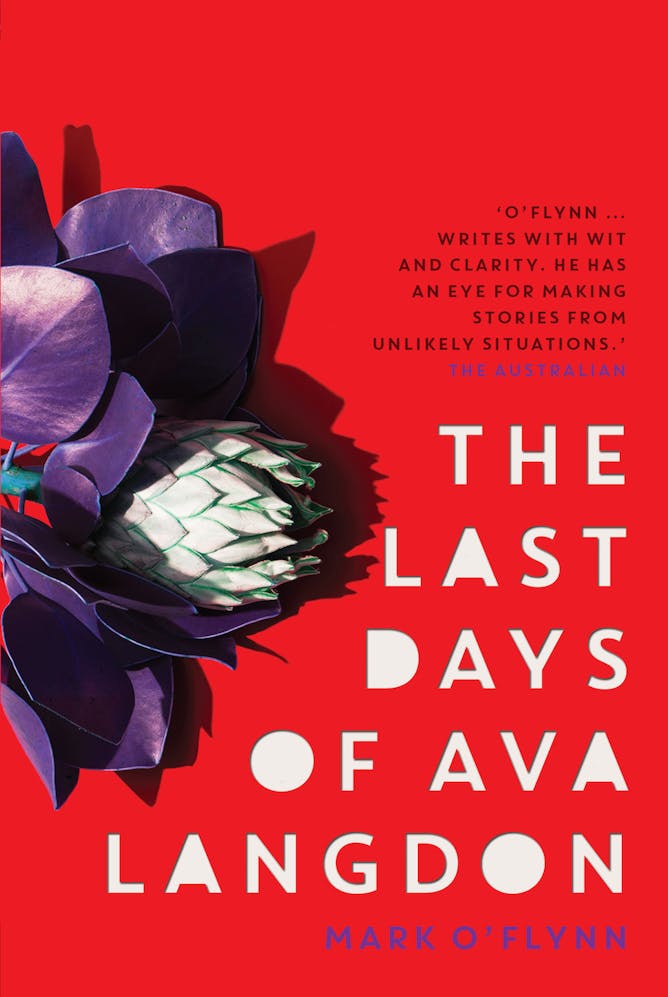
I started with Last Days of Ava Langdon, by poet and novelist Mark O’Flynn. This book, which channels the Australian-New Zealand writer Eve Langley, opens with the rhythm and pulse of a prose poem:
Sound of the sea slapping at the green and greasy legs of pier. The crashing of dishes. A cartoon whale.
This, on the very first page, sets the tone for the rest of the novel, one that vividly renders the glorious Blue Mountains environment (and its small towns with their country values), and the portrait of a writer who might have been, should have been, no longer is.
O’Flynn presents his Langley/Langdon as immensely sympathetic, and stunningly irritating. “All her life”, says the narrator, “has been the pursuit of the perfect line”.
While any writer must surely doff the cap to that pursuit, Ava’s single-mindedness has been more destructive than productive. She valiantly channels Oscar Wilde, refuses to acknowledge that she is ancient and frail, ignores the squalor of her home, and flickers between hope and hopelessness about her writing. She is a damaged person, a dada artist. She has lost her family and friends and she dies alone.
Still, Ava’s imagination (to say nothing of her splendid dress sense) brings a degree of sentience to the world, casting it in a luminous light. O’Flynn’s novel brings to bear a cold but tender gaze on “the last days” of someone who, but for fortune, could have been an extraordinary Australian artist.
Misfits in an unforgiving world
Philip Salom, another poet, gives us Waiting. It relies on the skill of poetic diction and the narrative traction of strong characters, the “looking awry” that so often accompanies mental illness, and the urgency to connect, to find a safe haven in an unforgiving world.
He juxtaposes together two pairs of difficult people to propel the narrative. The first two are Big (a cross-dressing, over-performing “crazy professor”) and his partner Little (quiet, crushed Agnes, the troubled lamb of god). They have effectively fallen out of history and are, Agnes reflects, “two characters in a novel who have no further story”.
The second pair, by contrast, are the inheritors of a further story: designer/landscaper Angus (coincidentally Agnes’ cousin) and the linguist Jasmin. They are creeping by fits and starts toward a relationship, but unlike Big and Little, who cling together for the most part in real intimacy, Jasmin and Angus struggle to connect, given their tendency to compete with each other, and their misunderstandings of each other’s values and professions. For Angus, the physical shaping of the material world is what matters. For Jasmin, it is the socio-political positioning of work that matters.
The novel is set against the increasingly threatening qualities of bushfire in the Australian environment, and the increasingly constrained options for those who do not or cannot fit into middle class conventions. The characters’ stories play out, to an end that promises consolation, at least.
Not so isolated
With Emily Maguire’s An Isolated Incident, we leave the poets and misfits and return to the “real” world: small-town New South Wales, and the struggle to make a living, maintain an identity, and retain hope for the future.
Chris Rogers, a barmaid and some-time prostitute, is faced with the loss of her beloved younger sister Bella, whose body is found on the side of the road, raped and murdered. May Norman, an ambitious journalist, attaches herself to Chris to report on the story and the unfolding investigation. So far, so crime thriller.
But actually, this is more an analysis of mourning, woven through with a biting critique of the social and legal context in which, in Australia, one woman is murdered each week, on average, by someone close to her. At one point May reflects on yet another appalling story of such violence, and observes:
This had nothing to do with what had happened to Bella and what happened to Bella had nothing to do with Tegan Miller and none of it had to do with the rich Sydney housewife left out to rot in the street which had nothing to do with the Nigerian girls stolen as sex slaves…
The unwavering attention paid to violence against women and to the commercial exploitation of suffering renders the title bitterly ironic: all these “isolated incidents” add up to a deeply felt and troubling novel.
Extinctions of all kinds
Josephine Wilson’s Extinctions is the winner of Dorothy Hewett Unpublished Manuscript prize, so has already made a significant mark on the literary landscape. It offers a tragic portrait of the various ways in which extinction looms — environmental, personal, cultural.
We see the sorrows, indignities and regrets of old age, as viewed through the eyes of retired theoretical engineer Fred Lothian, who fills his home with designer furniture rather than with his family.
We see the heartbreak of a wasted life, in his brilliant son, Callum, who was left with acquired brain injury following a car accident. And we see the struggle for identity in his adopted daughter, Caroline, who researches species extinction and is disconnected from her own Indigenous heritage. Together, these stories present an overwhelming narrative of loss, failure and distress.
But there is the possibility of an alternative in the form of Fred’s neighbour Jan. Though like Fred and his family, she has suffered great loss, she brings a wonderful energy and resilience, and a refusal to resign herself to extinction. Instead, she presses Fred to start over, to find a more productive way to be.
Literary satire
Finally, we come to Ryan O’Neill’s Their Brilliant Careers: The Fantastic Lives of Sixteen Extraordinary Australian Writers, one of the funniest novels I’ve read in a long time. He sails close to the wind of defamation (were the original authors still alive), unmercifully lampooning the models for his “extraordinary Australian writers”.
Like a supremely confident stand-up comic, he pushes the joke from initial humour through infuriating repetition to helpless laughter. And along the way, he shows impressive knowledge of Australian literary culture, so erudite readers can play the game of “spot the reference”. We see the sexism that runs through literary culture. We revisit the poetry wars— “a knife fight in a phone booth” — in the character of Arthur rhutrA, an author of whom it was said that: “the only constraint he couldn’t overcome was his lack of talent”.
We bump into parallel-universe versions of Ern Malley, Australia’s most infamous literary hoax, and radio characters Dad and Dave. We meet the litigious Stratford, self-proclaimed original author of works plagiarised and made famous by Hemingway, Fitzgerald, Joyce.
We are confronted by the rightwing racist Edward Gayle (writer for the journal Quarter) and the communist Francis McVeigh, whose early memory of reading Marx’s Manifesto “terrified me so much I had nightmares for the next six months”. Literary giant after literary giant, publisher after publisher, is kneecapped by these excoriating and hilarious accounts of the players, their work, and the impossibly interwoven lives they lead.
Compassionate voices
There is a surprising degree of compassion in the narrative voice that relates each of these novels, even when they are also characterised by sharp-eyed and sharp-tongued commentary. The characters are damaged — as are most human beings — but (with the exception of some of O’Neill’s writers) they are rarely people of ill will.
The narrators, in each case, maintain the distance required of an objective observer, yet cannot help but record small acts of humanity, the struggle to manage, to be recognised and to recognise others. This makes them, as a group, the most heart-warming selection of shortlisted novels that I have read for some time.
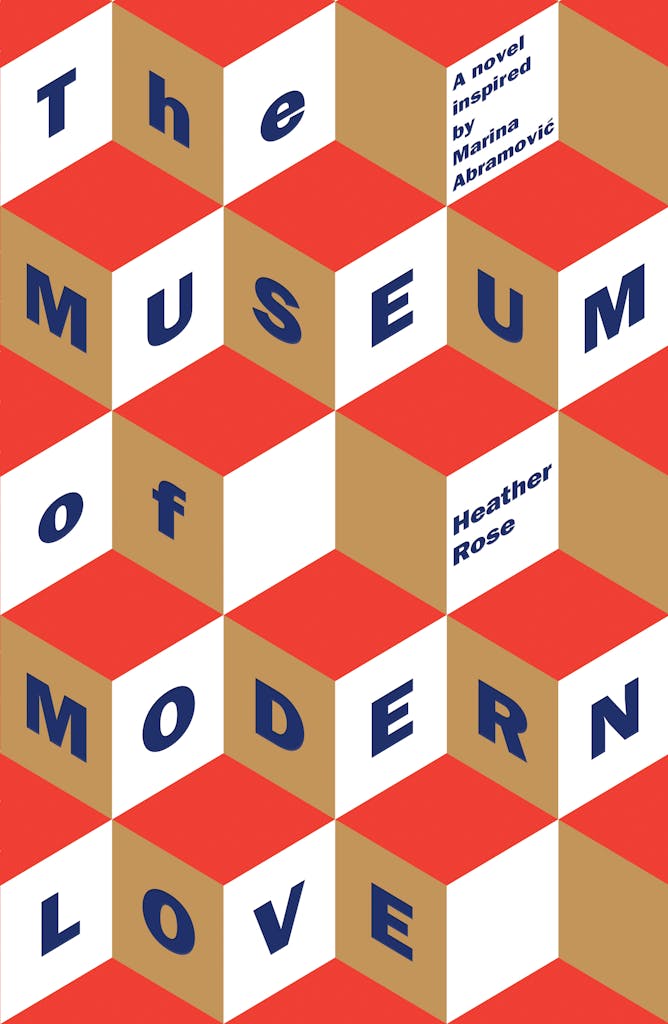
Heather Rose has won the 2017 Stella Prize for her novel The Museum of Modern Love, a fictional exploration of the power of art to transform individual lives, written in exquisite prose, with rare and subtle insight.
Brenda Walker, Chair of the judging panel, said:
It is rare to encounter a novel with such powerful characterisation, such a deep understanding of the consequences of personal and national history, such affection for a city and the people who are drawn to it, and such dazzling and subtle explorations of the importance of art in everyday life.
Rose’s novel centres on Serbian artist Marina Abramović’s The Artist is Present, a 75-day performance piece that took place at the Museum of Modern Art in New York. Throughout the work, Ambramović sat perfectly still at a table in the museum’s atrium, with bright lights shining down and around her, while spectators took turns to sit opposite. As each visitor sat, Abramović lifted her face and maintained eye contact.
Within days, people began crowding the atrium to watch, the lines frequently spilling out onto the street. Some gathered overnight or in the early hours before the museum opened. Occasionally the sitters cried.
Rose’s novel subtly explores the individual lives of fictional characters in the audience, all of whom are transformed by the strange intimacy of the work. At its centre is Arky Levin, a music composer who is emotionally cut off from life.
He wasn’t sure why he needed to keep returning to the sidelines of this strange performance, but he kept finding himself taking the train, walking in the door, climbing the stairs, taking his place by the white line. The atrium was a magnet, or maybe it was Abramović. Something about this was important, but he couldn’t say why.
In Rose’s novel, chance conversations with strangers offer rare and disarming insights not only into the emotional lives of the characters, and their often tragic situations, but also into our own yearning for “some new idea of life” – a more authentic kind of intimacy or connection in our disconnected, media-saturated world.
In a list that included significant and moving books by two writers, Georgia Blain and Cory Taylor, who have both died since the publication of their works, the choice to award Rose’s novel could not have come easily to the judging panel.
The Stella Prize judges, from left to right: Ben Law, Sandra Phillips, Brenda Walker, Di Johnston, Delia Falconer. Connor Tomas O’Brien
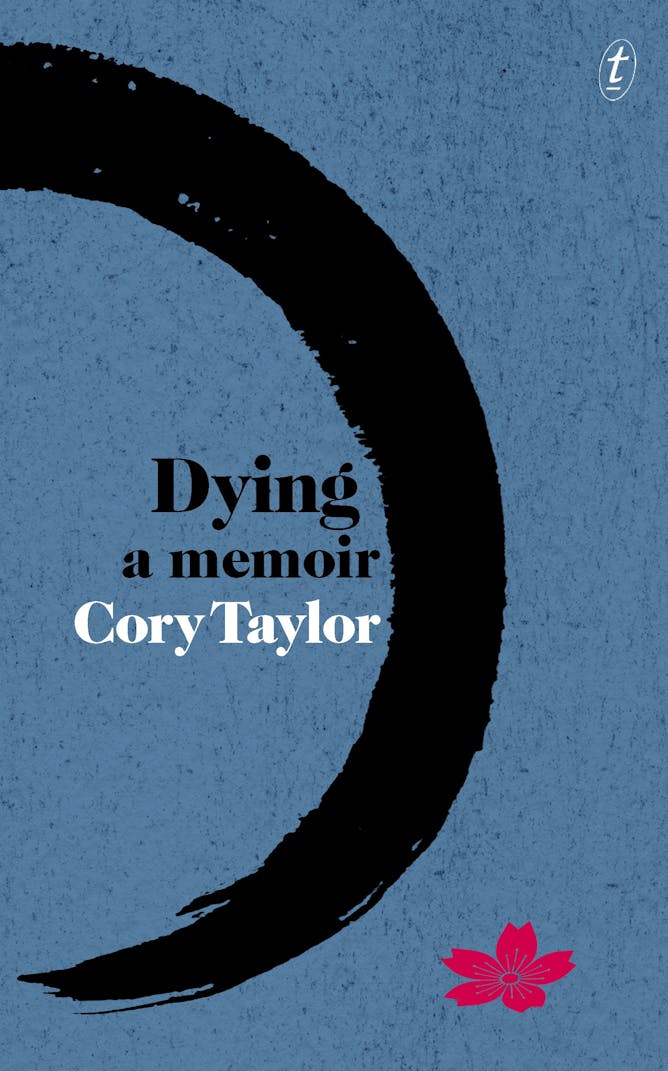
Taylor’s book, Dying a memoir, genuinely broke new ground in writing powerfully and with astonishing clarity about a subject that is rarely treated with such effect. Blain’s novel, Between a Wolf and a Dog, is the final achievement of a mature writer whose work spoke clearly and in a quietly profound way to a whole generation – my generation – of women.
But Blain and Taylor would have been the emotional choice. And objectivity is – perhaps – not possible in the face of such calamity. I am uncertain. But I do think there should be a special place in literature for books that do some real work in the world.
The Museum of Modern Love is Heather Rose’s seventh book. Her previous novels include White Heart (1999), The Butterfly Man (2005) and The River Wife (2009). She is co-author (with Danielle Wood) of the Tuesday McGillycuddy series for children, published under the pen name Angelica Banks. She won the Davitt Award in 2006, and her novels have been shortlisted for the Nita B. Kibble Award and the Aurealis Awards, and longlisted for the IMPAC Award.
Rose joins previous Stella winners including Carrie Tiffany, Clare Wright, Emily Bitto and Charlotte Wood.
Shortlisted Stella authors, clockwise from top left: Cory Taylor, Maxine Beneba Clarke, Catherine de Saint Phalle, Heather Rose, Emily Maguire and Georgia Blain. Stella Prize/The Conversation , CC BY-ND
There are certain books that have the knack of getting under your skin. This is why George Bernard Shaw declared Charles Dickens’ Little Dorrit to be a far more “seditious” text than Karl Marx’s Das Capital.
What he was getting at is the power of books to work on your emotions. The intellect can be too cold an instrument to engender empathy, to bring people who are distant from you into your “circle of concern”. And it is precisely this, as philosopher Martha Nussbaum argues, that matters for the pursuit of social justice.
In 2017, the Stella Prize judges have again come up with a shortlist of books that will engage your brain, but also your heart. They illuminate all the aspects of life that make us frail and vulnerable – sickness, dying, inequality – realities that many of us would prefer to ignore.
Two of the remarkable writers shortlisted, Cory Taylor and Georgia Blain, have died since the publication of their work: Blain of brain cancer; Taylor of melanoma-related cancer. And yet their books – alongside all those on this list – fasten our attention on the means to live better, more ethically, and with greater generosity. It is in the smallest things, in embracing everyday joys and sorrows, that we can learn to live large.
These are books that matter because they show us how to live in desperate times.
Let me draw them to your attention, one by one.
Georgia Blain, Between a Wolf and a Dog
Hilary is a 70-year-old filmmaker, dying of cancer, determined to choose the moment and manner of her death. She has not told her daughters, Ester and April, about her illness or her plans. Ester is the mother of young twins, a family therapist whose consulting rooms contain a world of pain – “post-natal depression, school aversion, relationship crisis, death, and loneliness”. Ester is estranged from her sister April, a once famous singer who never realised her potential, and from her one time husband, Lawrence, who has lied and cheated in his work.
The action unfolds in the space of a single rainy day – ending in the mauve light of dusk, “between a wolf and a dog”, a place filled with ambiguity and irresolution. Here, like Hilary’s last film – a “seemingly random scatter of images” – the characters find “narrative order”.
Blain is a quietly profound writer with an astonishing eye for the ways in which human beings hurt and heal one another. This, her final novel, addresses the significant questions of life, “what to keep, what to discard, what clings despite all efforts to dispel it, and what slides away”. It is modern, unflinching, and unsentimental.
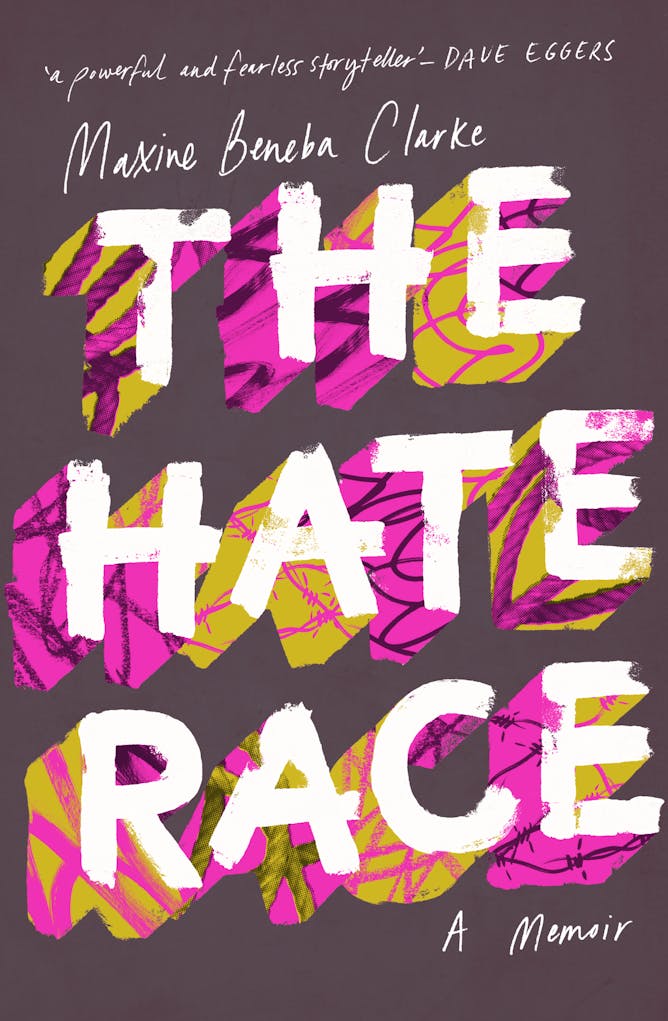
Maxine Beneba Clarke, The Hate Race
Maxine is brown.
Maxine has brown skin.
Maxine has funny curly hair.
Maxine thinks her family comes from England.
Maxine has dark brown skin.
There is an utterly transfixing, yet deeply disturbing moment in this memoir in which the young Maxine, growing up in suburban, middle-class Australia, believes that she is turning white.
In a realist, not magic realist work, the fervently desired “miracle … quietly brewing” on her skin, turns out to be a rare skin condition, diagnosed after a trip to the dermatologist’s office. What the poignant humour of the memoir conceals is the extraordinary violence of a society that would cause a child to want this transformation.
Clarke’s story charts the experience of everyday racism, tracing the lives of her British-Caribbean parents on their journey to a better life. This ideal life is turned upside down by shredded school books, abusive notes left in bags and pencil cases, and the hapless ineffectuality of teachers and school administrators.
Positive experiences seem few and far between: her friend Jennifer’s kind words written in her album, or the high school teacher who had the foresight to advise Maxine that the things she’d been told in primary school were as “bizarre as I’d suspected”. It takes courage to speak out again and again on issues that many of us would prefer to think did not exist. The book soars above its subject matter, demonstrating humanity in the face of the inhuman.
Emily Maguire, An Isolated Incident
Emily Maguire’s novel centres on the sexual assault and murder of a young woman in a tough-talking, truck-stop town midway between Sydney and Melbourne. It is in the form of a thriller, but the author is perhaps less interested in seeking out the murderer than studying the town’s reaction.
Chris Rogers, the victim’s sister, is an astonishing character, reeling from the breakdown of her relationship to the love of her life; the death of her mother, and the murder of her sister. Chris struggles with men, alcohol and society’s obsession with cleavage. Then there is May Norman, a city-based journalist who arrives in Strathdee to cover the murder, and who, like Chris, is no stranger to the sexual double standard through which women – and not men – are judged for their conduct.
This novel tackles the insidious idea that rape is “never simple” but a “murky and confusing” situation in which the “lines of consent” are “blurred”. Maguire has a keen eye for the practices that excuse, tolerate and trivialise sexual violence, and for the language of misogyny that demeans women, blaming the victim for what she wore, what she did, or where she went.
What starts out as a realist venture ultimately lands in the territory of the gothic. Ghosts drift over scorched landscapes, and the bodies of murdered women rise up to haunt the living. “It’s always the men,” says the local historian. “I’ve never had a female hear the scream.” The novel’s title is, of course, ironic – it turns out that the violent death it investigates is not an isolated incident at all.
Heather Rose, The Museum of Modern Love
If everything goes to crap, it won’t be art that saves us. Art won’t matter one iota. You can’t write your way alive, or paint your way out of death.
Against the odds, this is exactly what Heather Rose achieves in her startlingly original and strangely beautiful novel. It is built around the 75-day performance piece by Serbian artist Marina Abramović that took place at the Museum of Modern Art in New York in 2010.
Rose’s novel has a crystalline structure, tracing the lives of the characters who are transformed by the artwork. At its centre is Arky Levin, an emotionally-crippled composer who is cut off from life: from his daughter Alice, a medical student, and his wife, Lydia, an architect, facing the final stages of a potentially fatal illness in a nursing home without him.
Arky is joined at the performance by Jane Miller, an art teacher, who is mourning the death of her husband, Karl. There is also Brittika, a student; Healayas, a journalist assigned to cover the final days of the performance, and Danica – the ghost of Marina Abramović’s mother – who drifts, unsurprisingly, through its pages.
The unexpected oddity of the characters and their situations, and the luminous intensity of the language, marks out a philosophical territory that will be familiar to readers of Milorad Pavić, Dubravka Ugrešić or Danilo Kiš. This is an astonishingly beautiful book. In a culture that incessantly questions the worth and relevance of art for life, the novelist mounts a defence that is all the more astonishing for being successful.
Catherine de Saint Phalle, Poum and Alexandre
De Saint Phalle’s memoir is narrated through the eyes of a child who is beguiled and bewildered by her parents’ relationship, and the secret they appear to be hiding. They lead a fabled Parisian existence, always at some distance from their child. Her mother crosses herself frequently, talking incessantly about “the nuns” and what they might think. Her parenting mainly consists of reeling off long verses from The Odyssey.
Saint Phalle’s father regales her with tales of Napoleon, and could “convince me that Karl Marx was a practising Catholic” or “a bird that the sky is full of water”. He appears and disappears in the child’s life, for no apparent reason. A string of unknown aunts, cousins and siblings also arrive and depart unannounced, accentuating the book’s unstated sense of loss and abandonment, and the adults’ lack of awareness that a child may require a little more in the way of stability or commitment.
Written in soft, cloud-like prose, with a sense of elegy, this book is finally about the power of stories to conjure hope and possibility, and impart a sense of acceptance.
Cory Taylor, Dying a memoir
My suicide note was by way of apology. ‘I’m sorry,’ I wrote. ‘Please forgive me, but if I wake up from the surgery badly impaired, unable to walk, entirely dependent on other people to care for me, I’d prefer to end my own life.
Cory Taylor did not finally choose to take her life. Ultimately, she feared the trauma such a death would have inflicted on other people. Suicide, she writes, remains shrouded in a sense of “mental angst, hopelessness, weakness, the lingering whiff of criminality”.
In short, the problem is not hers but ours. We have “lost our common rituals and common language for dying,” becoming a society that only understands death, as “a form of failure”, as Taylor’s doctors seem to do. But living longer also means dying longer, and because of this the dying “are probably lonelier now than they’ve ever been”.
Taylor had already seen what it meant to die “badly”, witnessing her parents’ long, drawn out deaths from dementia in a nursing home. And so the desire to choose the way you die – assisted dying – becomes a source of comfort to her and a means of facing the things that are most terrifying about death – its total randomness, and our lack of control.
What is truly profound about this book is that – though it ought to be harrowing – it is astonishingly easy, if not strangely uplifting, to read. In part, this is because the narrative voice is so gentle, and tightly controlled. Every scene has a radiant quality; it glows.
The memoir ends with a “coming into dying”, a kind of effloresce that occurs at the edge of life – “the edge of words”. Images take over: “an over-exposed home movie footage of a girl with a dog in dappled sunshine, a car speeding down the road.” And then “The jet takes off. A kookaburra sits on a branch laughing.”
Taylor does not speak of death so much as she shows it to us, leaving the reader with an inexpressible sense of gratitude. This is writing that matters.
The winner of the 2017 Stella Prize will be announced in Melbourne tonight.
A bust of newspaper magnate Joseph Pulitzer looks on as reporters look through a box containing the announcements of the 1996 Pulitzer Prizes at Columbia University. AP Photo/Wally Santana
The 2017 Pulitzer Prizes have just been announced, and this year’s winners of the prestigious award include Charleston Gazette-Mail reporter Eric Eyre for his investigative report on the drug companies that flooded West Virginia with opioids and New York Times Magazine writer C.J. Chivers for his article about a veteran of the war in Afghanistan suffering from PTSD.
I’ve done research on award-winners for some time, analyzing Pulitzers granted since 1995 (the first year for which award-winning stories are available through the organization’s online archive). In studying the winning stories, we’re able to see what gets recognized as good journalism.
My research reveals something surprising: What distinguishes Pulitzer Prize-winning stories is not only painstaking journalistic work on important social issues, but also the use of emotional storytelling.
The winning stories, however, upend this narrative, showing that it’s possible to retain objectivity and also stir the feelings of readers.
An objective framework
The journalistic goal of objectivity first emerged around the end of the 19th century. It was motivated, in part, by a desire to broaden newspaper readership base by asserting the independence of the press from political parties and ideologies. And in order to maintain objectivity, the thinking went that journalism should be based on cold, hard facts. Journalists needed repress their own views and feelings.
According to standard practice of news reporting, the information should be delivered in an “inverted pyramid”-style lead paragraph, telling readers the most important facts first. The idea is that the objective style sends a strong signal about the independence and trustworthiness of journalism – something that, in the age of fake news, may be more important now than ever.
However, the objective style of journalism has been criticized for its dullness, for “freeze-drying the topic and manufacturing boring journalism.”
Getting personal
Instead of relying on the edicts of objectivity, award-winning journalism draws heavily on telling personal stories about people caught up in news events. My research shows that across hard news award categories – feature, explanatory, international, national, public service and investigative reporting – Pulitzer Prize winners eschew the standard “inverted pyramid.” Instead, they’ll often rely on what journalists refer to as an “anecdotal lead.”
An anecdotal lead draws the reader into a story with wider sociopolitical implications by illustrating how it affects a particular individual or group.
We see it in the winner of this year’s feature writing award, C.J. Chivers’ “The Fighter,” which shows the horrors of war by telling the story of one marine’s descent into violence after his service in Afghanistan:
“Sam Siatta was deep in a tequila haze, so staggeringly drunk that he would later say he retained no memory of the crime he was beginning to commit. It was a few minutes after 2 a.m. on April 13, 2014. Siatta had just forced his way into a single-story home in Normal, Ill., a college town on the prairie about 130 miles southwest of Chicago. A Marine Corps veteran of the war in Afghanistan, he was a 24-year-old freshman studying on the G.I. Bill at the university nearby, Illinois State. He had a record of valor in infantry combat and no criminal past.”
Similarly, the Associated Press won the coveted Public Service Pulitzer last year for a series exposing the grueling labor conditions in the seafood industry. The series opened with the experience of Burmese slaves forced to work in Indonesia:
“The Burmese slaves sat on the floor and stared through the rusty bars of their locked cage, hidden on a tiny tropical island thousands of miles from home. Just a few yards away, other workers loaded cargo ships with slave-caught seafood that clouds the supply networks of major supermarkets, restaurants and even pet stores in the United States. But the eight imprisoned men were considered flight risks – laborers who might dare run away. They lived on a few bites of rice and curry a day in a space barely big enough to lie down, stuck until the next trawler forces them back to sea.”
The Associated Press won the Pulitzer Prize in 2016 for articles documenting the use of slave labor in the commercial seafood industry in Indonesia and Thailand. AP Photo/Dita Alangkara
By using personal stories to elicit empathy for individuals, these stories all enable us to understand how real people are caught up in the large, bewildering forces that drive our world.
Outsourcing emotions
Of the stories I analyzed, more than three in five used anecdotal leads, while just under one in five drew on the conventional inverted pyramid. Stories of individuals caught up in the news were featured in 62.4 percent of stories.
It’s a trend that has been remarkably stable since the mid-1990s.
This type of storytelling is just one of several markers of what I have referred to as a “strategic ritual of emotionality”: an institutionalized and systematic practice of journalists infusing their reporting with emotion.
However, this doesn’t mean that the journalists write about their own emotions. Instead, they “outsource” emotions to the people whose stories they tell. According to my research, stories often use emotional language – for example, quoting worried investors, frightened children, hopeful villagers or anxious parents – but never in reference to the journalist’s emotions. What this suggests is that award-winning journalism is able to both maintain its allegiance to objectivity and tell emotional stories.
I’m not the first to notice the emotionality of award-winning journalism. For example, the journalist and academic Susan Shapiro has criticized the “sob sister” style of journalism which of is “calculated to snag readers by the emotions and not let them go until they burst, on cue, into tears.”
What my research suggests, however, is that Pulitzer Prize-winning journalism’s use of emotional storytelling is not merely focused on emotional appeals for their own sake. Rather, eliciting empathy from readers enables journalism to render abstract and complex events understandable and relatable.
In a world where our experiences and backgrounds are so varied, this type of storytelling is indispensable. And if journalism can successfully tap into universal emotions to bridge divides and elicit mutual understanding, such an achievement truly deserves an award.
In January 2016, I began working with The Stella Prize to set up their first ever Diversity Count. This meant widening their count of books reviewed according to the author’s gender to examine how issues of race, ethnicity, disability and sexuality affected the rate of books reviewed by women.
Until 2015, there’d been no recognition of these various intersections. Like the organisation VIDA: Women in the Literary Arts in the US, Stella had concentrated its early counts on the male/female binary and, as in the US, this began to annoy women whom the industry defines not only by their gender, but also by their race, ethnicity, sexuality, ability or gender-identity.
And Stella, which not only performs the count, but also awards The Stella Prize to the best book published by an Australian woman, has also come under increasing critique by women of colour about the whiteness of the prize’s longlists.
Charlotte Wood’s The Natural Way of Things, winner of the 2016 Stella Prize.
Undertaking the Stella Count is laborious and fairly crude work. Someone has to sit down and sift through newspapers and microfiches with a notepad and a running tally of the female and male names of authors whose work is reviewed.
That is, the distinction rests on name alone. This works to a degree, though not always; think of Lionel Shriver, JK Rowling (names that don’t reflect a gender) as well as authors who are gender-queer. And it doesn’t work at all if you’re taking into consideration race, ability and sexuality. It is difficult to look at a female name on a book and assess whether or not the author is a member of the LGBTI or queer community or if she has a disability.
It may be easier to distinguish race or ethnicity by a name, but this is fraught territory for a number of reasons, not least because names lie. Then what? In the case of race, do you look up pictures of all authors and assess the colour of their skin? Do you search for non-British sounding names? How do you tell?
So, after much discussion between myself and the Stella Count Coordinator, Veronica Sullivan, we designed a survey for women-identifying authors who had their work reviewed in 2015.
This was long and often difficult work. We set up a public forum for members of the writing community to give their feedback on drafts of the survey and also established a consultative committee, which had input into the final version of the Diversity Survey.
Then, after many months, we sent the survey out to writers. When the results came back they were underwhelming and statistically insignificant. This broke our hearts a little. But then I began to think about why we had such a small uptake from those we’d surveyed.
Too late in the game
In the case of race and ethnicity (the qualifiers I feel I am best placed to speak about), I have a feeling that counting reviews comes too late in the game. I would guess that the Australian publishing industry simply does not publish enough books by women who are not white, but there are no figures for this.
For example, thanks to a recent report from Macquarie University we know that within the genre of fiction in Australia, 65.2% of literary fiction writers, 76.2 % of genre fiction writers and 86.9% of children’s book authors are women. This makes those graphs showing that men get far more reviews than women all the more infuriating. But, as yet, we don’t have the figures for racial or ethnic diversity.
How many Indigenous writers are published each year? How many non-white writers are published? And what kinds of books are being published?
What kinds of stories are upheld about non-white people in Australian literature? mirtmirt/shutterstock
Part of this lack, I think, comes from constraints placed on writers who are “othered” by the industry. For example, I think that it is probably easier for an indigenous author to be published if they write about epic struggles, rather than breezy romantic comedy. Likewise, I think that migrant writers will have an easier time getting into print if they follow the well-established trope of the happy, grateful migrant.
American author Morgan Parker writes that “we often find ourselves either being asked to ‘emphasize’ (read: exoticize) our identities (‘I love your writing about race,’ one editor told me. ‘Do you have anything else like that?’)”. And while Parker is speaking of the US, I think the same rules apply in Australia.
Safe, exotic, far away
It seems to me that the job of Indigenous writers and other writers of colour is to keep themselves and their stories at the margins of Australian literary culture. Safe, exotic, far away.
This begs questions about representation and what this means for a national literature. I listened to Indigenous author Jane Harrison speaking at the Diverse Women Writers Workshop in September and she pointed out that while Australia’s Indigenous population is (now) only about 2.44%, Australian Indigenous writing ought to make up a much larger percentage of our national literature, as our national literature should reflect Australian cultural heritage.
She’s right, of course. Toni Morrison writes that in the US the canon is,
unshaped by the 400-year-old presence of, first, Africans and then African Americans in the United States. It assumes that this presence – which has shaped the body politic, the Constitution, and the entire history of culture – has no significant place or consequence in the origin or development of that culture’s literature.
Toni Morrison. Philippe Wojazer/Reuters
The Whiteness of the literary canon means that our ideas of good and bad writing are very narrow and, often, exclusionary.
In Australia, as in the US, only certain stories are allowed to take centre stage in our literary culture and the universal subject is still presumed to be a white, middle-class, cis-gendered, heterosexual and fully-abled male. The more deviations from this (limited and highly problematic) notion of personhood you possess, the more estranged from the centre you become.
work that draws from non-Anglo cultural references befuddles institutions (festivals, venues, funding bodies) whose understanding of ‘traditional’ and ‘contemporary’ is structured around Western practice.
Does this mean that the Diversity Count is doomed? Maybe, but that’s not necessarily a bad thing. Failures teach us that we have to look harder for answers. For me this entails a lot more quantitative as well as qualitative work, which comes at the stage of publication, rather than at the reviewing stage.
I’d like to undertake a comprehensive demographic survey of the Australian publishing industry (like those that Publisher’s Weekly perform in the US), examining both those people who work within the industry, as well as the authors who get published.
At the same time we need to look through our syllabuses in high-schools and universities and think about the kinds of stories that are upheld about non-white people in Australian Literature. By including a multitude of voices to speak fully and freely about the Australian experience, we have nothing to lose and everything to gain.
Natalie will be online for an Author Q&A between 4 and 5pm AEDT on Tuesday, 13 December, 2016. Post any questions you have in the comments below.


 Let me give Jan the last word, because she delivers what seems to me the coda to the narrative. Watching a child playing on a beach, she reflects: “At that moment, anything was possible”. As the novel draws to its conclusion, that more hopeful premise seems true.


 The narrators, in each case, maintain the distance required of an objective observer, yet cannot help but record small acts of humanity, the struggle to manage, to be recognised and to recognise others. This makes them, as a group, the most heart-warming selection of shortlisted novels that I have read for some time.






 At the BookShelf
You must be logged in to post a comment.