
The link below is to an article that takes a look at the finalists for the 2020 Neustadt International Prize for Literature.
For more visit:
https://lithub.com/announcing-the-2020-finalists-for-the-50000-neustadt-international-prize/

The link below is to an article that takes a look at the finalists for the 2020 Neustadt International Prize for Literature.
For more visit:
https://lithub.com/announcing-the-2020-finalists-for-the-50000-neustadt-international-prize/
The link below is to an article that takes a look at the shortlists for the 2019 Ned Kelly Awards.
For more visit:
https://www.booktopia.com.au/blog/2019/08/19/the-2019-ned-kelly-award-finalists-are-here/
The link below is to an article that takes a look at the longlists for the 2019 Ned Kelly Awards.
For more visit:
https://www.booktopia.com.au/blog/2019/07/26/see-the-ned-kelly-awards-longlist-for-2019/
The links below are to articles looking at the ‘Not the Booker Prize’ for 2019, including links to the longlist and shortlist selections.
For more visit:
– https://www.theguardian.com/books/booksblog/2019/jul/29/not-the-booker-longlist-vote-now-to-decide-the-2019-shortlist
– https://www.theguardian.com/books/booksblog/2019/aug/06/not-the-booker-prize-2019-the-first-three-books-on-our-shortlist-are-
– https://www.theguardian.com/books/booksblog/2019/aug/12/not-the-booker-prize-2019-three-more-finalists-revealed
The link below is to another article taking a look at the 2019 Booker Prize longlist.
For more visit:
https://lithub.com/heres-the-2019-booker-prize-longlist-with-almost-no-americans-for-a-change/
The link below is to an article that takes a look at the 2019 RuBY Awards finalists.
For more visit:
https://www.booktopia.com.au/blog/2019/07/12/the-2019-ruby-finalists-have-been-announced/

Jen Webb, University of Canberra
Too Much Lip joins the other prizewinning volumes in Melissa Lucashenko’s trophy cabinet. Her first-ever novel, Steam Pigs (1997), was shortlisted for or won several major prizes, and in the past two decades her books have racked up 26 awards.
Today’s win confirms her status as one of Australia’s top writers of contemporary fiction. Lucashenko has a marvellous knack of crafting fictions that are both drenched in anger, dysfunction and tragedy, and woven through with laugh-out-loud funny scenes, and relationships of great tenderness – with people and other living beings, and with the country in which they live.
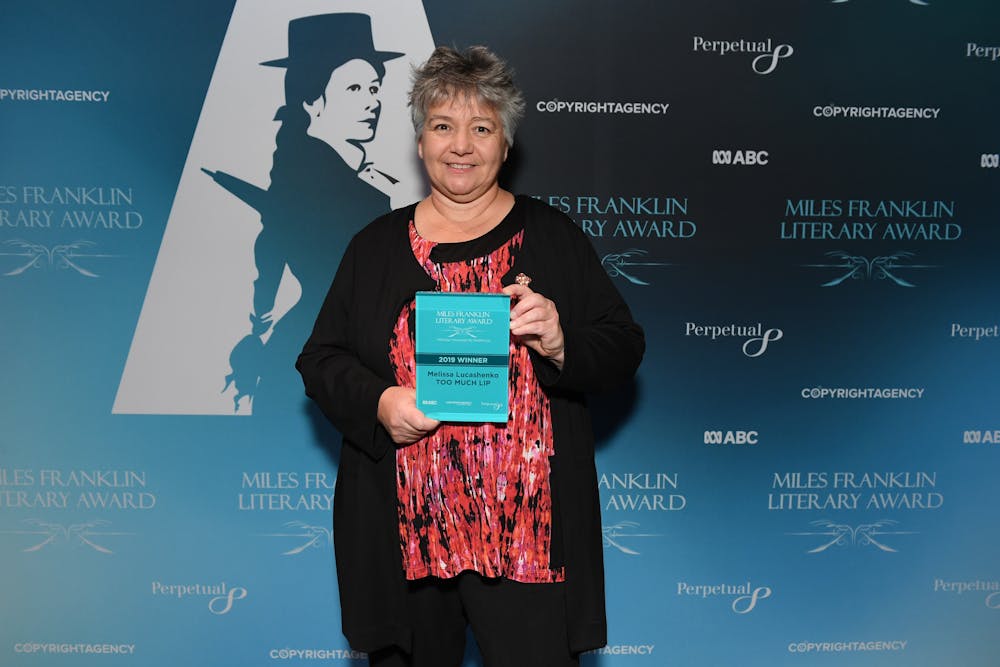
This latest volume is a brilliant addition to her oeuvre. A sustained story about a highly dysfunctional and traumatised family, its chief focus is on Kerry, the sister and daughter who has returned home. It is a home summed up by brother Ken as “a fucking coma ward”.
Pop in bed with the remote welded to the nags. Mum sits doing her cards and reading about the Second Coming of Christ our Lord, and I’m just about ready to harvest [son] Danny for his organs if the useless prick doesn’t move his arse soon. Talk about Limpet Dreaming.
Kerry laughs in response, largely to placate her labile brother; but for her it is not a joyful return. Not only is she here to say goodbye to her dying grandfather, but she is still wounded from the recent loss of her girlfriend Allie, who has been imprisoned for armed robbery, and has ended their relationship. Adding to disaster, Kerry and her family discover plans to develop a sacred site – and not just develop it, but actually build a prison on it.
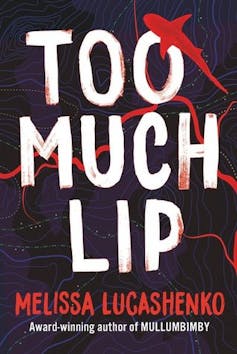
In an interview about Too Much Lip, Lucashenko says: “I discovered that I was writing hidden history without being aware of how close to home I was. If you stick at it long enough you will eventually discover that you were writing truth where you thought you were writing fiction.”
This novel seems to respond to Emily Dickinson’s famous axiom about creative writing: Tell all the truth, but tell it slant.
Too Much Lip is a performance of truth told slant, the actuality of life and of embodied history wrapped within a work of fiction that comes alive in the characters and events that fill its pages; thrumming with life.
But it is more than a story. Lucashenko’s work is a powerful response to the entrenched racism that still shapes Australian culture; to the public and official turning away from the brutalities and genocide on which this nation was built, or the violence and inequities that characterise contemporary society.
Kerry’s Pop says to her: “We livin’ in the whiteman’s world now. You remember that”, but like Kerry, Lucashenko refuses to be silenced.
In her fictions and public life she makes visible the vibrancy and resilience of Aboriginal communities and their continued connection to land and culture. At the same time she makes agonisingly clear the unhealed wounds of Australian culture, in writing that demands these wounds be addressed.
Jen Webb, Director of the Centre for Creative and Cultural Research, University of Canberra
This article is republished from The Conversation under a Creative Commons license. Read the original article.
The links below are to articles reporting on the 2019 winner of the Miles Franklin Literary Award, Melissa Lucashenko for ‘Too Much Lip.’
For more visit:
– https://www.theguardian.com/books/2019/jul/30/miles-franklin-2019-winner-melissa-lucashenko-we-need-a-revolution
– https://www.booktopia.com.au/blog/2019/07/30/melissa-lucashenko-wins-the-2019-miles-franklin-literary-award-for-too-much-lip/

Jen Webb, University of Canberra
I think it’s fair to say that each year the selected novels on the Miles Franklin shortlist manifest the zeitgeist, reflecting on some of the issues that are troubling society.
This year they take on and inflect some signature themes: racial/cultural relationships; human engagement with the natural world; and, threading through each novel, the problem of mourning – for lost loves, for the ruins of the past, for uncertain futures, for a hurt planet.
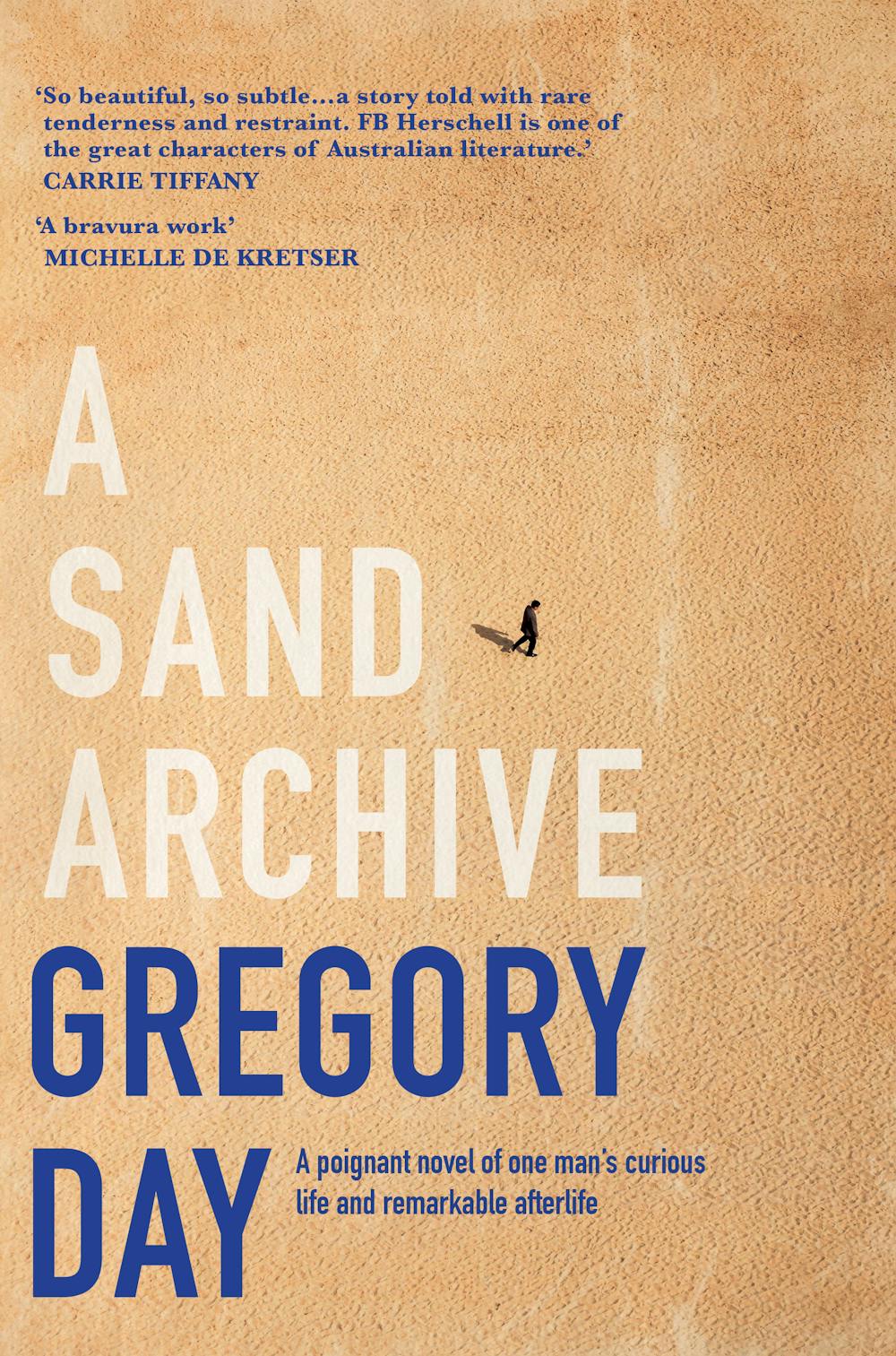
Gregory Day’s A Sand Archive starts with an introduction to engineer and dreamer FB, and his “cheaply printed” volume, The Great Ocean Road: Dune Stabilisation and Other Engineering Difficulties.
It is an introduction full of evocative images, and FB’s quaint and archaic self-presentation against a backdrop of shadows, sand and heath lets readers know with whom they will be travelling during the course of this novel. It establishes the voice of the novel, one marked by a lyrical flow, combining something not explicitly lyrical (Dune Stabilisation; Engineering Difficulties) with a poetic tone, and with a philosophical treatise on sand.
FB is studying “the ontology of dunes”, and discovering the uncertainty of a world built on sand. The narrator, like FB, is a polymath, and like FB is sequestered in regional Victoria. Thanks to the magic of publications and imaginations, both are able to range widely through history and cultures.
But FB has been knocked about by life: by his hopeless love for French activist Mathilde, his thwarted desire to arrest the degradation of south Victoria’s sand dunes, and the loneliness (and satisfactions) of the life he builds. This is a tender novel, and one in which sand becomes a metaphor for story, for the human heart, for how to keep living through “the absurdity of human endeavours”.
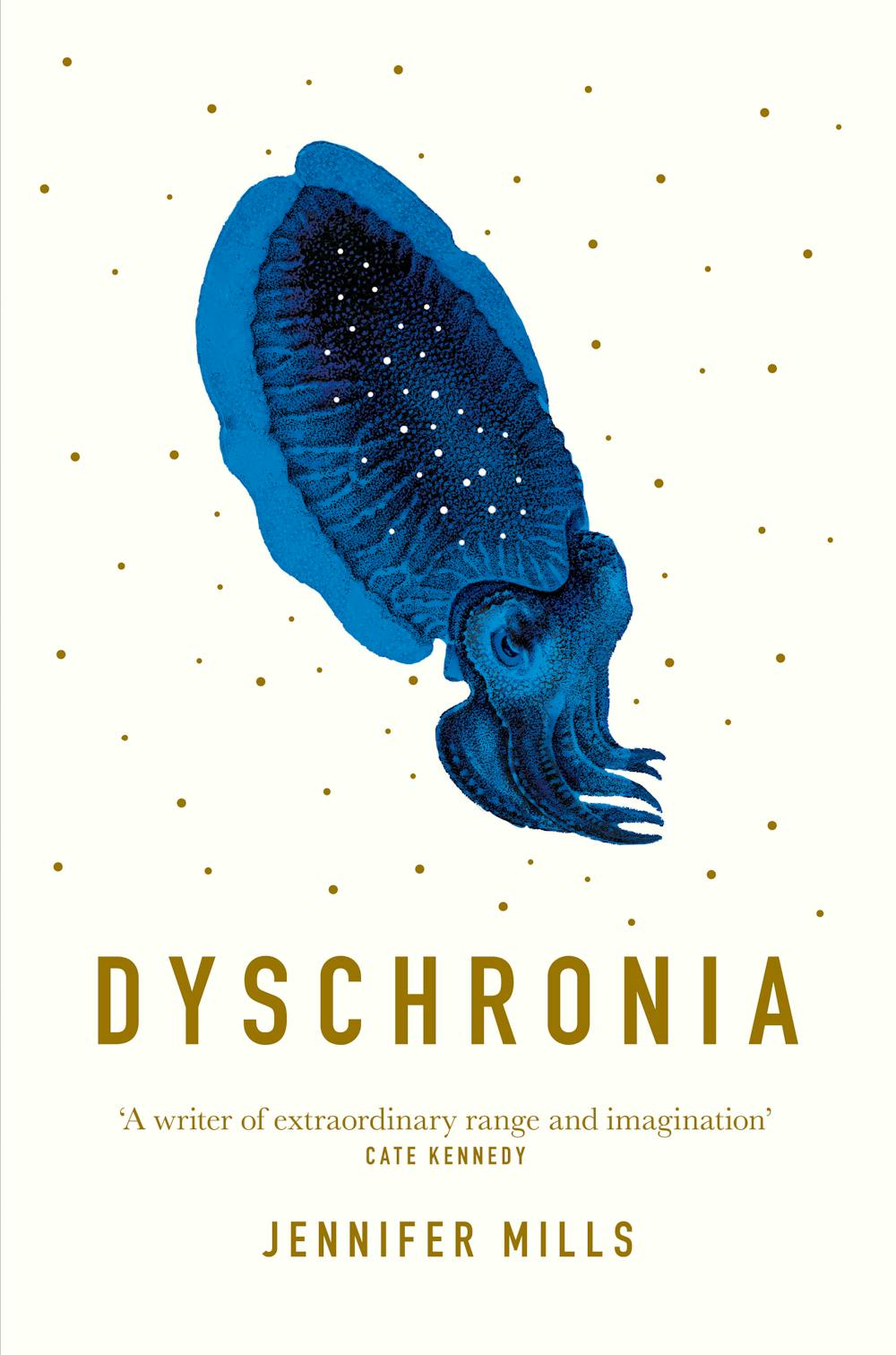
Dyschronia, Jennifer Mills’ latest novel, to some extent fits the clifi genre, but its brilliant exposition of time and its instabilities is perhaps the stronger driving force in this narrative.
Sam, the central character, suffers from migraines that come with the dubious gift of knowing the future. For Sam, who is thus captured by dyschronia, the future is not necessarily future. She lives in a jumble of tenses, and though her mother tries to instruct her in linearity – “Time’s like a road, see?” – she never escapes the “dys” of “chronos”.
For her, time is like Einstein’s river, one that flows randomly, separates, folds back on itself. The novel also offers a scathing interrogation of economic “development”. The local environment and the lives of the people living in Clapstone are ruined in the interests of corporate greed. The asphalt plant on which the town was established has closed, leaving behind a poisoned town and a wrecked environment.
Sam has lost herself, aware that her knowledge of the future will change nothing, that “the whole weak joke of order is unravelling”. But there is still a touch of hope in all this, a lovely contrast between the hopelessness of the situation and the irrepressibility of the locals, who determinedly ignore the end of their world. And, at the end, “laughter comes unbidden, like a gas bubbling up through water”.
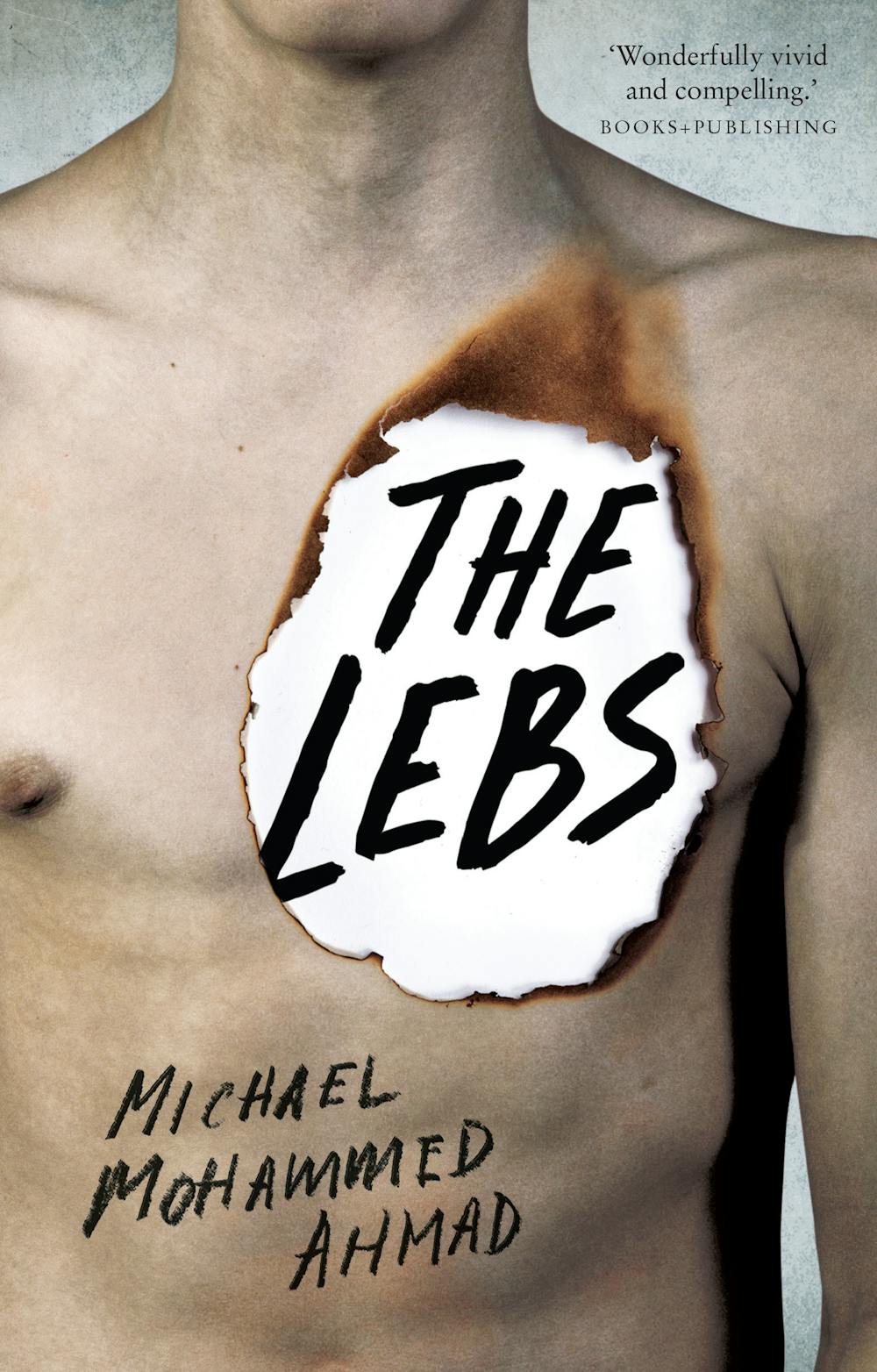
Michael Mohammed Ahmad’s The Lebs begins in the quasi-prison environment of Punchbowl Boys High, and all the violence and crassness of a community of sex segregated adolescents, boys whose present and probable future involves being derided and excluded. This makes it sound grim, but in fact it is often a very funny novel.
The narrator, Bani Adam, is a misfit at school and outside, and his performances and protestations of himself as intellectual, sophisticated, open-minded yet still devout, make for humour, albeit of a poignant, plaintive kind.
Bani also delivers an education in Muslim faith and its complexities; and illuminates the effect of a brutalising culture through an insider’s eye on the politics of being Muslim in an unwelcoming Australian context. Still, I found the unrelenting racism, the constant lateral violence, the easy homophobia and the sexualised representation of girls and women not sufficiently outweighed by the wit and literary skill that mark this novel. “That’s the problem at Punchbowl Boys”, says Bani, “even if you win, you lose”.
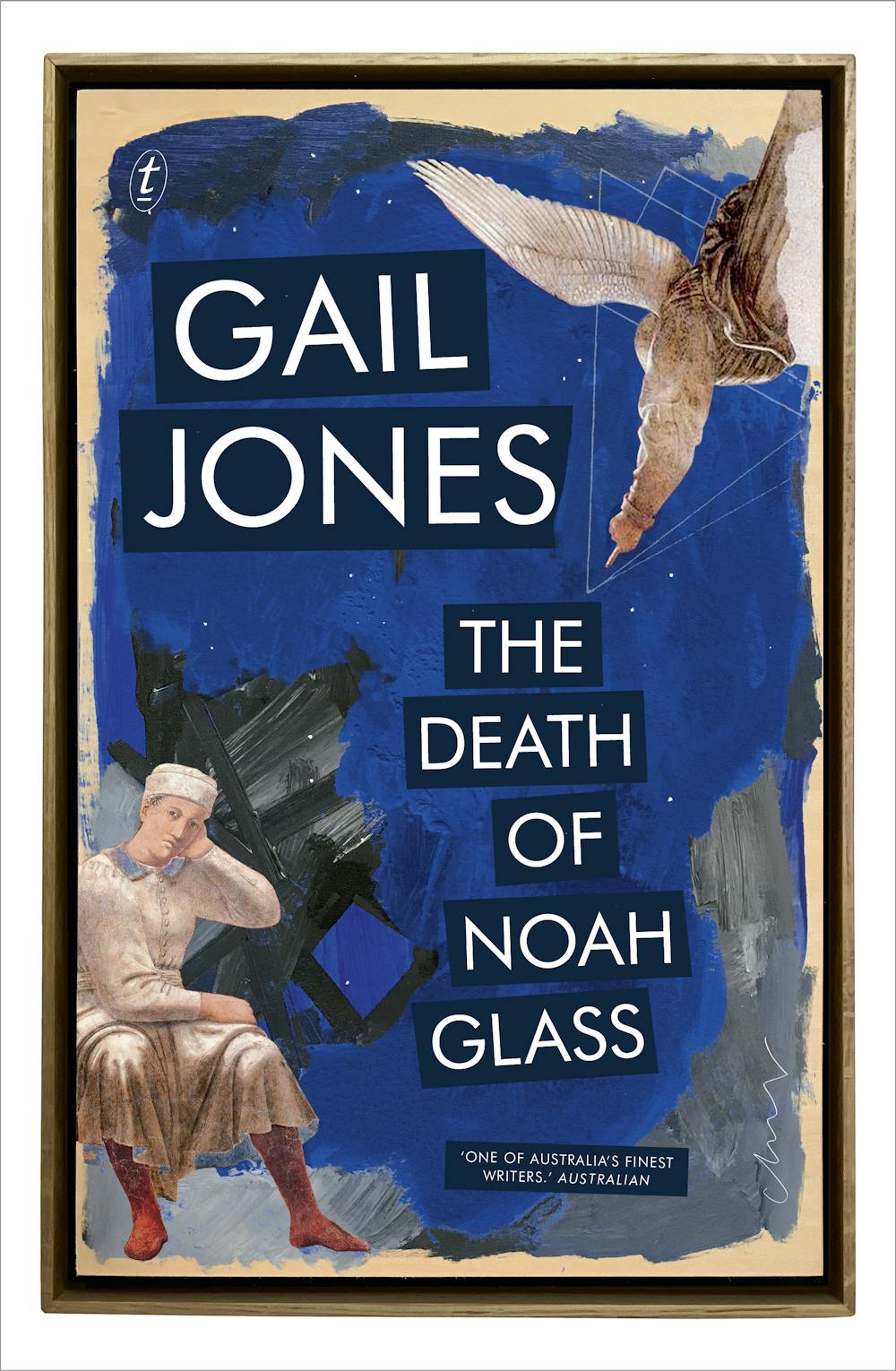
In The Death of Noah Glass, Gail Jones takes on a topic she has often explored: the creative world, one in which the eponymous Noah and his son Martin attempt to reconcile image and text, creativity and identity. It splendidly maps the world of art while offering beautiful portraits of mourning. Martin and his sister Evie have lost both parents now, and the impact of those deaths sets up a tremor that runs through the narrative.
Evie remembers “searching the rooms of their cold house” for her mother, “listening to her own breathing, the barest rhythm, in case stillness might summon her mother back”. And with their father’s sudden death being followed by the news of his possible involvement in art theft, there is “the wider mystery of things”, the impossibility of dealing with this slur on his reputation “when he was still inside them and not yet resting in peace”.
How the dead remain inside us; how memory and its regrets keep banging away at us (Noah in particular has much to regret); how the patterns of the world and of society shape and contain us; how parenthood, family, and sensory being allow us to live: these reappear throughout the novel, animating its characters.
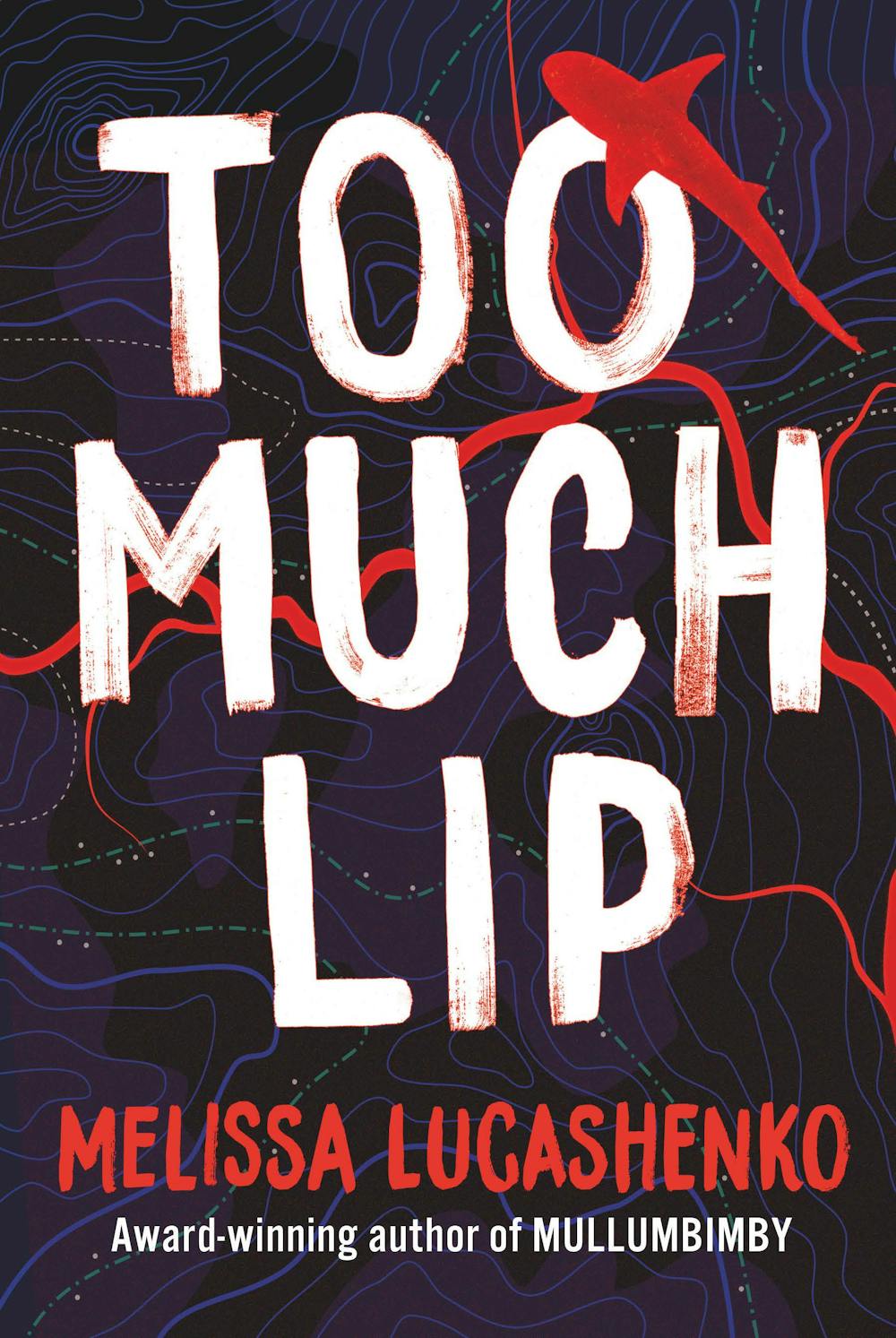
Melissa Lucashenko’s Too Much Lip takes us to regional Australia, introducing readers to an Aboriginal family living on country, and tracing the threads of settler violence that continue to harm the current generation. The story starts in 1943, with now-patriarch Owen Addison being brutalised so that: “When Owen died … there were seven decades of agony caged in him”.
Kerry Salter is returning home to see Owen, her damaged dying Pop, and she literally blasts into town, the “skinniest dark girl on a shiny new Softail, heart attack city, truesgod”, startling the “whitenormalsavages” at the corner store.
She is witty, sharp, tricky, compassionate, but like her siblings suffers intergenerational trauma, which emerges as pretty appalling sibling abuse, and inevitable tragedy. Her uncle manages to divert the worst possible ending to the story, telling her armed and desperate brother: “Terrible things happened in his [Owen’s] life … Some of that pain had to go somewhere. There’s no shame to you in it, my nephew. It wasn’t your fault.”
While the themes of the novel are tragic and often deeply disturbing, the tone and register point to courage, perseverance, and a powerful refutation of the violence of colonisation and the lies of history.

A Stolen Season, Rodney Hall’s first novel in over a decade, also takes on trauma, tracing its effects on the lives of the characters who people its pages. Adam Griffiths served in Gulf War 2, and due to what may have been “friendly fire” was reduced to little more than bones and burnt skin.
Now he has been returned from the dead, “a monstrosity”, and his previously estranged wife, Bridget, faces the dilemma of whether to remain with this shell of a man who functions only as a sort of android, or leave him to the uncertain compassion of government services: “There’s nothing to stop her walking out. Except the freedom to do so. This is what makes the possibility impossible.” Their story is interleaved with two others: that of Marianna Gluck, who like Adam was effectively dead, and then restored to a life of PTSD, paranoia, and flight; and the obscenely and pointlessly wealthy John Philip, whose vignette exposes the vapidity of the art market, celebrity culture, and elitism.
For each story line, an overwhelming issue is existential certainty; each character must realise that they are, after all, alive, and must therefore confront an ethical problem. This profoundly empathetic novel is finely attuned to sorrow and all its siblings – regret, pain, anguish, dust, despair. It offers glimmers of hope here and there, but no concrete answers.
In fact, each novel in this list is profoundly empathetic, and deeply attuned to contemporary Australia. While they look directly at crisis and suffering, they avoid hopelessness, using lyrical imagery, humour, and the consolations of art or family as tools against despair; and they suggest more intelligent, more compassionate ways to be human in the 21st century.
The winner of the Miles Franklin will be announced on Tuesday July 30.
Jen Webb, Director of the Centre for Creative and Cultural Research, University of Canberra
This article is republished from The Conversation under a Creative Commons license. Read the original article.
 At the BookShelf
You must be logged in to post a comment.