Unknown's avatar

Five novels with a real sense of place to explore from your living room


Dudarev Mikhail via Shutterstock

Christine Berberich, University of Portsmouth

Everybody knows the concept of “desert island books”, the novels you might pack if you were going to be marooned on a desert island. Thanks to the pandemic, many of us are indeed now marooned, except that instead of lazing on palm-fringed beaches, we’re in lockdown – in urban apartment blocks, suburban terraced houses or village homes.

A good book can help us forget about the world around us and also substitute our longing for pastures greener. It can take us from our sofa to the beaches of Thailand (as in Alex Garland’s The Beach) or to the streets of New York (as in Paul Auster’s City of Glass).

So, as someone who researches and teaches literature, I’ve chosen five novels that allow me to be elsewhere in my mind, whether that’s a glorious English countryside setting, the streets of a European metropolis, or the urban sprawl of an unnamed Indian city.

Kazuo Ishiguro: The Remains of the Day

The Remains of the Day tells the story of Stevens, the aged butler of Darlington Hall, and his ill-judged life choices that saw him being involved, albeit only on the fringes, with British fascism in the interwar years.
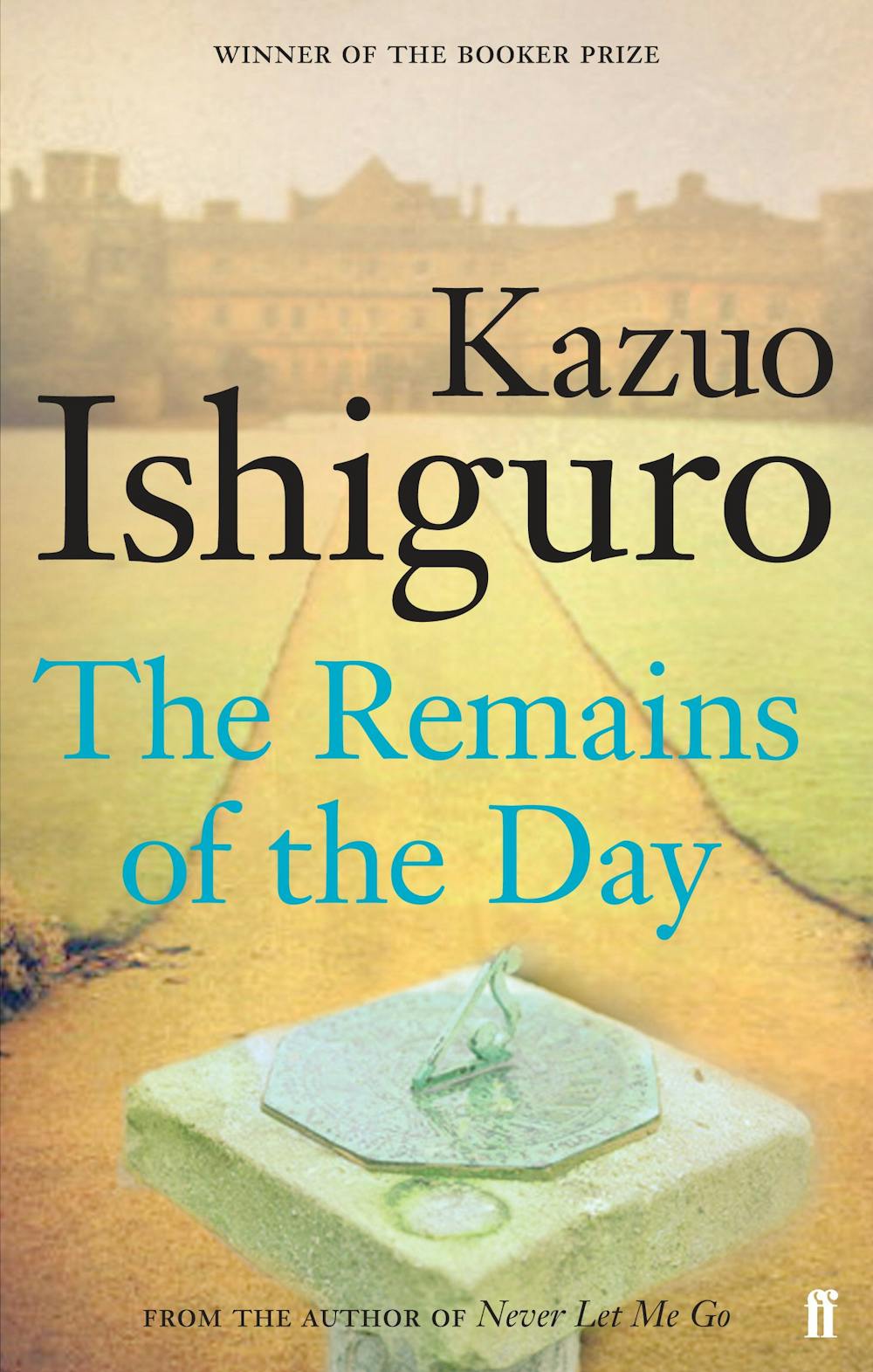
Beautiful English countryside.
Amazon

This allusion to British fascism in particular is something that makes this novel stand out: it is a subject matter not often discussed or even taught.

But at the moment, I can particularly take solace in Ishiguro’s beautiful descriptions of the countryside that Stevens – unused to the freedom of travel – encounters during his journey across south-west England:

What I saw was principally field upon field rolling off into the far distance. The land rose and fell gently, and the fields were bordered by hedges and trees … It was a fine feeling indeed to be standing up there like that, with the sound of summer all around one and a light breeze on one’s face.

As the lockdown drags on, this is a feeling I am longing for.

W.G. Sebald: The Emigrants

This collection of four novellas is predominantly set in England and Germany but also offers glimpses of the US, Egypt, Belgium and Switzerland. Focusing on a different protagonist in each novella, Sebald portrays how the long shadows of the second world war have affected individuals – but also how Germany has engaged with its troubled past.

A gentler images of pre-war Germany.
Amazon

His descriptions of the town of Kissingen’s illuminated spa gardens, with “Chinese lanterns strung across the avenues, shedding colourful magical light” and “the fountains in front of the Regent’s building” jetting “silver and gold alternately” conjure up images of times gone by and a town as yet untroubled by the scourge of antisemitism.

Sebald’s narrative is a collage of fiction, biography, autobiography, travel writing and philosophy. His prose is so full of quiet beauty and eloquence that it always helps me forget my surroundings and enter a quiet and contemplative “Sebaldian” space.

Patrick Modiano: The Search Warrant
A journey through Paris.
Amazon

The Search Warrant pieces together the real-life story of Dora Bruder, a young Jewish girl who went missing in Paris in December 1941.

Modiano attempts to retrace Dora’s movements across Paris and his book is full of evocative descriptions of quiet squares and bustling streets where she might have spent some time.

In comparison with the Avenue de Saint-Mandé, the Avenue Picpus, on the right, is cold and desolate. Treeless, as I remember. Ah, the loneliness of returning on those Sunday evenings.

From the first page it is clear that the city of Paris assumes the status of a character – and as readers we can follow the narrator’s (and Dora’s) movements on a map.

If we are familiar with Paris, we can picture where they are. By tracing Dora’s possible steps, Modiano evocatively recreates the twilight atmosphere of Paris under occupation.

Rohinton Mistry, A Fine Balance

A Fine Balance is a sprawling narrative that takes the reader all the way to the Indian subcontinent.

India in all its chaotic glory.
Amazon

Set initially in 1975 during the emergency government period and then during the chaotic times of the 1984 anti-Sikh riots, Mistry’s novel focuses on the lives of four central characters whose lives are on a downward spiral, from poverty to outright destitution and, ultimately, death.

Mistry does not whitewash the reality of urban poverty in India. His narrative does not hide away from disease or overcrowded slums with “rough shacks” standing “beyond the railroad fence, alongside a ditch running with raw sewage”. His are not places where we might want to be. But as readers, we become utterly engrossed in his characters’ lives – we hope with them, we fear for them and, at the end, we cry for them.

Elena Ferrante, My Brilliant Friend
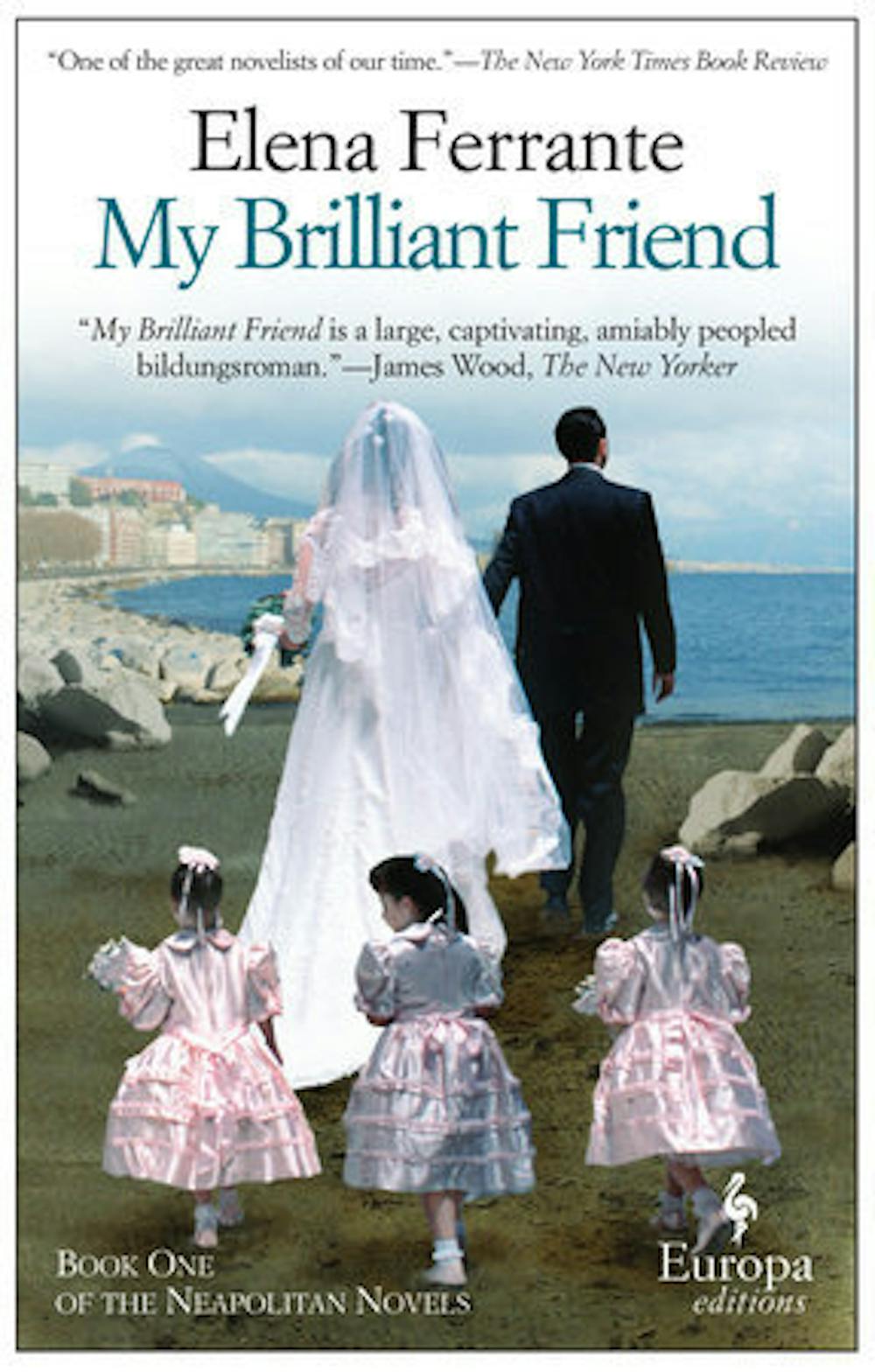
Oh! To be in Napoli.
Amazon

Elena Ferrante’s novels take me straight to my favourite city of Napoli. Starting with My Brilliant Friend, the four novels chart the intensive relationship between two girls, Elena “Lenù” Greco and Raffaella “Lila” Cerullo, who grow up in a poor neighbourhood in the 1950s.

Reading Ferrante’s sprawling narrative conjures up images of Napoli and makes me feel like I am standing in the Piazza del Plebiscito or having an espresso in the historic Caffè Gambrinus. Together with Lenù, I can see Vesuvio across the Bay of Naples, the:

delicate pastel-colored shape, at whose base the whitish stones of the city were piled up, with the earth-coloured slice of the Castel dell’Ovo, and the sea.

I can feel, hear and smell Napoli around me. Reading about the city might not be as good as being there in person; but, at the moment, it is a close second.

Of course, books can’t stop a global pandemic. But, for a short while, they can let us forget the world around us and, instead, transport us to different places, allowing us to at least travel in spirit.The Conversation

Christine Berberich, Reader in Literature, University of Portsmouth

This article is republished from The Conversation under a Creative Commons license. Read the original article.
Unknown's avatar

Shakespeare on Zoom: how a theatre group in isolation conjured up a Tempest


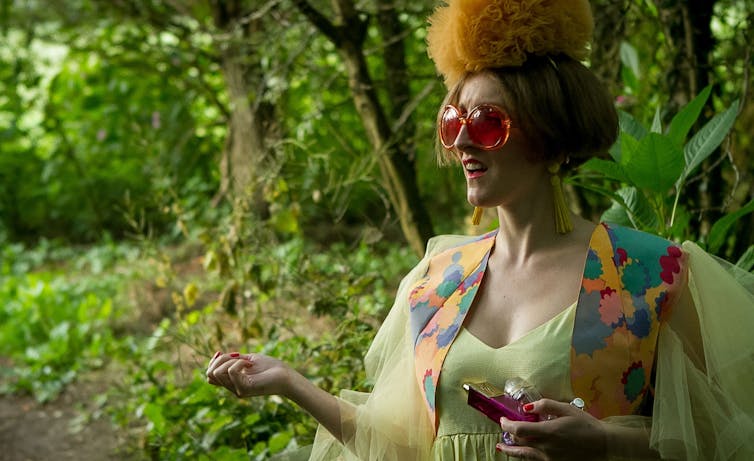
Madeleine MacMahon as ‘Sebastianne’ in a live production of The Tempest by Creation Theatre from 2019.
Creation Theatre/ Big Telly Theatre Company

Laura Jayne Wright, University of Oxford

While theatres remain closed, the way we watch Shakespeare is changing. When I picture the audiences Shakespeare would have written for, I think of the groundlings in Shakespeare in Love(1998). They stand, arms on the edges of the stage, staring upwards, eyes filled with tears – laughing, clapping, gasping. They are part of the show – and they show that they’re there. In the bright afternoon sun, the actors can see and hear every reaction.

Right now, of course, it’s not possible to take a trip to the playhouse. Still, with the National Theatre, the Globe, and the Really Useful Group moving quickly to put past performances online, the theatre can come to us via YouTube. We can see and hear the actors (and, having watched Hamlet, Jane Eyre and The Phantom of the Opera, I’ve been very grateful for it). But even though we can tweet our reactions, the actors can’t see or hear us.

The possibility of live performances during lockdown might change that. Over the Easter weekend, I watched an Oxford-based theatre company, Creation Theatre, and their co-producers at Big Telly Theatre Company from Portstewart in Northern Ireland, put on a production of The Tempest via video conferencing platform Zoom.

It seemed a tricky challenge under lockdown, with each cast member performing (and rehearsing) from home. Indeed, as chief executive and creative producer Lucy Askew warned before the play began, the night’s events were at the mercy of the technological gods.

But, when the play began and Ariel conjured a storm, suddenly it became clear that – despite our isolation – we too were part of the action. The audience’s microphones (muted while the actors spoke) were suddenly raised and we were asked to click our fingers to make it rain. The screen was full of audience members – and their pets, and their glasses of wine, and their pyjamas – and the storm was, even if I say so myself, convincing.

Within the space of an hour, the audience asked Antonio for answers via the chat function as he boasted of his usurpation of Prospero, we blew wind into the path of his ship and – in lieu of a banquet – all held up an offering of snacks (chocolate biscuits, from me). Each time other audience members appeared on screen, there was a rush of excitement as we got to see one another.

Listening to the island.

Shakespeare knew the importance of his audience’s reaction. At the end of The Tempest, Prospero relinquishes his magic and asks for something in return:

But release me from my bands
With the help of your good hands.
Gentle breath of yours my sails
Must fill, or else my project fails.

It’s a moment when we are asked to make some noise – to clap with our “good hands”, to cheer (or whistle, or shout) with our “gentle breath”. Prospero’s redemption, if we allow him that possibility, comes from finally turning outwards, it comes from him seeing the necessity of his connection to others – to his daughter, to his once-forgotten subjects in Milan, and, perhaps, to us.

Yet, for all of the noise we made, this new medium exposed the myriad kinds of loneliness in The Tempest. Prospero sat in front of a backdrop of television screens, reminding us that we were all at one remove from one another. When Caliban described the noises of the island, the “Sounds, and sweet airs that give delight and hurt not”, it was painfully apparent that he was alone and that there was nothing real to hear. When Ferdinand proposed to Miranda and reached from his screen to hers in an impressive feat of Zoom technology, that brief moment of “contact” was bittersweet.

After all, the despair of being alone is a fear which Prospero seeks to create. As ordered, Ariel deliberately scatters the shipwrecked courtiers across the island. Yet, as John Donne, a contemporary of Shakespeare, wrote:

No man is an island entire of itself;
every man is a piece of the continent, a part of the main.

The dispersed groups come back together – Prospero leaves his island exile, and returns home. It’s not a perfect resolution, and it’s not a happy ending, but it is, nonetheless, a reunion.

Somewhere new?

As site-specific, conference call plays go, The Tempest lends itself to such a production. It’s a play about isolation and exile, about characters moving around a small island without ever meeting one another. Creation’s performance did nothing to disguise its new medium. In fact, the most powerful part of the performance came as Prospero spoke the famous epilogue which begins: “Now my charms are all o’erthrown”.

The cast slowly and methodically packed up their bedsheet green screens and wiped off their makeup. They changed their onscreen identities from their character’s names back to their own. By the time we were invited to stay on Zoom for a moment or two, to catch up with friends, thank the actors, and wave goodbye, the spell was broken.

But the magic may not be entirely over, not least as the popularity of their performances have led to Creation extending its run. Moreover, The Tempest is not the only play offered in this new genre of “Zoom Shakespeare”. Another group of actors recently collaborated to create A Midsummer Night’s Stream, which they advertise not simply as a reading but a live performance, “adapted for our stage”. And there is no reason to think that “Zoom Theatre” will stick to Shakespeare.

While we will (to entirely misuse one of Prospero’s lines) return to a time when we “have no screen between this part he play’d/And him he play’d it for”, Zoom Theatre may not be a temporary measure. Perhaps new plays will be written with the possibilities of Zoom and YouTube in mind. For many, watching theatre from home will allow for greater access and comfort. And, for now, speaking back, making noise, and waving at strangers, could inject a bit of silliness into our own isolated worlds.The Conversation

Laura Jayne Wright, Stipendiary Lecturer in English, University of Oxford

This article is republished from The Conversation under a Creative Commons license. Read the original article.
Unknown's avatar

Poetry has linked war and disease for centuries


Julia M. Wright, Dalhousie University

War has been widely used — and criticized — as a metaphor for dealing with COVID-19. But the metaphor didn’t come out of nowhere. Writers have long linked war and disease, and not only because war often contributes to the spread of disease.

In my study of British and Irish literature from around 1800, including writing about medicine, it’s clear that people struggled to understand disease without having evidence of bacteria or viruses. In a chapter on “Contagion” in his 1797 handbook on medicine, the physician Thomas Trotter even laughed at the suggestion that diseases were spread by “little animals.”

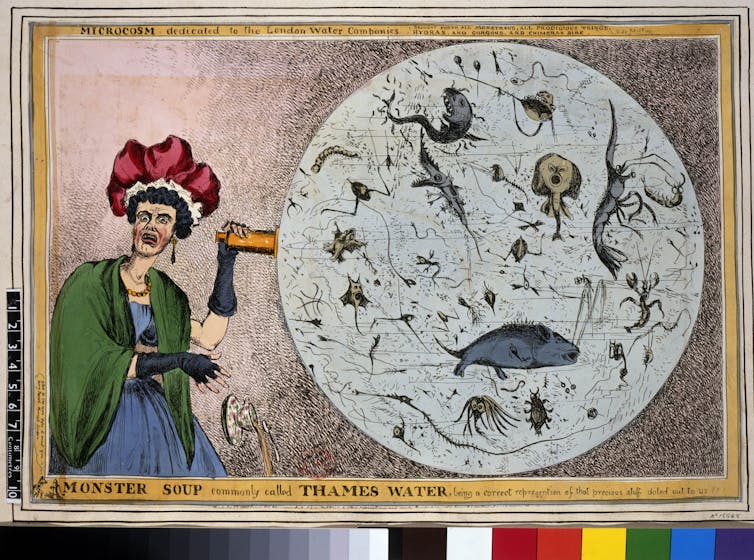
William Heath’s satirical drawing ‘Monster Soup’ in the British Museum shows artists in the early 1800s understood medicine and disease before technology.
(British Museum.), CC BY-NC-SA

Yet the idea persisted. In 1828, cartoon satirist William Heath imagined river water as “Monster Soup.” In 1854, English physician John Snow used what we might now call contact tracing to show that a London water pump was at the centre of a cholera outbreak. The same year, Italian physician Filippo Pacini used a microscope to identify the cause of the disease.

An easy step from disease to war

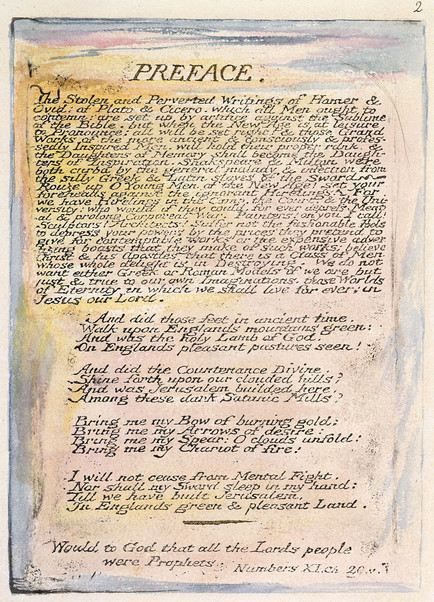
Writers were aware of public and research interests in medicine and drew on them, as in the familiar example of Mary Shelley’s Frankenstein in 1818. Writers also used medical metaphors: for instance, William Blake called the influence of Greek and Latin literature a “general malady and infection.”

These writers are using figures of speech to link concepts together: war is like a storm, disease is like war, and disease is like a storm, spread through clouds of bad air, raining contagion.


Read more:
Apocalyptic fiction helps us deal with the anxiety of the coronavirus pandemic


Metaphors aren’t simply decorative. They help explain unfamiliar ideas, and help us remember them by making them vivid or surprising. When Shakespeare had Hamlet talk about picking up weapons to fight “a sea of troubles,” he was communicating a sense of overwhelming odds. The metaphor was good enough to stick and is still widely used. Metaphors can also pass judgement, like Blake associating Greek and Latin literature with disease because it promoted war.

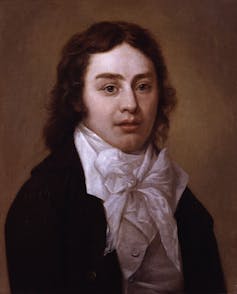
Writer and poet Samuel Taylor Coleridge was one of many British writers who used storms as metaphors for battles which were, in turn, used as metaphors for diseases.
(National Portrait Gallery, London), CC BY-NC-SA

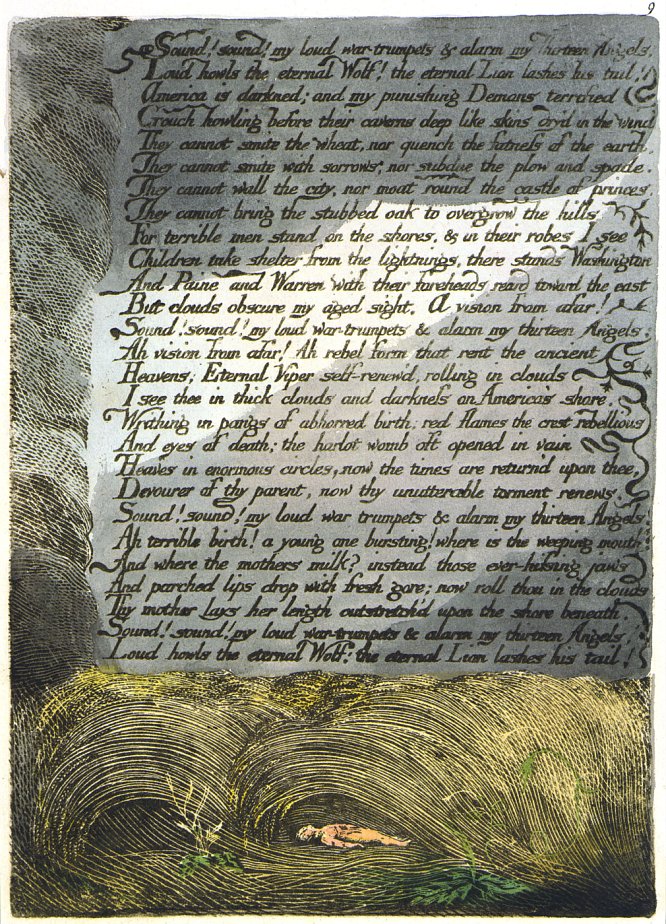
War was almost constant for Britain at this time, and writers often turned to thunderstorms to capture the terrible sound of battles. Blake’s 1793 poem about the American Revolutionary War describes the new United States as “darkned” by storm clouds while “Children take shelter from the lightnings” and leaders speak “in thunders.” A few years later, in his poem “Fears in Solitude,” Samuel Taylor Coleridge wrote about “Invasion, and the thunder and the shout.”

Medical writers of the era thought that bad air carried disease because they didn’t have the technology to see further. But they were able to connect the spread of disease with soldiers and ships. This made it an easy step from disease to war — with weather still in the mix.

In “Fears in Solitude,” Coleridge associated British imperialism with a spreading infection, carrying “to distant tribes slavery and pangs” “Like a cloud that travels on, / Steamed up from Cairo’s swamps of pestilence.” In “Adonais,” P.B. Shelley wrote of “vultures to the conqueror’s banner true … whose wings rain contagion.”

King Cholera goes to war

Two hundred years ago, disease wasn’t an “Invisible Enemy” or a “little animal”. It had power to kill, much like the kings who sent armies around the globe.

In her influential 1792 essay, Vindication of the Rights of Woman, English writer Mary Wollstonecraft wrote that “despots” are the source of a “baneful lurking gangrene” and lead to “contagion.” A quarter of a century later, the cholera pandemics began.

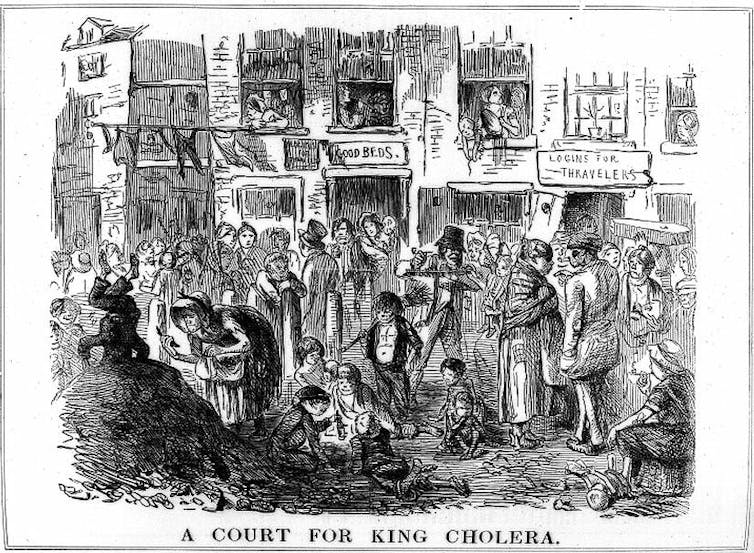
In John and Michael Banim’s 1831 poem “The Chaunt of the Cholera,” cholera doesn’t just “Breathe out the breath which maketh / A pest-house of the place.” It is a mercenary working for Europe’s monarchs: “Kings!–tell me my commission, / As from land to land I go.” Others, like English cartoonist John Leech, called the disease Lord Cholera or King Cholera.

John Leech’s cartoon showing the association of cholera with squalor. A child stands on his head on top of a rubbish heap in the left-hand corner. An old woman scavenges from the heap, another child shows off his own find, and washing flutters in the breeze overhead.
(Wellcome Library), CC BY

John Leech’s 1852 cartoon, “A Court for King Cholera,” relayed a message we’re hearing now: inequality feeds pandemics. The 1853 poem “King Cholera’s Procession” also details the unsanitary conditions of the urban poor while condemning “Those that rule” for being King Cholera’s “friends.”

In her 1826 novel about a devastating pandemic, The Last Man, Mary Shelley also links rulers, war, and disease. The plague “shot her unerring shafts over the earth,” a shower of arrows, and becomes “Queen of the World.” Shelley idealizes the leader “full of care” who doesn’t want victory — only “bloodless peace.”

The coming storm

To these writers, war was a metaphor for the problem, not the solution.

In our time, business media suggest “battle metaphors” are overused. We have television shows like Robot Wars and Storage Wars, training sessions called “bootcamps” and elections in “battleground states.”

War is all too real and devastating in many parts of our world. But as a metaphor it is worn out — perhaps no longer vivid, no longer explanatory. Writers such as Coleridge, the Shelleys, and Blake may have seen close connections between war and disease, but their work also hints at another possibility.

Instead of talking about a war on COVID-19, let’s consider those storm metaphors. We need to stay inside and wait for it to pass.

And, while we are, perhaps we can also look to the past for help in understanding our present. Before they had evidence of germs, they could see that war and inequality spread disease.The Conversation

Julia M. Wright, University Research Professor, Dalhousie University

This article is republished from The Conversation under a Creative Commons license. Read the original article.
Unknown's avatar

Book & Library Cleaning


The link below is to an article that looks at cleaning books and your personal library.

For more visit:
https://bookriot.com/2020/04/13/spring-cleaning-your-books/

Unknown's avatar

Pen Names


The link below is to an article that looks at the pros and cons of using a pen name.

For more visit:
https://www.thebookdesigner.com/2020/03/whats-in-a-pen-name-an-argument-against-noms-de-plumes/

Unknown's avatar

Quitting


The link below is to an article that looks at it being OK to quit reading a book.

For more visit:
https://www.readitforward.com/essay/article/why-its-okay-to-quit-a-book/

Unknown's avatar

Are Books Essential?


The link below is to an article that considers whether books are essential items during the coronavirus pandemic or not.

For more visit:
https://www.latimes.com/opinion/story/2020-03-31/coronavirus-essential-business-bookstore

Unknown's avatar

A Surge in Writing


The link below is to an article reporting on the surge in writing during the coronavirus pandemic.

For more visit:
https://www.theguardian.com/books/booksblog/2020/mar/26/novel-writing-during-coronavirus-crisis-outbreak

Unknown's avatar

Literature & Pandemics


The link below is to an article that considers the place of literature during a pandemic.

For more visit:
https://www.aljazeera.com/indepth/opinion/shirazi-boccaccio-literary-legacy-pandemics-200326130141247.html

Unknown's avatar

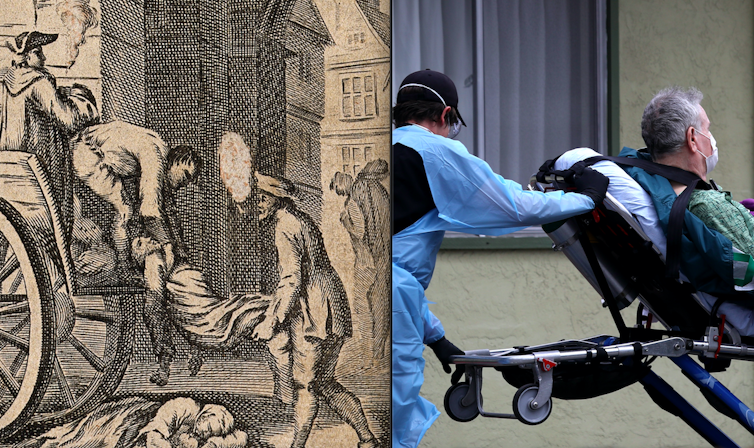
Diary of Samuel Pepys shows how life under the bubonic plague mirrored today’s pandemic


There were eerie similarities between Pepys’ time and our own.
Justin Sullivan/Getty Images

Ute Lotz-Heumann, University of Arizona

In early April, writer Jen Miller urged New York Times readers to start a coronavirus diary.

“Who knows,” she wrote, “maybe one day your diary will provide a valuable window into this period.”

During a different pandemic, one 17th-century British naval administrator named Samuel Pepys did just that. He fastidiously kept a diary from 1660 to 1669 – a period of time that included a severe outbreak of the bubonic plague in London. Epidemics have always haunted humans, but rarely do we get such a detailed glimpse into one person’s life during a crisis from so long ago.

There were no Zoom meetings, drive-through testing or ventilators in 17th-century London. But Pepys’ diary reveals that there were some striking resemblances in how people responded to the pandemic.

A creeping sense of crisis

For Pepys and the inhabitants of London, there was no way of knowing whether an outbreak of the plague that occurred in the parish of St. Giles, a poor area outside the city walls, in late 1664 and early 1665 would become an epidemic.

The plague first entered Pepys’ consciousness enough to warrant a diary entry on April 30, 1665: “Great fears of the Sickenesse here in the City,” he wrote, “it being said that two or three houses are already shut up. God preserve us all.”

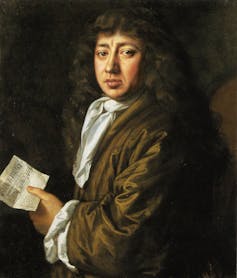
Portrait of Samuel Pepys by John Hayls (1666).
National Portrait Gallery

Pepys continued to live his life normally until the beginning of June, when, for the first time, he saw houses “shut up” – the term his contemporaries used for quarantine – with his own eyes, “marked with a red cross upon the doors, and ‘Lord have mercy upon us’ writ there.” After this, Pepys became increasingly troubled by the outbreak.

He soon observed corpses being taken to their burial in the streets, and a number of his acquaintances died, including his own physician.

By mid-August, he had drawn up his will, writing, “that I shall be in much better state of soul, I hope, if it should please the Lord to call me away this sickly time.” Later that month, he wrote of deserted streets; the pedestrians he encountered were “walking like people that had taken leave of the world.”

Tracking mortality counts

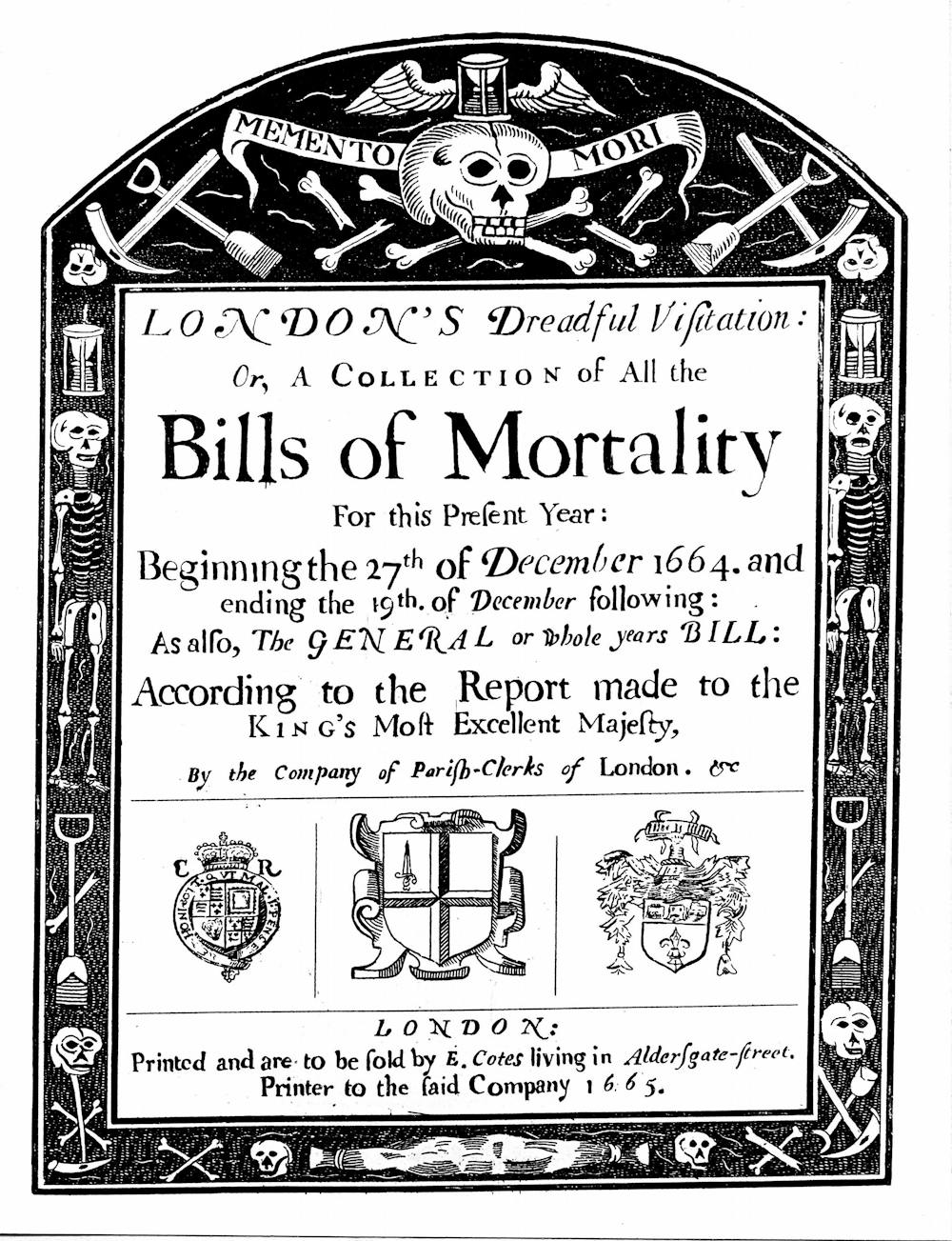
In London, the Company of Parish Clerks printed “bills of mortality,” the weekly tallies of burials.

Because these lists noted London’s burials – not deaths – they undoubtedly undercounted the dead. Just as we follow these numbers closely today, Pepys documented the growing number of plague victims in his diary.

‘Bills of mortality’ were regularly posted.
Photo 12/Universal Images Group via Getty Image

At the end of August, he cited the bill of mortality as having recorded 6,102 victims of the plague, but feared “that the true number of the dead this week is near 10,000,” mostly because the victims among the urban poor weren’t counted. A week later, he noted the official number of 6,978 in one week, “a most dreadfull Number.”

By mid-September, all attempts to control the plague were failing. Quarantines were not being enforced, and people gathered in places like the Royal Exchange. Social distancing, in short, was not happening.

He was equally alarmed by people attending funerals in spite of official orders. Although plague victims were supposed to be interred at night, this system broke down as well, and Pepys griped that burials were taking place “in broad daylight.”

Desperate for remedies

There are few known effective treatment options for COVID-19. Medical and scientific research need time, but people hit hard by the virus are willing to try anything. Fraudulent treatments, from teas and colloidal silver, to cognac and cow urine, have been floated.

Although Pepys lived during the Scientific Revolution, nobody in the 17th century knew that the Yersinia pestis bacterium carried by fleas caused the plague. Instead, the era’s scientists theorized that the plague was spreading through miasma, or “bad air” created by rotting organic matter and identifiable by its foul smell. Some of the most popular measures to combat the plague involved purifying the air by smoking tobacco or by holding herbs and spices in front of one’s nose.

Tobacco was the first remedy that Pepys sought during the plague outbreak. In early June, seeing shut-up houses “put me into an ill conception of myself and my smell, so that I was forced to buy some roll-tobacco to smell … and chaw.” Later, in July, a noble patroness gave him “a bottle of plague-water” – a medicine made from various herbs. But he wasn’t sure whether any of this was effective. Having participated in a coffeehouse discussion about “the plague growing upon us in this town and remedies against it,” he could only conclude that “some saying one thing, some another.”

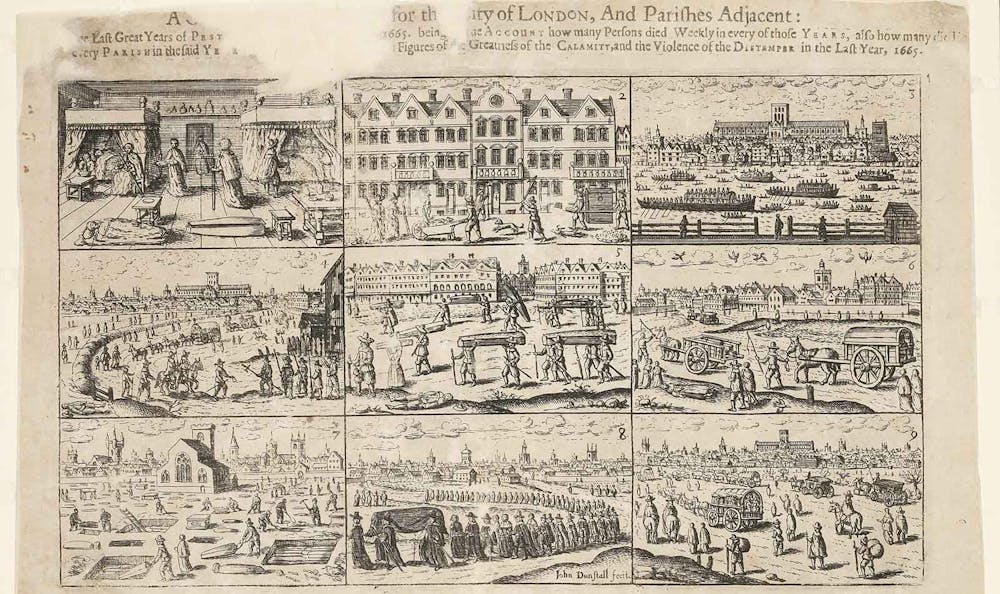
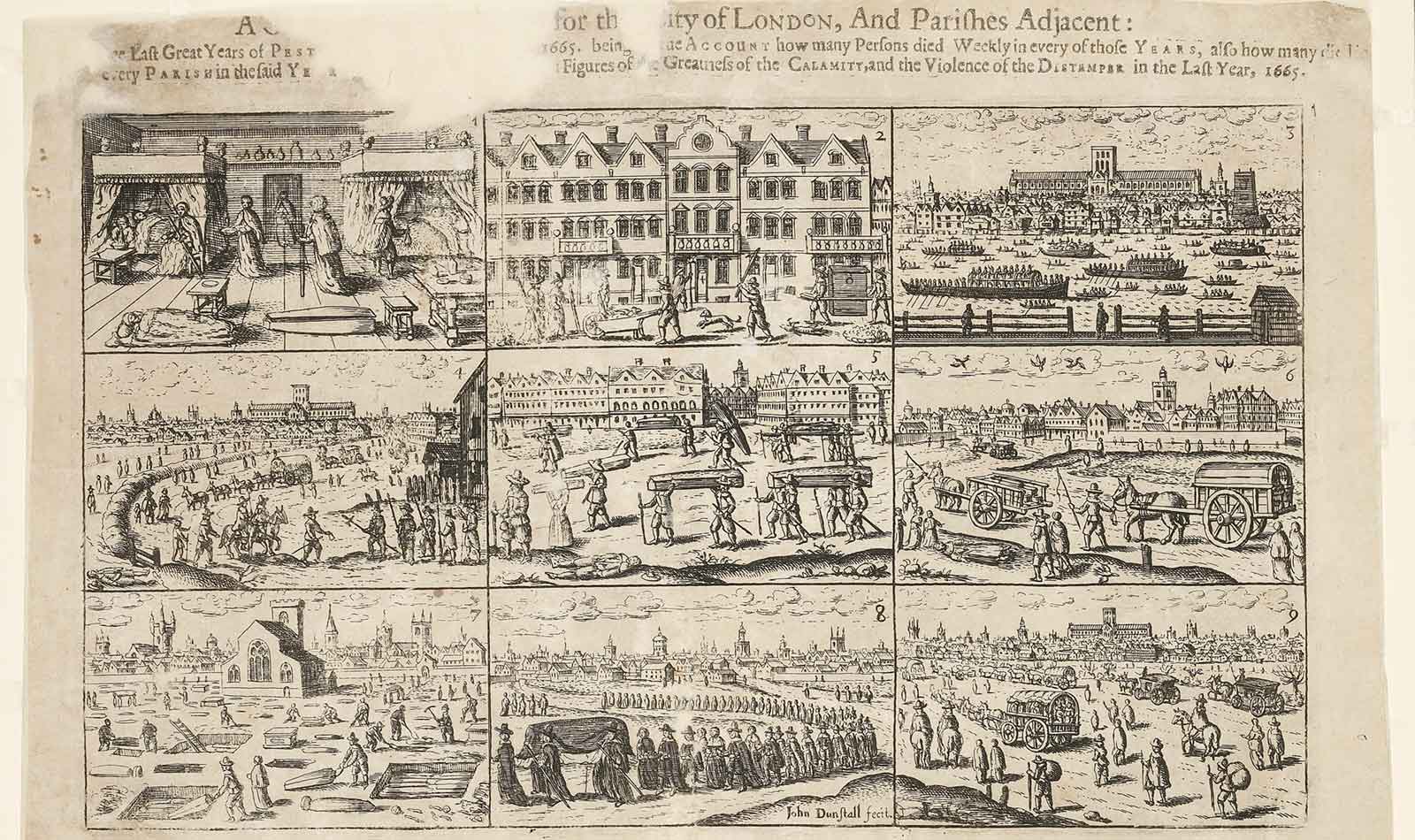
A 1666 engraving by John Dunstall depicts deaths and burials in London during the bubonic plague.
Museum of London

During the outbreak, Pepys was also very concerned with his frame of mind; he constantly mentioned that he was trying to be in good spirits. This was not only an attempt to “not let it get to him” – as we might say today – but also informed by the medical theory of the era, which claimed that an imbalance of the so-called humors in the body – blood, black bile, yellow bile and phlegm – led to disease.

Melancholy – which, according to doctors, resulted from an excess of black bile – could be dangerous to one’s health, so Pepys sought to suppress negative emotions; on Sept. 14, for example, he wrote that hearing about dead friends and acquaintances “doth put me into great apprehensions of melancholy. … But I put off the thoughts of sadness as much as I can.”

Balancing paranoia and risk

Humans are social animals and thrive on interaction, so it’s no surprise that so many have found social distancing during the coronavirus pandemic challenging. It can require constant risk assessment: How close is too close? How can we avoid infection and keep our loved ones safe, while also staying sane? What should we do when someone in our house develops a cough?

During the plague, this sort of paranoia also abounded. Pepys found that when he left London and entered other towns, the townspeople became visibly nervous about visitors.

“They are afeared of us that come to them,” he wrote in mid-July, “insomuch that I am troubled at it.”

Pepys succumbed to paranoia himself: In late July, his servant Will suddenly developed a headache. Fearing that his entire house would be shut up if a servant came down with the plague, Pepys mobilized all his other servants to get Will out of the house as quickly as possible. It turned out that Will didn’t have the plague, and he returned the next day.

In early September, Pepys refrained from wearing a wig he bought in an area of London that was a hotspot of the disease, and he wondered whether other people would also fear wearing wigs because they could potentially be made of the hair of plague victims.

And yet he was willing to risk his health to meet certain needs; by early October, he visited his mistress without any regard for the danger: “round about and next door on every side is the plague, but I did not value it but there did what I could con ella.”

Just as people around the world eagerly wait for a falling death toll as a sign of the pandemic letting up, so did Pepys derive hope – and perhaps the impetus to see his mistress – from the first decline in deaths in mid-September. A week later, he noted a substantial decline of more than 1,800.

Let’s hope that, like Pepys, we’ll soon see some light at the end of the tunnel.

[You need to understand the coronavirus pandemic, and we can help. Read The Conversation’s newsletter.]The Conversation

Ute Lotz-Heumann, Heiko A. Oberman Professor of Late Medieval and Reformation History, University of Arizona

This article is republished from The Conversation under a Creative Commons license. Read the original article.