
The link below is to an article that looks at how to sell non-returnable books.
For more visit:
https://blog.bookbaby.com/2020/09/sell-non-returnable-books/

The link below is to an article that looks at how to sell non-returnable books.
For more visit:
https://blog.bookbaby.com/2020/09/sell-non-returnable-books/
The link below is to an article that looks at 9 reasons to reactivate Kindle Unlimited.
For more visit:
https://ebookfriendly.com/reasons-reactivate-kindle-unlimited/
The link below is to an article reporting on the shortlists for this year’s Ngaio Marsh Award for New Zealand crime fiction.
For more visit:
https://www.booksandpublishing.com.au/articles/2020/08/11/154974/ngaio-marsh-award-2020-shortlists-announced/
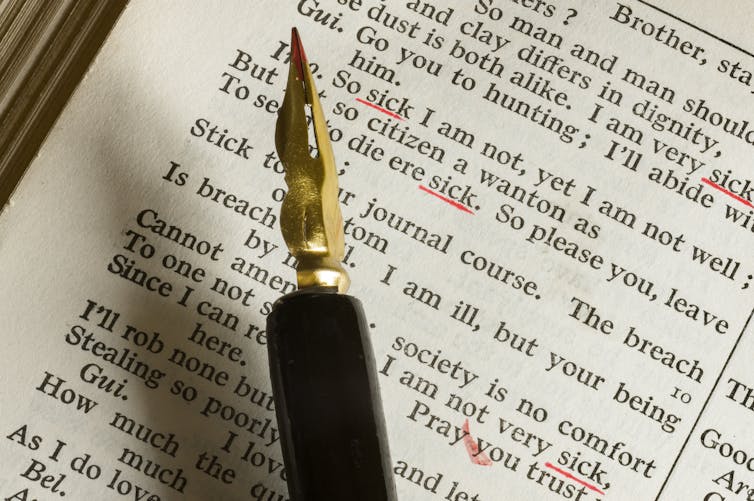
Rachel Hadas, Rutgers University Newark
Pondering the now no-longer Dixie Chicks – renamed “The Chicks” – Amanda Petrusich wrote in a recent issue of the New Yorker, “Lately, I’ve caught myself referring to a lot of new releases as prescient – work that was written and recorded months or even years ago but feels designed to address the present moment. But good art is always prescient, because good artists are tuned into the currency and the momentum of their time.”
That last phrase, “currency and momentum,” recalls Hamlet’s advice to the actors visiting the court of Elsinore to show “the very age and body of the time his form and pressure.” The shared idea here is that good art gives a clear picture of what is happening – even, as Petrusich suggests, if it hadn’t happened yet when that art was created.
Good artists seem, in our alarming and prolonged time (I was going to write moment, but it has come to feel like a lot more than that), to be leaping over months, decades and centuries, to speak directly to us now.
Some excellent COVID-19-inflected or anticipatory work I’ve been noticing dates from the mid-20th century. Of course, one could go a lot further back, for example to the lines from the closing speech in “King Lear”: “The weight of this sad time we must obey.” Here, though, are a few more recent examples.
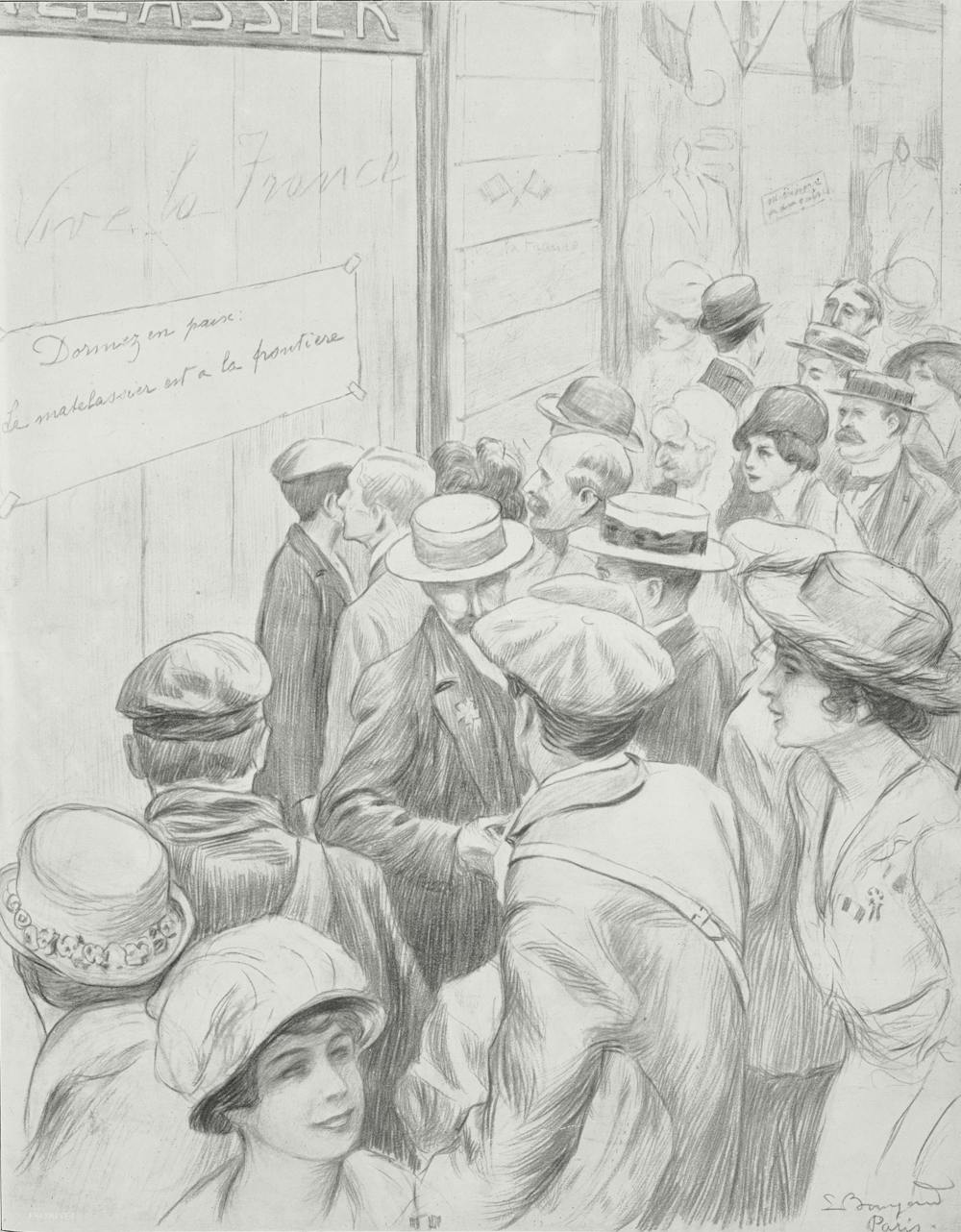
Marcel Proust’s “Finding Time Again,” an evocation of wartime Paris from 1916, strongly suggests New York City in March 2020: “Out on the street where I found myself, some distance from the centre of the city, all the hotels … had closed. The same was true of almost all the shops, the shop-keepers, either because of a lack of staff or because they themselves had taken fright, having fled to the country, and left the usual handwritten notes announcing that they would reopen, although even that seemed problematic, at some date far in the future. The few establishments which had managed to survive similarly announced that they would open only twice a week.”
I recently stumbled on finds from the 1958 edition of Oscar Williams’ “The Pocket Book of Modern Verse” – both, strikingly, from poems by writers not now principally remembered as poets. Whereas a fair number of the poets anthologized by Williams have slipped into oblivion, Arthur Waley and Julian Symons speak to us now, to our sad time, loud and clear.
From Waley’s “Censorship” (1940):
It is not difficult to censor foreign news.
What is hard to-say is to censor one’s own thoughts,-
To sit by and see the blind man
On the sightless horse, riding into the bottomless abyss.
And from Symons’ “Pub,” which Williams doesn’t date but which I am assuming also comes from the war years:
The houses are shut and the people go home, we are left in
Our island of pain, the clocks start to move and the powerful
To act, there is nothing now, nothing at all
To be done: for the trouble is real: and the verdict is final
Against us.
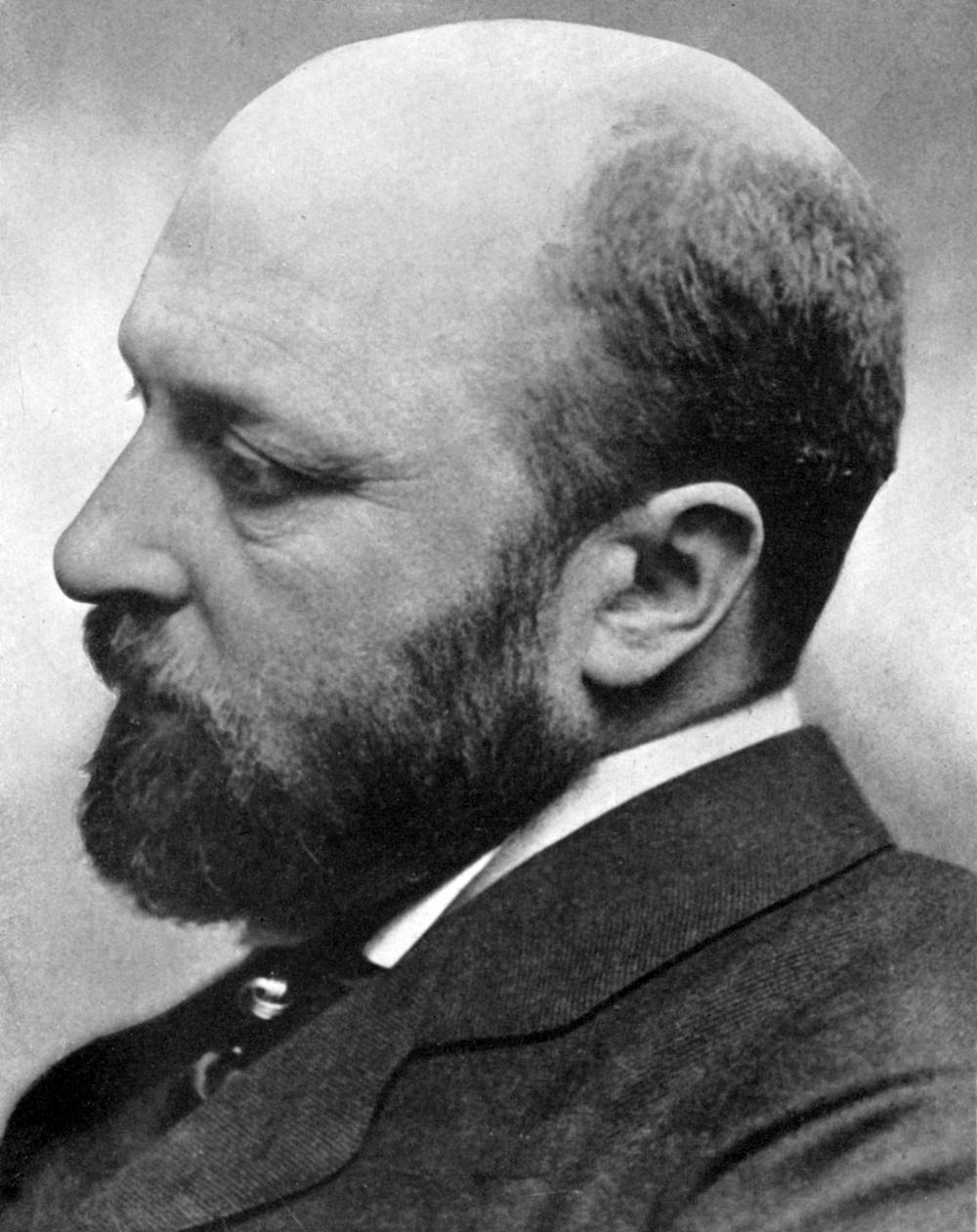
Dipping a bit further back, into Henry James’ “The Spoils of Poynton” from 1897, I was struck by a sentence I hadn’t remembered, or had failed to notice, when I first read that novella decades ago: “She couldn’t leave her own house without peril of exposure.” James uses infection as a metaphor; but what happens to a metaphor when we’re living in a world where we literally can’t leave our houses without peril of exposure?
[Deep knowledge, daily. Sign up for The Conversation’s newsletter.]
In Anthony Powell’s novel “Temporary Kings,” set in the 1950s, the narrator muses about what it is that attracts people to reunions with old comrades-in-arms from the war. But the idea behind the question “How was your war?” extends beyond shared military experience: “When something momentous like a war has taken place, all existence turned upside down, personal life discarded, every relationship reorganized, there is a temptation, after all is over, to return to what remains … pick about among the bent and rusting composite parts, assess merits and defects.”
The pandemic is still taking place. It’s too early to “return to what remains.” But we can’t help wanting to think about exactly that. Literature helps us to look – as Hamlet said – before and after.
Rachel Hadas, Professor of English, Rutgers University Newark
This article is republished from The Conversation under a Creative Commons license. Read the original article.
Seth Armstrong Twigg, Cardiff University
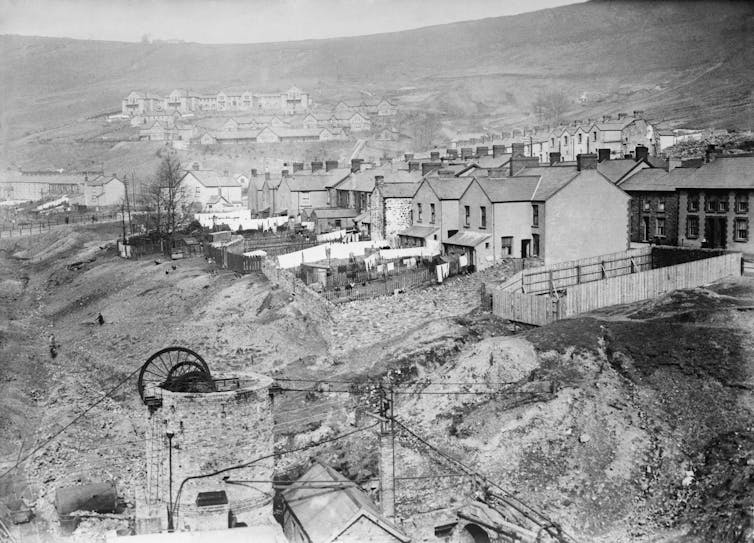
I come from a family of miners. The last person to work down the pit was my paternal grandfather, who dug coal from the subterranean tunnels hidden deep below the Welsh Marches, which lie along the English border. In comparison to the innumerable collieries that made south Wales at one point the biggest coal-exporting region in the world, ours was the forgotten coalfield.
My grandfather was a proud miner, but he was adamant that none of his children would follow in his footsteps. Thatcher’s obliteration of mining communities was conducted in an appalling manner, but reinstating the industry was not the answer. However, when I moved to south Wales to study, I was conscious of a different attitude towards our national heritage.
Shortly after beginning my master’s degree at Cardiff, I attended an event with a panel of ex-colliers. During the Q&A session, one audience member expressed a desire that mining should return to the area, which was met with approval from others. I was aware that this reflected the reality that large parts of south Wales have never fully recovered from the abrupt removal of industry, but also conscious that, on that occasion, there was hardly anyone arguing the contrary.
Admittedly, the coal industry brought employment, community and a strong sense of identity to parts of Wales. However, this came at the cost of widespread ecological destruction, and, despite the current coronavirus pandemic, the most significant threat to our survival remains climate change. As people, we have a natural tendency to look at the past fondly, but in order to avoid regressing, it is important to remember the negative aspects of history.
Literature about Welsh coal mining has attracted a healthy degree of critical attention over the years. Yet, little consideration has been paid towards the way writers depict the environmental impact of the industry.
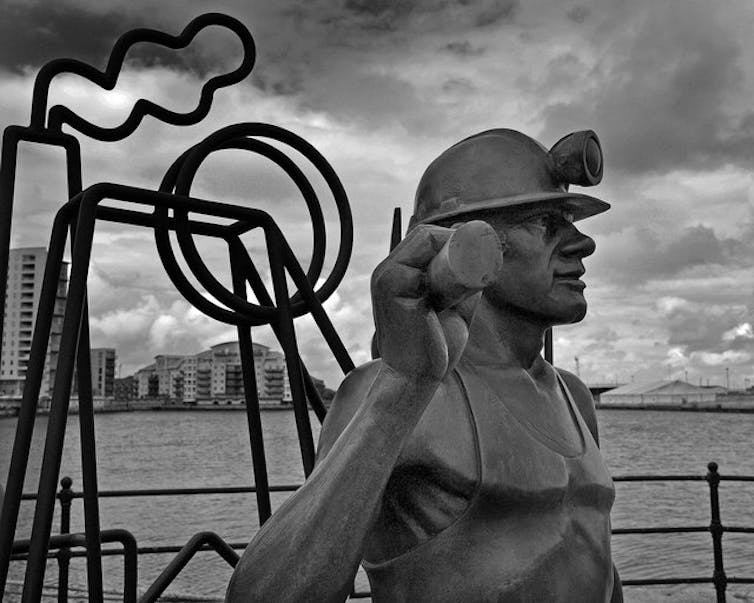
Over the past three years, I have examined a series of texts published in the 1930s, a decade that saw an increased demand – beyond Wales – for literature about the harsh realities of life in mining communities. This Welsh industrial writing, as it became known, is usually viewed as a social document of that era. In my view, we should reclassify these writings as early articulations of the man-made changes that have created today’s climate emergency.
Wales was devastated during the 1930s by the Great Depression. The coal industry was in decline and by 1932, nearly half of all men were unemployed. This economic desolation is mirrored by literary depictions of environmental degradation in Welsh industrial writing, which was going through a boom at the time.
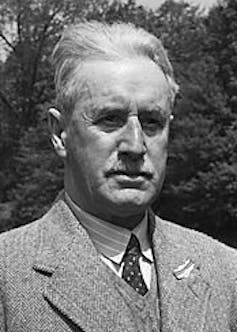
Collieries used local rivers to wash coal, whilst also treating water sources as a deposit for waste. As a result, river ecology suffered for generations. Jack Jones’s Black Parade (1935) communicates the deadly reality of this river pollution in Victorian Merthyr Tydfil, south Wales. Throughout Jones’s novel, the presence of the contaminated local river haunts the characters. Human and industrial waste combine to create intolerable living conditions where rats rule supreme.
Throughout the period of industrialisation, large areas of Welsh forest were cleared to produce the wooden props that were used to create underground tunnels for coal mining. In Idris Davies’s extended poem, Gwalia Deserta (1938), the poet draws parallels between the loss of Welsh trees to industry and the deprivation of the local population during the Depression. Davies’s poem serves as a stark warning of what a place becomes when it loses its trees.
Widespread air pollution was a major consequence of Welsh coal mining. BL Coombes’s autobiographical text, These Poor Hands (1939), describes how collieries created innumerable quantities of dust that blackened the natural landscape and nearby communities, whilst below ground, miners were subjected to abject working conditions that caused fatal respiratory diseases.
During the mining of Welsh coal, large amounts of waste material were also removed from the earth and placed on the surface. This resulted in enormous heaps of black dirt, known as spoil tips, which littered the Welsh landscape.
Richard Llewellyn’s How Green Was My Valley (1939) is criticised for its inaccurate portrayal of mining communities, but as the most widely read account of life in the Welsh coalfield, it deserves attention. The novel focuses throughout on the menacing spoil tip that looms above the protagonist’s house. Published almost 30 years before the Aberfan disaster, in which a spoil tip collapsed onto the Welsh village of Aberfan, killing 116 children and 28 adults, Llewellyn’s text is unsettlingly prophetic.
Given the urgency of reversing the global climate catastrophe, it is important that we end our reliance on fossil fuels. In Wales, we can be proud of our industrial heritage whilst acknowledging its ecologically destructive realities. Literature, in its ability to engage people, can help us remember the negative aspects of our past, so we avoid taking regressive steps in the future.
Seth Armstrong Twigg, Doctoral Researcher in Welsh industrial literature, Cardiff University
This article is republished from The Conversation under a Creative Commons license. Read the original article.
Matthew Redmond, Stanford University
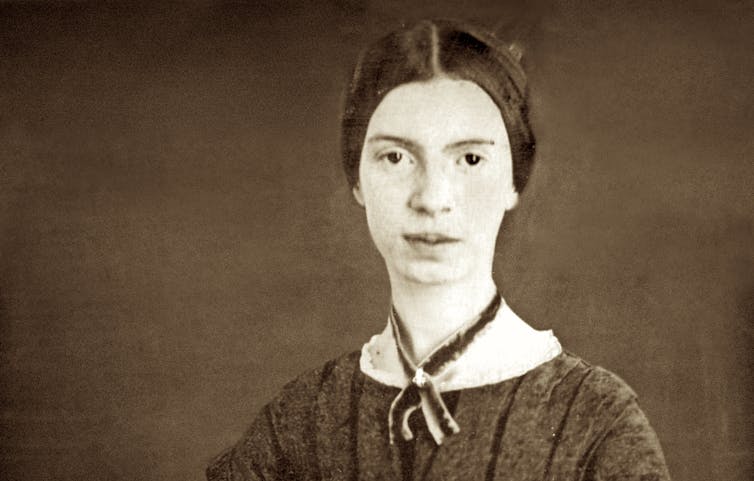
Since her death in 1886, Emily Dickinson has haunted us in many forms.
She has been the precocious “little dead girl” admired by distinguished men; the white-clad, solitary spinster languishing alone in her bedroom; and, in more recent interpretations, the rebellious teenager bent on smashing structures of power with her torrential genius.
As the world continues to endure the ravages of COVID-19, another ghost of Dickinson steps into view. This one, about 40 years old, seems by turns vulnerable and formidable, reclusive and forward. She carries the dead weight of crises beyond her control, but remains unbowed by it.
It was while drafting my dissertation, which explores the meaning of old age in America, that I first encountered this Dickinson. She has been with me ever since.
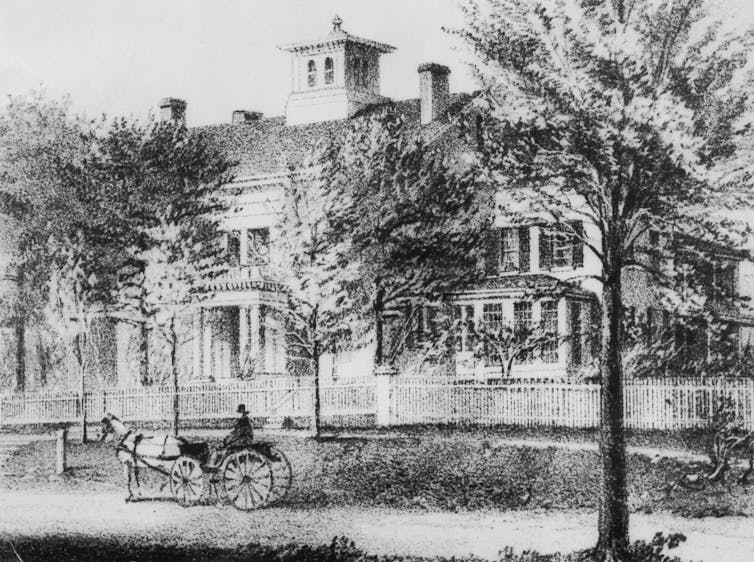
Most admirers of Dickinson’s poetry know that she spent a considerable part of her adult life in what we call self-imposed confinement, rarely venturing outside the family homestead in Amherst, Massachusetts. Less known, perhaps, is that the final 12 years of her life were passed in a state of nearly perpetual mourning.
It began with the death of her father. For all his stern comportment, Edward Dickinson had enjoyed a special relationship with Emily, his middle child. When her surviving letters declare him “the oldest and oddest sort of a foreigner,” one hears the affectionate annoyance that comes with real devotion. He died in 1874, away from home.
Loss followed loss. Favorite correspondent Samuel Bowles died in 1878. With the passing of Mary Ann Evans, otherwise known as George Eliot, in 1880, Dickinson lost a kindred spirit – a “mortal” who, in her words, had “already put on immortality” while living. A very different loss was that of Dickinson’s mother, Emily Norcross Dickinson, with whom she enjoyed little or no rapport for much of their life together, but who became at least somewhat precious to her daughter on her deathbed. That was in 1882, the same year that took from her literary idol Ralph Waldo Emerson and early mentor Charles Wadsworth.
The following year saw the death of her cherished eight-year-old nephew, Gilbert, from typhoid fever, his illness having spurred one of Dickinson’s rare excursions beyond the homestead. The year after that, Judge Otis Phillips Lord, with whom she pursued the only confirmed romantic relationship of her life, finally succumbed to an illness of several years and was wearily dubbed by the poet “our latest Lost.”
[Get the best of The Conversation, every weekend. Sign up for our weekly newsletter.]
What impact did so much grief have on the mind of one of America’s greatest visionary artists? Her letters say little enough. Writing to Mrs. Samuel Mack in 1884, however, she frankly admits: “The Dyings have been too deep for me, and before I could raise my heart from one, another has come.”
The word “deep” is an arresting choice, making it sound as though Dickinson is drowning in a pile of dead loved ones. Each time she comes up for air, yet another body is added to the great mass.
This is characteristic of Dickinson. If her imagination shrinks from visualizing breadth, it thrives on depth. Some of the most captivating images in her poetry are piles of things that cannot be piled: thunder, mountains, wind. During the Civil War, she uses the same technique to represent soldiers’ heroic and terrible sacrifice:
  The price is great - Sublimely paid -
  Do we deserve - a Thing -
  That lives - like Dollars - must be piled
  Before we may obtain?
In describing her more personal losses of the 1870s, Dickinson seems to imagine yet another pile of human corpses rising before her eyes. Or maybe it is the same pile, her loved ones added to the dead troops whose fate she kept contemplating to the end of her own life. Seen in this light, the “Dyings” appear not just too deep but unfathomably so.
At the time of this writing, the pile of lives that overshadows our lives is 800,000 deep and getting deeper by the hour. Dickinson’s imagery shows how keenly she would have understood what we might feel, dwarfed by a mountain of mortality that will not stop growing. The same anger, exhaustion and sense of futility were her constant companions in later life.
Fortunately, she had other companions. As recent studies have shown, Dickinson was the best kind of social networker, maintaining profoundly generative relationships by correspondence from the family homestead. Her poetic output, though greatly diminished toward the end of her life, never ceases, and its offerings include some of her richest meditations on mortality, suffering and redemption.
  I never hear that one is dead
  Without the chance of Life
  Afresh annihilating me
  That mightiest Belief,

  Too mighty for the Daily mind
  That tilling it’s abyss,
  Had Madness, had it once or, Twice
  The yawning Consciousness,

  Beliefs are Bandaged, like the Tongue
  When Terror were it told
  In any Tone commensurate
  Would strike us instant Dead -

  I do not know the man so bold
  He dare in lonely Place
  That awful stranger - Consciousness
  Deliberately face -
These words resonate in the current crisis, during which protecting the “daily mind” has become a full-time job. News reports, with their updated death tolls, erode our intellectual and spiritual foundations. All seems lost.
But if strain and sorrow are palpable in this poem, so is courage. Dickinson’s lonely speaker chooses to express what she has felt, to measure and record the burden of loss that life has thrust upon her. Beliefs, once bandaged, may heal. And while no man has ever been bold enough to confront the deeper “Consciousness” that so many deaths expose within the human mind, the speaker will not rule out doing so herself. There is still room in this blighted world for the kind of visionary experience from which hope not only springs, but flourishes.
Living in the shadow of death, Dickinson remained enamored of life. This, as much as anything, makes her a hero of our time.
Matthew Redmond, Ph.D. Candidate, Department of English, Stanford University
This article is republished from The Conversation under a Creative Commons license. Read the original article.
John McLeod, University of Leeds
In March 2020, when it became clear that my university campus was about to close due to the coronavirus pandemic, I hastily grabbed from my office shelves my well-thumbed copies of JG Farrell’s Empire Trilogy: Troubles (1970), The Siege of Krishnapur (1973), and The Singapore Grip (1978). This was no sentimental choice on my part. I believed that Farrell could help me deal with my queasy feelings that everyday life as I knew it was dissolving frighteningly into incertitude.
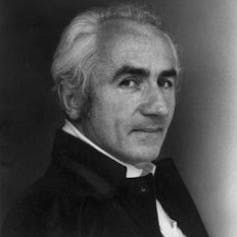
As a writer, Farrell was concerned with those suddenly tipped into uncertainty, no doubt because of his own life being irreversibly turned upside down due to the sudden advent of sickness. Aged 21, he had become seriously ill after playing rugby at Oxford University in December 1956 and was diagnosed with polio. A spell in an iron lung was followed by a long and painful recovery. Farrell’s upper body was permanently affected by the disease. He never recovered full mobility.
Almost overnight, a young, healthy and ambitious undergraduate had become physically fragile and equipped with a keen sense of how quickly and unexpectedly all we take for granted is lost. Cruelly, his illness would play a part in his untimely death by drowning in August 1979, aged 44. While fishing near his new home in Ireland’s Bantry Bay, he was swept into the rough sea. Unable to swim strongly, he was soon lost to the water.
Farrell’s early novels had often dwelt gloomily on the frailty of life. His second novel, The Lung (1965), in particular, sought to explore the dispiriting emotional and existential upset of his sudden illness. Yet, along with A Man From Elsewhere (1963) and A Girl in The Head (1967), it drew little attention – today, all three remain out of print.
His fortunes changed with the publication of Troubles, where he deployed more purposefully his consciousness of life’s latent fragility when depicting British colonial societies falling apart.
This turn to matters of Empire was not fanciful. Born to an Irish mother in Liverpool, Farrell had lived a modestly affluent childhood between England and Ireland before going up to Oxford. He knew the privileged social circles that were home to British colonialist attitudes but took a postcolonial position regarding the unhappy treatment of colonial subjects, such as the Irish.
Troubles imagines the lives of the Anglo-Irish Ascendency as the Irish War of Independence (1919-21) develops. Its often comical depiction of the Ascendency’s decline pokes fun at their arrogance and short-sightedness.
But Farrell’s sensitivity to the bewilderment and anxiety felt by all undergoing history also brings to the novel a measured sense of compassion for those whose worlds were at last evaporating. Indeed, the Empire Trilogy would uniquely combine the compassionate and condemnatory, the sensitive and the satirical, in its indulgent if unforgiving presentation of the colonial establishment. The novel established his critical reputation: it received the 1971 Geoffrey Faber Memorial Prize, while in 2010 it was awarded the “Lost Booker Prize” after a public vote.
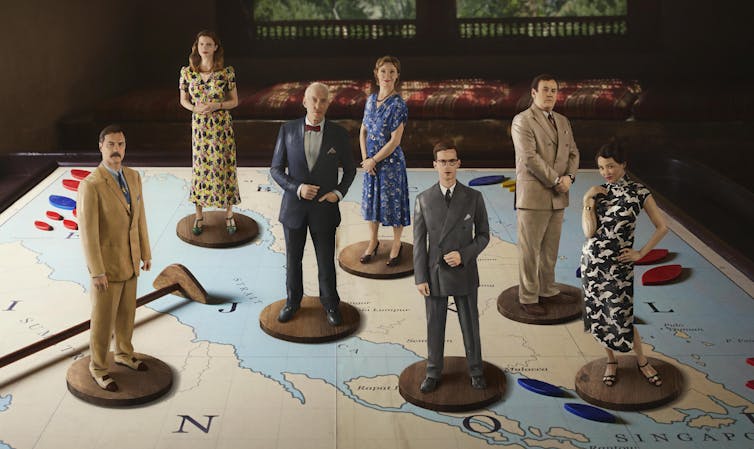
Farrell’s next novel, the Booker prize-winning The Siege of Krishnapur, depicted the ready collapse of British civility during the Indian Rebellion of 1857. Buoyed by its success, Farrell used part of his prize money to travel to south-east Asia to research his next – and, sadly, last – full-length novel, The Singapore Grip, which has just been adapted for television by Christopher Hampton.
Punctuated in turn by scenes of high comedy and historical solemnity, the novel portrays Singapore prior to its humiliating surrender to the Japanese in February 1942. At its heart is one of Farrell’s least likeable befuddled expatriates, the rubber magnate Walter Blackett, whose business empire exemplifies the unholy grip of capitalism and colonialism over the region’s impoverished workers.
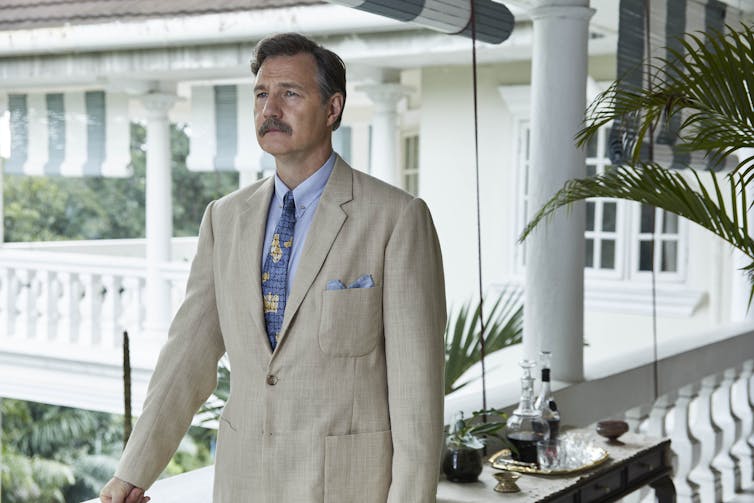
Keen to secure his firm’s future, Walter plots to marry his daughter Joan to Matthew Webb, the son of his geriatric business partner – a scheme all the more bizarre in an increasingly besieged and dangerous city.
An idealist at heart, Matthew’s progressive vision of a world where wealth and wisdom are equitably enjoyed soon becomes as battered as the bombed-out city. Events in Singapore appear instead to prove the “Second Law” often quoted by his American friend, James Ehrendorf:
In human affairs, things tend inevitably to go wrong. Things are slightly worse at any given moment than at any preceding moment.
Yet The Singapore Grip never loses faith in the capacity for survival and endurance. It mixes its unforgiving vision of colonialism’s absurdity and collapse with an unyielding and often warmly humorous embrace of human fellowship. And, while Matthew fails to flee in time, one important figure significantly escapes: an abandoned, diseased and distressed King Charles spaniel, sardonically named “The Human Condition” by one of Matthew’s friends, who is last seen bolting up the gangplank to safety on a soon-to-depart ship.

Highly amusing and deeply penetrating by turns, Farrell’s fiction often renders the human condition as precarious and insubstantial as the ailing dog in The Singapore Grip. But it crucially recognises that people are as complicated as the changing historical circumstances into which they are mercilessly thrust. Farrell’s firm condemnation of Empire never stopped him trying to understand humanely those undergoing its decline.
In reaching for Farrell when lockdown commenced, I had hoped to deal less fearfully with the experience of sudden change. But he soon reminded me, too, of the humane resources we also need at life-changing moments: steadfast hope, a saving sense of humour, and – for those lucky to escape or recover from illness – the wisdom of survival.
John McLeod, Professor of Postcolonial and Diaspora Literatures, University of Leeds
This article is republished from The Conversation under a Creative Commons license. Read the original article.
Ian Milligan, University of Waterloo
A seasonal change is in the air. With a minimal amount of nostalgia about the dwindling days of this unique summer, let’s turn to how we can make the most of the rest of 2020 — clearly a year for the history books.
As a historian, what concerns me is: What will our history of this unprecedented year look like in a quarter century? As the world is reshaped by COVID-19, as well as ongoing protests on a nearly unprecedented scale against racism and police brutality in the United States, Canada and around the world, it’s clear that this will be a year for future historians to make sense of.
A child today will be a historian of 2020 in the future. What sources will they turn to? How will they verify scattered memories? How will people tell the story of the tumultuous times that we’re living in today? 2020 may be a year for the history “books” but of course, the record we leave behind will be digital in manner.
But right now, Canada, unlike many other countries such as the United Kingdom, France, Denmark and others, doesn’t mandate its national library to capture a comprehensive digital record of Canadian life. This needs to change so we can ensure historians of the future have all the sources possible to write a rich, equitable and robust historical record.
From the role of video and social media in sparking and documenting protests to companies and educational institutions that moved online en masse in a matter of days this past March, 2020 will be a year that will be understood through digital media.
With coronavirus isolation, digital media has been enormously important for our interactions with colleagues, friends and loved ones.
Some trends: Zoom’s daily meeting participants went from 10 million in December to 300 million in April and we “doomscroll” through social media feeds before bed. As The New York Times explained: “The virus changed the way we internet.”
Because in part the British Library is empowered to collect millions of their web pages every year through the use of “legal deposit” power, a historian in the U.K. will have a rich record to explore.
For example, what did Britons think of senior adviser Dominic Cummings’ 418-kilometre trip from London to Durham while his wife was unwell? A researcher will be able to visit the British Library (in most cases, an in-person visit is required due to legal reasons) to consult not only social media feeds of everyday researchers, but news websites, U.K. blogs and beyond.
They will be able to draw on nearly everything published on the U.K. web in 2020. Right now a researcher can already view thousands of pages — and, most importantly, these are stewarded by the British Library for future preservation.
This information will be accessible to our future researcher thanks to the power of legal deposit. Legal deposit is defined by the International Federation of Library Associations as a “statutory obligation [that] requires publishers, distributors and, in some countries, printers, to freely provide copies of their publications to the national collection,” and is a power that builds the collections of national libraries including Library and Archives Canada (LAC).
What this has meant in practice is that when a book or publication is published, there has been a legal requirement to deposit the book with a national library.
What happens when a publication moves online? What about blogs? Should they have a similar responsibility to deposit their material? And, critically, does a national library have a duty to preserve this information at scale?
The British Library has, since April 2013, been “entitled to copy U.K.-published material from the internet for archiving under legal deposit.” In practice, this means that it annually archives websites of the U.K.; it also supplements this archive through curated collections such as the earlier mentioned one around global pandemics. Those tweets, blogs, health websites and so on all form part of the historical record — and once archived, there is no legal ability to retroactively delete them.
Crucially, sweeping collections of material under legal deposit means that material is being amassed that does not seem important today — but could be invaluable to a historian in years to come.
The remarkably forward thinking Library and Archives of Canada Act of 2004 gives Library and Archives Canada similar powers. One section of the act, for example, gives the institution the power to take a “representative sample of the documentary material of interest to Canada that is accessible to the public without restriction through the internet or any similar medium.”
These laws, however, aren’t used to their fullest. Canada’s national library doesn’t carry out a comprehensive snapshot of the entire Canadian web domain, meaning that countless voices will be lost for future historians.

This is not to paint too dire a picture. Library and Archives Canada does a great job of capturing material of interest. During COVID-19, it has selectively captured some 38 million digital assets related to COVID-19 by July 2020, which add to their robust web archives including the Government of Canada web archive, which collects and maintains a comprehensive record of federal government’s websites.
Increasingly, it’s making collections, such as the Truth and Reconciliation Commission’s collection, available online. In doing so, Library and Archives Canada is explicitly noting its collecting powers under the 2004 act, suggesting an increasing willingness to share these materials.
We should laud this great work, and use it as a launchpad for the comprehensive collection of all Canadian material.
While Library and Archives Canada has been collecting material for COVID-19, including social media hashtags as well as media and non-media related websites, even 900 websites being regularly collected is patchwork compared to the sheer amount of information published by Canadians online every day.
To do justice to what’s happening around us, and to make sure that historians of the future can understand this moment, the institution and policy-makers need to move quickly.
We need to aim to collect the entire Canadian web domain on an ongoing basis, both during and after COVID, to enable future researchers to understand our country. This will require additional funds to Library and Archives Canada. But, at what better time?
Ian Milligan, Associate Professor of History, University of Waterloo
This article is republished from The Conversation under a Creative Commons license. Read the original article.
The link below is to an article reporting on a new Australian project to digitise and make available out-of-print Australian titles.
For more visit:
https://www.booksandpublishing.com.au/articles/2020/07/31/154544/new-project-to-digitise-lend-and-sell-out-of-print-australian-titles/
The link below is to an article reporting on the Gandhara Scroll, an historically important Buddhist manuscript, that has been made available online.
For more visit:
http://www.openculture.com/2020/08/one-of-the-oldest-buddhist-manuscripts-has-been-digitized-put-online.html
 At the BookShelf

#/media/File:Jack_Jones.jpg)

You must be logged in to post a comment.