
The link below is to an article that looks at the best iOS audiobook apps.
For more visit:
https://ebookfriendly.com/best-ios-audiobook-player-ipad-iphone/

The link below is to an article that looks at the best iOS audiobook apps.
For more visit:
https://ebookfriendly.com/best-ios-audiobook-player-ipad-iphone/
The link below is to an article that takes a look at the top ebook reader brands of 2018.
For more visit:
https://goodereader.com/blog/electronic-readers/the-top-5-e-reader-brands-of-2018
The link below is to an article that considers what the perfect audiobook app would be like.
For more visit:
https://ebookfriendly.com/perfect-audiobook-app-ios-android-features/
The link below is to an article that takes a look at how to make more time for reading.
For more visit:
https://www.goodreads.com/blog/show/1394-13-ways-book-lovers-make-more-time-for-reading
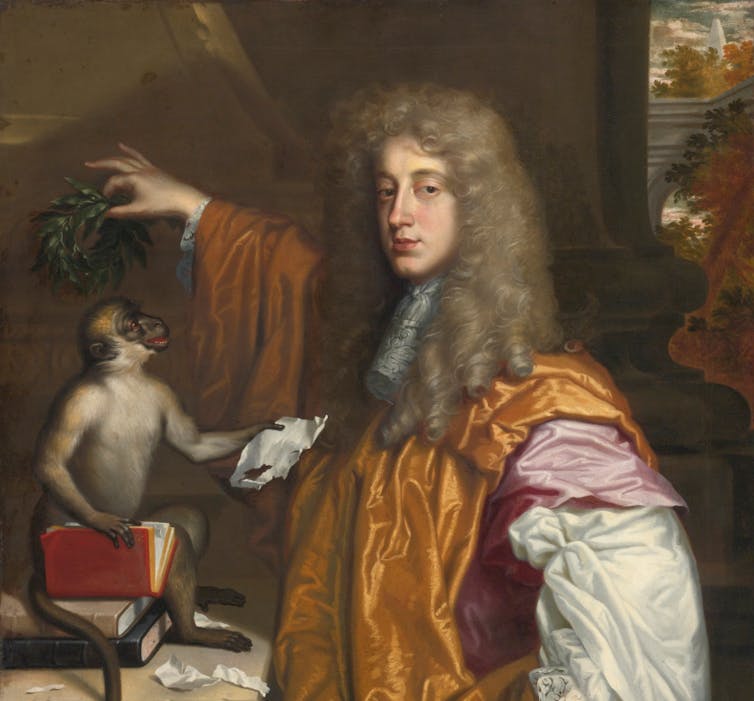
Jacob Huysmans
Claudine van Hensbergen, Northumbria University, Newcastle
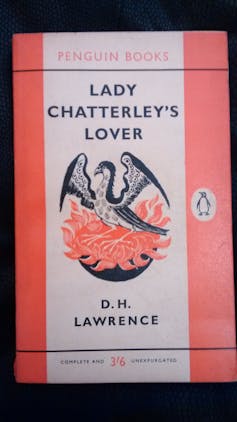
The judge’s copy of Lady Chatterley’s Lover used in the landmark 1960 obscenity trial of DH Lawrence’s famous novel is to be sold at auction in October. The paperback copy will be sold with a fabric bag, hand-stitched by the judge’s wife Lady Dorothy Byrne so that her husband could carry the book into court each day while keeping it hidden from reporters. The lot includes the notes on significant passages that Lady Byrne had helpfully marked up on the book for her husband, and a four-page list of references she had compiled on the headed stationery of the Central Criminal Court.
After six days of evidence and only three hours of deliberations, the jury found in the favour of Penguin Books, its verdict allowing the publisher to print copies of the novel for the first time. The trial was seen as a victory for liberal ideas over the old establishment. In literary terms, it signalled the opportunity for authors to write with a new type of language and freedom.
But was Lawrence really the first writer to use obscenity in literature? And were liberal readers of the 1960s the first to appreciate the literary potential of obscene words and sex scenes? In short, the answer is no. The literary world which Lawrence and his fellow modernist writers inherited was that of the Victorian establishment. An establishment that had silenced earlier writers who, like Lawrence, used obscenity for literary ends.
One of the most important writers to be wiped from the publishing record during the 19th century was the poet John Wilmot, Earl of Rochester. Even today, we continue to find the obscene language and images found in Rochester’s poetry shocking. Take, for example, his A Satyr on Charles II a critique of the monarch as a man governed by his penis:
‘Tis sure the sauciest prick that e’er did swive,
The proudest, peremptoriest prick alive.
Though safety, law, religion, life lay on ’t,
‘Twould break through all to make its way to cunt.
Restless he rolls about from whore to whore,
A merry monarch, scandalous and poor.
Following his death in 1680 publishers scrambled to produce editions of Rochester’s poems – correctly perceiving the public appetite for his verse. An initial run of pirate editions of Rochester’s poetry was quickly supplanted with an authoritative collection, produced in 1691 by the leading literary publisher of the day, Jacob Tonson. Tonson is credited with popularising John Milton’s (up to that point, fairly unsuccessful) poem Paradise Lost and also producing the first footnoted editions of William Shakespeare’s collected plays.
So why did a respectable publisher such as Tonson take the gamble of printing Rochester’s verse? The answer lies in the recognition of Rochester’s poetry as literature rather than obscenity. Just as with Lady Chatterley’s Lover, we need to read past the obscene language and images of the work to understand what Rochester is really saying.
Rochester is a poet of the human condition. He strips man down to his barest drives and desires to see the animal lurking underneath. In this way, he was much like the contemporary philosopher Thomas Hobbes, who famously pronounced that life was “nasty, brutish and short” and that underneath it all man was a beast like any other.
For Rochester, the sexual realm is just another place where we see (and feel) this stark reality. Rochester strips away all sense of love and romance from his depicted sexual encounters. And there are many of them. His images are those of the mechanics of sex, its failures, disappointments and disease. Take his notorious poem, The Imperfect Enjoyment, a work that opens with a scene indicating the sexual promise to come:
Naked she lay, clasped in my longing arms,
I filled with love, and she all over charms …
Quickly, this promise is destroyed. The poem’s speaker prematurely ejaculates:
But whilst her busy hand would guide that part
Which should convey my soul up to her heart,
In liquid raptures I dissolve all o’er,
Melt into sperm, and spend at every pore.
A touch from any part of her had done ’t:
Her hand, her foot, her very look’s a cunt.
The speaker’s lover encourages him to try again, but to no success:
Trembling, confused, despairing, limber, dry,
A wishing, weak, unmoving lump I lie.
The obscene language Rochester employs in The Imperfect Enjoyment – and the sexual act on which it focuses – led generations of readers to view the work as pornographic. But this is to misread the poem. The clue is in the title: the poem portrays the ultimate failure of desire. The emptiness of human experience. And its cold, clinical and obscene language (sperm, spend, pore, cunt) is contrasted throughout the poem with phrases that point to the scene’s absent romance (the sexual act “should convey my soul up to her heart”, but it doesn’t).
Rochester is often seen as a dangerous or obscene writer in the way he glamorised the licentious world of the Restoration court. But when we read his poetry more closely, we find little glamour in the language expressed. His verse exposes human feeling and behaviour, showing the superficiality of our social world with all its polite manners and codes of behaviour. And the use of obscene language is key to that project. As Rochester succinctly phrased it in his correspondence, “Expressions must descend to the Nature of Things express’d”.
The Victorians couldn’t cope with Rochester’s poetry, and there were no editions of his work published in the 19th century. It wasn’t until 1963, in the wake of the Chatterley trial, that American scholar David M. Vieth began work on a modern uncensored edition. Vieth gave us back the real Rochester and made it possible for readers to access his poems once again.
Obscenity might not make for comfortable reading, but that’s often its point. The purpose of literature is to make us feel, and to give us new ways of experiencing and thinking about the world around us. For Lawrence this involved using a new language that cut across class and gender in celebrating the sexual act – for Rochester it involved looking into the mirror and confronting the beast within.
Claudine van Hensbergen, Senior Lecturer in 18th Century English Literature, Northumbria University, Newcastle
This article is republished from The Conversation under a Creative Commons license. Read the original article.
The link below is to an article that looks at why the writer doesn’t organise her bookshelves.
For more visit:
https://bookriot.com/2018/09/29/why-i-dont-organize-my-bookshelves/
The link below is to an article that takes a look at endpapers.
For more visit:
https://bookriot.com/2018/09/29/in-praise-of-endpapers/
The link below is to an article that takes a look at the latest update of the Kindle for iOS app.
For more visit:
https://ebookfriendly.com/kindle-ipad-iphone-update-discover-prime-reading-kindle-unlimited/
The link below is to an article that takes a look at speed reading.
For more visit:
https://bookriot.com/2018/09/04/how-to-read-faster/
Kamilla Elliott, Lancaster University
There have been several attempts over the years to make a movie out of DM Thomas’s critically acclaimed 1981 novel, The White Hotel. But despite the involvement of such giants of the screen as David Lynch, Bernardo Bertolucci, Terrence Malik and David Cronenberg – who made a name for himself as a director who can adapt so-called “unfilmable books” – the novel has this far proved resistant to film adaptation.
In the absence of a film version, the book was recently adapted for radio by the BBC, directed by Jon Amiel and based on a screenplay written by the late Dennis Potter in the 1980s.
DM Thomas himself wrote in 2004 about the tortuous and sometimes tortured battle over screen rights for his novel, but apart from the saga over rights – so familiar to any novelist whose work has pricked the attention of film-makers – what was it about the book itself that meant a radio adaptation succeeded when film adaptations have failed?
There are a number of media, cultural and economic conventions that can explain this. But, in general, books that have been called “unfilmable” are books that are hard to read: weighty, ponderous, abstract, complex, convoluted, labyrinthine, densely allusive and excessively long. Or books that treat terrifying, horrifying, revolting or repulsive subjects.

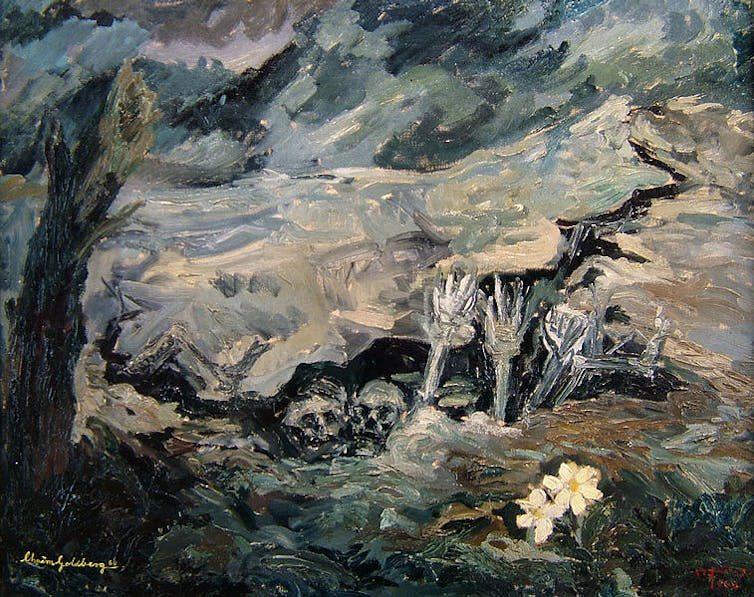
The White Hotel is a difficult read – for a start there’s the unreliable, psychologically disturbed, potentially hallucinating narrator, whose obscene and surreal narratives are followed by representations of horrific historical events and natural disasters. The book’s sections shift jarringly across textual forms and styles – rational, psychoanalytic case notes melt into mythological explorations of psychological symbols. Stories of strange mental states jolt into collective, realist histories. It’s a challenging read.
By contrast, mainstream film conventions require a clear narrative structure and a degree of temporo-spatial logic and continuity. They tend not to favour excessively “talky” screenplays, preferring to tell their stories through visuals and structure them via editing.
These and other reasons that books have been considered unfilmable have been widely discussed. They include historical sprawl (Gabriel Garciá Marquez’s One Hundred Years of Solitude), multiple worlds (Stephen King’s Dark Tower series), too many characters (David Foster Wallace’s Infinite Jest), and multiple unreliable narrators who confuse the story (Mark Z. Danielewski’s House of Leaves).
Some novels are written with a stream of consciousness that keeps the story inside a character’s head (James Joyce’s Ulysses and Thomas Bernhard’s Woodcutters); there may be lack of clear plot and dynamic action (Virginia Woolf’s To the Lighthouse), fantasies too elusive for film’s special effects (H.P. Lovecraft’s At the Mountains of Madness), or a book may be too distressing or obscene to visualise realistically (Art Spiegelman’s Maus and The White Hotel).
Censorship has also limited the number and scope of books that are allowed to be filmed – as films are more tightly controlled and censored than books. The reasons for this tighter control of visual images have ancient roots in Judaic, Islamic and Protestant Christian religions which represent the word as divine and the visual image as profane.
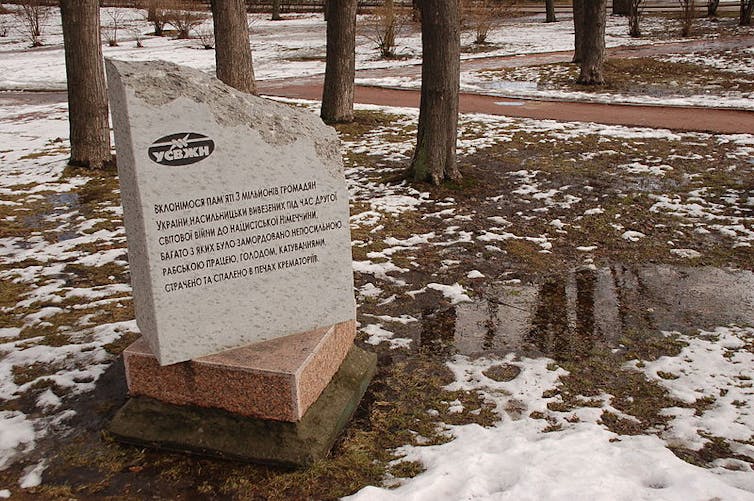
Their legacy persists in secular censorship practices. The US Motion Picture Production Code (MPCC) of 1930 ruled that: “The latitude given to film material cannot … be as wide as the latitude given to book material,” because “a book reaches the mind through words merely; a film reaches the eyes and ears through the reproduction of actual events”. It concluded that:
The mobility, popularity, accessibility, emotional appeal, vividness, straightforward presentation of fact in the films makes for intimate contact on a larger audience and greater emotional appeal. Hence the larger moral responsibilities of the motion pictures.
The MPCC advocated censoring films more stringently than books because film “reaches every class of society”, while other arts have their “grades for different classes”.
Even following the relaxation of the MPPC and similar censorship laws in other nations in the late 20th century, these considerations persist. When James Joyce’s Ulysses (1922) was made into a film by Joseph Strick in 1967, it remained banned in Ireland until 2000, whereas the book was never officially banned in Ireland.
When David Cronenberg filmed William S. Burroughs’s so-called unfilmable Naked Lunch (1959) in 1991, and was criticised for not being faithful to the book, he retorted that a “straightforward adaptation”, featuring all of the book’s far-flung locations and representing its most shocking scatological and sexual passages would “cost US$100m and be banned in every country in the world”. So the book could be filmed, but it could not be financed or pass film censorship laws.
Financing and censorship are interconnected: films have to reach a much larger audience than novels or radio plays to turn a profit, and must therefore appeal to the mainstream. BBC Radio 4 has a much smaller audience and can appeal to other demographics on other radio channels.
For all of these reasons, a word-only adaptation for the niche audience of BBC Radio 4, aired on a Saturday afternoon – a time when listener numbers are close to being the lowest of the week – clearly offered an economically viable and socially acceptable venue for transmitting this brilliant and challenging novel in another media form. For this, at least, we must be grateful.
Kamilla Elliott, Professor of Literature and Media, Lancaster University
This article is republished from The Conversation under a Creative Commons license. Read the original article.
 At the BookShelf

You must be logged in to post a comment.