Unknown's avatar

Remembering Janet Malcolm: her intellectual courage shaped journalism, biographies and Helen Garner


Matthew Ricketson, Deakin University

Journalism has rarely had a fiercer critic, nor a finer practitioner than the longtime writer for The New Yorker, Janet Malcolm, who died last week aged 86.

Some might quibble with the description of Malcolm as a journalist, but journalism is a far more supple practice than commonly believed. One list of the best American journalism of the 20th century, for instance, had Carl Bernstein and Bob Woodward’s Watergate reporting for The Washington Post ranked highly, but the top place went to John Hersey’s Hiroshima.

Published in 1946 in The New Yorker, Hersey’s 31,000-word article revealed in horrifying details the experiences of the victims of the first atomic bomb. It was also a pioneering, influential piece of what we would now call narrative non-fiction.

Malcolm began contributing to the magazine 17 years later, in 1963.

Over the next nearly six decades, she wrote many long reported pieces, profiles and essays that were published first in the magazine, then as books. Few journalists’ work has had as much influence on the way people thought about a range of topics – psychoanalysis, journalism, biography and the law.

She achieved this through a formidably sharp intelligence and sentences that were, as the magazine’s current editor, David Remnick, wrote last week, “clear as gin, spare as arrows, like no one else’s”.

A quiver of these sentences opens her withering critique of journalism, The Journalist and the Murderer, published in 1989:

Every journalist who is not too stupid or too full of himself [sic] to notice what is going on knows that what he does is morally indefensible. He is a kind of confidence man, preying on people’s vanity, ignorance, or loneliness, gaining their trust and betraying them without remorse.

When this was published, journalists exploded in outrage, not least because Malcolm had pierced the omertà observed by journalists concerning how they went about their work. There are all sorts of legitimate qualifications to be made about Malcolm’s insight, but more than three decades later it remains a key prod to any journalist, especially those working on longer projects, to reflect on the messy complexities inherent in the relationship between themselves and their sources.

Helen Garner’s ‘shard of horror’
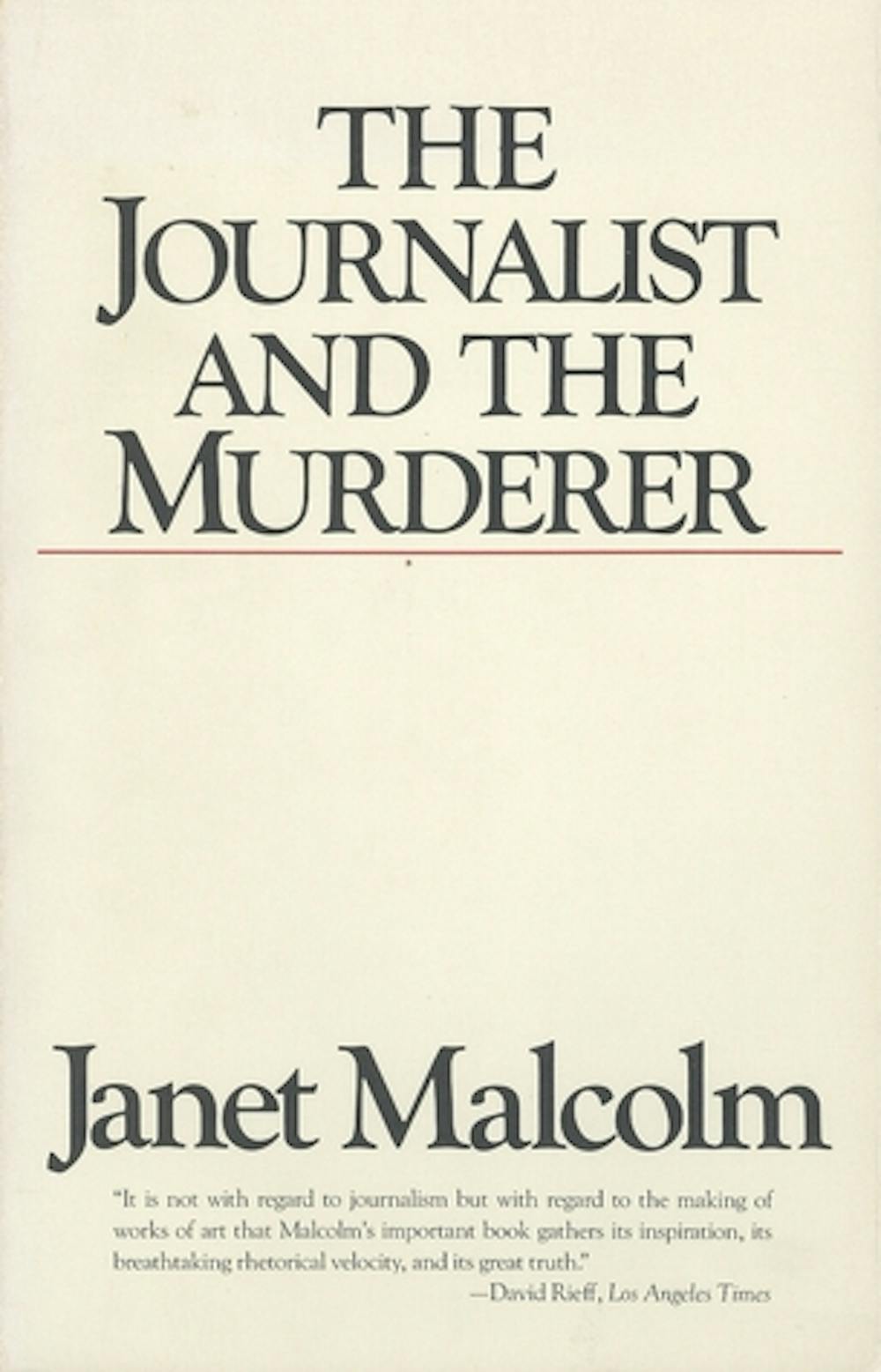
The Journalist and the Murderer book cover

Malcolm’s influence extends to Australia, primarily through Helen Garner, who came to fame through her fiction but forged a second career as one of the nation’s foremost practitioners of narrative non-fiction, and a highly controversial one, too.

When Garner read The Journalist and the Murderer, she said it immediately struck a chord. “It sends a shard of horror right through you,” she said in an interview for Meanjin in 2012.

Later in the same interview with Sonya Voumard, she talked about her debt to Malcolm when writing The First Stone (1995), her still much-debated account of a sexual harassment case at Melbourne University’s Ormond College in the early 1990s.


Read more:
Helen Garner’s This House of Grief: criminal justice viewed from the coalface


She recalled interviewing a retired judge who had once chaired the Ormond College council and was a “tough, smart old lawyer” who revealed little. As they talked and drank tea, Garner found herself gobbling up the homemade shortbread biscuits he had provided.

After she’d had three, he put the lid on the jar, saying “I didn’t do that to keep you out”, but he had.

Garner recalled:

It wouldn’t have occurred to me, unless I’d read Janet Malcolm, to put a Freudian interpretation on his closing the jar – I mean Freudian in the sense that people are always doing and saying things that enact their real purpose. He would have thought the incident was about biscuits. But unconsciously he was indicating to me that he was in charge of how much would be given and taken.

A writer of unusual intellectual courage

At that stage Garner had been reading Malcolm’s The Silent Woman (1993), her excoriating attack on biography in general and the industry surrounding the short life and tragic death of Sylvia Plath in particular.

In it, Malcolm likens biographers to professional burglars:

The voyeurism and busybodyism that impel writers and readers of biography alike are obscured by an apparatus of scholarship designed to give the enterprise an appearance of banklike blandness and solidity.

Readers, as well as biographers, are skewered for colluding in the exciting, forbidden undertaking of “tiptoeing down the corridor together, to stand in front of the bedroom door and try to peep through the keyhole”.

The Silent Woman book cover

Biographers were as outraged as journalists had been a few years earlier. Readers don’t appear to have objected. They — we — seem to think Malcolm must be talking about other readers, the voyeuristic ones. She couldn’t possibly be talking about us.

But she was, of course. One of the paradoxes of Malcolm’s work is she continued to practice the crafts that she forensically critiques — journalism and biography. For some, this might amount to hypocrisy. To me, it underscores her intellectual courage, taking seriously the power and influence inherent in the practice of these two forms, and refusing to shelter behind loyalty to her tribe.

Which brings me to my favourite rhetorical aria of Malcolm’s, also from The Silent Woman:

The narratives of journalism (significantly called ‘stories’), like those of mythology and folklore, derive their power from their firm undeviating sympathies and antipathies. Cinderella must remain good and the stepsisters bad. ‘Second stepsister not so bad after all’ is not a good story.

Malcolm refused to write fairytales. Her stories may be as sharp as arrows; they also fly true.


Read more:
Biography in the age of celebrity: what’s left to reveal?


The Conversation


Matthew Ricketson, Professor of Communication, Deakin University

This article is republished from The Conversation under a Creative Commons license. Read the original article.
Unknown's avatar

Moved by words: how poetry helps us express our feelings


Patrick Semansky/AAP

Maria Takolander, Deakin University

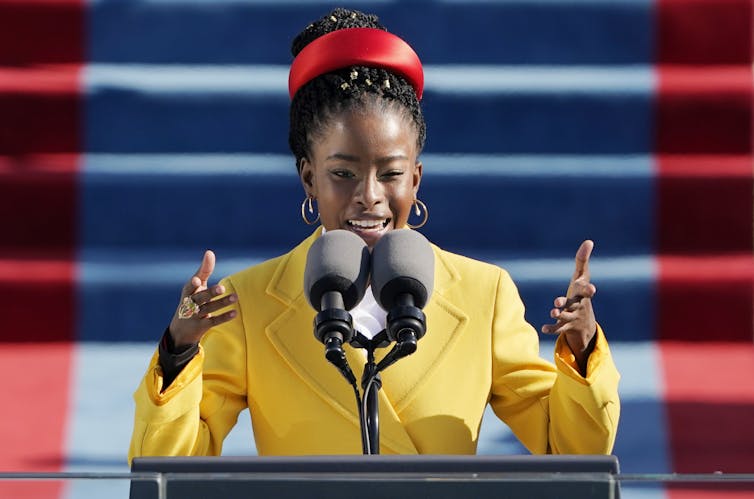
Poetry has made something of a comeback in popular culture, thanks to America’s Amanda Gorman, who read her performance poems at a presidential inauguration and this year’s Super Bowl. Gorman has been described as bringing poetry to the masses.

However, when it comes to the mainstream, poetry has long been hiding in plain sight. Gorman’s spoken-word performances, which have been compared to hip hop, drew attention to poetry in music lyrics. But poetry is also visible in movies and on TV.

These media representations are interesting because they show how poetry is popularly understood in connection with feelings. And that popular wisdom chimes with findings in cognitive neuroscience about how language and, by extension, poetry work.


Read more:
Ode to the poem: why memorising poetry still matters for human connection


Aside from films or TV series about poets, such as Dickinson or Paterson, poetry makes a cameo in some of our most iconic films, where it is said to represent or intensify a range of emotions. These include love (Before Sunrise), mad ambition (Citizen Kane), nostalgic patriotism (Skyfall), pride (Invictus), nihilism (Apocalypse Now) and trauma (The Piano).

Poetry, representative of emotion, is also frequently used to symbolise humanity. This is particularly apparent in films about clones.

In the Tom Cruise blockbuster Oblivion, when the clone Jack Harper recites a poem from Thomas Babington Macaulay’s Lays of Ancient Rome this reinforces his legitimacy. In Blade Runner, Rutger Hauer’s Roy Batty misquotes William Blake:

Fiery the angels fell; deep thunder rolled around their shores; burning with the fires of Orc.

What emerges from poetry’s onscreen appearances, then, is a popular understanding of it as an expression of human feeling and evidence of genuine humanity.

Cognitive neuroscience

This intuitive understanding of poetry resonates with findings in cognitive neuroscience. Leaving behind theories of the brain that suggest it operates like a computer and theories of language that focus on “mental grammar”, many scientists now acknowledge the body and emotion as the foundations of both cognition and speech.

Of particular interest is the role of mirror neurons. These brain cells fire when an action is observed or performed, and they tell us a lot about how we understand the actions of others. They suggest understanding comes from a mirroring or imitation that takes place in the brain but is acted out or felt in the body.

An example is the contagious effect of a smile. When we observe someone smiling, we mirror that action to understand it.

Something similar happens when understanding language. Words contagiously move us. As neuroscientist Christian Keysers explains in The Empathic Brain, if you hear or read the word “lick”, the part of your brain that moves your mouth is activated to aid understanding. The same happens if you hear or read the word “kick”. As a result, we feel the meaning of these words in our bodies.

What about producing words? Speech is fundamentally a motor activity, which evolved from gesture. We are moved to speak, and we literally move — our lips, our tongue, our lungs, our stomach muscles, and often even our hands — to express ourselves.

As infants, we begin learning language in interaction with a caregiver, imitating the shapes of their mouth, and waving our arms and legs in excitement and frustration at the repetitive noises they make, until eventually we are able to imitate their sounds. Those sounds are accompanied by feelings, related most strongly to a desire to communicate beyond the boundaries of ourselves.

Of course, language develops into a more abstract system for communication. It can often remain a struggle, however, to give expression to feelings that are powerfully felt in the body, such as loneliness or grief or trauma. As John Hannah’s character says in Four Weddings and a Funeral, when trying to articulate his feelings about his dead partner, “Unfortunately there I run out of words”.


Read more:
On poetry and pain


Rhymes and rhythms

This is where poetry comes in, making use of the rhymes and rhythms that have helped us find speech from infancy, calling attention to the auditory qualities of language to convey meaning through feeling.

If we can’t do it ourselves, we quote someone else’s words, instinctively and ritualistically associating poetry with the expression of emotion.

This link to emotion, as well as child-like speech, undoubtedly goes some way to explaining another popular idea about poetry: that it signals “madness”. Biopics of poets feed this stereotype by overwhelmingly choosing poets with mental illnesses as their subjects — for instance, Sylvia and Pandaemonium, portraits of Sylvia Plath and Samuel Taylor Coleridge respectively.

However, cognitive neuroscience — and popular wisdom — suggest poetry actually exemplifies an important truth about language and human nature.

While poetry is regularly denounced for “not making sense”, our cognition and our language do not arise according to purely rational principles.

We are bodies wrought by feeling. Robin Williams’ character simplifies this truth in Dead Poets Society:

We read and write poetry because we are members of the human race. And the human race is filled with passion.The Conversation

Maria Takolander, Associate Professor in Creative Writing and Literary Studies, Deakin University

This article is republished from The Conversation under a Creative Commons license. Read the original article.

Unknown's avatar

Growing up with trees: new books use story and science to connect kids with nature


Unsplash/Pat Whelan, CC BY

Kathryn Williams, The University of Melbourne

When I tell people I’m an environmental psychologist, they often assume that means I am a “tree hugger” and they are not entirely wrong. But it really means I spend a lot of time thinking and finding out about people’s relationships with the natural world, trees included.

So when I dropped in at my local book store and saw a whole collection of new books for children about trees, I found myself wondering: What kinds of books help kids connect with trees?

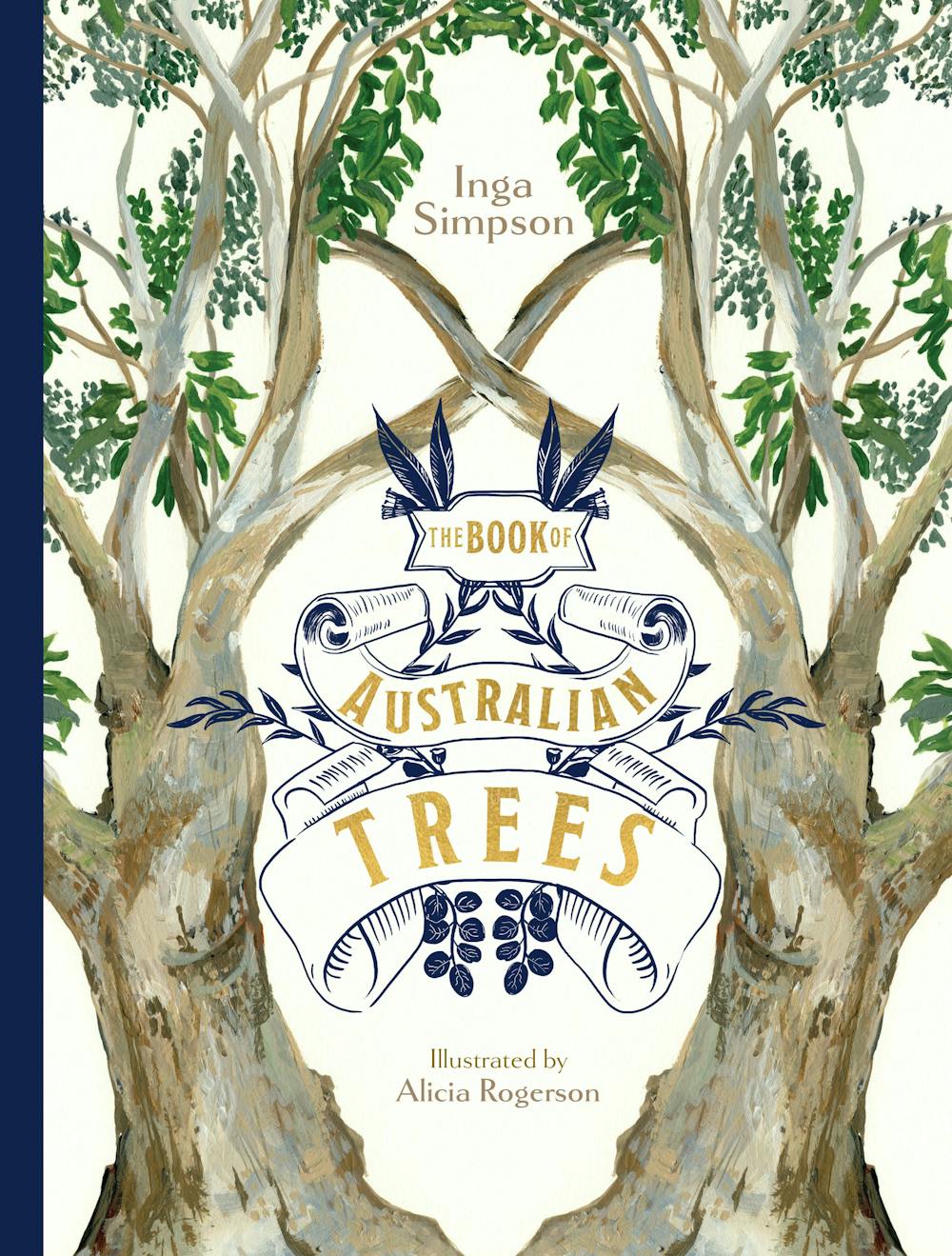
The question was prompted by a recent publication, The Book of Australian Trees by Inga Simpson and Alicia Rogerson. Its not the only tree book published this year, but it’s notable for its focus on Australian trees.

The last few years have seen the publication of some remarkable books about trees for children, for example Peter Wohlleben’s Can you hear the trees talking (a 2019 young reader’s edition of his book The Hidden Life of Trees) and Piotr Socha and Wojciech Grajkowski’s The Book of Trees (2018).

I love both these books, but they also illustrate why books about Australian trees and plants are needed. When Socha and Grajkowski declare: “In winter, the only green trees are coniferous trees”, or when Wohlleben suggests young readers go outside and find a birch log (likely in in their family’s store of firewood) kids in the southern hemisphere might feel lost.


Read more:
People are ‘blind’ to plants, and that’s bad news for conservation


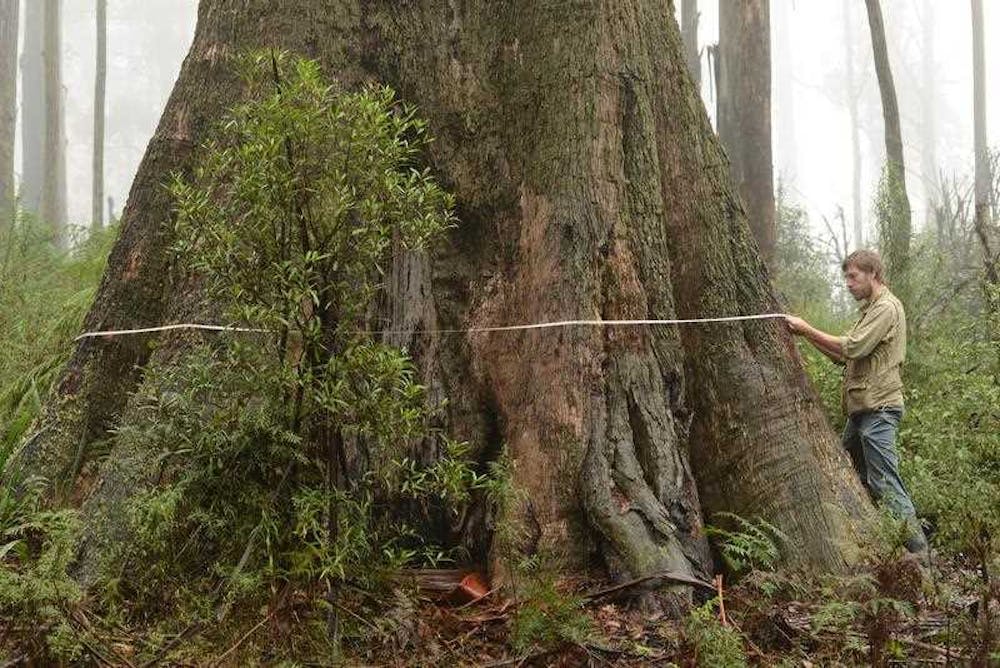
A researcher measures a Mountain Ash in a forest in Victoria.
Australian National University

Learning to love plants and trees

Having books that help children learn to love trees really matters to me. There is increasing concern that people are less connected with the natural world than in the past. Plants are of particular concern, as there is evidence of lower appreciation, knowledge and concern for plants compared with animals. Various writers have noted the negative implications of these trends for human health and well-being, environmental action, and conservation.

Direct experience of nature is often seen as essential to building connections, but it’s not always possible and might not be enough. Books can help children connect with trees, for example by:

So how are recent children’s book authors going about this important task?


Read more:
Where the old things are: Australia’s most ancient trees


The Book of Australian Trees

The introduction to Simpson and Rogerson’s book echoes some of these pathways for connection. “Trees tell stories about places,” Simpson writes and while trees may all seem the same, “if you look more closely, they are each a little different, like people”.


Goodreads

The book introduces just 16 different trees, most from the eastern mainland states of Australia. Each species is introduced with a single painting by Rogerson, often showing the trunk and lower canopy but sometimes just a part of the trees such as a Bunya Pine nut or a flower.

Simpson’s text is brief. It includes visual characteristics of the tree, the kinds of soils or climate in which it grows, and usually a an insight to cultural associations with the tree. Some entries refer to “famous trees”, for example Centurion, the tallest mountain ash tree found in Tasmania. Others refer to Australian literary references to trees, like the “Old Man Banksias” of May Gibbs’ Snugglepot and Cuddlepie stories.

I enjoyed Simpson’s evocative description of trees, particularly of bark and the ways it differs across trees and seasons. These often emphasise the links between visual attributes of trees and familiar human characteristics. Brush box branches “grow out like arms, with crooked elbows, then wrists and long fingers”. But while Simpson describes the kind of environments in which the trees typically grow, there is little sense of story or sense of place in these descriptions.

Books on trees and plants often focus purely on ecological qualities. Simpson incorporates cultural aspects of trees as they offer an important means of connection. But these are not always well considered. Linking magnificent Flame Trees to Cold Chisel’s 1984 song about “lost loves or old flames” seems unlikely to resonate with younger readers. Only a single entry (Bunya Pine) references relationships with First Nations peoples that have been maintained over many thousands of years.

The book is beautifully illustrated and celebrates the beauty of trees of this land — the flyleaf paintings of leaves, bark, cones, seeds, and blossoms lend themselves to a plant-rich conversation with younger readers.

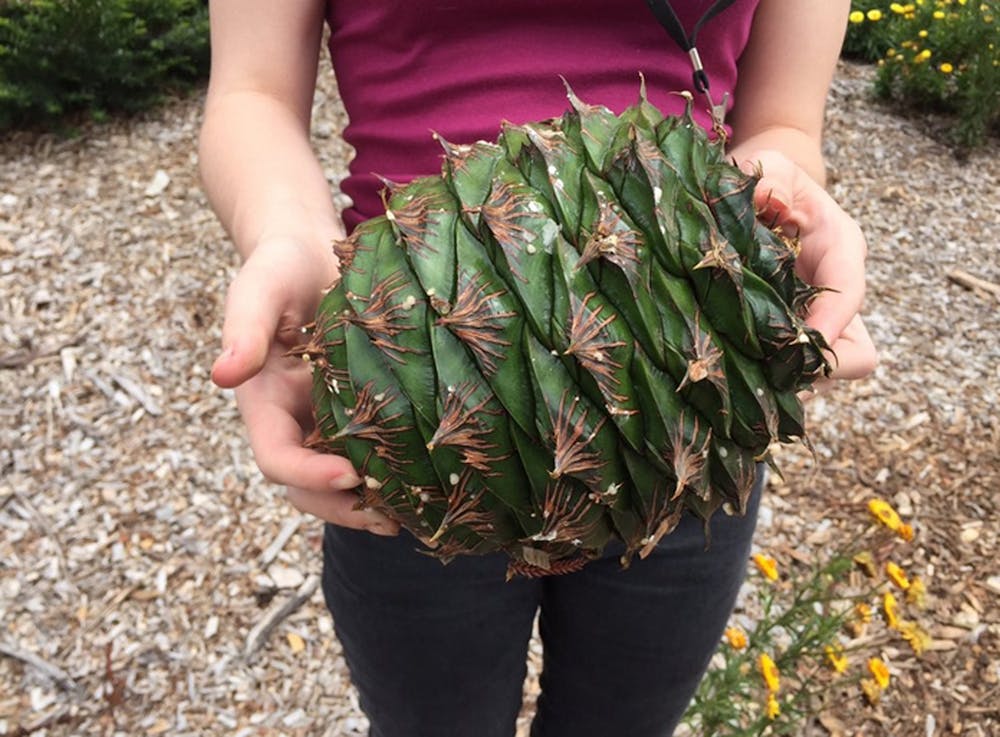
The cone from a Bunya Pine.
Australian Botanic Gardens

4 more to choose from

Other recent books about trees make great use of stories, emotion, science and tree-related activities to help children connect with trees.


Goodreads

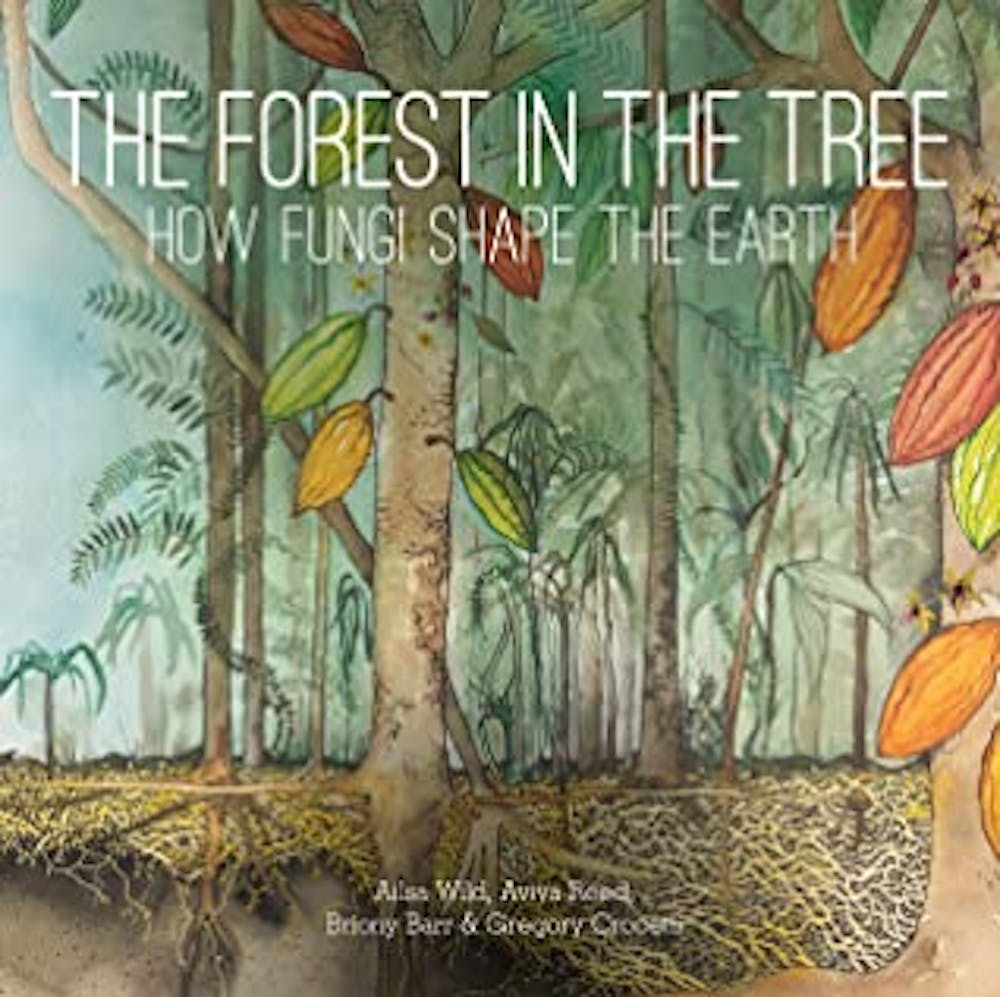
The Forest in the Tree (by Australian team Ailsa Wild, Aviva Reed, Briony Barr and Gregory Crocetti) skilfully weaves story and science to explore symbiotic relationships between trees and fungi. Characters include Broma the Cacao tree and We, Gloma the fungal network that connects the forest system. It is sure to fascinate and inform older children.


Goodreads

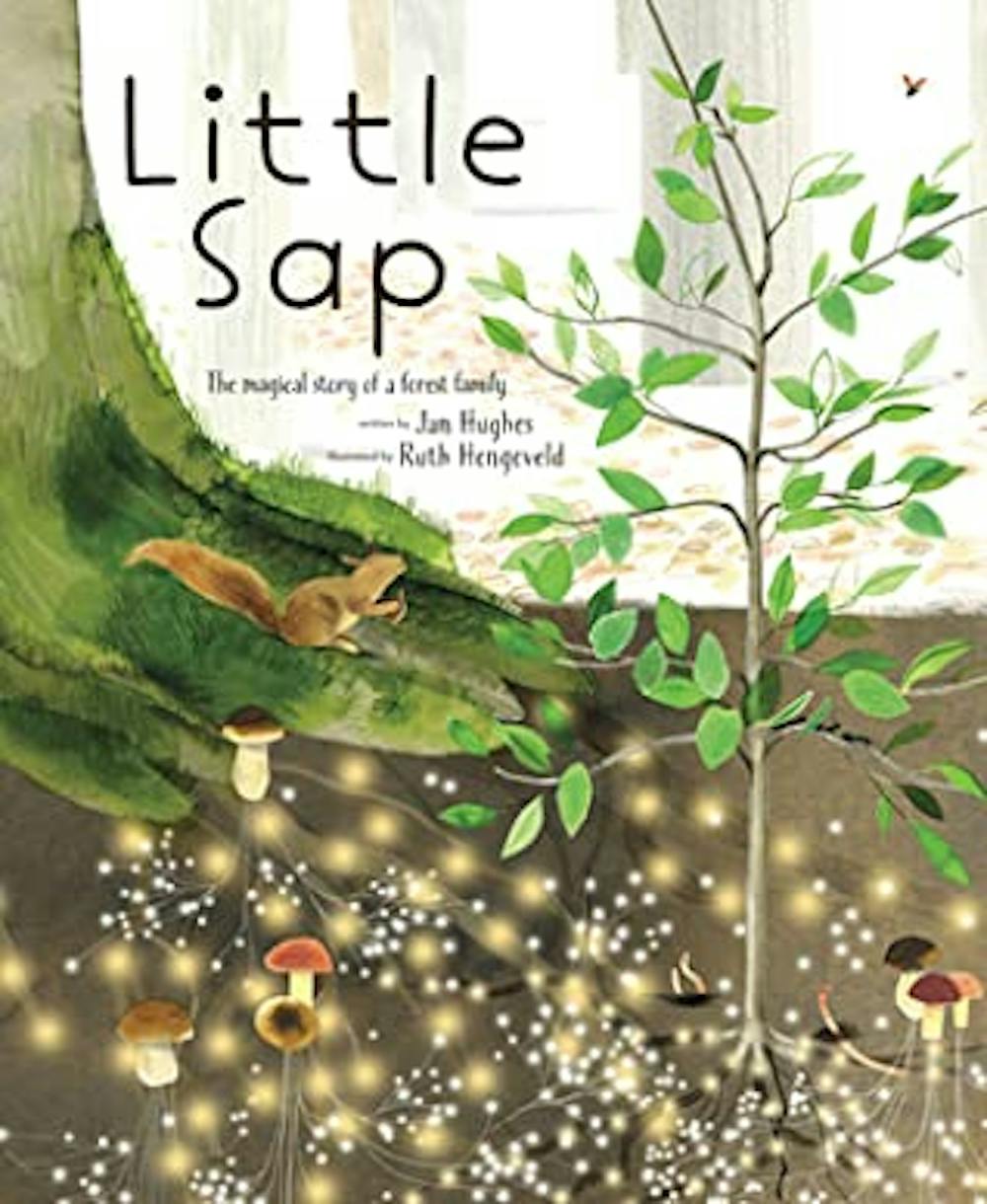
Little Sap (by Jan Hughes and Ruth Hengeveld) is written for a much younger audience. It tells a moving tale of a mother tree and a young sapling who eventually takes her place in the canopy. The authors note they found inspiration in the science of Suzanne Simard and Monica Gagliano among others.

Peter Wohlleben has also published a book for younger children. His book Peter and the Tree Children is a tale about Peter the forester and Piet the squirrel, and all they learn while walking in the forest.


Goodreads

I found it less engaging than his earlier book Can you hear the trees talking which is structured around curious questions like “How do trees make babies?” or “Is there a forest internet?”.

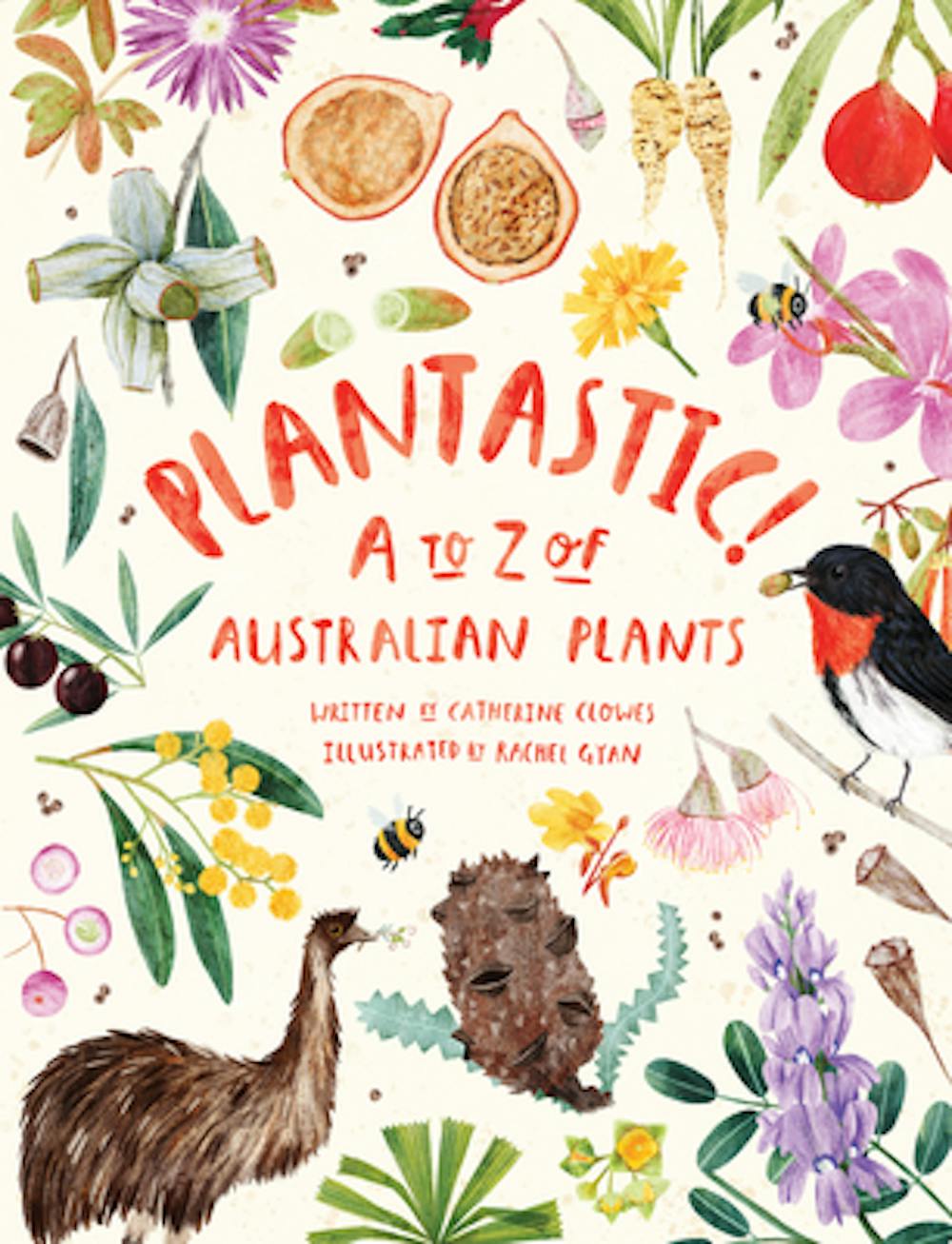
Finally, Plantastic! A new A-Z to 26 of Australia’s most unique and incredible native plants by Catherine Clowes and Rachel Gyan deserves a mention. Its not only about trees, but suggests some great activities that will encourage Australian kids to get out into nature and explore the wonder of plants.The Conversation

Kathryn Williams, Professor in environmental psychology, School of Ecosystem and Forest Sciences, The University of Melbourne

This article is republished from The Conversation under a Creative Commons license. Read the original article.
Unknown's avatar

Shakespeare’s rulers and generals are all flawed, but the books on his leadership lessons keep coming


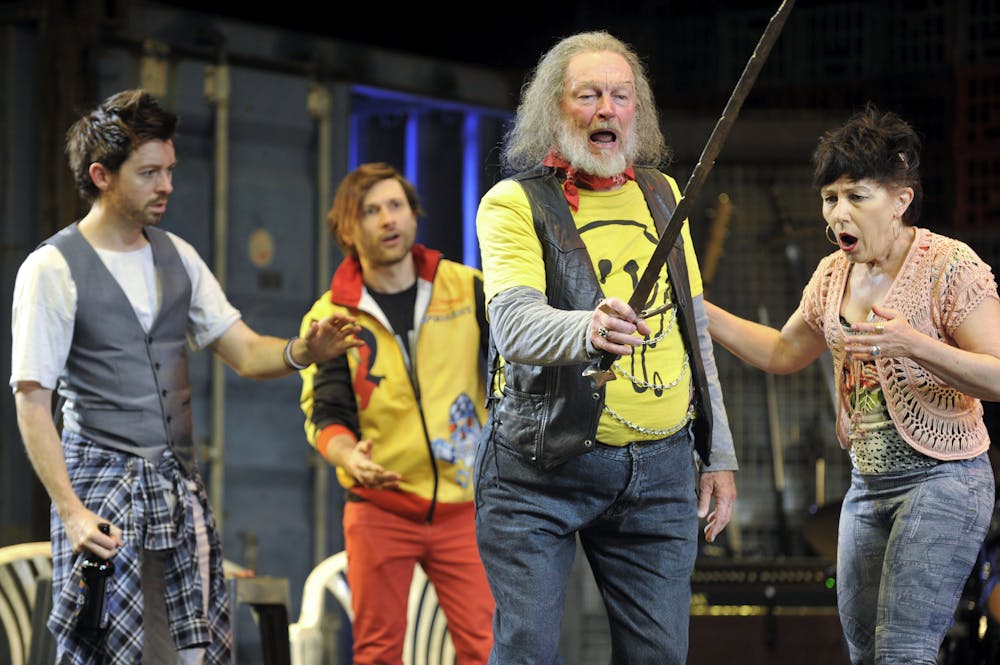
John Bell, pictured here in 2006, is the latest to write a book on Shakespeare and leadership.
Paul Millar/AAP

Robert White, The University of Western Australia

Review: John Bell, Some Achieve Greatness: Lessons on leadership from Shakespeare and one of his greatest admirers. With illustrations by Cathy Wilcox. Pantera Press, 2021.

John Bell’s new book Some Achieve Greatness is but the latest to use Shakespeare’s works to inspire and teach would-be leaders in the modern world.

In 2000 alone, two books appeared aimed at business management students: Power Plays and Shakespeare on Management. In perhaps the best of the genre, Shakespeare the Coach (2004), Australian Olympian, medical graduate, politician and hockey coach Ric Charlesworth applies the dramatist’s words to the sporting arena and people management. Naturally he devotes a chapter to motivational leadership, headed “Purpose and Persuasion”.

The new book from Bell, the actor and renowned theatre director, is both more, and less, than these. More, because it is as much a pithy “business autobiography” as instructional manual, from a man who has devoted his career to bringing Shakespeare to Australian audiences.


Read more:
Guide to the classics: Shakespeare’s sonnets — an honest account of love and a surprising portal to the man himself


Bell in 2013.
AAP

Bell has not only performed most of the major characters, learning their words by heart and internalising the subtleties and plural meanings, he has also directed the plays. He has shown business acumen in administering two successful theatre companies, co-founding Nimrod in 1970 (dedicated to producing Australian plays as well as Shakespeare’s), and of course, the Bell Shakespeare Company.

His name has become almost synonymous with the bard’s in our cultural life through this company and a series of scholarly editions of plays named after him. He also authored a substantial book titled On Shakespeare (2011), full of insights: the fruit of a practised actor-director’s rich and detailed experience.

And, as one of Australia’s Living Treasures, Bell has cemented his reputation by “dying” hundreds of times onstage in Shakespearean roles — like Cleopatra, he “hath such a celerity in dying”.

Reflecting on his multifaceted career, Bell applies his accumulated knowledge to recount his own leadership style as it evolved through experience. Sage advice is offered, enlivened and illustrated with pertinent quotations from speeches, which no doubt Bell can enviably recite from memory.

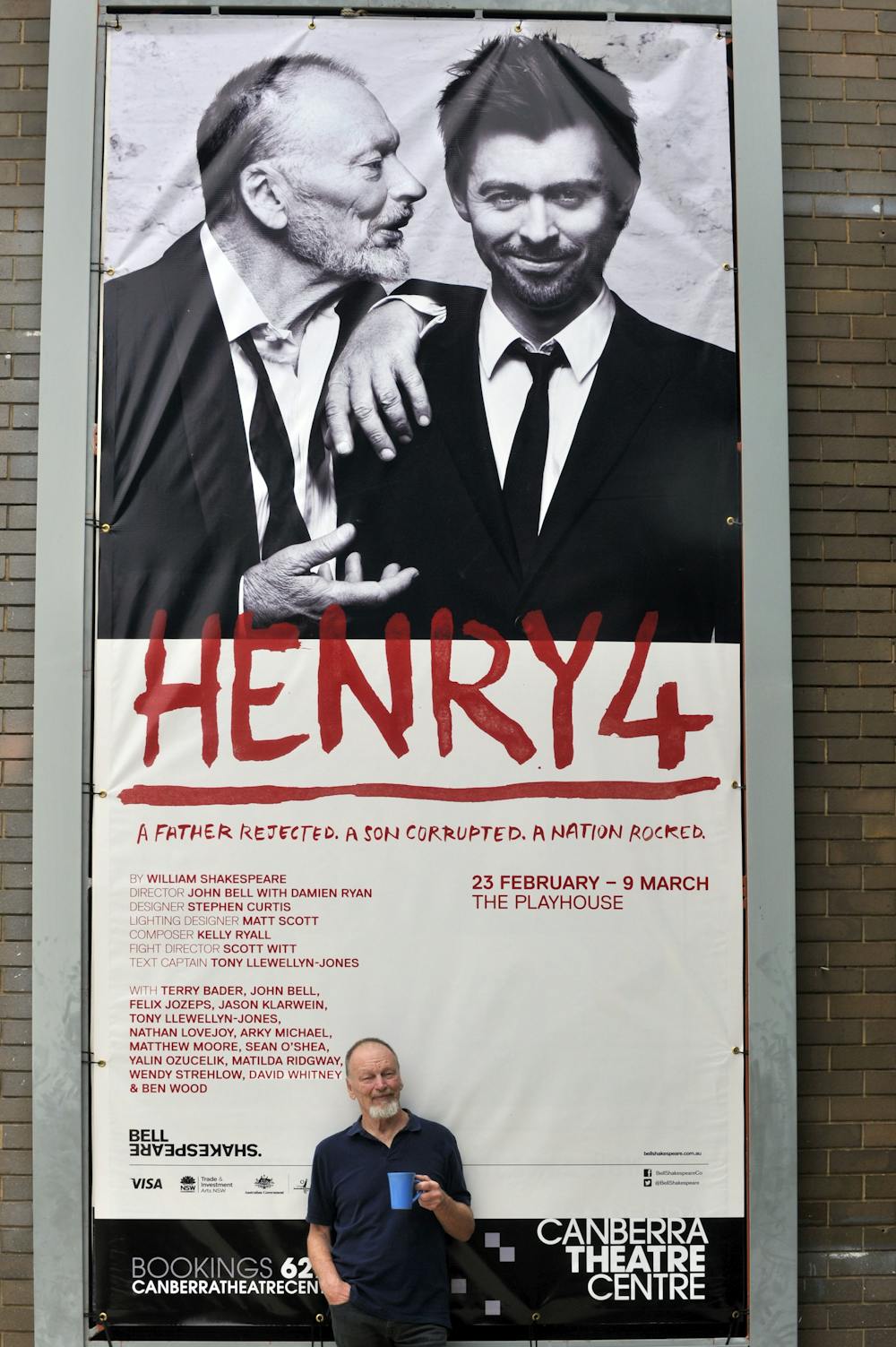
Bell, centre, as Falstaff during a dress rehearsal of Henry 4 in Canberra in 2013.
Alan Porritt/AAP

The book offers lessons gleaned from a Shakespeare who is seen as a natural “collaborator never a one-man band”. We find chapters on “Courage, or how to be a leader in times of crisis”, “Decisiveness, timing and tough decisions”, “Charisma, confidence and humility”, and other virtues such as integrity and humanity. These are set against dangerous managerial vices like ambition, arrogance and entitlement.

Along the way are sprinkled inspirational quotations about leadership from the likes of Abraham Lincoln, Nelson Mandela, John F. Kennedy and Michelle Obama, alongside cautionary reminders of a less savoury, more recent American president .


Read more:
Friday essay: How Shakespeare helped shape Germaine Greer’s feminist masterpiece


No ideal leaders

However, Bell offers less than Charlesworth (my benchmark), in that the latter dwells more on applicable quotations than characters and dramatic context. This allows him to skirt the problem Bell faces: there are, in fact, no unflawed or ideal leaders in Shakespeare.

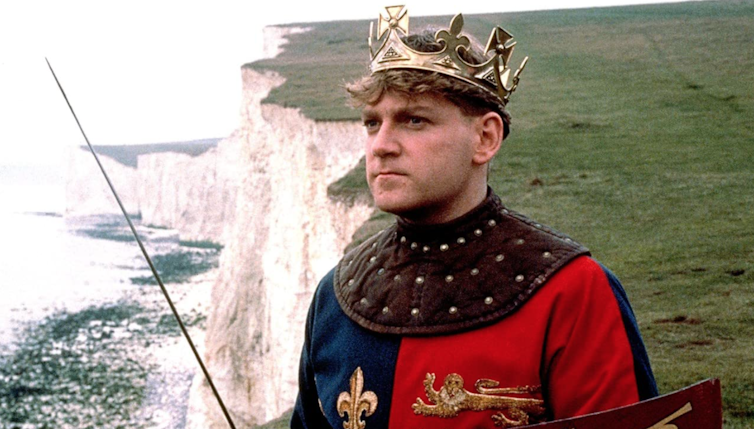
Although Bell ranges across the complete works, his major examples of good or bad leadership are surprisingly few in number. All are, to some extent flawed. Bell readily concedes this, since their failures are instructive. The figure who recurs in most detail is Henry V. For all his faults as a ruthless, likely war criminal, he seems to come closest to Bell’s ideal leader, at least in his rousing speeches.

Kenneth Branagh as Henry V in the 1989 film: ruthless but with rousing speeches?

Julius Caesar and Brutus emerge as ambiguous and lacking in strategical competence. Antony for all his brilliant oratory is too much the playboy who believes in his own “celebrity”, while King Lear is easy prey for sycophants and flatterers.

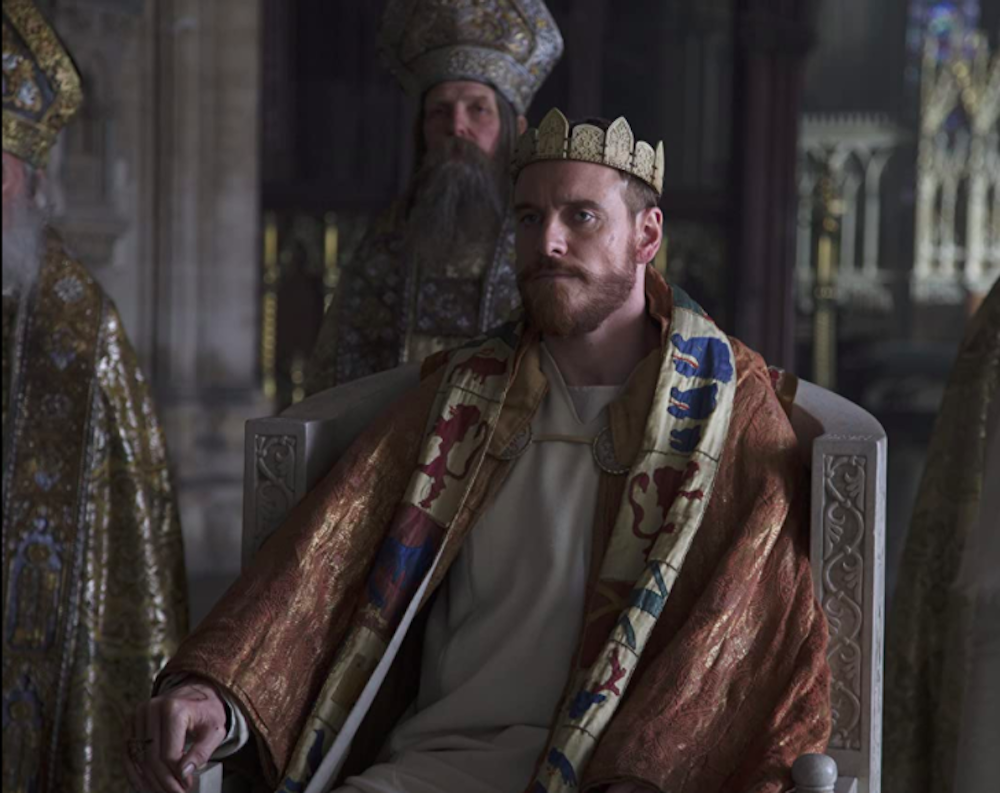
Naturally enough, Richard III and Macbeth as leaders are definitely not to be emulated, though there is somehow a touch of unintended humour in the homily-like way Bell warns us against using murder as a career move:

Watching the downfall of the Macbeths we have to ask ourselves: What am I prepared to pay to make it to the top of the pile? Is the reward worth my sanity, my self-respect, my relationship, my reputation, my friendships?

Who would answer yes to such a piously phrased question?

Michael Fassbinder as Macbeth in the 2015 film: not a great role model.
See-Saw Films, DMC Film, Anton

What about the women?

We have to wait for the final chapter before some women make an appearance, exemplifying such admirable qualities as adaptability and negotiating skills (Portia), integrity and plain-speaking honesty (Cordelia), and playfulness (Rosalind), although Bell sees their agency as qualified in a man’s world:

In the Comedies, women find a voice and authority by adopting a false male persona and using their wit, charm and female tenderness to lead the menfolk to an awareness of their follies and a better understanding of successful male/female coexistence and interdependence.

This book is very readable and can probably be devoured in a single sitting, though Bell might prefer us to take our time and savour at leisure the lessons taught. It also features witty and pertinent cartoons by Cathy Wilcox.The Conversation

Robert White, Winthrop Professor of English, The University of Western Australia

This article is republished from The Conversation under a Creative Commons license. Read the original article.
Unknown's avatar

Book publishing sidelined in the game of university measurement and rankings


Shutterstock

Agata Mrva-Montoya, University of Sydney and Edward Luca, University of Sydney

Academic book publishing is under threat. Global university rankings and competition for funding and international student enrolments are reshaping the research landscape. Academics are under more pressure to win grant funding and publish journal articles, rather than books, and be more strategic in their publishing.

With universities losing billions in revenue due to the impacts of COVID-19, these pressures are only going to increase.

Traditionally, a monograph published with a prestigious publisher has been a key medium to create and disseminate research in the humanities and social sciences. It has also been important for building scholarly careers and reputations. However, our research shows publishing pressures, incentives and rewards are changing.

A shift from quantity to quality

The Australian government’s approach to funding research has had a strong impact on what types of publications have been encouraged.

Australian universities first began reporting details of academics’ research outputs to the government in the 1990s as part of the formula for distributing research funding. The funds allocated for publication were significant. By 2001, a peer-reviewed journal article was “worth” more than A$3,000 to the university. A book was “worth” $15,000.

These rewards applied regardless of where the research was published. “Publish or perish” had well and truly taken over. Without appropriate measures to account for quality and impact, the system had the unintended consequence of encouraging academics to publish low-quality research with low-quality journals and publishers just to meet performance targets. The use of quantitative measures alone also increases the possibility for gaming and manipulation.


Read more:
Publish or perish culture encourages scientists to cut corners


Publication data were eventually removed from the Higher Education Research Data Collection (HERDC) specifications in 2016. Since then, no government funding based on quantity (or quality) of research outputs has been distributed.

Australia’s current national research assessment exercise, Excellence in Research for Australia (ERA), began in 2010. The ERA system is designed to identify and improve quality of research through international benchmarking.

As a result, all universities expect “quality” publications from their staff. This is invariably understood as publishing with international and prestigious publishers and in high-ranking journals.

As universities compete against each other, they have a strong incentive to lift their research profile and to design internal reward schemes based on how ERA defines quality.

Academics are now fundraisers

Our research project looked at the publishing strategies and behaviours of academics in the humanities and social sciences. We found the pressures for quantity appear to have subsided (for some at least). However, there is now a greater push for quality, competitive grant funding and real-world impact.

While universities are still interested in quality publications, the changing funding rules mean universities that receive competitive funding get additional research funds through HERDC. This translates to greater pressure on academics to apply for and secure funding. Academic production appears to have shifted from publication as an outcome in itself to funding as the main measure of performance.

women weighs up books in one hand against piggybank in the other
Academics must now weigh up the expectation that they attract funding against other performance criteria.
Shutterstock

Funding bodies, in turn, are increasingly looking to researchers to show their research has quantifiable, real-world impacts. And ideally they should publish in open access publications.


Read more:
2020 locked in shift to open access publishing, but Australia is lagging


Juggling publication quality and research impact

Academics are caught in the middle between the pressure to publish in quality outlets versus the need to demonstrate impact in the broader society. This creates a conundrum for academics in the humanities and social sciences in particular.

A number of participants in our research described the ways in which their university’s performance evaluations are aligned to publishing practices in science, technology and medicine. Citation metrics are commonly used as a proxy for quality in these fields. Books are generally not available or poorly represented in citation databases.

Many respondents felt their institutions devalued book publishing in favour of journal articles and collaborative authorship.

The emphasis on international publication means some subject areas are rated higher than others. For example, academics in Australian studies told us they felt their institutions undervalued their work.

We also observed an increase in the number of journal ranking lists or recommended publisher lists, created internally by universities. These are intended to make “quality” explicit by identifying where academics are advised to publish.

However, these lists discourage academics from publishing with local, niche, emerging or open-access book publishers and journals. These outlets might actually be a better fit for their target audiences and so lead to greater impact.


Read more:
Who cares about university research? The answer depends on its impacts


Distorting the value of academic inquiry

The different expectations of various stakeholders mean academics receive conflicting advice about publishing strategically. Academics are encouraged to engage with the Australian context and communities. At the same time, they are told to produce research that prestigious international journals and publishers will accept.

These pressures lead researchers to publish in ways that reflect how they are being measured. This appears, in turn, to influence their research agendas. The current research landscape seems to be more a reflection of what is being measured, rather than what is needed by society or would advance knowledge.

Academics, especially early career researchers, have no choice but to remain open to changing priorities, be they institutional or governmental. They must balance the contradictions and tensions in academia. In spite of the rhetoric of academic freedom, university performance expectations mean academics are increasingly required to construct their research agendas and publishing strategies to be attractive to grant funders and international publishers.

Apart from affecting individual academics’ careers, these practices have broad social and intellectual costs. For the humanities and social sciences, in particular, these trends could affect the future and relevance of these disciplines in Australia.The Conversation

Agata Mrva-Montoya, Honorary Associate, Department of Media and Communication, University of Sydney and Edward Luca, Manager, Academic Services, University of Sydney

This article is republished from The Conversation under a Creative Commons license. Read the original article.
Unknown's avatar

2021 West Australian Young Readers’ Book Awards Shortlists


The link below is to an article reporting on the shortlists for the 2021 West Australian Young Readers’ Book Awards (WAYRBA).

For more visit:
https://www.booksandpublishing.com.au/articles/2021/02/18/162734/wayrba-2021-shortlists-announced/

Unknown's avatar

2021 Carnegie Medal Longlist


The link below is to an article reporting on the longlist for the 2021 Carnegie Medal.

For more visit:
https://www.theguardian.com/books/2021/feb/18/outstanding-carnegie-medal-longlist-includes-three-previous-winners

Unknown's avatar

50 Classic Novels Under 200 Pages


The link below is to an article that takes a look at 50 classic novels under 200 pages.

For more visit:
https://lithub.com/50-great-classic-novels-under-200-pages/

Unknown's avatar

2021 Aspen Literary Awards Shortlist


The links below are to articles reporting on the shortlist for the 2021 Aspen Literary Awards.

For more visit:
https://lithub.com/heres-the-shortlist-for-the-2021-aspen-literary-awards/
https://publishingperspectives.com/2021/02/aspen-words-35000-literary-prize-names-its-2021-finalists/

Unknown's avatar

Kobo News


The links below are to articles reporting on news concerning Kobo.

For more visit:
https://blog.the-ebook-reader.com/2021/02/17/kobo-firmware-update-4-26-released-adds-new-my-words-feature/
https://goodereader.com/blog/kobo-ereader-news/kobo-just-redesigned-their-e-reader-page