Unknown's avatar

We should use ‘I’ more in academic writing – there is benefit to first-person perspective


Shutterstock

Peter Ellerton, The University of Queensland

The use of the word “I” in academic writing, that is writing in the first person, has a troublesome history. Some say it makes writing too subjective, others that it’s essential for accuracy.

This is reflected in how students, particularly in secondary schools, are trained to write. Teachers I work with are often surprised that I advocate, at times, invoking the first person in essays or other assessment in their subject areas.

In academic writing the role of the author is to explain their argument dispassionately and objectively. The author’s personal opinion in such endeavours is neither here nor there.

As noted in Strunk and White’s highly influential Elements of Style – (first published in 1959) the writer is encouraged to place themselves in the background.

Write in a way that draws the reader’s attention to the sense and substance of the writing, rather than to the mood and temper of the author.

This all seems very reasonable and scholarly. The move towards including the first person perspective, however, is becoming more acceptable in academia.

There are times when invoking the first person is more meaningful and even rigorous than not. I will give three categories in which first person academic writing is more effective than using the third person.

1. Where an academic is offering their personal view or argument

Above, I could have said “there are three categories” rather than “I will give three categories”. The former makes a claim of discovering some objective fact. The latter, a more intellectually honest and accountable approach, is me offering my interpretation.

I could also say “three categories are apparent”, but that is ignoring the fact it is apparent to me. It would be an attempt to grant too much objectivity to a position than it deserves.

In a similar vein, statements such as “it can be argued” or “it was decided”, using the passive voice, avoid responsibility. It is much better to say “I will argue that” or “we decided that” and then go on to prosecute the argument or justify the decision.

Taking responsibility for our stances and reasoning is important culturally as well as academically. In a participatory democracy, we are expected to be accountable for our ideas and choices. It is also a stand against the kinds of anonymous assertions that easily proliferate via fake and unnamed social media accounts.


Read more:
Post-truth politics and why the antidote isn’t simply ‘fact-checking’ and truth


It’s worth noting that Nature – arguably one of the world’s best science journals – prefers authors to selectively avoid the passive voice. Its writing guidelines note:

Nature journals prefer authors to write in the active voice (“we performed the experiment…”) as experience has shown that readers find concepts and results to be conveyed more clearly if written directly.

2. Where the author’s perspective is part of the analysis

Some disciplines, such as anthropology, recognise that who is doing the research and why they are doing it ought to be overtly present in their presentation of it.

There’s more to Descartes’ famous phrase than a claim to existence.
Shutterstock

Removing the author’s presence can allow important cultural or other perspectives held by the author to remain unexamined. This can lead to the so-called crisis of representation, in which the interpretation of texts and other cultural artefacts is removed from any interpretive stance of the author.

This gives a false impression of objectivity. As the philosopher Thomas Nagel notes, there is no “view from nowhere”.

Philosophy commonly invokes the first person position, too. Rene Descartes famously inferred “I think therefore I am” (cogito ergo sum). But his use of the first person in Meditations on First Philosophy was not simply an account of his own introspection. It was also an invitation to the reader to think for themselves.

3. Where the author wants to show their reasoning

The third case is especially interesting in education.

I tell students of science, critical thinking and philosophy that a phrase guaranteed to raise my hackles is “I strongly believe …”. In terms of being rationally persuasive, this is not relevant unless they then go on tell me why they believe it. I want to know what and how they are thinking.

To make their thinking most clearly an object of my study, I need them to make themselves the subjects of their writing.

I prefer students to write something like “I am not convinced by Dawson’s argument because…” rather than “Dawson’s argument is opposed by DeVries, who says …”. I want to understand their thinking not just use the argument of DeVries.


Read more:
Thinking about thinking helps kids learn. How can we teach critical thinking?


Of course I would hope they do engage with DeVries, but then I’d want them to say which argument they find more convincing and what their own reasons were for being convinced.

Just stating Devries’ objection is good analysis, but we also need students to evaluate and justify, and it is here that the first person position is most useful.

It is not always accurate to say a piece is written in the first or third person. There are reasons to invoke the first person position at times and reasons not to. An essay in which it is used once should not mean we think of the whole essay as from the first person perspective.

We need to be more nuanced about how we approach this issue and appreciate when authors should “place themselves in the background” and when their voice matters.The Conversation

Peter Ellerton, Lecturer in Critical Thinking; Curriculum Director, UQ Critical Thinking Project, The University of Queensland

This article is republished from The Conversation under a Creative Commons license. Read the original article.
Unknown's avatar

Galloping gargoyles! Is Harry Potter losing his (earning) power?


Louise Grimmer, University of Tasmania; Gary Mortimer, Queensland University of Technology, and Martin Grimmer, University of Tasmania

By the 20th anniversary of Harry Potter in 2017, over 400 million Harry Potter books had been sold worldwide and translated into 68 languages. In spite of J. K. Rowling’s rejection by a dozen publishers before her success with Bloomsbury, Harry Potter and the Philosophers Stone became one of the best selling books of all time.

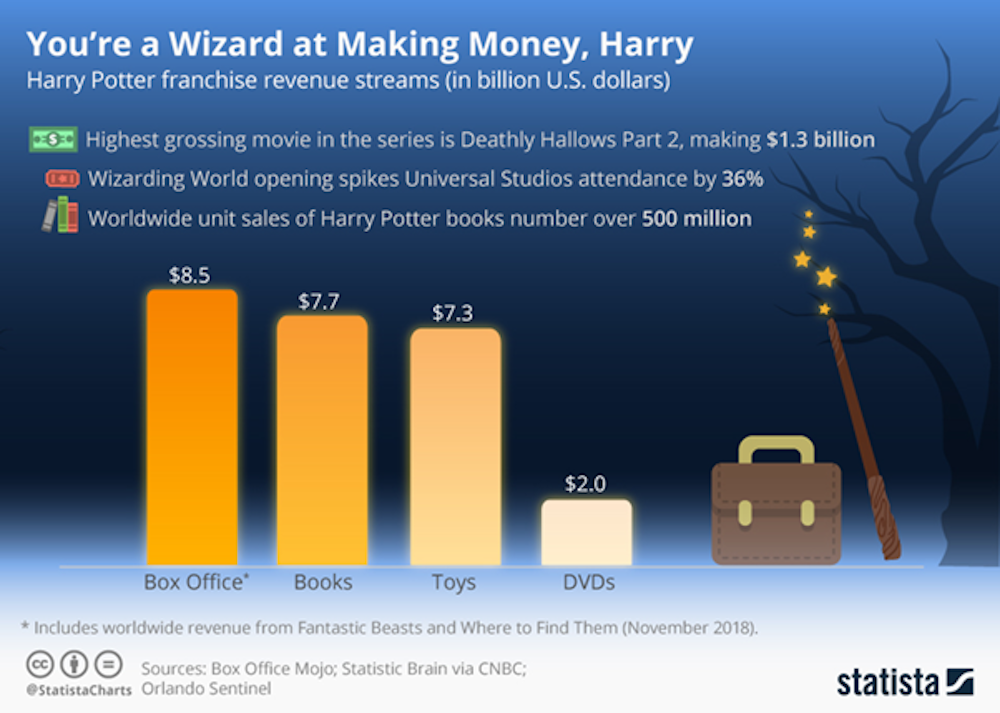
The film franchise of the books grossed US$8.5 billion (almost A$13 billion), book sales totalled US$7.7 billion (A$11.7 billion), US$7.3 billion (A$11 billion) has been made from toys and merchandise, and US$2 billion (A$3 billion) from DVD sales. The Harry Potter “empire” has an estimated total worth of US$25 billion (A$38 billion).

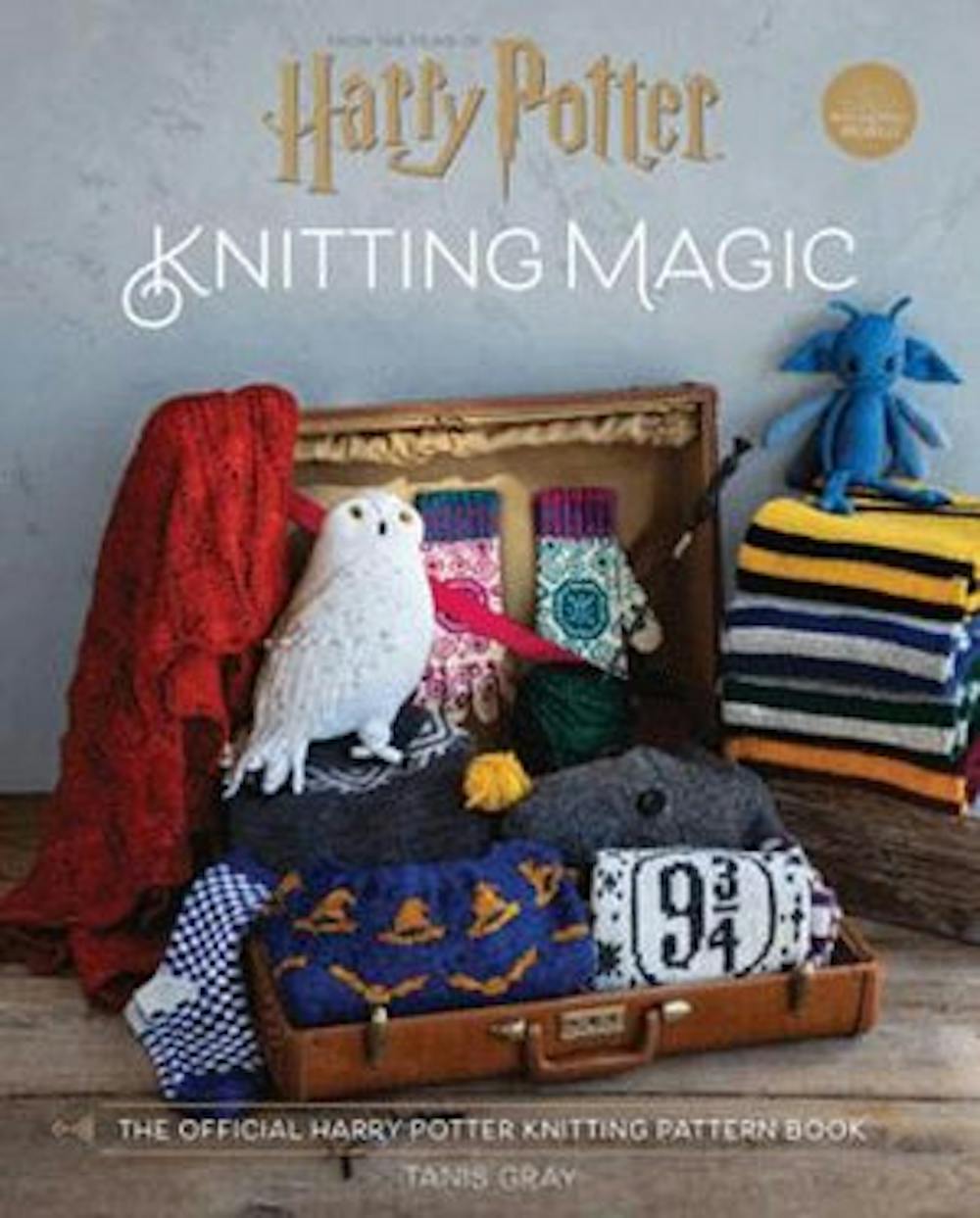
With bars, theme parks, fan conventions, mugs, costumes and knitting patterns going gangbusters, it seemed the little wizard could do no wrong. Words like “muggle”, “quidditch” and “Hogwarts” have become part of our vocabulary. But more than a decade since the last Harry Potter book was published, it appears the lucrative spell is wearing off.

For the wool wizards.
Booktopia

Page to screen to stage

Since the end of the beloved series (the last book in 2007 and film in 2011), there have been two spin-off stories: the film Fantastic Beasts and Where to Find Them, and the play Harry Potter and The Cursed Child, both released in 2016. The film’s sequel Fantastic Beasts: The Crimes of Grindelwald was released in 2018.

The first Fantastic Beasts film performed reasonably well at the box office, grossing US$814 million worldwide (A$1.2 billion), which is within the earnings range of the first eight Harry Potter films.

However, the Fantastic Beasts sequel resulted in less box office revenue than the first, at US$654 million (A$1 billion) globally, the lowest grossing of all the “Harry-verse” films.

Subsequent questions have been raised about how the third planned film will perform, let alone the rest of the five-film series that had previously been mooted.

The Harry Potter and the Cursed Child play is broadly considered a West End and Broadway success and has toured internationally. Despite the huge amount of money invested and the creative approach taken in promoting the production, ticket sales have seen a considerable drop in the past year (50% since their peak).

Harry Potter franchise revenue streams.
Statista, CC BY

A turning point

In and of itself the play was always going to be a challenge: it is a two-part production which means theatre goers have to buy two tickets and attend twice. The producers say it is intended to be seen “in order on the same day (matinee and evening) or on two consecutive evenings”.

This makes cost a problematic factor. It’s also a big time commitment. The play has a rather daunting running time of around two hours and 40 minutes each time, making a total duration of just over five hours. That’s likely to be too much for many young fans.

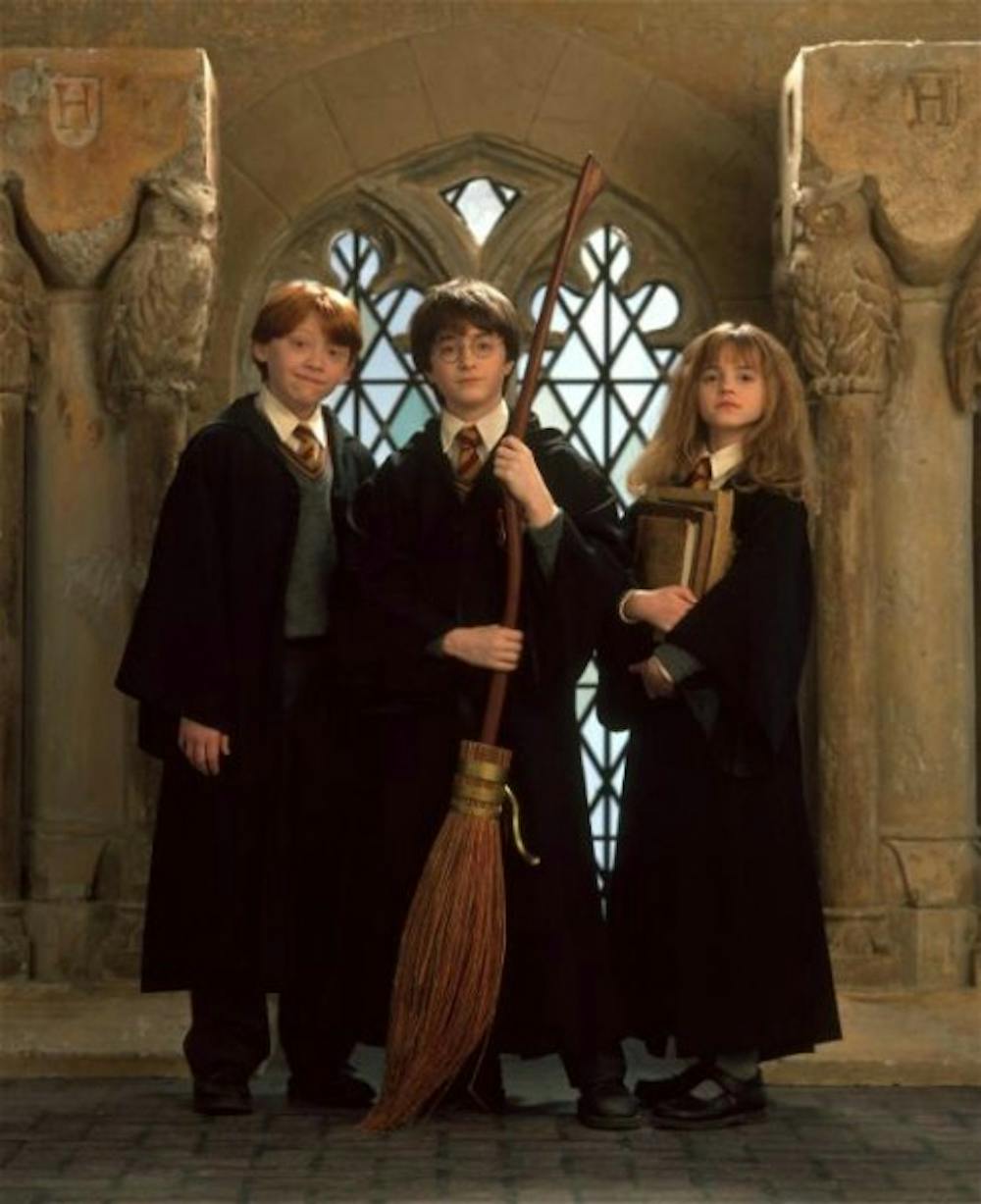
It’s hard to imagine anyone but Rupert Grint, Daniel Radcliffe and Emma Watson playing the central roles onstage.
IMDB

And about those “young fans”. When the Harry Potter and the Chamber of Secrets movie debuted in 2002, 60% of the audience was under the age of 15. This cohort are now in their 30s and this age group is considered as “non-theatre goers”. In the UK the average theatre audience member is 52. The average age of the Broadway theatregoer is 42 years old. Australian audiences at musicals and operas were last estimated to be predominantly between 55 and 74 years of age in 2014.

Another huge part of the appeal with the books and the films is the incredible fantasy world presented. Though audience members were encouraged to #keepthesecrets, transferring the magic of film CGI to the stage is an obvious challenge.

Another issue could be the recasting of Harry, Hermione and Ron. Not only are the famous three played by completely new people, but they’re no longer the young mischievous kids who captured our hearts.

The play, also published as a book, is set 20 years on from the last film, and Harry and the gang are all grown up. Daniel Radcliffe, Emma Watson and Rupert Grint have become so cemented as their characters, it is a stretch for audiences to accept anyone else in these roles.

Losing momentum

As well as challenges with the play, there are reports that ticket sales for theme parks and book sales are also slowing. Perhaps this is to be expected, given the nature of marketing “momentum”.

Marketers build momentum through exposure of their brand, product or service and through generating excitement. But eventually, when a product has been in the market for a certain period of time, momentum inevitably slows. Demand subsequently drops and may fall away completely.

Product campaigns – and Harry Potter is indeed a product – need certain elements to be successful. It all starts with marketing the right product, promoted with the right message to the right audience at the right time. Marketers add momentum into this mix and voila – you have marketing gold. The Harry Potter franchise ticked these boxes in a way that few brands have ever done, providing wonder and delight to audiences worldwide and riches to its creator.

Over 20 years later, the highly successful book and movie franchise, and all its various spin-offs, may finally be losing momentum.

Perhaps another fictional character will take his place. There are no doubt authors sending their pitches to a dozen publishers right now and hoping this will be the case. Or maybe Harry Potter was a once-in-a-lifetime wizard.The Conversation

Louise Grimmer, Senior Lecturer in Marketing, Tasmanian School of Business and Economics, University of Tasmania; Gary Mortimer, Professor of Marketing and Consumer Behaviour, Queensland University of Technology, and Martin Grimmer, Professor of Marketing, Tasmanian School of Business and Economics, University of Tasmania

This article is republished from The Conversation under a Creative Commons license. Read the original article.
Unknown's avatar

‘Freshly cut grass – or bile-infused Exorcist vomit?’: how crime books embraced lurid green


University of Sydney Library

Carolyn McKay, University of Sydney

Green is a colour that evokes nature, fecundity, sustainability.

At the traffic lights it signals go; on a boat, starboard.

It’s a soft celadon glaze; an intense Van Eyck wedding dress; frothy, aromatic matcha tea; aurora borealis; a meditative praying mantis. It’s jungle camouflage, Joyce’s snotgreen sea, green mould and Martians.

If green had a smell, would it be freshly cut grass – or bile-infused Exorcist vomit?

Green, like all colours, has innumerable meanings and cultural associations. My interest in green stems from the books I curated in Lurid: Crime Paperbacks and Pulp Fiction.

My favourite books in Lurid are the green Penguin crime series from the 1960s. Penguin was founded by Allen Lane in 1935 and revolutionised publishing through a focus on well-designed, pocket-sized and affordable high-quality literature, as distinct from mere pulp.


Read more:
Friday essay: the complex, contradictory pleasures of pulp fiction


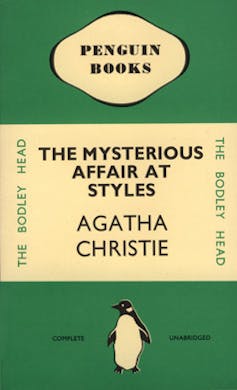
The covers were standardised yet stylish and instantly recognisable: two horizontal bands of colour separated by a central white band featuring the author’s name and title in Gill Sans font. Initially designed by Edward Young, the aesthetic was strengthened in 1947 by German typographer Jan Tschichold’s Penguin Composition Rules.

The cheerful Penguin logo, also designed by Young, was the only pictorial element on these early covers. In Jeremy Lewis’s Penguin Special, he writes Penguin eschewed the lurid picture jackets – “breastsellers” – adopted in the US in favour of English restraint and text-only designs.

The books were colour-coded by subject: the now classic orange for fiction, dark blue for biographies, red for drama. Of the first ten Penguin books published, two were crime and colour-coded green.

Since curating the Lurid exhibition, I’ve been wondering: why green? Why not blood-spatter red or noir black?

The affect of green

As a visual artist as well as a visual criminologist, I have a great interest in colour and its affective qualities.

The initial green used on Penguin crime covers was a slightly earthy green, not unlike terre verte. This is a soft green pigment traditionally used as a cool element when mixing flesh tones in a limited palette of flake white, yellow ochre, Venetian red and ivory black, depending on the subject’s skin tones.

Terre verte is often used as a grisaille or underpainting in figurative works and portraiture. But there are so many other irresistible greens in oil painting: cobalt, emerald, viridian, phthalo, cadmium, sap, olive, chromium.

The original earthen green hue of Penguin crime was brightened in the 1960s when Italian art director Germano Facetti challenged the traditional Penguin design rules and hired Polish graphic designer Romek Marber to revitalise the book covers.

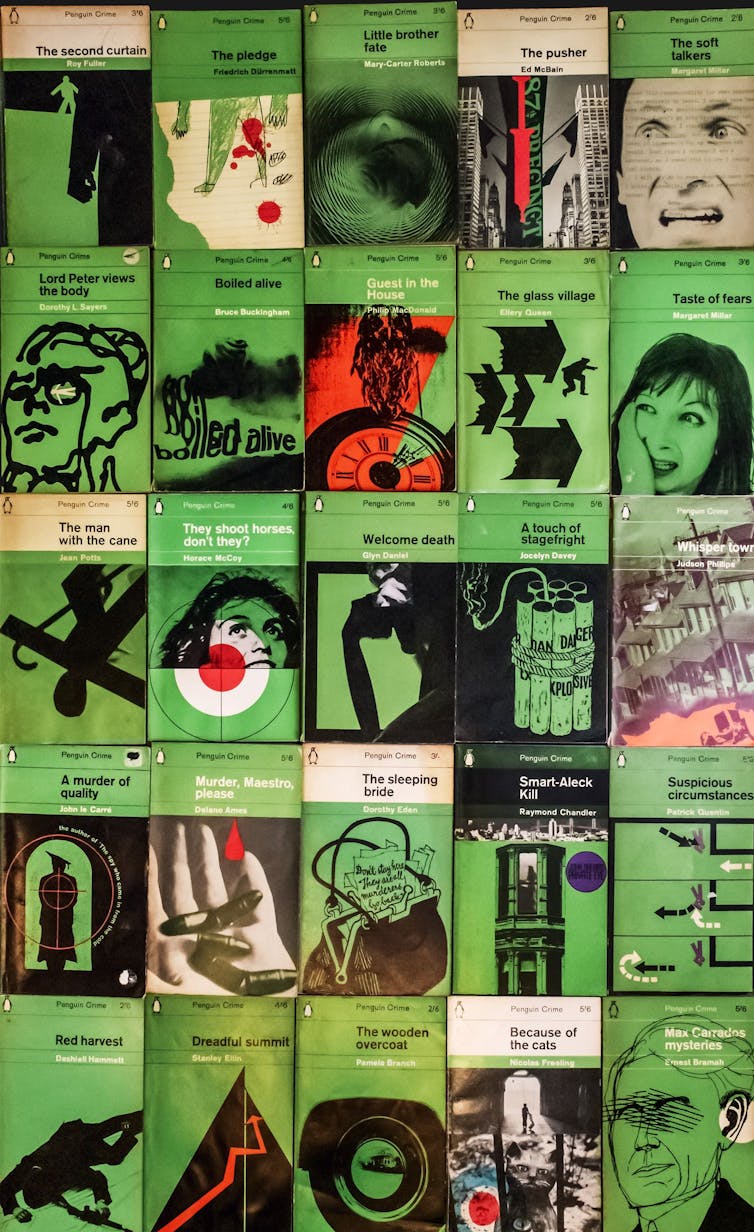
The “Marber Grid” and pictorial covers placed the typography and Penguin logo in the top third of the cover and allowed two-thirds of the layout for striking modernist illustration and graphic design.

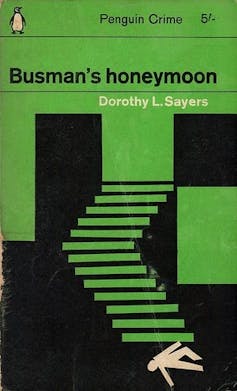
The covers of Dorothy L. Sayers’ Busman’s Honeymoon and Lord Peter Views the Body show the distinctive and recurrent white stick figure Marber applied only to her books.

The Busman’s Honeymoon, in particular, shows Marber at his best. The geometric design evokes a staircase with a corpse – the identifying device of the white cut-out – at the bottom.

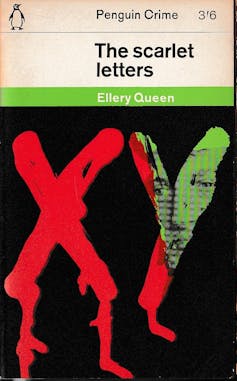
Marber’s last Penguin crime cover design was for Ellery Queen’s The Scarlet Letters in 1965. With the letters X and Y that, in the novel, a dying man traces in his own blood, the design introduces trickles of red, photography and a solid black background.

Looking at these book covers today, there is power in the simplicity of these designs with their limited colour palette, elements of photomontage, collage, drawing and geometric pattern, and use of sans serif font.

And, of course, there is the bright green.

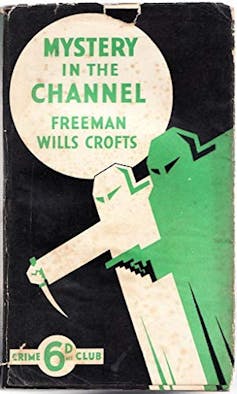
The Penguin crime series is not the only one to feature green. Launched by Collins in the 1930s, the White Circle Crime Club used a bold graphic design featuring two menacing figures and variations on a restricted palette of green, black and white.

This green branding was an intentional strategy to compete directly with the green Penguins.

Green to kill

Why green? Perhaps the answer lies in green’s association with toxicity.

The 18th century’s Scheele’s green, derived from arsenic, was vivid and alluring. The 19th century’s emerald green was highly desirable, and used extensively in clothing and wallpaper, including that of William Morris. Unfortunately, it was horribly poisonous: arsenic fumes from Emerald Green wallpaper killed.


Read more:
How we discovered three poisonous books in our university library


Green, then, is deadly. Green radioluminescent paint shone brightly on watches and caused radium poisoning; green chlorine gas was first used as a chemical weapon in the first world war.

The green of absinthe’s la fée verte, the green fairy, is intoxicating, once thought to be hallucinogenic, and an ingredient in Ernest Hemingway’s Death in the Afternoon cocktail.

With these lethal associations the green of crime fiction starts to make sense.

Sometimes, you can judge a book by its cover.The Conversation

Carolyn McKay, Senior Lecturer – Criminal Law, Procedure, Digital Criminology, University of Sydney

This article is republished from The Conversation under a Creative Commons license. Read the original article.

Unknown's avatar

Bookshop


The link below is to an article that takes a look at ‘Bookshop,’ an attempt to strike back against Amazon.

For more visit:
https://www.wired.com/story/bookshop-org/

Unknown's avatar

Libro.fm


The link below is to an article that takes a look at how Libro.fm works – an audiobook service.

For more visit:
https://bookriot.com/2020/01/31/how-does-libro-fm-work/

Unknown's avatar

Is Book Collecting Worth It?


The link below is to an article that looks at book collecting – is it worth it?

For more visit:
https://blog.bookstellyouwhy.com/is-book-collecting-worth-it

Unknown's avatar

Library Fines


The link below is to an article that takes a look at library fines and the trend away from them.

For more visit:
https://bookriot.com/2020/01/30/fine-free-libraries-trend/

Unknown's avatar

The Worth of a Rare Book


The link below is to an article that looks at how much a rare book may be worth.

For more visit:
https://blog.bookstellyouwhy.com/how-much-is-my-rare-book-worth

Unknown's avatar

Data Collected From Kindles


The link below is to an article that considers what data is collected from Kindles.

For more visit:
https://goodereader.com/blog/kindle/what-type-of-data-does-amazon-collect-from-kindles

Unknown's avatar

2020 Victorian Prize for Literature Winner


The link below is to an article that reports on the winner of the 2020 Victorian Prize for Literature.

For more visit:
https://www.booksandpublishing.com.au/articles/2020/01/31/144840/play-counting-and-cracking-wins-100k-victorian-prize-for-literature/