Unknown's avatar

Books offer a healing retreat for youngsters caught up in a pandemic


Johnny McClung/Unsplash

Margaret Kristin Merga, Edith Cowan University

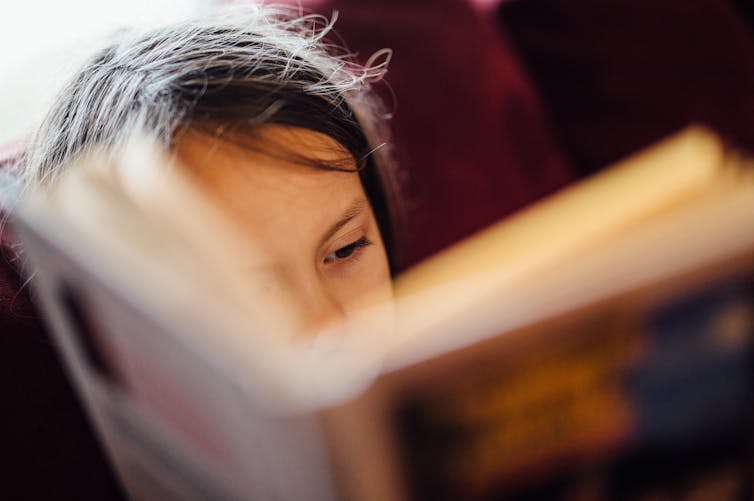
Parents at a loss to find activities for their children during COVID lockdowns can encourage them to escape into a book. New research shows how reading books can help young people escape from their sources of stress, find role models in characters and develop empathy.

Recent media reports have highlighted a concerning rise in severe emotional distress in young people. Isolation and disruption of learning in lockdown have increased their anxiety. Given the recent surge in COVID-19 cases and lockdowns in Australia, parents and educators may look to connect young people with enjoyable activities that also support both their well-being and learning.

A lot has been written about the role of regular reading in building literacy skills. Now, my findings from a BUPA Foundation-funded research project on school libraries and well-being provide insight into how books and reading can help young people deal with the well-being challenges of the pandemic.

The findings suggest books can not only be a great escape during this challenging time, but also offer further well-being benefits.

Escaping from a world of stress

We know that adults who are avid readers enjoy being able to escape into their books. Reading for pleasure can reduce psychological distress and has been related to mental well-being.

Reading-based interventions have been used successfully to support children who have experienced trauma. In a recent study, around 60% of young people agreed reading during lockdown helped them to feel better.

My research project confirms young people can use books and reading to escape the pressures of their lives. As one student said:

“If you don’t know what to do, or if you’re sad, or if you’re angry, or whatever the case is, you can just read, and it feels like you’re just escaping the world. And you’re going into the world of the book, and you’re just there.”
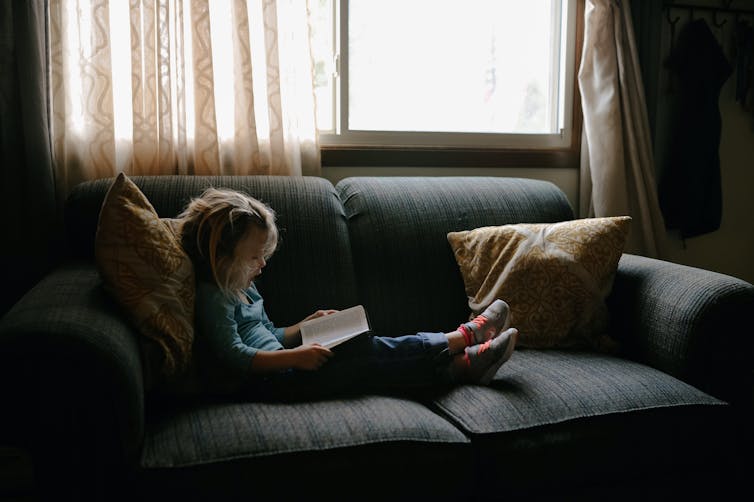
Young girl reading book on couch next to window
‘You’re going into the world of the book, and you’re just there.’
Josh Applegate/Unsplash

Connecting with role models in characters

If you enjoy reading, there’s a good chance you have favourite characters who hold a place in your heart. The project found young people can find role models in books to look up to and emulate, which can help to build their resilience. A student described her experience reading the autobiography of young Pakistani activist and Nobel laureate Malala Yousafzai:

“I thought it was incredible how no matter what happened to her, even after her horrific injury, she just came back and kept fighting for what she believed in.”


Read more:
Nobel Peace Prize: extraordinary Malala a powerful role model


Other research has linked connecting with characters to mental health recovery, partly due to its power to instil hope in the reader. Building relationships with characters in books can also be used as “self-soothing” to decrease anxiety.

Young people also celebrate their affection for book characters in social networking spaces such as TikTok, where they share their enjoyment of the book journey with favourite characters.

Young people are taking to TikTok to share their love of books with millions of others.

Developing empathy through reading

Research supports the idea that reading books builds empathy. Reading fiction can improve social cognition, which helps us to connect with others across our lives. My previous work with adult readers found some people read for the pleasure they get from developing insight into other perspectives, to “see the world through other people’s eyes”.

In the project, a student described how reading books helped him to understand others’ perspectives. He explained:

“You get to see in their input, and then you go, ‘Well, actually, they’re not the bad guy. Really, the other guy is, it’s just their point of view makes it seem like the other guy’s the bad guy.’ ”

Your teacher librarian can help you

If parents are not sure what books will best suit their child’s often ever-changing interests and needs, they can get in touch with the teacher librarians at school. Even during lockdown they are usually only an email or a phone call away.

The library managers in the project played an important role in connecting students with books that could lead to enjoyable and positive reading experiences.

For example, a library manager explained that she specifically built her collection to make sure the books provided role model characters for her students. She based her recommendations to students on their interests as well as their needs. To support a student who had a challenging home life, she said,

“I recommend quite a number of books where we’ve got a very strong female character […] in a number of adverse situations and where she navigates her way through those.”

Fostering reading for pleasure is a key part of the role of the teacher librarian. They create spaces and opportunities for students to read in peace. They also encourage them to share recommendations with their peers.

In challenging times, many parents are looking for an activity that supports their children’s well-being. And as reading is also linked to strong literacy benefits, connecting them with books, with the support of their teacher librarian, is a smart way to go.The Conversation

Margaret Kristin Merga, Honorary Adjunct, University of Newcastle; Senior Lecturer in Education, Edith Cowan University

This article is republished from The Conversation under a Creative Commons license. Read the original article.
Unknown's avatar

‘Goodreads’ readers #ReadWomen, and so should university English departments


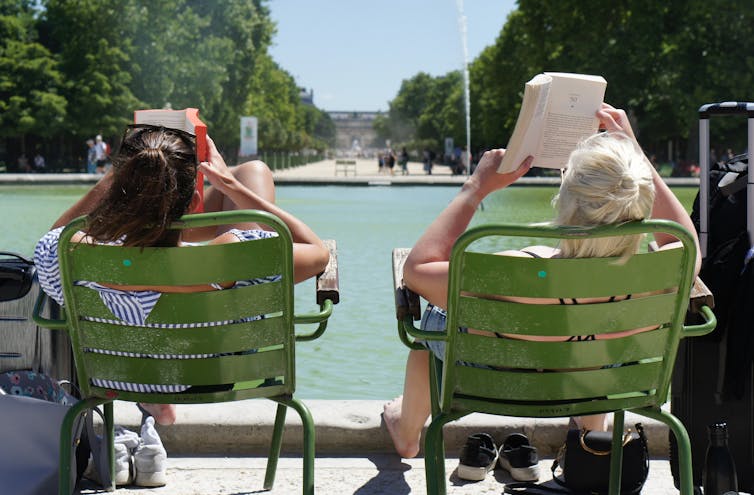
The social network website Goodreads provides insight into what some women are reading.
(Flip Mishevski/Unsplash)

Karen Bourrier, University of Calgary

Even in the 21st century, women writers are often consigned to what American novelist Meg Wolitzer has called “the second shelf.” Women’s novels are designed and marketed with a female audience in mind and publishers still presume that novels about women won’t appeal to male readers. Unfortunately, even in 2021 there may be some truth to this presumption.

This sexism can be seen in the continued speculation that female-identifying novelist Elena Ferrante is actually a man.
Vanity Fair contributing editor and book columnist Elissa Schappell summarized the assumptions behind the speculation: the novelist’s prolific output of “serious” books that interweave history, politics, violence, sex and domestic life, while “unflinchingly showing women in an unflattering light.”

Books by female-identifying authors are also less likely to be reviewed in prestigious literary magazines. In 2019, more than 60 per cent of reviews in magazines including London Review of Books, The Atlantic, and Harper’s, were of books written by men. This is actually an improvement since 2010, when between 69 per cent and 80 per cent of reviews in these magazines were of male-authored books.

The popular #readwomen hashtag on Twitter has been one response to the marginalization of women authors or sexism about their work. The social network website Goodreads can also provide insight into what women are reading.

Reading women

My collaborative research with data science professor Mike Thelwall has explored the reading habits of a cohort of mostly female readers (76 per cent) on the popular social network site Goodreads. As a group, Goodreads users also skew younger, whiter and more educated than the general population.

We examined what books readers read on Goodreads compared to what university professors assign in the classroom, using data from the Open Syllabus Project.

In past decades, researchers relied on handwritten diaries, letters and surveys of readers to find out how everyday readers responded to the books they read. Goodreads, which collects book reviews and ratings from 90 million members, offers one portal into reading habits.

On average, women Goodreads users read twice as much as male Goodreads users, and are more willing to read books by both male and female authors.

We scraped data from Goodreads and found that most Goodreads book club members were likely to have read books in common by women authors.

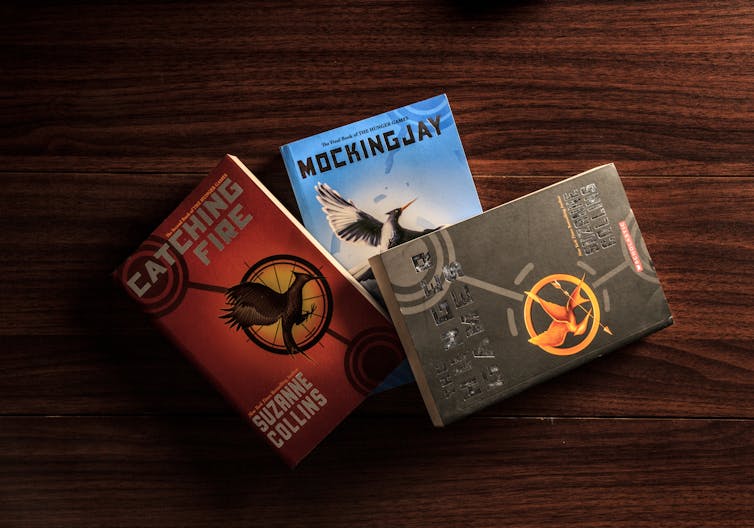
These women authors fell into two categories: young adult authors (J.K. Rowling, Suzanne Collins, Stephanie Meyer and Veronica Roth) and 19th- or early 20th-century authors (Jane Austen and Harper Lee). The popularity of young adult series by women, including the Harry Potter and Hunger Games series, means that 13 of the 19 most popular titles are by women.

Cover of three books from the Hunger Games series
A study found that that most Goodreads book club members were likely to have read books in common by women authors.
(Shutterstock)

Compared to what professors teach

In a second study, we compared what books Goodreads users read to what university professors assign in the classroom, using data from the Open Syllabus Project. The Open Syllabus Project originated at Columbia University. It amasses syllabi, or college reading lists, from openly accessible university websites. Open Syllabus currently has a corpus of over nine million syllabi from 140 countries.

Our study focused on Victorian literature, literature published during Queen Victoria’s reign (1837-1901), which is both commonly taught at the university level and still read by general readers.

For the most part, we found that Goodreads users read books — including classic works by Charles Dickens, Arthur Conan Doyle and Oscar Wilde — about as often as university professors taught them.

However, we also found that the books that Goodreads users read more often than they were assigned in university tended to be by women writers, to feature strong female protagonists and to be aimed at a young adult audience — or all three.

Taking women writers seriously

This research is important because it suggests that professors who want to connect to students should take women writers more seriously.

Women writers show up less often than male writers on university syllabi. A survey conducted at McGill University in 2018 showed that 73 per cent of writers assigned on the university’s English literature syllabi are men.

Unfortunately, this is no surprise: English Prof. John Guillory’s work on canon formation captures the state of college English classes 30 years ago (and sometimes even more recently) when it was not uncommon for English professors to teach only white men.

Works by women writers are formative for many readers. For example, Wuthering Heights and Jane Eyre are often among the first “adult” novels that young English-language readers read. Their combination of romance and strong female protagonists continues to appeal to 21st-century readers outside the classroom.

Our study also showed that Frances Hodgson Burnett’s The Secret Garden and A Little Princess, and Lewis Carroll’s Alice’s Adventures in Wonderland — three works of young adult fiction featuring girls — were also read more on Goodreads than we would predict given how often they were assigned on syllabi.


Read more:
Jane Eyre translated: 57 languages show how different cultures interpret Charlotte Brontë’s classic novel


It is more than time that publishers, book reviewers and university professors give women writers the respect they deserve. In an era of declining English majors when most English majors are women, English departments can at least start by assigning more women writers.The Conversation

Karen Bourrier, Associate Professor of English, University of Calgary

This article is republished from The Conversation under a Creative Commons license. Read the original article.

Unknown's avatar

Guide to the Classics: Carmen Laforet’s Nada captures longing and desire in post-war Spain


Nationaal Archief, CC0

Ruth McHugh-Dillon, Monash University

If you haven’t heard of Nada, one of the most important European novels of the 20th century, you’re not alone.

Written in a few short months by Carmen Laforet, it was originally published in Spain in 1944 to immediate acclaim. It won a wide readership and Spain’s inaugural Premio Nadal, now the country’s most prestigious literary prize. Yet Nada took more than 60 years to become widely available in English translation.

A classic in Spanish, it is still shamefully under-read in English.

In the 20th century, Spanish-language literature was dominated by groundbreaking international names from Latin America such as Gabriel García Márquez, Mario Vargas Llosa and Carlos Fuentes.

Several of these writers credit Nada with forcing them to reconsider writing from Spain. Until belatedly discovering Laforet’s novel, Vargas Llosa writes, he had believed “everything over there reeked of fustiness, sacristy and Francoism”.

The atmospheric and cruel Nada overturned this verdict. Laforet’s achievement is remarkable, given her age (just 23 when she wrote Nada) and the challenges she faced as a woman to overcome the sexist bias of her time and secure her place in the literary canon.

Even now, analysis frequently emphasises the autobiographical or semi-autobiographical elements of the novel, diminishing its feat of extraordinary imagination.

A family drama

Nada centres on Andrea, an orphan who arrives in Barcelona aged 18, to stay with relatives she hasn’t seen for years. Escaping to Barcelona to study literature has long been her dream. But the city Andrea encounters resembles nothing of her happy childhood memories.

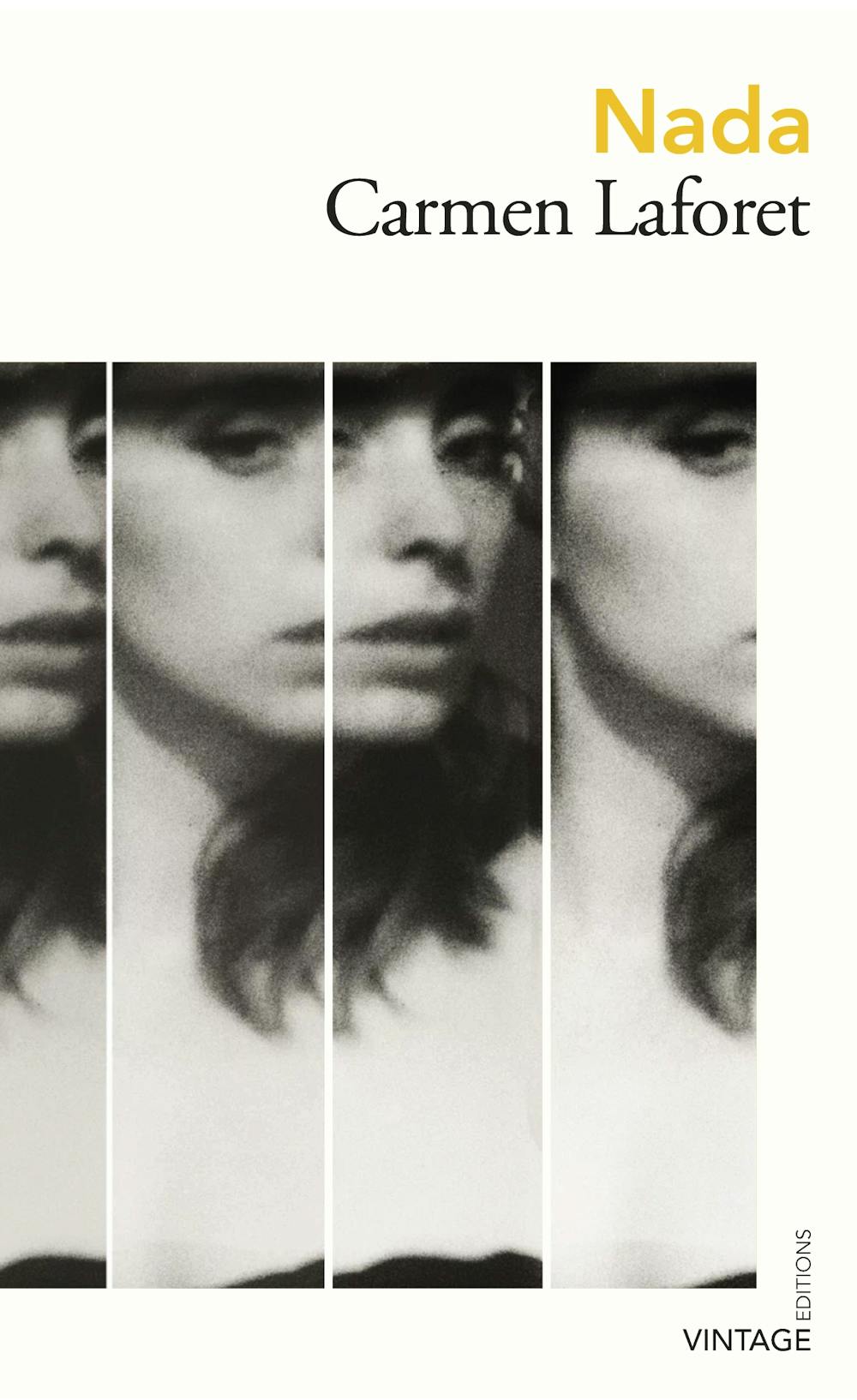
Nada book cover

Once glorious, Barcelona is now defeated and dilapidated, “its silence vivid with the respiration of a thousand souls behind darkened balconies”. Arriving at her grandparents’ crumbling apartment, Andrea enters “what seemed like a nightmare”: a ragged array of relatives teetering between madness and starvation.

Andrea’s grandfather is dead and the household is under the command of her authoritarian aunt, Angustias, who promises to “mould” Andrea into obedience. Every day, the same violent dramas recur. Andrea’s arrogant artistic uncle Román goads his hot-headed brother, Juan, usually about his “piece of trash” wife, Gloria, who Román claims is obsessed with him.

If Gloria gets involved, Juan turns on her. Juan can be found either beating Gloria or painting bad nudes of her to sell for a pittance. Andrea’s tiny, tremulous grandmother tries to keep the peace, recalling how “there were never two brothers who loved each other […] like Román and Juanito”. The scowling maid, Antonia, lurks in the shadows with her dog, relishing the violence.

Censorship and stagnation after the Civil War

Nada, which in Spanish means “nothing”, emerged in one of the darkest and most stagnant periods of Spanish history.

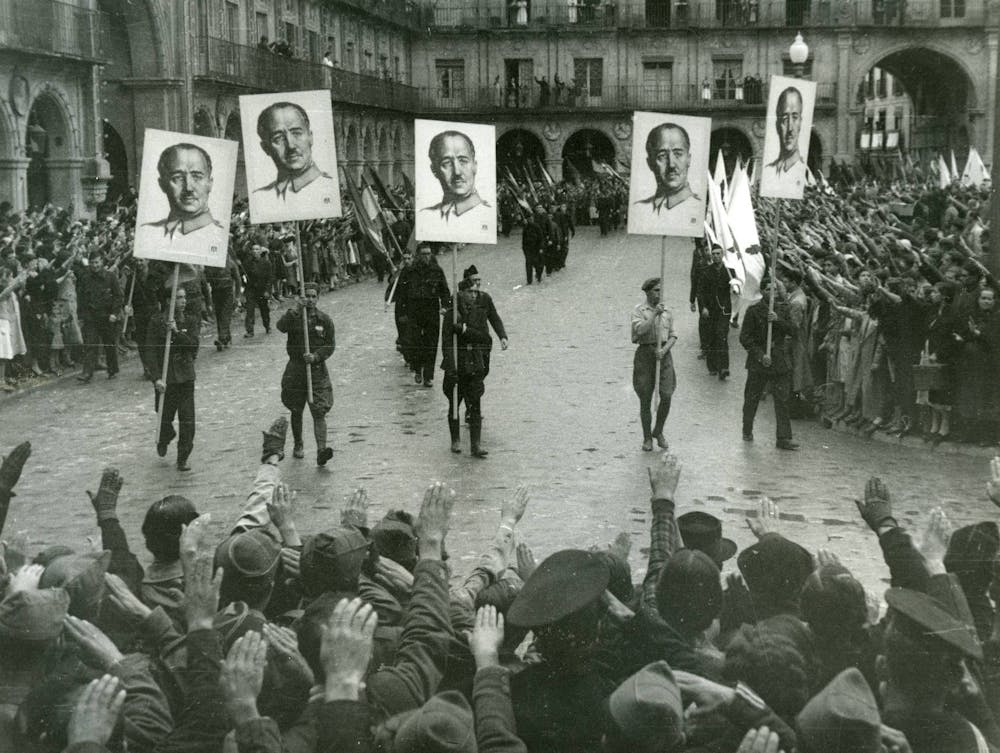
For many Spaniards — already exhausted from the brutal Civil War that ripped the country apart between 1936 and 1939 — their worst nightmare had become a crushing, everyday reality. The dictatorship of General Francisco Franco, whose rebel armies had ultimately vanquished the left-wing Republicans, would drag on until his death in 1975.

Francoist demonstration in Salamanca (1937) with the paraders carrying the portrait of Franco in banners and the populace pulling the Roman salute.
Nada was written in the early days of the Franco regime.
Biblioteca Virtual de Defensa/Wikimedia Commons, CC BY

While the rest of Europe was beginning to emerge from the nightmare of the second world war, by the mid-1940s Spain was settling into one of its bleakest periods. These early years of Franco’s regime are known in Spain as “the hunger years”.

It was in these hunger years Laforet wrote Nada. Andrea recalls how “[the] hunger I almost didn’t feel because it was chronic” weakens her will, making her irritable and unfocused. Sniffing around the kitchen, she drinks cold, leftover vegetable stock.

Bedbugs infest the rooms and characters have discoloured teeth; Gloria’s baby almost dies from pneumonia, a sickness of the undernourished. These are up-close glimpses of the severe deprivations that, as historian Miguel Ángel del Arco Blanco argues, Franco used to consolidate his power.

Under Franco, literary works were subject to strict censorship enforcing conservative values and the fascist narrative of the Civil War. As sometimes happens to art made in restricted circumstances, the social and political critiques embedded within Laforet’s novel are all the more remarkable given her creative play with what can and cannot be said directly.


Read more:
Franco’s invisible legacy: books across the hispanic world are still scarred by his censorship


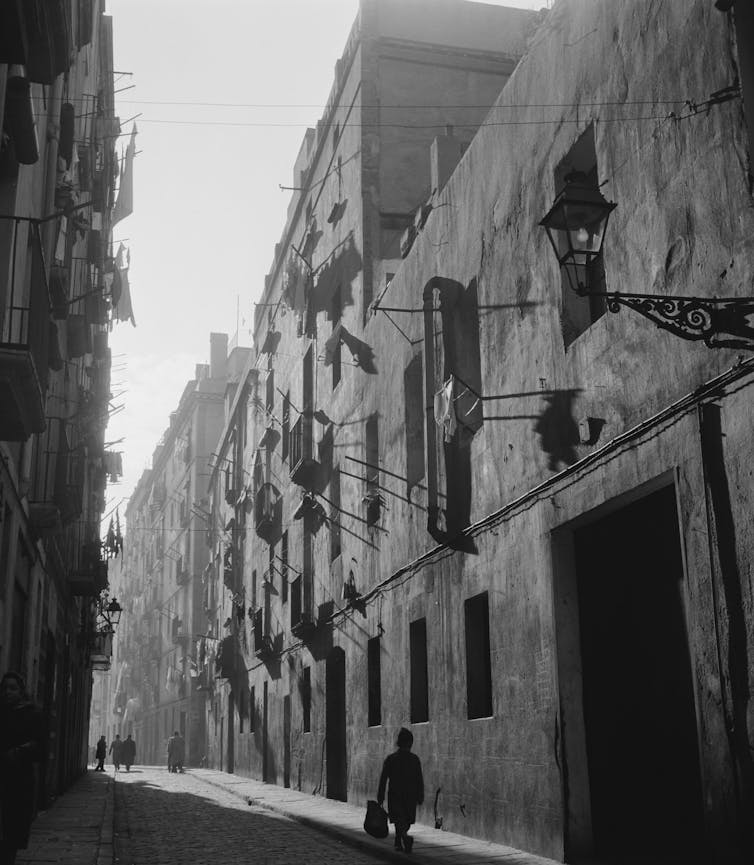
Apart from scattered references to the war, the political situation is rarely named. Yet the atmosphere is oppressive: walls ooze with damp, blinds are drawn against the daylight. Even the air itself is heavy. Family life is a gothic nightmare, replicated behind a thousand “darkened balconies” in Barcelona and beyond.

This apartment and the others like it, are haunted houses inhabited by the ghosts of past violence — but also by its survivors. Civil wars turn neighbour against neighbour, brother against brother. As they attempt to live side-by-side, the apparently intractable conflict between Juan and Román shows how violence can be subdued or domesticated, yet still bubbles beneath the surface.

A streetscape
Family life is oppressive, repeated again and again beyond darkened balconies.
Nationaal Archief, CC0

Gloria now views her joy at the end of the war as naïve:

How could I imagine what came afterwards? It was like the end of the novel. Like the end of all sadness.

With Nada, Laforet wrote the novel of what happens after: when the conflict ends but life continues.

A transcendent story of longing and desire

As a work of art, one of Nada’s triumphs is how it transcends this bleak and repressive atmosphere without ignoring it. Laforet’s novel offers compelling testimony of Spain’s post-war hunger years. But it is not a documentary. The novel’s compassionate portrayal of Andrea and its black humour draw the reader into a story that is unsentimental but deeply human: an impatient young woman, learning how to be in the world.

For Andrea, the only reprieve from the suffocating apartment is university. There, she makes friends with people her own age, who provide comfort away from the “ghostly world of older people”.

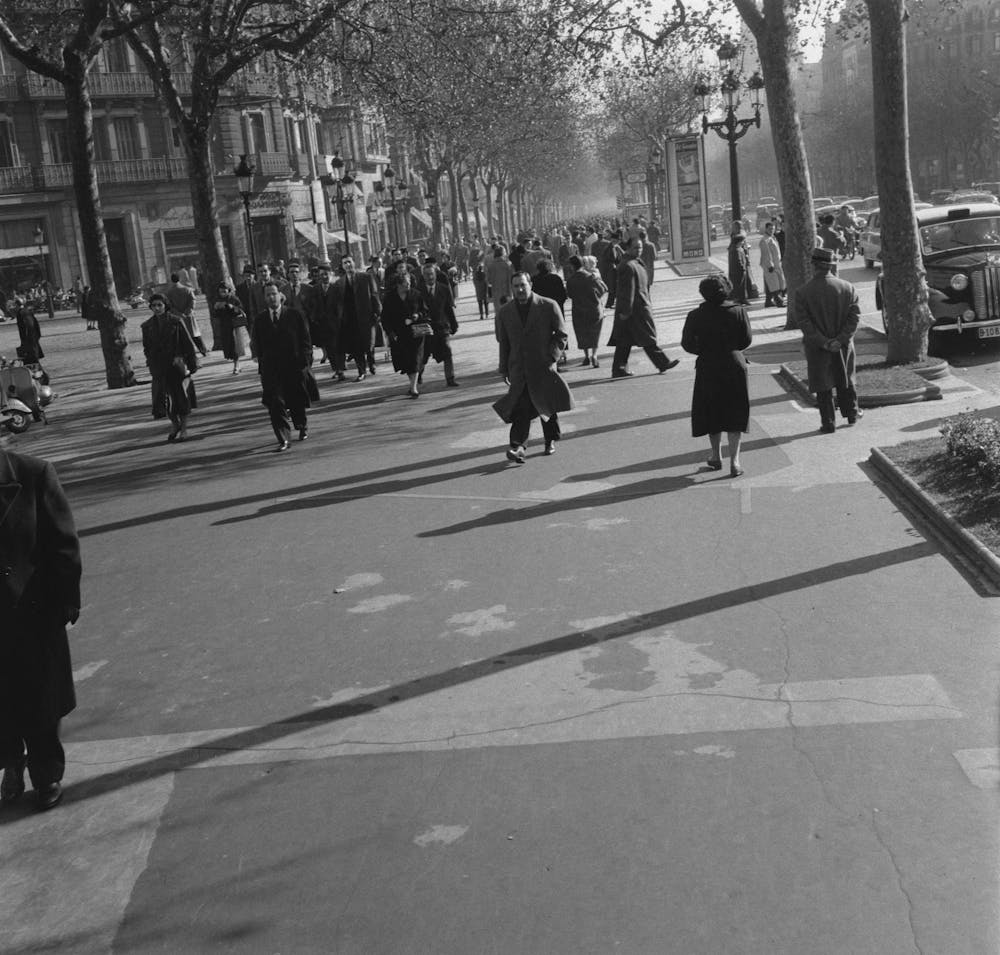
A crowded street
Andrea searches for respite from the suffocating apartment.
Nationaal Archief, CC0

The divide begins to blur, however, when her wealthy and magnetic friend, Ena, becomes drawn to Andrea’s uncle Román. Having already bewitched Gloria and the maid Antonia, Román’s predatory circling of Ena penetrates Andrea’s private world and threatens her most meaningful relationship.

Andrea’s relationship with Ena is charged with intense desire. She is drawn to Ena’s “pleasant, sensual face” and “terrible eyes” glittering with intelligence. Embraced by her friend’s family, Andrea must also endure the pain of watching Ena entertain her many male admirers. This, along with Andrea’s fascinated descriptions of Gloria’s naked body, has led to queer readings of the novel and its protagonist.

Named or unnamed, straight or queer, there is no doubt a deep sexuality surges beneath the novel’s surface. Angustias’s obsession with modesty, and her warnings Andrea stay away from Gloria, “an inappropriate woman”, represent the anxiety around sexual agency and transgression in Franco’s Spain.

Spanish culture before, during and after the dictatorship has challenged Franco’s repressive ideology. Written before the Civil War, Federico García Lorca’s play The House of Bernarda Alba (1936) also uses an authoritarian matriarch in the family home to explore repression and sexual freedom.

After Franco’s death, the Movida movement exploded in a riotous celebration of sexuality and transgression, on display in Pedro Almódovar’s many films.

Nada sits in between, passionate but understated, escaping the censors with a story of human longing, frustration and hope. Like all classics, it will be read, reread and given new context. Today, Andrea’s anguish at being trapped inside, waiting for life to begin, will speak to many.


Read more:
Pain and Glory: Pedro Almodóvar’s latest movie is as much self-therapy as it is self-portrait


Correction: this article originally misstated the date of Nada’s English translation. It was first translated in 1958, but not widely available until 2007.The Conversation

Ruth McHugh-Dillon, Lecturer in European Languages (Spanish and Latin American Studies), Monash University

This article is republished from The Conversation under a Creative Commons license. Read the original article.
Unknown's avatar

Hamlet: a play that speaks to pandemics past and present


Mark Brenner

Elizabeth Schafer, Royal Holloway University of London

I went to the theatre for the first time in 15 months to see the Theatre Royal Windsor’s new production of Hamlet. Starring Ian McKellen and directed by Sean Mathias, it really resonates in a time of ongoing pandemic. Mckellen’s very contemporary, teenage Hamlet slouches around in a hoodie and trackie bottoms, grieving, isolated and angry.

The setting, like the original, is the city of Elsinore, Denmark. In this version, COVID funerals are disrupted and truncated. Hamlet, a latterday prince, is a bisexual university student stuck at home with mum and step-dad when he wants to be back at uni in Wittenberg, hanging out with his friends and lovers.

Mental health issues afflict those in mourning, especially royalty. Hamlet muses “to be or not to be” as his lover, Horatio, gives the prince that most precious of things in lockdown, a haircut. Characters are overwhelmed by feelings of loss. Suicidal thoughts lurk. Denmark feels, and looks, like a prison. The government is morally corrupt.

Much of the play, this modern interpretation and Shakespeare’s original, speak to the circumstances and current climate in which we live. There is much in it to relate to and also learn from as our world widens and we learn to “live with the virus”.

Pandemics past

The spectre of plague and pandemic hung over much of Shakespeare’s life. He was born in April 1564, a few months before an outbreak of bubonic plague killed a quarter of the people in his hometown, Stratford-upon-Avon. Such pandemics would recur during his time in London in 1592, 1603, 1606 and then 1609.

When Shakespeare wrote Hamlet, usually dated around 1599-1601, feelings of grief, mourning and bereavement were probably at the forefront of his mind. His parents were very elderly by contemporary standards. Shakespeare’s father, John, died in September 1601 around 70 years of age. Five years earlier, in August 1596, Shakespeare’s son, Hamnet, had died aged 11, possibly of plague.

It is an uncanny coincidence that the name Hamlet is so close in sound to the name of Shakespeare’s son. The play is obsessed with fathers and sons, and how to navigate mourning a father’s death. It is full of speeches about grief and attempts to move on after bereavement. Hamlet is not alone in this as Ophelia and Laertes also suffer from unresolved grief in the play.

What galvanises Hamlet out of his emotional lockdown is theatre. When he hears travelling players are in town he leaps into action. Like so many in the audience he has really missed the theatre.

Despite the modern dress, Sean Mathias’ production eclectically evokes the theatre practices of the troupe in Hamlet. Most obviously, casting ignores age, ethnicity and gender, something which evokes the fact that Shakespeare’s stage had young men playing women. So while Jonathan Hyde is realistically cast as a plausible, efficient Claudius, the teenage Hamlet is played by an 82-year-old, while Francesca Annis who plays his elderly ghost.

Pandemic theatre

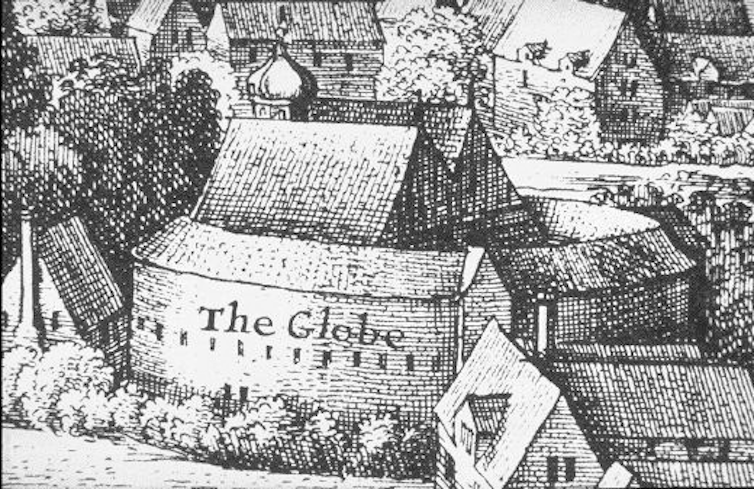
Lee Newby’s set design also encourages audiences to think of early modern playing conditions, transforming the Theatre Royal stage into a black metal, faux Globe theatre with two banks of seats on either side of the stage and a gallery at the back.

As a result, the onstage audience are clearly on display, sharing light with the performers. The mandatory face masks offer a constant reminder of COVID, while blanking out the audience’s reactions, but they also offer a reminder that Shakespeare’s playhouse had to navigate its own pandemic and often had to negotiate sudden lockdowns.

When the weekly plague death count reached 30 in Shakespeare’s time, the playhouses closed. Plague transmission was not properly understood, but it was clear that people congregating created a super-spreader event of sorts.

Shakespeare, a player, playwright and, most importantly of all, a shareholder in the Globe, seems to have seized the moment and written prolifically during plague lockdowns. In 1592 he was writing narrative poetry – Venus and Adonis, The Rape of Lucrece – as plague raged.

The years 1603 to 1604, 1606, and 1608 to 1609 were also bad for plague, and seem to have given Shakespeare space to write. For example King Lear was performed at Whitehall Palace on Boxing Day 1606 at the end of a year of plague. From 1597 on, Shakespeare could also escape to his sprawling Warwickshire country mansion, New Place, one of the largest houses for miles, with at least 20 rooms.

Illustration of the original Globe Theatre.
Globe Theatre, detail from Hollar’s View of London, 1647.
Wikimedia

By contrast, many players were desperate for any income and facing destitution. So, sometimes playhouses would reopen before the mortality rate fell to the level considered “safe”. The thought of what a “freedom day” was like in the early modern playhouse, with those standing (known as groundlings) pressed closely together in the yard, is perhaps even more daunting than watching people flood back now restrictions are lifted.

Now that so many restrictions have been lifted now in the UK since July 19, I am feeling very ambivalent about the shared experience of live theatre. The Theatre Royal created what feels like a very safe space and, personally, I could get used to having such a generous amount of leg room in front of me. In a COVID-secure theatre, there’s no need to get intimate with complete strangers while trying to squeeze through to your seat.

But after “Freedom Day”, the theatre is only insisting that masks remain mandatory for the audience onstage who are in such close proximity to the actors. The theatre will only “strongly encourage” the rest of the audience to mask up.

During the first decade of the 1600s, pandemic ravaged the country’s population and theatres were closed as often as they were open. This might be the case now too. Already productions have had to close to isolate, including London’s Shakespeare’s Globe, after positive cases among cast and crew. Maybe restrictions indoors could stave off more productions having to close. It took 30 deaths to close the playhouses in the 1600s, but now all it takes to close a theatre is one case of COVID.The Conversation

Elizabeth Schafer, Professor of Drama and Theatre Studies, Royal Holloway University of London

This article is republished from The Conversation under a Creative Commons license. Read the original article.
Unknown's avatar

Hustler literature sheds light on the world of internet fraud in Nigeria


Internet crime has become attractive as a form of ‘hustle’ to many young Nigerians.
Issouf Sanogo/AFP/Getty Images)

Daniel Chukwuemeka, University of Bristol

Hustler narratives have emerged as a genre in world literature since the mid 1960s. It is an expansive genre, but deals broadly with the shortcomings of any given political economy as seen from the perspective of characters who position themselves as both victims and villains.

There have been groundbreaking hustler narratives from the US – like The Autobiography of Malcolm X (1965) written by Malcolm X and Alex Haley, and Donald Goines’s Dopefiend (1971). In recent times, critics have described the work of African American writers in this field as a type of crime fiction. They carry the expressions of people’s response to inner city problems such as de-industrialisation and police repression. The books represent individuals who operate outside the bounds of what American society might consider acceptable, just to survive.

Nigeria has made its own contribution to this field with its stories of political and religious hustle, sex worker narratives and many others about roadside hawkers, destitution, petty theft, and internet fraud. Notable examples include Akachi Adimora-Ezeigbo’s Trafficked (2008) and Igoni Barrett’s Blackass (2016). Other African entries include South African novelist Niq Mhlongo’s Dog Eat Dog (2004) and Congolese author Alain Mabanckou’s Black Moses (2017).

African hustler narratives represent the way people survive at the margins of postcolonial African economies. A distinct kind of African hustler narrative is the Nigerian e-fraud story, portraying characters who engage in cybercrime trying to make scam e-mail recipients part with their money – locally called “Yahoo Boys”. The narratives show how people attempt to overcome geographic and economic disadvantages by creating alternative networks.

In a recent paper, I analysed some of these e-fraud novels – and one in particular, I Do Not Come To You By Chance by Adaobi Tricia Nwaubani – to show that they fit the literary canon of hustler novels and to find out what they have to say as a critique of the Nigerian state and its economy.

Between Afropolitans and hustlers

In my study I looked at Nigerian hustler narratives in relation to another common trend in African literature today: Afropolitanism.

Afropolitanism describes the experience of African subjects who attain the status of global citizenship. They do this by connecting to other non-African expressions of identity, community and sense of belonging.

Both hustler and Afropolitan narratives highlight the possibility of migration as a way to move socially. But whereas the privileged Afropolitan has a real chance of migration, the African hustler can only access it through a backdoor channel.

For example, In Chimamanda Ngozi Adichie’s Americanah, Ifemelu’s migration to the US is through a legally documented process. In contrast, the female hustlers in Chika Unigwe’s On Black Sisters’ Street pay a pimp to smuggle them from Lagos to Antwerp.


Hachette Books (2009)

However, instead of physical migration, the hustlers (e-scammers) in Nwaubani’s I Do Not Come to You by Chance resist poor economic conditions by creating an alternate digital universe. This they navigate by e-mail, for access to global locations of capital.

Nigerian hustler narratives establish e-fraud practice as an alternative economy and show how and why such economies emerge. They can also be a potent critique of young Nigerians’ exclusion from the postcolonial economy.

I Do Not Come to You by Chance

The protagonist of Nwaubani’s book, Kingsley, turns to e-fraud as a way out of poverty.

After independence in 1960, Nigeria continued to adopt the colonial model of an extractive economy, with its dependence on crude oil. Following the fall in global oil prices in the 1980s, Nigeria adopted a neoliberal economic policy called the Structural Adjustment Programme. But this failed to improve the lives of ordinary citizens and encouraged them to engage in capitalist pursuits.


Read more:
Meet the ‘Yahoo boys’ – Nigeria’s undergraduate conmen


Kingsley yearns to perform the traditional duties of a family’s opara (firstborn son), which include taking care of his siblings and widowed mother. He applies for work at Nigerian oil companies but none employs him. So he joins his uncle, Cash Daddy, in the informal economy of online fraud. He declares:

I was not a criminal. I had gone into [internet fraud] so that my mother could live in comfort and my siblings have a good education.

E-fraud and the Nigerian state

But in embracing e-fraud as an alternative to his economic exclusion, Kingsley recreates the same exploitative economic landscape that he seeks to avoid.

In one of his scam letters, he exploits the decadent image of Nigeria’s political economy and positions himself within it as a victim. He pretends to be the widow of former Nigerian head of state, General Sani Abacha, describing the persecution of the widow’s household following his death:

I have been thrown into a state of utter confusion, frustration and hopelessness by the current civilian administration. I have been subjected to physical and psychological torture by security agents in the country…

What Kingsley has done above is to weave his personal experience of economic deprivation into a scam e-mail. Terms like “hopelessness” and “psychological torture” serve to appeal to the scam target’s pity and earn their trust. But they simultaneously hold true about Nigeria’s economic uncertainties and Kingsley’s economic vulnerability. In this way, readers are introduced to the degenerate world of Nigeria’s postcolonial economy, one that emasculates the postcolonial subject.

In another scam e-mail he writes:

There is a lot of corruption in Nigeria and people get up to all sorts of devious things.

Kingsley’s class-climbing manoeuvres are therefore a by-product of a failing Nigerian economic system in which a parasitic state exploits the masses. It does so by privatising government assets and converting the common wealth to its advantage, excluding most citizens.

Kingsley’s story forms a critique of the Nigerian economic culture in which he is allowed first to starve and then to prosper.The Conversation

Daniel Chukwuemeka, PhD Candidate in African Postcolonial Writing, University of Bristol

This article is republished from The Conversation under a Creative Commons license. Read the original article.
Unknown's avatar

The story of an African children’s book that explains the science of skin colour


Shutterstock

Nina G. Jablonski, Penn State

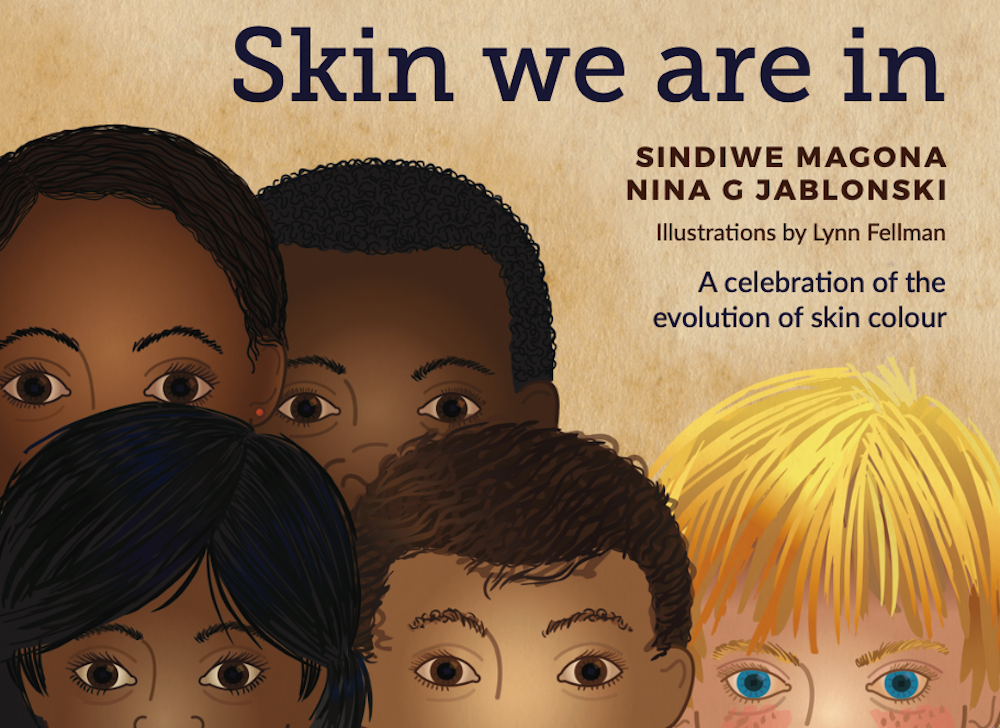
Skin We Are In is a landmark South African book for children (and grown-ups) on the subject of skin colour. Published in 2018, it was co-authored by an artist and a scientist, both South African luminaries – the author Sindiwe Magona and the anthropologist and palaeobiologist Nina Jablonski. Here they talk about how – and why – the book came about.


Nina Jablonski: As someone who studies the human biological past, I had been writing about skin colour and race for academic journals and for adult readers for years. The idea of doing a children’s book was planted back in 2010 when a friend impressed on me the importance of writing up my research on skin colour and race as an illustrated book for young readers. Like many South Africans, he realised that skin colour had been transformed through the country’s colonial history from a simple bodily trait – something that covers our bodies – to something that determines human worth and destiny.

I had found, in the course of my work, that people knew its social significance, but they didn’t understand it. Many were convinced that there was a genetic connection between skin colour and other physical and intellectual traits, including intelligence. This information – about how skin colour had evolved and how it didn’t determine any other human traits – really needed to be conveyed to the people who counted most: young people.

But I had no experience in writing for kids and no idea where the story would come from. I had the big challenge of finding a storyteller. I turned to the writer Njabulo Ndebele for advice. He suggested you, Sindiwe, saying “she has the spirit and spine needed”.

Sindiwe Magona: The project scared me for I had never worked with a scientist. But the subject matter is one of the most important aspects of my life as it has been the bane of black life in this country and, indeed, the world. This was a book that could enable parents to broach the subject of skin colour with their children. All parents need help to deal with race and racism; many did not get good grounding as children. Skin colour is often a difficult subject and dealing with it through storytelling is a great aid.

Nina Jablonski: One of the things that most impressed me, once we were talking, was your ability to express the everyday wear-and-tear of skin colour and colour-based racism.

Sindiwe Magona: Racism in South Africa was a way of life as it was sanctioned. Social stratification, according to skin, was reinforced by apartheid laws that in turn embedded and entrenched poverty and lack of mobility for the oppressed. The darker the skin colour, the less legal protection accorded, to the extent of denial of citizenship. Just as skin colour is inescapable, so was poverty inescapable. This created and reinforced a deep-seated sense of inferiority in most black people while most white people suffered the reverse and felt superior.

A book cover with the words 'Skin we are in' on an illustration of five young people, each a different skin tone.
The cover of the book written by two South African luminaries.
New Africa Books

Nina Jablonski: You found the hook to start writing the book quite by chance…

Sindiwe Magona: Coming back from our first meeting, Nina, I walked through the gate and reached behind the post for mail. Right there, on the small bush whose leaves I often have to brush aside to look into the mailbox, sat a chameleon. I watched as it slowly made its way from the stalk onto a leaf … changing colour as it did. At once, I morphed into a child, a boy, and I envied the chameleon’s ability. If only I could do that. Strange thing is – never before and never since have I spied another in my garden.


Read more:
Learning from the story of pioneering South African writer Sindiwe Magona


Nina Jablonski: When you told me about Njabulo, who longed to change his colour, I knew we had a great story. From there, we worked step by step, fitting the science alongside the developing text. We began working with Lynn Fellman, the illustrator, to create the look of the characters and their setting…

Sindiwe Magona: Enter Uncle Joshua and a group of children – Njabulo, Aisha, Tim, Chris and Roshni. Given a recycling project, Njabulo offers his Uncle Joshua’s junkyard, where the group from a multiracial school should meet. Njabulo, waiting for his group, is suddenly assailed by misgivings. Will his “friends” find him wanting? Are they, indeed, his friends? That is when he comes across the chameleon and wishes they were all the same colour … or if one could change colour like the chameleon. Uncle Joshua is stricken by the realisation of the self-doubt that is the lot of the black child. Later, he gets the group talking about skin colour; and here Nina’s science comes in very handy. With understanding grows self acceptance and appreciation. The result is the song that the group presents with the instruments they make using bits and pieces from the scrap yard.

An elder woman smiles lightly as she looks into the camera, eyes warm and dressed in black, beaded traditional Xhosa attire, a zebra skin on the wall behind her.
Sindiwe Magona has written over 130 children’s books.
© Bjorn Rudner/Sindiwe Magona

Nina Jablonski: Uncle Joshua was a believable and trusted wise uncle, who talked to the kids about things like the effects of sunlight on the body and how people got it wrong when they equated skin colour with intellectual potential. The science content boxes on each page provided basic facts backing up what Uncle Joshua was saying. The characters are very true, I don’t know how you do it.

Sindiwe Magona: I am fortunate that I never discarded my childhood, or perhaps it never left me. This enables me to go into that world of the child, imagine its delights, its fears, its doubts, and the absolute thrill of discovery, of mastery.

Nina Jablonski: We can’t force books into the hands of children, parents and teachers. But we made the book available in all of the official languages of South Africa, and made free copies readily available to schools in the Western Cape through Biblionef South Africa. We are incredibly fortunate that we had support from the businessman Koos Bekker through the Babylonstoren Foundation to make these things possible.


Read more:
We need to unpack the word ‘race’ and find new language


Sindiwe Magona: All parents are challenged by the issue of race and racism. White parents often feel “accused” of racism and black parents, by and large, feel since they are at the receiving end of racism, it is the other side that should learn. If white people would just stop being racist then the problem would be no more. Were it that simple.

We all need to forgive ourselves and one another … so we can go on and own our past and what it dealt us and then rid ourselves of beliefs we have come to know or recognise as unfounded. From there, we might be able to hand over a cleaner, wiser belief system to our children.

You can order a copy of Skin We Are In over here.The Conversation

Nina G. Jablonski, Evan Pugh University Professor of Anthropology, Penn State

This article is republished from The Conversation under a Creative Commons license. Read the original article.

Unknown's avatar

Not My Review: Alfurian Chronicles (Book 1) – Defiant by Aaron Hodges


Unknown's avatar

Yes, adult literacy should be improved. But governments can make their messages easier to read right now


Shutterstock

Cath Ferguson, Edith Cowan University

A parliamentary inquiry is looking into how to improve adult literacy in Australia.

Having a low level of literacy is not the same thing as being illiterate. The definition of “illiterate” is the inability to read or write. A low level of literacy is more complex and relates to people’s abilities to read, write and understand a range of information that allows them to fully participation in society.

According to the OECD, 40–50% of adults in Australia have literacy levels below the international standard required for participation in work, education and society.

Together with literacy, the inquiry will also look at numeracy and problem-solving.

While it’s important the inquiry look at ways to improve literacy for those struggling with it, the government could start acting now to make its information and services more accessible. One way is to present information in plain English, and make services like Centrelink easier to navigate.

Why are we having this inquiry?

The inquiry will consider both economic and social aspects of literacy. But its focus is on increased labour market participation, and increased productivity.

It was initiated after a 2020 Productivity Commission report showed Australia’s falling rates of educational achievement, compared to other countries in the OECD, were related to our levels of productivity — particularly as compared to the United States.


Read more:
Josh Frydenberg has the opportunity to transform Australia, permanently lowering unemployment


The OECD numbers show our literacy rates are similar to New Zealand and actually better than in the United Kingdom and US.

In a survey of adult skills conducted by the OECD in Australia from October 2011 to March 2012, Australian adults scored fifth out of participating countries for literacy — after Japan, Finland, the Netherlands and Sweden. The United Kingdom and the US scored at 15th and 17th respectively.

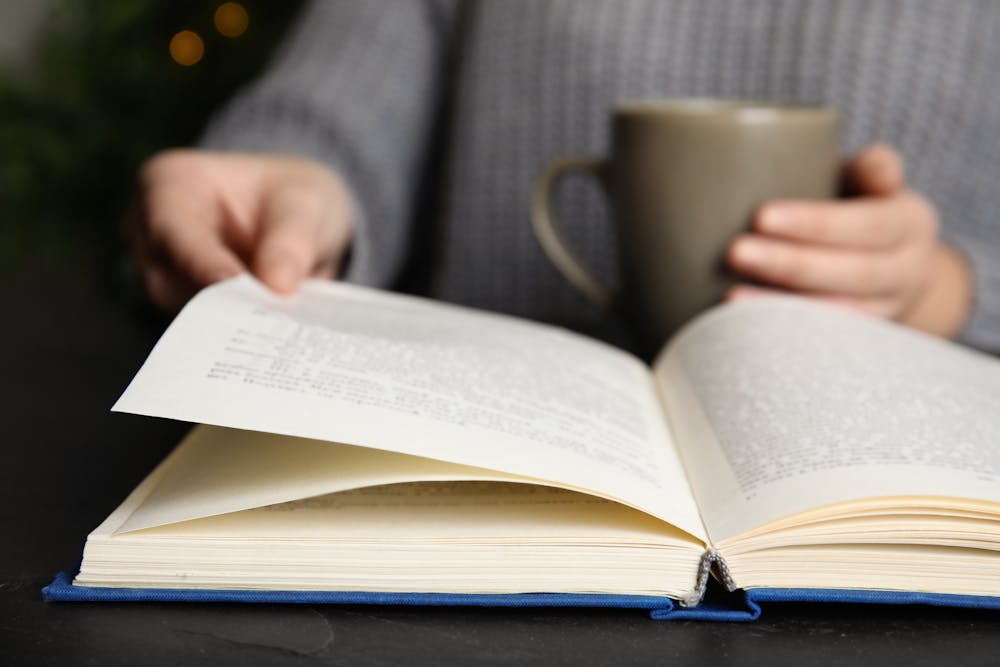
Person reading book with a cup of tea.
A low level of literacy isn’t the same as not being able to read. It is about accessing information in a way that allows a person to participate in society and the economy.
Shutterstock

But for numeracy Australia ranked 14th, the UK 17th and the USA 21st.

Adults with low literacy come from different cultural or language backgrounds. Those born in Australia could have low literacy due to various circumstances including:

  • learning difficulties
  • alternative preferences for learning
  • social circumstances that prevent school attendance or lead to many school changes
  • health issues during childhood
  • childhood trauma (including family/domestic violence)
  • a lack of interest or motivation to learn.

What are we doing to improve the issue?

A number of programs are available to train adults in certain skills to increase labour market participation. One example is the government’s Job Trainer Fund that provides free or low-cost courses as part of its economic response to COVID.

There are government programs too that focus on literacy and numeracy skills. They include

While these program are good to have, there is stigma attached to low literacy and this can inhibit help-seeking at all ages.


Read more:
To lift literacy levels among Indigenous children, their parents’ literacy skills must be improved first


Schools are increasingly recognised as the best place to improve the educational outcomes for adults. Early childhood education is especially important as the earlier in life issues are identified, the better the outcomes.

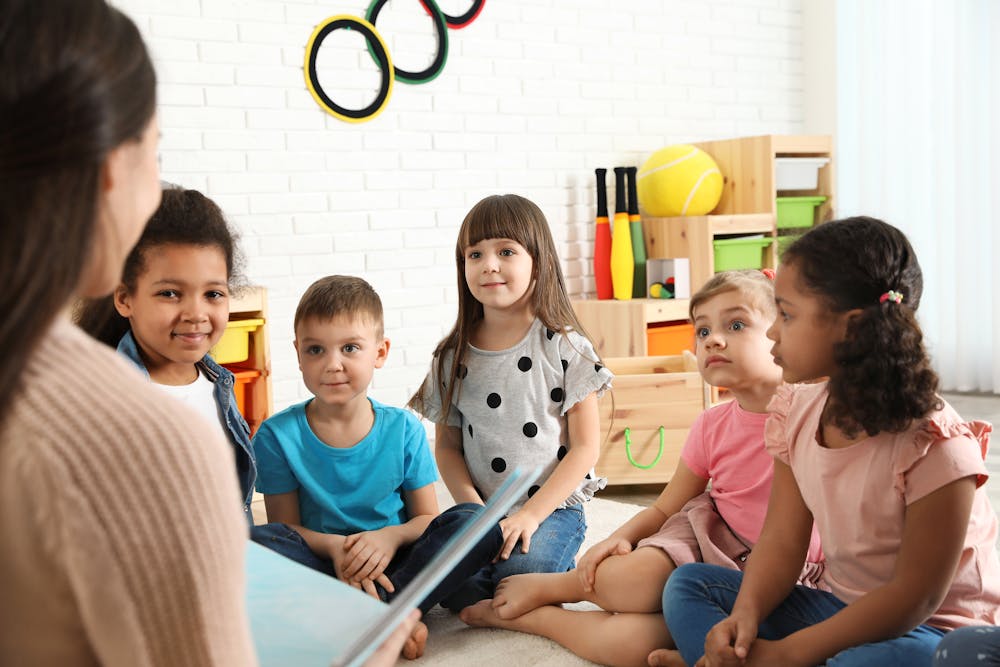
Kindergarten kids listening intently to the teacher as she reads from book.
A good early learning system can help ensure most people learn the literacy skills they need at a young age.
Shutterstock

Still, people with learning difficulties are often experts at hiding their challenges and some people will slip through the school system without their issues being addressed.

Services can be more accessible

The inquiry has received around 100 submissions from a range of organisations and individuals.

A submission from Read Write Now (where I am a tutor) — a West Australian organisation that provides free one on one support for adults in areas such as filling out forms, or reading aloud to their children — notes new arrivals are more likely to seek literacy help than those born in Australia. This is not always a case of demand, but one of stigma around illiteracy.

Their submission also notes there is little consistency of such services across Australia.

Many of our clients, especially people from Indigenous backgrounds, live a transient lifestyle. We find that often when they move there is no literacy program to link them into at their new location, so they fall out of the system.

A few submissions highlighted the difficulty many adults have filling out forms and navigating government services such as Centrelink. A submission from the NSW Council of Social Service noted the “increased digitisation of government services is a compounding factor”. It points to the need for government agencies to adhere to requirements for plain English and easy access material.

In this, the government can start making changes now.

Our recent analysis of government information on COVID-19 found many documents were written in a way that is inaccessible to struggling readers.


Read more:
Most government information on COVID-19 is too hard for the average Australian to understand


The problem lies in not only helping to improve adults’ literacy but in making services more accessible, as well as reducing unnecessary hurdles. For instance, in one submission, a woman talks of her husband who is a recent migrant with dyslexia. Although he can speak English well, he struggles with complex writing tasks that prevent him from being able to get the kind of jobs he has the skills to do.

She writes:

he could fulfil a handyman role offered recently by our local council — but only if the job were offered to him. He would not be able to provide a written CV and selection criteria responses during an online application process without significant assistance from me.

Organisations need to be aware of such issues, to not prevent skilled people from doing a job due to the application process alone. We also need to encourage those who need support to access the available services.

The House Employment, Education and Training Committee is continuing to hold public hearings for the inquiry into adult literacy.The Conversation

Cath Ferguson, Senior research fellow, Edith Cowan University

This article is republished from The Conversation under a Creative Commons license. Read the original article.
Unknown's avatar

2021 Australian Literature Society (ALS) Gold Medal Winner


The link below is to an article reporting on the winner of the 2021 Australian Literature Society (ALS) Gold Medal, Nardi Simpson, for ‘Song of the Crocodile.’

For more visit:
https://www.booksandpublishing.com.au/articles/2021/07/21/190069/simpson-wins-2021-als-gold-medal-for-song-of-the-crocodile/

Unknown's avatar

2021 Davitt Awards Shortlist


The link below is to an article reporting on the 2021 Davitt Awards Shortlist.

For more visit:
https://www.booksandpublishing.com.au/articles/2021/07/26/190342/davitt-awards-2021-shortlists-announced/