
The link below is to a very useful article about how reading can improve your life.
For more visit:
http://www.buzzfeed.com/erinlarosa/12-scientific-ways-reading-can-actually-improve-your-life

The link below is to a very useful article about how reading can improve your life.
For more visit:
http://www.buzzfeed.com/erinlarosa/12-scientific-ways-reading-can-actually-improve-your-life
The link below is to a very good article concerning the publishing industry and Amazon – well worth a read.
For more visit:
http://www.futurebook.net/content/book-industry-stop-moaning-and-be-creative-tomchalmers
There has been plenty of debate about the pros and cons of reading via an ebook reader and the article linked to below removes one of the many ‘mythological’ reasons many people dislike ebook reading – well, it does for reasonable people anyway.
For more visit:
http://blogs.smithsonianmag.com/smartnews/2013/06/e-readers-dont-cut-down-on-reading-comprehension/
Chapter 6: Ludlow’s Choice
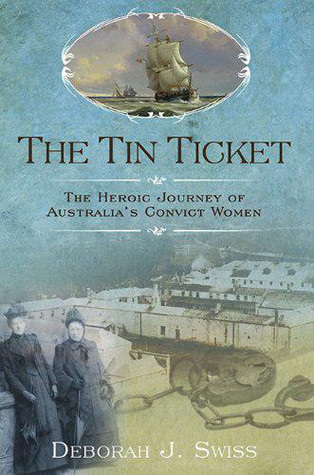
Chapter 6 introduces a new character to the narrative of The Tin Ticket – Ludlow Tedder, a 45-year-old widow who is working hard to try and provide for her family. There is a very brief biographical description of her life to that point and a very good description of her then life as a servant in the home of a barrister, Fitzowen Skinner and his wife Laura. It is not an easy life and with so much work for not much pay – certainly not enough to provide all the necessaries for her family. And it is this that brings her into the story of The Tin Ticket. To try and get that little bit extra so she can purchase what she needs for her young daughter she pawns a few pieces of cutlery, but is found out in tragic circumstances for her family.
As a result she seeks to escape justice but her life on the run is cut short in very quick time and she is imprisoned at Newgate. There she awaits trial and is quickly condemned to be transported to Van Dieman’s Land for ten years, though tempered with the mercy of being able to take her youngest daughter with her. Yet again the injustice of the British law system can be seen in the sentence – 10 years transportation in appalling conditions for a very petty crime.
The chapter also provides a selection of other similar petty criminal cases and examples of the corruption that influenced the sentencing of prisoners at that time.
Buy this book at Amazon:
http://www.amazon.com/gp/product/B0043RSIWI/
 I usually like to own the books I read and these days I prefer to own them as ebooks. This particular book however I do not own. I did try and find a digital copy but was unable to do so. The book I have read was lent to me from a guy I work with and I believe he found it among some books that were being disposed of. So it has had something of a rough history I would say.
The edition I read was a hardcover book published in 2005 by Chamberlain Bros., a member of Penguin Group (USA) Inc. It is 169 pages in length, though the Forward and Introduction need to be added to that total. It took me less than a day to read, which demonstrates that the book is a very easy and interesting book to read.
Breaking Ships is a fascinating read, although I was familiar with the subject covered in the book, having seen a TV program on the very subject some months before. Indeed, the reason the book was lent to me was because the breaking up of ships in Bangladesh had been discussed during a meal break at work. We had been discussing the mammoth task of chopping up these ships and the recycling of everything contained therein – as well as the environmental damage caused and the poor wages of those that worked in the ship breaking yards.
However, the book has given me a better appreciation of conditions in the business, as well as conditions throughout Bangladesh and the massive impact this business has for the entire country. The book is a real eye opener for the entire process and all the people involved in breaking up a ship. The book’s main concern as far as the ships being recycled is the ‘Asian Tiger,’ a gigantic 38 000 ton oil tanker. The Asian Tiger’s dismemberment is traced right from the initial beaching of the ship until there is nothing left – including a look at all those involved in the work, the villages that provide the workers, how the material being recycled is sold and used thoughout Bangladesh, etc. It is a most fascinating read as I have already said. The book features many photos which I think adds greatly to the value of the work.
This book introduces the western reader to a different world, with a glimpse behind the scenes at industrial life in a third world country that has very little of that which we would expect in such an industry – good wages, work safety, environmental protection, etc. It’s well worth a read.
The video below is of footage taken from the beaches near Chittagong in Bangladesh, showing something of what it is like in the ship breaking business of Bangladesh.
The link below is to a book review of ‘The Power of the Herd: A Non-predatory Approach to Social Intelligence,’ by Linda Kohanov.
For more visit:
http://blogcritics.org/book-review-the-power-of-the3/
The link below is to an article that considers reasons to admire self-publishing.
For more visit:
http://www.huffingtonpost.com/alison-baverstock/5-reasons-to-admire-selfp_b_3327322.html
The link below is to an article that takes a look at the various popular reading apps on iOS.
For more visit:
http://dearauthor.com/ebooks/reading-with-ios-101-a-reading-app-guide-revisited/
Chapter 5: More Sinned Against Than Sinning
Having arrived in Van Dieman’s Land at the conclusion of the previous chapter, chapter 5 begins with an account of the disembarkment of the female convicts from the Westmoreland and their arrival in the Van Dieman’s Land colony proper at Hobart Town, an already bustling centre of some 14 000 people. Agnes McMillan and Janet Houston are abruptly introduced to the ‘winterish’ Tasmanian summer of December 1836, as they are much some distance through Hobart Town to the Cascades Female Factory housed in an old rum distillery some 2 miles outside of town at the base of Mount Wellington.
The first section of chapter 5 covering the convicts arrival at and journey through Hobart Town provides a fascinating insight into what life was like in colonial Van Dieman’s Land in 1836. The description of Hobart Town is wonderful, as is the colour of society set forth as the convict brigade marches thorugh the town. This is a great encapsulation of what is what like to live in those early heady days of Tasmania.
The remainder of the chapter narrates the life of Agnes as a female convict on assignment, though it seemed more often than not, her time was spent in the crime class at Cascades Female Factory. The conditions of her imprisonment at Cascades were far in excess of what was deserved for the ‘crimes’ she committed. Indeed, the chapter title is very appropriate – ‘more sinned against than sinning.’
Buy this book at Amazon:
http://www.amazon.com/gp/product/B0043RSIWI/


You must be logged in to post a comment.