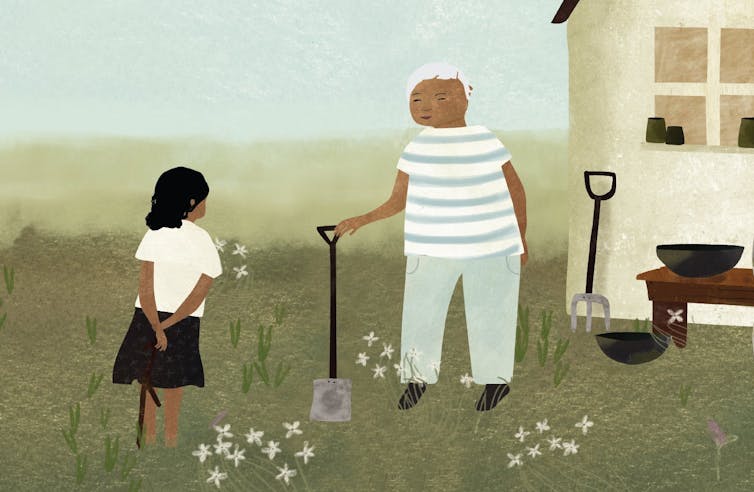
Detail from ‘Birdsong’ by Cree-Métis artist Julie Flett, which won the 2020 TD Canadian Children’s Literature Award for most distinguished book. The story follows an intergenerational friendship and speaks to change in children’s lives. (Greystone Kids)
My research team and I recently explored 500 picture books created by authors or illustrators living in Canada and published since 2017 by Canadian publishers. I’ve also reviewed an array of modern titles that demonstrate the evolution of what Eliza Dresang, a professor of library science, called “radical change” in children’s literature.
Today, picture books appear in a variety of genres, fiction and non-fiction, and generally unfold in 24 or 32 pages. Many of these books rely greatly on images to create and deepen meaning, and image quality is therefore critical. Readers now have access to multi-media projects with tremendous artistic merit, as well as stunning projects without any words at all, such as Sidewalk Flowers, illustrated by Sydney Smith and authored by JonArno Lawson. This wordless picture book won the 2015 Governor General’s Award in the category for children’s illustrated books.
‘Sidewalk Flowers,’ written by JonArno Lawson and illustrated by Sydney Smith.
Choosing books for children
Children need access to stories that authentically represent their lived lives. Educators and parents who are selecting picture books for children should examine the illustrations as well as the words, seeking titles that are representative of the world we live in. Audiences need diverse characters who are portrayed respectfully and accurately in terms of culture, language, religion, social class, ability, sexual orientation and gender.
The following books are extraordinary in both text and illustration, grouped here as a snapshot of contemporary excellence that represents diverse communities, identity themes and artistic media. Include them in home and school collections or enjoy them from your local public library.
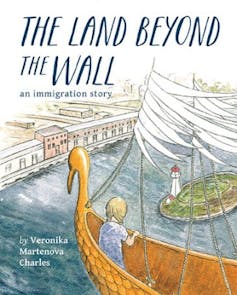
This allegory, presented in evocative narrative and watercolour, follows a young girl who moves to a country where she is free to be an artist. The author’s afterword discusses her childhood behind the Iron Curtain, arriving in Canada via Pier 21 in Halifax. For ages 5–12+.
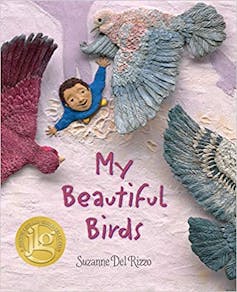
Sami has escaped war-torn Syria and lives in a refugee camp. As he befriends four new birds, he begins to adjust to his new life. Poetic language pairs well here with stunning illustrations created through Plasticine, polymer clay and acrylics. For ages 6–10+.
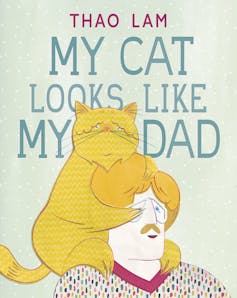
This unique story, presented with retro-style collage, lists the various ways the narrator’s dad resembles their cat. A surprising twist at the end: the narrator is actually a bird. The message is that family is what you make it. For ages 3–8+.
‘Kisimi taimaippaktut angirrarijarani/Only in my hometown’ (House of Anansi Press)
Free-verse childhood memories, paired with evocative paintings, illuminate growing up in a small Arctic town. The text unfolds in two languages: Inuktitut (using both syllabics and transliterated roman orthography) and English. For ages 5–adult.
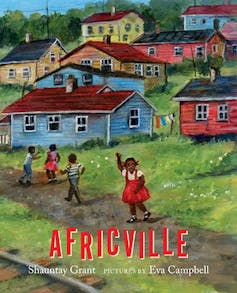
‘Africville’ (Groundwood Books)
Africville, written Shauntay Grant and illustrated by Eva Campbell.
Groundwood Books, 2018.
A young girl visits the former site of Africville and imagines this historic Black Nova Scotian community while thinking about family stories. Textured oil-and-pastel-on-canvas illustrations extend the lyrical text. An author’s note provides more information about Africville’s development from an early settlement, and how the community was razed by the city of Halifax in the 1960s. For ages 4–8+.
‘Seamus’s Short Story.’ (House of Anansi Press)
Seamus’s Short Story, written by Heather Hartt-Sussman and illustrated by Milan Pavlović.
House of Anansi Press, 2017.
When Seamus wears his mother’s high-heeled shoes, he can reach everything! But … there are definitely times to be tall and times to be small. This is a nuanced story about innovation, self-acceptance and love, presented with a bright palette of colour. For ages 4–8.
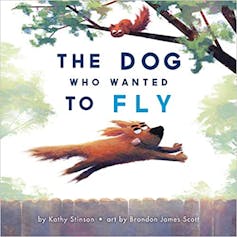
This warm-hearted story, enriched by Brandon Smith’s highly animated illustrations, encourages readers to follow their dreams. Zora is a well-developed and compelling canine character that audiences will cherish. For ages 3–8.
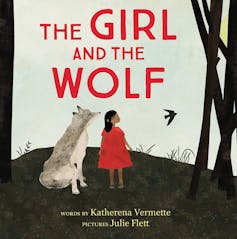
‘The Girl and the Wolf’ (Theytus Books Ltd.)
The Girl and the Wolf, written by Katherena Vermette and illustrated by Julie Flett.
Theytus Books Ltd., 2019.
A girl gathers berries with her mother when she becomes lost in the woods. A wolf helps her use her wits and she finds her family. Later, she leaves tobacco in a red cloth as a gift of thanks. Julie Flett’s textured mixed-media images extend Katherena Vermette’s powerful text about finding courage and wisdom inside ourselves. The author’s note says this story was “inspired by traditional stories, yes, but in no way taken from one.” For ages 4–9+.
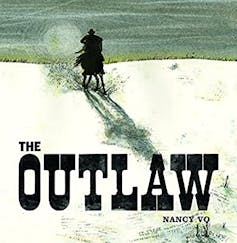
A young boy speaks on behalf of an outlaw returning to make amends in this story about redemption. The images use ink, watercolour and newsprint transfer, with newspaper clippings and fabric patterns from the late 19th century. For ages 5–9+.
The links below are to articles reporting on the shortlist and winners of the 2020 Prime Minister’s Literary Awards (the most recent article is at the top).
Tara June Winch’s The Yield has won the fiction category of the Prime Minister’s Literary Awards. I wrote an enthusiastic review of this novel earlier in 2020, and my admiration has not abated in the months since it won the Miles Franklin award. If anything, the heart of the story — one of reclaiming language, culture, identity, and a possible future — seems only more potent now.
There is nothing new about the knowledge that whose stories are told, and how they are told, matters enormously. Or understanding that a significant part of what becomes the shared “truth” of a time and culture is the product of the stories told and told again until they are embedded in a reader’s sense of the world.
Nor is it new to recognise that language shapes our thinking; particular languages see the world in particular ways; and understanding the many ways in which the world is seen and told can only enrich the human community. But for so long, Indigenous languages have been smothered and Indigenous stories ignored.
It is not possible to keep ignoring writers of the quality of Tara June Winch. The Yield is, I am confident, a novel that is going to be read and reread over the coming years and decades.
There are three main stories braided together in the novel. The first is that of Poppy Albert, who has built a dictionary of his language, salted with personal stories that imbue words with sensibility. The second story belongs to his granddaughter August, returned home for his funeral, and in time to join a protest against the mining company that is about to desecrate the region. The third story is presented in the form of notes, reports and letters written in the 19th century by the Reverend Ferdinand Greenleaf, who claims the position of defender of “the decent Natives whom I have lived amongst”.
Together these three stories of past, recent past, and a present becoming future, offer a powerful account of settler violence and its continuing impacts, whether the direct assault of forces of power, or the exhausting paternalism enacted by do-gooders like Greenleaf.
For me, it is impossible to read this story, particularly the sections told by Poppy Albert, without shivering in empathy, hearing and feeling the passion, the ethics, and resilience.
Books like this will be profoundly important building blocks for a more equitable and ethical Australia.
The power of language to shape understandings of the world is a theme of other winners this year: the Gay’wu Group of Women’s Songspirals: Sharing Women’s Wisdom of Country through Songlines shared the non-fiction award with Christina Thompson, author of Sea People: The Puzzle of Polynesia.
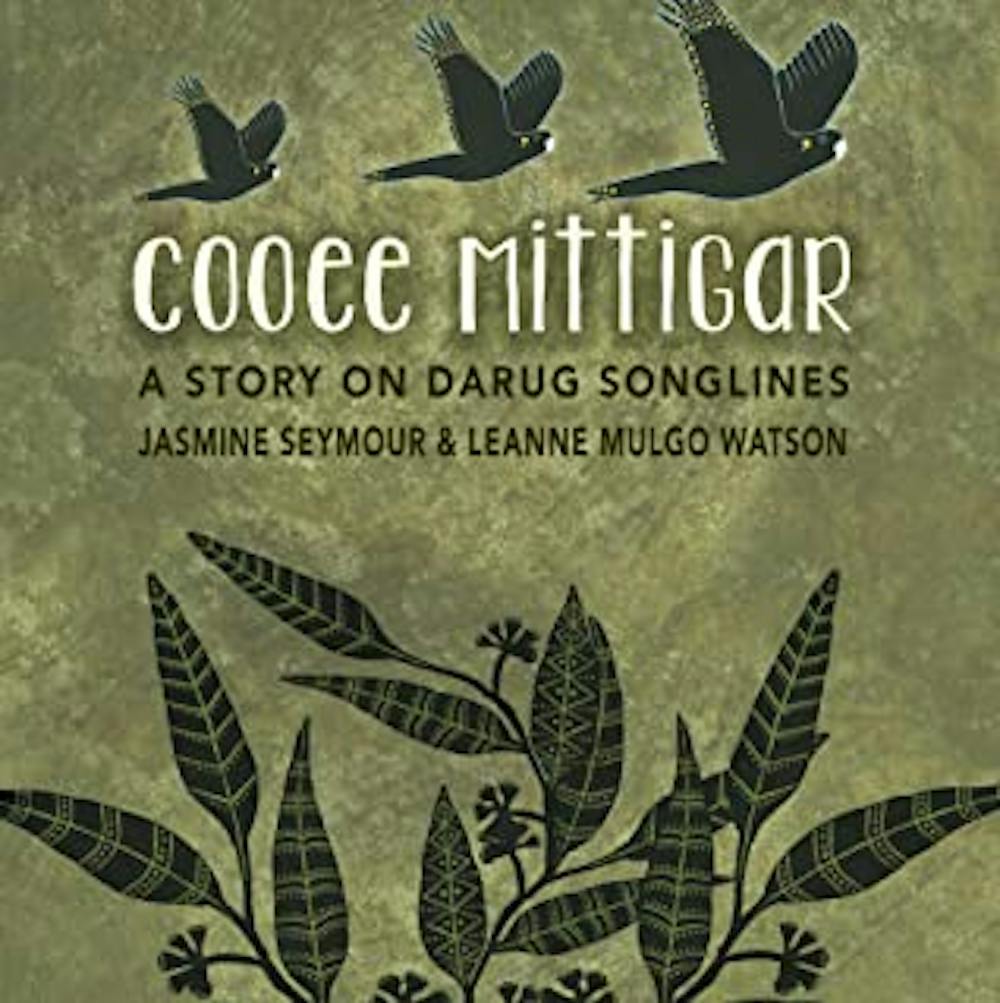
And the Darug duo of Jasmine Seymour and Leanne Mulgo Watson won the children’s category for Cooee Mittigar: A Story on Darug Songlines, described by its publisher as “introducing children and adults alike to Darug Nura (Country) and language”.
‘Old fashioned, elitist, white’
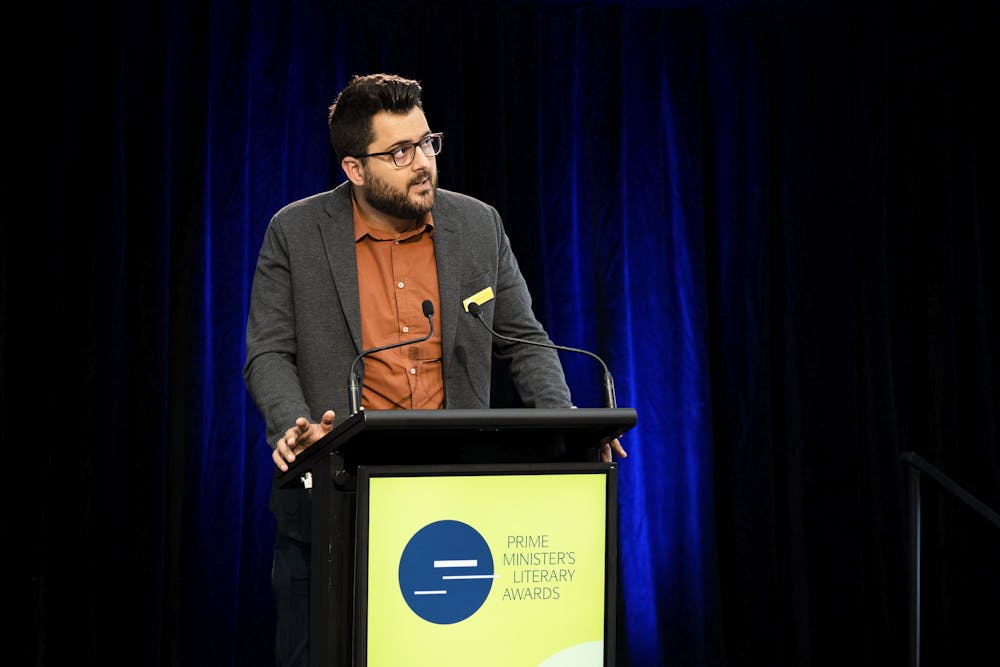
In an interview early this year, Omar Sakr, winner of the Prime Minister’s Award for poetry, said of poetry, “I always had a skewed perception of it as being old-fashioned, elitist, white, and concerning subjects that had nothing to do with me”. He’s not alone in that perception.
Academic Natalie Kon-yu has written eloquently about the lack of diversity in Australian literature and similar issues emerge across the Anglophone world. Add in the apparent elitism of poetry, and it can quickly appear to be a domain inaccessible to anyone whose identity is categorised as “diverse”.
Fortunately, the walls of privilege are capable of being scaled, and Sakr has shown commendable facility here. His first collection, These Wild Houses, was shortlisted for the Kenneth Slessor Prize in 2018. I read it hungrily, relishing the depictions of migrant life, of family interactions, of place and politics.
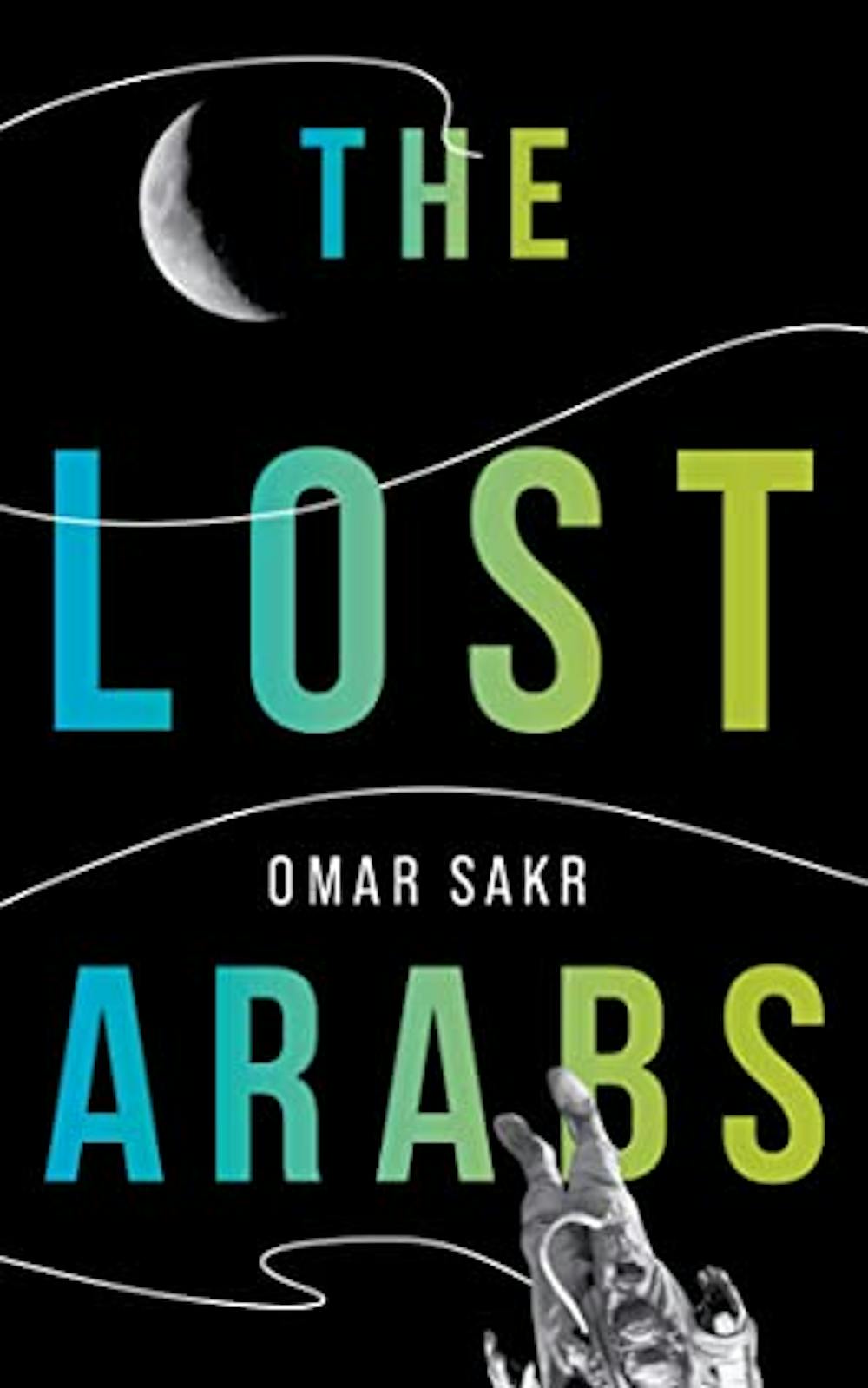
What was evident in that volume is only richer and stronger in the new, prize-winning collection, The Lost Arabs. As The Guardian noted, Sakr is “the first Arab Australian Muslim poet to be shortlisted — and then to win”.
And what a worthy win. The poems in this collection shimmer with energy, the imagery confronts and captivates, and Sakr’s lovely style blends control with compassion, moving fluidly between expressions of rage and of delight.
His writing is lyrical and closely observant; his poems shape words and lines in ways that make meanings tremble across the body, much as the mother in one poem, Sailor’s knot, feels the angels “dancing on my skin”.
At the end of an exhausting year, these two prize-winning books speak volumes about how we face trying times; how we might recognise the beauty in brokenness; how we can throw fragile lines across the cultural and linguistic and all the other divides to connect as humans, in all our flawed histories. And maybe — who knows? — find ways to repair the wounds of the past.
Growing up in Australia in the 1970s, I much preferred the hijinks of Han Solo and Chewie to Princess Leia’s sexualised damsel in distress. My sister and I spent an entire summer pigging out on Choc Wedges and Barney Bananas so we could collect the men’s cricket team on specially marked sticks. Feminism seemed a world “far, far away”. Yet what Australian girls could and couldn’t do was being explored through a glut of screen adaptations of classic novels.
These included Picnic at Hanging Rock (1975), The Getting of Wisdom (1977), Seven Little Australians (1973) and My Brilliant Career (1979). Many revealed a depressing picture of what happened if you were different, clever or outspoken. You could be: left behind while other girls are led through a mysterious rock portal, the subject of school bullying, or crushed more literally by a falling tree in an act of sacrificial redemption.
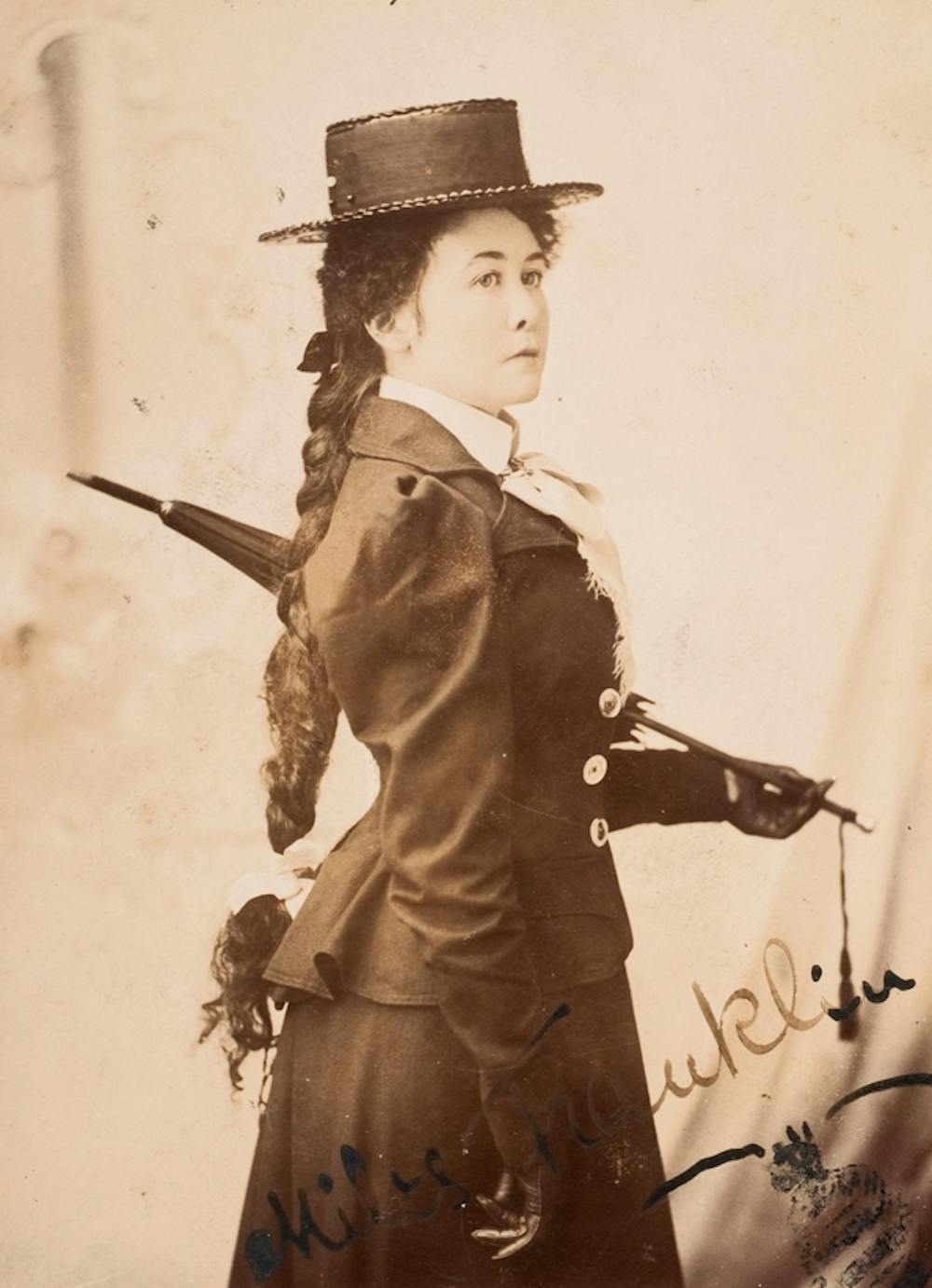
My Brilliant Career offered an alternative. Sybylla Melvyn, its “little bush commoner,” remains untamed and unapologetic. She would be modelled on author Miles Franklin herself, who mailed the manuscript to her literary idol, Henry Lawson. He subsequently provided a rousing endorsement and saw through its publication.
Miles Franklin in 1901. Wikimedia Commons
My Brilliant Career emerged in 1901, the same year as Federation, and aligned women’s independence with national independence through a symbolic coming-of-age narrative.
While Australian women received the right to vote the following year, My Brilliant Career voiced an irrepressible desire to be heard. Addressed to “My dear fellow Australians,” Melvyn (or Franklin) argues the story seeks to improve on other autobiographies by telling a collective truth: “This is not a romance … neither is it a novel, but simply a yarn — a real yarn”.
As such, My Brilliant Career blends the intimacy of life writing with the broader scope of a story being retold. My Brilliant Career is everywoman’s career as much as it is the career of Australia.
Sybylla is a highly likeable but flawed heroine, kicking around a crowded home and lamenting the “agonizing monotony, narrowness, and absolute uncongeniality” of teenage life.
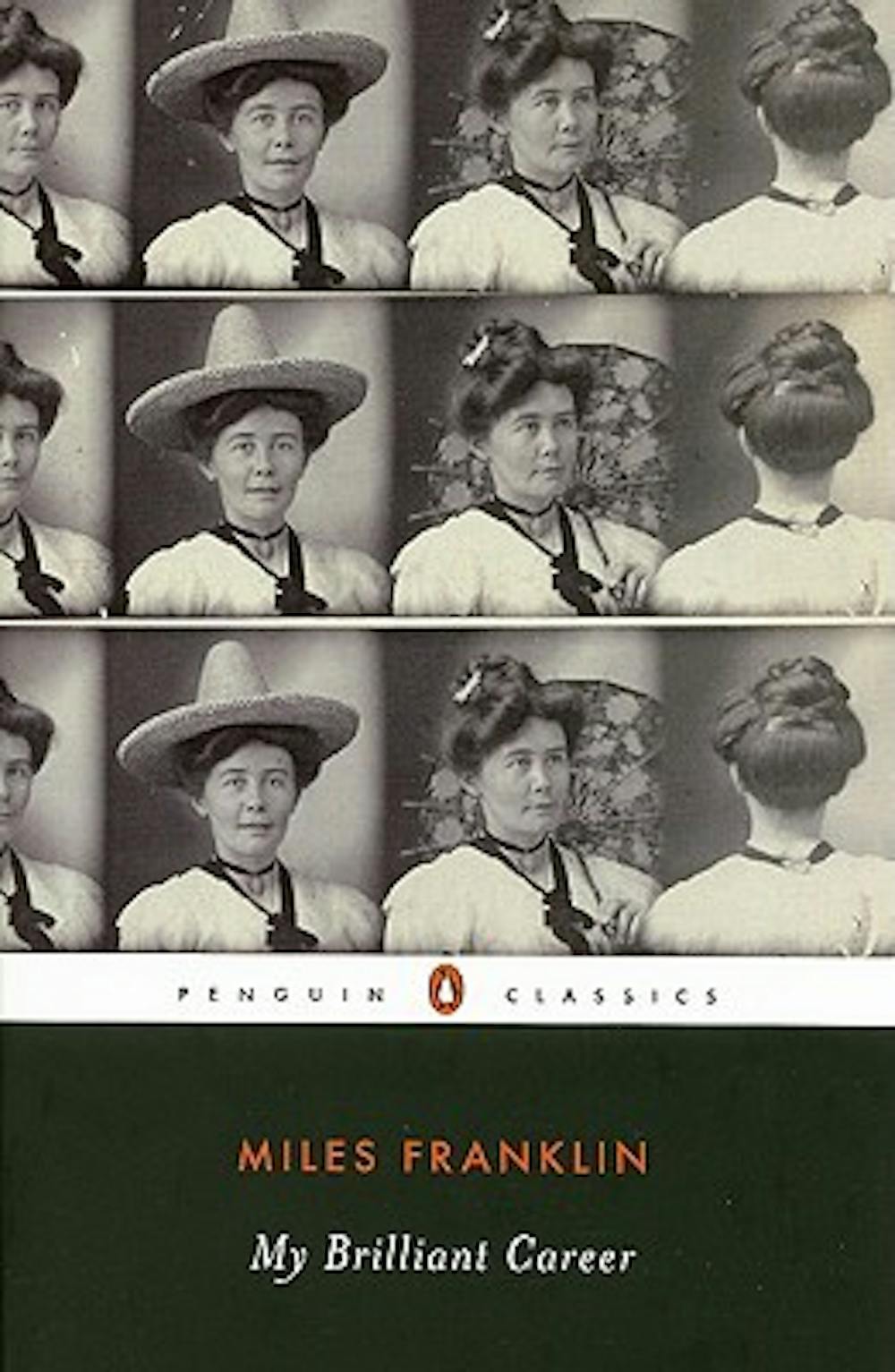
Goodreads
The family has fallen on hard times, shifting from three stations and 200,000 acres to the small and “stagnant” Possum Gully. Dick Melvyn, once his daughter’s “hero, confidant, encyclopedia, mate, and even religion”, reneges all paternal responsibility by turning to drink after a series of failed speculations.
Franklin captures the resulting strain between Sybylla’s hardworking mother and her eldest daughter. As Sybylla knocks about as a hoydenish tomboy and dreams of joining the ranks of poets like Gordon, Lawson and Paterson, her mother sees only domestic uselessness and self-centredness.
Sent with her siblings to the local school, mingling with the Italian migrants at nearby diggings, and absorbing pub slang when retrieving her father, Sybylla has a democratic outlook:
To me the Prince of Wales will be no more than a shearer, unless when I meet him he displays some personality apart from his princeship — otherwise he can go hang.
Such colourful vernacular underscores how Franklin mobilises a living language, as much as a bush landscape, to generate national distinctiveness.
Packed off to her grandmother’s to be transformed into more marriageable material, Sybylla soon navigates a class-bound squattocracy with limited options. Besides her mother’s descent into drudgery, her Aunt Helen has been forced to return to the family home after her husband’s desertion. Sybylla realises with
a great blow that it was only men who could take the world by its ears and conquer their fate, while women, metaphorically speaking, were forced to sit with tied hands and patiently suffer as the waves of fate tossed them hither and thither.
She is critical of women’s value being reduced to an index of their beauty but also internalises it to think herself plain and unappealing. In this, she is proved wrong, for her unpretentious liveliness attracts a number of possible suitors, including neighbouring hunk, Harry Beecham.
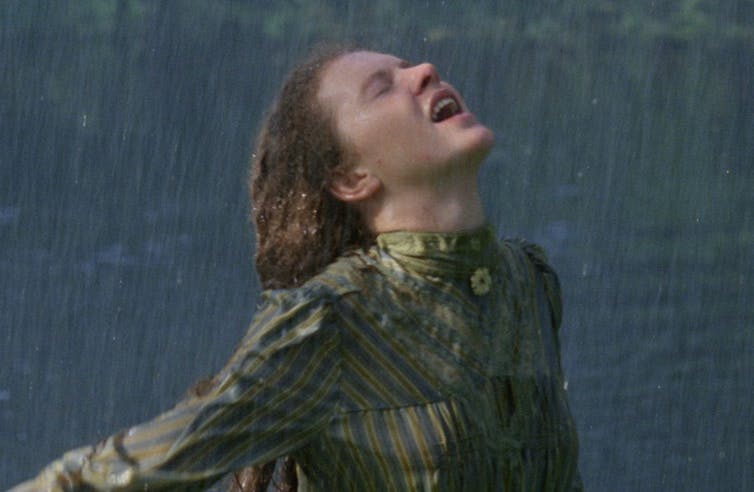
For the 1979 film, Gillian Armstrong perfectly cast then little-known Judy Davis as the pimply, unkempt Sybylla, a far cry from the Chiko Roll or Big M girls then gracing Australian billboards and TV.
My mother, now in her 80s, still raves about Sam Neill’s blue eyes as the dashing Beecham. Both Franklin and Armstrong build the chemistry in Sybylla and Harry’s courtship, emphasising an equality of energy and wit.
A higher love
Distinguishing between sexual passion and friendship love, Aunt Helen advises Sybylla she might receive and find real love in the latter. Yet Sybylla seeks a higher love.
Having “learnt them by heart”, the “men I loved” are the poets and she continues her “hope that one day I would clasp hands with them, and feel and know the unspeakable comfort and heart rest of congenial companionship”.
Sybylla holds to a Romantic view of the poet as both bard of the people and transcendent. The poet must be “Alone because his soul is as far above common mortals as common mortals are above monkeys.” This drives her sense there is something more than her appointed lot in life.
While Harry is prepared to “give” Sybylla “a study” and “truckload of writing gear” so she can pursue her career, Sybylla refuses his marriage proposal. She reflects, “He offered me everything — but control.”
Realising she needs an unfettered life, she knows she would ultimately destroy Harry’s “honest heart”. At the same time, there is little possibility of finding an ideal mate, who would be someone who has similarly “suffered” for their dreams.
My Brilliant Career not only captured the frustration of women at the turn of the century; it refused to end happily. Whereas the novel ends with Sybylla stuck and wearisome at Possum Gully, the film has her hopeful at the fence-line sending off her finished manuscript. Even in the 1970s, a choice between career and love seemed harsh.
Whereas Franklin suggests that women’s path to success requires lonely self-determination, second-wave feminism emphasised collective consciousness-raising, even if that forum of voices remained faultily selective in its whiteness.
A social divide
While representing the “rope of class distinction” drawing “tighter” around Australian working men and women, My Brilliant Career revealed a social divide marked as much by race as class and gender. The Irish M’Swats, for whom Sybylla is forced to become a governess to repay her father’s debt, are depicted as uncivilised in their dirtiness.
The Aborigines exist as unnamed servants, their culture similarly dismissed. Servant girl Jane Haizelip tells Sybylla of her disdain for the men at Possum Gully: “They let the women work too hard. It puts me in mind er the time wen the black fellows made the gins do all the work.”
While Franklin occasionally employs a slave rhetoric to emphasise female oppression, one is struck by the novel’s racial inequities.
Many of the problems in My Brilliant Career remain prescient: drought, bushfire, economic depression and social precarity. Whereas second-wave feminists advocated having it all, too often the message today is that women can’t expect to have love, family and career simultaneously.
Franklin achieved fame and showed women as central to Australian literature. I hope my daughter’s generation keep her spirit but that the yarn becomes one of shared, all-round fulfilment.









 At the BookShelf
You must be logged in to post a comment.