Unknown's avatar

Sci-fi author William Gibson: how ‘future fatigue’ is putting people off the 22nd century


Shutterstock/HQuality

Andre Spicer, City, University of London

The future isn’t what it used to be, at least according to the Canadian science fiction novelist William Gibson. In a interview with the BBC, Gibson said people seemed to be losing interest in the future. “All through the 20th century we constantly saw the 21st century invoked,” he said. “How often do you hear anyone invoke the 22nd century? Even saying it is unfamiliar to us. We’ve come to not have a future”.
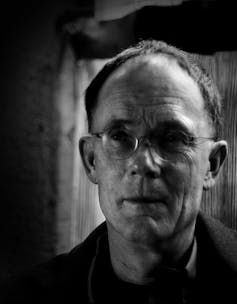
Portrait of William Gibson taken on his 60th birthday on March 17, 2008.
GonzoBonzo/Wikimedia, CC BY-SA

Gibson thinks that during his lifetime the future “has been a cult, if not a religion”. His whole generation was seized by “postalgia”. This is a tendency to dwell on romantic, idealised visions of the future. Rather than imagining the past as an ideal time (as nostalgics do), postalgics think the future will be perfect. For example, a study of young consultants found many suffered from postalgia. They imagined their life would be perfect once they were promoted to partner.

“The Future, capital-F, be it crystalline city on the hill or radioactive post-nuclear wasteland, is gone”, Gibson said in 2012. “Ahead of us, there is merely … more stuff … events”. The upshot is a peculiarly postmodern malaise. Gibson calls it “future fatigue”. This is a condition where we have grown weary of an obsession with romantic and dystopian visions of the future. Instead, our focus is on now.

Gibson’s diagnosis is supported by international attitude surveys. One found that most Americans rarely think about the future and only a few think about the distant future. When they are forced to think about it, they don’t like what they see. Another poll by the Pew Research Centre found that 44% of Americans were pessimistic about what lies ahead.

An imagined city of the future.
Shutterstock/JuanManuelRodriguez

But pessimism about the future isn’t just limited to the US. One international poll of over 400,000 people from 26 countries found that people in developed countries tended to think that the lives of today’s children will be worse than their own. And a 2015 international survey by YouGov found that people in developed countries were particularly pessimistic. For instance, only 4% of people in Britain thought things were improving. This contrasted with 41% of Chinese people who thought things were getting better.

Rational or irrational pessimism?

So why has the world seemingly given up on the future? One explanation might be that deep pessimism is the only rational response to the catastrophic consequences of global warming, declining life expectancy and an increasing number of poorly understood existential risks.

But other research suggests that this widespread pessimism as irrational. People who support this view, point out that on many measures the world is actually improving. And an Ipsos poll found that people who are more informed tend to be less pessimistic about the future.


Read more:
The end of the world: a history of how a silent cosmos led humans to fear the worst


Although there may be some objective reasons to be pessimistic, it is likely that other factors may explain future fatigue. Researchers who have studied forecasting say there are good reasons why we might avoid making predictions about the distant future.

Distant forecasts

For one, forecasting is always a highly uncertain activity. The longer the time frame one is making predictions about and the more complicated the prediction, the more room there is for error. This means that while it might be rational to make a projection about something simple in the near future, it is probably pointless to make projections about something complex in the very distant future.

Economists have known for many years that people tend to discount the future. That means we put a greater value on something which we can get immediately than something we have to wait for. More attention is paid to pressing short-term needs while longer-term investments go unheeded.

Psychologists have also found that futures that are close at hand seem concrete and detailed while those that are further away seem abstract and stylised. Near futures were more likely to be based on personal experience, while the distance future was shaped by ideologies and theories.

When a future seems to be closer and more concrete, people tend to think it is more likely to occur. And studies have shown that near and concrete futures are also more likely to spark us into action. So the preference for concrete, close-at-hand futures mean people tend to put off thinking about more abstract and distant possibilities.

The human aversion to thinking about the future is partially hardwired. But there are also particular social conditions that make us more likely to give up on the future. Sociologists have argued that for people living in fairly stable societies, it is possible to generate stories about what the future might be like. But in moments of profound social dislocation and upheaval, these stories stop making sense and we lose a sense of the future and how to prepare for it.

Plenty Coups portrait by Edward Curtis dated 1908.
Wikipedia

This is what happened in many native American communities during colonialism. This is how Plenty Coups, the leader of the Crow people, described it: “When the buffalo went away the hearts of my people fell to the ground, and they could not lift them up again. After this nothing happened.”

But instead of being thrown into a sense of despair by the future, Gibson thinks we should be a little more optimistic. “This new found state of No Future is, in my opinion, a very good thing … It indicates a kind of maturity, an understanding that every future is someone else’s past, every present is someone else’s future”.The Conversation

Andre Spicer, Professor of Organisational Behaviour, Cass Business School, City, University of London

This article is republished from The Conversation under a Creative Commons license. Read the original article.


Unknown's avatar

10½ commandments of writing


Things to keep in mind for writers young and old.
Kenny Luo/Unsplash

Sean Williams, Flinders University

Every author is asked by new writers for advice. There is, however, no all-encompassing, single answer that also happens to be correct. Quite a lot of commonly offered suggestions (“write every day”) don’t work for everyone and must be approached with caution.

A few years ago, I set out to create a list that will benefit all new writers. I put ten commandments through the wringer of my peers, who suggested modifications and noted that this list applies not just to new writers but to writers at every stage of their career. Indeed, I’ve needed reminding of more than one myself.

Here, then, are the 10½ commandments of writing – with an extra one for free.

1. Read widely

To succeed as a writer, you must occasionally read. Yet there are wannabe-novelists who haven’t picked up a book in years. There are also, more tragically, writers too busy to engage with the end-product of our craft. If the only thing you’re reading is yourself you are bound to miss out on valuable lessons.

The same applies to reading only within a favourite genre. A varied diet will strengthen your literary muscles.

2. Write

No need to thrash out 1,000 words a day or pen a perfect poem before breakfast, but you do have to write. The fundamental qualification for being a writer is putting words on the page.

If you aren’t doing that now, it’s possible you never will.

3. Follow your heart

When you really want to write literary fiction, but the market wants paranormal romance, write literary fiction. Chasing paranormal romance will be futile. Writing well is hard enough without cynicism getting in the way.

Passion doesn’t always pay, but it increases the odds of your work finding a home.

The best books come from the heart.
Brooke Cagle/Unsplash

4. Be strategic

But the choice is never between just literary fiction and paranormal romance. You might have poetry and narrative non-fiction passion projects as well, and it’s possible narrative non-fiction will appeal to the widest audience. If a wider audience is what you want, narrative non-fiction is the one to choose.

If, however, you don’t give two hoots about your audience, write what you like.

There are lots of different kinds of writers and lots of different paths to becoming the writer you want to be.

5. Be brave

Writing is hard, intellectually and physically. It also takes emotional work, dealing with exposure, rejection, fear and impostor syndrome. It’s better you know this upfront, in order to fortify yourself.

These crises, however, are surmountable. We know this because there are writers out there, leading somewhat normal lives, even healthy and happy ones. You can too, if you don’t give up.

The ones who persist are the ones who prevail.

6. Be visible

Many writers would prefer they remain hidden in a dark cave for all eternity. But stories demand to be communicated, which means leaving that cave. Whether it’s you or your written word, or both, broaching the bubble of self-isolation is important.

This doesn’t mean assaulting every social platform and attending every festival and convention. Find the kind of engagement that suits you and embrace it, and don’t overdo it. Remember: you still have to write.

You have to come out from there at some point.
Matthew Henry/Unsplash

7. Be professional

Don’t lie. Don’t belittle your peers and don’t steal from them. Keep your promises. Communicate. Try to behave like someone people will want to work with – because we all have to do that, at some point.

8. Listen

Heed what people you’re working with are saying, because you never know what gems of knowledge you might glean – about craft, about the market, about something you’re working on – among the knowledge you (think you) already possess.

9. Don’t settle

Every story requires different skills. You’ll never, therefore, stop learning how to write. The day you think you’ve worked it out is the day the ground beneath you begins to erode, dropping you headlong into a metaphorical sinkhole – and nobody wants that. Least of all your readers.

Readers can tell when you’re getting lazy, just like they can tell when you’re faking. You’re one of them. Deep down, you’ll be the first to know.

10. Work hard

Put in the hours and you’re likely to get some return on your investment. How many hours, though?

There’s a wonderful saying: “Even a thief takes ten years to learn her trade.” Writing is no different to any other career. Hope for overnight success; plan for being like everyone else.

The bonus commandments

When I put this list to my friends, several raised the importance of finding your people. Although I agree this is an important principle, I would argue it is implicit in commandments 6-8: these have no meaning without engaging. I decided to encapsulate this as 10.5. Embrace community

Find those who will walk alongside you.
Kenny Luo/Unsplash

After I’d been teaching and giving talks on this topic for several years, someone suggested another commandment that lies beneath the rest. It is so fundamental none will work unless you have this in spades. It is 0. Really want it, which sounds so obvious that it barely needs stating – except it does.

One day, I may no longer want to write. If that happens, I will take every mention of writing from this list and substitute the name of a new vocation – because this list applies to everything.The Conversation

Sean Williams, Lecturer, Flinders University

This article is republished from The Conversation under a Creative Commons license. Read the original article.

Unknown's avatar

Holocaust poetry and the reclamation of many identities


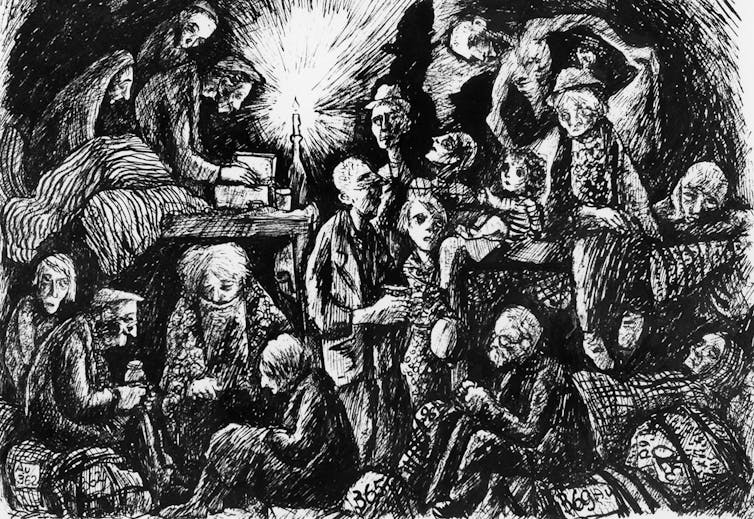
In the Living Quarters by Bedrich Fritta portrays Terezín (Theresienstadt) ghetto where early Holocaust poetry was written.
Wikimedia

Marian de Vooght, University of Essex

The first Holocaust poems were written 90 years ago, when the full extent of the horror was yet to be known. Starting in the 1930s, those first works foreshadowed the catastrophe that was soon to come. As the second world war erupted and the Nazi killings began, people continued to write poetry that recorded direct experiences of persecution and lamented the murder of loved ones.

While many writers of Holocaust poetry are Jewish, there are those who belong to other groups targeted by the Nazi regime. Including those who were perceived to have disabilities, Roma and Sinti people, political and religious opponents and homosexual men.

Writing poetry of the Holocaust has often been a way to reclaim identity, as writer and translator Lou Sarabadzic puts it:

Victims of the Holocaust are not the Other in these lines, but rather the authors, the ones we listen to, the ones expressing emotions.

As such, they continue to be written today as people continue to reckon with the memories and impact of the Holocaust.

Diverse backgrounds

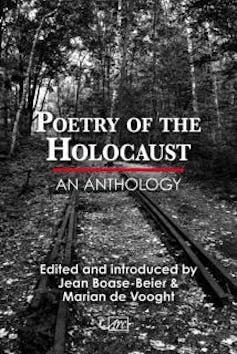
Published in 2019, Poetry of the Holocaust: An Anthology brings together poems from 19 languages that were previously unavailable in English. The translations in this book are followed by the original texts. These include poems in languages not normally associated with the Holocaust, such as Norwegian and Japanese, and from places like Argentina, Denmark and South Africa.


Author provided

Holocaust poetry in the 1930s and through the war wrestled with the incomprehensible reality its writers were facing. The earliest poems in Europe responded to the foreboding of the fascist regime and its politics of elimination.

In 1932, the German poet Eduard Saenger wrote in reaction to the sinister change of atmosphere that he was witnessing in his country:

A silent wind sends fear through the land / with an edge like the howling of wolves.

Like Saenger, many wrote poems warning of the approaching dark times and also in reaction to specific events, like the book burnings of May 1933 and Kristallnacht in November 1938.

During the war, the poems documented life in ghettos, prisons and concentration camps. They spoke of mass shootings and of seeing neighbours deported.

Writing in the Terezín (Theresienstadt) ghetto in the early 1940s, the Czech teenager Dagmar Hilarová expressed the desire to die rather than undergo further humiliation and torture:

Like a bird with wounded wings / To lie down, / And not to wait for morning.

Poems written in concentration camps were memorised or hidden, often later found by others. Sallie Pinkhof wrote a poem in Bergen-Belsen in 1944, in which he mocked the state of his body:

What a hoot / these loose-fitting tendons / and bones in my foot!

Pinkhof did not survive but his poems were preserved by fellow camp inmates. An anonymous poem found in the Zigeunerlager (Gypsy Camp) of Auschwitz-Birkenau opens with the wish:

Do not wake me from my dream, / so the world need never know / how they treat a Roma.


Read more:
Nazis murdered a quarter of Europe’s Roma, but history still overlooks this genocide


After the war

For many the horror of the Holocaust is both lifelong and unspeakable. As the memory and impact of the catastrophe continue to be felt by survivors, their children and people touched by its reverberations, poems continue to be written about the Holocaust to express what is almost beyond words. Dutch poet Chawwa Wijnberg (2001), whose father was executed by the Nazis:

Always present is the unsaid / the unsaid / that rips the wound open

Silence is a recurrent theme. Rita Gabbai-Simantov, a Sephardic-Turkish poet who lives in Greece and writes in Ladino, Judaeo-Spanish, about Thessaloniki – “old Saloniki” – and its wiped-out Jewish community (1992): “As you walk, your companion / will be silence”.

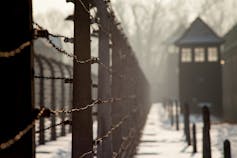
After her visit to Auschwitz, the Lithuanian poet Janina Degutytė recorded in 1966 the enduring silence of the people who were deported from her country and murdered:

Lips gasp for air … / The only sound is the rustling of golden leaves, / The rustling flow of time: which was – is – will be …“.

Later poetry also gave voices to persecuted groups who were previously unrepresented. In 1995, French writer André Sarcq was the first to express the fate of gay men who for decades after the war, in France and elsewhere, could not speak about their experience in concentration camps. This was because homosexuality continued to be outlawed and they felt, in Sarcq’s words, like “the rag of a pool of souls”.

The poet Janina Degutytė wrote a poem about Lithuanian victims after visiting Auschwitz in Poland.
Szymon Kaczmarczyk/Shutterstock

Poetry of the Holocaust continues to be written in our time. A striking example is the poem by Angela Fritzen, a journalist who has Down’s syndrome. Written after visiting an exhibition in Bonn, Germany in 2016, the poem is about the fate of people with disabilities during the Nazi era. “To have strength” is how Fritzen ends her deeply felt poem.

Holocaust poetry is a rich and diverse genre that continues to be added to. Both the older and the contemporary poems need readers, because Holocaust poetry is about communication. The poets felt the need to share their pain and it is vital that readers take the chance to empathise with what they have been through. By way of reflecting on the experience of others we recognise what it means to be human.

The translators of the quoted lines of poetry in this article are: Jean Boase-Beier (Saenger, Fritzen, Sarcq), Anna Crowe (Gabbai-Simantov), Maria Grazina Slavėnas (Degutytė), Marian de Vooght (Pinkhof, Sarcq) and Philip Wilson (Hilarová).The Conversation

Marian de Vooght, Visiting Fellow, Department of Government, University of Essex

This article is republished from The Conversation under a Creative Commons license. Read the original article.

Unknown's avatar

Comma again? Philip Pullman’s Oxford comma rage doesn’t go far enough


Philip Pullman thinks this coin needs another comma. What do you think?
HM Treasury/PA

Roslyn Petelin, The University of Queensland

High-profile author Philip Pullman tweeted on Sunday about the new 50 pence English coin due for release by the Royal Mint on Friday, January 31.

“The ‘Brexit’ 50p coin is missing an Oxford comma, and should be boycotted by all literate people,” he said.

An Oxford comma is the comma inserted before “and” or “or” in a list to separate the final item in a list from the items that go before it.

Sir Philip lives in Oxford, which voted to remain in the European Union. He has written several bestselling books, including the fantasy trilogy His Dark Materials. He argues that the commemorative coin requires a comma between “prosperity” and “and” – a very controversial opinion.

When The Guardian republished his tweet in an article, hundreds of responses were posted within hours. Moderators removed many comments – presumably the most heated ones.

Exciting passions

The mention of the Oxford (or Harvard or serial) comma unfailingly attracts passionate advocates (of which I am one) and determined detractors.

As Comma Queen Mary Norris, former copy editor at The New Yorker, says:

Nothing, but nothing — profanity, transgender pronouns, apostrophe abuse — excites the passion of grammar geeks more than the serial, or Oxford, comma. People love it or hate it, and they are equally ferocious on both sides of the debate. Individual publications have guidelines that sink deep into the psyches of editors and writers. The Times, like most newspapers, does without the serial comma. At The New Yorker, it is a copy editor’s duty to deploy the serial comma, along with lots of other lip-smacking bits of punctuation, as a bulwark against barbarianism.

Although its use is widespread in North America, the Oxford comma is not as widely used in Australia and the UK.

The Australian government’s Style Manual for Authors, Editors and Printers merely says “sometimes a comma is placed between the last two items to ensure clarity” and doesn’t use it in the manual’s title.

The UK National Curriculum authority warns students will be penalised if they use a serial comma in a list of simple items such as “apples, cheese, and milk”.

Many of the detractors say: “I was taught at school not to use it.”

To them I would say: “Well, you were taught wrong!”

As one poster on The Guardian article comments:

The use of the Oxford comma is not standard practice [in the UK], merely because of the ignorant, narrow-minded grammar school teachers we had.

Many believe it should be used only to avoid ambiguity, as in Robert Fulford’s example of a blooper that occurred in a newspaper reporting on a documentary about Merle Haggard: “Among those interviewed were his two ex-wives, Kris Kristofferson and Robert Duvall.”

My argument is deciding whether or not to use the Oxford comma is an unnecessary burden. I advocate using it at all times, although most journalists aren’t fans of the comma – perhaps because they can save a couple of spaces by omitting it.


Read more:
Grammarians rejoice in the $10 million comma


The 50p coin

To return to the quote on the coin in question, “Peace, prosperity and friendship with all nations”, placing an Oxford comma after “prosperity”, as Pullman advocates, doesn’t go far enough, in my opinion, to sort out the problem with the quote.

The intent of the quote seems to apply “with all nations” to the three nouns, but by parsing out each section we can see this does not work.

Does “Peace with all nations” make grammatical sense? No.

Does “Prosperity with all nations” make grammatical sense? No.

Whatever committee adapted US President Thomas Jefferson’s 1801 inauguration principles “peace, commerce, and honest friendship with all nations” by merely deciding to drop the Oxford comma and echo the rest of his words has resulted in this egregiously inept wording.

As admirable (or pedantic, depending on your feelings about the Oxford comma) as Pullman might be in advocating for the use of the Oxford comma on the coin, it’s clear this coin has committed more than one crime against the rules of grammar.The Conversation

Roslyn Petelin, Course coordinator, The University of Queensland

This article is republished from The Conversation under a Creative Commons license. Read the original article.

Unknown's avatar

Finished Reading: The Etruscans and the First Romans – The History and Legacy of the Civilizations that Fought for Control of Italy by the Charles River Editors


The Etruscans and the First Romans: The History and Legacy of the Civilizations that Fought for Control of ItalyThe Etruscans and the First Romans: The History and Legacy of the Civilizations that Fought for Control of Italy by Charles River Editors
My rating: 3 of 5 stars

View all my reviews

Unknown's avatar

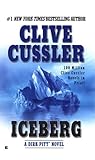
Finished Reading: Dirk Pitt (Book 3) – Iceberg by Clive Cussler


Iceberg (Dirk Pitt, #3)Iceberg by Clive Cussler
My rating: 4 of 5 stars

View all my reviews

Unknown's avatar

Finished Reading: Dirk Pitt (Book 2) – Mayday by Clive Cussler


Mayday (Dirk Pitt Adventure)Mayday by Clive Cussler
My rating: 4 of 5 stars

View all my reviews

Unknown's avatar

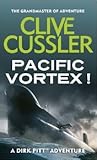
Finished Reading: Dirk Pitt (Book 1) – Pacific Vortex! by Clive Cussler


Pacific Vortex! (Dirk Pitt, #1)Pacific Vortex! by Clive Cussler
My rating: 4 of 5 stars

View all my reviews

Unknown's avatar

Minimal Posting For the Time Being


I have been unwell lately and struggling a little with my health. This has been the case for the last 30 years, having just passed an unwanted anniversary. I first got sick in 1990, when I was about 21. It has been a hard slog ever since. There are times when it is harder than usual – this is one of those times. I have Chronic Fatigue Syndrome (CFS/ME) – the illness that many say doesn’t exist. That is not something people can tell me. It is a terrible affliction and something I would be gladly done with.

The link below is to an article that looks at one particular case (and not all cases are exactly the same by the way) and I think it provides a bit of an insight on the impacts of the illness on people’s lives. It can be very hard – every single day.
https://www.abc.net.au/news/2020-01-13/chronic-fatigue-syndrome-illness-left-tony-wallace-a-hollow-man/11839536

So why this post? Well, I’ll be posting on a very limited basis for the time being. I am struggling to get to work each day and frankly that is more important than my Blogs. I still need to pay the bills, put food on the table, etc, and so my ‘hobby’ will have to be pushed to the side a little. I have at times thought that I should just close the Blogs and websites and be done with it – but I really don’t want this illness to steal something else from me. Perhaps one day it will, but not today.

Unknown's avatar

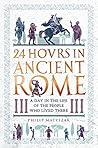
Finished Reading: 24 Hours in Ancient Rome – A Day in the Life of the People Who Lived There by Philip Matyszak


24 Hours in Ancient Rome: A Day in the Life of the People Who Lived There24 Hours in Ancient Rome: A Day in the Life of the People Who Lived There by Philip Matyszak
My rating: 4 of 5 stars

View all my reviews