

Unknown's avatar

Indigenous children’s book ‘Little Louis’ aims to curb COVID-19 vaccine hesitancy with a culturally relevant story


The children’s book, Little Louis, tells the story of a young boy preparing for his COVID-19 vaccination.
(Morning Star Lodge), Author provided

Patrick Sullivan, University of Saskatchewan and Heather O’Watch, University of Saskatchewan

The COVID-19 pandemic has been difficult for everyone. But communities are different, and so are their pandemic experiences. After more than a year of uncertainty and frustration, vaccines have brought many a sense that a return to normal is on the horizon. However, health and research communities now face a new challenge: vaccine hesitancy.


Click here for more articles in our series about vaccine confidence.

While there are countless reasons to be vaccine hesitant, we must acknowledge the numerous legitimate reasons for hesitancy.

For example, if a community has experienced an exhausting history of medical experimentation, forced or coerced sterilization and breaches of trust by the very institutions presenting the vaccine, their hesitancy is based on cultural or historical factors and entirely distinct from the “anti-vaxx” movement.


Read more:
Nutrition researchers saw malnourished children at Indian Residential Schools as perfect test subjects


This is the daunting reality for many Indigenous communities across the country. As a result, there is an urgent need to repair trust and promote vaccine confidence through evidence-based knowledge.

At Morning Star Lodge, we are part of a partnership between the community research advisory committee at Star Blanket Cree Nation and Solutions for Kids in Pain (SKIP). Together we have collaborated to promote vaccine confidence while demonstrating the importance of community-led research.

Reflecting culture

We entered into this partnership to promote vaccine uptake under the direction of Indigenous communities. Through our discussions, we came to solutions about ways we could promote COVID-19 vaccination information — like booklets for Indigenous children and adults. After coming up with several solutions, Star Blanket Cree Nation’s research advisory committee members pointed towards an additional need: A children’s book, and in came Little Louis.

Many Indigenous Peoples grew up without medical information that respected or reflected their culture, the CRAC recognized the need to reverse this trend. A children’s book that reflects the identities of Indigenous children is important for making information accessible to all.

SKIP, Morning Star Lodge and Indigenous community members began to prepare a children’s book that is engaging, educational and relevant for Indigenous children experiencing needle fear or vaccine hesitancy — seeing their culture reflected in a children’s book can make all the difference when it comes to getting the jab. Needle fear or hesitation is a common feeling and there is minimal children’s literature on the topic, especially literature that is culturally relevant.

The Star Blanket Cree Nation’s cultural, community and storytelling expertise far exceeds that of SKIP or Morning Star Lodge. The community research advisory committee members live in, and are from, the communities we serve, their Indigenous Knowledge adds depth and relevance to all of our projects. Their guidance and leadership ensures that developments, like Little Louis, directly reflect community needs.

Indigenous Peoples expertise, guidance and leadership

Little Louis talks about how to prepare for getting a vaccine, what vaccines feel like and what parents and children can do in order to be supported. The intention is that Little Louis will evolve into several different stories that will target different audiences and address different issues as time goes on and different issues arise. This sort of flexibility is a requisite to working with dynamic communities.

Inflexible research was and is often the norm. “Helicopter” research (where researchers enter communities, collect data and leave, never to be heard from again) was and is still practised. This entirely one-sided interaction always benefits researchers but rarely, if ever, benefits communities. It frequently misrepresents realities for Indigenous communities and actively creates negative stereotypes that have been used to justify systemic racism.

Historically, research with Indigenous Peoples was not conducted “in a good way.” Today, researchers can be guided to correct the errors of the past through principles like OCAP (ownership, control, access and possession) and the CARE and FAIR principles for Indigenous data governance. Further, researchers can learn about ethical engagement and cultural safety to ensure their research is truly ethical and upholds community perspectives.

In practice, this means Indigenous Peoples should be at the helm of any research that may impact them or is about them. Doing so can prevent harmful misrepresentations, promote self-determination and contribute to solutions Indigenous communities actually need — like a children’s book that addresses vaccine hesitancy.

The following is a synopsis of “Little Louis.” Check the Morning Star Lodge blog for updates on publication.

Meet Little Louis

Little Louis tells the story of Louis, a young boy preparing for his COVID-19 vaccination. Louis starts by sharing his fears and frustrations with safety restrictions and the vaccine. His family listens and tells him how brave he is for making the decision to keep himself and the community safe.

Still nervous and hesitant about the vaccine, Louis’ family has an idea to create a “little” Louis, out of paper, which he can bring to the vaccination clinic during his appointment. Louis’ family also shares the story of a brave Métis leader named Gabriel Dumont and his rifle, le petit (little one).

The night before the vaccination appointment, Louis dreams of going on a fishing adventure with Little Louis where they reel in what they think is a fish but it turns out to be a big needle! Louis and Little Louis both bravely face the needle, reeling it in until it turns into the big catch they hoped for. The next morning Louis shares his dream with his family. They tell him that he was brave for facing his fears.

Finally, Louis goes to his vaccine appointment with Little Louis by his side. The doctor asks to see Little Louis to give him the vaccine first. Observing that Little Louis was brave and didn’t get scared, Louis is ready and the doctor gives Louis his vaccine. Both Louis and Little Louis are now protected from COVID-19!

Do you have a question about COVID-19 vaccines? Email us at ca‑vaccination@theconversation.com and vaccine experts will answer questions in upcoming articles.The Conversation

Patrick Sullivan, Sr. Research Assistant, Morning Star Lodge, University of Saskatchewan and Heather O’Watch, Research Assistant, Morning Star Lodge, University of Saskatchewan

This article is republished from The Conversation under a Creative Commons license. Read the original article.
Unknown's avatar

Orwell’s ideas remain relevant 75 years after ‘Animal Farm’ was published


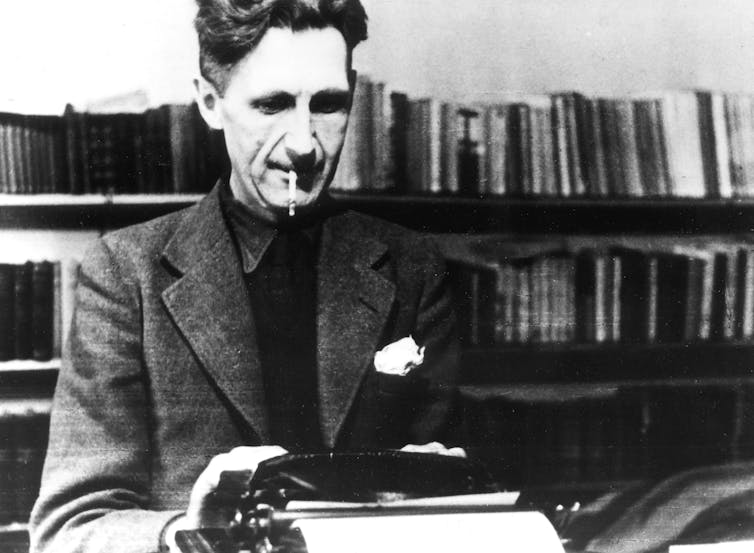
George Orwell’s writings have left a lasting imprint on American thought and culture.
ullstein bild/ullstein bild via Getty Images

Mark Satta, Wayne State University

Seventy-five years ago, in August 1946, George Orwell’s “Animal Farm” was published in the United States. It was a huge success, with over a half-million copies sold in its first year. “Animal Farm” was followed three years later by an even bigger success: Orwell’s dystopian novel “Nineteen Eighty-Four.”

In the years since, Orwell’s writing has left an indelible mark on American thought and culture. Sales of “Animal Farm” and “Nineteen Eighty-Four” jumped in 2013 after the whistleblower Edward Snowden leaked confidential National Security Agency documents. And “Nineteen Eighty-Four” rose to the top of Amazon’s best-sellers list after Donald Trump’s Presidential Inauguration in 2017.

As a philosophy professor, I’m interested in the continuing relevance of Orwell’s ideas, including those on totalitarianism and socialism.

Early career

George Orwell was the pen name of Eric Blair. Born in 1903 in colonial India, Blair later moved to England, where he attended elite schools on scholarships. After finishing school, he joined the British civil service, working in Burma, now Myanmar. At age 24, Orwell returned to England to become a writer.

During the 1930s, Orwell had modest success as an essayist, journalist and novelist. He also served as a volunteer soldier with a left-wing militia group that fought on behalf of the Spanish Republic during the Spanish Civil War. During the conflict, Orwell experienced how propaganda could shape political narratives through observing inaccurate reporting of events he experienced firsthand.

Orwell later summarized the purpose of his writing from roughly the Spanish Civil War onward: “Every line of serious work I have written since 1936 has been, directly or indirectly, against totalitarianism and for democratic Socialism.”

Orwell did not specify in that passage what he meant by either totalitarianism or democratic socialism, but some of his other works clarify how he understood those terms.

What is totalitarianism?

For Orwell, totalitarianism was a political order focused on power and control. The totalitarian attitude is exemplified by the antagonist, O’Brien, in “Nineteen Eighty-Four.” The fictional O’Brien is a powerful government official who uses torture and manipulation to gain power over the thoughts and actions of the protagonist, Winston Smith. Significantly, O’Brien treats his desire for power as an end in itself. O’Brien represents power for power’s sake.

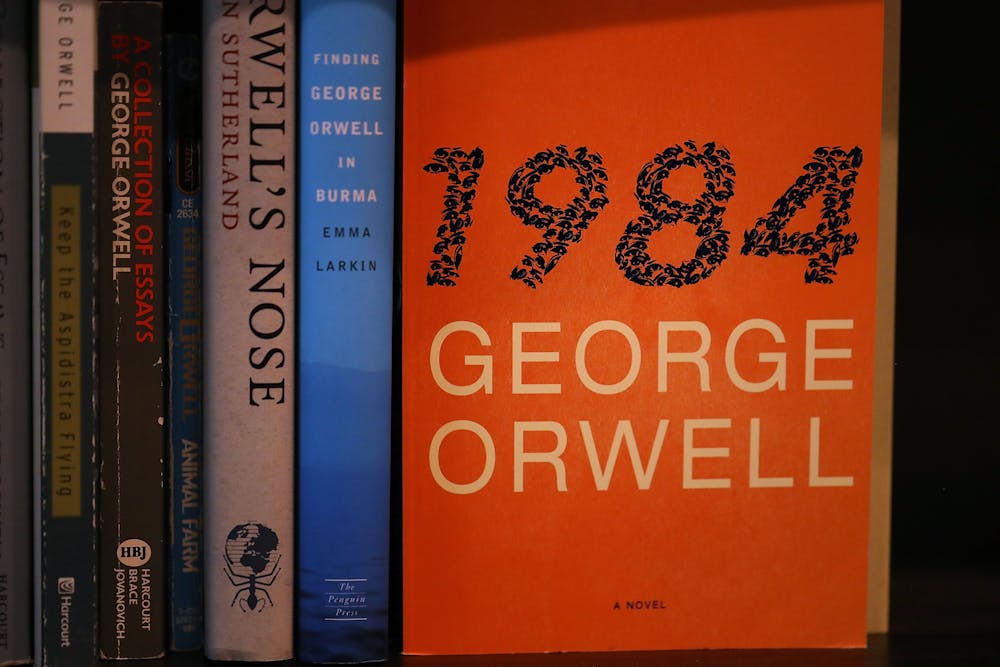
A copy of George Orwell's novel '1984' is displayed at The Last Bookstore on January 25, 2017, in Los Angeles.
George Orwell’s dystopian novel ‘Nineteen Eighty-Four’ (‘1984’) surged to the top of Amazon.com’s best-sellers list after Donald Trump’s Presidential Inauguration in 2017.
Justin Sullivan/Getty Images

Much of Orwell’s keenest insights concern what totalitarianism is incompatible with. In his 1941 essay “The Lion and the Unicorn,” Orwell writes of “The totalitarian idea that there is no such thing as law, there is only power … .” In other words, laws can limit a ruler’s power. Totalitarianism seeks to obliterate the limits of law through the uninhibited exercise of power.

Similarly, in his 1942 essay “Looking Back on the Spanish War,” Orwell argues that totalitarianism must deny that there are neutral facts and objective truth. Orwell identifies liberty and truth as “safeguards” against totalitarianism. The exercise of liberty and the recognition of truth are actions incompatible with the total centralized control that totalitarianism requires.

Orwell understood that totalitarianism could be found on the political right and left. For Orwell, both Nazism and Communism were totalitarian.

Orwell’s work, in my view, challenges us to resist permitting leaders to engage in totalitarian behavior, regardless of political affiliation. It also reminds us that some of our best tools for resisting totalitarianism are to tell truths and to preserve liberty.

What is democratic socialism?

In his 1937 book “The Road to Wigan Pier,” Orwell writes that socialism means “justice and liberty.” The justice he refers to goes beyond mere economic justice. It also includes social and political justice.

Orwell elaborates on what he means by socialism in “The Lion and the Unicorn.” According to him, socialism requires “approximate equality of incomes (it need be no more than approximate), political democracy, and abolition of all hereditary privileges, especially in education.”

In fleshing out what he means by “approximate equality of incomes,” Orwell later says in the same essay that income equality shouldn’t be greater than a ratio of about 10 to 1. In its modern-day interpretation, this suggests Orwell could find it ethical for a CEO to make 10 times more than their employees, but not to make 300 times more, as the average CEO in the United States does today.

But in describing socialism, Orwell discusses more than economic inequality. Orwell’s writings indicate that his preferred conception of socialism also requires “political democracy.” As scholar David Dwan has noted, Orwell distinguished “two concepts of democracy.” The first concept refers to political power resting with the common people. The second is about having classical liberal freedoms, like freedom of thought. Both notions of democracy seem relevant to what Orwell means by democratic socialism. For Orwell, democratic socialism is a political order that provides social and economic equality while also preserving robust personal freedom.

I believe Orwell’s description of democratic socialism and his recognition that there are various forms socialism can take remain important today given that American political dialogue about socialism often overlooks much of the nuance Orwell brings to the subject. For example, Americans often confuse socialism with communism. Orwell helps clarify the difference between these terms.

With high levels of economic inequality, political assaults on truth and renewed concerns about totalitarianism, Orwell’s ideas remain as relevant now as they were 75 years ago.

[Explore the intersection of faith, politics, arts and culture. Sign up for This Week in Religion.]The Conversation

Mark Satta, Assistant Professor of Philosophy, Wayne State University

This article is republished from The Conversation under a Creative Commons license. Read the original article.

Unknown's avatar

How to Get Out of a Reading Slump


Unknown's avatar

Audible Alternatives


The link below is to an article that lists six alternatives to Audible for audio books.

For more visit:
https://www.makeuseof.com/free-audiobook-apps-audible-alternatives/

Unknown's avatar

Webcomic Apps


The link below is to an article that takes a look at 5 free webcomic apps.

For more visit:
https://www.makeuseof.com/free-webcomic-apps-to-discover-and-read-comic-strips-online/

Unknown's avatar

Not My Review: Sex, Lies and Question Time by Kate Ellis


The link below is to a book review of ‘Sex, Lies and Question Time,’ by Kate Ellis.

For more visit:
https://www.theguardian.com/books/2021/mar/27/sex-lies-and-question-time-by-kate-ellis-review-an-insider-account-of-sleaze-and-innuendo-in-canberra

Unknown's avatar

KindleBreak Jailbreak Method


The links below are to articles that look at a recently discovered way to jailbreak Kindles called KindleBreak.

For more visit:
https://blog.the-ebook-reader.com/2021/03/26/kindlebreak-released-new-jailbreak-method-for-kindles/
https://goodereader.com/blog/kindle/do-not-use-the-new-amazon-kindlebreak-jailbreaking-system

Unknown's avatar

Look Back at the 2021 Dylan Thomas Prize Shortlist and Winner


The links below are to article reporting on the shortlist and winner of the 2021 Dylan Thomas Prize. The first list looks at the shortlist and the second list at the winner, Raven Leilani for ‘Luster.’

For the shortlist visit:
https://lithub.com/americans-and-debuts-dominate-the-shortlist-for-the-2021-dylan-thomas-prize/
https://www.theguardian.com/books/2021/mar/25/debut-authors-dominate-on-extraordinary-dylan-thomas-prize-shortlist
https://publishingperspectives.com/2021/03/wales-dylan-thomas-prize-names-its-2021-shortlist-covid19/

For the winner visit:
https://www.theguardian.com/books/2021/may/13/raven-leilani-wins-dylan-thomas-prize-for-fearless-novel-luster
https://lithub.com/raven-leilani-has-won-the-dylan-thomas-prize/
https://publishingperspectives.com/2021/05/dylan-thomas-prize-names-raven-leilani-its-2021-winner-covid19/
https://www.booksandpublishing.com.au/articles/2021/05/17/186337/leilani-wins-dylan-thomas-prize-for-luster/

Unknown's avatar

A Look Back at the Winner of the 2021 Rathbones Folio Prize


The link below is to an article that takes a look at the winner of the 2021 Rathbones Folio Prize, Carmen Maria Machado for ‘In the Dream House.’

For more visit:
https://www.booksandpublishing.com.au/articles/2021/03/25/184103/machado-wins-2021-rathbones-folio-prize/

Unknown's avatar

Epic


The link below is to an article that takes a look at ‘Epic,’ an online reading platform designed for kids and the data it collects.

For more visit:
https://lithub.com/this-online-reading-platform-that-mines-kids-preferences-to-create-new-books-is-deeply-creepy/