
The link below is to an article that takes a look at genrefication (classification) of a library.
For more visit:
https://bookriot.com/how-to-genrefy-a-library/

The link below is to an article that takes a look at genrefication (classification) of a library.
For more visit:
https://bookriot.com/how-to-genrefy-a-library/
The link below is to an article reporting on the shortlist for the 2020 Danger Prize.
For more visit:
https://www.booksandpublishing.com.au/articles/2020/10/26/158481/the-danger-prize-2020-shortlist-announced/
The links below are to articles reporting on a forced update of the Kindle for PC and Mac.
For more visit:
– https://goodereader.com/blog/kindle/kindle-for-pc-is-force-updating-to-the-latest-version
– https://blog.the-ebook-reader.com/2020/10/25/kindle-for-pc-and-mac-forcing-update-to-newer-version/
The link below is to an app that is being developed to make newsletter reading easier and better.
For more visit:
https://pigeoninbox.com
The link below is to an article that takes a look at the 2020 winner of the Not The Booker Prize.
For more visit:
https://www.booksandpublishing.com.au/articles/2020/10/27/158586/hello-friend-we-missed-you-wins-2020-not-the-booker/
The link below is to an article that includes a Twitter chat that looks at tools for writers – something like 100 of them.
For more visit:
https://selfpublishingadvice.org/twitterchat-the-top-100-tools-for-authors/
The link below is to an article that takes a look at 5 writing mistakes.
For more visit:
https://blog.bookbaby.com/2020/10/five-writing-mistakes/
The links below are to articles reporting on the winner of the 2020 Booker Prize, Douglas Stuart, for ‘Shuggie Bain.’
For more visit:
– https://publishingperspectives.com/2020/11/douglas-stuart-wins-the-2020-booker-prize-for-shuggie-bain-covid19/
– https://lithub.com/and-the-winner-of-the-2020-booker-prize-is/
– https://www.booksandpublishing.com.au/articles/2020/11/20/159888/stuart-wins-booker-prize-for-shuggie-bain/
– https://www.theguardian.com/books/2020/nov/19/douglas-stuart-booker-voice-shuggie-bain
– https://www.theguardian.com/books/2020/nov/21/booker-winner-douglas-stuart-i-owe-scotland-everything
– https://www.theguardian.com/books/2020/nov/19/douglas-stuart-wins-booker-prize-for-debut-shuggie-bain
– https://bookriot.com/2020-booker-prize-winner/
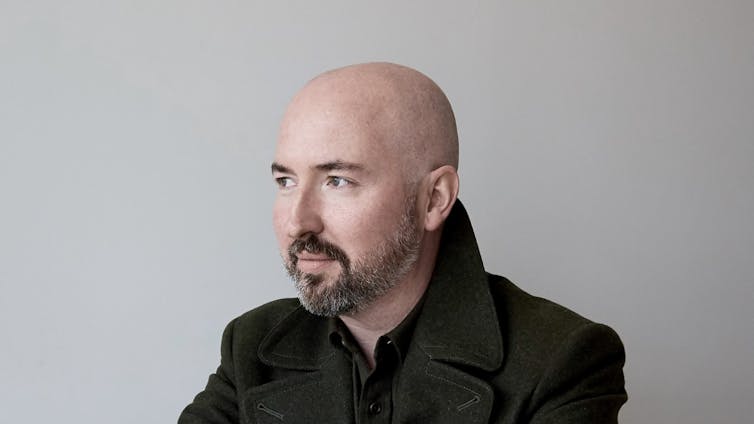
Stevie Marsden, Manchester Metropolitan University
Douglas Stuart’s debut novel Shuggie Bain has won the 52nd Booker Prize. The ceremony, normally a glitzy affair with long speeches, readings from shortlisted books and a lavish dinner, was held in a relatively empty Roundhouse Theatre.
The few in attendance included BBC Front Row’s John Wilson, the 2020 Booker Prize Chair of Judges Margaret Busby, last year’s winner Bernadine Evaristo and the Chineke! Chamber Ensemble. The shortlisted authors and guest speakers joined virtually, beamed into the ceremony from their homes.
Whether deliberately or not, this was one of the most politically charged Booker Prize shortlists and winner we’ve ever had. Not only did the ceremony include a video from former President Barack Obama, who wished the shortlisted authors luck and expounded on the importance of reading, but the shortlist and eventual winner also echo the most significant and complex challenges we have faced throughout 2020.
The entire shortlist speaks to our current cultural moment – covering themes such as climate change, existential anxiety, the challenges of familial care, racial micro-aggressions and class prejudice. The winner explores issues of childhood poverty, parental alcoholism and emotional neglect in 1980s Glasgow, issues which remain alarmingly relevant in 2020. The pandemic has highlighted social inequalities throughout the UK, particularly the vulnerability of the 4.2 million children living in relative poverty.
It seems that Shuggie Bain’s relevance in 2020 was clear to the prize judges who reportedly took only an hour to come to the unanimous decision to select the winner. Busby said that Shuggie Bain was “destined to become a classic”.
There is no doubt that prize shortlists – whether for literature, film or art – reflect the cultural and political moment in which they exist. This may seem an obvious point since all forms of art are influenced by the context within which they’re created. But it is nonetheless important to remember that prizes are not only celebrations of artistic endeavour; but are a kind of time capsule, capturing the cultural moment in which they were chosen.
This year we’ve sought out art and literature that helps us make sense of the systemic political and social inequities embedded within society. This was seen by the rise of sales of books such as Reni Eddo-Lodge’s Why I’m No Longer Talking To White People About Race in response to the Black Lives Matter protests during the summer. This surge in sales led to Eddo-Lodge becoming the first black British author to top UK book charts.
The 2020 Booker Prize has contributed to this moment too. This year’s longlist was one of the most diverse in the prize’s history. On the shortlist, four of the six books were debut novels and four of the six shortlisted authors are writers from Black, Asian and minority ethnic (BAME) backgrounds. It was also the most diverse judging panel ever.
During the ceremony, Busby was reluctant to suggest that the diverse selection of books was deliberate. She did, however, acknowledge that publishing still had some way to go “in terms of including people from a different demographic […] people from different classes, different ethnicities, different regions of the country”.
The Booker Prize itself has historically replicated inequities. It’s worth remembering that it wasn’t until 2015 that the judging panel included a black judge, and Bernadine Evaristo was the first black woman to win the prize in 2019 (even then she had to share it with Margaret Atwood).
While the diversity of the authors and stories on the shortlist might suggest that publishing has made demonstrable progress in recent years, the Rethinking Diversity in Publishing report published earlier this year reminds us otherwise. The industry is far from implementing significant changes. Publishers continue to make broad assumptions about their core (white, middle-class) audiences, fail to reach diverse audiences, and undervalue writers and readers from BAME and working-class backgrounds.
Stuart is only the second Scottish author to ever win the award. He follows James Kelman’s 1994 win for How Late It Was, How Late, a novel which also explored poor, working-class life in Glasgow.
So, while we should celebrate the 2020 Booker Prize for its diversity in voice, representation and themes, it has been borne of a specific moment in which we have been forced to examine societal inequities and structural inequalities. And we cannot become complacent about the enduring need to continue this work.
Stevie Marsden, Tutor in Publishing, Manchester Metropolitan University
This article is republished from The Conversation under a Creative Commons license. Read the original article.

England international footballer and child poverty campaigner Marcus Rashford has announced that he is launching a book club. The initiative will distribute books to children, particularly those from vulnerable and underprivileged backgrounds, in order to promote reading and literacy.
Studies have shown us how vital reading – specifically reading for pleasure – is for academic and economic success, as well as for mental health (among other things). Reading, according to the National Literary Trust, encourages children (particularly girls) to dream about the future.
But the number of children reading every day for pleasure is at its lowest since the National Literacy Trust started monitoring it in 2005. In 2019, only 26% of young people (under 18) read every day. Although engagement with books has risen during lockdown, some children have faced greater barriers due to library closures, amongst other things.
Former children’s laureate Michael Rosen has said these findings should act as “a wake-up call for the government”. And we already know that Rashford can cause a stir at Westminster. So his intervention could become a much-needed force for change.
Rashford says that reading and books are cool. Children who own books are more than twice as likely to agree that reading is cool than those who don’t. But what if you don’t have access to books, like 384,000 children and young people (mostly from disadvantaged backgrounds) in the UK? And, more specifically, what if you don’t have access to books that you can see yourself in?
My own research, along with that of the Reflecting Realities project by the
Centre for Literacy in Primary Education, has also demonstrated how woefully underrepresented people of colour are in children’s books and children’s authorship. A few weeks ago, my new BookTrust Represents report was published in conjunction with the new Centre For Literacy In Primary Education (CLPE) report, which tracks the number of children’s books by and about people of colour published in the UK.
Read more:
Five books to read to children that adults will enjoy
Both reports show progress over the past three years (2017-2019): the number of protagonists of colour increased fivefold, from 1% (2017) to 5% (2019), while the number of authors of colour increased from 5.58% to 8.68%.
It is important to stress that these numbers are still very low, particularly when we consider that 33.5% of school-age children in the UK are from ethnic minority backgrounds. There is a long way to go before representation in children’s books and publishing authentically mirror UK society. And it will take collective action to break down the systemic barriers that cause under- (and mis-) representation.
This is why initiatives like Rashford’s book club are very welcome. In light of my research, I support the book club’s focus on quality inclusive youth literature: books that are authentically representative of the society that we live in. “No matter where you grow up”, Rashford wrote in a statement, “talent should be recognised and championed”.
Books provide insight into a variety of different lives and cultures. They have an important role in holding up a mirror to the world or offering a window into another. What they reflect impacts how young readers see themselves and the world around them. Inclusive books are important for children of all ethnicities and from all socio-economic backgrounds.
This new book club, with Rashford at the helm, will bring inclusive books into the consciousness of a much wider audience. Rashford has already made strides in tackling inequality in the UK and this initiative will help bridge the cultural and educational divide.
Rashford will also co-author several books, in partnership with MacMillan Children’s Books, beginning with You Are A Champion: Unlock Your Potential, Find Your Voice And Be the Best You Can Be, based on Rashford’s life (May 2021). Two books, aimed at children over six, will follow in 2022. This age group is significant because it covers a critical period in academic development where there is often a decline in children reading for pleasure.
Rashford can now add author and cultural gatekeeper to his list of accolades, and, by centring himself as such, will be a role model to aspiring writers and publishers – something my previous BookTrust Represents report highlighted as an enabler for young people of colour to join the industry.
While this intervention by Rashford is exciting, it’s important to acknowledge the activists, authors, publishers, and booksellers that have been supporting inclusive youth literature for decades. Bookshops and supermarket bookshelves may be dominated by bestselling and celebrity books, but other books, with smaller marketing budgets abound. Here are five of my favourite books for young people (published in 2020), by British authors of colour, to tide you over until Rashford’s book club begins next year:
The Infinite by Patience Agbabi: A time-travelling mystery and adventure by a much-celebrated poet.
When Secrets Set Sail by Sita Bramachari: Another magical book, on a hidden part of Indian history, by this stalwart author.
The Girl Who Became a Tree: A Story Told in Poems by Joseph Coelho: Ancient legends and modern-day grief merge in this book in verse.
Boy, Everywhere by A M Dassu: A beautifully written debut about the plight of Syrian refugees.
When Life Gives You Mangos by Kereen Getten: Another dreamy debut about friendship, loss, and small-town life.
Melanie Ramdarshan Bold, Associate Professor of Publishing and Book Cultures, UCL
This article is republished from The Conversation under a Creative Commons license. Read the original article.
 At the BookShelf
You must be logged in to post a comment.