Unknown's avatar

Emily Dickinson is the unlikely hero of our time


‘The Dyings have been too deep for me,’ Dickinson wrote in 1884.
Wikimedia Commons

Matthew Redmond, Stanford University

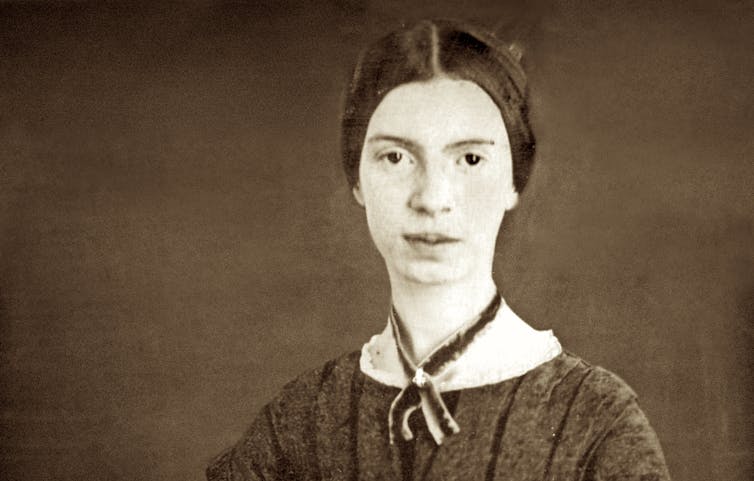
Since her death in 1886, Emily Dickinson has haunted us in many forms.

She has been the precocious “little dead girl” admired by distinguished men; the white-clad, solitary spinster languishing alone in her bedroom; and, in more recent interpretations, the rebellious teenager bent on smashing structures of power with her torrential genius.

As the world continues to endure the ravages of COVID-19, another ghost of Dickinson steps into view. This one, about 40 years old, seems by turns vulnerable and formidable, reclusive and forward. She carries the dead weight of crises beyond her control, but remains unbowed by it.

It was while drafting my dissertation, which explores the meaning of old age in America, that I first encountered this Dickinson. She has been with me ever since.

The depths of loss

Most admirers of Dickinson’s poetry know that she spent a considerable part of her adult life in what we call self-imposed confinement, rarely venturing outside the family homestead in Amherst, Massachusetts. Less known, perhaps, is that the final 12 years of her life were passed in a state of nearly perpetual mourning.

It began with the death of her father. For all his stern comportment, Edward Dickinson had enjoyed a special relationship with Emily, his middle child. When her surviving letters declare him “the oldest and oddest sort of a foreigner,” one hears the affectionate annoyance that comes with real devotion. He died in 1874, away from home.

Loss followed loss. Favorite correspondent Samuel Bowles died in 1878. With the passing of Mary Ann Evans, otherwise known as George Eliot, in 1880, Dickinson lost a kindred spirit – a “mortal” who, in her words, had “already put on immortality” while living. A very different loss was that of Dickinson’s mother, Emily Norcross Dickinson, with whom she enjoyed little or no rapport for much of their life together, but who became at least somewhat precious to her daughter on her deathbed. That was in 1882, the same year that took from her literary idol Ralph Waldo Emerson and early mentor Charles Wadsworth.
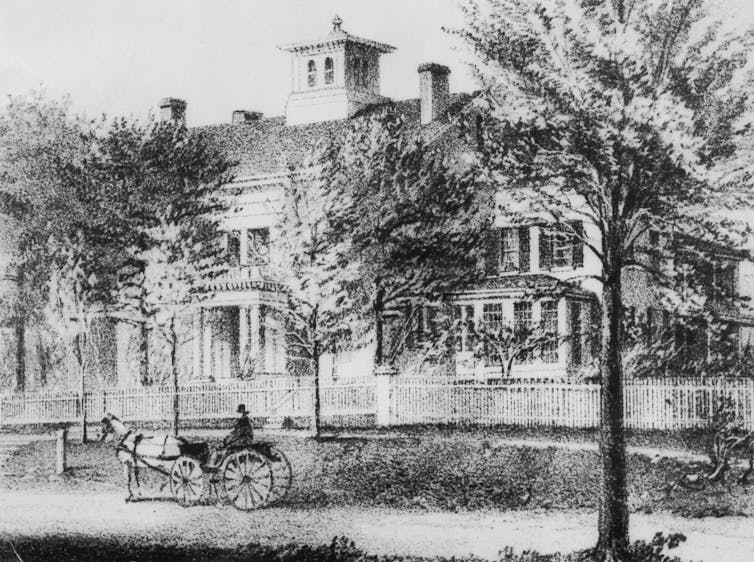
A horse-drawn carriage passes by Emily Dickinson's home in Amherst, Mass.
The Dickinson House in Amherst, Massachusetts.
Bettmann via Getty Images

The following year saw the death of her cherished eight-year-old nephew, Gilbert, from typhoid fever, his illness having spurred one of Dickinson’s rare excursions beyond the homestead. The year after that, Judge Otis Phillips Lord, with whom she pursued the only confirmed romantic relationship of her life, finally succumbed to an illness of several years and was wearily dubbed by the poet “our latest Lost.”

[Get the best of The Conversation, every weekend. Sign up for our weekly newsletter.]

Piling on

What impact did so much grief have on the mind of one of America’s greatest visionary artists? Her letters say little enough. Writing to Mrs. Samuel Mack in 1884, however, she frankly admits: “The Dyings have been too deep for me, and before I could raise my heart from one, another has come.”

The word “deep” is an arresting choice, making it sound as though Dickinson is drowning in a pile of dead loved ones. Each time she comes up for air, yet another body is added to the great mass.

This is characteristic of Dickinson. If her imagination shrinks from visualizing breadth, it thrives on depth. Some of the most captivating images in her poetry are piles of things that cannot be piled: thunder, mountains, wind. During the Civil War, she uses the same technique to represent soldiers’ heroic and terrible sacrifice:

  The price is great - Sublimely paid - 
  Do we deserve - a Thing - 
  That lives - like Dollars - must be piled 
  Before we may obtain?

In describing her more personal losses of the 1870s, Dickinson seems to imagine yet another pile of human corpses rising before her eyes. Or maybe it is the same pile, her loved ones added to the dead troops whose fate she kept contemplating to the end of her own life. Seen in this light, the “Dyings” appear not just too deep but unfathomably so.

Life after death

At the time of this writing, the pile of lives that overshadows our lives is 800,000 deep and getting deeper by the hour. Dickinson’s imagery shows how keenly she would have understood what we might feel, dwarfed by a mountain of mortality that will not stop growing. The same anger, exhaustion and sense of futility were her constant companions in later life.

Fortunately, she had other companions. As recent studies have shown, Dickinson was the best kind of social networker, maintaining profoundly generative relationships by correspondence from the family homestead. Her poetic output, though greatly diminished toward the end of her life, never ceases, and its offerings include some of her richest meditations on mortality, suffering and redemption.

  I never hear that one is dead
  Without the chance of Life
  Afresh annihilating me
  That mightiest Belief,

  Too mighty for the Daily mind
  That tilling it’s abyss,
  Had Madness, had it once or, Twice
  The yawning Consciousness,

  Beliefs are Bandaged, like the Tongue
  When Terror were it told
  In any Tone commensurate
  Would strike us instant Dead -

  I do not know the man so bold
  He dare in lonely Place
  That awful stranger - Consciousness
  Deliberately face -

These words resonate in the current crisis, during which protecting the “daily mind” has become a full-time job. News reports, with their updated death tolls, erode our intellectual and spiritual foundations. All seems lost.

But if strain and sorrow are palpable in this poem, so is courage. Dickinson’s lonely speaker chooses to express what she has felt, to measure and record the burden of loss that life has thrust upon her. Beliefs, once bandaged, may heal. And while no man has ever been bold enough to confront the deeper “Consciousness” that so many deaths expose within the human mind, the speaker will not rule out doing so herself. There is still room in this blighted world for the kind of visionary experience from which hope not only springs, but flourishes.

Living in the shadow of death, Dickinson remained enamored of life. This, as much as anything, makes her a hero of our time.The Conversation

Matthew Redmond, Ph.D. Candidate, Department of English, Stanford University

This article is republished from The Conversation under a Creative Commons license. Read the original article.
Unknown's avatar

JG Farrell’s The Singapore Grip: new TV adaptation brings to life the final book by one of the UK’s finest novelists


SIngapore Grip: the final book in JG Farrell’s Empire Trilogy.
ITV Pictures

John McLeod, University of Leeds

In March 2020, when it became clear that my university campus was about to close due to the coronavirus pandemic, I hastily grabbed from my office shelves my well-thumbed copies of JG Farrell’s Empire Trilogy: Troubles (1970), The Siege of Krishnapur (1973), and The Singapore Grip (1978). This was no sentimental choice on my part. I believed that Farrell could help me deal with my queasy feelings that everyday life as I knew it was dissolving frighteningly into incertitude.

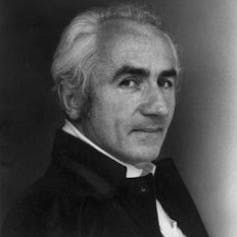
As a writer, Farrell was concerned with those suddenly tipped into uncertainty, no doubt because of his own life being irreversibly turned upside down due to the sudden advent of sickness. Aged 21, he had become seriously ill after playing rugby at Oxford University in December 1956 and was diagnosed with polio. A spell in an iron lung was followed by a long and painful recovery. Farrell’s upper body was permanently affected by the disease. He never recovered full mobility.

Almost overnight, a young, healthy and ambitious undergraduate had become physically fragile and equipped with a keen sense of how quickly and unexpectedly all we take for granted is lost. Cruelly, his illness would play a part in his untimely death by drowning in August 1979, aged 44. While fishing near his new home in Ireland’s Bantry Bay, he was swept into the rough sea. Unable to swim strongly, he was soon lost to the water.

Middle-aged man in evening dresss photographed in profile.
Taken too young: JG Farrell.
Wikimedia Commons

Farrell’s early novels had often dwelt gloomily on the frailty of life. His second novel, The Lung (1965), in particular, sought to explore the dispiriting emotional and existential upset of his sudden illness. Yet, along with A Man From Elsewhere (1963) and A Girl in The Head (1967), it drew little attention – today, all three remain out of print.

Making it as a writer

His fortunes changed with the publication of Troubles, where he deployed more purposefully his consciousness of life’s latent fragility when depicting British colonial societies falling apart.

This turn to matters of Empire was not fanciful. Born to an Irish mother in Liverpool, Farrell had lived a modestly affluent childhood between England and Ireland before going up to Oxford. He knew the privileged social circles that were home to British colonialist attitudes but took a postcolonial position regarding the unhappy treatment of colonial subjects, such as the Irish.

Troubles imagines the lives of the Anglo-Irish Ascendency as the Irish War of Independence (1919-21) develops. Its often comical depiction of the Ascendency’s decline pokes fun at their arrogance and short-sightedness.

But Farrell’s sensitivity to the bewilderment and anxiety felt by all undergoing history also brings to the novel a measured sense of compassion for those whose worlds were at last evaporating. Indeed, the Empire Trilogy would uniquely combine the compassionate and condemnatory, the sensitive and the satirical, in its indulgent if unforgiving presentation of the colonial establishment. The novel established his critical reputation: it received the 1971 Geoffrey Faber Memorial Prize, while in 2010 it was awarded the “Lost Booker Prize” after a public vote.

End of Empire

Farrell’s next novel, the Booker prize-winning The Siege of Krishnapur, depicted the ready collapse of British civility during the Indian Rebellion of 1857. Buoyed by its success, Farrell used part of his prize money to travel to south-east Asia to research his next – and, sadly, last – full-length novel, The Singapore Grip, which has just been adapted for television by Christopher Hampton.

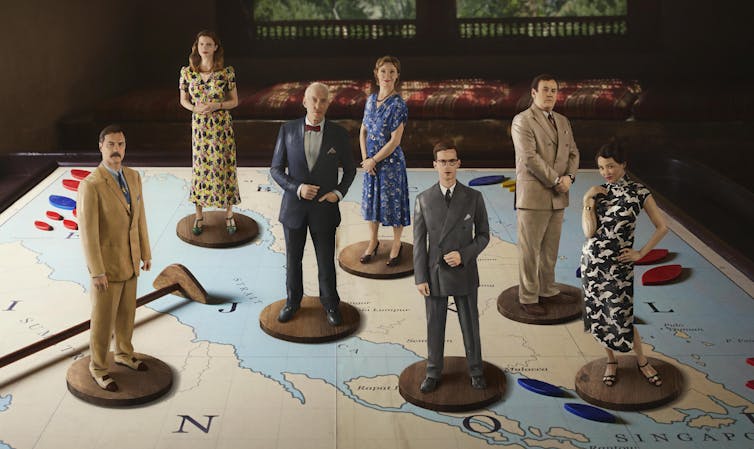
Punctuated in turn by scenes of high comedy and historical solemnity, the novel portrays Singapore prior to its humiliating surrender to the Japanese in February 1942. At its heart is one of Farrell’s least likeable befuddled expatriates, the rubber magnate Walter Blackett, whose business empire exemplifies the unholy grip of capitalism and colonialism over the region’s impoverished workers.

Mustachioed man in linen suit on varandah.
Unpleasant and manipulative: David Morrissey as Walter Blackett in The Singapore Grip.
ITV Pictures

Keen to secure his firm’s future, Walter plots to marry his daughter Joan to Matthew Webb, the son of his geriatric business partner – a scheme all the more bizarre in an increasingly besieged and dangerous city.

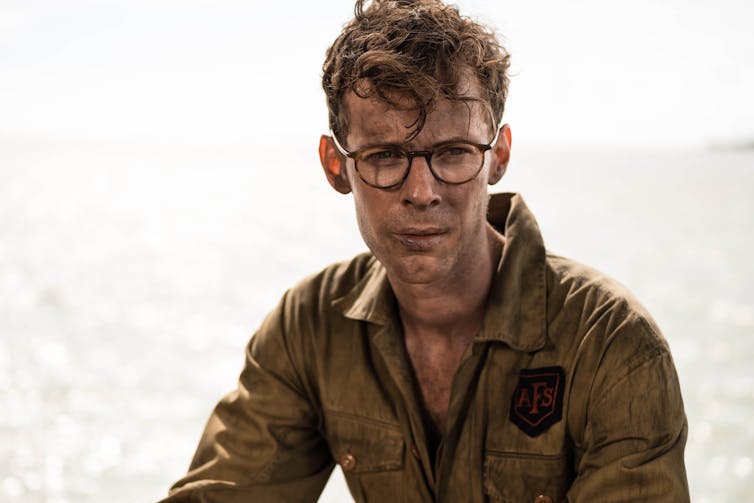
An idealist at heart, Matthew’s progressive vision of a world where wealth and wisdom are equitably enjoyed soon becomes as battered as the bombed-out city. Events in Singapore appear instead to prove the “Second Law” often quoted by his American friend, James Ehrendorf:

In human affairs, things tend inevitably to go wrong. Things are slightly worse at any given moment than at any preceding moment.

Yet The Singapore Grip never loses faith in the capacity for survival and endurance. It mixes its unforgiving vision of colonialism’s absurdity and collapse with an unyielding and often warmly humorous embrace of human fellowship. And, while Matthew fails to flee in time, one important figure significantly escapes: an abandoned, diseased and distressed King Charles spaniel, sardonically named “The Human Condition” by one of Matthew’s friends, who is last seen bolting up the gangplank to safety on a soon-to-depart ship.

Young man with glasses, dirty uniform.
Captured: Luke Treadaway as Matthew Webb in The Singapore Grip.
ITV Pictures

Highly amusing and deeply penetrating by turns, Farrell’s fiction often renders the human condition as precarious and insubstantial as the ailing dog in The Singapore Grip. But it crucially recognises that people are as complicated as the changing historical circumstances into which they are mercilessly thrust. Farrell’s firm condemnation of Empire never stopped him trying to understand humanely those undergoing its decline.

In reaching for Farrell when lockdown commenced, I had hoped to deal less fearfully with the experience of sudden change. But he soon reminded me, too, of the humane resources we also need at life-changing moments: steadfast hope, a saving sense of humour, and – for those lucky to escape or recover from illness – the wisdom of survival.The Conversation

John McLeod, Professor of Postcolonial and Diaspora Literatures, University of Leeds

This article is republished from The Conversation under a Creative Commons license. Read the original article.

Unknown's avatar

2020 is a year for the history books, but not without digital archives


Canada lags behind some countries with preserving public digital records.
(Flickr/BiblioArchives / LibraryArchives Canada), CC BY-NC

Ian Milligan, University of Waterloo

A seasonal change is in the air. With a minimal amount of nostalgia about the dwindling days of this unique summer, let’s turn to how we can make the most of the rest of 2020 — clearly a year for the history books.

As a historian, what concerns me is: What will our history of this unprecedented year look like in a quarter century? As the world is reshaped by COVID-19, as well as ongoing protests on a nearly unprecedented scale against racism and police brutality in the United States, Canada and around the world, it’s clear that this will be a year for future historians to make sense of.

A child today will be a historian of 2020 in the future. What sources will they turn to? How will they verify scattered memories? How will people tell the story of the tumultuous times that we’re living in today? 2020 may be a year for the history “books” but of course, the record we leave behind will be digital in manner.

But right now, Canada, unlike many other countries such as the United Kingdom, France, Denmark and others, doesn’t mandate its national library to capture a comprehensive digital record of Canadian life. This needs to change so we can ensure historians of the future have all the sources possible to write a rich, equitable and robust historical record.

Social movements, virus

From the role of video and social media in sparking and documenting protests to companies and educational institutions that moved online en masse in a matter of days this past March, 2020 will be a year that will be understood through digital media.

With coronavirus isolation, digital media has been enormously important for our interactions with colleagues, friends and loved ones.

Some trends: Zoom’s daily meeting participants went from 10 million in December to 300 million in April and we “doomscroll” through social media feeds before bed. As The New York Times explained: “The virus changed the way we internet.”

Corner outside of a tall glass building.
Today, archival work means considering digital records. Here, Library and Archives Canada’s Preservation Centre in Gatineau, Que., seen in May 2012.
(David Knox. Library and Archives Canada, IMG_1982 /Flickr), CC BY-NC

Minute-by-minute information

Because in part the British Library is empowered to collect millions of their web pages every year through the use of “legal deposit” power, a historian in the U.K. will have a rich record to explore.

For example, what did Britons think of senior adviser Dominic Cummings’ 418-kilometre trip from London to Durham while his wife was unwell? A researcher will be able to visit the British Library (in most cases, an in-person visit is required due to legal reasons) to consult not only social media feeds of everyday researchers, but news websites, U.K. blogs and beyond.

They will be able to draw on nearly everything published on the U.K. web in 2020. Right now a researcher can already view thousands of pages — and, most importantly, these are stewarded by the British Library for future preservation.

Legal deposit

This information will be accessible to our future researcher thanks to the power of legal deposit. Legal deposit is defined by the International Federation of Library Associations as a “statutory obligation [that] requires publishers, distributors and, in some countries, printers, to freely provide copies of their publications to the national collection,” and is a power that builds the collections of national libraries including Library and Archives Canada (LAC).

What this has meant in practice is that when a book or publication is published, there has been a legal requirement to deposit the book with a national library.

What happens when a publication moves online? What about blogs? Should they have a similar responsibility to deposit their material? And, critically, does a national library have a duty to preserve this information at scale?

The British Library has, since April 2013, been “entitled to copy U.K.-published material from the internet for archiving under legal deposit.” In practice, this means that it annually archives websites of the U.K.; it also supplements this archive through curated collections such as the earlier mentioned one around global pandemics. Those tweets, blogs, health websites and so on all form part of the historical record — and once archived, there is no legal ability to retroactively delete them.

Crucially, sweeping collections of material under legal deposit means that material is being amassed that does not seem important today — but could be invaluable to a historian in years to come.

Canada should aggressively follow

The remarkably forward thinking Library and Archives of Canada Act of 2004 gives Library and Archives Canada similar powers. One section of the act, for example, gives the institution the power to take a “representative sample of the documentary material of interest to Canada that is accessible to the public without restriction through the internet or any similar medium.”

These laws, however, aren’t used to their fullest. Canada’s national library doesn’t carry out a comprehensive snapshot of the entire Canadian web domain, meaning that countless voices will be lost for future historians.

A finger pushing a digital button with documents behind it.
The notion of legal deposit could be expanded in Canada to cover a comprehensive snapshot of the entire Canadian web domain.
(Shutterstock)

This is not to paint too dire a picture. Library and Archives Canada does a great job of capturing material of interest. During COVID-19, it has selectively captured some 38 million digital assets related to COVID-19 by July 2020, which add to their robust web archives including the Government of Canada web archive, which collects and maintains a comprehensive record of federal government’s websites.

Increasingly, it’s making collections, such as the Truth and Reconciliation Commission’s collection, available online. In doing so, Library and Archives Canada is explicitly noting its collecting powers under the 2004 act, suggesting an increasing willingness to share these materials.

We should laud this great work, and use it as a launchpad for the comprehensive collection of all Canadian material.

Patchwork collecting: not enough

While Library and Archives Canada has been collecting material for COVID-19, including social media hashtags as well as media and non-media related websites, even 900 websites being regularly collected is patchwork compared to the sheer amount of information published by Canadians online every day.

To do justice to what’s happening around us, and to make sure that historians of the future can understand this moment, the institution and policy-makers need to move quickly.

We need to aim to collect the entire Canadian web domain on an ongoing basis, both during and after COVID, to enable future researchers to understand our country. This will require additional funds to Library and Archives Canada. But, at what better time?The Conversation

Ian Milligan, Associate Professor of History, University of Waterloo

This article is republished from The Conversation under a Creative Commons license. Read the original article.
Unknown's avatar

‘A doubtful gleam of solace’: reading Tennyson’s In Memoriam AHH in difficult times


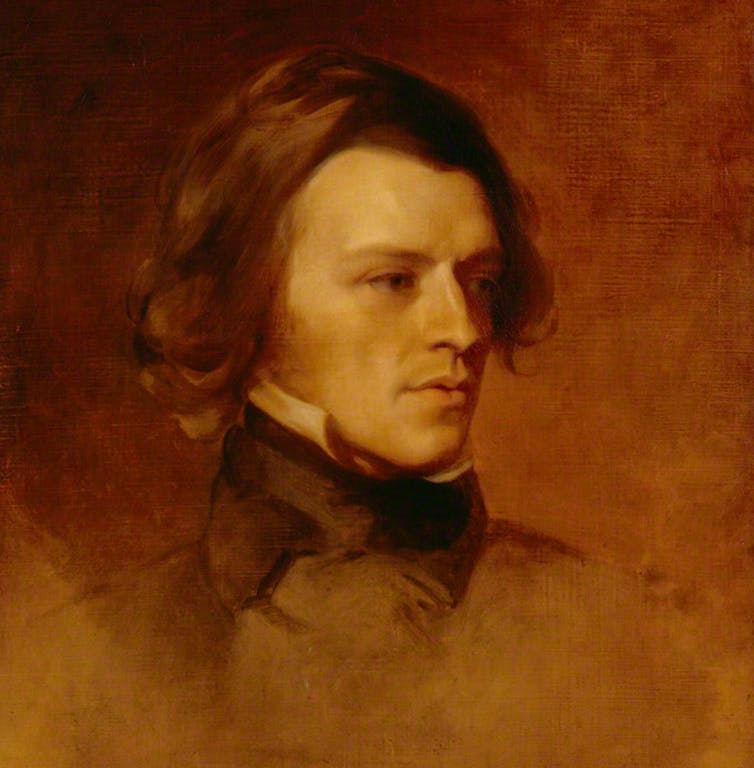
A portrait of Alfred, Lord Tennyson,
by Samuel Laurence and Sir Edward Burne-Jones, circa 1840.
Wikimedia Commons

Darius Sepehri, University of Sydney

In our series Art for Trying Times, authors nominate a work they turn to for solace or perspective during this pandemic.

In Memoriam AHH, cantos 27 & 28, read by Darius Sepehri.

Alfred Tennyson’s 1833 poem “Ulysses”, was, he tells us, written under a sense of loss — “that all had gone by but that still life must be fought out to the end.”

Dealing with the inertia created by grief, and the will needed to resist and move ahead, the poem perfectly expresses what St Paul called the “hope against hope”. Despite the heroism of the famous last line, (“To strive, to seek, to find, and not to yield”), the poem’s defiance only makes sense in the light of the anguish animating it.

Tennyson’s book-length elegy In Memoriam AHH, published in 1850, once among the most popular poems in English, came out of the same sense that the whole world was over — not a world but the world — and yet life must be lived, somehow.

I experience In Memoriam as a soulful and provocative artwork, not a “relevant” one or one merely to be mined for therapeutic consolations.

Despite its formal control and elegance, and what we may hear as dated language, Tennyson’s long poem is tumultuous, chaotic, and not only personal but social, deeply connected with upheavals in Victorian society.

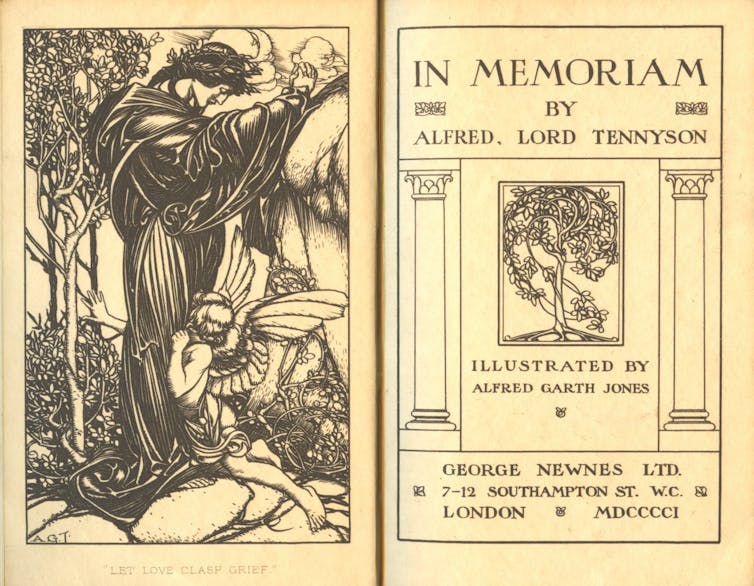
An 1851 edition of In Memoriam.
Wikimedia


Read more:
Ode to the poem: why memorising poetry still matters for human connection


Passion

Both Victorian and modern in style and composition, In Memoriam uses extraordinarily passionate language, tightly compressed. Its passion is directed by Tennyson at another man, his friend Arthur Hallam, a brilliant philosopher. Tennyson and Hallam met at university. We know their first encounters were magnetic and catalysing.

When Hallam died suddenly of a brain aneurysm in Italy in 1833, aged 22, it violently changed Tennyson’s life.

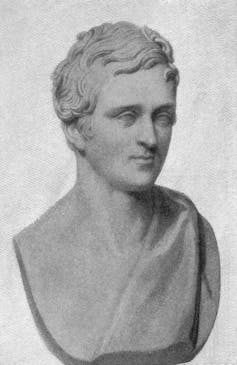
Bust of Arthur Hallam by Francis Leggatt Chantrey.
Wikimedia

Tennyson took 18 years to write In Memoriam. The prologue and epilogue attest to unshakeable faith in Christianity and in life’s continuity. The prologue’s first line addressed to “Strong Son of God, immortal Love”, and the last lines professing the eschatological completion of the world in “one far-off divine event/To which the whole creation moves”, could hardly seem more assured.

And yet. The 131 cantos in between these bookends trace an agonising journey into suffering, doubt, helplessness and the possibility of unredeemed pain that has no meaning or purpose. The rhetorical strength of some of these cantos is such that it puts the orthodox Christian position the poem professes elsewhere in serious question.

The way the poem tries to think through the many grand subjects it raises, such as if God cares for each individual being, creates a meandering journey, now confused, now suddenly clear. This feels right for grief.

Cantos 34 & 38 recited by Darius Sepehri.

The poem spirals around its ideas, rejecting clean linear progression, organised
around three Christmas sections (cantos 28, 78, and 104) of heightened feeling. Coming back and back to things, seemingly obsessed, Tennyson speaks of “a loss for ever new”. There is no “closure” of the wound. Can Christ really fill it? The world and its goods cannot.

I’ve committed many parts of In Memoriam to memory, made easier by the poem’s exceptionally memorable language (immortal, melodious phrases like “I loved the weight I had to bear/because it needed help of love”).

The poem’s form, entirely in quatrains of iambic tetrameter rhyming abba, composed in a long, ledger-like diary now kept at the British Museum, aids in memorisation.


Read more:
Explainer: poetic metre


I recite a selection of cantos here, and the famous “Ring Out Wild Bells” sequence, which charts a move from devastation to rebirth.

In Memoriam has an almost relentlessly regular meter, meant to recall biological processes such as the beat of the heart and breathing, organic processes that sustain life even as the poet’s being cries that life has ended.

All creation mourns

After Tennyson received a letter telling him Hallam’s remains were coming back by sea to Hallam’s family in England, he wrote the very first part of In Memoriam, calling the ship home: “Sphere all your lights around, above/Sleep, gentle heavens, before the prow/ Sleep, gentle winds, as he sleeps now.”

A hypnotic enchantment is created with the ship phosphorescent as it sails at night.

The poem connects something cosmic and transcendent with Tennyson’s own very private, enclosed grief. Terrence Malick’s Tree of Life, a film where the death of a young son is juxtaposed with grand existential and metaphysical questions that interrogate God, also aimed for such territory.

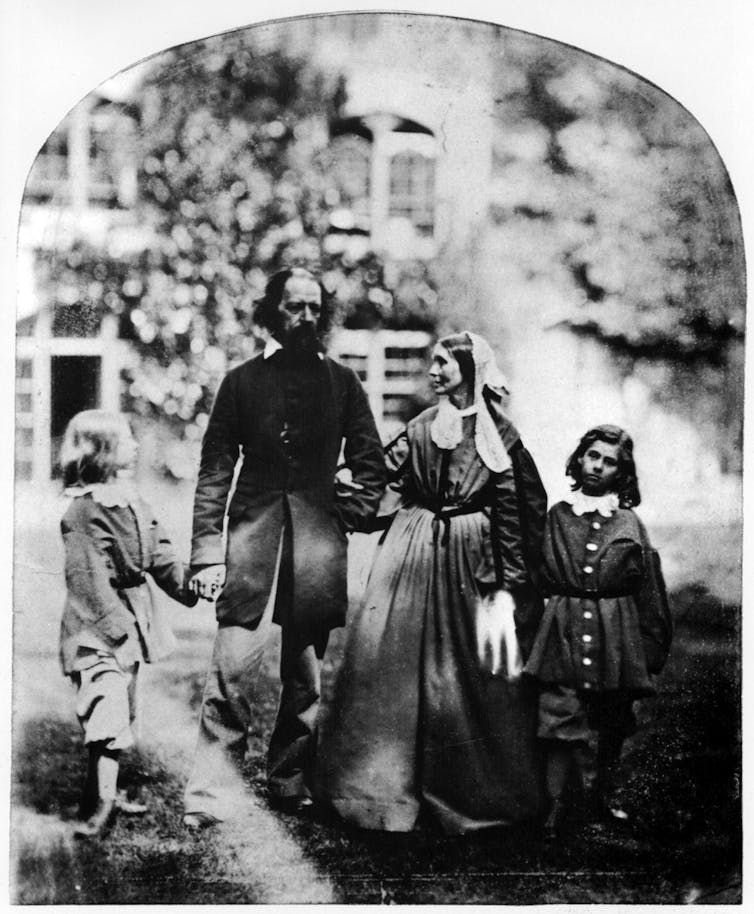
Tennyson with his wife Emily and sons, circa 1862. He named one of his sons Hallam.
Public Domain

Soulful ambiguity

“Dear friend, far off, my lost desire”, cries Tennyson. Today if a man speaks such excessive language of love to another man, we are likely to apply a defined identity or classification.


Read more:
Guide to the classics: Walt Whitman’s Leaves of Grass and the complex life of the ‘poet of America’


Although modern readers may read Tennyson’s excessive professions of love for Hallam as homosexual, the nature of their relationship was unclear to Tennyson himself, and its expressions in keeping with Victorian sentimentality. He would have baulked at our collapsing of an entire world of feelings so complex.

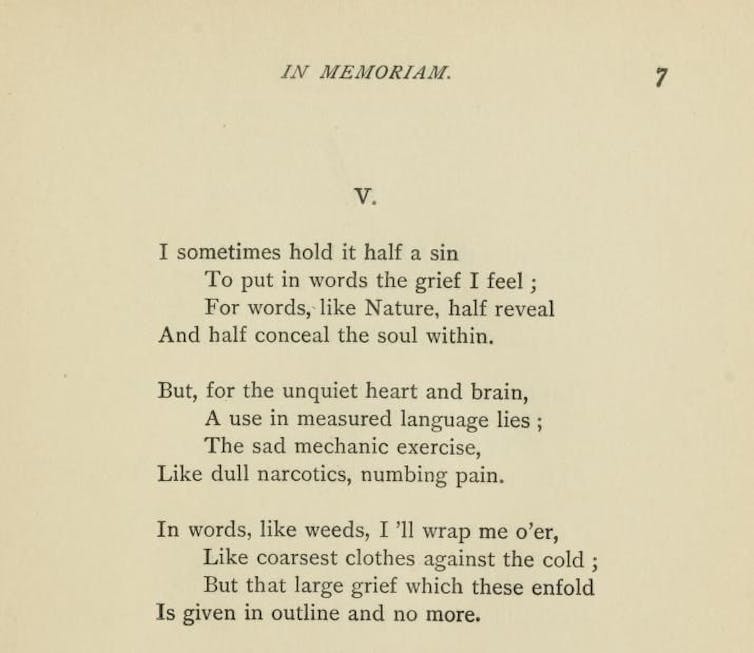
In Memoriam testifies to the ineffability of human experience. Language is inadequate to capture its density and intensity.

Canto 5.
Wikimedia

Tennyson was protective of the intensity of his feelings: hence the time he took to publish. He avoided the imperative to immediately display. Today we feel immense pressure to respond at once, in public, with clear stances, to make things transparent. Such transparency destroys soulfulness.

What makes our times so hard to bear are not just external circumstances themselves but the common ejection of mystery and suffering from art, and transcendence from consciousness.

In Memoriam dwells with the mysteries of being and death, mounts an impassioned defence of love and friendship, and — perhaps rarest of all — reminds us of something noble in the capacity to suffer for an ideal.

Tennyson’s lavish, excessive passion, his “tarrying with the negative” as Hegel put it, shows us how soulful art stirs us to life and staves off banality — but the cost must be paid.

Tennyson had a deep interest in Persian poetry through his friend Edward Fitzgerald (translator of the Rubaiyat of Omar Khayyam).

He surely found something in Persian poetry’s insistence that grief and joy are inseparable and that death is not total loss, because nothing we feel passionately and soulfully is truly lost to us.The Conversation

Darius Sepehri, Doctoral Candidate, Comparative Literature, Religion and History of Philosophy, University of Sydney

This article is republished from The Conversation under a Creative Commons license. Read the original article.

Unknown's avatar

Repairing a Fold-Out in a Book


Unknown's avatar

Finished Reading: Primordia (Book 1) – In Search of the Lost World by Greig Beck


In Search of the Lost World (Primordia #1)In Search of the Lost World by Greig Beck
My rating: 2 of 5 stars

View all my reviews

Unknown's avatar

Australian Project to Digitise Out-Of-Print Australian Titles


The link below is to an article reporting on a new Australian project to digitise and make available out-of-print Australian titles.

For more visit:
https://www.booksandpublishing.com.au/articles/2020/07/31/154544/new-project-to-digitise-lend-and-sell-out-of-print-australian-titles/

Unknown's avatar

The Gandhara Scroll


The link below is to an article reporting on the Gandhara Scroll, an historically important Buddhist manuscript, that has been made available online.

For more visit:
http://www.openculture.com/2020/08/one-of-the-oldest-buddhist-manuscripts-has-been-digitized-put-online.html

Unknown's avatar

More Amazon Bashing


The link below is to an article that looks at the latest attempts at Amazon bashing and curbing the power of Amazon in the book industry. Don’t get me wrong here, monopolies are not necessarily a good thing in my opinion, however, has Amazon done anything illegal? I doubt it. Perhaps bookshops and bookstores need to change things up a bit – many still seem to refuse to mail order (I stress many, not all) for example.

For more visit:
https://lithub.com/bookseller-writer-and-publisher-organizations-want-congress-to-go-after-amazon/

Unknown's avatar

Sharing Books During the Pandemic


The link below is to an article that considers how to safely share books during the coronavirus pandemic – how to disinfect books, etc.

For more visit:
https://bookriot.com/how-to-disinfect-books/