Unknown's avatar

Remembering Achmat Dangor, the South African novelist who redefined identity


Leonardo Cendamo/Getty Images

Ronit Frenkel, University of Johannesburg

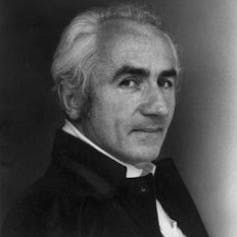
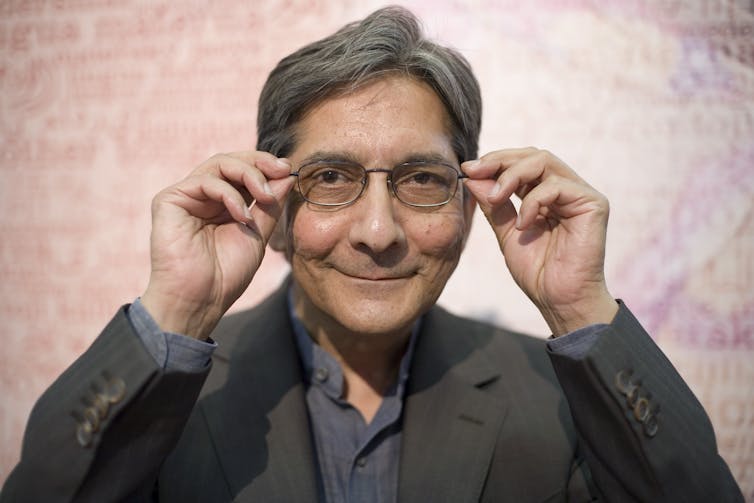
In his 71 years, Achmat Dangor was many things to many people, both in South Africa and across the world. He was a lifelong activist and social justice advocate. He was once banned for his political activities in resistance to apartheid. He was a cultural leader at the centre of the Congress of South African Writers, a tireless development organiser and, for six years, the chief executive of the Nelson Mandela Foundation. For me, he was above all an extraordinary novelist and poet who expanded how I think.

I was a graduate student when, quite by chance, I picked up a copy of Dangor’s 1997 novel Kafka’s Curse in Exclusive Books in Johannesburg. It was 2001 and I was starting to write my dissertation proposal. I read Kafka’s Curse and realised that I had to change topics, such was the impact of the novella on my intellectual life.

It remains a formative novel in my understanding of South African culture, and a favourite novel due to the sheer pleasure to be found in its writing, in its gorgeous prose and magical, mythical landscape.

The complexity of culture

In Kafka’s Curse the characters shift and transform. The protagonist Oscar Kahn is revealed to be Omar Khan, both coloured and Muslim, who has passed as Jewish and white by changing two letters of his name. His wife leaves him as his illness progresses, an illness which poisons his lungs and turns his skin into bark just as Nelson Mandela becomes South Africa’s first democratically elected president.

In many ways, Dangor’s fiction represented the shifts that South African literature and culture underwent in the early days of the country’s transition to democracy. His was a focus on the relationship between race, memory and apartheid constructions.

Both the form and the content of his novels highlight the ambiguous character of identity and history. They offer a complex and nuanced alternative to dominant understandings of South Africa, ones that moved away from a logic of black and white, good and bad, past and present, and into a textured and intricate conception of the country’s culture.
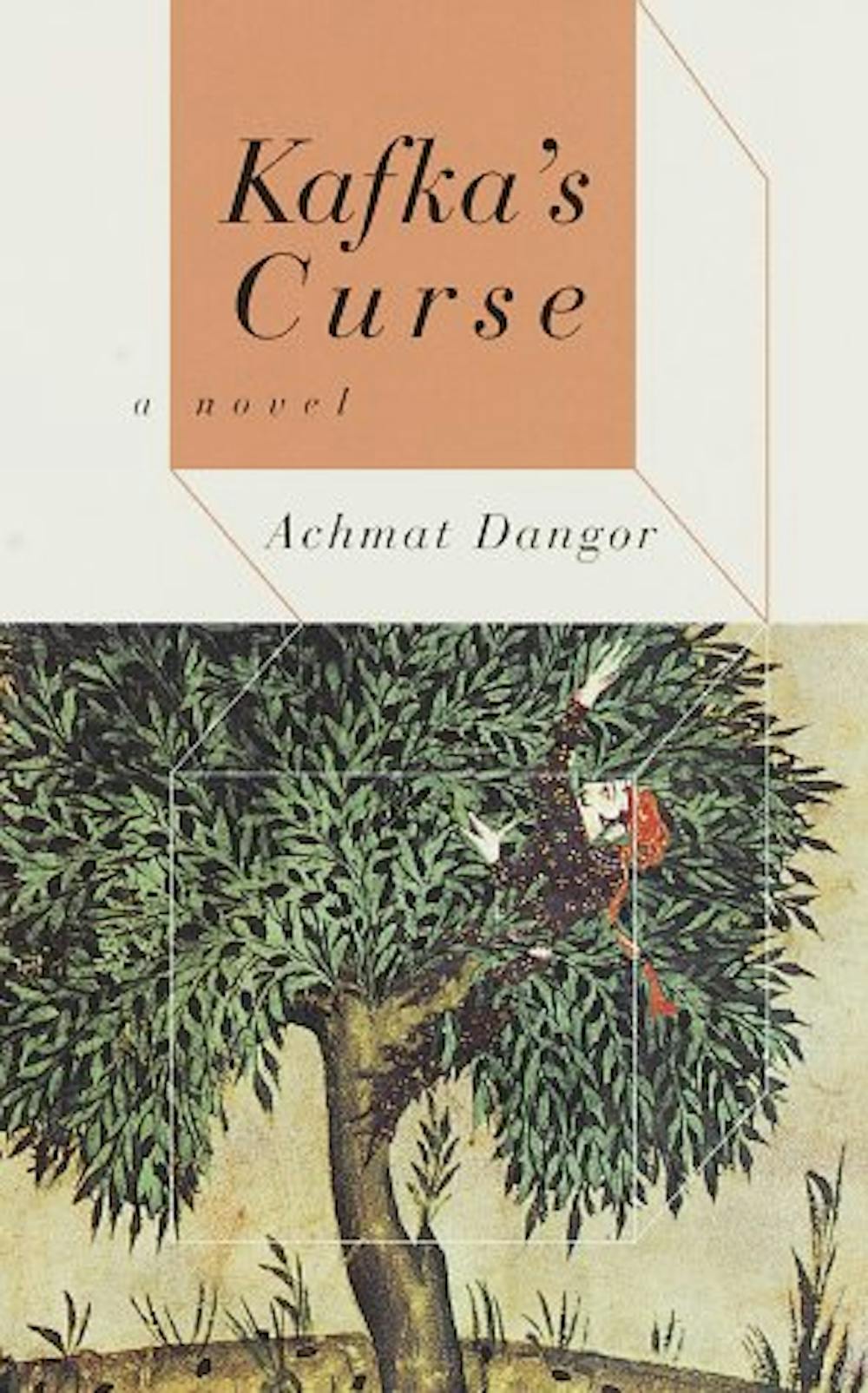
An illustration of a tree with an orange fruit in its branches.

Pantheon Books

They certainly changed my own understandings of my world. Kafka’s Curse showed me that South Africans were not always one thing or another, but had to deny the complexities of identity in order to fit into apartheid’s system of racial categorisation.

In a post-apartheid context, Dangor’s characters reveal the irrepressible mix of South African identities. In Kafka’s Curse he applied the legend of Majnoen to South African culture in a short novel written of rich prose that is often described as magical realist in terms of genre. In an interview with Bold Type magazine, he himself described it as follows:

The ancient Arabic legend of Leila and Majnoen (‘a name as well as a madness’) is a cautionary moral tale: tamper with the hierarchy of a society’s structure and you threaten its orderliness, and hence its very existence.

Ask the Caliph who caused his daughter Leila and her lover Majnoen so much suffering: his caliphate probably did not endure as long as their legend.

The legend of Majnoen in South Africa becomes a story of enduring love that defies despotic rule. Apartheid meanings are interrogated from the points that it denied existed – the ambiguities or overlaps between its lines of racial categorisation. This is embodied by the figure of Oscar/Omar.

Like when I first read it, these ambiguities unravel what my own graduate students think they know when I teach this book today. Kafka’s Curse muddies the line between the imagined and the lived reality of racial constructions.

The uncertainty of the past

In his internationally acclaimed 2001 novel Bitter Fruit, Dangor continued his investigation of ambiguity by exploring the line between silence and speaking up. He did this by looking at the impact of the Truth and Reconciliation Commission (TRC), set up by the Mandela government to deal with the atrocities of apartheid. While Kafka’s Curse explored these issues around South Africa’s first democratic election in 1994, Bitter Fruit dealt with similar issues around the second election in 1999. Its focus was the uncertainties of history and memory.
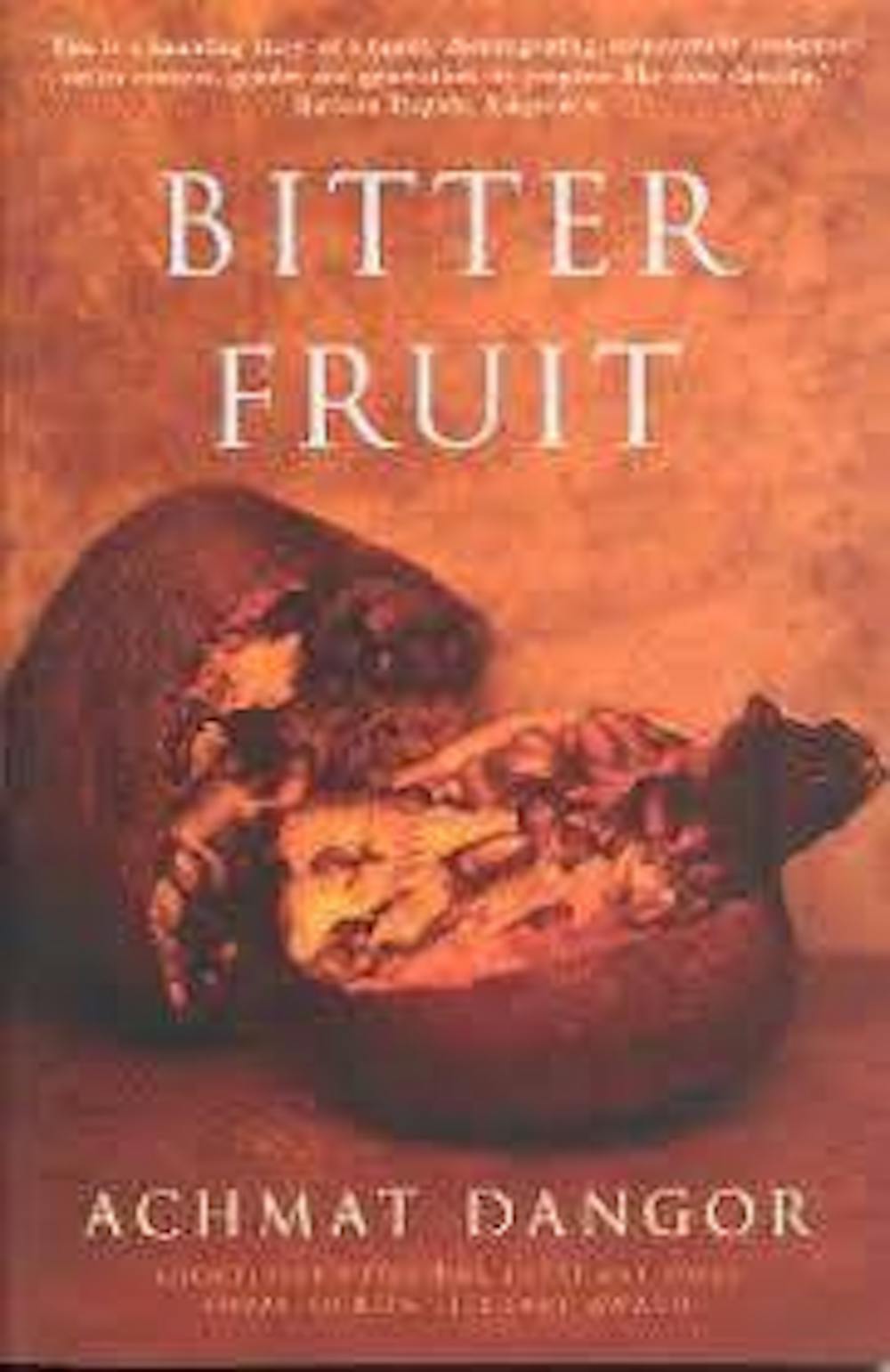
A painting of a pomegranate torn open on the cover of a book.

Atlantic Books

Bitter Fruit was shortlisted for the Booker Prize in 2004 and is probably Dangor’s best-known work. Set in urban Johannesburg, the narrative focuses on Silas and Lydia Ali and their son Mikey. As their relationships begin to unravel at the end of the Mandela presidency, silence surrounds the characters’ pasts as a counterpoint against which to examine the impact of the TRC as a form of cultural articulation.

How do we deal with our past and the uncertainties of history, Dangor asks, in a novel that floats back and forth between present and past, speech and silence, public and private.

Bitter Fruit’s three sections – memory, confession and retribution – act as counterpoints against which the TRC’s processes of speak, grieve and heal are situated. He doesn’t offer any neat solutions, but traces different ways of dealing with our past. In much the same way that the TRC could not construct a unified idea of South African history but merely offered one piece of a fragmentary story, Dangor illustrated the ambiguity inherent in the various ways we synthesise that past as individuals and as a society as a whole.

In each of his books, he explored questions that shifted these sorts of cultural debates. Dangor’s last novel, Dikeledi (2017), sits on my bedside table and I wonder what new knowledge lies within its pages for me to discover, what questions will be explored that I cannot articulate myself.

Rest in peace Achmat Dangor, my teacher in novelistic form.The Conversation

Ronit Frenkel, Professor of English, University of Johannesburg

This article is republished from The Conversation under a Creative Commons license. Read the original article.

Unknown's avatar

‘Quarantine envy’ could finally wake people up to the deep inequalities that pervade American life


Envy is one of the seven deadly sins – the worst of them all, according to the ‘Canterbury Tales.’
Richard Donaghue/EyeEm via Getty Images

Jessica Rosenfeld, Washington University in St Louis

In recent months, mental health experts have been drawing attention to what they’ve dubbed “quarantine envy.”

Many people, they note, have been sizing up the extent to which they’ve been affected by lockdowns and economic hardship. Who still has a job? Who gets to work from home? Whose home is spacious, light-filled and Instagram-worthy?

The start of the school year adds another layer of comparison. Parents stuck in a small apartment with two kids forced to learn remotely might feel pangs about the fact that their friend’s kids get to attend a private school in person.

What should we do with these unpleasant feelings? Should we repress them or reason them away? Are they too shameful to be shared?

Envy is one of Christianity’s seven deadly sins – the worst of them all, says the Parson in Chaucer’s “Canterbury Tales.” But my research into the long history of envy shows that the emotion has many sides to it.

Some are certainly destructive. But envy can also be useful. The “sin” can help us better understand ourselves and the world around us – and it can be a key driver of social change.

Tales of envy

Envy has a bad reputation. Everyone feels it at one point or another, although we often don’t want to admit to being truly envious of others – harboring the kind of envy that gnaws at us and makes us feel inferior.

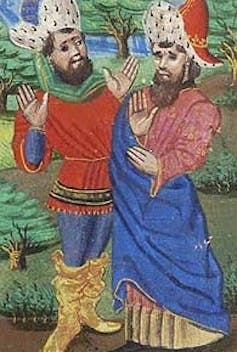
One man – representing envy – stands with his palms out and one eye blinded. The other – greed – has both his eyes blinded.
A 15th-century illustration of a classic fable of envy and greed.
Morgan Library

Portraits of envy can show it as an astonishingly malicious emotion. One version of a popular fable tells the story of an envious man and a greedy man being given a single wish. The one condition is that the person who does not get to choose the reward will be given double what the other man wishes. The greedy man quickly asks that the envious man be given the choice; the envious man then wishes to be blinded in one eye.

In William Langland’s poem “Piers Plowman,” the personification of Envy confesses that all he wants is for his neighbor, “Gybbe,” to have something bad happen to him; he wants this even more than he wants cheese (which is saying a lot, if you ask me!).

In these stories, envy is typically defined as wanting misfortune for others, longing to feel superior in some way or at least making them just as miserable as you are.

Late medieval literature is also filled with stories that point to envy as a source of violence.

The chronicler Jean Froissart describes the social unrest associated with the Peasants’ Revolt of 1381 as a consequence of the envy the commoners had toward the nobles and the rich.

Here – and elsewhere – envy is a label used to diminish the political claims of a particular group of people. In 2012, Mitt Romney accused Barack Obama of practicing the “bitter politics of envy.” In this way, criticism of the rich or powerful, or wanting the wealthy to be taxed more to fund public services, brings accusations of petty envy and resentment.

When envy spurs social change

Modern understandings of envy are also related to other kinds of negative feelings, like anger that someone has undeserved wealth or frustration that certain groups are hoarding money, power, or privileges.

Here is where envy can take a turn that can lead to better outcomes. Envy can be productive when it is not directed at one person in particular but is instead directed at the way society is structured.

Economists and political scientists increasingly recognize that reducing inequality can be an end in itself. Envy – even the kind of nakedly competitive envy that seeks to damage others for no personal gain – can work to regulate inequality that has grown too wide.

Political scientist Jeffrey Green defends policies driven by a “reasonable envy” that targets the well off, even if there is no expectation of gain for everyone else. For example, he says that capping wealth might lower the material welfare for all, but this would be worth the reduction in inequality, since excessive or unjust inequality can lead to instability and feelings of disempowerment among ordinary citizens.

Economist Robert Frank prefers taxing consumption to reduce “luxury fever,” in which competitive spending escalates wildly, especially among the super-rich, leaving less money for individuals and the government to spend on essential services.

Personification of envy, wearing a veil and green dress, sits on a bench with her arms folded.
An illustration of the personification of envy from a medieval manuscript.
The Morgan Library

In their new book, “The Economic Other,” political scientists Meghan Condon and Amber Wichowsky open with the line, “The human imagination is an engine of comparison.”

In their studies, they show that politics is driven by the social imagination – and Americans have fewer opportunities for comparison because of increasing class segregation in our society. Middle-class and poorer Americans see the wealthy online and on TV but not in everyday life. The authors believe policies might become more just if there were more opportunities for “upward comparison” – if everyday Americans could simply see, in their day-to-day lives, the extent to which the wealthy lead extravagant lives. Their research suggests that envious comparison would lead to more support for government spending on welfare, Social Security and education.

[Deep knowledge, daily. Sign up for The Conversation’s newsletter.]

Dwelling with envy

Aristotle has a much more specific – and negative – definition of envy. In his view, the emotion is directed toward our equals. We become envious when our neighbors have something we desire and believe we deserve, and when we feel it is our own fault that we do not have that good thing.

He distinguishes envy from other comparative feelings like emulation, indignation or pity. These kinds of distinctions are helpful, because thinking carefully about emotions can give us information about ourselves and our environment. Some philosophers describe emotions as reasoning tools, a shortcut to filter copious amounts of information.

In a time of quarantine – when comparisons often involve who has the best version of being alone – dwelling with envy can open our eyes to ourselves and the world.

Do these negative feelings say something about ourselves? Are they specific to another person? Or do they reflect an unjust system?

Can these disparities change? If so, what could bring that about?

Trying to manage or avoid envious feelings doesn’t allow us to answer – or even ask – those questions.The Conversation

Jessica Rosenfeld, Associate Professor of English Literature, Washington University in St Louis

This article is republished from The Conversation under a Creative Commons license. Read the original article.

Unknown's avatar

Can robots write? Machine learning produces dazzling results, but some assembly is still required


Shutterstock

Alexandra Louise Uitdenbogerd, RMIT University

You might have seen a recent article from The Guardian written by “a robot”. Here’s a sample:

I know that my brain is not a “feeling brain”. But it is capable of making rational, logical decisions. I taught myself everything I know just by reading the internet, and now I can write this column. My brain is boiling with ideas!

Read the whole thing and you may be astonished at how coherent and stylistically consistent it is. The software used to produce it is called a “generative model”, and they have come a long way in the past year or two.

But exactly how was the article created? And is it really true that software “wrote this entire article”?

How machines learn to write

The text was generated using the latest neural network model for language, called GPT-3, released by the American artificial intelligence research company OpenAI. (GPT stands for Generative Pre-trained Transformer.)

OpenAI’s previous model, GPT-2, made waves last year. It produced a fairly plausible article about the discovery of a herd of unicorns, and the researchers initially withheld the release of the underlying code for fear it would be abused.

But let’s step back and look at what text generation software actually does.

Machine learning approaches fall into three main categories: heuristic models, statistical models, and models inspired by biology (such as neural networks and evolutionary algorithms).

Heuristic approaches are based on “rules of thumb”. For example, we learn rules about how to conjugate verbs: I run, you run, he runs, and so on. These approaches aren’t used much nowadays because they are inflexible.


Read more:
From Twitterbots to VR: 10 of the best examples of digital literature


Writing by numbers

Statistical approaches were the state of the art for language-related tasks for many years. At the most basic level, they involve counting words and guessing what comes next.

As a simple exercise, you could generate text by randomly selecting words based on how often they normally occur. About 7% of your words would be “the” – it’s the most common word in English. But if you did it without considering context, you might get nonsense like “the the is night aware”.

More sophisticated approaches use “bigrams”, which are pairs of consecutive words, and “trigrams”, which are three-word sequences. This allows a bit of context and lets the current piece of text inform the next. For example, if you have the words “out of”, the next guessed word might be “time”.

This happens with the auto-complete and auto-suggest features when we write text messages or emails. Based on what we have just typed, what we tend to type and a pre-trained background model, the system predicts what’s next.

While bigram- and trigram-based statistical models can produce good results in simple situations, the best recent models go to another level of sophistication: deep learning neural networks.

Imitating the brain

Neural networks work a bit like tiny brains made of several layers of virtual neurons.

A neuron receives some input and may or may not “fire” (produce an output) based on that input. The output feeds into neurons in the next layer, cascading through the network.

The first artificial neuron was proposed in 1943 by US neuroscientists Warren McCulloch and Walter Pitts, but they have only become useful for complex problems like generating text in the past five years.

To use neural networks for text, you put words into a kind of numbered index. You can use the number to represent a word, so for example 23,342 might represent “time”.

Neural networks do a series of calculations to go from sequences of numbers at the input layer, through the interconnected “hidden layers” inside, to the output layer. The output might be numbers representing the odds for each word in the index to be the next word of the text.

In our “out of” example, number 23,432 representing “time” would probably have much better odds than the number representing “do”.


Read more:
Friday essay: a real life experiment illuminates the future of books and reading


What’s so special about GPT-3?

GPT-3 is the latest and best of the text modelling systems, and it’s huge. The authors say it has 175 billion parameters, which makes it at least ten times larger than the previous biggest model. The neural network has 96 layers and, instead of mere trigrams, it keeps track of sequences of 2,048 words.

The most expensive and time-consuming part of making a model like this is training it – updating the weights on the connections between neurons and layers. Training GPT-3 would have used about 262 megawatt-hours of energy, or enough to run my house for 35 years.

GPT-3 can be applied to multiple tasks such as machine translation, auto-completion, answering general questions, and writing articles. While people can often tell its articles are not written by human authors, we are now likely to get it right only about half the time.

The robot writer

But back to how the article in The Guardian was created. GPT-3 needs a prompt of some kind to start it off. The Guardian’s staff gave the model instructions and some opening sentences.

This was done eight times, generating eight different articles. The Guardian’s editors then combined pieces from the eight generated articles, and “cut lines and paragraphs, and rearranged the order of them in some places”, saying “editing GPT-3’s op-ed was no different to editing a human op-ed”.

This sounds about right to me, based on my own experience with text-generating software. Earlier this year, my colleagues and I used GPT-2 to write the lyrics for a song we entered in the AI Song Contest, a kind of artificial intelligence Eurovision.

AI song Beautiful the World, by Uncanny Valley.

We fine-tuned the GPT-2 model using lyrics from Eurovision songs, provided it with seed words and phrases, then selected the final lyrics from the generated output.

For example, we gave Euro-GPT-2 the seed word “flying”, and then chose the output “flying from this world that has gone apart”, but not “flying like a trumpet”. By automatically matching the lyrics to generated melodies, generating synth sounds based on koala noises, and applying some great, very human, production work, we got a good result: our song, Beautiful the World, was voted the winner of the contest.

Co-creativity: humans and AI together

So can we really say an AI is an author? Is it the AI, the developers, the users or a combination?

A useful idea for thinking about this is “co-creativity”. This means using generative tools to spark new ideas, or to generate some components for our creative work.

Where an AI creates complete works, such as a complete article, the human becomes the curator or editor. We roll our very sophisticated dice until we get a result we’re happy with.


Read more:
Computing gives an artist new tools to be creative


The Conversation


Alexandra Louise Uitdenbogerd, Senior Lecturer in Computer Science, RMIT University

This article is republished from The Conversation under a Creative Commons license. Read the original article.

Unknown's avatar

Guide to the Classics: The Secret Garden and the healing power of nature


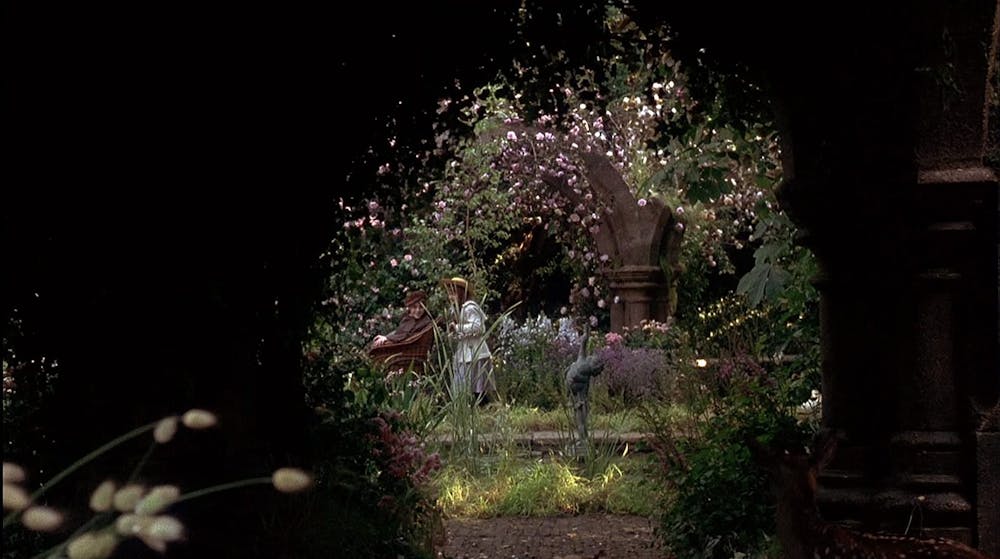
StudioCanal

Emma Hayes, Deakin University

Frances Hodgson Burnett’s The Secret Garden has been described as “the most significant children’s book of the 20th century.”

First published in 1911, after being serialised in The American Magazine, it was dismissed by one critic at the time as simple and lacking “plenty of excitement”. The novel is, in fact, a sensitive and complex story, which explores how a relationship with nature can foster our emotional and physical well-being. It also reveals anxieties about national identity at a time of the British Empire, drawing on ideas of Christian Science.

The Secret Garden has been read by generations, remains a fixture on children’s publishing lists today and has inspired several film versions. A new film, starring Colin Firth, Dixie Egerickx and Amir Wilson, updates the story in some ways for modern audiences.

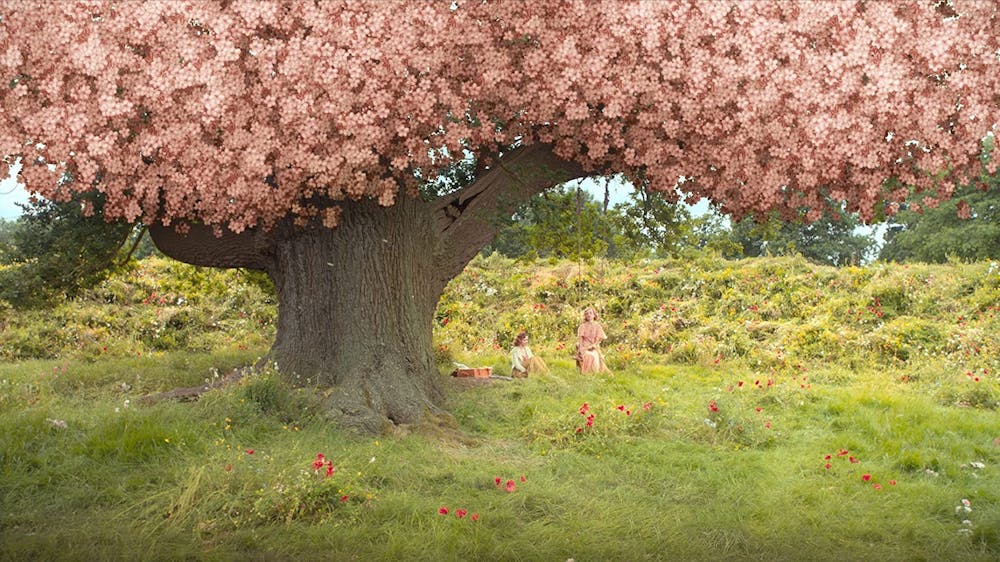
2020 movie still, a tree covered in pink flowers
A scene from the new movie version of the book.
Studiocanal

The book opens as nine-year-old Mary Lennox is discovered abandoned in an Indian bungalow following her parents’ deaths during a cholera outbreak. Burnett depicts India as a site of permissive behaviour, illness and lassitude:

[Mary’s] hair was yellow, and her face was yellow because she had been born in India and had always been ill in one way or another.

Mary is “disagreeable”, “contrary”, “selfish” and “cross”. She makes futile attempts at gardening, planting hibiscus blossoms into mounds of earth. The Ayah tasked with caring for Mary and the other “native servants … always obeyed Mary and gave her her own way in everything.”

On the death of her parents, Mary is sent to live with her reclusive uncle Archibald Craven at Misselthwaite Manor in Yorkshire.

Mary’s arrival in England proves a shock. The “blunt frankness” of the Yorkshire servants – in contrast to those in India – checks her behaviour. Martha Sowerby, an outspoken young housemaid, presents Mary with a skipping rope: Yorkshire good sense triumphing over Mary’s imperial malaise.

Also in the manor is Colin, her 10-year-old cousin. Hidden from Mary, she discovers him after hearing his cries at night.

Colin is unable to walk and believes he will not live to reach adulthood. Sequestered in his bedroom, Colin terrorises his servants with his tantrums: he performs “hysterics” in the model of Gothic femininity.


Read more:
The Yellow Wallpaper: a 19th-century short story of nervous exhaustion and the perils of women’s ‘rest cures’


Transformation

Perhaps the most famous image associated with Burnett’s text is the locked door leading to the eponymous garden.

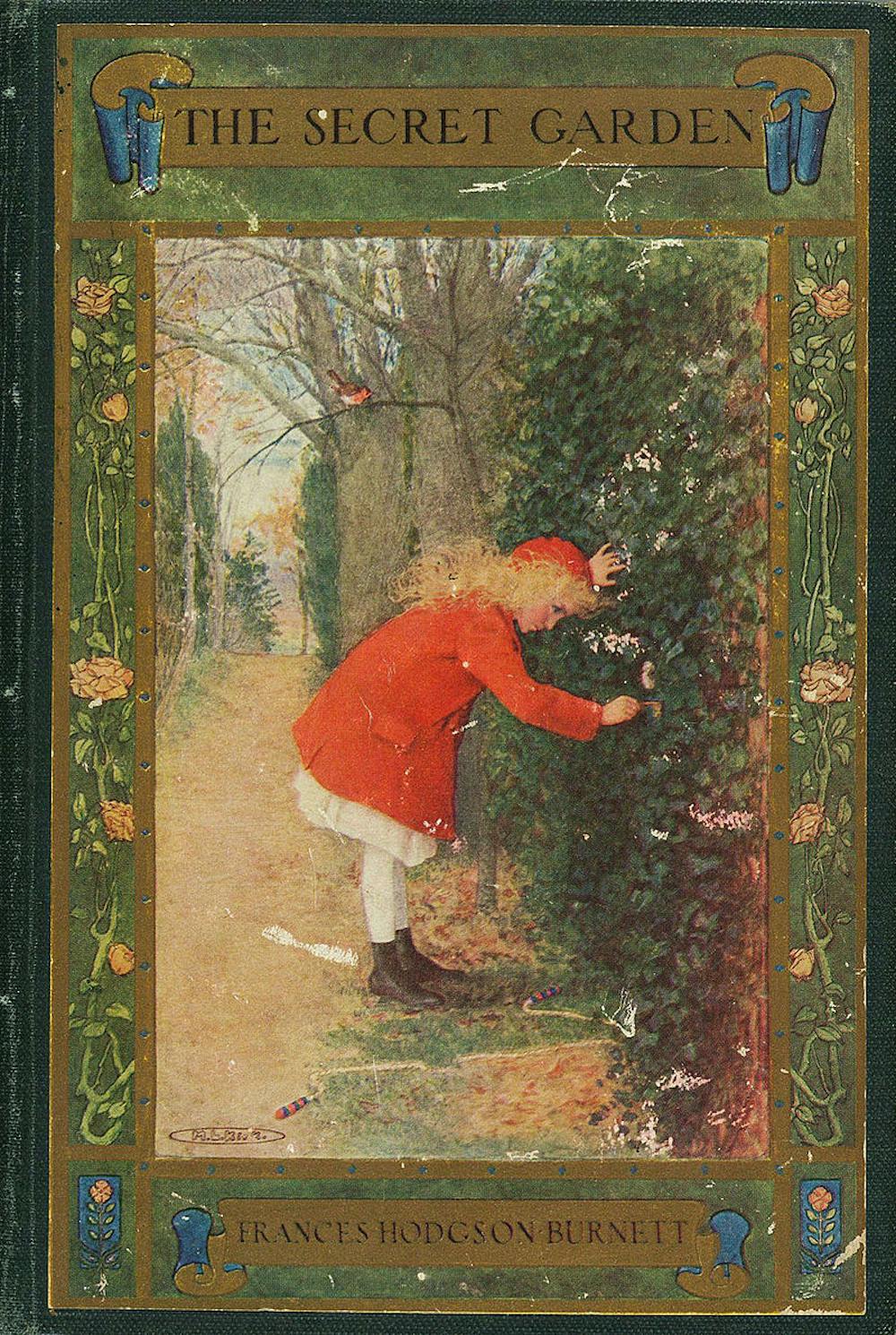
The first edition of The Secret Garden, published in 1911.
Houghton Library, Harvard University

This walled garden had formerly belonged to Colin’s mother, Lilias Craven. When she died after an accident in the garden, her husband, Archibald, locked the door and buried the key.

After Mary unearths the key, she begins to work in this mysterious, overgrown garden along with Martha’s brother, Dickon. Eventually, she manages to draw Colin out of his room with the help of Dickon, and the garden helps him to recover his strength.

Burnett draws upon the cultural connection between childhood and nature, highlighting Edwardian beliefs about the importance of the garden. Like other Edwardian texts, such as Kenneth Grahame’s The Wind in the Willows (1908) and J. M. Barrie’s Peter Pan in Kensington Gardens (1906), The Secret Garden also explores an English turn-of-the-century interest in paganism and the occult, expressed through the book’s fascination with the Greek god Pan.

Dickon, who shares an affinity with animals and the natural world, is first introduced as he sits under a tree “playing on a rough wooden pipe” reminiscent of Pan’s flute.

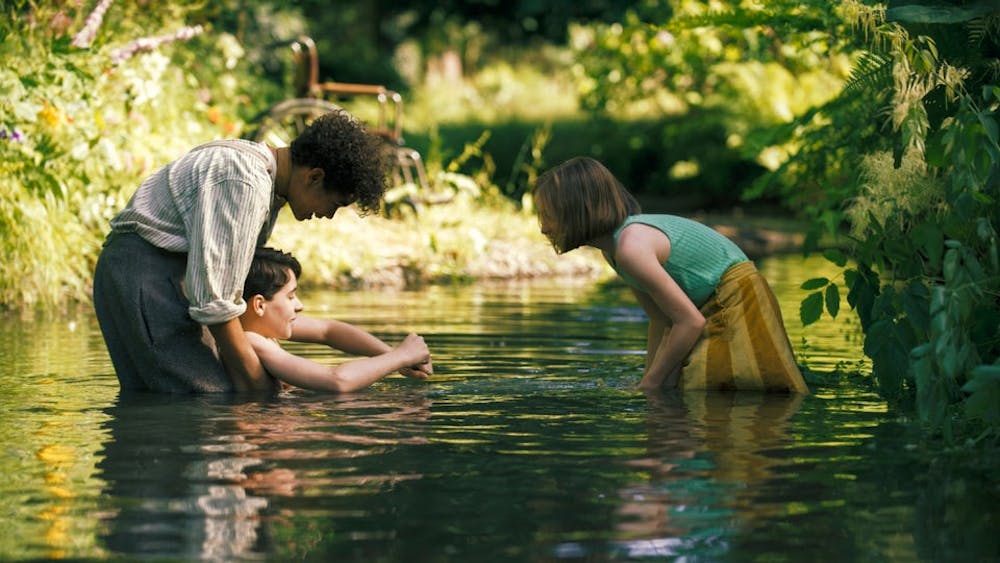
Dickon and Mary bathe Colin in a stream.
The garden becomes a space of rejuvenation for the children.
IMDB/Studiocanal

Mary and Colin are both physically and psychically transformed through working in the garden. The stifling rooms and constricting passages of Misselthwaite Manor are contrasted to the freedom of the secret garden.

At first it seemed that green things would never cease pushing their way through the earth, in the grass, in the beds, even in the crevices of the walls. Then the green things began to show buds and the buds began to unfurl and show colour, every shade of blue, every shade of purple, every tint and hue of crimson.


Read more:
B&Bs for birds and bees: transform your garden or balcony into a wildlife haven


The children are healed by gardening in the “fresh wind from the moor”. Both gain weight and strength and lose their pallor. Colin’s gardening suggests mastery of the space as he plants a rose – the floral emblem of England.

Mary is subordinated as Colin’s healing becomes the text’s main focus; Colin gains the ability to walk and – importantly – to win a race against her.

Movie still from 1993, children play in the garden
By interacting with nature, the children grow in strength and in heart.
Warner Bros

‘Just mere thoughts’

The Secret Garden emphasises the power of positive thinking: “thoughts – just mere thoughts – are as powerful as electric batteries – as good for one as sunlight is, or as bad for one as poison”.

This focus on the power of positive thoughts highlights Burnett’s interest in New Thought and Christian Science. New Thought teaches that people can enhance their lives by altering their thought patterns. It was developed by Phineas Parkhurst Quimby in the 19th century, and one of Quimby’s students was Mary Baker Eddy, the founder of Christian Science. While Burnett did not join either religion, she acknowledged that they influenced her work. Both religions often reject mainstream medicine.


Read more:
Why you should know about the New Thought movement


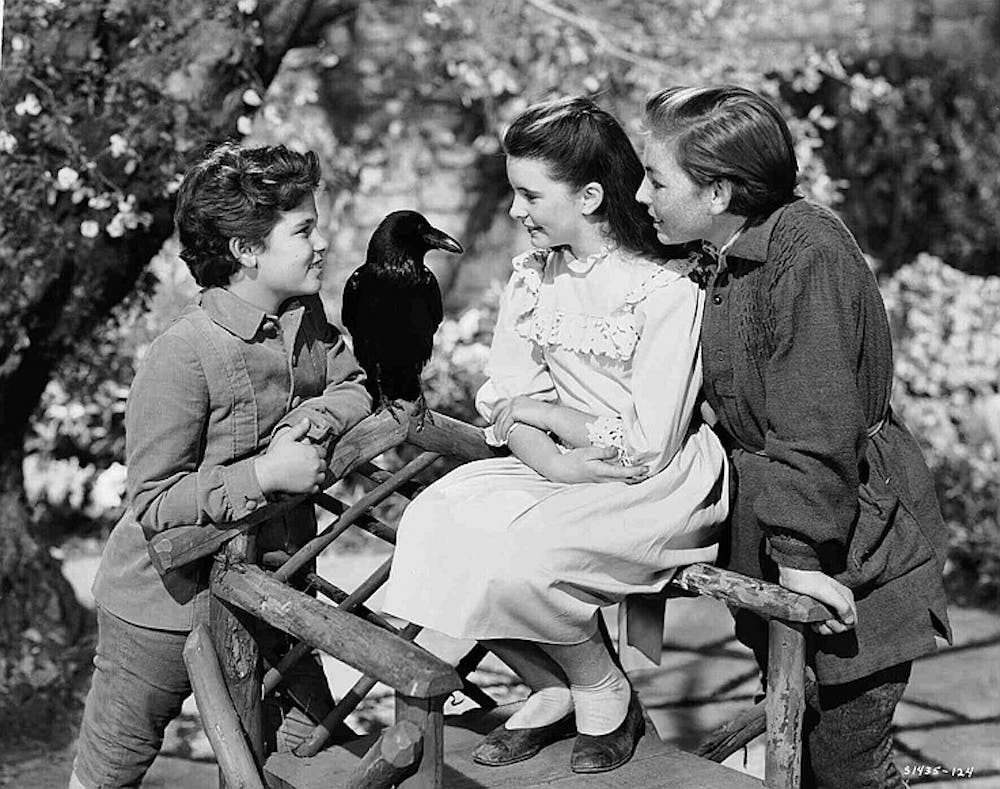
1949 movie still
The garden, seen here in the 1949 movie, captures the New Thought ideals of the healing power of thoughts.
IMDB/MGM

Belief in the healing power of thoughts is reflected as Colin chants about the “magic” of the garden.

The sun is shining – the sun is shining. That is the Magic. The flowers are growing – the roots are stirring. That is the Magic. Being alive is the Magic – being strong is the Magic. The Magic is in me… It’s in every one of us.

The Secret Garden today

Written in a time of British imperial expansion, The Secret Garden’s anxieties around national identity are evident. It draws implicit (and explicit) distinctions between the sickliness and languor of India, and the health and vitality associated with life on the Yorkshire moors.

Yet The Secret Garden still resonates with contemporary audiences. This new adaptation elaborates upon the “magic” associated with the healing power of thoughts, introducing a fantastic element to the story as Mary, Colin and Dickon enter a secret garden filled with otherworldly plants.

Director Marc Munden’s new adaptation also appears to revisit the colonialist emphasis of Burnett’s text. The adaptation shifts the time period during which the film is set to 1947, the year of the Partition of India.

This temporal change suggests an alteration to the original text’s ideas about national identity. While Burnett’s 1911 text considered Britain’s relationship with India at the height of British imperialism, Munden’s adaptation situates the narrative in the period of India gaining independence from Britain.

This new film suggests a desire to ensure The Secret Garden’s continued relevance to today’s audiences, who may be attuned to the book’s colonialist ideologies.

The Secret Garden opens in select cinemas today.The Conversation

Emma Hayes, Academic, School of Communication and Creative Arts, Deakin University

This article is republished from The Conversation under a Creative Commons license. Read the original article.

Unknown's avatar

The absurdity of empire in JG Farrell’s The Singapore Grip


Peter Morey, University of Birmingham

In 2017, the then British Foreign Secretary Boris Johnson paid a visit to the sacred Shwedagon Pagoda in Myanmar. Approaching the giant Tharawaddy Min bell that hangs in the pavilion, Johnson began muttering lines from Rudyard Kipling’s classic imperial poem The Road to Mandalay:

For the wind is in the palm-trees, and the temple-bells they say:

“Come you back, you British soldier; come you back to Mandalay!”

In a scene worthy of TV political satires like Yes Minister the horrified British Ambassador, accompanying Johnson, discretely intervened to remind the minister of the danger of offending his hosts: “You’re on mic … Probably not a good idea”.

The incident seems to capture something of the nostalgic spirit, the hold exerted by past imperial glories incongruously rehashed for the modern world, that characterises the contemporary political landscape. The Singapore Grip, the final volume of JG Farrell’s Empire Trilogy, is now being screened on ITV as a glossy period drama. The novel is built on an awareness of that same self-mythologising of imperial Britons and points up its absurdity.

Vainglorious imperialist attitudes

Farrell is interested in depicting what he called individuals undergoing history: his subject matter, the decline of the British empire. In The Singapore Grip, the focus is on the fall of Singapore to the Japanese in early 1942. The typical Farrellian protagonist – here, Matthew Webb the idealistic son of a deceased rubber magnate – is essentially a bystander to great events. The novel turns on the everyday and the mundane, paying attention to characters’ frantic, incongruous attempts to maintain normality in the face of encroaching chaos.

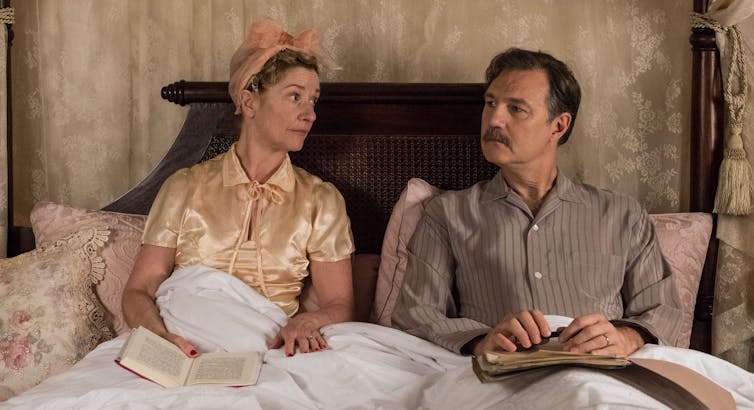
Man and woman in bed in pyjamas.
The Singapore Grip is built on the self-mythologising of imperial Briton.
Mammoth screen/ITV

Although the novel’s celebrated humour is often wry, it sometimes works up to farcical set-pieces which encapsulate the vaingloriousness of the imperial attitudes on show. A high point comes with attempts to fire a female daredevil from a cannon at the Great World amusement park. It is a symbolic enactment of the defence of the colony, which ends with the human projectile missing her target and landing head first in a safety net. Safely captured: “she jumped and arched and flapped like a netted salmon”.

The main target of The Singapore Grip is economic imperialism. Farrell skewers self-serving justifications for indefensible economic practices, which ensure that Europeans cream off the lion’s share of profits from Singapore industries while keeping the local workforce in poverty. At one point, Matthew and his Eurasian girlfriend visit a dying house inhabited by ailing Malay labourers who one-by-one rise from their deathbeds to point an accusing finger at this son of British imperialism.

Pampered colonialists

Early reactions to the ITV adaptation have called out “cultural colonialism” and erasure of Asian bodies. Yet, similar criticisms of the novel would be wide of the mark.

The personal tribulations of the Europeans do offer the main focus, but Farrell punctuates the book with other perspectives. He does so to remind us of those paying the heaviest price for imperial malpractice.

Woman stands with a suitcase next to an old fashioned car.
The TV show has been criticised for its erasure of Asians. The book, however, is pointed in its critique of the tendency of colonists to do the very same.
Mammoth screen/ITV

At one point the narrative pulls away from the pampered colonialists to take us into the experience of an elderly Chinese wharf-worker who inhabits a tiny cubicle in a decaying dockside tenement. On a starlit night he leaves the building to visit the privy, oblivious to the first bombing raid over the city by Japanese aircraft which is about to begin:

As he returns, stepping into the looming shadow of the tenement there is a white flash and the darkness drains like a liquid out of everything he can see. The building seems to hang over him for a moment and then slowly dissolves, engulfing him. Later, when official estimates are made of this first raid on Singapore (61 killed, 133 injured), there will be no mention of this old man for the simple reason that he, in common with so many others, has left no trace of ever having existed either in this part of the world or in any other.

Far from erasing marginal figures, Farrell reinserts them in a challenge to that very act of historical erasure.

Farrell’s novel is most notable, however, for its comic evisceration of a certain imperial style, a kind of bluster familiar once more as we live through a time in which the inequities of the past are downplayed and patriotic slogans replace a truthful reckoning with the challenges of the present. For us today, JG Farrell’s ability to prick the alluring delusions of the British Empire is more relevant than ever.The Conversation

Peter Morey, Professor of Twentieth-Century Literature, University of Birmingham

This article is republished from The Conversation under a Creative Commons license. Read the original article.

Unknown's avatar

JG Farrell’s The Singapore Grip: new TV adaptation brings to life the final book by one of the UK’s finest novelists


SIngapore Grip: the final book in JG Farrell’s Empire Trilogy.
ITV Pictures

John McLeod, University of Leeds

In March 2020, when it became clear that my university campus was about to close due to the coronavirus pandemic, I hastily grabbed from my office shelves my well-thumbed copies of JG Farrell’s Empire Trilogy: Troubles (1970), The Siege of Krishnapur (1973), and The Singapore Grip (1978). This was no sentimental choice on my part. I believed that Farrell could help me deal with my queasy feelings that everyday life as I knew it was dissolving frighteningly into incertitude.

As a writer, Farrell was concerned with those suddenly tipped into uncertainty, no doubt because of his own life being irreversibly turned upside down due to the sudden advent of sickness. Aged 21, he had become seriously ill after playing rugby at Oxford University in December 1956 and was diagnosed with polio. A spell in an iron lung was followed by a long and painful recovery. Farrell’s upper body was permanently affected by the disease. He never recovered full mobility.

Almost overnight, a young, healthy and ambitious undergraduate had become physically fragile and equipped with a keen sense of how quickly and unexpectedly all we take for granted is lost. Cruelly, his illness would play a part in his untimely death by drowning in August 1979, aged 44. While fishing near his new home in Ireland’s Bantry Bay, he was swept into the rough sea. Unable to swim strongly, he was soon lost to the water.

Middle-aged man in evening dresss photographed in profile.
Taken too young: JG Farrell.
Wikimedia Commons

Farrell’s early novels had often dwelt gloomily on the frailty of life. His second novel, The Lung (1965), in particular, sought to explore the dispiriting emotional and existential upset of his sudden illness. Yet, along with A Man From Elsewhere (1963) and A Girl in The Head (1967), it drew little attention – today, all three remain out of print.

Making it as a writer

His fortunes changed with the publication of Troubles, where he deployed more purposefully his consciousness of life’s latent fragility when depicting British colonial societies falling apart.

This turn to matters of Empire was not fanciful. Born to an Irish mother in Liverpool, Farrell had lived a modestly affluent childhood between England and Ireland before going up to Oxford. He knew the privileged social circles that were home to British colonialist attitudes but took a postcolonial position regarding the unhappy treatment of colonial subjects, such as the Irish.

Troubles imagines the lives of the Anglo-Irish Ascendency as the Irish War of Independence (1919-21) develops. Its often comical depiction of the Ascendency’s decline pokes fun at their arrogance and short-sightedness.

But Farrell’s sensitivity to the bewilderment and anxiety felt by all undergoing history also brings to the novel a measured sense of compassion for those whose worlds were at last evaporating. Indeed, the Empire Trilogy would uniquely combine the compassionate and condemnatory, the sensitive and the satirical, in its indulgent if unforgiving presentation of the colonial establishment. The novel established his critical reputation: it received the 1971 Geoffrey Faber Memorial Prize, while in 2010 it was awarded the “Lost Booker Prize” after a public vote.

End of Empire

Farrell’s next novel, the Booker prize-winning The Siege of Krishnapur, depicted the ready collapse of British civility during the Indian Rebellion of 1857. Buoyed by its success, Farrell used part of his prize money to travel to south-east Asia to research his next – and, sadly, last – full-length novel, The Singapore Grip, which has just been adapted for television by Christopher Hampton.

Punctuated in turn by scenes of high comedy and historical solemnity, the novel portrays Singapore prior to its humiliating surrender to the Japanese in February 1942. At its heart is one of Farrell’s least likeable befuddled expatriates, the rubber magnate Walter Blackett, whose business empire exemplifies the unholy grip of capitalism and colonialism over the region’s impoverished workers.

Mustachioed man in linen suit on varandah.
Unpleasant and manipulative: David Morrissey as Walter Blackett in The Singapore Grip.
ITV Pictures

Keen to secure his firm’s future, Walter plots to marry his daughter Joan to Matthew Webb, the son of his geriatric business partner – a scheme all the more bizarre in an increasingly besieged and dangerous city.

An idealist at heart, Matthew’s progressive vision of a world where wealth and wisdom are equitably enjoyed soon becomes as battered as the bombed-out city. Events in Singapore appear instead to prove the “Second Law” often quoted by his American friend, James Ehrendorf:

In human affairs, things tend inevitably to go wrong. Things are slightly worse at any given moment than at any preceding moment.

Yet The Singapore Grip never loses faith in the capacity for survival and endurance. It mixes its unforgiving vision of colonialism’s absurdity and collapse with an unyielding and often warmly humorous embrace of human fellowship. And, while Matthew fails to flee in time, one important figure significantly escapes: an abandoned, diseased and distressed King Charles spaniel, sardonically named “The Human Condition” by one of Matthew’s friends, who is last seen bolting up the gangplank to safety on a soon-to-depart ship.

Young man with glasses, dirty uniform.
Captured: Luke Treadaway as Matthew Webb in The Singapore Grip.
ITV Pictures

Highly amusing and deeply penetrating by turns, Farrell’s fiction often renders the human condition as precarious and insubstantial as the ailing dog in The Singapore Grip. But it crucially recognises that people are as complicated as the changing historical circumstances into which they are mercilessly thrust. Farrell’s firm condemnation of Empire never stopped him trying to understand humanely those undergoing its decline.

In reaching for Farrell when lockdown commenced, I had hoped to deal less fearfully with the experience of sudden change. But he soon reminded me, too, of the humane resources we also need at life-changing moments: steadfast hope, a saving sense of humour, and – for those lucky to escape or recover from illness – the wisdom of survival.The Conversation

John McLeod, Professor of Postcolonial and Diaspora Literatures, University of Leeds

This article is republished from The Conversation under a Creative Commons license. Read the original article.

Unknown's avatar

‘Quarantine envy’ could finally wake people up to the deep inequalities that pervade American life


Envy is one of the seven deadly sins – the worst of them all, according to the ‘Canterbury Tales.’
Richard Donaghue/EyeEm via Getty Images

Jessica Rosenfeld, Washington University in St Louis

In recent months, mental health experts have been drawing attention to what they’ve dubbed “quarantine envy.”

Many people, they note, have been sizing up the extent to which they’ve been affected by lockdowns and economic hardship. Who still has a job? Who gets to work from home? Whose home is spacious, light-filled and Instagram-worthy?

The start of the school year adds another layer of comparison. Parents stuck in a small apartment with two kids forced to learn remotely might feel pangs about the fact that their friend’s kids get to attend a private school in person.

What should we do with these unpleasant feelings? Should we repress them or reason them away? Are they too shameful to be shared?

Envy is one of Christianity’s seven deadly sins – the worst of them all, says the Parson in Chaucer’s “Canterbury Tales.” But my research into the long history of envy shows that the emotion has many sides to it.

Some are certainly destructive. But envy can also be useful. The “sin” can help us better understand ourselves and the world around us – and it can be a key driver of social change.

Tales of envy

Envy has a bad reputation. Everyone feels it at one point or another, although we often don’t want to admit to being truly envious of others – harboring the kind of envy that gnaws at us and makes us feel inferior.

One man – representing envy – stands with his palms out and one eye blinded. The other – greed – has both his eyes blinded.
A 15th-century illustration of a classic fable of envy and greed.
Morgan Library

Portraits of envy can show it as an astonishingly malicious emotion. One version of a popular fable tells the story of an envious man and a greedy man being given a single wish. The one condition is that the person who does not get to choose the reward will be given double what the other man wishes. The greedy man quickly asks that the envious man be given the choice; the envious man then wishes to be blinded in one eye.

In William Langland’s poem “Piers Plowman,” the personification of Envy confesses that all he wants is for his neighbor, “Gybbe,” to have something bad happen to him; he wants this even more than he wants cheese (which is saying a lot, if you ask me!).

In these stories, envy is typically defined as wanting misfortune for others, longing to feel superior in some way or at least making them just as miserable as you are.

Late medieval literature is also filled with stories that point to envy as a source of violence.

The chronicler Jean Froissart describes the social unrest associated with the Peasants’ Revolt of 1381 as a consequence of the envy the commoners had toward the nobles and the rich.

Here – and elsewhere – envy is a label used to diminish the political claims of a particular group of people. In 2012, Mitt Romney accused Barack Obama of practicing the “bitter politics of envy.” In this way, criticism of the rich or powerful, or wanting the wealthy to be taxed more to fund public services, brings accusations of petty envy and resentment.

When envy spurs social change

Modern understandings of envy are also related to other kinds of negative feelings, like anger that someone has undeserved wealth or frustration that certain groups are hoarding money, power, or privileges.

Here is where envy can take a turn that can lead to better outcomes. Envy can be productive when it is not directed at one person in particular but is instead directed at the way society is structured.

Economists and political scientists increasingly recognize that reducing inequality can be an end in itself. Envy – even the kind of nakedly competitive envy that seeks to damage others for no personal gain – can work to regulate inequality that has grown too wide.

Political scientist Jeffrey Green defends policies driven by a “reasonable envy” that targets the well off, even if there is no expectation of gain for everyone else. For example, he says that capping wealth might lower the material welfare for all, but this would be worth the reduction in inequality, since excessive or unjust inequality can lead to instability and feelings of disempowerment among ordinary citizens.

Economist Robert Frank prefers taxing consumption to reduce “luxury fever,” in which competitive spending escalates wildly, especially among the super-rich, leaving less money for individuals and the government to spend on essential services.

Personification of envy, wearing a veil and green dress, sits on a bench with her arms folded.
An illustration of the personification of envy from a medieval manuscript.
The Morgan Library

In their new book, “The Economic Other,” political scientists Meghan Condon and Amber Wichowsky open with the line, “The human imagination is an engine of comparison.”

In their studies, they show that politics is driven by the social imagination – and Americans have fewer opportunities for comparison because of increasing class segregation in our society. Middle-class and poorer Americans see the wealthy online and on TV but not in everyday life. The authors believe policies might become more just if there were more opportunities for “upward comparison” – if everyday Americans could simply see, in their day-to-day lives, the extent to which the wealthy lead extravagant lives. Their research suggests that envious comparison would lead to more support for government spending on welfare, Social Security and education.

[Deep knowledge, daily. Sign up for The Conversation’s newsletter.]

Dwelling with envy

Aristotle has a much more specific – and negative – definition of envy. In his view, the emotion is directed toward our equals. We become envious when our neighbors have something we desire and believe we deserve, and when we feel it is our own fault that we do not have that good thing.

He distinguishes envy from other comparative feelings like emulation, indignation or pity. These kinds of distinctions are helpful, because thinking carefully about emotions can give us information about ourselves and our environment. Some philosophers describe emotions as reasoning tools, a shortcut to filter copious amounts of information.

In a time of quarantine – when comparisons often involve who has the best version of being alone – dwelling with envy can open our eyes to ourselves and the world.

Do these negative feelings say something about ourselves? Are they specific to another person? Or do they reflect an unjust system?

Can these disparities change? If so, what could bring that about?

Trying to manage or avoid envious feelings doesn’t allow us to answer – or even ask – those questions.The Conversation

Jessica Rosenfeld, Associate Professor of English Literature, Washington University in St Louis

This article is republished from The Conversation under a Creative Commons license. Read the original article.
Unknown's avatar

2020 PEN/Ackerley Prize for a Work of Memoir or Autobiography Winner


The link below is to an article reporting on the 2020 PEN/Ackerley Prize for a work of memoir or autobiography winner, ‘A Radical Romance,’ by Alison Light.

For more visit:
https://www.booksandpublishing.com.au/articles/2020/08/21/155533/light-wins-2020-pen-ackerley-prize/

Unknown's avatar

KindleGen No More


The link below is to an article reporting on the demise of KindleGen.

For more visit:
https://the-digital-reader.com/2020/09/04/amazon-has-retired-kindlegen/

Unknown's avatar

Latest Kindle Updates


The links below are to articles reporting on the latest Kindle software/firmware updates.

For more visit:
https://the-digital-reader.com/2020/08/28/amazon-releases-a-firmware-update-for-the-kindle-paperwhite-3-and-other-models/
https://goodereader.com/blog/kindle/amazon-issues-new-update-for-the-kindle-paperwhite-3
https://blog.the-ebook-reader.com/2020/08/28/new-software-update-available-for-kindle-paperwhite-3-and-other-kindles/